Serena’s Review: “Gilded”

This post may contain affiliate links for books we recommend.  Read the full disclosure here.

Book: “Gilded” by Marissa Meyer

Publishing Info: Feiwel and Friends, November 2021

Where Did I Get this Book: Edelweiss+

Where Can You Get this Book: Amazon | IndieBound | WorldCat

Book Description: Long ago cursed by the god of lies, a poor miller’s daughter has developed a talent for spinning stories that are fantastical and spellbinding and entirely untrue.

Or so everyone believes.

When one of Serilda’s outlandish tales draws the attention of the sinister Erlking and his undead hunters, she finds herself swept away into a grim world where ghouls and phantoms prowl the earth and hollow-eyed ravens track her every move. The king orders Serilda to complete the impossible task of spinning straw into gold, or be killed for telling falsehoods. In her desperation, Serilda unwittingly summons a mysterious boy to her aid. He agrees to help her . . . for a price.

Soon Serilda realizes that there is more than one secret hidden in the castle walls, including an ancient curse that must be broken if she hopes to end the tyranny of the king and his wild hunt forever.

Review: We read “Cinder” for bookclub many (many) years ago, and I remember enjoying it for the most part. Which is why I bewilder myself that I haven’t read any of the rest of the books in that series or by this author! She writes creative fairytale retellings (some times even including science fiction angles!) for heaven’s sake! That sounds right up my alley! Whatever the case, I did request an e-galley of this book back in 2021 when it came out….and again failed to prioritize it. But when I saw that the second one was coming out this fall, I finally decided that enough was enough, so here we finally, finally are.

Serilda is a story-teller at heart, spending her days spinning wonderous tales of magic and danger. Most of the time, however, this propensity for tall-tales is only appreciated by the village children. Indeed, most others see the mysterious wheels of color that mark her eyes and see nothing but trouble, a young woman touched by a god known for lies. Soon enough, however, magic seems to escape from the world of words and Serilda finds herself caught up in a tall tale herself, forced to spin straw into gold (a skill she foolishly claimed during one of her stories) for a cruel Fae king. Luckily for her, she meets a strange young man who does in fact have this skill. But what will he ask for in return?

I have to say, discovering that you’ve been missing out on something awesome has to be one of the few times where you’re almost rewarded for your own delay. I mean, I loved this book and I had the second book already primed and ready to go and got to merrily skip out on the year-long wait that other fans had to put up with! But it also means I’ve just been missing good books for years. I’ll definitely be checking out those other “Cinder” books now, that’s for sure.

This book was a solid fairy-tale retelling, meeting all of the requirements I look for in this sort of book. The plot hits all the major markers that readers are familiar with from the original “Rumpelstiltskin,” but other than these basic points, the world, characters, and story all feel fresh and unique. Obviously, the biggest change is that Gild himself is not the villain but the love interest. This is definitely an example of a “less is more” romance, and I appreciated that the author didn’t abandon her premise to give more page time to this character or the romance in general. Indeed, it proves just how well-written Gild was that I was fully invested in his story and the romance between him and Serilda given we only see him briefly here and there, broken up by large sections of the story that follow only Serilda.

But this choice is even neatly referenced by Serilda herself at times, noting that this is her story and not Gild’s. While the mystery surrounding him and his ability to spin gold is at the heart of much of the story, Serilda’s own motivations and priorities are what drives things: her love for her father, a mother she lost to magic years ago, and to the young children she tells stories to in her village. She was an excellent character in that you can see her making choices that you, as the reader, know will lead to mischief and sorrow, but they also feel true to the character she is. She also never shies away from the fallout of her own decisions, good and bad. She’s an incredibly strong and brave character, and, at times, laugh out loud funny.

But the story was also much darker than I was expecting. The Erkling was a terrifyingly cruel character, his presence seeming to leak off the page and let you viscerally feel the fear that everyone experiences when around him. There were several moments in the story where it felt like the author was going in a certain direction and I thought “oh, she won’t follow through on that, there will be a way out.” Nope! This had all the darkness and grim horror that is often found in classic fairytales where innocence is not a magical shield that protects characters from bad outcomes.

I loved this book. For all that it had dark, sob-worthy moments, I also found the dialogue and inner monologue to be clever and witty, giving the reader a nice reprieve from too much gloom. It does end on a pretty massive cliff hanger, but luckily for me (and anyone else who hasn’t read it yet) the second book in the duology is coming out this month, so there’s not much of a wait there. I definitely recommend this for fairy-tale fantasy readers. It might also fall into the rare “new adult” fantasy genre.

Rating 9: Sooooo good! An excellent fairytale retelling that takes a familiar story and character and remakes them into something entirely new and fresh.

Reader’s Advisory:

“Gilded” can be found on these Goodreads lists: YA Fractured Fairytales/Radical Retellings and YA/NA Fantasy Romance Book Club Nominations.


Kate’s Review: “After Dark with Roxie Clark”

This post may contain affiliate links for books we recommend.  Read the full disclosure here.

Book: “After Dark with Roxie Clark” by Brooke Lauren Davis

Publishing Info: Bloomsbury YA, October 2022

Where Did I Get This Book: I received an ARC from the publisher at ALAAC22

Where You Can Get This Book: WorldCat | Amazon | Indiebound

Book Description: Roxie Clark has seen more dead bodies than your average seventeen-year-old. As a member of the supposedly-cursed Clark family, most of her ancestors have met tragic ends, including her own mother. Instead of fearing the curse, however, Roxie has combined her flair for performance and her gruesome family history into a successful ghost tour. But her tour never covers the most recent body she’s seen-her sister Skylar’s boyfriend, Colin Riley, found murdered in a cornfield.

A year after the murder, Roxie’s desperate to help Skylar find closure and start to heal. Instead, Skylar becomes fixated on finding the killer. As the sisters dig into what really happened, they discover that more than one person has been lying about that night. And the closer they get to the truth, the more Roxie starts to wonder if some scary stories might be better left untold. Brooke Lauren Davis offers another thought-provoking and eerily satisfying tale, perfect for fans of Kara Thomas and Cruel Summer

Review: Thank you to Bloomsbury YA for giving me an ARC of this book!

It’s been a few months now and I’m getting near the end of my ALAAC22 ARC stack, thinking back fondly of the conference and the massive suitcase sized haul of books I left with. So many end up being books I either grabbed on a whim, or those that were hyped by representatives of the publishing houses. “After Dark with Roxie Clark” by Brooke Lauren Davis was one of the more effective hype moments, as when walking by the table with the ARC, the rep overheard me saying something about horror. And she said ‘would a book about a Goth teenager who runs her own ghost tour business be of interest to you?’ What other possible response could I have had, other than

Between this woman and the woman who gave me the Spike book, the hype people were on point this past year (source).

And what the perfect premise for an October read. Ghost tours, a maudlin teenage girl, a murder mystery, a family curse? Hell yeah. Perfect spooky season reading.

In “After Dark with Roxie Clark” we meet Roxie, the aforementioned Goth girl who has her own ghost tour business, which takes stories from her own tragic family history and turns them into folklore that can help her process the angst around her family tree. Roxie is exactly the kind of character I would have loved as a teenage girl, as her love of all things horror and her spunky attitude would have spoken to me on every level. Even as a grown woman who still has that Goth girl in her I really loved Roxie. Did I need to suspend a little disbelief about her having a successful business? Sure. But independence and autonomy are big pluses in a teenage reader’s mind, so I am more than happy to forgive it. I liked her personality, I liked her wit, I just liked everything about her. I also liked the mystery at hand, about who killed Colin, her older sister Skylar’s boyfriend, and the brother of Roxie’s best friend (and crush) Tristan. I enjoyed how the worries of a Clark family curse enter into Roxie’s anxieties, and I liked how she and grief stricken Skylar team up after being distant to try and solve it (more on Skylar later….). In terms of the mystery itself, sure there were some things that were patently obvious as being red herrings, but there were definitely a few things that took me by surprise, and I mostly liked seeing Roxie grapple with the mystery at hand that is so personal to her, and how she has made a business of family tragedy, even if doing so in a respectful (in her mind) way. All of these things worked wonders for me.

The reason that this doesn’t have a higher rating is mostly because of my own personal struggles with one major aspect. That aspect is Skylar, Roxie’s older sister who is mourning the death of her boyfriend, and who is not coping well. I can’t even tell you why, as from what I can tell she is a pretty good representation of what terrible grief can do to a person when they don’t have the access to help that they need. But I had a very hard time with her as a character, and her actions as they try to figure out what happened to Colin, mostly because in her obsession and grief she does not care who she hurts, even if that person is her younger sister. I am grappling with the fact that I found a mourning and traumatized teenager wholly unlikable, and that may very well be something on my end, as she sure doesn’t have to be likable! But ruminating on it, I think it was more that a lot of it felt a bit overwrought, characterization wise, and with few peaks and valleys to it. Mourning and traumatized or not, I felt she was almost always at the highest level, and that gets a bit tiring.

But again, the mystery was taut, I was caught off guard by a few of the reveals, and Roxie as a character will surely be fun self insertion fantasy for Goth girls everywhere! “After Dark with Roxie Clark” is a great Halloween read for those who want to celebrate the season, but don’t want too much horror to go with it.

Rating 7: A solid YA mystery with a very enjoyable main character, “After Dark with Roxie Clark” is a good Halloween themed book for those who want an appropriate seasonal read without too much horror.

Reader’s Advisory:

“After Dark with Roxie Clark” is included on the Goodreads list “What To Read After Riverdale”.

Serena’s Review: “Princess of Souls”

This post may contain affiliate links for books we recommend.  Read the full disclosure here.

Book: “Princess of Souls” by Alexandra Christo

Publishing Info: Feiwel Friends, October 2022

Where Can You Get this Book: Amazon | IndieBound | WorldCat

Book Description: For sixteen years, Selestra has been trapped in her tower on the Floating Mountain, preparing to take her mother’s place as the King’s Witch, who foretells deaths in the Festival of Predictions. Outrunning your fate earns a wish and the chance to steal the King’s immortality. But die and your soul is forfeit. And though thousands have tried, nobody has ever beaten death.

A soldier in the King’s army, Nox is an unlikely candidate for the Festival, but, driven by revenge, he is determined to steal the King’s immortality and kill the entirety of his court, starting with Selestra.

Yet when Selestra touches Nox in her very first prediction, their fates become entwined, and death seeks to take both their souls. Only by working together can they survive long enough to escape the dark fate and the immortal King that now hunts them.

Review: I’m going to try really hard to resist going on a rant against Macmillan Publishing right now. Long story short, the Macmillan booth at ALA foolishly decided to allot 5…FIVE!!!!…ARCs of each of their books per day of the conference. So unless you were crazy enough to line up at the entrance to the convention center at the crack of dawn, chances were low you were going to get your hands on any books from them. This is truly an insane policy at a convention where you’re entire purpose is promoting your titles to librarians who will hopefully than purchase your books. No, no I will NOT wait in line for an ARC copy of a book I’m not sure I’ll even like. Ok, enough of that. All of that to say, this was the one ARC I was able to snag from Macmillan over the entire conference. And the fact that (spoiler alert) it was a solid “meh” is exactly why I would never get up early to get ARCs, especially by unknown authors. So…change your plan next time Macmillan!

For years, Selestra has remained trapped within the castle walls, standing to the side of her mother learning to one day take her place foretelling death for those foolish enough to bet their souls on the chance of riches. Every year, hundreds take this risk, with only a small few making any gains; and any who risk their lives, always losing. Selestra has always wondered what would make these individuals choose these odds. So when she has a vision of her life tied up alongside one of these foolish risk takers, she is more confused than ever. For his part, Nox has very fixed reasons for why he has entered this tournament. And getting involved with the King’s magical protégé is definitely not part of the plan.

This book was one of those strange reads where I started it up and thought “Wow, I’m really liking this. It’s definitely going to get a solid rating from me.” And then the longer I read, the more and more it began to feel like a chore. Until by the end, I had a very ambivalent feeling towards the entire experience. I can’t even point to very clear reason for this, but we’ll try and tease something out. But, to start with positives, I did enjoy this to start with and I’m sure that for many other people, this positive first impression will last. The writing is entertaining and smooth. The plot moves quickly. And both of our main characters were interesting and had distinct inner voices. Nox, in particular, was the type of witty guy lead that I typically very much enjoy.

But, again, I simply couldn’t sustain interest in this story. For one thing, I thought all of the twists were incredibly predictable, especially as the story continued. I also struggled with the world-building as the plot progressed. Things that had started out as interesting concepts began to stick in my brain and raise continuing questions about how exactly any of this works or how this history/culture really came to be. I understand that this book is set in the world of the author’s previous book, “To Kill a Kingdom,” but the success of a stand-alone book relies on the fact that it is meant to be approachable to readers who may not have read related works.

I also had heard that this book was a re-imaging of “Rapunzel,” part of the reason I was on the look-out for it at all at ALA in the first place. And…I just can’t see it? I mean, sure, she’s a girl stuck in a tower (and even this is highly questionable as she breaks out with ease within the first quarter of the book). But that’s about it. Her hair is kind of a thing, but not at all in the same way as the story. And really, there were no obvious connections to that fairytale at all in the way the story was plotted or paced. I really dislike being sold this type of false premise. If you’re going to try to hook a reader in with a specific reference like this, you better follow through with a story that actually meets that expectation in some way.

So, overall, this was a miss for me. However, I can also see it working for a lot of YA fantasy readers. For one thing, if you liked “To Kill a Kingdom,” this will probably be a nice return to a familiar world. And, like I said, there was a lot of immediate appeal to the characters and style of writing, so for many, this will likely carry them through. But if you’re looking for a tightly plotted story or a complex exploration of character and motivation, this probably won’t be.

That being said, if you’re one of those fans of the first book or are a YA fantasy reader who’s looking for a fast-paced read, don’t forget to check out our giveaway! It is open to U.S. residents only and ends Oct. 26.

Enter to win!

Rating 7: A promising start sadly wasted away over the course of this read, though I still think it will appeal to a lot of YA fantasy fans looking for lighter fare.

Reader’s Advisory:

“Princess of Souls” isn’t on any Goodreads lists yet, but it should be on Rapunzel Retellings.

Serena’s Review: “The Liar’s Crown”

This post may contain affiliate links for books we recommend.  Read the full disclosure here.

Book: “The Liar’s Crown” by Abigail Owen

Publishing Info: Entangled Teen, August 2022

Where Did I Get this Book: Edelweiss+

Where Can You Get this Book: Amazon | IndieBound | WorldCat

Book Description: Everything about my life is a lie. As a hidden twin princess, born second, I have only one purpose—to sacrifice my life for my sister if death comes for her. I’ve been living under the guise of a poor, obscure girl of no standing, slipping into the palace and into the role of the true princess when danger is present.

Now the queen is dead and the ageless King Eidolon has sent my sister a gift—an eerily familiar gift—and a proposal to wed. I don’t trust him, so I do what I was born to do and secretly take her place on the eve of the coronation. Which is why, when a figure made of shadow kidnaps the new queen, he gets me by mistake.

As I try to escape, all the lies start to unravel. And not just my lies. The Shadowraith who took me has secrets of his own. He struggles to contain the shadows he wields—other faces, identities that threaten my very life.

Winter is at the walls. Darkness is looming. And the only way to save my sister and our dominion is to kill Eidolon…and the Shadowraith who has stolen my heart.

Review: I’m on record as very much enjoying stories about sisters and the often beautiful but complicated relationships those can be. So it made requesting this book a bit of a no brainer. True, much of the general description sounds very familiar to other YA fantasies I’ve read. But there’s also the general adage that there’s nothing new under the sun and that all books are derivatives of others in some way or another! So request away I did!

Both magic and twins run in the royal line. But what could seen has only an odd quirk of a particular lineage has served this particular kingdom in ways known by few others. While one princess grows up as the heir to the thrown and eventually the Queen, the other lives a life unknown, stepping in to live as the royal sister when there are threats or other unknowns that may pose a risk to the true Queen. For Meren, living in her sister’s shadow has provided a sense of duty alongside a sense of claustrophobia. With no life to call her own, she struggles to carve out something of her own. But she also loves her sister, so when a threat comes in the night of her sister’s coronation, Meren steps up. So when the threat is fulfilled and the Queen is captured, it is Meren who falls into the grasp of a dark, deadly man.

While this book didn’t turn out to be all I had hoped it would be, there was still a lot to like. The writing was solid throughout. And, in particular, I think the dialogue was really well-done. The lines that were meant to be quippy were in fact funny. And characters had “voices” and manners to their speaking that made them feel like distinct characters. This is a writing skill that too often goes unnoticed, but when you stand back and look at books that come across as well-written and others that you find yourself struggling with, believable dialogue can often be found as a culprit either way. Some of my favorite authors are my favorite based almost purely on their skill at writing good dialogue.

I also really liked the characters. Meren was a sympathetic character, balancing a sense of loyalty and devotion to sister with the natural frustrations that would come from living life as a person whose entire existence is meant to be unknown. Further, I thought the love interest was also an intriguing character. There were a few reveals of him that came around the halfway mark that I found particularly interesting. These two also had good chemistry; again, I think much of this came down to the good dialogue work by the author.

But, in the end, I did find myself continuing to struggle to fully connect to the book. I was initially really into it, but as the story progressed, the entire thing began to feel more like a chore. Part of this came down to a familiar frustration for me with this kind of story: characters hiding and lying about things far past the point of believability. After a certain point, the more the author has to work to justify continuing the choice for character to continue to withhold important facts from each other. And the longer the story goes, the more these justifications begin to feel inadequate. Such was the case here. And once I started to feel annoyed about Meren’s choices in this regard, the more I struggled to get myself back into the story.

I also found myself returning to an early point in the book and a piece of history that was presented that plays an important part of the story: apparently, the villain (well known as a villain to all of the other kingdoms as well) has been stealing and killing Queens from this particular realm for quite some time. But somehow there is the assumption that the villain doesn’t know about the whole twin thing? I don’t quite get what everyone seems to think the villain character is making of the fact that the minute he captures one Queen another, identical one pops right up? It was all very weird, and as the story continued with this odd point being left to just sit there unchallenged, the more I became fixated on what should have been a minor plot point.

This is the type of book that I think will work for a lot of people. And, in fact, it was very close to working for me. There were just a few too many things that made me raise my eyebrows for me to really become invested in the story. If you like fantasy romance, however, this might be a good read for you!

Rating 7: This book has a lot of strengths, but it also fell into a few plot holes that I always struggle with. Will likely appeal to a lot of fantasy romance fans, however!

Reader’s Advisory:

“The Liar’s Crown” can be found on this Goodreads list: Books with Crowns

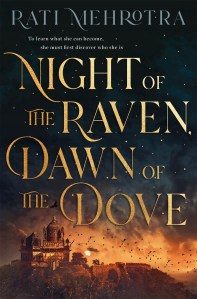
Serena’s Review: “Night of the Raven, Dawn of the Dove”

This post may contain affiliate links for books we recommend.  Read the full disclosure here.

Book: “Night of the Raven, Dawn of the Dove” by Rati Mehrotra

Publishing Info: Wednesday Books, October 2022

Where Did I Get this Book: Edelweiss+

Where Can You Get this Book: Amazon | IndieBound | WorldCat

Book Description: Katyani’s role in the kingdom of Chandela has always been clear: becoming an advisor and protector of the crown prince, Ayan, when he ascends to the throne. Bound to the Queen of Chandela through a forbidden soul bond that saved her when she was a child, Katyani has grown up in the royal family and become the best guardswoman the Garuda has ever seen. But when a series of assassination attempts threatens the royals, Katyani is shipped off to the gurukul of the famous Acharya Mahavir as an escort to Ayan and his cousin, Bhairav, to protect them as they hone the skills needed to be the next leaders of the kingdom. Nothing could annoy Katyani more than being stuck in a monastic school in the middle of a forest, except her run-ins with Daksh, the Acharya’s son, who can’t stop going on about the rules and whose gaze makes her feel like he can see into her soul.

But when Katyani and the princes are hurriedly summoned back to Chandela before their training is complete, tragedy strikes and Katyani is torn from the only life she has ever known. Alone and betrayed in a land infested by monsters, Katyani must find answers from her past to save all she loves and forge her own destiny. Bonds can be broken, but debts must be repaid.

Review: I feel like I’ve read a number of India-inspired fantasy novels over the last few years or so. Most of them have been very good, and it’s always refreshing to see new fantasy world built on the foundation of other cultures, histories, and religions from around the world. This one was particularly interesting when I stumbled across it because it was toted as being inspired by Medieval India, a period that I know even less about that the more recent history of the nation and region. Other than this general point of interest, however, I had very little to go on.

Ever since a forbidden magical intervention was performed to save her life as a child, binding her to the queen of the realm, Katyani has always seen her future as bright and clear. She was worked tirelessly to become the best guardswoman she could be and is in line to become the personal guard of the crown prince. But as persistent assassination attempt goes unthwarted, Katyani’s stable future begins to become shaky. Not only has she been unsuccessful in thwarting this threat, but she is now being sent away from the queen and castle to guard the prince and his cousin as they train in a remote school. And while there, she begins to question more and more in not only her future, but her past.

In a lot of ways, this book felt like it was right on the verge of being a story I’d love. The world-building is interesting, the magic had its moments, and there were some excellent fantasy monsters and creatures. But all of this fell just a little short of being particularly interesting. The world-building had some good moments, but I also never felt fully grounded, often unable to picture anything particularly unique about this world. This left me filling in the blanks. And, unfortunately, when a reader is left to fill in blanks, they’ll do with elements they’re most familiar with, thus completely undermining the goal of being exposed to a world/culture that is completely new.

The magic system was also barely a system, with many things working “just because.” I don’t always need elaborate systems ala Brandon Sanderon, but I do need to feel as if there are some rules around how magic is used and what is and isn’t possible. Without this, magic begins to feel like it could just be a silver bullet for any problem that should ever arise, thus dramatic lowering any and all stakes. But, I will say, the monsters and creatures were definitely the saving grace for fantasy elements. They were all new and interesting, doing most of the work of making this world feel like a unique place and touching on the cultural and mythical Indian elements that I was looking to learn more about.

I also couldn’t connect to the characters at all. The main character was supremely bland, suffering from the all-too-familiar case of a teenage character who is somehow the best everyone’s ever seen at a highly skills based occupation. This is a personal annoyance for me, of course, so others may not be bothered by it. But even personal preferences aside, Katyani didn’t have a lot going for her. She wasn’t annoying or prone to ridiculous dramatics, but she also didn’t have any real character traits that made me care about her personally. Beyond that, all of the characters had as similar sort of blandness which made them even less interesting as they began to blend together.

Lastly, I found a lot of the story highly predictable. From the very first few chapters, it was easy to guess what a few of the “reveals” would be. When you can see all of the twists coming, it’s very hard to feel investing in sticking it out while the characters themselves discover these truths. Ultimately, this book just wasn’t for me. Given that I didn’t particularly enjoy the other duology by this author that I’ve read, I think this is maybe just a sign that I should stick to other writers in the future. Fans of her work, however, might enjoy this, as I do think it was similar to that first duology (in that my annoyances have been the same between them, so if you weren’t bothered by it then, you may be good to go here too!)

Rating 6: Everything felt like it was lacking that certain spark that needs to come together to make a great read.

Reader’s Advisory:

“Night of the Raven, Dawn of the Dove” isn’t currently on any Goodreads list, but it should be on Indian Inspired Fantasy Novels.

Serena’s Review: “All of Our Demise”

This post may contain affiliate links for books we recommend.  Read the full disclosure here.

Book: “All of Our Demise” by Amanda Foody & Christine Lynn Herman

Publishing Info: Tor Teen, August 2022

Where Did I Get this Book: Edelweiss+

Where Can You Get this Book: Amazon | IndieBound | WorldCat

Book Description: For the first time in this ancient, bloodstained story, the tournament is breaking. The boundaries between the city of Ilvernath and the arena have fallen. Reporters swarm the historic battlegrounds. A dead boy now lives again. And a new champion has entered the fray, one who seeks to break the curse for good… no matter how many lives are sacrificed in the process.

As the curse teeters closer and closer to collapse, the surviving champions each face a choice: dismantle the tournament piece by piece, or fight to the death as this story was always intended.

Long-held alliances will be severed. Hearts will break. Lives will end. Because a tale as wicked as this one was never destined for happily ever after.

Previously Reviewed: “All of Us Villains”

Review: “All of Us Villains” was one of those rare beasts for me last year where it was a very hyped book that I felt actually lived up to the hype. More surprising still, it was a multi-POV fantasy story that actually managed to create a cast of characters all of whom felt unique and whose stories I was interested in reading individually and collectively. All of this to say, I was very excited about this second half of this duology to release this year (especially given that my main gripe about the first book was the cliffhanger it all wrapped up on).

The stakes could not be more high. What once was a brutal, secretive battle royale has had all of its mysteries torn away with the fall of the veil that used to separate the city of Ilvernath and the harsh landscape where the contestants fought. But, while much may be different, many things are still the same, like the deathly importance of alliances and the fear that one never knows friend from foe. For some, however, the goal is no longer to win this most brutal of tournaments, but to destroy it once and for all.

Well, while there was a lot to like about this book, I feel a controversial review coming on! But first let’s get into the parts of my review that will probably line up nicely with everyone else’s reaction. For one thing, there’s no denying the general quality of this duology. The writing remains one of its strongest aspects, across both dialogue and descriptive portions. There were several pieces that I re-read and several moments where I knew that the high quality of the writing was helping assuage some of my annoyances at what I felt were missed opportunities, story-wise.

I also still like the overall concept of the story. Though, I do have to say that this was one of the places where this book began to fall short of the first. There was such a feeling of a breath of fresh air in that first book. Not only did I find all of the characters’ stories interesting, but in a world where I’ve read a million and one “magical competition” fantasy novels, this one managed to stand out from the crowd. But that being the case, this book had a higher task at hand since that initial good will based purely on a new world and concept had already been spent. And while I still enjoyed returning to this world, I did start to feel as if some of the alliances and character drama was beginning to overtake the enjoyment that could have been found in continued world-building.

And really, this is where I was really held up: the characters. While I enjoyed almost all of them in the first book, here I began to feel that several of their storylines began to fall apart, especially when you looked back over the two books together. There were character decisions and betrayals that began to feel more like they were driven by the authors wanting to create shock value than in any organic change in the characters themselves. More and more, I found myself feeling frustrated by some of the characters and the lack of consistency in their reactions to other characters and other plot points.

My biggest annoyance comes with a plot point that I can’t really talk about without some major spoilers. I wasn’t against this particular point in a vacuum, but specifically in the story we see here, it began to represent my overall frustration with the character arcs overall. I felt like the authors not only set the reader up in the first book in a way that was misleading (this second-book-switch could have worked if a bit more effort had been laid down to hint at this change of path, but I don’t feel that was the case), but I also felt like one of the biggest emotional cliffhangers from the first book was kind of wasted. In other words, I feel like I was really revved up to be invested in certain things and then…those things weren’t anything, ultimately. This will be the most unpopular opinion in this review, I’m sure, as I know that the outcome seen here is going to appeal to a lot of fans. And I feel like I could have been on this train too, but I was left frustrated by the feeling that the authors intentionally wound me up into an emotionally invested situation that they were using purely as misdirection. And, as a reader, this kind of thing at best, doesn’t work for me. And at worst, annoys me. And here it really annoyed me because I thought that the abandoned storyline had been set up in a really interesting way.

I also have to say I was a bit let down by the lack of brutality in this book. Maybe I’m just sadistic, but I didn’t feel like any of the big moments in this book really landed and that most of the decisions that would have felt like true gut punches were avoided. But, like I said, the writing was still excellent, and I know this will be seen as an excellent end to the story for many readers. Just not as much for me, sadly.

Rating 7: Unpopular opinion from me in that I felt like a lot of the build up of the first book was wasted here in the second.

Reader’s Advisory:

“All of Our Demise” is on this Goodreads list: YA Releases August 2022

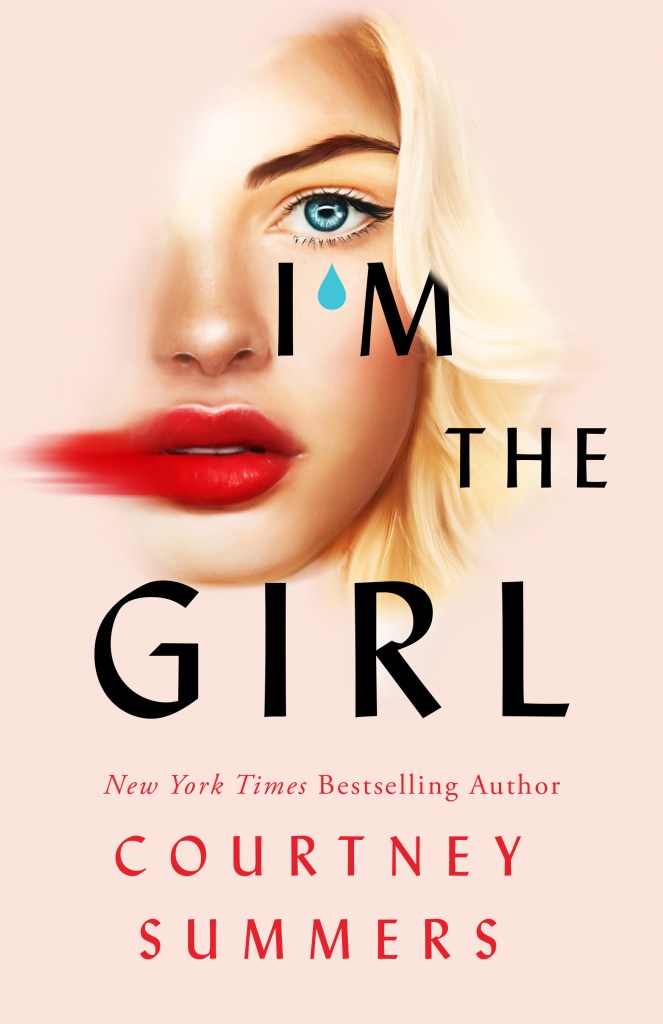
Kate’s Review: “I’m The Girl”

This post may contain affiliate links for books we recommend.  Read the full disclosure here.

Book: “I’m The Girl” by Courtney Summers

Publishing Info: Wednesday Books, September 2022

Where Did I Get This Book: I received an ARC from the publisher at ALAAC22.

Where You Can Get This Book: WorldCat | Amazon | Indiebound

Book Description: The new groundbreaking queer thriller from New York Times bestselling and Edgar-award Winning author Courtney Summers.

When sixteen-year-old Georgia Avis discovers the dead body of thirteen-year-old Ashley James, she teams up with Ashley’s older sister, Nora, to find and bring the killer to justice before he strikes again. But their investigation throws Georgia into a world of unimaginable privilege and wealth, without conscience or consequence, and as Ashley’s killer closes in, Georgia will discover when money, power and beauty rule, it might not be a matter of who is guilty—but who is guiltiest.

A spiritual successor to the 2018 breakout hit, Sadie, I’m the Girl is a masterfully written, bold, and unflinching account of how one young woman feels in her body as she struggles to navigate a deadly and predatory power structure while asking readers one question: if this is the way the world is, do you accept it?

Review: Thank you to Wednesday Books for giving me an ARC of this novel!

Ever since I read “Sadie” by Courtney Summers, I knew that she was going to become one of my must read authors. “Sadie” kicked me in the gut, but I loved every minute of it because of it’s rawness. I was lucky enough to snag her newest book “I’m The Girl” at the Annual ALA Conference (well, Serena snagged it for me on our first night strategic ‘split up and find all the ARCs’ mission), but I knew that I would probably drag my feet on reading it for a bit. Just because I knew that she wasn’t going to pull punches in her newest thriller. She never does, you see. But I also knew that this one, with its haunting cover and somewhat vague description, was going to be something else. And when I did finally sit down and read it, it had my attention, even if it was another kick in the gut.

I will first and foremost say that this book, like most of Courtney Summers’s books, is a rough one. We do not shy away from pretty bleak but realistic issues, like grooming, sexualization of children, trauma, and rape, and it makes for a book that is filled to the brim with content warnings that should be heeded by those who have sensitivities. I am a fairly steely reader for the most part, but even this one had me deeply uncomfortable at a number of moments. But I think that it’s also important to be frank and candid about these things, especially if they are handled in a way that isn’t exploitative or titillating, and I think that Summers achieves that. If we are going to explore beauty as power and how, in turn, powerful people wish to exploit and own beautiful things and people, it’s important to look at what all that means, and I think that we do that here. Even when it’s dark and very disconcerting to do said exploration.

The mystery is the main artery of this story, as our protagonist Georgia stumbles upon the dead body of thirteen year old Ashley James, who was the missing daughter of the local deputy sheriff, after she herself was hit by the car of the potential perpetrator. George is recruited by Ashley’s sister Nora to help solve what happened, but there is a lot more to this story than a teenage murder mystery, and the complexity is deftly handled. George is also hoping to start working at the small town’s elite resort and social club Aspera, where celebrities, politicians, and other big wigs come from far and wide to experience the luxury provided by Matthew and Cleo Hayes and their done up employees, the women known as ‘Aspera Girls’. George’s mother was an Aspera girl until a scandal left her without a job, and while George has always been beautiful her mother, now deceased, always told her she wouldn’t belong. George is a very complicated character, whose foray in amateur detective-hood is overshadowed by her quest to fit into the opulence of Aspera, no matter the cost and no matter the sacrifice. Summers takes her time in unveiling bits and pieces of the plot, be it the mystery of what happened to Ashley, or the reasons that George is so desperate to join Aspera, and what she has tried to do to make herself stand out from the crowd in an effort to wield her beauty as the only power she feels she has. I did like the mystery overall, and I liked seeing George delve into the secrets of Aspera in connection to Ashley as she worked there, given that small town secrets are always okay in my book as a theme, and mysterious organizations are as well. I kind of figured out what was going on in regards to Ashley, but ultimately that isn’t the point of this book. This is more an exploration of the ways that girls are told they can be powerful, but how those in power can also take that power away in insidious ways. Especially if there is wealth and disenfranchisement involved between the players. And it all set me on edge, even as I tore through it over the course of a couple nights.

“I’m The Girl” is another triumph by Courtney Summers that looks into the void and doesn’t sugar coat what it sees. People will need to steel themselves for this one, but I think it’s powerful reading all the same.

Rating 9: Dark, powerful, and gritty to the bone, “I’m The Girl” is another unnerving YA thriller from Courtney Summers.

Reader’s Advisory:

“I’m The Girl” is included on the Goodreads lists “If You Love Veronica Mars… YA Books”, and “#MeToo”.

Book Club Review: “The Ten Thousand Doors of January”


This post may contain affiliate links for books we recommend.  
Read the full disclosure here.

We are part of a group of librarian friends who have had an ongoing book club running for the last several years. Each “season” (we’re nerds) we pick a theme and each of us chooses a book within that theme for us all to read. Our current theme is “Book Bingo” where we drew reading challenges commonly found on book bingo cards from a hat and chose a book based on that.  For this blog, we will post a joint review of each book we read for book club. We’ll also post the next book coming up in book club. So feel free to read along with us or use our book selections and questions in your own book club!

Book: “The Ten Thousand Doors of January” by Alix E. Harrow

Publishing Info: Redhook, September 2019

Where Did I Get This Book: The library!

Where You Can Get This Book: WorldCat | Amazon | Indiebound

Book Bingo Prompt: A book with a misleading title

Book Description: In a sprawling mansion filled with peculiar treasures, January Scaller is a curiosity herself. As the ward of the wealthy Mr. Locke, she feels little different from the artifacts that decorate the halls: carefully maintained, largely ignored, and utterly out of place.

Then she finds a strange book. A book that carries the scent of other worlds, and tells a tale of secret doors, of love, adventure and danger. Each page turn reveals impossible truths about the world and January discovers a story increasingly entwined with her own.

Kate’s Thoughts

We’re back to a familiar statement from me during a Book Club post and discussion: I am not really a fantasy reader outside of a few specific exceptions, be it titles (“The Lord of the Rings”; “The Neverending Story”) or sub-genres (dark fantasy). So going into my review of “The Ten Thousand Doors of January”, you need to take all of this with a grain of salt. Maybe a teaspoon or two. I am almost never going to be able to vet a fantasy title super well because as a genre it’s not my bag, baby (a phrase that was tossed around in book club during the discussion).

What I will say about this book that I did like was the way that Harrow incorporated social issues of the time period into the book. We see the struggles of life in Edwardian-era England for not only women, but also women of color within a certain social stature. While January is somewhat shielded from some of this because of her placement with Locke, she is still kept in a gilded cage, and eventually put in an asylum under guise of hysteria when in actuality she is more inconvenient for Locke and his contemporaries when she becomes a perceived threat. And then once she is more outside of Locke’s ‘protection’ (you can’t REALLY call it that), her race is suddenly something she also has to contend with in a more direct and overt fashion. I also liked the way that Harrow addresses aspects of Imperialism and Colonialism through the character of Jane, a woman born in Africa who was being subjected to a missionary school, and eventually finds a door that helps her find freedom. And really, her door, where she encounters a world with a matriarchal cheetah society, was SUPER interesting! But we didn’t really get to see much of that. We didn’t get to see as many doors as I anticipated.

So yeah, I liked the social aspects of this book, as it’s great to see fantasy address these themes. But it’s still fantasy, which just isn’t my genre. So this is very much a ‘your mileage may vary’ situation.

Serena’s Thoughts

Don’t worry fantasy lovers! As the resident fantasy reader, I am happy to step up to vet titles in this genre. And, all told, I found a lot to like in this book. This is definitely one of those fantasy novels that leans heavily on subgenres like historical and literary fiction. While there is definite magic involved in the story and it is surely a portal fantasy, the pacing and overall feel of the book falls more in line with literary fantasy and historical fiction than anything else. As Kate mentioned, the book focuses a lot on the realities of life in this time period for both women and people of color. Even though there are fantastical doorways into different worlds, there is no magic wand to wave away the very real challenges facing many during this time.

The pacing of this book is also on the slower side, spending much more time developing the overall feel of the story and the realities that January is facing. But to balance this slower pace, the story is broken up into two primary stories: one that of January herself, and the second following another young woman born a few decades before January who also found doorways and used them to redirect the pathway laid before her. I really enjoyed the way these two stories came together. I was also surprised by a few twists and turns that were given a long the way. For all the dire circumstances and reality that makes up so much of January’s life, the story includes a hefty dose of hope right when things could begin to feel a bit too bleak.

Overall, I really liked this book. It’s definitely on the slower side and errs towards the lyrical over the action-packed. Like some book club members pointed out, for a book about a thousand doorways between worlds, the story spends most of its time in our old familiar world. But I think that worked for the balance that was being struck between fantasy story and a larger reflection on this period of history and its people.

Kate’s Review 6: It’s fantasy. I liked some of the social themes presented and the small tastes of some of the worlds. But it’s just not my genre.

Serena’s Review 8: A lyrical fantasy novel that makes up for its slower pacing with its lovely character work.

Book Club Questions

  1. What were your thoughts on January as a protagonist of this book? Did you connect with her as a main character?
  2. Did you find it to be a nice change of pace when the book would transition to the Adelaide story arc?
  3. Which side characters did you find the most compelling in this story? Were there any side worlds through the doors you liked reading about?
  4. What were your thoughts on how this book tackled and addressed various social aspects like imperialism, racism, and sexism?
  5. Were there any moments that stood out in particular in this novel?
  6. Who would you recommend this book to?

Reader’s Advisory

“The Ten Thousand Doors of January” is on these Goodreads lists: Portal Fantasy Books and Best Books with a Month in the Title.

Next Book Club Book: “Old Man’s War” by John Scalzi

Serena’s Review: “The Last of the Talons”

This post may contain affiliate links for books we recommend.  Read the full disclosure here.

Book: “The Last of the Talons” by Sophie Kim

Publishing Info: Entangled: Teen, September 2022

Where Did I Get this Book: ARC from ALA convention!

Where Can You Get this Book: Amazon | IndieBound | WorldCat

Book Description: After the destruction of her entire Talon gang, eighteen-year-old Shin Lina—the Reaper of Sunpo—is forced to become a living, breathing weapon for the kingdom’s most-feared crime lord. All that keeps her from turning on her ruthless master is the life of her beloved little sister hanging in the balance. But the order to steal a priceless tapestry from a Dokkaebi temple incites not only the wrath of a legendary immortal, but the beginning of an unwinnable game…

Suddenly Lina finds herself in the dreamlike realm of the Dokkaebi, her fate in the hands of its cruel and captivating emperor. But she can win her life—if she kills him first.

Now a terrible game of life and death has begun, and even Lina’s swift, precise blade is no match for the magnetic Haneul Rui. Lina will have to use every weapon in her arsenal if she wants to outplay this cunning king and save her sister…all before the final grain of sand leaks out of the hourglass.

Because one way or another, she’ll take Rui’s heart.

Even if it means giving up her own.

Review: So, I mostly grabbed this book at ALA with very little thought other than “oooh, is that a dragon on the cover??” Cuz you all know I’m always down for another dragon book! If I had read the book description more fully I might have been a bit more wary. Let’s just say, me and YA assassins have a bit of a checkered history. Beyond numerous other problems I regular find with this plotline, I’m beginning to question whether the two concepts, “assassin” and “young adult fiction,” aren’t just oxymorons that can never work well together by the very natures of their differences. “Assassin” would lead you to believe that your leading character is pretty morally compromised and things will get bloody. “Young adult fiction,” on the other hand, has at least a passing commitment to keep stories approachable for younger audiences. So….what’s to be done? Let’s see what this book has to say.

Shin Lina had once lived a blessed life, or what she considered one at least. Perhaps most people wouldn’t think making up ones family of gang members and gaining a reputation as the city’s most deadly assassin would count as “blessed,” but to Lina, it was enough. But now that has all been ripped away, and she has been forced to work for the very enemy who massacred this family, all to protect the life of her younger sister. When a job goes bad, however, Lina finds herself at odds with a powerful magical being. But more could be at stake than just her life. Perhaps even her heart.

Well, this book is not the one to disprove the theory I had in my intro paragraph. In fact, it exemplified many of the other factors that I think add to the uncomfortable pairing of assassin characters leading up YA stories. But before we get to that, let’s talk about the positive. If I zoom way, way out, there are the bones of an interesting story here. Unfortunately, any closer look renders these larger strokes pretty unsatisfactory. But the world-building itself had potential, with a fairly intricate political and magical system. And there were some genuinely funny moments with the dialogue, though, admittedly, these were few and far between for me.

However, again, when you dive even shallowly (let alone a deep dive) into how any of this works it begins to get murky. For one thing, because this is YA, Lina is, of course, a teenager herself. And yet, through a series of flashbacks, we see that she only joined the gang and learned her skills to be an assassin when she was an older kid. And then this story starts out several years after the death of everyone in said gang. Soooo, in a period of like 4 years she somehow became the most skilled assassin ever, even more so than the adults who trained her. It’s these time-related things that just really irk me about YA characters who derive their “specialness” through some skillset that is esteemable purely because of the sheer quantity of time and effort needed to excel at it. Not only does it stretch past my ability to suspend disbelief, but it also waters down what makes the skill impressive to begin with, if a regular farm girl can become the absolute best in two years.

Beyond that, we have yet another assassin who doesn’t really kill anyone? I mean, honestly, what’s the point of having a character like that if all we get is a lot of “telling” that they’re some amazing assassin, but no actual evidence of it (both in the actual skills of killing someone or the mental/emotional state of a character who makes a living dealing out death regularly)?

This book adds to the challenge of this particular qualm by the very nature of the main conflict of the story. For absolutely no apparent reason, Rui sets Lina the task of…killing him? In order to spare her life? I’m not going to even get into the weirdness of that situation to begin with and what it says about Rui that this is what he wanted. But it also creates a plotline that sets up our big bad assassin Lina to fail. Obviously, she can’t succeed at killing Rui or it would defeat the entire point of the story. That then leaves us with a character who has been toted as the best assassin ever having to fail again and again to kill someone through the entire book.

I’ll stop venting about this now. But I think the lackluster writing style and very bland leading characters left me with really nothing else to focus on than my annoyances in these areas. I do think there are YA readers who will like this, especially given the popularity of other YA assassin books. But this wasn’t for me. And if you’re looking for anything new in this particular subgenre, I don’t think this is it.

Rating 6: More of the same, with an assassin whose much more talk than action.

Reader’s Advisory:

“The Last of the Talons” can be found on these Goodreads lists: SF/F Assassins! and 2022 Book Releases by Asian Authors.

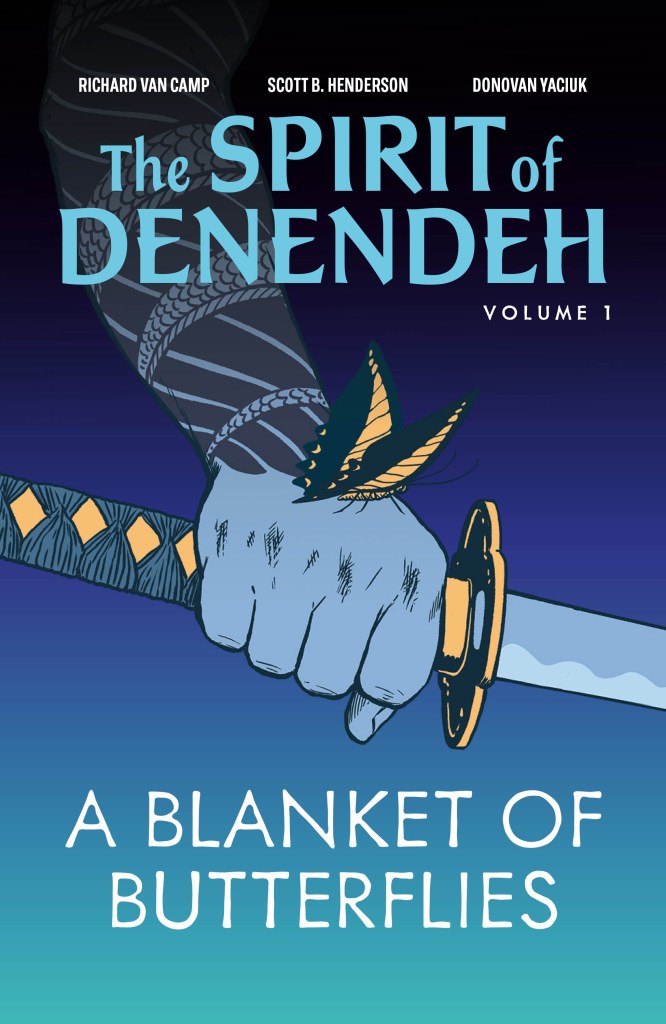
Kate’s Review: “A Blanket of Butterflies”

This post may contain affiliate links for books we recommend.  Read the full disclosure here.

Book: “A Blanket of Butterflies” by Richard Van Camp, Scott B. Henderson (Ill.), & Donovan Yaciuk (Ill.)

Publishing Info: HighWater Press, September 2022

Where Did I Get This Book: I received an eARC and a print copy from the publisher.

Where You Can Get This Book: WorldCat | HighWater Press | IndieBound

Book Description: No one knows how a suit of samurai armour ended up in the Fort Smith museum. When a mysterious stranger turns up to claim it, Sonny, a young Tłı̨chǫ Dene boy, is eager to help.

Shinobu has travelled to Fort Smith, NWT, to reclaim his grandfather’s samurai sword and armour. But when he discovers that the sword was lost in a poker game, he must confront the man known as Benny the Bank. Along the way, Shinobu must rely on unlikely heroes—Sonny, his grandmother, and a visitor from the spirit world. Together, they face Benny and his men, including the giant they call Flinch.

Will Shinobu be able to regain the lost sword and, with it, his family’s honour? Can Sonny and his grandmother help Shinobu while keeping the peace in their community?

Review: Thank you so, so much to Lohit Jagwani from HighWater Press for sending me an eARC and print copy of this graphic novel!

So today I am starting an ongoing series that is going to happen through the rest of September. I was approached by HighWater Press, and imprint of Portage & Main Press that focuses on Indigenous stories and voices by Indigenous authors, and it was decided that I would read and review a number of their graphic novels and middle grade books. So for the next few Thursdays there will be a decided theme, and honestly I am so excited to talk about and amplify these stories. So thanks again to Lohit Jagwani and to HighWater Press for this amazing opportunity! We are starting this series with “A Blanket of Butterflies” by Richard Van Camp, an author that I am familiar with due to not only the graphic novel collection “This Place”, but due to the picture books “Little You” and “We Sang You Home”, both huge hits with my toddler. I was very excited to check this graphic novel out, as I like Van Camp’s stories, and I was VERY intrigued by the premise of a Japanese man traveling to Canada to try and get his family Samurai armor back.

The plot to “A Blanket of Butterflies” is pretty simple and straightforward. A Japanese man named Shinobu has tracked down a family heirloom of Samurai armor and sword to a small community in the Northwest Territory in Canada, but when he arrives to reclaim it the sword has been lost in a poker game to a local heavy and his underlings. After he confronts Benny the Bank, he is beaten to a pulp, and is taken in by a boy named Sonny and his grandmother. I think that in a traditional Western tale, there are certain expectations as to how this would go, and I myself had my own thoughts on how this was all going to come together. But what I really loved about this book is that Van Camp takes these expectations and turns them on their head, instead focusing on Shinobu’s healing at the hands of Sonny’s ehtsi, and the things that he learns from her and how it shapes the rest of the story. I really liked how Van Camp did a lot of showing versus telling, whether it be regarding Shinobu’s tattoo’s to imply his dark past, or to use metaphorical visions in reference to the NWT’s involvement in the Manhattan Project. And, again, I enjoyed the more introspective way that the final conflict is approached, and how the examination of connections across families and cultures and the power of both can show similarities that may make us think twice about succumbing to more violent outcomes.

The most interesting part of this story, howeer, was the extensive bits of notes left at the end, talking about the experiences of Indigenous peoples in the modern and 20th century NWT, but also that of Japanese Canadians during WWII. I know a lot about the American Incarceration of Japanese Americans, but had no knowledge of the similar conditions of Japanese Canadians during this time. I really, really loved having the context there to explain how a Samurai armor and sword would be in a random possession of a Canadian person, and how the traumas of both Indigenous Canadians and Japanese Canadians intertwine a bit in this story because of colonialism, systemic disparities, and the Canadian government’s racist policies.

And finally, I really liked the artwork in this story. It has a realism to it, but it also has vibrant use of colors and tones, which makes it pop on the page.

Source: HighWater Press

I really liked this graphic novel. Richard Van Camp has a wide appeal across ages, and “A Blanket of Butterflies” moved me and explored other ways to solve conflicts for those who have been beaten down by conflict their whole lives. It was very enjoyable.

Rating 8: An informative but also moving story about connection, conflict, and shared thematic histories, “A Blanket of Butterflies” is a lovely graphic novel from Richard Van Camp.

Reader’s Advisory:

“A Blanket of Butterflies” is included on the Goodreads lists “Canadian Indigenous Books”, and “Graphic Novels & Comics By The Aboriginal, Indigenous, and Native Peoples of the World”.