Kate’s Review: “The Follower”

Book: “The Follower” by Kate Doughty

Publishing Info: Amulet Books, March 2021

Where Did I Get This Book: I received an eARC from NetGalley.

Book Description: A spine-tingling YA thriller, based on a still-unfolding true story
 
Instagram-famous triplets Cecily, Amber, and Rudy—the children of home renovation superstars—are ready for a perfect summer. They’ve just moved into the site of their parents’ latest renovation project when they begin to receive chilling messages from someone called The Follower. It soon becomes clear that this anonymous threat is more than a simple Internet troll, and he can’t wait to shatter the Cole family’s perfect veneer and take back what’s his. The Follower examines the implications of what it is to be watched in the era of social media fame—as well as the lies we tell and the lengths we’ll go to uphold a perfect image, when our lives depend on it.

Review: Thank you to NetGalley for providing me with an eARC of this novel!

One of the things that most caught my eye about “The Follower” by Kate Doughty is that in the description it says that it’s ‘based on a still-unfolding true story’. Sure, I’ve seen ‘based on a true story’ until the cows come home, but ‘still-unfolding true story’?

Like, WHAT? (source)

I did a little digging, and found out that this book takes some inspiration from the still unsolved “Watcher” case, in which a family moved into a house, and started getting harassing and threatening letters from an unknown person. This went on for awhile, the person was never caught, the family moved out. HERE is an article about it if you want to know more, and you probably do because it’s BANANAS. But ‘still-unfolding’ may be a little misleading, as it sounds like it’s stalled out and will probably never be solved. That said, “The Follower”, though taking inspiration, does not leave the reader hanging like reality did! In fact, it captured my attention and held it, making it so I had a really hard time putting this book down.

What I liked best about “The Follower” was how fast paced and generally addictive it was. We hit the ground running in the very first pages, and we never really paused to take a breather. This made for a book that I just kept on taking in, which was great in the moment. While it’s true that sometimes this fast paced momentum meant that we’d feel like we would trip through moments that needed maybe a little bit of a slow down, this only happened a couple times and the awkward pacing wasn’t too distracting. I also liked all three of the Cole Triplets, when I assumed that at least one of them was going to fall more by the wayside. But all three of them had well rounded personalities and motivations, as well as insecurities and flaws that made them feel human in spite of their ‘influencer’ lives. I especially liked how we got to explore Amber’s drive to be a fashion master while being plus sized, and how while she was hurt by how people (specifically her mother) think that she isn’t as valuable because of her body, she herself is happy with how she is because why shouldn’t she be? Also, the snippets of the social media comments were a fun way to show how their experience at the house and with The Follower was being perceived, and how when ‘fans’ on social media get whipped up into a frenzy of perceived wrongdoing/their own entitlement and or outrage, it can be REALLY damaging. I’m not going to say that it’s going so far as to be a critique of so called ‘cancel culture’, but I will say that it raises good points about how toxic fandoms can be towards living breathing people because of the faux intimacy of social media.

In terms of the actual mystery of who “The Follower” is, there were parts that were pretty obvious from the get go if you are familiar with tropes that go with these kinds of stories. If a character has a beloved pet, it will probably meet an untimely end. If things move around and no one fesses up to doing it, that may mean something more. The family can’t leave the house in which they are being terrorized because it’s a money pit. And so forth. It’s not BAD, per se, and these tropes are familiar and cozy in a way that means that they work just fine. But it also didn’t really make for many big surprises as the story went on. There were a number of moments that should have been ‘ah HA’ in nature, but because I knew the tropes and tricks from many stories before, almost all of them were not surprising, and even somewhat predictable. That being said, I’ve been consuming these kinds of stories for many years now, so for readers who are just getting started there could be things to discover.

“The Follower” was a comfortable read for me that gave me all the reliable elements that I like of a YA thriller. I look forward to seeing what Kate Doughty comes out with in the future, and will definitely be checking it out, whatever it may be.

Rating 7: Fast paced and a page turner, “The Follower” is a pretty satisfying thriller, if at times a predictable and reliant on tropes seen many times before.

Reader’s Advisory:

“The Follower” is pretty new and not featured on any Goodreads lists, but I think that it would fit in on “Books Involving Stalking”, and “Unwanted Attention”.

Find “The Follower” at your library using WorldCat, or a local independent bookstore using IndieBound!

Kate’s Review: “The Lost Apothecary”

Book: “The Lost Apothecary” by Sarah Penner

Publishing Info: Park Row, March 2021

Where Did I Get This Book: I received an eARC from the publisher via NetGalley.

Book Description: A female apothecary secretly dispenses poisons to liberate women from the men who have wronged them—setting three lives across centuries on a dangerous collision course

Rule #1: The poison must never be used to harm another woman.

Rule #2: The names of the murderer and her victim must be recorded in the apothecary’s register.

One cold February evening in 1791, at the back of a dark London alley in a hidden apothecary shop, Nella awaits her newest customer. Once a respected healer, Nella now uses her knowledge for a darker purpose—selling well-disguised poisons to desperate women who would kill to be free of the men in their lives. But when her new patron turns out to be a precocious twelve-year-old named Eliza Fanning, an unexpected friendship sets in motion a string of events that jeopardizes Nella’s world and threatens to expose the many women whose names are written in her register.

In present-day London, aspiring historian Caroline Parcewell spends her tenth wedding anniversary alone, reeling from the discovery of her husband’s infidelity. When she finds an old apothecary vial near the river Thames, she can’t resist investigating, only to realize she’s found a link to the unsolved “apothecary murders” that haunted London over two centuries ago. As she deepens her search, Caroline’s life collides with Nella’s and Eliza’s in a stunning twist of fate—and not everyone will survive.

Review: Thank you to Park Row and NetGalley for providing me with an eARC of this novel!

As a true crime fan worth her salt, I can tell you that a trend seen in many women killers is the use of poisons and toxins within their murders. You have Mary Anne Cotton, Belle Gunness, Giulia Tofana, and numerous others. Poison has been deemed a ‘woman’s murder weapon’ (though, to be fair, plenty of men have used it over the years as well), and while I haven’t done MUCH deep diving into it as a means of murder, I feel like I should. Even more so now that I’ve read “The Lost Apothecary” by Sarah Penner, a dual timeline and multi-perspective narrative that involves women who are wronged by the men in their lives, and an apothecary owner who creates poisons to take care of such issues. Because why do things the direct way when you can just dump a vial into someone’s food and call it a night?

“The Lost Apothecary” takes place in two different timelines. The first has two perspectives, those of Nella, the apothecary owner who mixes poisons for wronged or desperate women, and Eliza, a servant girl sent to the apothecary to fetch a poison meant to be ingested by her employer (at the behest of the woman of the house). The second is that of Caroline, an American woman who has travelled to London on what was meant to be her tenth anniversary trip, though she has just found out about her husband’s infidelity. What connects the two timelines and three perspectives is a glass vial, lost in time but found by chance by Caroline. Penner is very careful to find the strings and threads that bring the two stories and three characters together, and draws parallels between all of their lives as women who have been aggrieved in one way or another by the men in their orbits. In the modern day we see Caroline start to find the puzzle pieces about Nella and Eliza, and in the past we see the path that Nella and Eliza take that may lead to their undoing and doom. The mystery of what happened to Nella and Eliza as found out through their perspectives and that of what Caroline finds is a fun device that kept me interested, especially as things in the modern day started to harken back to some of the, shall we say, ‘themes’ of the 18th century plot line. I don’t want to spoil anything, but let’s just say that poison is timeless…. On top of all that, it did mostly keep me guessing until the end, even if there were some convenient moments that felt a little forced or hard to believe. But I was having enough fun that I could forgive it. I also just liked learning about all the women, and found all of them pretty believable in their portrayals.

But what I liked most in “The Lost Apothecary” is how these two timelines slowly unfolded not only the fates of a long lost poison shop and those who were involved with it, but how they had similar grievances across centuries about abusive and toxic men and misogyny, and what that does to women. While it’s true that the degrees of the shitbird men in this book, especially the ones that have impacted the three main character’s lives, run a gamut, we still see how even in a 21st century setting a woman can have her life upended and set adrift because of power dynamics that society has set in place in terms of expectations on how a man and a woman should be, especially in a marriage. I felt for Caroline, not just because of her husband’s transgressions, but because of how much she sacrificed for him and their relationship all because she had been told all her life that was just what you do. And while Caroline may not be turning to poison as a solution, back in the 18th century Penner paints a very clear picture as to why women from all backgrounds may see poison as the only way that they can escape a really terrible situation when it comes to the men in their lives. Some of the stories that we learn of are truly horrifying, and it makes Nella’s shop seem more like a place for justice for the forgotten, instead of a place where murderers gather their wares. I got a fun and cathartic thrill, which was ultimately what I wanted from this book.

“The Lost Apothecary” is a fun historical mystery thriller, and one that I would definitely recommend to those who want a little nasty catharsis when it comes to patriarchy smashing.

Rating 8: A wicked and satisfying historical thriller, “The Lost Apothecary” is a slow burn of a cathartic tale of revenge against the ever present patriarchy.

Reader’s Advisory:

“The Lost Apothecary” is included on the Goodreads lists “Dual Time Mysteries”, and “[ATY 2021] – Female Villains or Criminals”.

Find “The Lost Apothecary” at your library using WorldCat, or a local independent bookstore using IndieBound!
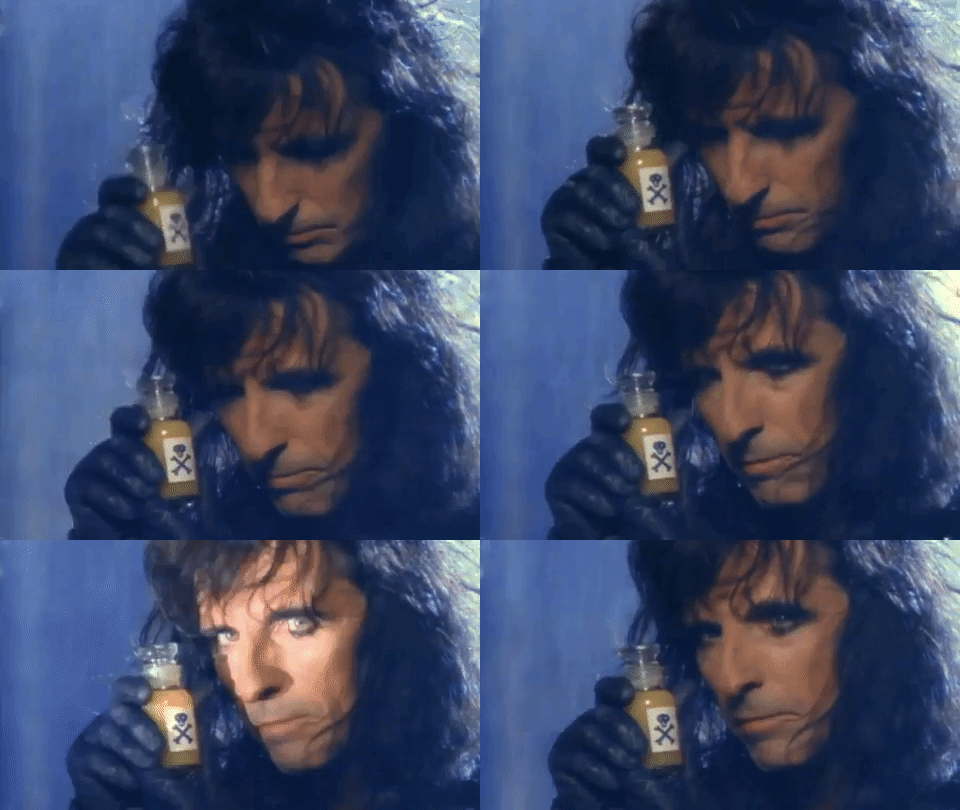
Kate’s Review: “The Last Secret You’ll Ever Keep”

Book: “The Last Secret You’ll Ever Keep” by Lauria Faria Stolarz

Publishing Info: Wednesday Books, March 2021

Where Did I Get This Book: I received an eARC from NetGalley.

Book Description: Bestselling author Laurie Faria Stolarz returns with a thrilling novel where an eighteen-year-old girl’s search for answers lands her in one of the most terrifying situations imaginable.

Four days…Trapped in a well, surrounded by dirt, scratching at the walls trying to find a way out. Four days of a thirst so strong, that when it finally rains, I drink as much as possible from the dripping walls, not even caring how much dirt comes with it.

Six months… Since my escape. Since no one believed I was taken to begin with – from my own bed, after a party, when no one else was home… Six months of trying to find answers and being told instead that I made the whole incident up.

One month… Since I logged on to the Jane Anonymous site for the first time and found a community of survivors who listen without judgment, provide advice, and console each other when needed. A month of chatting with a survivor whose story eerily mirrors my own: a girl who’s been receiving triggering clues, just like me, and who could help me find the answers I’m searching for.

Three days…Since she mysteriously disappears, and since I’m forced to ask the questions: will my chance to find out what happened to me vanish with her? And will I be next? 

Review: Thank you to NetGalley for providing me with an eARC of this novel!

Back at the beginning of 2020 I reviewed the book “Jane Anonymous”, in which a kidnapping survivor has to readjust to her life after returning home. I thought that it did a great job of combining legitimate thrills with a realistic and responsible take on trauma. So when I saw that Laurie Faria Stolarz had written a new book within that same universe, “The Last Secret You’ll Ever Keep”, I was pretty interested! I really like the idea of a series that gives stories to different characters who are on the Jane Anonymous blog and support chat board that was established at the end of the first book, so I was really eager to jump into this one to see what story was up next. But unfortunately, this book didn’t live up to the high hopes I had for it.

I do want to say right off the bat that I think that Stolarz does her due diligence to portray mental illness and the effects of trauma on a person in realistic and non-romanticized ways. Terra has two big, horrible things that she has to deal with: the traumatic death of her parents, who died in a house fire that she survived, and being kidnapped and held captive for days, only to escape and have people not believe her. These two things would of course weigh on anyone, and the crap that Terra has to deal with, be it the disassociation, the PTSD, the fugue states, etcetera is only exacerbated by people who either can’t handle her very difficult behavior, or are openly hostile towards her or wary of her. Sometimes I think that mental illness can be portrayed in ways that doesn’t do it justice in the sense that it can be VERY hard for the person suffering, and it can be constant and repetitive. That was all well done. The problem, however, is that when you have a character going through these kinds of things in realistic ways, it can make for a plot that feels like its spinning its wheels or repeating itself. “Jane Anonymous” was able to balance both the trauma themes and the plot progression, so it was disappointing that this one couldn’t quite manage it.

And in terms of the plot progression, we have two mysteries at hand. The first is the mystery that is always in the air, and that is what happened to Terra when she was abducted, or if she was abducted at all. As the story goes on Terra has pretty much stopped trying to convince people of what happened to her, as she is met with those who think she’s flat out lying, or those who think that her previous trauma of losing her parents has led her to a psychotic break of sorts. There are moments of her looking for proof, and scenes of her maybe seeing clues that she is still being watched, though she lets it fall by the wayside a bit because she just doesn’t really know how to approach it lest she be met with derision. The other, more active mystery is what happened to her online friend Peyton, someone she met on the Jane Anonymous support boards, who has been talking about her own trauma of being kidnapped, and is worried that her kidnapper is stalking her again as well. After Peyton disappears, Terra is motivated to try and find her, and therein perhaps find the man who took her, as their stories have similarities. The problem with this storyline is that the action doesn’t pick up until we are more than halfway done with the book. I kept waiting for it and waiting for it, as it’s in the description that this is the main plot line, but it was very late, in my opinion a little too late in the progression. And by the time we do get to the big climax, which I won’t spoil here, there were things that just felt wrapped up a little too quickly, or too conveniently, and then the plot lingered a little too long post climax. Ultimately, it felt muddled and haphazard.

Given that I still think that there is a lot of potential for more books within the “Jane Anonymous” world that looks at different survivors and their stories, I’m not writing off the series as a whole. But “The Last Secret You’ll Ever Keep” was a bit of a let down that couldn’t quite find a good balance between important messages and captivating story.

Rating 5: Though I had hopes for this sequel to “Jane Anonymous”, “The Last Secret You’ll Ever Keep” was a repetitive and muddled follow up. That said, the candid look at how difficult mental illness and trauma could be was well handled.

Reader’s Advisory:

“The Last Secret You’ll Ever Keep” is included on the Goodreads lists “Sweet Vicious”, and “YA Suspense/Thriller/Mystery”.

Find “The Last Secret You’ll Ever Keep” at your library using WorldCat, or a local independent bookstore using IndieBound!
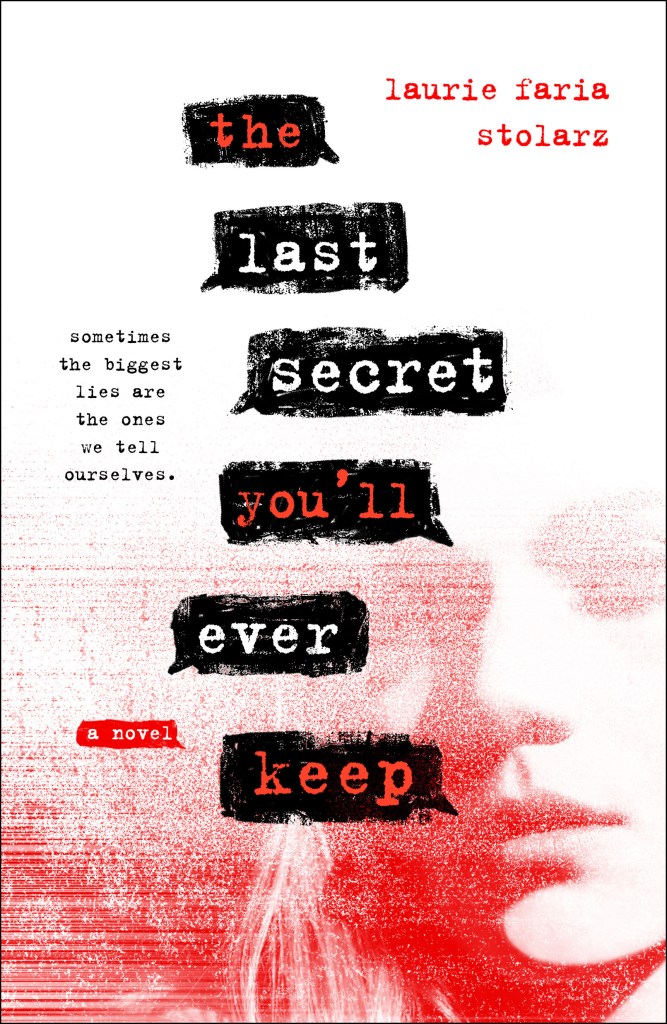
Previously Reviewed: “Jane Anonymous”

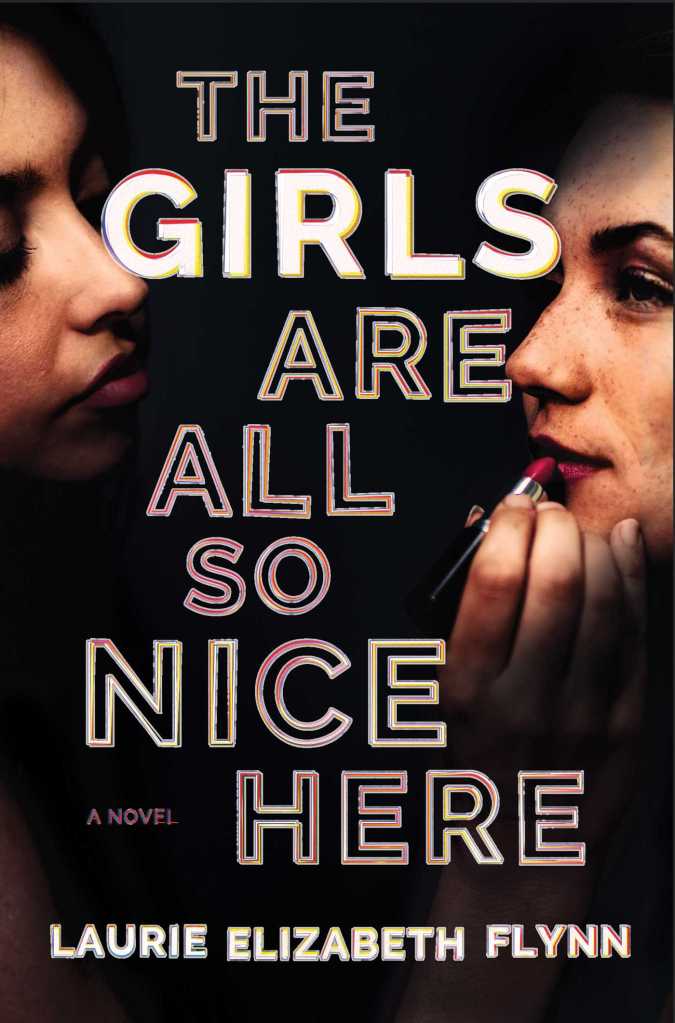
Kate’s Review: “The Girls Are All So Nice Here”

Book: “The Girls Are All So Nice Here” by Laurie Elizabeth Flynn

Publishing Info: Simon & Schuster, March 2021

Where Did I Get This Book: I received an eARC from NetGalley.

Book Description: Two former best friends return to their college reunion to find that they’re being circled by someone who wants revenge for what they did ten years before—and will stop at nothing to get it—in this shocking psychological thriller about ambition, toxic friendship, and deadly desire.

A lot has changed in the years since Ambrosia Wellington graduated from college, and she’s worked hard to create a new life for herself. But then an invitation to her ten-year reunion arrives in the mail, along with an anonymous note that reads “We need to talk about what we did that night.”

It seems that the secrets of Ambrosia’s past—and the people she thought she’d left there—aren’t as buried as she’d believed. Amb can’t stop fixating on what she did or who she did it with: larger-than-life Sloane “Sully” Sullivan, Amb’s former best friend, who could make anyone do anything.

At the reunion, Amb and Sully receive increasingly menacing messages, and it becomes clear that they’re being pursued by someone who wants more than just the truth of what happened that first semester. This person wants revenge for what they did and the damage they caused—the extent of which Amb is only now fully understanding. And it was all because of the game they played to get a boy who belonged to someone else, and the girl who paid the price.

Alternating between the reunion and Amb’s freshman year, The Girls Are All So Nice Here is a shocking novel about the brutal lengths girls can go to get what they think they’re owed, and what happens when the games we play in college become matters of life and death.

Review: Thank you to NetGalley for providing me with an eARC of this novel!

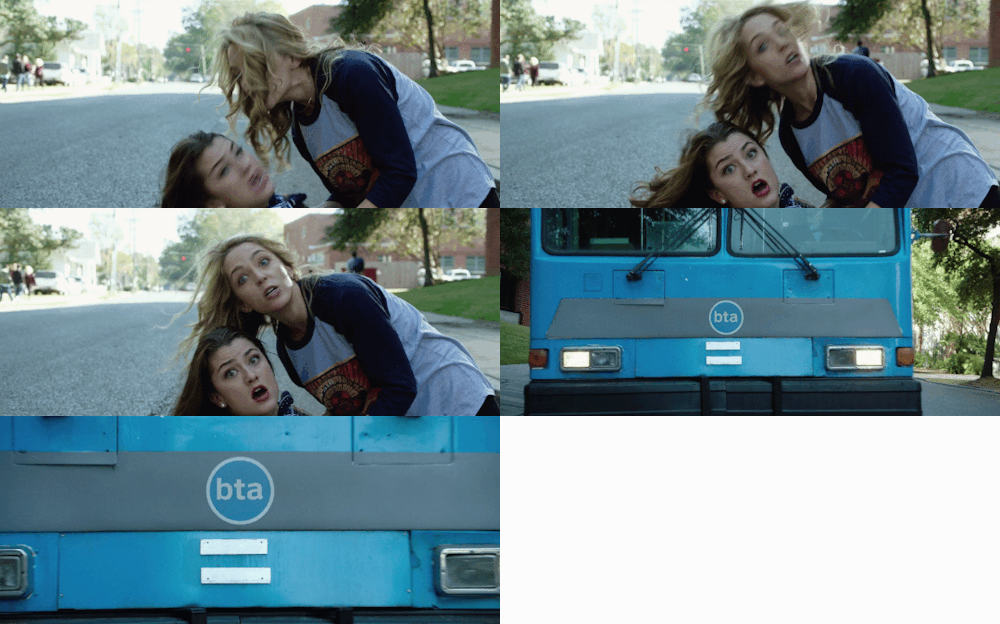
Having gone to a large public university (two, really, as I transferred after freshman year from one U of MN campus to another) and having only lived in the dorm for one year, I didn’t really find myself caught up in any dorm drama or scandals. Perhaps my dorm was just boring, or perhaps I wasn’t looking hard enough. The closest I got was having a roommate with whom I initially bumped heads (but even that doesn’t really count because now she’s one of my dearest friends). But I guess that I can believe that such things do happen. And “The Girls Are All So Nice Here” by Laurie Elizabeth Flynn is steeped, and I mean STEEPED, in the poisonous shenanigans that some college kids get up to while living on campus. I’ll admit that I was just picturing Danielle from “Happy Death Day” as I read the description. And while I wasn’t too far off, it didn’t rise to the occasion that I was anticipating.

Danielle and Tree play my expectations when they’re smacked back to reality. (source)

“The Girls Are All So Nice Here” has some pretty good hits, and a few glaring misses. I’ll start with the hits, however, as there were definitely things that worked really well. We have ourselves a mystery at hand. Our narrator, Amb, has done her best to leave her college days behind and forget about them. She has a kind husband, lives in New York, and has cultivated a scandal free life. But when her college reunion looms, she starts getting strange messages from an anonymous person saying that they need to ‘talk about what they did that night’. The story is Amb going back to the school to find out who is sending the messages, and we as the readers slowly get to find out what it is she did, through flashbacks and the present day reunion weekend. It’s a device that we’ve seen before, but it works well here as Flynn carefully peels back the layers of Amb’s freshman year, and her relationships. Specifically those she had with her then best friend Sully, the resident mean girl, and Flora, Amb’s sweet and well loved roommate. I will say that what we find out is pretty damn upsetting, with mean girl bullshit spiraling out of control, jealousy and pettiness getting the best of people, and the entitlement thinking one deserves more than they have leading to very bad things. I’m being vague deliberately, because the plot itself is well done. When I thought a character couldn’t stoop lower, she did. When I thought that a twist was one thing, it ended up being something else. A couple reveals felt a bit convenient, but ultimately I was enjoying the ride enough that it didn’t put me too off.

What didn’t work as well for me were the characterizations of the various players in our toxic soup of a story. I definitely understand having garbage people being at the forefront in a story like this, and I don’t have a problem with following an unreliable narrator who is also an unlikable and nasty person. But I think that if you are going to do that, I would like a little bit of exploration as to what it is that makes them that way, or at least make them wickedly entertaining in their nastiness. With Amb, we get a lot of telling that she is insecure, that she is jealous of Flora and how easy it is for ‘girls like her’, but there wasn’t really much in Amb’s background that we see that made me fully see the complexities that go with this kind of dangerous coveting and jealousy that leads to very bad things. Sully, too, is just nasty with no reason or exploration into her nastiness. We just see she’s horrible and that’s all we get from her, and she isn’t interesting enough to even make it fun to hate her. Perhaps one would think that Flora may get a bit of depth here, given that she is the one who is hurt the most by Amb and Sully, but no. Flora is your two dimensional really nice girl that is there to be a martyr. Even when she talks with Amb or other characters talk about her with Amb in the past and the present, all we know about Flora is SUPER sweet which, sure, makes your blood boil when Amb and Sully treat her like crap. But that only gets me so far.

So while the plot was engrossing and had some genuine tricks up its sleeves, “The Girls Are All So Nice Here” was a fairly run of the mill thriller about women behaving badly. It gets the job done, but it probably could have done more.

Rating 6: A twisty thriller with some fun surprises, “The Girls Are All So Nice Here” will keep you guessing, but doesn’t have anyone to root for.

Reader’s Advisory:

“The Girls Are All So Nice Here” is included on the Goodreads list “Mystery & Thriller 2021”.

Find “The Girls Are All So Nice Here” at your library using WorldCat, or a local independent bookstore using IndieBound!
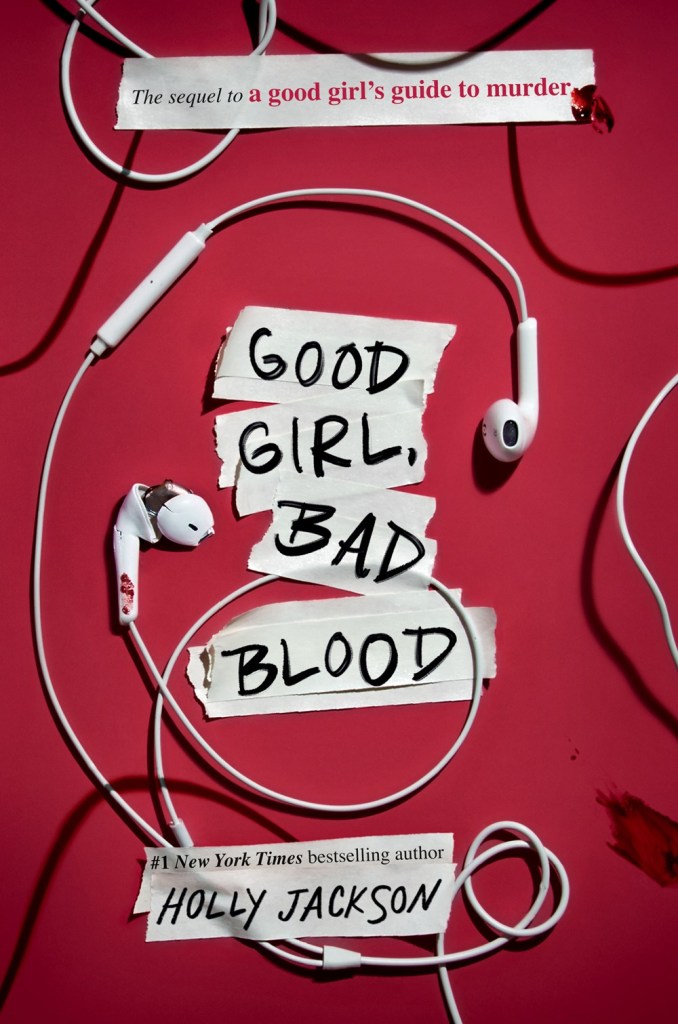
Kate’s Review: “Good Girl, Bad Blood”

Book: “Good Girl, Bad Blood”(A Good Girl’s Guide to Murder #2) by Holly Jackson

Publishing Info: Delacorte Press, March 2021

Where Did I Get This Book: I received an eARC from NetGalley.

Book Description: The highly anticipated sequel to the instant New York Times bestseller, A Good Girl’s Guide to Murder! More dark secrets are exposed in this addictive, true-crime fueled mystery.

Pip is not a detective anymore. With the help of Ravi Singh, she released a true-crime podcast about the murder case they solved together last year. The podcast has gone viral, yet Pip insists her investigating days are behind her.

But she will have to break that promise when someone she knows goes missing. Jamie Reynolds has disappeared, on the very same night the town hosted a memorial for the sixth-year anniversary of the deaths of Andie Bell and Sal Singh. The police won’t do anything about it. And if they won’t look for Jamie then Pip will, uncovering more of her town’s dark secrets along the way… and this time everyone is listening. But will she find him before it’s too late?

Review: Thank you to NetGalley for providing me with an eARC of this novel!

Perhaps you remember that last year I greatly enjoyed the YA mystery “A Good Girl’s Guide to Murder” by Holly Jackson, and it even made my Top Ten Books of 2020. I also mentioned in that review that I was super stoked for the sequel. Well folks, the time has arrived. “Good Girl, Bad Blood” is here.

My first highly anticipated thriller book of the year! (source)

We pick up not to far after we left off in “A Good Girl’s Guide to Murder”. Pip is no longer actively seeking out mysteries to solve, instead working on a podcast about the Andie Bell/Sal Singh case, and attending the trial of serial rapist Max Hastings. Pip, however, is drawn into helping her friend Connor, whose brother has gone missing, and dedicates a new season of her podcast to her investigation. What I liked most about “Good Girl, Bad Blood” is that while Jackson could have set Pip up to be a modern day Nancy Drew who is just going to solve cases and move on to the next, instead we get a front seat at the physical, mental, and emotional labor that she has to endure to help those she cares about. Well, and to give her that purpose that she felt she had in the first book. It’s an angle that may seem obvious, but Jackson does it in a way that makes you really start to wonder how much of this is all worth it as Pip gets sucked into another case, and risks her safety in trying to solve it. I didn’t expect it to go in this direction, and I was happy that it did. Jackson also takes this time to examine the weaknesses in our current law and order systems, as the police in town aren’t really taking Jamie’s missing status seriously, and the rape trial of Max Hastings follows a lot of the same ‘he said, she said’ injustices we see in real life. All of these things combine that leaves Pip in some pretty bleak places as the story goes on, and since there is going to be another book in the series, I want to see how Jackson tackles this for our imperfect heroine.

In terms of the plot itself, “Good Girl, Bad Blood” has a lot of the same strengths as the first book. I still really like Pip, and I loved seeing her relationship with Ravi Singh evolve and flourish (cutest couple ever). I also liked getting to know some of her other friends a little bit better, like Connor. As to the mystery, once again we got a taut and suspenseful thriller, and we get to see everything laid out in a cohesive way through podcast transcripts and Pip’s notes. It’s a much better way to keep everything organized without making any of the characters seem like they’re reciting facts in a robotic way, and I really enjoy it. I will say that there were a couple of trip ups for me, however. The first was that a couple of red herrings tossed out there didn’t really get resolved as red herrings or not. Like, I think that they were? But it felt a little too touched upon in the narrative to just be left behind without explanation. That’s nitpicky. The other issue isn’t as such, in that one of the big puzzle pieces that ties everything together wasn’t even hinted at until well into the last fourth of the book. It felt sort of like a deus ex machine, but for a plot point. But that said, I was pretty much kept guessing until the end. And what an ending it was. It has set us up for the next book in the series. And now, once again, I am waiting anxiously to see where Pip can go next.

“Good Girl, Bad Blood” continues a fun series that is on my must read list going forward. If you haven’t tried these books yet and like a good YA mystery/thriller, you absolutely need to pick them up.

Rating 8: A twisty and suspenseful sequel, “Good Girl, Bad Blood” has a couple of stumbles, but is overall a great follow up to a runaway hit!

Reader’s Advisory:

“Good Girl, Bad Blood” is included on the Goodreads lists “Young Adult Crime/Murder Mysteries”, and “Fiction Books Featuring Podcasts”.

Find “Good Girl, Bad Blood” at your library using WorldCat, or a local independent bookstore using IndieBound!
Previously Reviewed: “A Good Girl’s Guide to Murder”

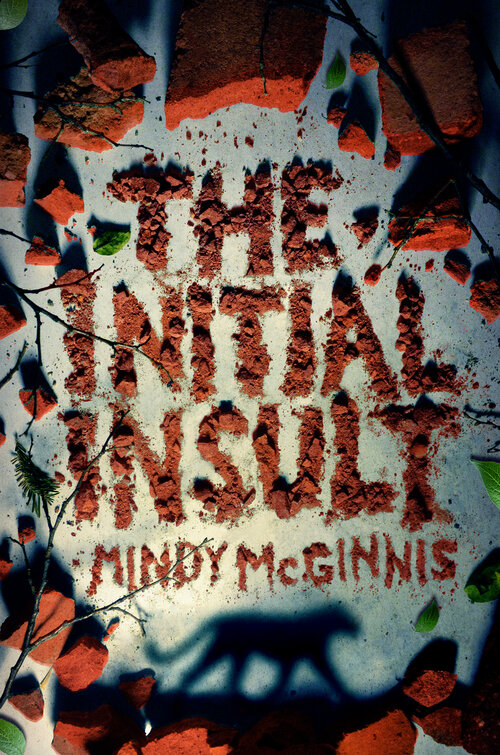
Kate’s Review: “The Initial Insult”

Book: “The Initial Insult” by Mindy McGinnis

Publishing Info: Katherine Tegen Books, February 2021

Where Did I Get This Book: I received an eARC from NetGalley.

Book Description: Welcome to Amontillado, Ohio, where your last name is worth more than money, and secrets can be kept… for a price. Tress Montor knows that her family used to mean something—until she didn’t have a family anymore. When her parents disappeared seven years ago while driving her best friend home, Tress lost everything. She might still be a Montor, but the entire town shuns her now that she lives with her drunken, one-eyed grandfather at what locals refer to as the “White Trash Zoo,” – a wild animal attraction featuring a zebra, a chimpanzee, and a panther, among other things.

Felicity Turnado has it all – looks, money, and a secret that she’s kept hidden. She knows that one misstep could send her tumbling from the top of the social ladder, and she’s worked hard to make everyone forget that she was with the Montors the night they disappeared. Felicity has buried what she knows so deeply that she can’t even remember what it is… only that she can’t look at Tress without having a panic attack.

But she’ll have to. Tress has a plan. A Halloween costume party at an abandoned house provides the ideal situation for Tress to pry the truth from Felicity – brick by brick – as she slowly seals her former best friend into a coal chute. With a drunken party above them, and a loose panther on the prowl, Tress will have her answers – or settle for revenge.

In the first book of this duology, award-winning author Mindy McGinnis draws inspiration from Edgar Allan Poe and masterfully delivers a dark, propulsive mystery in alternating points of view that unravels a friendship . . . forevermore.

Review: Thank you to NetGalley for providing me with an eARC of this novel!

As I’ve mentioned before, I really enjoyed Edgar Allan Poe and his poems and short stories. From the sad to the dream like to the macabre, the guy always has something that is going to connect with me. It’s been a long time since I read “The Cask of Amontillado”, the short story in which a man slowly seals up his rival into a tomb brick by brick, but I do remember how much it unsettled me the first time I read it back in middle school. When I head that Mindy McGinnis had written a new YA novel that took that story and updated it to be between two teenage girls, I was interested, but wondered how it could be done! But I was absolutely game to give it a try.

Taking a story like “The Cask of Amontillado” and turning it into a thriller/horror about two teenage girls whose friendship has gone bad is a lofty goal to set for oneself, but McGinnis rises to the occasion and has created a creepy and suspenseful story. We get the perspectives of both Tress, the one with the bricks, and Felicity, the one in the chains, and see how their relationship has gotten to this point. I really enjoyed both voices of each girl, and McGinnis was very careful to show that each of them had their own roles to play in the disintegration of their friendship. She doesn’t really give either of them a pass, but is also very empathetic to each of them in their struggles. It made it easy to both feel for them, and hate them, depending on the moment of the story. But it was the third perspective that I didn’t expect that kind of worked the best for me, and that is of the Panther that Tress’s grandfather Cecil owns, who has escaped from the exotic zoo. It’s this element that makes “The Black Cat” our other most prominent Poe work, and I thought it upped the ante, but also added an experimental and all knowing third perspective to bring in other, dreamy elements.

I WILL say, and I never thought I’d ever say this given how much I like Poe, that there was a little too much Poe stuffed into this book. It’s one thing when you are throwing references with names, vague similarities between the source content and the interpretation, and a main plot that’s paying homage. But McGinnis put a few too many plot points in that were a bit overwhelming. If it had just been “The Cask of Amontillado” and “The Black Cat” with a few other nods I think it would have been fine. But we also get a whole “The Mask of Red Death” subplot which feels underexplored because there is so much else going on, and some plot points from “Hop Frog” thrown in as well that are also superfluous. It just made things seem a bit more bloated than they needed to be, especially since there is, indeed, going to be another book in the series. Could these things have been saved for that? Or will there be even MORE underutilized opportunities with some great source material?

But yes, having said that, “The Initial Insult” was a lot of fun, and while I’m curious about how a sequel is going to work (given that things seemed pretty final in some regards), I have a couple of theories as to what McGinnis may be up to. And even if those theories don’t pan out, I’m definitely anticipating what comes next.

Rating 8: A creative modern day interpretation of an Edgar Allan Poe classic, “The Initial Insult” sometimes does too much, but is entertaining and suspenseful nonetheless.

Reader’s Advisory:

“The Initial Insult” is included on the Goodreads list “Books Influenced by Edgar Allan Poe”.

Find “The Initial Insult” at your library using WorldCat, or at a local independent bookstore using IndieBound!
Kate’s Review: “What She Found in the Woods”

Book: “What She Found in the Woods” by Josephine Angelini

Publishing Info: Sourcebooks Fire, December 2020

Where Did I Get This Book: I received an eARC from NetGalley.

Book Description: Running from a scandal at her New York private school, Magdalena heads to her family home to recover under the radar.

Over-medicated and under-confident, she’s fearful she’ll never escape her past.

Until she meets Bo out hiking. Wild, gorgeous and free, he makes her believe she might finally be able to move on.

But when a mutilated body is discovered in the woods, Magdalena realises she can’t trust anyone. Not even herself.

Review: Thank you to NetGalley for providing me with an eARC of this novel!

In a moment of ‘why did no one tell me this’, last November I was looking at my Highlights list for December, only to discover that one of the books I had highlighted had been postponed until Spring of this year. So I needed to go looking for a new title that I could highlight, and hit a bunch of lists for December publications. It doesn’t happen often, but when it does, I panic! But I was happy when I saw “What She Found in the Woods” by Josephine Angelini, as the description was checking off a LOT of my boxes. A privileged girl running from a private school scandal, a strange boy who may be hiding something, and dead bodies popping up in the wilderness, my gosh, what a treasure trove! I was lucky enough to get a copy via NetGalley, and dove in hoping for a fun read. But sadly, checked boxes or no, “What She Found in the Woods” ended up not gelling for me.

While it certainly has a promising premise and it did have some moments of tension because of a solid build up, “What She Found in the Woods” just didn’t thrill me the way that I wanted it to. The first issue I had was the characters themselves. Magdalena, our protagonist, had a well plotted slow burn of a reveal to her past, but I feel like there was too much piled on once we got past the first initial ‘bad thing’ that was revealed just to make it ‘extra bad’. We really didn’t need the additional issues after the first one (being vague as best as I can here), as it felt like too much to me. There was also a huge reliance on mental health problems as plot progression, or being used as potential foreshadowing, which doesn’t really count as character development, and is a bit problematic as it’s seen as a weakness or potential for violent behavior. And then there is Bo, the mysterious Wild Boy who lives in the wilderness with his family. I thought that Angelini did address how his social skills may not be up to par, though he felt a little manic pixie dream boy for a good amount of the time. There was also a glossed over ‘oh he’s going to go to college’ aspect to his storyline which didn’t feel very thought out, as how? How is he going to go to college? There are so many hoops that he would have to jump through within the context of him going that just saying ‘oh he’s going to’ doesn’t really cut it.

On top of that, the story itself wasn’t too thrilling for me. I wasn’t invested in who was maybe killing people in the woods, as to whether it was Bo or a mysterious entity known as Dr. Goodnight. The commentary on addiction and poverty was interesting enough, but ultimately it barely scratched the surface and the bigger priority was whether or not the instalove between Magdalena and Bo was going to work out, either because of her mental issues, or his potential for having a role in what was happening in the woods. By the time we got to the big climax, I just kind of wanted to be done for the sake of being done.

I’d been really struggling with if I wanted to go into spoilers for this review, just because those who may want to read it should go in without having to worry about having aspects of the mystery ruined. But one of my biggest gripes outside of ‘it just didn’t thrill me’ is tangled with a pretty big spoiler. But I think that I need to address it, so, as always, here is your

So, one of the big questions in this mystery is why Bo and his family have been living in the woods off the grid, and why they are so paranoid about Bo being discovered, and why he has to pretty much say goodbye to them once he leaves the woods for a college life. It is eventually revealed that Bo’s father Ray was an anesthesiologist who started doing a Dr. Kevorkian kind of service, where people who were dying and in agony wanted him to euthanize them to end their suffering. I actually liked that this book brought up issues of euthanasia and bodily autonomy, and whether or not people should have the right to decide when they end their life with the assistance of those who can make it painless and with dignity. This is the worst thing that he has done in this book (so this is the big spoiler: he is NOT Dr. Goodnight), a string of acts that are illegal, but seen as a huge grey area depending on whom you speak to. SO THAT SAID, since he is eventually shown as a medical professional who was participating in illegal, but morally complicated, acts, and wasn’t actively seeking out to cause pain and suffering to others, it felt COMPLETELY incongruous when in the story he encourages Magdalena to go off her very complex prescription regimen when that is SO dangerous to do. When it was possible that he was doing that as a sadist, I was thinking ‘okay, maybe’, but when it’s revealed that no, he’s NOT a sadist, that whole aspect just felt like either a lazy red herring (which IS incredibly damaging, as even though Magdalena eventually gets back on medication that she needs, it’s mentioned in passing, which doesn’t stand out), or a complete disservice to the character in that it just doesn’t mesh with who we eventually see him as.

“What She Found in the Woods” really had potential on paper, but just didn’t live up to it. I think that if I knew someone was just starting to dabble in unreliable narrator tropes in their stories I could see myself recommending it, but there are many that are better executed.

Rating 4: A promising concept to be sure, but a ho hum and at times uneven execution.

Reader’s Advisory:

“What She Found in the Woods” isn’t on many specific Goodreads lists, but I think that it would fit in on “YA Involving Mental Health Issues (2000-Present)”.

Find “What She Found in the Woods” at your library using WorldCat, or at a local independent bookstore using IndieBound!

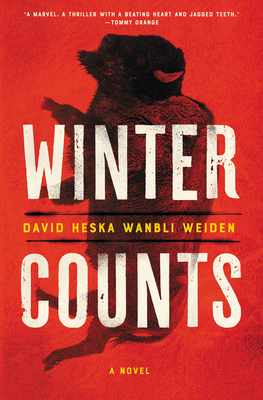
Kate’s Review: “Winter Counts”

Book: “Winter Counts” by David Heska Wanbli Weiden

Publishing Info: Ecco, August 2020

Where Did I Get This Book: I own it.

Book Description: A groundbreaking thriller about a vigilante on a Native American reservation who embarks on a dangerous mission to track down the source of a heroin influx. 

Virgil Wounded Horse is the local enforcer on the Rosebud Indian Reservation in South Dakota.  When justice is denied by the American legal system or the tribal council, Virgil is hired to deliver his own punishment, the kind that’s hard to forget. But when heroin makes its way into the reservation and finds Virgil’s nephew, his vigilantism suddenly becomes personal. He enlists the help of his ex-girlfriend and sets out to learn where the drugs are coming from, and how to make them stop.

They follow a lead to Denver and find that drug cartels are rapidly expanding and forming new and terrifying alliances. And back on the reservation, a new tribal council initiative raises uncomfortable questions about money and power. As Virgil starts to link the pieces together, he must face his own demons and reclaim his Native identity. He realizes that being a Native American in the twenty-first century comes at an incredible cost.

Winter Counts is a tour-de-force of crime fiction, a bracingly honest look at a long-ignored part of American life, and a twisting, turning story that’s as deeply rendered as it is thrilling.

Review: While I am certainly an aficionado of the thriller genre, as a genre it can span over a number of sub genres. I tend to not really go as much into the literary side of things, nor do I really tread towards the incredibly dark. And given that “Winter Counts” by David Heska Wanbli Weiden is both of those things, I was stretching my preferred subgenre muscles a bit. But I’m also always game to read books by Indigenous authors, and when I read up on this one it captured my interest. One birthday gift later, and I owned it, though it sat on the shelf awhile. I eventually picked it up. Almost immediately it went dark and bleak. But it also snagged me in even as I was immediately uncomfortable.

Our main character is Virgil Wounded Horse, a Lakota man living on the Rosebud Indian Reservation in South Dakota. He’s made his way as an enforcer who will dole out justice for those who cannot get it by other means, be it due to corruption, apathy, or both from local law enforcement and tribal governance. Right off the bat we have a trigger warning, as he beats the absolute shit out of a child rapist. This is just the beginning of the violence that is within this book, but it never feels exploitative, nor does it feel like it’s ever too much. “Winter Counts” doesn’t shy away from the very desperate circumstances on the reservation, and what those circumstances can drive people to do just to survive, and how predatory people can take advantage of it. While I feel like a character like Virgil in many other settings (especially within certain tropes of the thriller genre) may come off as morally ambiguous (and in some ways he kind of does here), overall Virgil never feels like an antihero, probably because of the environment he’s operating within. This book brings up a lot of hard realties and truths about 21st century life for Indigenous people both on and off reservations, and it isn’t limited to drug cartels. The fallout of racism, colonialism, and extended genocide by the American Government are throughout this book

The mystery of who is behind the cartel and drug activity on the reservation is the main thread of this story, given that Virgil’s nephew Nathan gets caught up in it after almost fatally OD’ing on some of the stuff brought in. Nathan and his ex girlfriend Marie set out to find the culprits, Virgil doing so because it’s personal and Marie acting as a guiding moral voice towards what it does to the Native community as a whole. While at times I wasn’t as interested in the ‘who’ of the whodunnit, it wasn’t because I didn’t want to know, it was more because the other themes of the story and the inner conflicts of Virgil, Marie, and others were more interesting. Marie is more idealistic and social justice driven, while Virgil is just trying to survive, and these two motivations sometimes bumped against each other, though thankfully never led to questions of who was ‘right’, as both are in their own ways. But that said, I was surprised by the ultimate solution to the mystery, even if the mystery itself took a bit of a backseat to other interests in my reading motivation.

And yeah, like I said, this is a DARK book. It took me a little while to get through it just because the heaviness of it all could be a bit much. But it’s also compelling and powerful, and totally worth it. Weiden kept me coming back for more, even if I had to pace myself a bit to get there. Just know that there are many triggering themes within its pages.

“Winter Counts” is a bold book from a striking new voice in thriller fiction. If you’re looking for a new twisty thriller and can handle the darkness, I definitely suggest you check it out.

Rating 8: Dark, compelling, and powerful, “Winter Counts” is a difficult read at times, but worth it to be sure.

Reader’s Advisory:

“Winter Counts” is included on the Goodreads lists “Popsugar 2021 #16: A Book by an Indigenous Author”, and “2020 Adult Debut Novels by Authors of Color”.

Find “Winter Counts” at your library using WorldCat, or a local independent bookstore using IndieBound!
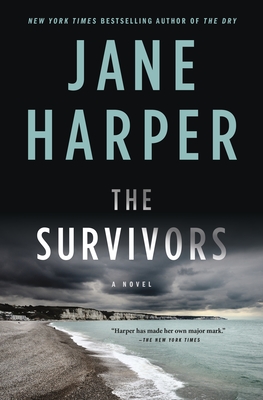
Kate’s Review: “The Survivors”

Book: “The Survivors” by Jane Harper

Publishing Info: Flatiron Books, February 2021

Where Did I Get This Book: I received an eARC from NetGalley.

Book Description: Coming home dredges up deeply buried secrets...

Kieran Elliott’s life changed forever on the day a reckless mistake led to devastating consequences. The guilt that still haunts him resurfaces during a visit with his young family to the small coastal community he once called home. Kieran’s parents are struggling in a town where fortunes are forged by the sea. Between them all is his absent brother, Finn. When a body is discovered on the beach, long-held secrets threaten to emerge. A sunken wreck, a missing girl, and questions that have never washed away… 

Review: Thank you to NetGalley for providing me with an eARC of this novel!

Someday, when the world isn’t dealing with a pandemic and I don’t have to worry about traveling with a little one, I have every intention of going to Australia. My time in the Sydney airport on the way to New Zealand doesn’t count. When I think about a trip there my mind hovers in big cities like Sydney, and also thinks about The Outback, but I’d do well to remember that there are also oceanside towns, which I tend to love no matter what the continent. I was reminded of such facts as I read “The Survivors” by Jane Harper, her newest mystery, another standalone that’s separate from the Aaron Falk Series (and I’m not sure when we’re getting another one of those, but patience is a virtue, I guess? So I’m told, I wouldn’t know).

One of the common strengths of Harper’s stories is the ability she has to bring out strong atmosphere and sense of place, and “The Survivors” is no different. Evelyn Bay is a seaside town in Tasmania, and you immediately feel the close knit strength of the community, the strength and reverence of and for the ocean, and the pitfalls that come with all of these things. Just as there is a strong sense of community, for some people that can be a downfall. Our protagonist, Kieran, knows this from first hand experience, and has only come back because he and his girlfriend Mia have a new baby, and because his father Brian is falling more and more into dementia. We know that a terrible accident happened that caused Kieran to flee this town as soon as he could, and we see the consequences, both the good and the bad, for those who stayed behind. There are those in town who hold a grudge against Kieran because of his role in the tragedy during a bad storm, and it is slowly shown just how much Kieran has held in and how much his guilt has weighed him down. Harper explores the complications of family in the wake of a tragedy, as well as unresolved trauma and grief. You throw in the worries and anxieties of being a new parent, and the sadness and stress of dealing with an ailing father, and Kieran is having a rough go all around, even BEFORE a local murder dredges up past hurts, suspicions, and ills. It’s a painful time unpacking a lot of this, and the emotions are raw and real, but that’s really the strongest aspect of this book.

The two mysteries that are the hearts of “The Survivors” are years apart, but similar in nature. During the storm that upturned Kieran’s life, a local girl went missing. She has connections to Kieran, as she was the younger sister of his friend Olivia, as well as the best friend of his now girlfriend Mia. And it just so happens that during Kieran’s visit, a young woman named Bronte is discovered dead on the beach, reigniting fears and suspicions in the community. The questions are who killed Bronte, is it connected to the past case, and who knows something. I was happy that from the get go it’s made clear that Kieran isn’t really a true suspect, at least in the reader’s eyes, as that would have been a red herring I would have had a hard time dealing with on top of all the other garbage in his life. But that isn’t to say that there aren’t red herrings; because boy are there. The mysteries take a bit of a backseat to Kieran’s inner turmoil and the atmosphere of a small town in disarray, which made it a little hard to be invested in either of them, at least to a level that I would have expected. But all that said, the clues are carefully plotted out, and there were enough curve balls thrown that I was left guessing and left pretty entertained. It was a little slow to be an addictive read, but that was alright in the end.

“The Survivors” is heavy and emotional, and certainly an interesting examination of one man’s baggage. Harper continues to show us her talents as a mystery author, and now we wait to see what she comes up with next!

Rating 7: An emotional mystery about trauma, family, and the darkness in small towns, “The Survivors” is a new entertaining thriller from Jane Harper.

Reader’s Advisory:

“The Survivors” is included on the Goodreads lists “Down By The Sea”, and “Fictitious Australia”.

Find “The Survivors” at your library using WorldCat, or a local independent bookstore using IndieBound!

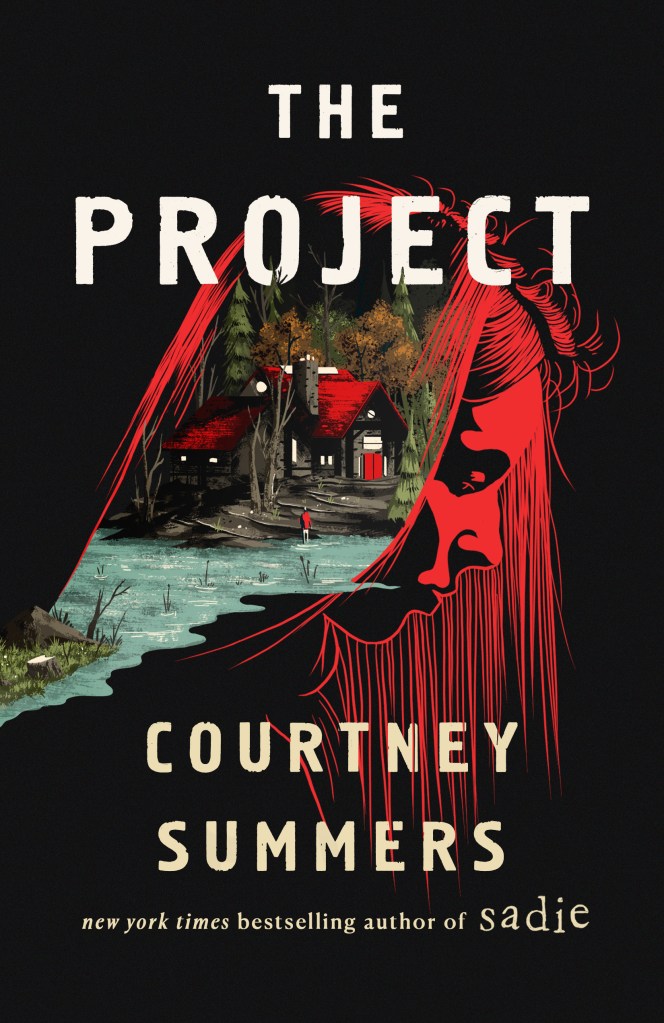
Kate’s Review: “The Project”

Book: “The Project” by Courtney Summers

Publishing Info: Wednesday Books, February 2021

Where Did I Get This Book: I received an eARC from NetGalley.

Book Description: Lo Denham is used to being on her own. After her parents died, Lo’s sister, Bea, joined The Unity Project, leaving Lo in the care of their great aunt. Thanks to its extensive charitable work and community outreach, The Unity Project has won the hearts and minds of most in the Upstate New York region, but Lo knows there’s more to the group than meets the eye. She’s spent the last six years of her life trying—and failing—to prove it.

“The Unity Project murdered my son.”

When a man shows up at the magazine Lo works for claiming The Unity Project killed his son, Lo sees the perfect opportunity to expose the group and reunite with Bea once and for all. When her investigation puts her in the direct path of its charismatic and mysterious leader, Lev Warren, he proposes a deal: if she can prove the worst of her suspicions about The Unity Project, she may expose them. If she can’t, she must finally leave them alone.

But as Lo delves deeper into The Project, the lives of its members, and spends more time with Lev, it upends everything she thought she knew about her sister, herself, cults, and the world around her—to the point she can no longer tell what’s real or true. Lo never thought she could afford to believe in Lev Warren . . . but now she doesn’t know if she can afford not to.

Welcome to The Unity Project.

Review: Thank you to NetGalley for providing me with an eARC of this novel!

Given how much I loved Courtney Summers’s previous novel “Sadie”, when I saw that her next book was going to be about a cult I was freakin’ stoked. The dark grittiness of “Sadie” kept me unsettled and on edge for a long while after finishing that book, and I figured that “The Project” would be almost darker, if only because of the root of the conflict (and because it sounded like it took a lot of inspiration from NXIVM from the summary, which is all kinds of yikes as more and more details come out about that group).

Once again we have a sister relationship that serves as the beating heart of this novel, a theme that Summers has used before and done very well. I had been a bit worried we’d get a bit more of the same because of it, but the relationship between Lo and Bea is very different from what I had imagined. I thought that Summers did a fantastic job of capturing the trauma and regret of both women, be it of Bea, who left her younger sister in a time of need, or Lo, who has resented the hole that Bea left behind but is also obsessed with finding her. You get both sisters perspectives, it it Lo’s journey as she goes deeper and deeper into The Unity Project, or Bea as she too finds herself drawn in more and more in a different time than Lo. The complexities of their relationship are there, and while we don’t see much interaction between them be it in the present or in flashbacks, you do get a good solid sense for the love and pain they share through their memories and feelings towards each other. It is also interesting seeing them take similar journeys when it comes to the mysterious, and perhaps deeply malevolent, Unity Project, and how they both parallel and yet invert each other. The suspense builds as Lo learns more and more about Bea’s time with Lev and other members, and by the time Lo is making some pretty drastic decisions (some of which I don’t think were QUITE built up to enough, but that’s all I will say because we’re keeping this generally spoiler free), you have been turned about and messed with as a reader about as much as she has as a character because she’s so easy to connect to. And while Bea is more mysterious, you still get a pretty good sense about other aspects of her personality, and how she could get caught up in something like The Project. While you know that things won’t be happily ever after for these sisters by the time the book is done, Summers still makes you ache for both of them on the journeys they are taking in trying to find, or trying to run from, each other.

Now let’s talk about The Project itself. As touched upon above, we are given so much information about them from inside sources, outside sources, and reliable and unreliable threads, that Summers effectively binds a reader up in becoming disoriented. I will say that given that I could see the NXIVM influences (the upstate New York setting, the beverage heiress who is a high ranking member, some of the more violent aspects of the group), there wasn’t really much question in my mind about what this group was ultimately going to be like, but had I not had that context I do think that Summers throws in a lot of things that could question that. She does a good job of showing how predatory cult leaders slowly lull their members into a sense of security, love, and faith, and then twist them and meld them into doing some really disturbing things. Lev is one of the more unsettling antagonists that I’ve encountered in YA literature in awhile, as his charisma and visage of kindness is rarely cracked as the book goes on, unless you know what to look for, just like psychopathic cult leaders in real life. There are Raniere influences here, but also shades of David Koresh and Charles Dederich, though Lev still stands on his own without being too much of a stand in for any one cult leader.

“The Project” is definitely a tragic and unsettling book, but it’s another strong narrative from an author who isn’t afraid to go dark. And it also has little bright spots of potential hope that are much appreciated in tales like this. Summers has a knack for balancing all of this out, and I think this will be another hit for her.

Rating 8: Intense, tragic, and unsettling as heck, “The Project” gets into the cult mentality and shows the power a charismatic leader can have.

Reader’s Advisory:

“The Project” is included on the Goodreads lists “Cults and Communes in Fiction”, and “Cults, Mind Control, and Spiritual Abuse”.

Find “The Project” at your library using WorldCat, or a local independent bookstore using IndieBound!