Kate’s Review: “You Like It Darker”

This post may contain affiliate links for books we recommend.  Read the full disclosure here.

Book: “You Like It Darker” by Stephen King

Publishing Info: Scribner, May 2024

Where Did I Get This Book: I own it.

Where You Can Get This Book: WorldCat.org | Amazon | Indiebound

Book Description: “You like it darker? Fine, so do I,” writes Stephen King in the afterword to this magnificent new collection of twelve stories that delve into the darker part of life—both metaphorical and literal. King has, for half a century, been a master of the form, and these stories, about fate, mortality, luck, and the folds in reality where anything can happen, are as rich and riveting as his novels, both weighty in theme and a huge pleasure to read. King writes to feel “the exhilaration of leaving ordinary day-to-day life behind,” and in You Like It Darker, readers will feel that exhilaration too, again and again.

“Two Talented Bastids” explores the long-hidden secret of how the eponymous gentlemen got their skills. In “Danny Coughlin’s Bad Dream,” a brief and unprecedented psychic flash upends dozens of lives, Danny’s most catastrophically. In “Rattlesnakes,” a sequel to Cujo, a grieving widower travels to Florida for respite and instead receives an unexpected inheritance—with major strings attached. In “The Dreamers,” a taciturn Vietnam vet answers a job ad and learns that there are some corners of the universe best left unexplored. “The Answer Man” asks if prescience is good luck or bad and reminds us that a life marked by unbearable tragedy can still be meaningful.

King’s ability to surprise, amaze, and bring us both terror and solace remains unsurpassed. Each of these stories holds its own thrills, joys, and mysteries; each feels iconic. You like it darker? You got it.

Review: Stephen King is a favorite of mine as we all know, and I’m just happy getting even one story out of him a year. But this year along with “Holly” (which I loved), we also get a new short story collection! “You Like It Darker” is that collection, and I absolutely pre-ordered it in high anticipation. While some of these stories have been published in other capacities before, it was my first experience with all of them, and I was very excited to read it. And no surprises here, I was very satisfied with it.

As I always do with a short story collection, I’m going to review my favorite three stories in full, and then review the collection as a whole.

“The Fifth Step”: This story was, to me, the most ‘classic King’ in tone and storytelling. A man sitting in a park is approached by a stranger who asks if he can try and complete his Fifth Step for his AA program with him, as he feels more comfortable approaching a stranger to express ‘the exact nature of his wrongs’ as opposed to someone he knows, as suggested by his sponsor. As he confesses for his program, things take a very personal turn. I loved the build of this one, as the intensity ratchets up and the story starts to twist the reader in the wind. As I said, Classic King right here, with a folksy twang and a creepy air about it.

“Danny Coughlin’s Bad Dream”: Sometimes the scariest things are rooted in a very dark reality, and “Danny Coughlin’s Bad Dream” was very much that. It was also my favorite story in the collection because of how goddamn scary it was. Danny Coughlin is an average working man who is just trying to live his life. But when he has a vivid psychic vision about finding a dead body in an abandoned lot, he is afraid to say anything due to the nature of his knowledge. but does the right thing…. only for the police to decide that HE is the perpetrator, and will stop at nothing to put him behind bars. This one really, really freaked me out because it’s a damning indictment of the corruptions and rot in law enforcement circles, and how some investigators are less interested in making a suspect fit evidence and more interested in making evidence fit a suspect. It was definitely the most suspenseful of the collection.

“Laurie”: This story is one of the more poignant and quieter tales in the book, and while it has some creepy aspects, there is such a tenderness about it. A widower living in Florida has become depressed and listless after losing his wife of decades, and is gifted a puppy that he doesn’t really want from his sister, who thinks he could use the company. While he’s reluctant at first, he starts to take a liking to Laurie the puppy. As he starts to shift his life to fit his new puppy, he starts to build a bond with her, and to find a purpose again. I loved thi story because of how it so compassionately examines grief and loss and how important reconnecting to your life can be. But don’t worry, there are still some scary and nasty King things to be found here.

But there were lots of great stories in this book. King has become such a chameleon with his stories, I wouldn’t classify any of the ones in this collection PURE horror, because even the ones that were definitely horror stories had so many moments of grounded humanity and emotion and literary exploration that it just felt like that much more. They also felt generally introspective in many ways, with lots of meditations on life and death and destiny and the human condition. It’s so frustrating that there are still people that kind of dismiss King because he is such a prolific and talented genre author (but that’s just the reflection of people looking down on genre fiction as a whole, which is another thing that grinds my gears), because man, he is so talented and shows no signs of stopping.

I thoroughly enjoyed “You Like It Darker”. There’s a story for everyone in here, with so many themes and tones and moods that they run a whole gamut. Highly recommended.

Rating 8: A solid, at times unsettling, and bittersweet collection of short stories from my favorite author, “You Like It Darker” is a King that feels introspective and melancholy, but also tentatively hopeful.

Reader’s Advisory:

“You Like It Darker” is included on the Goodreads list “Horror to Look Forward to in 2024”.
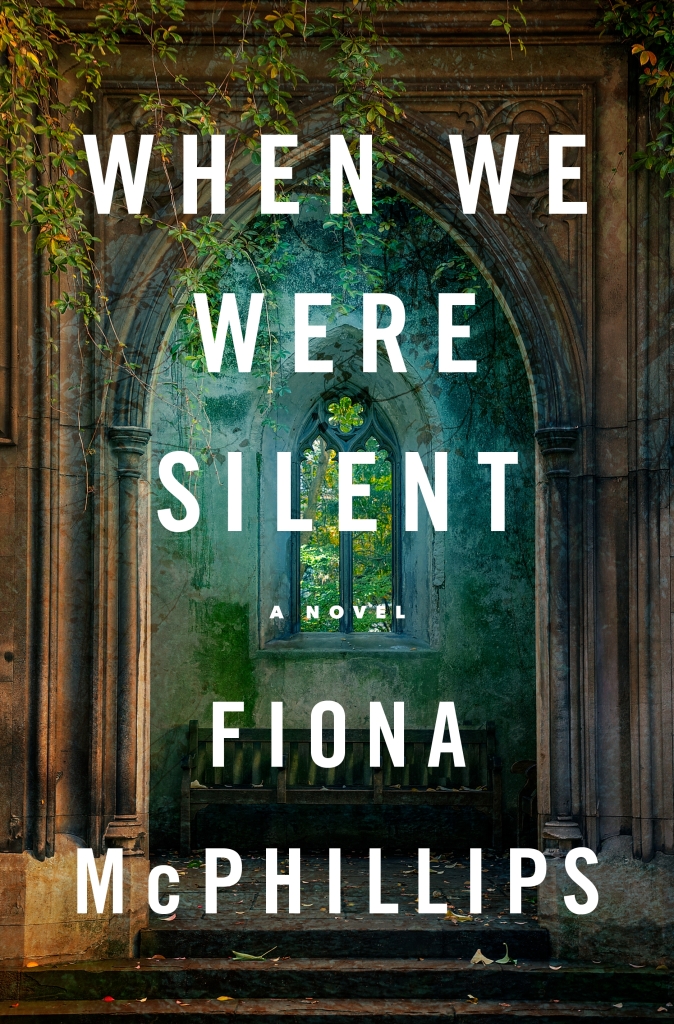
Blog Tour: “When We Were Silent”

This post may contain affiliate links for books we recommend.  Read the full disclosure here.

Book: “When We Were Silent” by Fiona McPhillips

Publishing Info: Flatiron Books, May 2024

Where Did I Get This Book: I received an ARC from the publisher.

Where You Can Get This Book: WorldCat.org | Amazon | Indiebound

Book Description: An outsider threatens to expose the secrets at an elite private school in this suspenseful debut novel

Louise Manson is the newest student at Highfield Manor, Dublin’s most exclusive private school. Behind its granite walls are high-arched alcoves, an oak-lined library…and the dark secret Lou has come to expose.

Lou’s working-class status makes her the consummate outsider, until she is befriended by some of her beautiful and wealthy classmates. But after Lou attempts to bring the school’s secret to light, her time at Highfield ends with a lifeless body sprawled at her feet.

Thirty years later, Lou gets a shocking phone call. A high-profile lawyer is bringing a lawsuit against the school—and he needs Lou to testify. Lou will have to confront her past and discover, once and for all, what really happened at Highfield. Powerful and compelling, When We Were Silent is a thrilling story of exploitation, privilege, and retribution.

Review: Thank you to much to Flatiron Books for sending me an invitation to participate in this blog tour!

When Flatiron Books approached me to be a part of the Blog Tour for Fiona McPhillips’s debut novel “When We Were Silent”, I was definitely interested, but also a little nervous judging by the plot. I knew that it sounded very interesting and that I wanted to check it out, but I also knew that the themes present, specifically that of a prestigious Catholic high school in Dublin covering up sexual abuses of teenage girls to protect a predatory teacher, would almost certainly set off a rage trigger as I was reading. But it intrigued me, and I went in, steeling myself to the themes, and I am glad that I did, because “When We Were Silent” is absolutely harrowing.

McPhillips is a journalist, and this is her debut novel, but reads like she’s been writing literary fiction for years. We have two timelines at hand, and she blends them together seemlessly. In the present we meed Louise “Lou” Manson, a professor living in Dublin who is approached by a lawyer about testifying in a lawsuit against Highfield Manor, as she herself had been a whistleblower of sexual abuse that, at the time, went unheard. At least until someone ended up dead. In the past we see Lou as a lower class student trying to fit in, while also trying to get revenge and retribution for a friend who had been raped by a popular swim coach, and who Lou is trying to expose in a time where the abuses of girls within a Catholic institution were almost assuredly covered up. And how she herself becomes one of his victims in her pursuit, and how she isn’t believed and villified. As we jump through the two times we see who Lou was before, and who she is now, and how the trauma, rage, regret, and lack of closure has defined her life, as well as the loves of other girls who were victimized. It is an unflinching look at predation and child sexual abuse within a religious institution, and it does not hold back (and this, of course, comes with many many content warnings of rape, abuse, suicide, gaslighting, and many other things). I found this to be a very difficult read at times, but McPhillips handles these very heavy themes with respect and care, and it never felt exploitative or like it was crossing a line, at least for this reader. It also makes the stakes of the mystery at the heart of this novel all the higher, and it makes the two comparisons of Lou then and Lou now very complex. It’s also a good comparison about how there has definitely been progress made when it comes to sexual abuse of minors and taking it seriously, though it also shows that some things haven’t changed much. It’s honest and raw and very emotional.

And back to the mysteries of this book, there are two at play. The first is the question of who actually died in the past narrative of they story. The second is the question of who is trying to intimidate Lou into not cooperating with the lawyer/testifying in the present, as she starts receiving mysterious anonymous messages trying to silence her. But while these mysteries are certainly compelling and kept me reading and interested, they are a bit of a footnote in this novel, never overhyped and never used as twists or gotchas. This is a mystery to be sure, but it’s moreso a literary work about trauma, abuse, privilege, corruption, and justice. It’s more about a woman who never got justice and was unfairly maligned because she spoke her truth, and how that has haunted her in the years since. It’s at times devastating, but it also a searing indictment of institutions that enable and cover up abuses to keep a hold on their own power, as well as an indictment of a greater culture that normalizes all of this. It’s rightfully angry and it’s powerful.

“When We Were Silent” is a difficult read, but it’s an important one. I will absolutely be checking out what Fiona McPhillips brings us next, because this was a great debut.

Rating 8: Harrowing, heartbreaking, and a rallying cry. “When We Were Silent” is a great debut from an author I am going to definitely follow going forward.

Reader’s Advisory:

“When We Were Silent” is included on the Goodreads list “52 Book Club 2024: #13 An Academic Thriller”.

Kate’s Review: “Rabbit Rabbit Rabbit”

This post may contain affiliate links for books we recommend.  Read the full disclosure here.

Book: “Rabbit Rabbit Rabbit” by Nadine Sander-Green

Publishing Info: House of Anansi Press, April 2024

Where Did I Get This Book: I received an ARC from Zg Stories.

Where You Can Get This Book: WorldCat.org | Amazon | Indiebound

Book Description: A woman’s coming-of-age through a toxic relationship, isolation, and betrayal―set against the stark landscape of the far north.

Millicent is a shy, 24-year-old reporter who moves to Whitehorse to work for a failing daily newspaper. With winter looming and the Yukon descending into darkness, Millicent begins a relationship with Pascal, an eccentric and charming middle-aged filmmaker who lives on a converted school bus in a Walmart parking lot. What begins as a romantic adventure soon turns toxic, and Millicent finds herself struggling not to lose herself and her voice.

Events come to a head at Thaw di Gras, a celebration in faraway Dawson City marking the return of light to the north. It’s here, in a frontier mining town filled with drunken tourists, eclectic locals, and sparkling burlesque dancers, that Millicent must choose between staying with Pascal or finally standing up to her abuser.

In the style of Ottessa Moshfegh’s honest exploration of dysfunctional relationships, and with the warmth and energy of Heather O’Neill, Rabbit Rabbit Rabbit illuminates what it’s like to be young, impulsive, and in love in one of the harshest environments in the world.

Review: Thank you to Zg Stories for sending me an ARC of this novel!

While I am usually a person who loves predictability and not so much spontaneity, one of the areas where I DO tend to divert from the norms is my reading. And while that isn’t shown as much on the blog, I found myself compelled to dip my toes outside of my usual genres when the book “Rabbit Rabbit Rabbit” by Nadine Sander-Green came across my path. I was wholly taken with not only the setting of a small town in The Yukon (far up North small towns are very near and dear to my heart, even if my frame of reference is more Minnesota and Wisconsin versus Canada), and it sounded like an interesting character study of a woman trying to find herself, and unfortunately being targeted and manipulated by a toxic older man. So while it MAYBE had some thriller potential due to the latter bit of that, I felt that even if it was ultimately not a thriller, I still wanted to give it a go. And I’m happy I did, because “Rabbit Rabbit Rabbit” hit a nerve in a good way.

“Rabbit Rabbit Rabbit” is a contemporary novel that follows Millicent, a twenty four year old woman who has uprooted her life to take a job at a small town newspaper in an isolated community in The Yukon called Whitehorse. Her only initial connection is her roommate Sophie, a friend from university whom she has drifted from, and her new job has left her with a serious case of imposter syndrome as she is at her heart a poet, not a journalist. The small town setting is both claustrophobic, but also striking and very grounded. I could imagine Whitehorse, I could almost see all the people, and the dark winter landscape as Millicent tries to adjust. I also got a full sense for the community as a whole and the very real issues that happen within the time and place, with references to relevant social issues in the Yukon in regards to politics and the First Nations people who are living there, and the ins and outs of a dying newspaper that Millicent works for. It’s a quieter novel, but I found it very engaging perhaps in part because of that. Millicent is a bit of a fish out of water, and her isolation, even from her supportive roommate and coworkers, makes it easy for her to be drawn to Pascal, a local eccentric who fancies himself and artist and is living a transient lifestyle in a bus like a mercurial bohemian. His eccentricity makes him stand out in this setting, which is so well drawn out by Sander-Greene that his appeal, at least on the surface, is wholly believable (and more on him in a bit).

Another thing I enjoyed about this book is how straight forward it is in terms of the plot and narrative. As we follow Millicent’s story, there are few bells and whistles, very little melodrama, no twists, and no big reveals to upend expectations of the plot. Instead we just have a very clear cut story about a young woman who is trying to find herself in a new environment that can feel quite isolating, and who becomes wrapped up with a manipulative and charismatic man in the hunt for connection. And this thread in the book was what stood out to me the most, this portrayal of a toxic relationship and how a smart young woman could find herself entangled within it. Pascal is absolutely a villain in this book, but his villainy is very well done in that it is very subtle and very easy to see why Millicent, who is yearning for connection and with an idealistic view of the world, could be sucked in by him. He’s charming, his life seems artistic, romantic, and interesting, and how many times have we heard of older men preferring the company of young women because of, at least in part, how much they can control them, and manipulating them to feel connected and genuine. Pascal is sinister as hell, but he never feels like an moustache twirling antagonist that is over the top with his malevolence, and if anything that makes him that much scarier.

“Rabbit Rabbit Rabbit” was a gratifying shift from my usual genres, with a powerful new voice for contemporary and literary works. I will certainly be looking out for more works by Nadine Sander-Green in the future!

Rating 8: A compelling, quiet, and intense story about isolation, identity, and finding oneself in the face of abuse and hardship.

Reader’s Advisory:

“Rabbit Rabbit Rabbit” isn’t on any Goodreads lists as of now, but it would fit in on the Goodreads list “The Yukon”.

Blog Tour and Review: “Secret Identity”

This post may contain affiliate links for books we recommend.  Read the full disclosure here.

Book: “Secret Identity” by Alex Segura

Publishing Info: Flatiron Books, March 2022

Where Did I Get this Book: I received an eARC from the publisher via NetGalley as part of this Blog Tour.

Where Can You Get this Book: WorldCat | Amazon | IndieBound |

Book Description: From Anthony Award-winning writer Alex Segura comes Secret Identity, a rollicking literary mystery set in the world of comic books.

It’s 1975 and the comic book industry is struggling, but Carmen Valdez doesn’t care. She’s an assistant at Triumph Comics, which doesn’t have the creative zeal of Marvel nor the buttoned-up efficiency of DC, but it doesn’t matter. Carmen is tantalizingly close to fulfilling her dream of writing a superhero book.

That dream is nearly a reality when one of the Triumph writers enlists her help to create a new character, which they call “The Lethal Lynx,” Triumph’s first female hero. But her colleague is acting strangely and asking to keep her involvement a secret. And then he’s found dead, with all of their scripts turned into the publisher without her name. Carmen is desperate to piece together what happened to him, to hang on to her piece of the Lynx, which turns out to be a runaway hit. But that’s complicated by a surprise visitor from her home in Miami, a tenacious cop who is piecing everything together too quickly for Carmen, and the tangled web of secrets and resentments among the passionate eccentrics who write comics for a living.

Alex Segura uses his expertise as a comics creator as well as his unabashed love of noir fiction to create a truly one-of-a-kind novel–hard-edged and bright-eyed, gritty and dangerous, and utterly absorbing.

Review: Thank you so much to Maris Tasaka of Macmillan for sending me an eARC of this book via NetGalley and for including our blog on the Blog Tour of this book!

My enjoyment of comic books and therein graphic novels was solidly influenced by my mother, who was an avid DC fan as a child. During a childhood trip to visit my grandparents in Iowa, my mother managed to find a huge box of her old comics, and I had a grand old time reading through them and familiarizing myself with Superman, The Flash, Green Lantern, and Batman (I feel like this was her favorite title; SO MANY BATMAN COMICS). I definitely spent some time thinking about this as I read “Secret Identity”, a new literary mystery from Alex Segura, that has its main thrust and story in the comics industry during the 1970s (about ten years after my Mom was reading the various heroes of DC), and starring a young woman named Carmen who loves comics and is working with them, though not at the capacity she’d like. Because misogyny and racism, of course! That alone is compelling as hell, but when you add some ghost writing, an unstable ex, and a murder to boot? That’s even more tantalizing.

“Secret Identity” is fast paced, suspenseful, and it sends the reader back to 1970s New York City with ease. As I was reading I felt deeply immersed in the time and place, able to picture everything that was being described. The setting makes for a great mystery, given that 1970s New York City was gritty and grim in many ways, and Segura gives us a solid whodunnit with a fantastic detective at the forefront. I really loved Carmen as our protagonist, as she is determined and ambitious, as well as very relatable and likable while trying to balance her gender, ethnicity, and sexuality in a very patriarchal vocation and society. I was righteously indignant for her given the fact that she is a Latin woman working in a boys club industry during a time of changing gender dynamics, and her experiences very much reflect that. Be it being dismissed by her boss, being seen as a secretary and not much more, being hit on by men and having to fend them off while hiding the fact she’s into women, or being excluded from her coworkers, even in inadvertent ways, Carmen has to deal with a lot of shit. And she does it because she loves comics, she lives and breathes comics, and that makes her tolerate it all…. Until a coworker named Harvey approaches her for creative help on a new character they call The Lynx, a female superhero that subverts the norms. Carmen is the force behind the best parts of her, but Harvey takes the full credit because of course he does. Carmen’s anger about this is kind of short lived, however, as before she can confront him he is murdered. And the reason for that may be because of the Lynx. Combining this violation of her creative property with a murder mystery makes for a very complicated journey for Carmen, as while she has to frame it as wanting to find justice for her friend, there is the deeper component of wanting to reclaim her character, but also being in danger BECAUSE of the character. The mystery is very well crafted, and Segura lays out the clues and has a number of well placed red herrings to boot.

And this entire story is a true Valentine to superhero comics and the way they can sweep a reader up and influence them, while being realistic about what the comics industry was like during the time period. Carmen is not only a great noir-esque amateur detective, but I loved how Segura made her love and passion for comics so evident and believable, and how honest he is about the highs and lows of the comics industry. Carmen’s enthusiasm and knowledge is really fun on the page, and we even get to see some of the pages of the comics of The Lynx as the story goes on and when the themes are relevant (given that Segura is also a comics writer, these moments were extra awesome and felt really authentic). And while this takes place in the 1970s, my guess is that some of the issues are timeless, and Segura takes on mediocre writers who get promotions based on sex and race, misogyny, idea theft, and other toxic realities of being a woman and POC in the comics industry. It adds another layer to the mystery, given that Harvey was more than happy to steal the credit from Carmen and figured that there wouldn’t be anything she could do about it. It all comes together nicely and in a way that adds to the plot and makes it all the more complex and interesting.

I definitely enjoyed “Secret Identity”, and already have a wide swath of people in mind as to who I would recommend it to (my Mom, for instance)! The buzz around this book is absolutely spot on. Anyone into superhero comics from the era, or just comics in general, should pick it up!

Rating 9: A solid mystery, a love letter to comics, and a stirring character study, “Secret Identity” is a must read for comics fans and mystery fans alike!

Reader’s Advisory:

“Secret Identity” is included on the Goodreads lists “Books for Geeky Girls”, and “About Comics”.

Other Stops on the Blog Tour:

Jessicamap Reviews (March 10)

Kate’s Review: “Reprieve”

Book: “Reprieve” by James Han Mattson

Publishing Info: William Morrow, October 2021

Where Did I Get This Book: I own it.

Book Description: A chilling and blisteringly relevant literary novel of social horror centered around a brutal killing that takes place in a full-contact haunted escape room—a provocative exploration of capitalism, hate politics, racial fetishism, and our obsession with fear as entertainment.

On April 27, 1997, four contestants make it to the final cell of the Quigley House, a full-contact haunted escape room in Lincoln, Nebraska, made famous for its monstrosities, booby-traps, and ghoulishly costumed actors. If the group can endure these horrors without shouting the safe word, “reprieve,” they’ll win a substantial cash prize—a startling feat accomplished only by one other group in the house’s long history. But before they can complete the challenge, a man breaks into the cell and kills one of the contestants.

Those who were present on that fateful night lend their points of view: Kendra Brown, a teenager who’s been uprooted from her childhood home after the sudden loss of her father; Leonard Grandton, a desperate and impressionable hotel manager caught in a series of toxic entanglements; and Jaidee Charoensuk, a gay international student who came to the United States in a besotted search for his former English teacher. As each character’s journey unfurls and overlaps, deceit and misunderstandings fueled by obsession and prejudice are revealed, forcing all to reckon with the ways in which their beliefs and actions contributed to a horrifying catastrophe.

An astonishingly soulful exploration of complicity and masquerade, Reprieve combines the psychological tension of classic horror with searing social criticism to present an unsettling portrait of this tangled American life.

Review: You all know what a big fan I am of Halloween, and while for various reasons I haven’t done this in a long time I also really enjoy doing haunted hayrides, and living in Minnesota it’s not hard to drive outside the city limits to find such shenanigans. But I’m not as big into walk through haunted houses, and am certainly NOT into any ‘extreme’ haunted houses. Locally we had something called The Soap Factory, which made you sign a waiver before you went through, but they closed a couple years ago. The most infamous ‘extreme’ haunt, however is almost assuredly McKamey Manor, a combined haunted house escape room puzzle experience that is notorious in the haunt industry. Yes, you sign a waiver, and you may be subjected to physical and psychological torture for hours on end all in the name of thrills. There is no question in my mind that “Reprieve” by James Han Mattson is partially inspired by McKamey Manor, and that made an already enjoyable reading experience that much better. This book seems to be polarizing. I’m firmly on the ‘love’ team.

“Reprieve” is a deeply layered and multidimensional horror story that comes to life through literary structure. The guts of the tale involve a slowly revealed violent incident at Quigley House, a hardcore escape room/haunted house that offers players serious money if they can solve the puzzles in all the ‘cells’ while actors inflict psychological terror upon them. What exactly happened is slowly revealed through court room transcripts, flashbacks through character perspectives, and the straight narrative of the timeline of what happened in each cell up until the moment in question. I liked the slow build up and the combined story telling techniques, and how all of them combined to make a building tension of dread while also getting to know each character and what role they play. I’m sure that it’s the literary structure that threw readers for a loop, as I can definitely say that the creative choices made here are probably not for everyone. Which is totally okay. I, however, really liked it. I’m not the kind of person who thinks that horror needs to be elevated or classed up by any stretch of the imagination, but “Reprieve” does this without feeling pretentious or disingenuous. The scares are knowing what is coming (even if only in part), seeing it all unfold, and seeing the way that the REAL horror is in the bad behavior of villainous people, unwitting or not.

This is also a really well done commentary on capitalism, the weaponization of entertainment, and race in America. Many of the characters are POC, some are LGBTQIA+, and many of them feel lost, isolated, or Othered. Kendra is a new resident of this small Nebraska community and one of the few Black people (outside of her family) and finds herself working at Quigley House. The ‘we’re family here’ mentality definitely pulls her in deeper when she feels isolated in other ways. Contestant Jaidee is an international student from Thailand who is also gay, and feels scrutiny from his college peers because of both of these facts. And then there are the characters of Leonard, a hotel worker who feels inadequate in his personal life, and John, who owns Quigley House. Their friendship is a toxic concoction that encapsulates misogyny, xenophobia, and aggression, and sets off the first domino that leads to tragedy. Mattson knows what he’s doing with these characters, and while they easily could have felt like two dimensional villains, we get into their minds a bit, and it makes them fascinating, and all the more upsetting.

Boy did I enjoy “Reprieve”. It’s one of the more unique horror novels I’ve read lately, and it finds the horrors in both an extreme haunted house, and the darker side of American cultural consciousness.

Rating 9: A stunning literary horror thriller, “Reprieve” is mesmerizing, blistering, and deeply sad.

Reader’s Advisory:

“Reprieve” is included on the Goodreads lists “Deliciously Chilling Horror”, and “If You Like ‘Squid Game’, You Should Read…”.

Find “Reprieve” at your library using WorldCat, or at a local independent bookstore using IndieBound!

Book Club Review: “Annihilation”

We are part of a group of librarian friends who have had an ongoing bookclub running for the last several years. Each “season” (we’re nerds) we pick a theme and each of us chooses a book within that theme for us all to read. Our current theme is “Outside the Genre Box”, in which we each picked a book from a genre or format that we don’t usually read.

For this blog, we will post a joint review of each book we read for book club. We’ll also post the next book coming up in book club. So feel free to read along with us or use our book selections and questions in your own book club!

Book: “Annihilation” by Jeff VanderMeer

Publishing Info: Farrar, Straus and Giroux, February 2014

Where Did We Get This Book: The library!

Book Description: Area X has been cut off from the rest of the world for decades. Nature has reclaimed the last vestiges of human civilization. The first expedition returned with reports of a pristine, Edenic landscape; the second expedition ended in mass suicide, the third in a hail of gunfire as its members turned on one another. The members of the eleventh expedition returned as shadows of their former selves, and within weeks, all had died of cancer. In Annihilation, the first volume of Jeff VanderMeer’s Southern Reach Trilogy, we join the twelfth expedition.

The group is made up of four women: an anthropologist; a surveyor; a psychologist, the de facto leader; and our narrator, a biologist. Their mission is to map the terrain, record all observations of their surroundings and of one another, and, above all, avoid being contaminated by Area X itself.

They arrive expecting the unexpected, and Area X delivers—but it’s the surprises that came across the border with them and the secrets the expedition members are keeping from one another that change everything.

Genre/Format: Horror

Kate’s Thoughts

This is not my first time reading “Annihilation”, as a few years ago I picked it up thanks to the recommendation of a circulation supervisor at a library I was subbing at at the time. Along with his rec, one of my good friends also said that she loved the series. Reading it through the first time was a weird, unsettling, but rewarding experience into weirdo gonzo sci-fi horror. So when Serena chose it for book club, I was pretty amped to give it a re-read.

And on the second time around, I was once again really into “Annihilation”. Vandermeer creates such a unique, creepy, and mysterious environment that feels like a character in and of itself. Area X is an unknown entity that dooms those who enter it, many of whom just straight up never come back, and those that do come back, well… They’re changed. As our characters (all nameless, referred to by their occupations in the expedition) start to fall prey to Area X, as well as their own paranoia and potentially even their compatriots, the first person Narrator, The Biologist, leads us on a confusing and convoluted journey where you don’t really know what’s going on. And that, in and of itself, is scary.

Vandermeer’s greatest strength is building up the unknown through the things we cannot see. For me, the scariest aspect was an entity referred to as The Moaner, which lets off terrifying baying sounds at dusk and night. I mean MY GOD. It’s things like this, as well as nefarious scheming that we see happen without much explanation, and the general breaking down of the explorers’s sanity, that kept my dread levels pretty high up on both reads. While other books may slowly start to peel back reveals, with foreshadowing, twists, and ah ha moments abound, those aren’t the kind of things that you find in this book. And our book club was pretty split as to how we felt about that. For some of us that worked. For others, it didn’t. But that just meant the conversation was great as we all peeled back the various layers.

“Annihilation” is weird. It doesn’t feel a need to give you many answers. But if you like weirdo Sci-Fi horror with a hint of eco-terror as well, it is absolutely the book for you.

Serena’s Thoughts

When we came up with this round’s bookclub theme, I knew immediately that I wanted to do horror for my pick. Not only is it good to dabble in the genre that my co-blogger routinely writes about and reads, but I’ve found myself enjoying a decent number of horror-y book that have come across my reading pile recently (“Mexican Gothic” comes to mind right off the bat). But, of course, being me, I couldn’t resist a choice that also seemed to dabble in science fiction themes as well. And thus, “Annihilation!”

I really enjoyed this book. It’s definitely a strange one, and I feel like my comfort reading epic fantasy novels where you’re routinely thrown into worlds full of strange words and rituals that are never really explained paid off really well for me. This book is weird and it’s only marginally interested in explaining itself. What does get explained only comes up in the last 20% or so of the story. So that leaves almost the entire book with the reader being just as (if not more) clueless than our nameless main character. It takes a long time to even get an answer about why there are so few answers to start with! A convoluted idea if ever there was one.

In many ways, the reader is left feeling unbalanced and confused throughout most of the read. This helps increase the building tension and fear when, for most of it, very little is actually, physically, happening. Instead, the book leans into the sense of doom and the greater fear of an unknown that you can’t see or understand rather than the monster that is richly described in detail for you.

The narrator is also an unknown. Much of her story plays out in a series of flashbacks to her life before entering Area X. She is is definitely a strange entity all on her unknown. I wasn’t quite sure if her oddness was an intentional choice on the author’s part or if he struggled to write from a woman’s perspective? Or some combination of things? I will say, characterization is perhaps not his particular strength as a writer, but the narrator was definitely serviceable in delivery all the oddness and spookiness inherent in Area X itself.

In the end, I think I was left with more questions than I had answers. Most of bookclub was just one big question: “What the heck did we just read?” But for me, this was a good question, and I’ll probably add the second book to my TBR pile.

Kate’s Rating: Super weird but incredibly fascinating, “Annihilation” is very unique in how it tells a story.

Serena’s Rating 8: Bizarre in the best way, this book dials into the fear of the unseen in a really great way.

Book Club Questions

  1. The main character’s past and her relationship with her husband directs a lot of her thoughts and actions. In what ways were these flashbacks important to her story? Was there any one moment/flashback that stood out to you as touching on the greater themes?
  2. There are a lot of unknowns in this book, from bigger mysteries surrounding Area X down to smaller details like characters’ names. How did this prevailing sense of the unknown affect your reading experience? Were you able to predict any of the reveals?
  3. What do you believe Area X is? Does it have a goal, and if so, what is it? Any theories regarding the meaning of the writing and the writer?
  4. This story walks the line between horror and science fiction. What aspects of the story/writing best represented each of these genres?
  5. This is the first book in a trilogy. Do you have any predictions for where the story will go from here? What are you most curious to learn more about?

Reader’s Advisory

“Annihilation” is included on these Goodreads lists: Best Weird Fiction Books and Cli-Fi: Climate Change Fiction.

Find “Annihilation” at your library using WorldCat, or a local independent bookstore using IndieBound!

Next Book Club Book: “Big Friendship: How We Keep Each Other Close” by Aminatou Sow and Ann Friedman

Book Club Review: “Red at the Bone”

We are part of a group of librarian friends who have had an ongoing bookclub running for the last several years. Each “season” (we’re nerds) we pick a theme and each of us chooses a book within that theme for us all to read. Our current theme is “Outside the Genre Box”, in which we each picked a book from a genre or format that we don’t usually read.

For this blog, we will post a joint review of each book we read for book club. We’ll also post the next book coming up in book club. So feel free to read along with us or use our book selections and questions in your own book club!

Book: “Red at the Bone” by Jacqueline Woodson

Publishing Info: Riverhead Books, September 2019

Where Did We Get This Book: The library!

Genre/Format: Literary Fiction

Book Description: Moving forward and backward in time, Jacqueline Woodson’s taut and powerful new novel uncovers the role that history and community have played in the experiences, decisions, and relationships of these families, and in the life of the new child.

As the book opens in 2001, it is the evening of sixteen-year-old Melody’s coming of age ceremony in her grandparents’ Brooklyn brownstone. Watched lovingly by her relatives and friends, making her entrance to the music of Prince, she wears a special custom-made dress. But the event is not without poignancy. Sixteen years earlier, that very dress was measured and sewn for a different wearer: Melody’s mother, for her own ceremony– a celebration that ultimately never took place.

Unfurling the history of Melody’s parents and grandparents to show how they all arrived at this moment, Woodson considers not just their ambitions and successes but also the costs, the tolls they’ve paid for striving to overcome expectations and escape the pull of history. As it explores sexual desire and identity, ambition, gentrification, education, class and status, and the life-altering facts of parenthood, Red at the Bone most strikingly looks at the ways in which young people must so often make long-lasting decisions about their lives–even before they have begun to figure out who they are and what they want to be.

Kate’s Thoughts

Although this genre doesn’t tend to make it onto the blog, I am not really a stranger to literary fiction. If a literary novel has a topic that sounds interesting, or has a lot of hype around it, I will probably pick it up, and a lot of the time I enjoy it as a genre. But somehow I missed “Red at the Bone” by Jacqueline Woodson when it came out, so when book club picked it as the Outside the Genre Box book I was eager to dive in. I read it in the course of an afternoon, as the family saga theme is one that I’ve always been a sucker for.

“Red at the Bone” is an emotional look at a family that has gone through a lot through the generations. We start with the society coming out celebration of Melody, a sixteen year old Black teenager living in New York City in 2001. She is wearing the dress that her mother Iris was supposed to wear before her, but her pregnancy at 16 cancelled the event. We look at the entire family, jumping through time, perspectives, and themes, and learn how Melody came to be, how her relationship with Iris has become what it has, and how the influence of her other family members, and the influences of their experiences, has affected her, and all of them. Woodson takes a good hard look at class differences, the way that parents have hopes for their children that don’t always mesh, and the way that trauma can be passed down through family lines, even if the later generations weren’t there to experience the initial traumatic event (for example, there is a lot of attention paid to the Tulsa Massacre, and how that horrible event has lingered down the family line). I found the different perspectives of different family members to be powerful, and Woodson gave all of them a lot of attention even in the comparatively lower number of pages. I was especially moved by the way that Woodson looks at mother and daughter relationships, and the difficulties that can be found there (I’m probably a bit biased in that regard, but I have no doubt that anyone will find it emotionally resonant as Woodson is so good).

I really liked “Red at the Bone”. It’s a quick read, but it hits in all the right ways.

Serena’s Thoughts

Unlike Kate, I really and truly don’t read a lot of literary fiction. Pretty much rules me out of being an adult librarian (rather than YA/children’s, which what I was trained for)! But I have read one or two here and there, usually upon recommendation, and often enjoyed them. I typically want more magic and unicorns in my reading, but if the writing and story are strong, I can get behind ordinary life as well.

I knew nothing about this author before reading this. Or, really, anything about what the story was about even. So I picked it up with no real preconceptions. And then I didn’t set it down until it was finished. Yes, it is a shorter book as well, but it was also compulsively readable. The layers of family history and personalities perfectly layered one on top of the other to weave together an intricate tapestry of lives lived through various trials and tribulations. We see the many ups and downs of everyone’s lives and how these experiences shape not only the character whose head we are in currently, but how these traumas, joys, choices ripple out to affect everyone else around them and following them.

Like Kate, I was particularly interested in the story of motherhood that is at much of the heart of this story. While I have two boys instead of a daughter, I am, of course, a daughter myself. It was heart-breaking and yet completely relatable to experience the fierce love and fierce hurt that can exist within this unique relationship. I also very much related to the sudden, sometimes harsh, reality of what parenthood looks like.

My own experience was very different, behind older, married to my husband, and both hoping for this outcome. But there were also moments of very real, very dark places in the actual experience of become a mother, too. The idea that overnight your entire identity seems to be sucked into this new born baby. It’s the first thing people ask you, it’s almost all you are to people for so long. And, you know, the baby isn’t even grateful! Just screaming and crying and demanding food all the time! Little punk. I kid, but it is also very hard. I can’t even imagine going through it as a young teenager and trying to find some way to be a good mother while also retain some part of a life for yourself that you hadn’t even had a chance to start.

There were so many incredible themes that resonated in this book: family, identity (both sexual and racial), history and legacy. For such a short book, it would be easy to write several essays covering different topics broached in this story. Fans of literary fiction, especially those focused on family and identity should definitely check this one out.

Kate’s Rating 8: An emotional and lyrical family saga, “Red at the Bone” is a quick and powerful read.

Serena’s Rating 8: Beautiful and heart-breaking, a must-read for fans of stories focused on family.

Book Club Questions

  1. What did you think of the structure of the narrative? Was it easy for you to follow?
  2. Did you have a character that you liked the most, or wanted to learn more about beyond the story that they had in this book?
  3. What did you think about the way that Woodson presented this family and the dynamics within in?
  4. There is a lot of family trauma and grief that this family has gone through over the years, as well as hope for future generations. What did you take away from this story in terms of trauma that passes through family lines, as well as aspirations for legacy?
  5. Iris and Melody are the central relationship within this story. Do you think that their relationship has hope to evolve into something new beyond the end? Do you think that it needs to?

Reader’s Advisory

“Red at the Bone” is included on the Goodreads lists “Anticipated Literary Reads for Readers of Color 2019”, and “Popsugar 2021 #33: A Book Featuring Three Generations”.

Find “Red at the Bone” at your library using WorldCat, or a local independent bookstore using IndieBound!

Next Book Club Book: “Annihilation” by Jeff VanderMeer

Diving into Sub-Genres: Literary Fantasy

We each have our own preferred genres of choice. Kate loves horrors and thrillers, really anything that will keep her up at night! And Serena enjoys escaping through hidden doors into realms of magic and adventure. We also read mysteries, historical fiction, graphic novels, etc. etc. And that’s not even counting the multitude of sub-genres contained within each greater genre. In this series, one of us with present a list of our favorites from within a given sub-genre of one of our greater preferred genres.

Literary fantasy is a hard sub-genre to even wrap your head around. Many of the other sub-genres of fantasy (portal fantasy, epic fantasy, steampunk, urban) have very distinct elements that are easily recognizable even from a short blurb about the book. Literary fantasy…not so much. It’s tempting to say that literary fantasy is simply contemporary fantasy where the story is simply light on fantasy altogether. But this writes off historical works which would also fit this category. So perhaps it is simply the light fantastical elements? But even that I don’t think is correct (you’ll see that a couple of books I’ve included here have fairly extensive magical elements).

Instead, I think it’s largely contained in a certain style of writing that is often found in these books. Literary fantasy is often just as focused on a beautiful turn of phrase as it is on describing a magical spell’s effects. There’s often an elegance to the writing, a compulsion to appreciate the words themselves rather than fully immerse oneself in the book to the point that the reader forgets they’re reading. Indeed, knowing that one is reading is half of the joy of these types of books, with more focus given to descriptions and omniscient narrator musings than action-packed set pieces. In many ways, I’m essentially describing “literary fiction” but with some fantastical element involved. However, I think that “literary fiction” typically includes other notable elements that don’t necessarily rely on a style of writing as strongly as literary fantasy does (often tragic, more experimentation with word-play and style of writing).

So with that in mind, here are a few examples of favorite books of mine that I would file under literary fantasy.

“The Invisible Life of Addie LaRue”

This was actually the book that inspired this entire review series, after one of our readers commented on my labeling it as “literary fantasy” and asked about other titles that would fit in that sub-genre. So here we are! This story, that of a young woman who strikes a deal to live forever but to never be remembered by anyone she meets, fits the criteria in a few ways. It definitely has fantasy elements, what with the main character living forever and all, but the themes of the book are much more focused on identity, one’s own history, and what it means to exist in a world made up of so many other people living out their own journeys. There’s also a big focus on art and how it expresses the lives of both the artist and the subject of art. Between these themes, much of the story taking place in a standard contemporary/historical setting with very little magic involved, and the beautiful style of writing, it definitely meets the criteria for literary fantasy.

“The Starless Sea” by Erin Morgenstern

If “The Invisible Lie of Addi LaRue” was the inspiration for this post, “The Starless Sea” was my immediate answer to the question posed by our blog reader for another example of literary fantasy. I could also include Morgenstern’s first novel, “The Night Circus,” under this category, but as this is the one I’ve read and loved most recently, I’ll include it here. It’s also an example of a book I would classify as literary fantasy but one that includes many, many fantasy elements. If anything, it walks right up to the line of what I would classify as fairytale fantasy or portal fantasy. The story is a winding affair of exploration and mystery throughout time and space, all held together by a mysterious library that exists right through a doorway, if one is only brave enough to open it. There’s much reflection on love and passion, but half of the magic is the sheer whimsy of the entire thing. Behind every door is a new wonder, and the writing seems to wrap you up in a warm blanket of delight and you’re left wondering if you perhaps travelled to this magical world after all, simply through the process of reading this book. It is this lovely style of writing and the effortless feel of the magical elements involved that classifies it as literary fantasy.

“Deathless” by Catherynne M. Valente

This book walks even closer to the line of fairytale fantasy than the last, in that it’s largely inspired by Russian myth and the Russian folklore character, Kuschei the Deathless. But again, it’s all in the style of writing. I debated including one of Valente’s “Fairyland” stories, which I think skirt this sub-genre fairly well themselves. But I think “Deathless” hits the mark a bit better with its supposition of fantastical creatures and myths over almost all of the important events of the 20th century in Russia. Of course, knowing even a little of Russia’s history during that time period, it’s a safe guess that the story, while beautiful, has its fair share of tragic moments, as well. Valente expertly wields her magical elements in such a way as to shine new light and new insights into some of the better (and lesser) known parts of the country’s history. Anyone who has read a book by her before can also testify to the unique and beautiful style of her writing. She’s definitely an author whose stylized sentences and combinations of thoughts often makes the reader stop and re-read certain sections just to revel in her use of words.

“The Golem and the Jinni” by Helene Wecker

This is another literary fantasy novel that is at least as much concerned with delving into its real-life, historical themes as it is in exploring the two magical creatures who are the story’s main characters. Yes, our two leads are the titular golem and jinni, but their story is much more than that. Instead, in many ways, the book is more concerned at looking at the experience of immigrants in the early 1900s and life in New York City during this time period, in general. Not only are both of our characters origins not of the United States, but each, of course, is even more “other” in that they aren’t human. But at the same time, each has such core human traits that define them, that their experiences and struggles feel almost amplified for it. This is a long book, and one that definitely takes its time carefully depicting the details of the place and time as much as it does the history of the golem and jinni. It’s the kind of book that could fairly easily be recommended to straight-up historical fiction fans as well as fantasy readers.

“Tigana” by Guy Gavriel Kay

Guy Gavriel Kay is another author who’s entire catalog of books would likely fit in this sub-genre. My favorite books by him, “The Fionavar Tapestry” quartet, definitely meet the criteria for style of writing, but they fall closer to portal fantasy, in my opinion. But I could have easily put “The Lions of Al-Rassan” or “Children of Earth and Sky” or many others on this list. I selected “Tigana,” however, because it’s probably, universally, one of his most beloved and well-regarded novels. Gavriel Kay’s books are also unique to this category in the fact that they are entirely set in alternative worlds. The settings and events are often inspired by real-life countries and events, but the worlds are still entirely fantasy-based, ultimately. This story touches on themes of war, love, and the tangle that politics makes of it all. It is expansive and marvelous, and, too many, set a higher bar for what readers can expect from fantasy fiction and specifically literary fantasy.

“The Bear and the Nightingale” by Katherine Arden

Lastly, I wanted to include the first book in a trilogy of books that would all fit well in this category. Like some of the others, “The Bear and the Nightingale” has a definite fairytale vibe to the story. But the slow build of the story, the attention spent on developing atmosphere, and the beautiful, lyrical style of writing all fit perfectly for literary fantasy. The sharply beautiful description of the Russian winter landscape are particularly poignant, and the themes regarding religion, magic, and one young woman’s journey to carve out a place for herself in a world that doesn’t have a place for women who don’t fit a certain type of mold. What starts out on a fairly small scale expands across the three books until Vasilisa’s story starts to encompass the entirety of Russia itself. I loved this entire tirlogy and would recommend all three (though they can’t be read separately, other than the first one, perhaps) to fans of literary fantasy.

What fantasy books would you categorize as literary fantasy? What are some of your favorites? Share in the comments below!

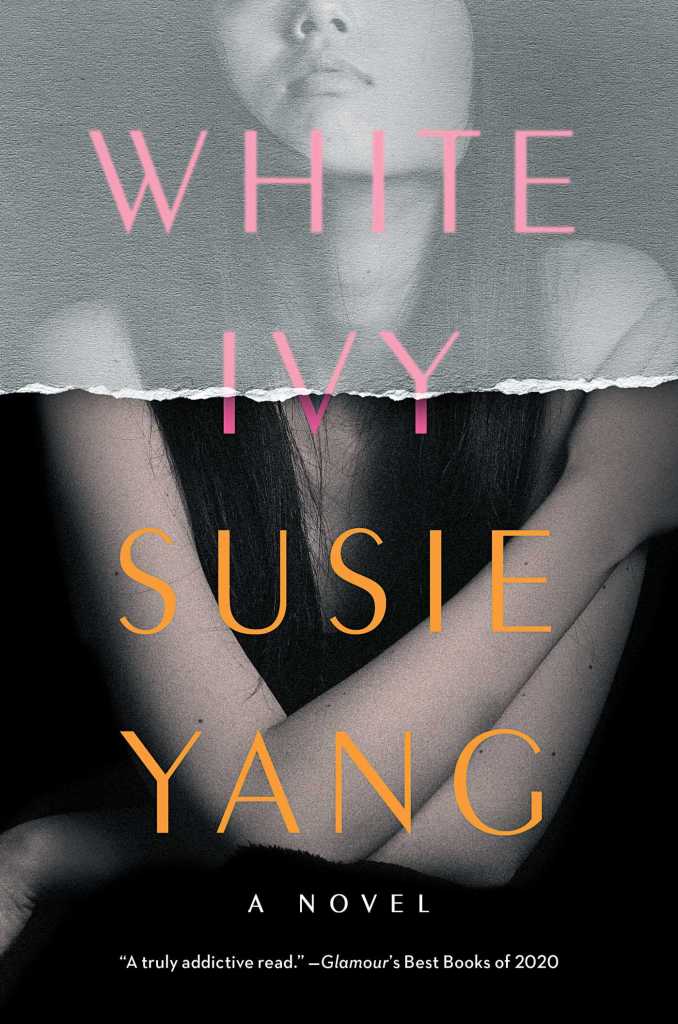
Kate’s Review: “White Ivy”

Book: “White Ivy” by Susie Yang

Publishing Info: Simon & Schuster, November 2020

Where Did I Get This Book: I won an ARC in a Goodreads giveaway.

Book Description: A dazzling debut novel about a young woman’s dark obsession with her privileged classmate and the lengths she’ll go to win his love.

Ivy Lin is a thief and a liar—but you’d never know it by looking at her. Raised outside of Boston, she is taught how to pilfer items from yard sales and second-hand shops by her immigrant grandmother. Thieving allows Ivy to accumulate the trappings of a suburban teen—and, most importantly, to attract the attention of Gideon Speyer, the golden boy of a wealthy political family. But when Ivy’s mother discovers her trespasses, punishment is swift and Ivy is sent to China, where her dream instantly evaporates.

Years later, Ivy has grown into a poised yet restless young woman, haunted by her conflicting feelings about her upbringing and her family. Back in Boston, when she bumps into Sylvia Speyer, Gideon’s sister, a reconnection with Gideon seems not only inevitable—it feels like fate.

Slowly, Ivy sinks her claws into Gideon and the entire Speyer clan by attending fancy dinners and weekend getaways to the Cape. But just as Ivy is about to have everything she’s ever wanted, a ghost from her past resurfaces, threatening the nearly perfect life she’s worked so hard to build.

Filled with surprising twists and offering sharp insights into the immigrant experience, White Ivy is both a love triangle and a coming-of-age story, as well as a glimpse into the dark side of a woman who yearns for success at any cost.

Review: Thank you to Goodreads for sending me an ARC of this novel as part of a giveaway!

Me and my kiddo were sitting in the front yard one day, when a UPS guy pulled up and had what was clearly a book shaped parcel in his hands. I thanked him from afar and after he left I wondered if I had ordered a book that I’d forgotten about. But when I opened it up and saw that it was “White Ivy” by Susie Yang, it occurred to me that I had won a Goodreads giveaway! Which rarely happens! I had seen a bit of buzz online about this book, being described as a thriller much like “The Luckiest Girl in the World”, which is about a social climbing schemer with a dark past. That book was entertaining enough, so I figured “White Ivy” would be similar. Which it is…. and it isn’t.

“White Ivy” is certainly about a social climbing schemer. Ivy Lin is our protagonist, and after being raised in a lower class and strict Chinese immigrant household, she has dreams of rising above. It’s true that she from the get go sets her sights on a rich former classmate, and it’s true that she has every intention of doing anything to be with him. But the issue is that “White Ivy” reads less like a thriller, and more like a character study of a damaged person who, being put in certain boxes because of her gender, culture, and race, wants to succeed in the world she has deemed ‘perfect’. Sort of a twist on the ‘immigrant experience’ story that is seen in literature. In some ways Ivy is conniving, but I felt that Yang wrote her with empathy and not really with that much judgement, at least not as much as the summary implies. Does Ivy do questionable/admittedly bad things to get ahead? Absolutely. But I felt that she came off more as an anti-heroine than anything else. And I liked that Yang wrote her that way. We get to see white male antiheroes in books all the time. Seeing a Chinese-American woman fit into this part is something that I don’t encounter nearly as much. Yang touches on the culture clash between Ivy and her parents and grandmother, as while Ivy was born in China, she has grown up in the U.S. (outside of being sent back for awhile after she was caught misbehaving). I thought that while Ivy’s parents definitely contributed to her problems, Yang also afforded them some grace as well, not painting them as just another antagonizing factor, but as complicated people.

Character study aside, outside of Ivy’s deeply fascinating characterization “White Ivy” follows a somewhat predictable route. Ivy finds herself caught between Gideon, a man who represents the ideal life and future she wants, and Roux, a bad boy from her past who stirs up passion, albeit a toxic kind. Following this escalating love triangle to dangerous places isn’t exactly new territory, and this is the only element where the ‘thriller’ aspect of the story comes into play. It has a slow build and escalation to be sure, but there weren’t any surprises that came out of it. I think that had Ivy not been such a good character with all the complexities and depths that she had, I would have been a little less forgiving of this. Her two lovers don’t really move outside of their tropes, Gideon being boring but dependable, and Roux being exciting but dangerous and violent. It also doesn’t read as much like a thriller as buzz and descriptions have promoted. There was one area of suspense for me, but I feel like you need more than one to be an actual ‘thriller’ novel.

Overall, I enjoyed “White Ivy” mostly because of Ivy herself. I think that if you go into it looking at it as a character study as opposed to a full on thriller, you’ll like it. I am intrigued by what Yang will do next.

Rating 7: A dark and fascinating character study and a twist on the ‘immigrant experience’ trope, “White Ivy” is a page turner with an anti-heroine you will probably root for despite your moral misgivings.

Reader’s Advisory:

“White Ivy” is included on the Goodreads lists “Anticipated Literary Reads for Readers of Color 2020”, and “Romance Books with Asian Love Interests” (this may be a stretch but I think it applies).

Find “White Ivy” at your library using WorldCat, or a local independent bookstore using IndieBound!

Kate’s Review: “These Women”

52218559Book: “These Women” by Ivy Pochoda

Publishing Info: Harperluxe, May 2020

Where Did I Get This Book: I own it.

Book Description: In West Adams, a rapidly changing part of South Los Angeles, they’re referred to as “these women.” These women on the corner … These women in the club … These women who won’t stop asking questions … These women who got what they deserved … 

In her masterful new novel, Ivy Pochoda creates a kaleidoscope of loss, power, and hope featuring five very different women whose lives are steeped in danger and anguish. They’re connected by one man and his deadly obsession, though not all of them know that yet. There’s Dorian, still adrift after her daughter’s murder remains unsolved; Julianna, a young dancer nicknamed Jujubee, who lives hard and fast, resisting anyone trying to slow her down; Essie, a brilliant vice cop who sees a crime pattern emerging where no one else does; Marella, a daring performance artist whose work has long pushed boundaries but now puts her in peril; and Anneke, a quiet woman who has turned a willfully blind eye to those around her for far too long. The careful existence they have built for themselves starts to crumble when two murders rock their neighborhood.

Written with beauty and grit, tension and grace, These Women is a glorious display of storytelling, a once-in-a-generation novel.

Review: I know that through my true crime reviews, and maybe even a thriller review or two, that I’ve mentioned the concept of ‘lesser dead’ on this blog. For those who may not have seen that, it’s basically the idea that law enforcement doesn’t prioritize certain victim groups when trying to solve cases. Groups included in this concept are POC, addicts, and sex workers. When I read a book review of “These Women” by Ivy Pochoda, the fact that it was emphasizing a literary thriller take on this concept, I knew that I really needed to read it. But as I read “These Women”, it became apparent that the narrative wasn’t only going to focus on forgotten sex workers who are the victims of a serial killer, but also on other women who are connected, if not directly affected.

We have multiple perspectives in “These Women” who represent a swath of women living different lives in South Central, Los Angeles. You have Feelia, a sex worker who narrowly survived being murdered. Dorian, whose daughter Lecia was a victim of the same murderer. Julianna, a sex worker who Lecia used to babysit for. Essie, a detective for the LAPD whose colleagues don’t take her insistence on paying attention to a potential serial killer seriously. Marcella, a neighbor to Julianna who finds a cell phone that sparks her creativity, no matter what that may mean for another person’s privacy. And Anneke, a judgmental woman who has certain opinions about other women in her community. On the surface a lot of these characters seem different from each other, but once you get really into the grit and meat of this book you realize that, while there are some differences and some privilege differences, all of these women are struggling in their own ways, usually because of societal expectations thrust upon them. I felt that Pochoda gave pretty good attention to most of them, though there were some that were more compelling than others. The pain was very real in a few of them, the rage in others, as well as perspectives that were more about privilege and superiority. They all worked well, and really brought on guttural responses at the various injustices that are feeling especially pertinent in this moment.

While this is definitely more a character study, or an examination of some aspects of the culture we live in, there is a mystery at hand, and that is who is killing these sex workers, and why. The mystery did take a back seat to the other aspects of the book, but for the most part I thought that it was well laid out and plotted so that I was taken by surprise by the reveal when it happened. I also found myself really enjoying how all the pieces eventually came together, both in terms of the mystery and in terms of how all of these characters are connected to one another. It also is a good way of showing that there is common ground between all of these women in a way, and how a society that looks down upon the gender as a whole makes victims of them all in different ways, and sometimes in ways that can be damaging to each other. All of that said, I did feel that the story ended a little abruptly, and I think that that is in part due to the structure of it as a whole, with no moment to tie all of the perspectives together. It doesn’t really matter at the end of the day because this is less about conclusions and more about concepts, but for me it just felt like it was cut off when there could have been a little more room to sink into an end.

Overall, “These Women” is dark, emotional, and gritty. Also very sad. But I think that it tackles a good number of themes and realities that many thrillers sometimes leave by the wayside. Ivy Pochoda has a very clear message, and while it’s hard to immerse oneself in, it’s necessary to do so.

Rating 7: A very powerful message about how society views the victimology of certain groups, “These Women” is a compelling literary thriller, even if it ends a bit abruptly.

Reader’s Advisory:

“These Women” is included on the Goodreads list “Can’t Wait Crime, Mystery, & Thrillers, 2020”.

Find “These Women” at your library using WorldCat, or a local independent bookstore using IndieBound!