Kate’s Review: “Burn Down, Rise Up”


This post may contain affiliate links for books we recommend.  
Read the full disclosure here.

Book: “Burn Down, Rise Up” by Vincent Tirado

Publishing Info: Sourcebooks Fire, May 2022

Where Did I Get This Book: I received an eARC from NetGalley.

Where You Can Get This Book: WorldCat | Amazon | Indiebound

Book Description: Stranger Things meets Get Out in this Sapphic Horror debut from nonbinary, Afro-Latine author Vincent Tirado.

Mysterious disappearances.
An urban legend rumored to be responsible.
And one group of teens determined to save their city at any cost.

For over a year, the Bronx has been plagued by sudden disappearances that no one can explain. Sixteen-year-old Raquel does her best to ignore it. After all, the police only look for the white kids. But when her crush Charlize’s cousin goes missing, Raquel starts to pay attention—especially when her own mom comes down with a mysterious illness that seems linked to the disappearances.

Raquel and Charlize team up to investigate, but they soon discover that everything is tied to a terrifying urban legend called the Echo Game. The game is rumored to trap people in a sinister world underneath the city, and the rules are based on a particularly dark chapter in New York’s past. And if the friends want to save their home and everyone they love, they will have to play the game and destroy the evil at its heart—or die trying.

Review: Thank you to NetGalley for providing me with an eARC of this novel!

If I had a dollar for every moment I saw firsthand someone kvetch about the horror genre ‘becoming woke’ or other such nonsense, I don’t think I’d have a LOT of money, but it would be enough to buy me a nice dinner downtown. I do know that people have been complaining about how more and more horror stories seem to be bringing social issues into plots, but that’s just a dumb frustration because horror has always had its political and sociological angles, for better or for worse. I haven’t heard any such beef with Vicent Tirado’s new teen horror novel “Burn Down, Rise Up”, though I wouldn’t be shocked if it was out there. But the political and sociological possibilities in the horror genre are things that I am always on the look out for, so when read the description for this book I was VERY intrigued. This country has a lot to reckon with when it comes to racist policies and ideals, and putting some of those issues within The Bronx at the forefront WHILE mixing in a deadly Internet game horror story was too interesting to miss. And hey, there’s nothing wrong with a solid history lesson for readers of any age. “Burn Down, Rise Up” has that to be sure.

Given that I am a huge fan of Internet Creepypastas that have these urban legend game factors (such as The Elevator Game or Hide and Seek Alone), there was a lot to like about “Burn Down, Rise Up”. I thought that Tirado did their due diligence when it came to inventing an Internet urban legend game, with nods to real life inspirations while still feeling fairly unique and fresh. I liked the rules, I liked the eerie creepiness of the game itself, and I liked how Tirado worked history of racist policy, violence, and destruction of the Bronx into the game. It’s the history of the Bronx and the violence directed towards Black and Latine people that has the most horrors here, as the beings in this Echo are victims of the fires that plagued the Bronx in the 1970s and 1980s and were the result of redlining, inadequate infrastructure, slumlords, and other systemic oppression that made for a dangerous situation in which many buildings burned and many Black and brown people were displaced. Some of the creatures and ghouls that Raquel and her friends meet in The Echo are very clear representations of this, with many burned entities wandering around to a Slumlord antagonist to black mold-esque infections ravaging people beyond the Echo into our world. In terms of actual action and mythos of the Echo, I thought that those points were a bit underdeveloped, with the metaphors being really strong and interesting but the actual supernatural parts being undercooked. I also would have loved a bit more exploration into Raquel’s father’s connections and devotions to Santeria, and more exploration of her own psychic abilities.

As for the characters, I liked Raquel a lot, as she is trying to navigate a sick mother, a despondent friend/crush, and the conflict between her and her best friend Aaron as they both have a crush on Charlize (though he doesn’t know of her feelings). A lot of the obstacles and conflicts she faces of being a teenager, especially an Afro-Latine teenager at that, felt pretty well thought out. Whether it’s anxiety about her feelings for Charlize and whether they are reciprocated or the understandable skittishness of dealing with the NYPD as they investigate Charlize’s cousin Cisco’s disappearance, I knew Raquel as a character and understood her motivations and feelings in the moments of the plot. I was also very interested in one of the entities in the Echo that has been connecting with Raquel referred to as a Man in Corduroy, as while he is creepy and mysterious there is an intriguing essence to him through his dialogue and actions, a morally grey feel that I really liked. Everyone else was serviceable, though perhaps not as well rounded.

All in all, “Burn Down, Rise Up” had some good mythos and some well thought out connections to some dark and racist social history in the Bronx. I liked how Tirado examined this while showing how vibrant and close knit her characters, and the Bronx itself, are. A fun horror that I will definitely be recommending to teens.

Rating 7: A fun horror tale that takes Internet urban legends into politically conscious territory, though some of the supernatural elements are a bit underdeveloped.

Reader’s Advisory:

“Burn Down, Rise Up” is included on the Goodreads lists “YA Black Lives Matter”, and “Horror/Thriller Books by Black Authors”.

Kate’s Review: “The Hacienda”

This post may contain affiliate links for books we recommend.  Read the full disclosure here.

Book: “The Hacienda” by Isabel Cañas

Publishing Info: Berkley, May 2022

Where Did I Get This Book: I received an eARC from NetGalley.

Where You Can Get This Book: WorldCat | Amazon | Indiebound

Book Description: Mexican Gothic meets Rebecca in this debut supernatural suspense novel, set in the aftermath of the Mexican War of Independence, about a remote house, a sinister haunting, and the woman pulled into their clutches

In the overthrow of the Mexican government, Beatriz’s father is executed and her home destroyed. When handsome Don Rodolfo Solórzano proposes, Beatriz ignores the rumors surrounding his first wife’s sudden demise, choosing instead to seize the security his estate in the countryside provides. She will have her own home again, no matter the cost. But Hacienda San Isidro is not the sanctuary she imagined.

When Rodolfo returns to work in the capital, visions and voices invade Beatriz’s sleep. The weight of invisible eyes follows her every move. Rodolfo’s sister, Juana, scoffs at Beatriz’s fears—but why does she refuse to enter the house at night? Why does the cook burn copal incense at the edge of the kitchen and mark its doorway with strange symbols? What really happened to the first Doña Solórzano?

Beatriz only knows two things for certain: Something is wrong with the hacienda. And no one there will help her. Desperate for help, she clings to the young priest, Padre Andrés, as an ally. No ordinary priest, Andrés will have to rely on his skills as a witch to fight off the malevolent presence haunting the hacienda and protect the woman for whom he feels a powerful, forbidden attraction. But even he might not be enough to battle the darkness. Far from a refuge, San Isidro may be Beatriz’s doom.

Review: Thank you to NetGalley for providing me with an eARC of this novel!

I am a little embarrassed to admit that Isabel Cañas’s debut Gothic horror novel “The Hacienda” was just sitting on my Kindle for months. I requested it pretty early out from the release date, and I know that when I do that books do tend to just sit. By the time I deemed it right to pick up, the chiding ‘downloaded on ___’ indicator was staring at me and making me fidget. And then when I started it, I felt myself all the more annoyed because holy COW. This book was immediately awesome! With a description that has “Mexican Gothic” meets “Rebecca” I knew it was going to be a treat, but boy howdy was I not ready for the treat that it was. I absolutely LOVED “The Hacienda”.

It bears repeating. (source)

Right off the top I want to say that the ghost story and Gothic elements are ON POINT. Cañas knows how to set the scene and slowly build the dread, pretty much starting right from Beatríz’s arrival to Hacienda San Isidro when she sees gutted rodents strewn about the courtyard. Cats are the culprits, she is told, though there is tension in the air, and it slowly builds and consumes until the tension is unbearable. There are plenty of haunted house moments applied here, from cold spots to slamming doors, to glowing eyes seen in the darkness for a fleeting second, to skeletons found in hidden places. It soon becomes clear to Beatríz that there is something haunting this estate, and as she tries desperately to get someone to believe her, it’s the servants and the locals who have the most insight. When most Priests scoff at her, one, Padre Andrés, answers her call for an exorcism. I loved Beatríz as a tormented and determined protagonist, as she both fits the bill for a Gothic heroine while also pushing against stereotypes as she refuses to be gaslit over what is happening in the home. And I also really liked Andrés, whose Father Karas-esque test of faith hides the fact that he is, at his heart, a witch whose practices have been hidden and repressed by the colonial culture that has taken root (more on that soon). They make a great horror story team, as they are easy to root for a relate to and make you become very invested very quickly. Which makes the haunting they are dealing with all the scarier. And makes the forbidden attraction between them even more high stakes. And yes, SWOON WORTHY.

But there are also a lot of underpinning themes regarding classism, racism, colonialism, and political upheaval that make “The Hacidenda” all the richer when it comes to the story it aims to tell. The aforementioned priest/witch, Andrés, basically went into the priesthood to hide his witchcraft and folk healing that has been passed down through the generations, as the Inquisition came to Mexico and practicing such would make him a target. The previous mistress, Doña Catalina, was abusive and cruel to her servants, who are of lower social standing and are also mostly mestizo in their heritage, and she sees them as subhuman. Juana, the half sister of Don Rodolfo, is a child of a hacendado but as a woman with a mysterious family background has no social claim to his wealth. And even Beatríz has connections to these political themes, as her father was murdered by Don Rodolfo’s party, and as a woman has few options and sees marriage to him as a way to keep herself safe. It’s when these real life horrors and injustices are applied to the horror tale that it really stands out, bringing in a critique of colonized Mexico and the damage it has done to the people who live there. Cañas has a fantastic authors note at the back of this book that really puts it all into context, and she weaves it in perfectly.

And on top of all that, I really loved Cañas’s writing style. She has the right flow, the most haunting and at times beautiful imagery, and paces everything just right. This is a fantastic debut.

“The Hacienda” is can’t miss horror fiction. Scary and thoughtful and a must read to be sure.

Rating 9: Gothic and creepy with ghosts, witchcraft, and commentary, “The Hacienda” is a great horror novel that can’t be missed!

Reader’s Advisory:

“The Hacienda” is included on the Goodreads lists “Latinix Horror/Fantasy”, and “2022 Gothic”.

Kate’s Review: “The Fervor”

This post may contain affiliate links for books we recommend.  Read the full disclosure here.

Book: “The Fervor” by Alma Katsu

Publishing Info: G.P. Putnam’s Sons, April 2022

Where Did I Get This Book: I received an eARC from NetGalley.

Where You Can Get This Book: WorldCat | Amazon | IndieBound

Book Description: From the acclaimed and award-winning author of The Hunger and The Deep comes a new psychological and supernatural twist on the horrors of the Japanese American internment camps in World War II.

1944: As World War II rages on, the threat has come to the home front. In a remote corner of Idaho, Meiko Briggs and her daughter, Aiko, are desperate to return home. Following Meiko’s husband’s enlistment as an air force pilot in the Pacific months prior, Meiko and Aiko were taken from their home in Seattle and sent to one of the internment camps in the Midwest. It didn’t matter that Aiko was American-born: They were Japanese, and therefore considered a threat by the American government.

Mother and daughter attempt to hold on to elements of their old life in the camp when a mysterious disease begins to spread among those interned. What starts as a minor cold quickly becomes spontaneous fits of violence and aggression, even death. And when a disconcerting team of doctors arrive, nearly more threatening than the illness itself, Meiko and her daughter team up with a newspaper reporter and widowed missionary to investigate, and it becomes clear to them that something more sinister is afoot, a demon from the stories of Meiko’s childhood, hell-bent on infiltrating their already strange world.

Inspired by the Japanese yokai and the jorogumo spider demon, The Fervor explores a supernatural threat beyond what anyone saw coming; the danger of demonization, a mysterious contagion, and the search to stop its spread before it’s too late.

Review: Thank you to NetGalley for sending me an eARC of this novel!

I say this a lot on here, but I have a few must read authors and this post is about another one. I have been living for Alma Katsu’s historical horror stories since I picked up “The Hunger” a few years ago, the promise of a horror retelling of the Donner Party too amazing to pass up. We went on to “The Deep” which brought us ghosts and the Titanic. And when I heard about “The Fervor”, and how it was going to be a historical horror story set during Japanese American Internment during World War II, I was both incredibly excited, but also hit by a sense of grief. That’s usually how I feel when I read about the Internment,as I’ve covered on here in a couple of other book reviews. But I was also very excited to see what she was going to do with it. Because Alma Katsu is always unique and surprising with her scares that blend history with horror.

Once again Katsu has created a deeply disturbing horror story steeped in historical events that have their own Earthly horrors to them. “The Fervor” has a few different subgenres that it taps into, from contagion horror to political conspiracy to some fantastic Japanese folklore involving yōkai and demons alike, all within the context of the home front during World War II where America had imprisoned its own citizens because of their Japanese ancestry and heritage. I really liked all of it and how Katsu blends it all together, weaving the supernatural elements with the real world ones. There are strange and dreamy moments of kitsune fox spirits, or visions the jorogumo spider demon dressed as a woman in a red kimono who appears with a swaddled bundle, and usually brings disaster if you get too close. I’m familiar with the kitsune story, but the jorogumo spider demon was new and it was so, SO creepy. I mean, spiders are already not my favorite thing, but it was the imagery of the woman in red and the knowledge that something bad was going to happen when she appeared that really set me on edge.

But let’s be real. The greater horror at the heart of “The Fervor” is the horrors of xenophobia and racism and the oppression of the Japanese American citizens under Executive Order 9066, and how the American Government and society at large justified it. In spite of the fact that Meiko and Aiko obviously have nothing to do with the fighting in the Pacific (there are some distant connections…. but that’s all I will say and I want to reiterate that Meiko and Aiko are innocent, like all those held prisoner during this awful period), they are victims of distrust and racism. And once a mysterious illness starts spreading through Minidoka, and mysterious government agents start arriving and acting shady about said illness, we get a whole new layer of horror that has echoes of some of the things we are seeing today. Katsu draws connections between modern day racism towards the Asian American community (especially right now, given that hate crimes again Asian Americans, especially women, have been on the rise in the face of the COVID-19 pandemic), as well as the ways that our government bodies are willing to Other non-white groups to gain power of various kinds, and to keep the darker realities hidden from the public. I’m really trying not to spoil anything. Just know that it all feels like as the more things change, the more they stay the same. It’s powerful parallels, and it’s the true horror of the novel.

What’s interesting about this historical retelling horror tale that Katsu has become known for is that the Japanese Internment and World War II is still, for some people, in living memory. With the Donner Party and the sinking of the Titanic it’s been so long that living witnesses aren’t really a complicating factor, but Katsu makes sure that the not so distant time period isn’t complicating to the story she is trying to tell. We have a mix of fictional characters like Meiko, Aiko, and Fran, but also characters inspired by real people like Archie Mitchell, the missionary whose wife was killed by a Fu-Go balloon bomb in Oregon (if you haven’t read up on the Fu-Go balloons it’s DEEPLY fascinating and I recommend you do). Katsu explores all the different angles of these characters and how their races, genders, and social standings have placed them where they are in society, and how that in turn ties into the greater themes of the story. For Meiko and Aiko, their race has made them enemies of the government. For Fran, she is a white woman but is also Jewish, and is also trying to make a career for herself in a world where men have the power to stop her dreams for any perceived misstep. And then there’s Archie, a white Christian man who is in deep mourning due to his wife’s death at the hands of a strange bomb that can cannot get any information on from authorities, who is conflicted between his rage and his guilt for past indiscretions, and how this leads him to some very dangerous people. They are all interesting and complex, and I loved following all of them as they all eventually come together to try and solve just what is happening with this mysterious illness, and how it connects to the Fu-Go’s and the Internment camps. It’s stellar characterization.

“The Fervor” is another disturbing and effective horror story from Alma Katsu. She is doing historical horror in ways that are so unique, and this one has a deep pain and anger within its pages that feels incredibly warranted. One of the scariest things it reveals is that America hasn’t learned much from one of its most despicable moments.

Rating 8: A compelling and still too relevant story about racism, Othering, jingoism, and fear, “The Fervor” is another well done historical horror remix of tragic events from Alma Katsu.

Reader’s Advisory:

“The Fervor” is included on the Goodreads lists “Internment Camps in Fiction”, and “2022 Horror Novels Written by Women and Non-Binary Femmes”.

Kate’s Review: “Locke & Key: The Golden Age”

This post may contain affiliate links for books we recommend.  Read the full disclosure here.

Book: “Locke & Key: The Golden Age” by Joe Hill & Gabriel Rodríguez (Ill.)

Publishing Info: IDW, April 2022

Where Did I Get This Book: I received an eARC from the publisher.

Where You Can Get This Book: WorldCat | Amazon | IndieBound

Book Description: Unlock moments from Keyhouse’s long history, expanding the saga of the Locke family in this collection of stories, which includes the epic crossover with DC’s The Sandman Universe!

For two hundred years, the Locke family has watched over Keyhouse, a New England mansion where reality has come unhinged and shadows are known to walk on their own. Here they have guarded a collection of impossible keys, instruments capable of unlocking both unparalleled wonder and unimaginable evil. Take a glimpse into the lives of Chamberlin Locke and his family in the early 20th century as they use the keys to fight battles big and small. From the killing fields of Europe during WWI and the depths of Hell, the Lockes are in a constant struggle to keep the dark forces of their world at bay.

Collects three standalone tales, “Small World,” the Eisner-nominated “Open the Moon,” and the never-before-seen “Face the Music,” along with the 3-part …In Pale Battalions Go… and the epic 80-page crossover with The Sandman Universe, Hell & Gone all from the co-creators of Locke & Key, Joe Hill and Gabriel Rodriguez!

Review: Thank you to IDW for sending me an eARC of this graphic novel!

It wasn’t so long ago that I wrapped up my “Locke & Key” re-read, and just as it was finished I was delighted to receive an invitation to read “Locke & Key: The Golden Age”. As someone who had never really gone back to read the expanded Locke Family stories that serve as stand alone prequels of sorts, this was a great opportunity to finally do so, especially since the original story was so fresh in my mind. But what made this all the more tantalizing? “Locke & Key: The Golden Age” not only has the supplemental expansions on this universe, but it also has the “The Sandman” crossover that has been tempting me ever since I heard about it.

IT’S HAPPENING! (source)

I will admit that I read this in the exact wrong order (as the collection was sent to me in their individualized sections), mostly because I was so damn eager to get to “Sandman” that I started there, which was like starting at the end. So I’m going to save that for last and start with the Locke stories that lead up to it, but also stand on their own two feet. We meet the Locke family that is living in Keyhouse at the beginning of the 20th Century. We have patriarch Chamberlain, his wife Fiona, his brother Harland, and his children John, Mary, Ian, and Jean. I liked getting to know this new Locke Family through the stories in this collection, which include “Small World”, where Chamberlain gives his kids the Small World Dollhouse key, which can bring anything into their actual house in scale sized form. Problem is, a black widow spider gets into the house when young Jean isn’t paying attention. This is a nice introductory tale that plays with a generally innocuous key, though clearly it has other issues. The other standalone story I want to mention was the most emotional of the bunch for me, called “Open the Moon”. In this story Chamberlain realizes that son Ian, who has a brain tumor and is getting sicker and sicker, is not long for this world. So he and Harland decide to construct a new kind of key to give him peace, taking him on a hot air balloon journey around the world with a magical conclusion. Hill made this short tale so bittersweet and moving, it had me weeping by the end, while still being full of whimsy and joy. These standalones were a good way to introduce a new Locke Family and to make you understand them with limited pages. Which is essential for the next two sections.

The next tale (and, of course, the one I read last because again, out of order!) was the collection called “In Pale Battalions Go”, which bridges the whimsical stand alone Locke stories with the “Sandman” crossover. I will have to spoil a bit in the next section, as the way this one plays out sets the scene for the “Sandman” story. World War I is raging, and even though Chamberlain has the keys and all the powers that they hold, he refuses to use them to turn the tides of war, as he feels they are too dangerous to wield in such ways. His son John, and idealistic early teenager, thinks that the keys should be used to help defeat the Germans, and uses the Age Key to age himself up, takes the keys, and goes to enlist. So we have a World War I tale, with some good ‘horrors of war’ and ‘great power comes great responsibility’ themes. As one can imagine, it does not go well. I liked this story for the most part, as it’s bleak as hell and it does a great job of showing the dangers of hubris and unintended consequences (something that is seen in other “Locke and Key” arcs). I also liked getting to follow John, even if I didn’t particularly care for him as a character because of his jingoistic zeal and terrible decisions. But at the same time, I think that Hill made him a fully realized and realistic character, being an impatient teenage boy during a World War that was unleashing unspeakable horrors.

And now the big event: “Hell and Gone”, the crossover story with “The Sandman”. Taking place a decade after “Battalions”, John’s twin sister Mary has a mission. Chamberlain is on his deathbed, haunted by the fact John killed himself at the end of “Battalions”. Using the Wellhouse portal, Chamberlain knows that John is in Hell because of his suicide, and Mary is determined to go and find him and bring him peace so that her father can die at peace as well. She hears of rumors that in England there is an otherworldly being that could be the key to getting her answers, and when she arrives to meets a boy with a strange helmet and amulet… You can see where this is going. I went into this thinking that there would be a fair amount of opportunity for Morpheus, but then when I realized the time period was during his capture, I wasn’t certain WHAT this story was going to do. But fear not, because this “Sandman” crossover instead utilizes other well loved “Sandman” characters, as Mary teams up with Lucien and Fiddler’s Green to confront Lucifer in Hell over John’s soul. I actually loved this even more because Fiddler’s Green is such a joy of a character, with his mild anxiety and caring heart. I also really loved Mary, as this is very much her story to shine in and SHINE SHE DOES. Her loyalty to her family and love for her twin means the stakes are VERY high for her, and it makes perfect sense that she would be down for tangling with Lucifer himself. And I believed every bit of it. And look for cameos from other “Sandman” characters, like the Corinthian, and yes, even Morpheus himself. And it’s done in a way that works for the timeline of his story combined with this one. Hill did a great job with the “Sandman” characters and mythos, it all felt like it combined perfectly and that he had true reverence for that comic and its characters.

And yes, Gabriel Rodríguez comes back to illustrate these stories and I still love his style. And he is a great artist to add to the great artists who worked on “Sandman” tales over the years.

Isn’t Mary just great? She’s great. (source: IDW)

Overall, this is a fantastic collection that both “Locke & Key” and “The Sandman” fans really need to check out if they haven’t already. I’m so happy to return to both Keyhouse and The Dreaming in this way. “Locke & Key: The Golden Age” met all my high expectations.

Rating 9: Fantastic backstory, fantastic fantasy, and a fantastic crossover with “The Sandman” Universe.

Reader’s Advisory:

“Locke & Key: The Golden Age” isn’t included on any Goodreads lists yet in this format, but it would fit in on “Best Horror Comics/Graphic Novels”, and “WWI: Speculative Fiction”.

Kate’s Review: “Goddess of Filth”


This post may contain affiliate links for books we recommend.  
Read the full disclosure here.

Book: “Goddess of Filth” by V. Castro

Publishing Info: Creature Publishing, March 2021

Where Did I Get This Book: I own it.

Where You Can Get This Book: WorldCat | Amazon | Indiebound

Book Description: One hot summer night, best friends Lourdes, Fernanda, Ana, Perla, and Pauline hold a séance. It’s all fun and games at first, but their tipsy laughter turns to terror when the flames burn straight through their prayer candles and Fernanda starts crawling toward her friends and chanting in Nahuatl, the language of their Aztec ancestors.

Over the next few weeks, shy, modest Fernanda starts acting strangely—smearing herself in black makeup, shredding her hands on rose thorns, sucking sin out of the mouths of the guilty. The local priest is convinced it’s a demon, but Lourdes begins to suspect it’s something else—something far more ancient and powerful.

As Father Moreno’s obsession with Fernanda grows, Lourdes enlists the help of her “bruja Craft crew” and a professor, Dr. Camacho, to understand what is happening to her friend in this unholy tale of possession-gone-right.

Review: I will wholeheartedly admit that I was one of those girls in middle and early high school who fancied herself a witchcraft enthusiast, as me and some of my girlfriends held the occasional spell casting after school. Whether it be at the far end of the baseball fields or in the fourth floor computer lab, we would cast spells, call to the directions, and do our best impressions of the characters in “The Craft”. Needless to say, when V. Castro’s novella “Goddess of Filth” opened with five teenage girls doing a spell while reminiscing about “The Craft”, I felt seen. Of course, the worst thing that happened at my spellcasting endeavors was some spilled non alcoholic wine on my backpack, not a possession from an ancient goddess…

Honestly, those were some good memories, stained backpack notwithstanding. (source)

“Goddess of Filth” may be my favorite story from V. Castro, and that is because she has not only hit all the sweet spots in terms of feminist spell casting and/or witch tales, she also subverts the traditional possession tale in ways that I have been aching for for a very long time. The first big win for me was our group of friends, consisting of Lourdes, Fernanda, Ana, Perla, and Pauline. When quiet Fernanda is possessed by an ancient Aztec deity during a seance, it is up to her friends to figure out how to help her. This is a novella, so the pages are limited, but Castro shows the fierce loyalty between this group of friends, and how they all have endured difficulties in their lives due to their race and class in their Texas community. Through flashback moments and action in the present we see how Lourdes and her friends are viewed by the people around them, and how Fernanda has been put on a pedestal that has both buoyed her but also put a significant weight upon her shoulders. They are seen only as Madonnas and Whores, and it hurts all of them, but they always have each other.

But what I loved most about “Goddess of Filth” is how Castro decides to tackle this whole ‘possession’ storyline. Fernanda’s behavior, on the surface, harkens to the classic demonic possession tropes, so much so that her devout mother calls in a priest to try and exorcise her. She becomes wilder, she masturbates, she speaks in Nahuatl, and at first it seems like things have gone terribly wrong. But Castro flips it, and decides to explore this through a lens that is more positive than one might think. Fernanda is now becoming more in tune with her sexuality and her desires. The deity inside of her, Tlazoltéotl, is a ‘Goddess of Filth’, but she is also a cleanser of sins. While Fernanda’s parents and Father Moreno see this as a demon, they are seeing it through a colonized and Western worldview. For Fernanda, Lourdes, and their other friends (as well as a professor of pre-Columbian cultures they seek out), they see Tlazoltéotl not as ‘bad’, per se, but as a necessary, if not sometimes violent, force. One of my favorite lines in this book was when Professor Camacho decides that a better word as opposed to ‘possess’ is ‘inhabit’, as Tlazoltéotl isn’t really doing anything to Fernanda that is oppressive or possessive. Rather, they work together to free people of their sins, whether it be through helping them come to terms with them, or through punishing them if the sins are very, very terrible. This partnership between Fernanda and Tlazoltéotl, as well as the friendships between Fernanda, Lourdes, and everyone else, are so fantastically feminist. And I could rave about the way that the obsessive and dangerous Father Moreno is a representation of violent imperialist religious oppression probably forever. I love how Castro brings in these bits of social commentary and makes them fit seamlessly and without any clunks along the way.

“Goddess of Filth” is an awesome, quick read, and one that fans of witch stories and possession stories absolutely need to look into. If you haven’t picked up anything by V. Castro yet, make this the one. It’s sure to satisfy.

Rating 9: Feminist, fantastical, and witchy to the bone, “Goddess of Filth” deconstructs possession horror in all the ways I’ve ever wanted.

Reader’s Advisory:

“Goddess of Filth” is included on the Goodreads lists “Best Summer Horror Books”, and “Celebrate Horror 2021”.

Kate’s Review: “All the White Spaces”


This post may contain affiliate links for books we recommend.  
Read the full disclosure here.

Book: “All the White Spaces” by Ally Wilkes

Publishing Info: Atria/Emily Bestler Books, March 2022

Where Did I Get This Book: I received a finished hardcover from the publisher.

Where You Can Get This Book: WorldCat | Amazon | IndieBound

Book Description: Something deadly and mysterious stalks the members of an isolated polar expedition in this haunting and spellbinding historical horror novel, perfect for fans of Dan Simmons’ The Terror and Alma Katsu’s The Hunger.

In the wake of the First World War, Jonathan Morgan stows away on an Antarctic expedition, determined to find his rightful place in the world of men. Aboard the expeditionary ship of his hero, the world-famous explorer James “Australis” Randall, Jonathan may live as his true self—and true gender—and have the adventures he has always been denied. But not all is smooth sailing: the war casts its long shadow over them all, and grief, guilt, and mistrust skulk among the explorers.

When disaster strikes in Antarctica’s frozen Weddell Sea, the men must take to the land and overwinter somewhere which immediately seems both eerie and wrong; a place not marked on any of their part-drawn mapsof the vast white continent. Now completely isolated, Randall’s expedition has no ability to contact the outside world. And no one is coming to rescue them. In the freezing darkness of the Polar night, where the aurora creeps across the sky, something terrible has been waiting to lure them out into its deadly landscape…

As the harsh Antarctic winter descends, this supernatural force will prey on their deepest desires and deepest fears to pick them off one by one. It is up to Jonathan to overcome his own ghosts before he and the expedition are utterly destroyed.

Review: Thank you to Atria Books for sending me a hardcover copy of this book!

This past Halloween season I invited my Terror Tuesday horror movie friends over for a backyard movie night and bonfire. In the group text we were debating on possible movies to watch, and one title we decided on was “The Thing”. You know, the 1980s Sci-Fi horror movie by John Carpenter in which an Antarctic research team is trapped in their research station with an alien that can shapeshift and picks them off one by one. It’s a really fun movie, and it’s one that I kept thinking about as I read “All the White Spaces” by Ally Wilkes. I’m sure that’s by design (given that a couple characters share names with characters in that movie), and the similarities are there, and to make it all the more method I was reading it in Duluth on a night where the windchill was in the negative twenties. Talk about perfect.

But as I was reading it, “Thing” vibes or not, I realized that Wilkes was doing something unique with a story theme we’ve seen before, because our main character, Jonathan Morgan, is a trans man during the World War I era. And I’m going to start with characters and time period because of that uniqueness. I liked the character set up of Jonathan as a trans man, and how he has found himself on an Arctic exploration ship after the death of his older brothers Rufus and Francis in the War. It gives him the perfect motivation, as he felt left behind when they went to war and he had to stay behind because his family and society did not understand his gender. I thought that Wilkes did a really good job of portraying a realistic and in the time trans man who has immense guilt over his older brothers death. His grief makes him want to connect to them in ways that he never did when they were alive, and decides stowing away on an expedition team that they had always been interested in is the way to do it. I also thought that Jonathan’s class privilege still being a blinding factor as well as his general naïveté due to youth and said privilege made him well rounded and complex (and at times very frustrating, which I imagine was the point). His interactions with the other men on the ship as a trans man in hiding was at times tense because of the secret we know Jonathan is keeping, as is the general idea of Antarctic travel during a time when said exploration is dangerous and enthralling. We get to see a little bit into the motivations of the other men, though it adds a bit to the mystery as well. I especially liked the character of Tarlington, an ostracized member of the team due to his scientific role as well as his conscientious objector status in the wake of the First World War. The tidbits of the time period, both in societal themes and characterization, felt well researched.

And Wilkes really does find the horror in both the supernatural as well as the very real dangers of Antarctic exploration during this time period. I can’t even imagine going on this kind of voyage back at the beginning of the 20th Century (I can barely imagine doing this kind of thing right now!), and Wilkes takes the ‘everything that can go wrong WILL go wrong’ approach. Speaking to the realistic stuff first, as that was the stuff that was the scariest for me, there is a glut to pick from. We have the paranoia of being in an isolated place. We have eternal darkness for months on end. We have the VERY real dangers of the cold and what it can do to the body (this was the worst for me; there was one scene in particular that was so gruesome and disturbing I actually put the book down for a bit so I could just decompress). And we have the very understandable fear of a trans person who is hiding his identity from a number of strangers who are becoming more and more unpredictable in dangerous circumstances. It makes for VERY tense reading.

And yes, there is supernatural stuff going on as well, and Wilkes makes it VERY unsettling and creepy, as well as somewhat metaphorical. Which is always good. As Jonathan et al are seeing shadows and beings and other things out of the corners of their eyes or on the horizon, we get to play with potential unreliable narrators (albeit in the third person) who may just be going insane due to their circumstances. But the descriptions of the figures as they slowly make themselves known, oof! I love the weird ambiguity these kinds of reveals can tread on for a good chunk of the narrative at hand, and just thinking of this kind of thing in THIS setting? AUGH!

Antarctic exploration just seems dangerous! (source)

“All the White Spaces” is some solid and scary arctic horror with a really well done trans perspective that I haven’t seen much of in the horror genre. It feels like that’s changing, which is great. I cannot wait to see what Ally Wilkes brings us next, because this was SO creepy. And it made me so glad that Spring is almost here.

Rating 8: Dark, disturbing, and unique with its perspective, “All the White Spaces” is a must for those who are interested in expeditions of the past, body horror, and “The Thing”.

Reader’s Advisory:

“All the White Spaces” is included on the Goodreads lists “Transgender Horror”, and “2022 Horror Novels Written by Women and Non-Binary Femmes”.

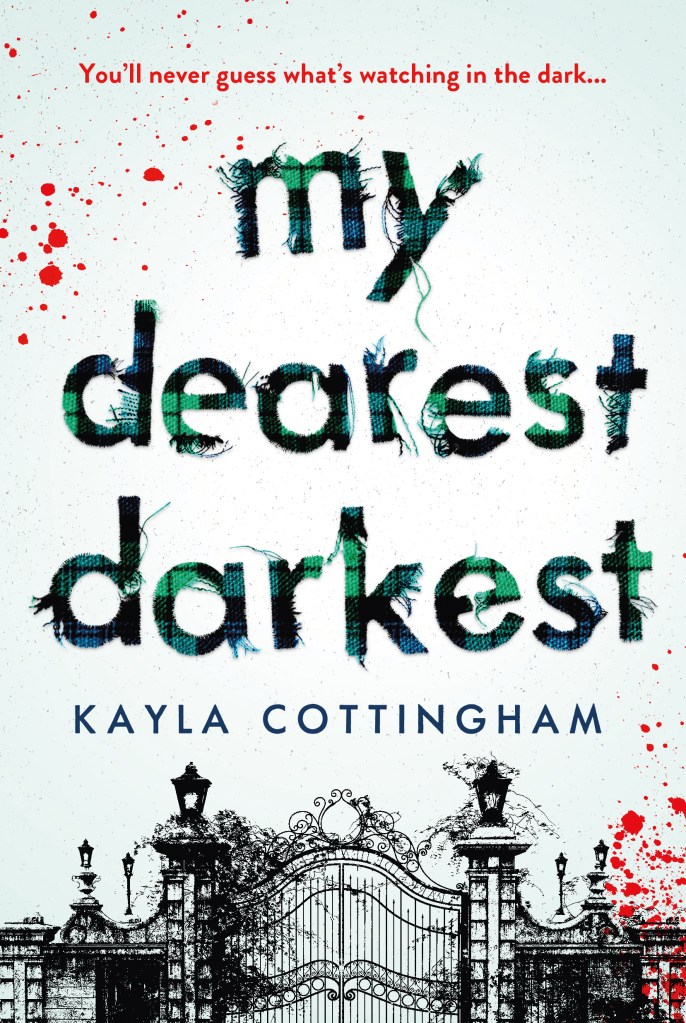
Kate’s Review: “My Dearest Darkest”


This post may contain affiliate links for books we recommend.  
Read the full disclosure here.

Book: “My Dearest Darkest” by Kayla Cottingham

Publishing Info: Sourcebooks Fire, March 2022

Where Did I Get This Book: I received an eARC from NetGalley.

Where You Can Get This Book: WorldCat | Amazon | Indiebound

Book Description: WILDER GIRLS meets THE CRAFT in this Sapphic horror debut that asks: What price would you be willing to pay to achieve your deepest desires?

Finch Chamberlin is the newest transfer student to the ultra-competitive Ulalume Academy… but she’s also not what she seems. Months before school started, Finch and her parents got into an accident that should have left her dead at the bottom of a river. But something monstrous, and ancient, and terrifying, wouldn’t let her drown. Finch doesn’t know why she woke up after her heart stopped, but since dying she’s felt a constant pull from the school and the surrounding town of Rainwater, like something on the island is calling to her.

Selena St. Clair sees right through Finch, and she knows something is seriously wrong with her. But despite Selena’s suspicion, she feels drawn to Finch and has a sinking feeling that from now on the two will be inexplicably linked to one another.

One night Finch, Selena, and her friends accidentally summon a carnivorous creature of immense power in the depths of the school. It promises to grant every desire the girls have kept locked away in their insecure hearts―beauty, power, adoration―in exchange for a price: human body parts. But as the cost of their wanting becomes more deadly, Finch and Selena must learn to work together to stop the horror they unleashed, before it consumes the entire island

Review: Thank you to NetGalley for providing me with an eARC of this novel!

As someone who loves horror as well as soapy academic settings, it’s probably not a big surprise that “My Dearest Darkest” by Kayla Cottingham grabbed by attention based on that summary alone. She also had me at the promise of a Sapphic romance with hints of “The Craft”, a film that I hold near and dear to my heart (and which will be referenced again soon on this blog…). I hopped into this horror novel with certain expectations, and while there were a couple stumbles here and there, there was a lot of potential and lot that was well executed.

I’m actually going against my usual process and will opt to start with the negative first, mostly because I feel like the positives are greater in the long run and I want to tackle them second. In terms of characterization, “My Dearest Darkest” is a little more on the weaker side than I was hoping for. I really liked misunderstood ‘bad’ girl Selena St. Clair, as her inner conflicts regarding toxic friendships, fear of rejection due to her bisexuality, and hardened spirit due to a traumatic event at the hands of someone she trusted makes for a complex character. She’s rough around the edges, but you also see just how big her heart is. Selena is the exception to the following critique. Everyone else is just kinda dull, from Selena’s mean girl friends to Finch, the new girl who has a strange connection to Nerosi, a strange being that has awakened on the school grounds who can grant favors to those who ask, if only for something in return. Finch has tragic background and a connection to a supernatural threat, but compared to Selena she fades a bit, falling back on meek characteristics we’ve seen many times before. I liked Selena and Finch as a burgeoning pair, but that, again, may have more to do with Selena. And don’t even get me started on various side characters, who are just there to provide exposition when convenient and little else.

But the horror elements. My GOSH the horror elements! Cottingham is not messing around here, bringing in multiple subgenres like body horror, Gothic horror, and Cosmic horror with some ghosties for good measure, and it all works really well. I wasn’t really sure of what to expect in this regard, as sometimes YA authors err on the side of caution and make horror moments a little less intense, hedging their bets in case there are readers who may need some restraint. Not this book. There were multiple moments where I was like ‘oh shit!’, from people pulling their teeth out, to descriptions of cosmic limbs in all their tentacled disgustingness, to a VERY creepy moment with a ghostly being that moved in jerky, uneven spurts. Which is totally one of the things in horror movies that really freaks me out.

It certainly didn’t help that I had just rewatched “Kairo”, the movie with this scene which nearly gave me a panic attack the first time I saw it. (source)

I also liked the Nerosi mythology and mystery, from an eight eyed stag familiar that brings nothing but trouble to an urban legend about a band that may be based in truth who disappeared years prior. At the end of the day, I pick up a horror novel because I want to be scared in some way, shape or form, and there isn’t any question that “My Dearest Darkest” was super creepy, with knowing nods to Lovecraftian ideas as well as the likes of “The Craft” and “Jennifer’s Body”. And what a glorious amalgamation it makes.

So while I thought that a lot of the characters were pretty cardboard in their execution, I really did like the horror elements, which elevated the book over all. I am very interested to see what Kayla Cottingham comes out with next, because their horror prowess is pretty solid!

Rating 7: While some of the characters felt a bit two dimensional and stiff, there was plenty of gnarly body and cosmic horror to make up for it!

Reader’s Advisory:

“My Dearest Darkest” is included on the Goodreads lists “Spooky Books with Bi Characters”, and “Queer Horror”.

Kate’s Review: “Dark Stars: New Tales of Darkest Horror”

This post may contain affiliate links for books we recommend.  Read the full disclosure here.

Book: “Dark Stars: New Tales of Darkest Horror” by Joh F.D. Taft (Ed.)

Publishing Info: Tor Nightfire, March 2022

Where Did I Get this Book: I received an eARC from NetGalley.

Where Can You Get this Book: WorldCat | Amazon | IndieBound

Book Description: Dark Stars, edited by John F.D. Taff, is a tribute to horror’s longstanding short fiction legacy, featuring 12 terrifying original stories from today’s most noteworthy authors, with an introduction by bestselling author Josh Malerman and an afterword by Ramsey Campbell.

Created as an homage to the 1980 classic horror anthology, Dark Forces, edited by Kirby McCauley, this collection contains 12 original novelettes showcasing today’s top horror talent. Dark Stars features all-new stories from award-winning authors and up-and-coming voices like Stephen Graham Jones, Priya Sharma, Usman T. Malik, Caroline Kepnes, and Alma Katsu, with seasoned author John F.D. Taff at the helm. An afterword from original Dark Forces contributor Ramsey Campbell is a poignant finale to this bone-chilling collection.

Within these pages you’ll find tales of dead men walking, an insidious secret summer fling, an island harboring unspeakable power, and a dark hallway that beckons. You’ll encounter terrible monsters—both human and supernatural—and be forever changed. The stories in Dark Stars run the gamut from traditional to modern, from dark fantasy to neo-noir, from explorations of beloved horror tropes to the unknown—possibly unknowable—threats. It’s all in here because it’s all out there, now, in horror.

Review: Thank you to NetGalley for providing me with an eARC of this collection!

“Dark Stars: New Tales of Darkest Horror” was a long time coming! As has been a theme for some books in the past two years, it was initially supposed to come out at one time, then got bumped back by a number of months due to various issues. It had been on my radar for awhile, as it was sporting the names of a number of my favorite authors (Caroline Kepnes and Stephem Graham Jones, what’s up?), AND was set up as an homage to horror anthology collections over the years (the title alone harkens to “Dark Forces”, a horror anthology from 1981 that is considered a game changer for horror short fiction in many horror circles). Those two things alone were enough to make me shrug off my nervousness about tackling a short story collection, when my experiences with such things are mixed. Granted, lately I’ve had a pretty good run with short story anthologies, but as a pessimist I’m always waiting for the other shoe to drop!

I’ll break it down first with the stories I liked best. And the ones I’m picking are a mix of the obvious but also something new.

“The Attentionist” by Caroline Kepnes

Kepnes is one of my very favorite authors, so no duh she ends up as a top story in this collection. “The Attentionist” is a story that has a huge focus on sisterly rivalry, with a heavy dose of the original 1970s “Black Christmas” thrown in for good and horrifying measure. Maeve and Reg are teenage sisters, both desperate for the attention and approval of boys. They both have fantasies about being swept off their feet and live vicariously through each other, especially when Maeve gets a phone call that Reg answers and it leads to a fantasy about a potential boyfriend… But when Maeve picks up the phone, it isn’t a dream boy, but a threatening stalker, who keeps on calling, much to Maeve’s horror… and excitement. Kepnes is so damn good at making creepy and disturbing content go down with ease thanks to snark, sarcasm, and satire, and I was both very unsettled by this story while also being highly entertained. I liked the pacing, the turn on a dime reveals, and the way that Kepnes easily shows the consequences of her teenage girl characters being so deeply warped by society’s message about male approval at any cost.

“All the Things He Called Memories” by Stephen Graham Jones

Another favorite author makes it to my favorites list from this collection! And he did not disappoint, which isn’t surprising. “All the Things He Called Memories” is a blend of a few kinds of horror themes: isolation, the unknown, and the fear of not knowing a person you think you know. Jones sets his tale during the height of the first year of COVID-19, with married couple Bo and Marcy not leaving their home and trying to find ways to pass the time, Marcy suggesting they talk about their fears and the scariest thing they can remember from their lives. Bo talks about the feeling of always being watched whenever he was alone in his house, and feeling a presence around him…. And then, that presence starts to creep back into his psyche. But is it something supernatural, or a symptom of COVID restlessness.. or something worse? This story, like many Jones stories, has a deeply human element to it, with relatable characters and a slow build of creepiness that set my teeth on edge, and as Bo tries to figure out what is going on, Jones lays out many possibilities, only to have a very unsettling outcome that is going to stay with me for awhile. As someone who also has a terrible irrational feeling of being hunted while on the steps in my house, afraid of what may or may not be in the dark, this one was a home run for me.

“Challawa” by Usman T. Malik

I hadn’t read anything by Usman T. Malik until this short story collection, so I really didn’t know what to expect going in, but “Challawa” was fantastic. Karima and her husband Ed have travelled to India, with Karima interested in folklore and history of a small town that was the location of an English backed match factory during the Imperial occupation of Britain. As Karima learns of the folklore and mythology of the region, she is also dealing with her husband’s infidelity, the stillbirth of their child, and how their relationship has been reeling because of it (and other issues). As Karima gets closer to her guide and the lore, the history of violent colonialism bleeds in and leads up to a terrifying realization. This one was probably my favorite in the collection as a whole, as Malik not only has some great South Asian monster lore he’s working with, but also very real horrors of misogyny, racism, colonialism, and the traumas that all come with it. I’m reluctant to use this comparison because this is very much an Eastern story and shouldn’t have to have Western analogs, BUT, there are definitely similar universal themes that made me think of “Midsommar”. But given that I didn’t like “Midsommar”, I’m not going to say that “Challawa” is akin to it in all ways. It stands on its own as something unique and SUPER scary.

And while there were standouts from a couple more authors (I do want to acknowledge Alma Katsu’s story “The Familiar’s Assistant”, because man did that nail vampire themes!), the rest were mixed. There were some that were okay, or at least kept my attention, and there were others that really didn’t work for me, be it because of strange style choices, scattered narratives, or some slight to expansive appropriation of Indigenous cultural stories and themes. That last point aside, I’m sure that the variety of story types and subgenres means that there will be something for everyone in this collection, but as someone who is already wary of story collections the number of misses merely confirmed my wariness. There are certainly gems here, as you can see above, but having to get through the stories that weren’t as interesting was a bit of a chore.

If you are a horror person who really enjoys short story collections (and I know a few!), “Dark Stars” is a pretty good example of that. I’m always happy to find more authors I connect with, and that is something that this book provided for me.

Rating 7: A third really stood out, a third were okay, and a third were not for me. All in all, a mixed collection.

Reader’s Advisory:

“Dark Stars: New Tales of Darkest Horror” is included on the Goodreads list “Horror to Look Forward to in 2022”.

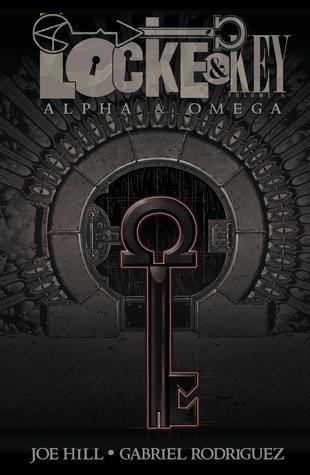
Kate’s Review: “Locke & Key (Vol. 6): Alpha & Omega”

This post may contain affiliate links for books we recommend.  Read the full disclosure here.

Book: “Locke & Key (Vol. 6): Alpha & Omega” by Joe Hill and Gabriel Rodríguez (Ill.)

Publishing Info: IDW Publishing, January 2014

Where Did I Get This Book: I own it.

Where Can You Get this Book: Amazon | IndieBound | WorldCat

Book Description: The shadows have never been darker and the end has never been closer. Turn the key and open the last door; it’s time to say goodbye.

The final arc of New York Times bestselling Locke & Key comes to a thunderous and compelling conclusion.

Review: I feel like my re-read of “Locke & Key” went by in a flash. It could be because my re-read of “Sandman” was a few volumes longer, but I think that it’s also the fact that Joe Hill has created something that has depth, complexity, and some great horror and fantasy moments that is well packaged and easily digestible. I found myself kind of dreading the end, as I knew that it was going to pack an emotional wallop, but once I picked up “Alpha and Omega”, I basically devoured it in a sitting, taking breaks only to weep into my hands because of said wallop.

I don’t even know where to begin as I review the end of this series. Hill has built up to this moment, and you know that there are going to be a lot of casualties and a lot of collateral damage as Dodge makes his final moves into trying to open the Black Door, but when it centers around graduation night and a high school party in the caves, the stakes are raised to the highest point that the series has seen. It’s up to Tyler and Kinsey to try and stop Dodge, though they have no idea that Dodge has inhabited Bode’s body. So when Dodge does start wreaking havoc, all through the body of a child, it’s just heart-rendering to see. Especially since all the chaos that unfolds involves teenagers, and therefore other children. No one ever said that Hill was sunshine and rainbows, but I had forgotten just how goddamn bleak this last arc is as the horrors unleash and demons do their best to overtake Lovecraft, and perhaps the world at large. It’s a great reveal, it all comes together and makes sense in terms of what we’ve seen so far, and it is a fantastic climactic story arc for this series with awesome horror moments and full fledged mythology. And a whole lot of death, a lot of it coming for characters we have come to care for.

But there are also a lot of wonderful bits of hope throughout this tale. We’ve followed the Locke children (as well as their mother and uncle to lesser degrees), and now we get to see them come to the end of their journey and to live up to the potential of who they are meant to be, as Lockes and as people in general. Tyler and Kinsey have come so far as characters, and through the highs and lows of both I came to just fall in love with them both all over again, just like I did the first time I read it. They are teenagers with a lot of pain in their hearts, and they are messy and damaged, but they are also, ultimately, great people who love their family, even as the family has gone through something terrible and hasn’t figured out how to come through the other side just yet. Hill writes them both as incredibly human, and as such sometimes they just made me want to throttle them, and other times I want to hug them and never let them go. By the time we got to the end of their journeys, Tyler’s in particular, I was a weepy mess.

There are a couple things that don’t work. One is how Hill writes Jordan’s, Tyler’s girlfriend’s, final storyline. I feel like we never really got to fully explore Jordan as a character, as she was relegated to ‘bad girl with a heart of gold who pushes those who care for her away’. We’ve seen it before. She’s more there to give Tyler the ability to learn and grow, and I felt like she deserved more than that. There is also one big moment (no spoilers here) that didn’t really get the explanation I think that it needed, but ultimately these things are minor within the grand scheme of what does end up working. Because so much works.

And one more shout out to Gabriel Rodríguez. His artwork is so fantastic, and there are a lot of moments in this book that have emotional beats that fully rely on the visuals as opposed to what is being said.

Though full disclosure, these days any emotional content with mothers and daughters is going to set me off. (source: IDW Publishing)

“Locke & Key: Alpha and Omega” is a near perfect ending to a fantastic series. I am so glad that I decided to revisit it, as I feel like I got even more out of it this time than I did on my initial read. I imagine I will revisit the Locke Family in the future, as they and the story they have is a wondrous dark fantasy horror creation with so much heart.

And given that there is a crossover story with “Sandman”….. we may be seeing both worlds from some comic re-reads in the near future…

Rating 9: A practically perfect ending that made me weep, “Locke & Key (Vol. 6): Alpha & Omega” brings it all to the finish with emotion, horror, and hope.

Reader’s Advisory:

“Locke & Key (Vol. 6): Alpha & Omega” is included on the Goodreads lists “Best Coming of Age Horror Novels”, and “Graphic Novels That Are Quality”.

Previously Reviewed:

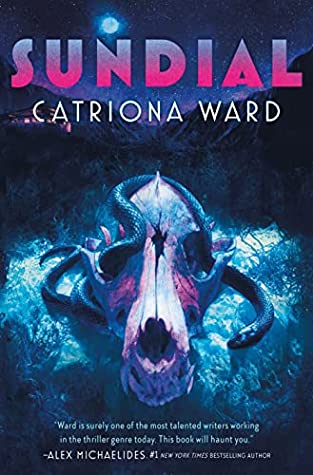
Kate’s Review: “Sundial”

This post may contain affiliate links for books we recommend.  Read the full disclosure here.

Book: “Sundial” by Catriona Ward

Where Did I Get This Book: I received an eARC from NetGalley.

Publishing Info: Tor Nightfire, March 2022

Where Can You Get this Book: Amazon | IndieBound | WorldCat

Book Description: Sundial is a new, twisty psychological horror novel from Catriona Ward, internationally bestselling author of The Last House on Needless Street.

You can’t escape what’s in your blood

All Rob wanted was a normal life. She almost got it, too: a husband, two kids, a nice house in the suburbs. But Rob fears for her oldest daughter, Callie, who collects tiny bones and whispers to imaginary friends. Rob sees a darkness in Callie, one that reminds her too much of the family she left behind. She decides to take Callie back to her childhood home, to Sundial, deep in the Mojave Desert. And there she will have to make a terrible choice.

Callie is worried about her mother. Rob has begun to look at her strangely, and speaks of past secrets. And Callie fears that only one of them will leave Sundial alive… The mother and daughter embark on a dark, desert journey to the past in the hopes of redeeming their future.

Review: Thank you to NetGalley for providing me with an eARC of this novel!

You perhaps remember last Fall when I reviewed the supremely hyped horror novel “The Last House on Needless Street” by Catriona Ward. And that while I thought it was engaging and entertaining, I thought that the big twists and surprises were based in kinda cliché tropes that we’ve seen before, and that I called them from a mile away. I wasn’t super concerned about that when I saw she had a new book called “Sundial”, however, as I could tell that Ward has a serious talent for convoluted horror with a lot of misdirection and oddness. So I jumped in one weekend, eager to see if this one would be an experience that was a bit more fulfilling. And oh. It was. It was a fucked up ride but fulfilling it was.

Me closing my Kindle at 11pm after reading something so supremely fucked and feeling great about it. (source)

As a reader you are thrown into a very strange narrative when you start “Sundial”. All you know is that you are following Rob a wife and mother who is hiding a terrible backstory, is married to a shithead named Irving, and has two daughters, the softspoken Annie and the weird and morbid Callie, who likes to play with bones and may or may not be talking to ghosts. After a violent incident that involves Callie nearly ends in disaster, Rob in convinced that the wrongness in her is getting out of control, and takes her on a mother daughter trip to Sundial, the compound that Rob and her now absent twin sister Jack grew up on. Which involved animal research, complete isolation from the outside world, and Jack seeing ghosts that weren’t there? Does Ward explain any of this as we are tossed into the deep end? Nope. But all in good time we slowly get to see Rob’s backstory at Sundial, her relationship with her sister and her father and stepmother, and how she ended up in a violent marriage with a kid who has something wrong with her. It’s told in Rob’s present, as well as Callie’s present POV, and through flashbacks to Rob’s life moving up to the present. Ward is so good at keeping things unexplained without making them frustrating for the reader, as I was absolutely muttering to myself ‘what the fuck is going on?’ without getting mad about it. I really liked how it all comes together, and how even in my wildest dreams I couldn’t have predicted how so many things were going to shake out, while still seemingly ‘believable’ within the world we are exploring. It’s a very unique horror tale, and it works.

I also liked the characters in this book, at least the ones that we spend the most time with. And again, I want to emphasize that Ward kind of drops us in the middle of the high stress and strangeness life of Rob and doesn’t feel a need to explain until she is ready. But Rob is such a relatable and interesting character from the jump that it didn’t bother me. Why is she married to this man she obviously hates? What is she so afraid of when she sees how Callie is behaving? And also, why is Callie the way she is? I loved the way that we carefully peel back both of their characters and how nuanced they both were. I’m doing my very best to work in vague terms because it’s definitely best to go in with this muddy situation. But I ended up caring for them both and worrying about them both, even when they are potentially at lethal odds with one another. The fear, anger, and love between them really connects, and makes the read all the more emotional.

My one quibble? A couple of the twists were a bit frustrating to me, and I think I know why. Without spoiling, I’ll try and explain. The first is the most obvious, as it is once again a twist that happens right at the end as one last gotcha. You know that I don’t like this kind of thing unless it is REALLY earned. And actually, it is, for the most part, somewhat earned in this book. But it’s one that still felt a bit like a hackneyed ‘didn’t see THAT one coming moment!’ just for shocks, though not as bad as many are! The other is one of the twists involving Rob’s twin sister Jack, and how it changes some of the perceptions of Rob and her relationships with those around her (honestly, I thought that Jack was the least interesting character of them all, as she functions in tropes that we have seen many times before. It’s kind of too bad that she plays such a huge role in the story in term’s of Rob’s characterization and more, because I found her grating). The effect it had and the fallout that transpired was hard to swallow for me, as, again, it’s the kind of twist that has been done within themes like this before, and it’s one that feels over-explored at this point.

BUT, overall I really enjoyed “Sundial”! Ward has proven herself to be skilled at writing stories with discombobulating plots that eventually come together and make sense, and it worked even better this time around with even muddier waters to navigate. I cannot wait to see what she comes up with next.

Rating 8: A surrealistic and twisted horror tale about sisters, mothers, and daughters, “Sundial” kept me guessing and kept me riveted.

Reader’s Advisory:

“Sundial” is included on the Goodreads lists “Horror to Look Forward To in 2022”, and “2022 Horror Written by Women (Cis and Trans) and Non-Binary Femmes”.