Kate’s Review: “Bloody Fool for Love”

This post may contain affiliate links for books we recommend.  Read the full disclosure here.
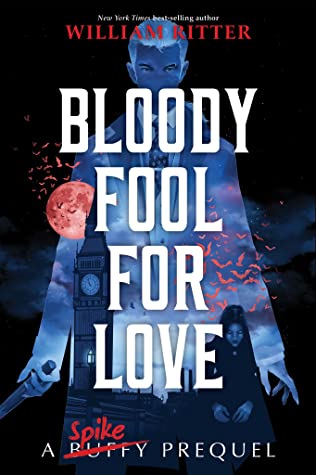
Book: “Bloody Fool for Love” by William Ritter

Publishing Info: Disney Hyperion, August 2022

Where Did I Get This Book: I received an ARC from the publisher at ALA.

Where You Can Get This Book: WorldCat | Amazon | Indiebound

Book Description: Bloody Fool for Love from New York Times best-selling author William Ritter marks the beginning of an all-new series that explores prequel stories about fan-favorite Buffy characters.

Spike just wants to enjoy the spoils of his new badass reputation. He’s now a legendary slayer-killer, and he’s returning to London―the greatest city in the world. Unfortunately, his new abode is far from ideal (mostly a dank basement), and the rest of his strange little “family” is reeling from the fact that their patriarch, Angel, abandoned them. Spike’s love, Drusilla, seems especially heartbroken over the loss and spends her time lost in her tarot cards and planning their next gruesome family dinner when they all can be reunited.

Desperate to break Dru out of her melancholy, Spike vows to steal a powerful relic that will help her focus on their dark future together. It’s the perfect plan―that is until a monster named Gunnar, leader of the demon underworld of London, steals the relic first. Forced to form his own ragtag group of mercenaries, Spike plans an epic heist against a ruthless gang of undead criminals. Confronted with paranormal plots, royal black ops, and tea (they may be abominations, but they’re British abominations, thank you very much), Spike soon realizes that his homecoming is about to get bloody.

This rompy, action-packed novel inspired by one of Buffy’s most infamous bad boys is part Bonnie and Clyde, part Sherlock and Watson, with just a bit more bloodsucking.

Review: Thank you to Disney Hyperion for giving me an ARC of this novel!

When Serena and I were wrapping up our time at the ALA Annual Conference, we were making a last pass at each publisher booth to see if there were any new ARCs to be had. I spotted one at Disney Hyperion called “Big Bad”, which is a “Buffy the Vampire Slayer” book that showcases a lot of the villains from the show (we may see that in the near future on the blog, we will see!). I picked it up and said an offhanded remark along the lines of ‘well, if it has Spike in it I HAVE to pick it up’. Spike was my very favorite character on the show. He was funny, sarcastic, a bit of a dork, punk to the bone, and had a very interesting character arc that changed him from throw away villain to hero. I had a MASSIVE crush on him, he was probably my first TRUE teenage celebrity crush, the kind of crush that just sets the scene for a lot of crushes afterwards. So when the rep at the table said ‘We have a Spike book too. Do you want that as well?’, you can probably imagine how I reacted.

I was fifteen again, emotionally. (source)

And that is how I stumbled upon “Bloody Fool for Love” by William Ritter. A historical fantasy-horror heist story featuring Spike, aka William the Bloody, on a quest to get a magical artifact for his fellow vampire lady love Drusilla in early 20th Century London.

[Let’s stop here to talk about an elephant in the room: Joss Whedon. Joss Whedon is an abusive asshole, and I haven’t revisited any of his works in a very long time. Partially because of the newish information about him, partially because of my own frustration with how he wrote some of his shows, partially because there had been whisperings of his terribleness for a LONG time and it had already made me uncomfortable revisiting (like, I’m pretty sure I was aware of the disgusting Charisma Carpenter situation around the time it happened because of rumors online shortly after it all went down). I was super happy to see a lot of “Buffy” actors speak out about the toxic set, including James Marsters, who played Spike, and while I have given up on Whedon’s creative visions with his direct involvement, I want to see what other people do with these characters.]

“Bloody Fool for Love” is, as I said, a historical fiction fantasy-horror heist story, and while I am not SUPER into heist stories, it’s Spike. We established I would probably follow him through a trip to the post office, so I will happily follow him through a heist. Ritter does a really good job of picking up in the show’s lore and setting the right tone that falls between action thriller and tongue in cheek. We have a very specific moment, after Spike has killed his first slayer and after he, Drusilla, and Darla have returned from China, sans Angel. Spike is riding high on his new reputation, while Drusilla is aching for her sire and Darla is having her own existential crisis. The story captures all of these characters pretty handily, and I believed all of them in terms of voice and actions. Spike is such a fun character who, even without a soul at this point, has his moments of being complicated in his actions while still coming off with a swagger and devil may care persona, and Ritter nails it. Having him stupidly attempt to heist an ancient artifact for Drusilla, even though it will surely put a target on his back, is so on point for the character in his impulsivity and his RIDICULOUS loyalty and love for Dru, it just spot on, and I loved seeing him fly by the seat of his pants. Like I said above, Spike could really do anything and I’d be entertained, but Ritter really had a good grasp on the character and all his complexities. I also liked the rag tag group of weirdos that he recruits to help go up against the demon kingpin he’s trying to rip off, from other demons to a werewolf, as they felt like they fit into the story and the universe really well. I could see this plot line being an extended arc on the show it fits in so well.

But what I liked the most about this book, interestingly enough, had less to do with the character of Spike and more to do with the character of Darla. For those unfamiliar with the show, Darla was part of the “Fanged Four”, which included Spike, Drusilla, and Angellus/Angel. Darla was Angellus’s sire, and she served a few purposes during both the “Buffy the Vampire Slayer” series and the “Angel” series. Darla is always a bit left behind in the stories on the show, even if she was the first of the group. First she was an evil ex girlfriend who basically was killed as a way to prove Angel’s new, reformed ways. Then on “Angel” she was brought back as a human with torment, only to be turned back into a vampire for ANGEL’S torment, and then she was there to be a uterus so Angel could have a son named Connor (and that whole storyline is a SHIT SHOW), who then sacrificed herself for her baby. As one can imagine, I have a lot of notes about all of this, because through the flashback sequences we do see of her throughout the two shows during their “Fanged Four” time, Darla had a LOT of potential to be super interesting, but was instead relegated to a LOT of misogynistic tropes (I reiterate my up-page point: Joss Whedon sucks). But in “Bloody Fool for Love”, Darla has her OWN storyline that gets to explore these complexities, as she is privately reeling from the loss of Angel, and having to be the ‘mom friend’ to Drusilla, a very unstable waif, and Spike, who is, bless him, a reckless dolt. Darla doesn’t want to leave these two far younger and impulsive vampires to fend for themselves, but she also wants to have her life back, and you see the mechanisms and dealings that she is making in hopes of securing a new future for herself, while also keeping her loved ones safe. I loved seeing her interact with various players, as it shows her charm, her diplomacy, her cunning, and her resiliency.
About fucking TIME this badass queen gets the respect she deserves! (source)

I will be very curious to see what other ‘fan favorite’ characters get the prequel story treatment. Spike was the clear winner to start with, as he is such a dynamic and interesting player in the “Buffy” universe, and I think that William Ritter did him right. “Bloody Fool for Love” will probably be most fun for “Buffy” fans, and as a Spike fangirl through and through I had a blast with it.

Rating 8: A truly fun standalone tale with a vampire who means SO much to me, “Bloody Fool for Love” not only brings Spike to life, it also gives another of my favorites a great romp of a story.

Reader’s Advisory:

“Bloody Fool for Love” is included on the Goodreads list “Best Buffy the Vampire Slayer Books”.

Kate’s Review: “American Vampire (Vol. 2)”

This post may contain affiliate links for books we recommend.  Read the full disclosure here.

Book: “American Vampire (Vol.2)” by Scott Snyder & Raphael Albuquerque (Ill.)

Publishing Info: Vertigo, May 2011

Where Did I Get This Book: I own it.

Where You Can Get This Book: WorldCat | Amazon | Indiebound

Book Description: While trafficking in a bestselling sub-genre, American Vampire introduces a new strain of vampire — a more muscular and vicious species, born of the American West.

It’s Las Vegas circa 1935, and Skinner Sweet and our gal Pearl are about to learn the hard way that the bloodsuckers in Hollywood were nothing compared to what awaits them in Sin City.

In just a few short years, young police Chief Cash McCogan has watched his native city of Las Vegas go from cow-town to wild, glittering boomtown. And when the bodies of prominent businessmen start showing up drained of blood, Chief McCogan finds himself facing a threat much darker and deadlier than anything he could have imagined . . . and the only sure bet in town is that Skinner and Pearl are right in the thick of it.

Review: So “American Vampire”‘s second volume was the one I was most apprehensive revisiting, as I remembered not liking it so much on my initial read. So much so that I kind of stopped the series for awhile. I felt that it dove into some stuff that I had a very hard time with, ultimately, and I knew that while I had to read it again for this revisit, I wasn’t looking forward to it. But a completist I am when it comes to this stuff, and ya gotta judge a series but all of it’s canonical parts. So into “Volume 2” I dove. And it was a better experience this time around to be sure, just putting into the context of the greater storyline! But man, I still really hate that Skinner Sweet. And I think he’s getting off a little easy.

Starting with what I do like about this volume, as it does outweigh the negatives, I love how Snyder has taken another snapshot of a moment in American history, this time being the inception of Las Vegas’s reputation as a party town due to the construction of the Hoover Dam, and adds in some vampire touches that could link to real life ills of American society. This time it’s the idea of progress and innovation, as the dam has brought in a lot of workers, and with workers comes a certain rowdiness that Las Vegas Deputy Cash McCogan is wary of. So when high powered backers involved in the dam start ending up dead, drained of blood, he is approached by a mysterious couple of agents, one of whom is Felicia Book, the daughter of previous hero turned vampire James Book. I loved how we slowly peeled back what Felicia’s deal was, and what kind of group she is working for, as well as her ulterior motives beyond the group because of her connection to their target, Skinner Sweet. And of course Skinner has his disgusting claws planted firmly in Las Vegas’s underbelly. I thought that the mythos building in this issue was good, though some of the plot points introduced were very quickly resolved in ways that felt unsatisfying to me.

I think that my biggest qualms partially go back into my previous qualms with my initial read, though I did find more this time that aggravated me, though my overall dissatisfaction wasn’t as pronounced this time. For one, without going into specifics, Skinner Sweet continues to be the irredeemable worst, and continues to not have any interesting growth or nuance. It’s fine when it’s the first volume and we are just getting to know him, but if we are going to have such a focus on him as the story goes on, it would sit better with me if he was more interesting in his badness. As it is in this volume, he’s either exploiting sex workers as the head of a brothel, continuing his spiteful violence, and creating a pivotal turning point in the series for a few characters through a particularly terrible act that disturbed me as much this time as it did the first time reading it. I did like following our ‘heroes’, deputy Cash McCogan, as well as two mysterious agents for the hush hush group, one of whom being Felicia, but on the flip side there is a VERY serious lack of Pearl in this volume. Given that Pearl is the vampire I actually really like in this series, it was a shame she was kind of sidelined, even if it was rewarding in some ways. The lack of Pearl this time was especially galling. She is far more interesting than Skinner freakin’ Sweet.

But Raphael Albuquerque’s art is still pretty great! I like that this time around he gets to play with some vampire designs that think outside the box!

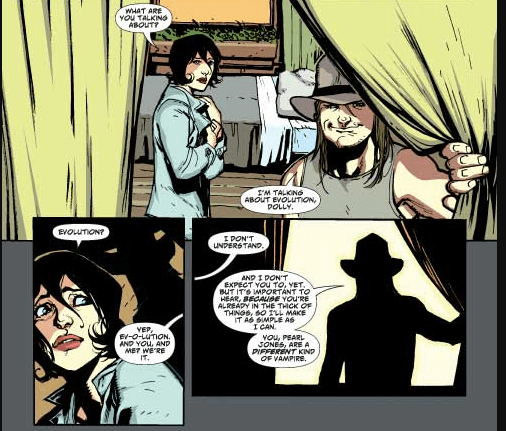
I mean this is just cool. (source)

I liked the expanded mythos of the vampire hunters, but didn’t like the central focus on Skinner Sweet this time around. But I am excited to revisit where things go next, as I remember liking it more than this foray into the storyline.

Rating 7: Another fun deep dive into vampire connections to American history, though it sometimes feels a bit haphazard in introducing and concluding plot points.

Reader’s Advisory:

“American Vampire (Vol. 2)” is included on the Goodreads lists “Comic Books to Appreciate and Love”, and “Best Horror Comics/Graphic Novels”.

Previously Reviewed:

Kate’s Review: “Shutter”

This post may contain affiliate links for books we recommend.  Read the full disclosure here.

Book: “Shutter” by Ramona Emerson

Publishing Info: Soho Crime, August 2022

Where Did I Get This Book: I received an ARC of this novel at ALAAC22.

Where You Can Get This Book: WorldCat | Amazon | Indiebound

Book Description: This blood-chilling debut set in New Mexico’s Navajo Nation is equal parts gripping crime thriller, supernatural horror, and poignant portrayal of coming of age on the reservation.

Rita Todacheene is a forensic photographer working for the Albuquerque police force. Her excellent photography skills have cracked many cases—she is almost supernaturally good at capturing details. In fact, Rita has been hiding a secret: she sees the ghosts of crime victims who point her toward the clues that other investigators overlook.

As a lone portal back to the living for traumatized spirits, Rita is terrorized by nagging ghosts who won’t let her sleep and who sabotage her personal life. Her taboo and psychologically harrowing ability was what drove her away from the Navajo reservation, where she was raised by her grandmother. It has isolated her from friends and gotten her in trouble with the law. And now it might be what gets her killed.

When Rita is sent to photograph the scene of a supposed suicide on a highway overpass, the furious, discombobulated ghost of the victim—who insists she was murdered—latches onto Rita, forcing her on a quest for revenge against her killers, and Rita finds herself in the crosshairs of one of Albuquerque’s most dangerous cartels. Written in sparkling, gruesome prose, Shutter is an explosive debut from one of crime fiction’s most powerful new voices.

Review: Thank you to Soho Crime for giving me an ARC of this novel!

Before I went out to the ALA Annual Conference this summer, I made a list of books that I wanted to look for in potential ARC form. I also sat down and tried to figure out which publishing house was where on the map so I could be the most efficient in finding said potential books. There were some that I put little stars next to, denoting that these were the books I was most excited for, and “Shutter” by Ramona Emerson was one of those books. I had stumbled upon the description of this book online, and it just called out to me. An Indigenous author combining a gritty detective procedural with a story of a woman who can see ghosts at the crime scene she photographs? In Albuquerque, when New Mexico is one of my favorite states?! HELL YES I WANT THIS BOOK! And I was so thrilled when it was available. I finally sat down to read it about a month after the conference, and let me tell you, I was not disappointed.

The first big thing is that, as we all know, I am a HUGE sucker for stories with people who can see ghosts. I love the idea of a person communicating with the dead, and so help me, if it helps solve a crime and gets tangled up in a procedural setting, I am going to be SO ON TOP OF THAT. And Emerson nails that entire concept here with a really likable medium protagonist, a well established psychic connection to the dead, and how that can both help and hinder her (and it’s mostly hinder her) in her professional and day to day life. I love the idea of the dead not being at all chill about finding someone they think can help them, and then becoming so obsessed with her that THAT is one of the scariest things. In so many stories like this the medium just assists the ghosts because that’s just the right thing to do. In “Shutter”, the ghost in question, Erma, is a complete psychotic asshole who is making Ramona’s life a living hell, and watching it escalate is creepy and scary. I also liked the kinder and gentler interactions between Ramona and ghosts, mostly those from her childhood where her deceased grandfather would come to visit. But along with all that, I also LOVED how Emerson brings an Indigenous perspective to this, and how for Ramona as a Navajo woman seeing the dead is incredibly taboo and something that makes those in her community wary of her, as well as worried for her. Because of this, she cuts herself off from her culture in some ways, and it reflects a lot of the tragic ways that Indigenous people can lose grasps on their identities in a reality that doesn’t involve ghosts.

But this is also a solid procedural thriller, that mixes in gritty detective drama, cartel threats, and a very real and malevolent undercurrent of police corruption that is rotting at the systemic level. While it is true that Erma is a pain in the ass and genuinely creepy at times, the real threat to Ramona is getting too close to not only dangerous drug runners, but also realizing that the supposed ‘good guys’ that she works with can be just and threatening, as law enforcement has its own problems with violent, dangerous people working within it. Emerson also addresses how Rita, as an Indigenous woman, had bad run ins with police as a kid, where she tried to use her powers to help solve a murder, but then was zeroed in on as a potential suspect as opposed to someone with information. Sometimes procedurals get lost in the idea of good police working against the odds, and maybe address a smattering of bad cops here or there while being sure to show that the hero cops are righteous and true. I always kind of like it more these days when stories about law enforcement, even those that follow detectives and police, are more honest about the serious problems law enforcement in this country has in regards to racism and corruption, and “Shutter” addresses it very well.

If you love a good detective story, and if you love a good story about people who talk to ghosts, absolutely pick up “Shutter”. I thoroughly enjoyed it.

Rating 8: Heavy, creepy, and suspenseful, “Shutter” is an awesome horror twist on a procedural mystery.

Reader’s Advisory:

“Shutter” isn’t on any Goodreads lists as of yet, but I think it would fit in on “Not the ‘Normal’ Paranormal”.

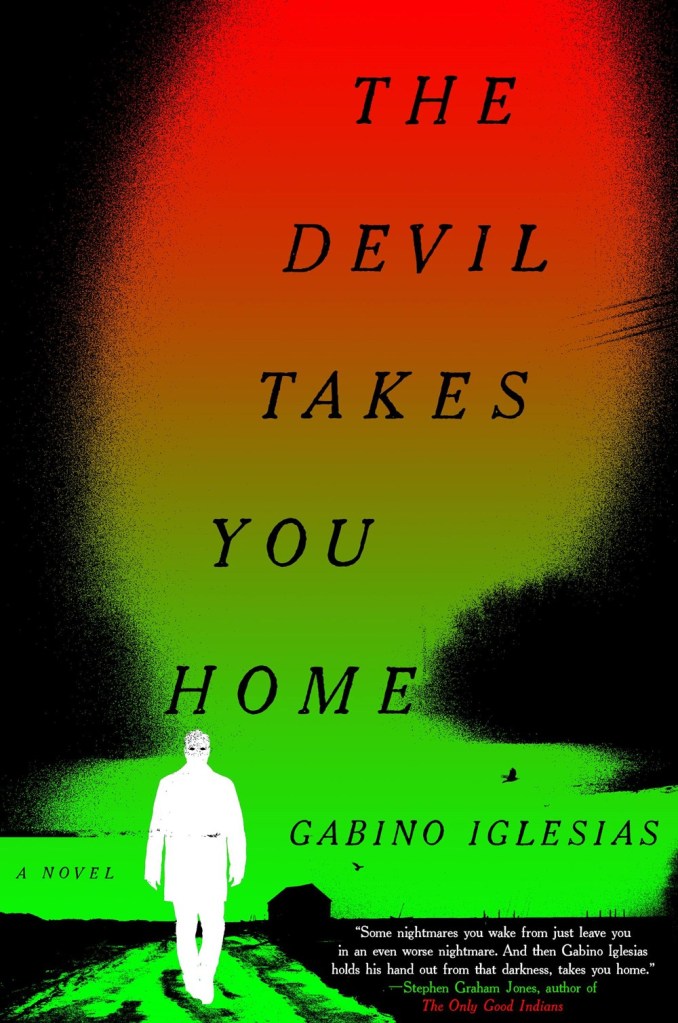
Kate’s Review: “The Devil Takes You Home”

This post may contain affiliate links for books we recommend.  Read the full disclosure here.

Book: “The Devil Takes You Home” by Gabino Iglesias

Publishing Info: Mulholland Books, August 2022

Where Did I Get This Book: I received an eARC from NetGalley and an ARC from the publisher at ALA.

Where You Can Get This Book: WorldCat | Amazon | Indiebound

Book Description: From Bram Stoker, Anthony, and Locus award-nominated author, Gabino Iglesias, comes a genre-defying thriller about a father desperate to salvage what’s left of his family, even if it means a descent into violence–both supernatural and of our own terrifying world.

Buried in debt due to his young daughter’s illness, his marriage at the brink, Mario reluctantly takes a job as a hitman, surprising himself with his proclivity for violence. After tragedy destroys the life he knew, Mario agrees to one final job: hijack a cartel’s cash shipment before it reaches Mexico. Along with an old friend and a cartel-insider named Juanca, Mario sets off on the near-suicidal mission, which will leave him with either a cool $200,000 or a bullet in the skull. But the path to reward or ruin is never as straight as it seems. As the three complicated men travel through the endless landscape of Texas, across the border and back, their hidden motivations are laid bare alongside nightmarish encounters that defy explanation. One thing is certain: even if Mario makes it out alive, he won’t return the same.

The Devil Takes You Home is a panoramic odyssey for fans of S.A. Cosby’s southern noir, Blacktop Wasteland, by way of the boundary-defying storytelling of Stephen Graham Jones and Sylvia Moreno-Garcia

Review: Thank you to NetGalley and to Mulholland Books for giving me an eARC and an ARC of this novel!

I had been hearing about “The Devil Takes You Home” by Gabino Iglesias for a number of months, either on social media or on buzzy book lists. It was one that was definitely on my list, given that I enjoyed Iglesias’s previous book “Coyote Songs”, so when I had the opportunity to read it via NetGalley AND through an ARC I got at ALA, I was eager, but nervous to start. I knew that Iglesias wasn’t going to pull punches, and the description alone tipped me off that this was probably going to be supremely creepy, and also very sad. And reader, I was right. Iglesias just kicked me in my feelings AND set me on the edge of my seat in this part horror story, part cartel thriller, part indictment of American society and the tragedies it creates through its apathy.

The supernatural horrors that Iglesias describes and explores were super, super unsettling, using an air of mystery and ambiguity to fuel them. Just as Mario doesn’t know what he is seeing in the tunnels or out in the desert, we too don’t know, outside of glimpses and short descriptions of things that just don’t sound right. A potential psychic gift that is growing louder. Creatures that sound perhaps humanoid-ish, but which are feral and grotesque. Witchcraft and rituals harkening to the Narcosatánicos conjures up seemingly impossible acts, with the dead coming to life for a fleeting moment to descend upon enemies. Rituals end with otherworldly goo that is then used as a blessing of sorts. A story of a man whose barn was inhabited by a strange being. All of these moments were fleeting, and we didn’t linger to understand or to get an explanation, and honestly that made it all the scarier.

But then it was the real life horrors that REALLY got under my skin. Iglesias doesn’t put too much focus on the magical or otherworldly terrors, but he lasers in on the very real terrors of cartel violence, systemic racism, torture, and childhood illness and brings out so much dread and devastation. I found myself having to put the book down after a particularly devastating moment, but it always feels like there is a purpose and meaning behind the most devastating beats. Iglesias also knows how to capture the rage and trauma and grief that Mario is feeling after his family is ripped asunder by his daughter Anita’s illness, and how a child dying of leukemia is the greatest horror of this book should you be a parent of a young kid (and hello, that is me, so you know I was just reeling in despair). Iglesias doesn’t hold back on the realism that comes with the violence and the violent world that Mario inhabits, and you find yourself horrified by some of the things he does, but you also completely understand it as he is grief stricken AND up to his ears in medical debt. The clear line of society causing so many ills due to capitalism, racism, and class warfare cuts through the pages of this novel, and the desperation of some of our characters drives them into this dark journey in which we are passengers. It mixes horror and thriller and spits out something wholly unique. As I was reading it it felt almost dreamlike, which I imagine is the point, as Mario certainly doesn’t know what is reality and what is in his head as the journey goes on.

“The Devil Takes You Home” is scary and tragic, a cartel thriller and a ghoul-ridden horror tale at once, and it left me breathless by the end. Steel yourself for this one, both in the vivid moments of violence, but also the tragedy of a parent at the end of their rope.

Rating 9: Dark and genre bending, “The Devil Takes You Home” is incredibly tense, unwaveringly scary, and is both bleak and dreamlike.

Reader’s Advisory:

“The Devil Takes You Home” would fit in on the Goodreads list “Diverse Horror”.

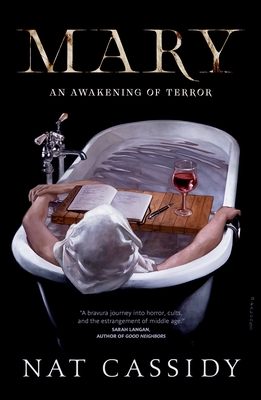
Kate’s Review: “Mary: An Awakening of Terror”


This post may contain affiliate links for books we recommend.  
Read the full disclosure here.

Book: “Mary: An Awakening of Terror” by Nat Cassidy

Publishing Info: Tor Nightfire, July 2022

Where Did I Get This Book: I received an eARC from NetGalley.

Where You Can Get This Book: WorldCat | Amazon | Indiebound

Book Description: Mary is a quiet, middle-aged woman doing her best to blend into the background. Unremarkable. Invisible. Unknown even to herself.

But lately, things have been changing inside Mary. Along with the hot flashes and body aches, she can’t look in a mirror without passing out, and the voices in her head have been urging her to do unspeakable things.

Fired from her job in New York, she moves back to her hometown, hoping to reconnect with her past and inner self. Instead, visions of terrifying, mutilated specters overwhelm her with increasing regularity and she begins auto-writing strange thoughts and phrases. Mary discovers that these experiences are echoes of an infamous serial killer.

Then the killings begin again.

Mary’s definitely going to find herself

Review: Thank you to NetGalley for providing me with an eARC of this novel!

I’m a little reluctant to give a concrete number as to the amount of ARCs I got at ALA Annual in June, as the number is staggering and a little out of control. And yet in spite of these numbers I won’t disclose, there were a few books I was hoping I’d pick up but were unable to obtain either because they weren’t there or the timing was off. So I ran to NetGalley and grabbed the titles I wanted that way, which works out just as well (and far more compact in terms of storage, really). One of those books was “Mary: An Awakening of Terror” by Nat Cassidy. I had my eye on it for awhile, as it touts being in similar veins as “Carrie” and “Midsommar”, which catch my eye for varying reasons. And really, look at that cover. Just disturbing as hell right from the jump. By the time I was fully submerged in the story, however, I was a little adrift, feeling like perhaps I had bitten off a little more than I could chew, thematics wise…

First, what I did like about it. And there is a lot to like about this book! Firstly, I liked how Cassidy really wanted to give a unique voice in a horror novel the spotlight. Our main character Mary Mudgett is a middle aged woman who feels invisible, who is experiencing perimenopause, and who is pretty alone in the world. She returns to her hometown after a decades long absence, a bit nervous to return to a place where she was so tormented by her peers and her aunt Nadine. I thought that Cassidy really brought forth the voice of a middle aged woman who feels left behind and forgotten about, and how he tapped into the horrors of societal expectations of aging, misogyny, and isolation and anxiety so authentically. I also thought that a lot of the aspects he explored in this book in terms of plots, from reincarnation to small town secrets to body horror were all very well done, and came together in unique ways that really got his story across. Also, major props to him for addressing his choice to give a middle aged woman a voice when he himself is a younger cishet man, and how he tried his best to be authentic in her voice and experiences. Also, he clearly has a lot of love for “Carrie”, as in his author’s note he explains that Mary is a reimagining of a woman like Carrie who does make it past the night of Prom, and what that would look like.

But here is the thing. Like many fans of horror (and really all kinds of genres), I am someone who has topics and themes that really work for her, and other topics and themes that really don’t. And “Mary: An Awakening of Terror” is incredibly brutal in a lot of ways, and brutality heaped upon me over and over again can wear me down a bit. I was really happy that Cassidy put a thorough content warning before the story began, because I was able to prepare myself a bit before digging in, but even with the content warning I still had moments where I just had to put the book down for a bit. I won’t spoil anything, but there were three vivid moments where I was fairly put off by what I was reading on the page, and one in particular where I almost stopped reading altogether. At the end of the day, this book was a bit too brutal for me. So we’re kind of in the midst of a review that may be more based on preference than actual content. But one thing to keep in mind is that I’m someone who can tolerate a fair amount of horror nonsense in her reading and consuming of other media. It’s rare that I find myself almost abandoning something because of its brutality. So this book may be too brutal for others as well.

Overall, I really liked the voice that Nat Cassidy gave Mary Mudgett, and I liked some of the creative and scary aspects of the novel as well. But at times it wasn’t an experience I was enjoying in the moment because of the content. Your mileage may vary.

Rating 6: Scary and brutal, but perhaps a bit too much so for this reader.

Reader’s Advisory:

“Mary: An Awakening of Terror” is included on the Goodreads list “Anticipated 2022 Horror/Thriller Releases”.

Serena’s Review: “Dead Water”

This post may contain affiliate links for books we recommend.  Read the full disclosure here.

Book: “Dead Water” by C.A. Fletcher

Publishing Info: Redhook, July 2022

Where Did I Get this Book: Edelweiss+

Where Can You Get this Book: Amazon | IndieBound | WorldCat

Book Description: There’s something in the water… On the edge of the Northern Atlantic lies a remote island. The islanders are an outwardly harmonious community—but all have their own secrets, some much darker than others. And when a strange disorder begins to infect them all, those secrets come to light. Ferry service fails and contact with the mainland is lost. Rumors begin to swirl as a temporary inconvenience grows into nightmarish ordeal. The fabric of the once tight-knit island is unnervingly torn apart—and whatever the cause, the question soon stops being how or why it happened, but who, if anyone, will survive.

Review: I’m pretty much treading on Kate’s toes at this point, since this book clearly fits within the horror genre. But to be fair to myself, it’s from an author I’ve read and enjoyed in the past (seriously, “A Boy and His Dog at the End of the World” is fantastic!), so I was just following my own reading track record to read this latest release. It’s also worth noting that this is the second time in about a month where I’ve read a horror book that not only features zombie rabbits but has them on the cover. Trends are weird, man. Anyways, on to the review!

On a small island, accessible only by ferry once a day, there is no escaping one another. For better or worse, everyone knows everyone, and secrets and gossip have a way of coming to the surface. But when a strange malady begins affecting the people of the island, the true inescapabilty of the place hits home. Without knowing the cause of the curse, an ancient thing half lost to memory, who will survive the night of horror ahead?

I’m going to go out on a limb right now and guess that this book will be a bit polarizing to readers. And I think that all comes down to the pacing and stylistic decisions the author makes early in the book. It’s a slow (sloooooow) start to the story, and we are introduced to a large number of POVs in quick succession. For me, because I enjoyed Fletcher’s first book so much and knew that that one had a large payoff at the end for the groundwork laid early on, I had enough faith that this was all going to go somewhere eventually to happily read on. But I imagine for some readers it may be feel like quite a slog. The horror/fantastical aspects of the story really don’t start showing up until almost halfway through the story.

I think this slow build and the sheer number of characters actually worked really well in the end, if you can get there. For one thing, by having this number of characters, you really get a sense for the feeling of the island, where everyone knows everyone, and their lives weave in and out of one another’s in interesting ways. It also created a situation that gives the reader an increased investment in the outcome of the horror that begins to unfold. These are people with hopes, dreams, flaws, and strengths, not simply NPCs dropping like flies with no thought in the world. It was also clever that your opinions of some of the characters changed as the story continued, so those who you thought were easy-fodder-baddies become more interesting in their own right.

There was also an interesting history and myth that slowly unfolds between chapters of the book. Not only did I find this smaller story interesting in its own right, but there was a surprising twist that came into play in the last fourth of the book that really pulled this story into the present situation in a unique way.

There was also a great exploration of grief and family that winds its way throughout the story. We see how much family is a choice that one makes, regardless of blood connections. That families can support each other but also uniquely break one another. One of the main (ish) characters is also struggling with the recent loss of a spouse, and we see her having to confront some of the darker sides of grief. There’s also an interesting touch on faith and belief that comes into play as the story unspools.

In the end, I think the payoff of the last half of the book is well worth the slow start of the story. By the time the horror starts to tack up, you really care about the characters who are in the path of this violence. And woven throughout is a heart-warming story of coming to understand both the tragic but also the bright sides of love and family. If you enjoy slower, immersive reads with a nice touch of horror and fantasy, than this is definitely one to check out!

Rating 8: A slow start ultimately pays off in a creeping, dread-filled story that also explores beautiful themes of family and the power of love.

Reader’s Advisory:

“Dead Water” isn’t on any Goodreads lists yet but it should be on Aquatic Horror Books.

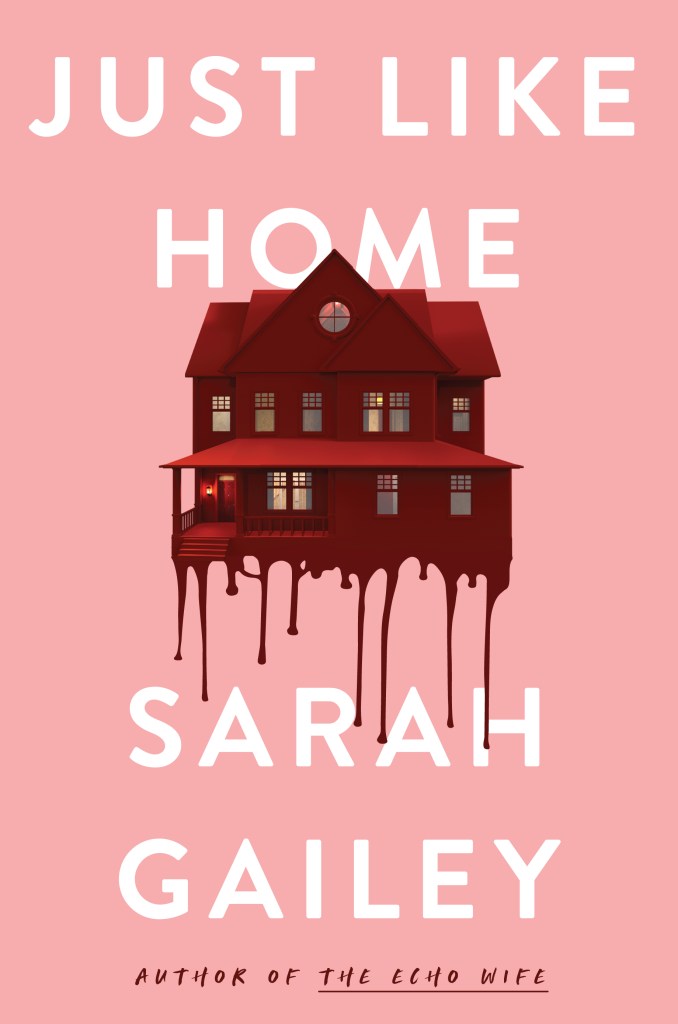
Kate’s Review: “Just Like Home”

This post may contain affiliate links for books we recommend.  Read the full disclosure here.

Book: “Just Like Home” by Sarah Gailey

Publishing Info: Tor Books, July 2022

Where Did I Get This Book: I received an eARC from NetGalley.

Where You Can Get This Book: WorldCat | Amazon | Indiebound

Book Description: “Come home.” Vera’s mother called and Vera obeyed. In spite of their long estrangement, in spite of the memories — she’s come back to the home of a serial killer. Back to face the love she had for her father and the bodies he buried there.

Coming home is hard enough for Vera, and to make things worse, she and her mother aren’t alone. A parasitic artist has moved into the guest house out back, and is slowly stripping Vera’s childhood for spare parts. He insists that he isn’t the one leaving notes around the house in her father’s handwriting… but who else could it possibly be? There are secrets yet undiscovered in the foundations of the notorious Crowder House. Vera must face them, and find out for herself just how deep the rot goes.

Review: Thank you NetGalley for providing me with an eARC of this novel!

I’ve heard the name pop up now and then, but I am pretty certain that until I picked up “Just Like Home”, I hadn’t read anything by Sarah Gailey. I’ve been tempted by a couple of their titles like “The Echo Wife”, but I just haven’t made the leap in spite of the fact that they have some buzz around them. But when I read about this newest book, a horror novel involving a woman who is returning to her childhood home, which also happens to be the site that her father committed numerous murders, I decided that it was time to finally jump in. And, to my slight dismay, as I was reading, I wasn’t really getting into it in the way that the description implied I would.

But I will start with the good, as per usual. I will say that Gailey has a very clear vision as to how they want to portray the very real complexities of loving someone who is, without a doubt, a fucking monster. Vera’s childhood relationship with her father, who turned out to be a serial killer who was torturing men in the family home’s basement, is one that was very fulfilling for her as a child. He clearly loved her very much, always made her feel special, and knew exactly how to prop her up when she was down. We know that Vera’s father is a psychopath, and we see the brutal descriptions of his work, as it were. But we also completely understand how Vera has a hard time reconciling that truth with the other seeming truth of how much he loved her. It’s something that always feels sticky, when loved ones of horrible people who cause damage and pain and violence upon others have a hard time unpacking their experience from that reality, and I thought that that aspect of Vera felt pretty spot on, as well as the ways that she has been warped because of it. And yes, there are plenty of really upsetting and unsettling moments not only because of this stark relationship exploration, but also in terms of the horror elements themselves. It’s a VERY weird and unnerving book, and it goes in directions I wasn’t expecting, and a lot of it reminded me of the movie “Frailty”, which is ANOTHER weird and unnerving story.

But that’s the flip side, in a way: it almost got to be too weird. I can’t even really tell you why, exactly, the rest of this story didn’t connect with me, but it just goes to places that I didn’t enjoy as much as I was hoping I would. We take a VERY sharp turn late in the game in terms of reveals and twists, and it just threw me more than anything else. I have to be careful in how I talk about this, as my biggest issue would be considered a pretty big spoiler, but what I will say is this: I understand the symbolism and metaphor that Gailey was going for here, and I think that it could have been achieved if approached a different way. But as it was, it felt like the metaphor got a bit OVERextended, and got to a place that felt clunky and strange and really threw off the rest of the book for me. This very well may just be me, so I encourage people who are interested to give it a go. But it just didn’t land in the way that I had hoped that it would.

This was a solidly mixed bag for me. I think I would give Sarah Gailey another shot (honestly, bring on “The Echo Wife”), but “Just Like Home” wasn’t the home run I was anticipating. But if you like weirdness, as so many people do, definitely give it a go.

Rating 6: Some good creepiness and some interesting moments about loving someone who is a monster, but the weirdness got a little too weird for me.

Reader’s Advisory:

“Just Like Home” is included on the Goodreads lists “Queer Horror”, and “2022 Horror Written by Women and Non-Binary Femmes”.

Kate’s Review: “American Vampire (Vol. 1)”

This post may contain affiliate links for books we recommend.  Read the full disclosure here.

Book: “American Vampire (Vol. 1)” by Scott Snyder, Stephen King, & Rafael Albuquerque (Ill.)

Publishing Info: Vertigo, 2010

Where Did I Get This Book: I own it.

Where You Can Get This Book: WorldCat | Amazon | Indiebound

Book Description: From writers Scott Snyder and Stephen King, American Vampire introduces a new strain of vampire – a more vicious species – and traces the creatures’ bloodline through decades of American history.

Snyder’s tale follows Pearl, a young woman living in 1920s Los Angeles, who is brutally turned into a vampire and sets out on a path of righteous revenge against the European monsters who tortured and abused her. And in King’s story set in the days of America’s Wild West, readers learn the origin of Skinner Sweet, the original American vampire – a stronger, faster creature than any vampire ever seen before.

Don’t miss out as Snyder and King set fire to the horror genre with this visionary, all-original take on one of the most popular monster stories! This beautiful collection features a new introduction by Stephen King and bonus art including character sketches, variant covers and more!

Review: Here we are again, about to embark on a re-read of a graphic novel series that I loved in the past and want to revisit in the present. Well, sort of. You see, I read the majority of “American Vampire”, Scott Snyder’s horror comic that follows American vampires through the decades as America changes and evolves. I own almost the entire series. But then for some reason I just kind of stopped reading it, and I honestly don’t really remember why (I have theories, but to address them here would be spoiler-y). So I decided that for my next re-read (potentially final…) of a series I would go back to a horror series I greatly enjoyed. And as a bonus, guess who wrote part of the first volume? Good ol’ Uncle Steve. If Stephen King is involved, I’m always game, and always have been.

We have to differing storylines that do merge together in a way in Volume 1. The first is of Pearl, a 1920s movie extra who loves being in the silent films, as she and her roommate Hattie try to make it big in Hollywood. But when Pearl is invited to a Hollywood executive’s party, what she thinks is a big break turns out to be a trap; the high powered executives are vampires, and they attack her and leave her for dead in the desert. She is rushed to a hospital, but dies.. Until a mysterious man brings her back to life, and she vows revenge on those who killed her. The other story (and the one King wrote) is about said mysterious man, Skinner Sweet, a ruthless desperado from the 1800s, who is turned into a vampire, and realizes that somehow he’s a new breed, one that has distinct advantages over the European ilk, and he goes on a massacre while a man named Book hopes to hunt him down and stop him once and for all. Both stories have a distinctly American feel to them, be it the glowing lights of Hollywood and it’s broken promises, or the dangerous and lawless expansion out West, and Snyder and King find ways to not only have some great arcs that set up an entire series, but ones that can stand on their own as well (especially King, as this is his only contribution to the series, and it’s SO him in characterization and storytelling). It’s the interesting Western theme and the femme fatale theme that are so compelling to the story, and they easily fit together as Pearl beings her journey, and Sweet continues his. I also really appreciated the idea of the ‘American’ vampire type being more violent and opportunistic and guns-a-blazing than the European type. If that isn’t an apt metaphor I don’t know what is.

I definitely prefer the Pearl storyline, as Pearl is such a great character from the jump. She is ambitious but not cutthroat, tough but fair, and the fantastic metaphor of a predatory movie studio being turned into vampire nest works on every level. Once Pearl realizes her new state and new powers, she isn’t hesitant to seek revenge on those who killed her, but at the same time she is struggling with her new condition, especially because of those she loves, specifically her roommate and best friend Hattie, and her would be lover Henry. The relationship with Henry is especially compelling, as Henry is a supportive and caring man who just worships the ground Pearl walks on. Snyder writes him in a way that makes him so likable, never making his love and devotion to her in doubt, nor making it some kind of weakness. Pearl can absolutely stand on her own, especially after she becomes a vampire, but it’s also completely okay for her to want companionship and support and it never feels like it’s holding her back. I loved Pearl the first time, and I loved her again this time.

Skinner is another story, however. It’s interesting, because I thought that perhaps going back into it ten years later with an evolved reading taste would change my thoughts, but nope, I still find Skinner to be the worst, and not really in a fun way. King doesn’t really write him as anything but a disgusting villain, which is good, as the focus of the hero arc is more on his enemy James Book, who was hunting him down in life and now hunts him down post vampirism. There are lots of “Dracula”-esque moments as a group of humans uses their wits and knowledge to track down a vampire, and once again I was more rooting for them to take out Skinner (even though we know it doesn’t work, given Skinner’s connection to Pearl). I do like how King sets up an entire line and arc for how Skinner is going to be functioning and hounded in the years to come, as generations have reason to go after him (Book’s partner has a daughter named Abi who has her own reasons to want Skinner dead as time goes on. I will say that the relationship between her and Book is weird and a little gross, but it has to happen for something ELSE to happen, so…. whatever). Long story short, the Skinner Sweet storylines we see are only as interesting as his foils, and my guess is that King intended for that to be case.

And finally, the artwork is still some of my favorite artwork in comics to date. Rafael Albuquerque can do both really charming kind of down to Earth designs, while also tapping into some really horrific imagery.

Source: Vertigo

I’m really excited about this re-read of “American Vampire”, as I’m already having a blast. Join me, won’t you, as we follow Pearl and Skinner through the years of this very young and very flawed nation. What will these two very different vampires get up to?

Rating 8: A great start to a vampire story that feels incredibly American, for better and for worse.

Reader’s Advisory:

“American Vampire (Vol. 1)” is included on the Goodreads lists “Comics + Graphic Novels To Read For Halloween”, and “Best Adult Vampire Books”.

Kate’s Review: “The Last Comic Book on the Left (Vol.1)”

This post may contain affiliate links for books we recommend.  Read the full disclosure here.

Book: “The Last Comic Book on the Left (Vol. 1)” by Ben Kissel, Marcus Parks, & Henry Zebrowski (Eds.)

Publishing Info: Z2 Comics, June 2022

Where Did I Get This Book: I own it.

Where You Can Get This Book: WorldCat | Amazon | Indiebound

Book Description: RISE FROM YOUR GRAVES
Not a joke, not a gag like a necromancer The Last Podcast on The Left is reviving the tradition of the humor comic magazine except this time as a series of graphic novels. Inside you will see stories edited and curated by your Last Podcast Hosts made to entrance the eyes and titillate the senses. SEE: Detective Popcorn solve the meaning of LIFE! WITNESS: The descendent of Albert Fish! GET AROUSED BY: Very Sexy Mothman! A mix of Comedy and Horror created by some of the best comic writers ,artists, warlocks in this dimension
.

Once read The Last Comic on The Left will change your life maybe for the better.

DISCLAIMER: The Last Comic on The Left has not been funded by an underground satanic cult. All Cryptid portrayals have come with the explicit permission of The Mothman, Sasquatch and Jersey Devil estates. By buying, reading or even looking at this book you are consigning your soul, spirit or any eternal animating entity to the creators of this book which again is not funded by a satanic cult

Review: It’s been a few years, but I am still wholeheartedly into the podcast “The Last Podcast on the Left”. While other podcasts have fallen to the wayside, partially due to not driving as much, partially due to other factors, this one is still a must listen for me, and I will support Ben Kissel, Marcus Parks, and Henry Zebrowski in as many creative endeavors as I can. So of course I was going to pick up “The Last Comic Book on the Left”, the new graphic novel horror anthology inspired by the show, and designed by a number of writers and artists working in today’s comics industry. I preordered it and it took awhile after some delays, but when it did arrive, I dove in.

This is a collection that has a lot of entries, from short stories to ongoing tales to odd artwork that sends up pin ups and ads from old comic anthologies from back in the day. You can tell that all of the contributors have a clear vision that they are putting forth, and it’s a mish mash of varying successes. I actually enjoyed it quite a bit, haphazard as it was. There were a few stand outs for me. My favorite things were the pin up artworks of various cryptids, from the Jersey Devil to Mothman to Sasquatch, designed in ways that make them out to be Playboy centerfolds with sexy designs and insights into their favorite things (the Mothman one was particularly hilarious, as it’s just otherworldly gibberish with the occasional unsettling bits of English). There is also a really interesting story by Noah Van Sciver that starts out as a seemingly graphic history of the Fundamentalist Latter Day Saints, the offshoot Mormon cult that is known for egregious abuses and fanaticism, but instead turns into a meditation on how we tell these stories (this was probably my favorite in the collection; I have been deeply fascinated by the FLDS and I really liked how Van Sciver turned the whole concept of comic histories on its head). There is also a creepy comic that is based on the Sandown Clown Incident, which was just unsettling and tense because of not only the source material, but also the framing of the tale itself with two small children encountering a creepy clown-like figure, the tension building and building into high strangeness discomfort.

But here is the thing. While I think that fans of the podcast (like myself) will find a lot to love in this collection, I’m not sure that there will be a lot of crossover appeal to broader audiences. With the previous LPOTL book being the fantastic “The Last Book on the Left” there was so much great content and context beyond the podcast lore that I felt any fan of true crime could pick it up and enjoy it. “The Last Comic Book on the Left” is definitely a love letter for the fans who have been with the show for awhile, with references to such characters as Detective Popcorn and Scungilli Man that a layman just isn’t going to get. I think it’s super fun, and I think that there will probably be some people who like the weirdness of a lot of it. And a lot of the stories have outside accessibility to be sure. But it does feel niche. I’m okay with niche, however. This comic is written for me as a fan of the show. It’s chaotic and wild. But it’s absolutely a matter of ‘your mileage may vary’ in terms of other readers.

That said, let’s just look at one of my favorite bits of artwork. BEHOLD: SEXY JERSEY DEVIL by artist Sean Van Gorman!

The caption at the bottom sent me into hysterical laughter. (source: Z2 Comics)

It’s out there, it’s nutty, it’s funny and strange. I had a fun time with “The Last Comic Book on the Left”. It fuses the humor of my favorite podcast with some creative graphic novel designs and storytelling.

Rating 7: It’s going to be very niche, I feel, geared towards fans of the podcast, but I enjoyed the chaotic energy this collection was serving.

Reader’s Advisory:

“The Last Comic Book on the Left” isn’t included on any Goodreads lists as of now, but I think it would fit in on “Horror Comics Anthologies”.

Kate’s Review: “The Pallbearers Club”

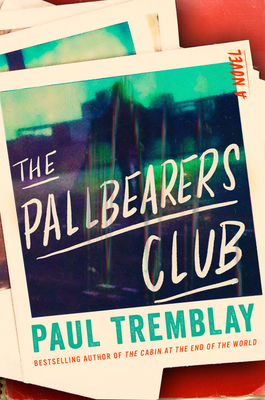
Book: “The Pallbearers Club” by Paul Tremblay

Publishing Info: William Morrow, July 2022

Where Did I Get This Book: I received an eARC from NetGalley.

Where You Can Get This Book: WorldCat | Amazon | Indiebound

Book Description: A cleverly voiced psychological thriller about an unforgettable—and unsettling—friendship, with blood-chilling twists, crackling wit, and a thrumming pulse in its veins—from the nationally bestselling author of The Cabin at the End of the World and Survivor Song.

What if the coolest girl you’ve ever met decided to be your friend?

Art Barbara was so not cool. He was a seventeen-year-old high school loner in the late 1980s who listened to hair metal, had to wear a monstrous back-brace at night for his scoliosis, and started an extracurricular club for volunteer pallbearers at poorly attended funerals. But his new friend thought the Pallbearers’ Club was cool. And she brought along her Polaroid camera to take pictures of the corpses. Okay, that part was a little weird. So was her obsessive knowledge of a notorious bit of New England folklore that involved digging up the dead. And there were other strange things – terrifying things – that happened when she was around, usually at night. But she was his friend, so it was okay, right?

Decades later, Art tries to make sense of it all by writing The Pallbearers’ Club: A Memoir. But somehow this friend got her hands on the manuscript and, well, she has some issues with it. And now she’s making cuts.

Seamlessly blurring the lines between fiction and memory, the supernatural and the mundane, The Pallbearers’ Club is an immersive, suspenseful portrait of an unforgettable and unsettling friendship.

Review: Thank you to NetGalley for providing me with an eARC of this novel.

It’s finally time, everyone! Paul Tremblay has a new horror novel out, and it’s one that caught my attention VERY quickly when I read about it. For one reason, obviously, is that it’s Paul Tremblay. He’s one of my favorite horror authors, and one of the best ones writing today. But the bigger issue at hand is that while he has taken on other horror themes and twisted them onto their head (possession, zombies, ghosts, etc), he is taking on a subgenre that is near and dear to my heart, and that I am VERY picky about: vampires. I love vampire stories, but I want very specific things from my vampire stories. And Paul Tremblay gave me everything I need. Oh, and yes, like in most of his other works, I ended up weeping relentlessly by the end.

It almost always comes to this when I read his books. (source)

Let’s start with the plot and the way this story is told. The narrative structure of this book is so fantastic. It is framed as a memoir written by Art Barbara. Going in, we know nothing about Art, or why he would have written a memoir about himself. We also almost immediately notice that there are seemingly handwritten annotations and footnotes written by a mystery voice, and those footnotes are critiquing the story as written. We soon realize that this story Art is telling is about his friendship with mysterious cool girl Mercy Brown, whom he met through the Pallbearers Club, a group he formed in high school as a community service opportunity. Teens work at funerals of forgotten people to serve as mourners and pallbearers. Mercy saw the ad Art put out, and called him. Thus began a friendship built on punk music, 80s yearning, and a mutual interest in working funerals. Art for extracurricular brownie points, Mercy for… other reasons. As Art talks about their friendship, he slowly reveals that he believes her to be a vampire. Mercy, in the footnotes, is constantly questioning his words, editorializing, and it is through both of their POVs that we see a slow burn creepy story about toxic friendship and potential vampirism come to be. I loved how Tremblay decided to tell this story, as it makes both of our narrators have truths and lies that the are sprinkling in. And given that Tremblay is a master at creating deeply disturbing horror moments, the vampire stuff (as Art describes it) is well done, unique, and taps into an actual folktale from New England that is about, in fact, a woman named Mercy Brown who was thought to be a vampire. Look it up! Start HERE. I loved how he brought in this actual story of American mythology and connected it to a metaphor about toxic friendships. The vampire mythos that we get feels fresh and new, and it taps into the non-romanticized themes of vampires as users, superstitions around illness, and codependence. It’s so damn good.

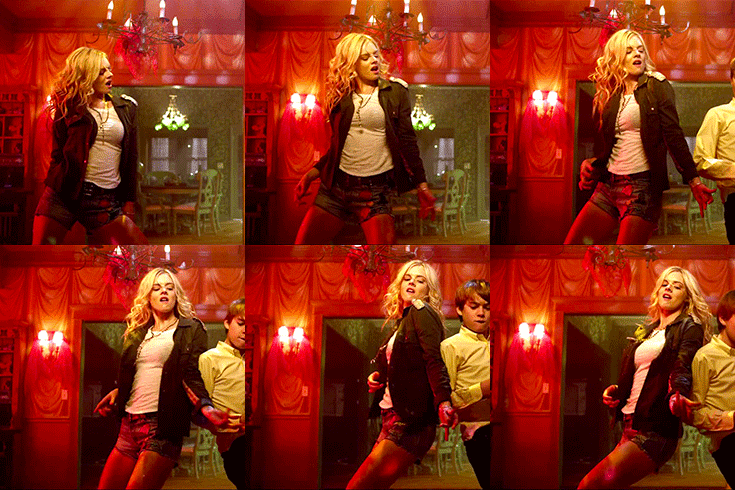
Now I need to talk about Mercy. Mercy is the shining star of this book, of all Paul Tremblay books. He so effortlessly captures the ‘cool girl as seen through the geek boy’s eyes’ trope and turns it into something that is both malevolent as well as bittersweet. We have this great tactic in which we see how Art views Mercy through his memoir, and we also get to see Mercy’s voice not only tell him how badly he has projected his own insecurities into he perception of her (which I believe so many ‘cool girls’ have to deal with when it comes to these kinds of geek boys and their worshiping), but also reflect that cool girl-ness she absolutely DOES have, as well as the clear love (and resentment) she also has for him. There is no question that both Art and Mercy are terrible for each other, and that they both get a lot of things wrong about each other. But the way that Tremblay gives both of them voices to construct a broader truth is great, and he does it in a way that doesn’t make Mercy just a potential vampire that is also a well worn manic pixie dream girl trope. She is basically what I wanted Samara Weaving’s character in “The Babysitter” to be in terms of meeting her full potential, and I absolutely adored her with my entire heart.

Bee is pretty great too, don’t get me wrong, but Mercy is Bee with a bit more depth. (source)

And finally I need to talk about this pathos I keep mentioning. Because this book is just brimming with it in the way that Tremblay does. He really, really knows how to just gut the reader. As said above, Art and Mercy’s friendship is not healthy, really, given that the entire ‘is it a vampire thing?’ question harkens back to the parasitic nature of vampirism, and therein the parasitic natures of some bad human relationships. But I will say, without spoiling things, there is some serious emotional depth that Tremblay taps into with their friendship, about their mutual outcast status and loneliness that connected them in the first place, and at once makes you think ‘this is so unhealthy’, while also feeling the mutual, real love they have for each other. And, once again, I found myself bawling during a Paul Tremblay horror novel. God DAMN do I love how this man knows how to destroy my soul.

“The Pallbearers Club” is a phenomenal take on a vampire story. It is definitely my favorite of Tremblay’s books. I urge horror fans, especially if you like new takes on vampire stories, to pick this one up.

Rating 10: Loved it so much. Mixing humor, horror, and a whole lot of pathos, “The Pallbearers Club” is Tremblay’s best work.

Reader’s Advisory:

“The Pallbearers Club” is included on the Goodreads list “Horror To Look Forward To in 2022”, and it would fit right in on “The Ultimate List of Vampire Books”.