Kate’s Review: “Linghun”

This post may contain affiliate links for books we recommend.  Read the full disclosure here.

Book: “Linghun” by Ai Jiang

Publishing Info: Dark Matter INK, April 2023

Where Did I Get This Book: I received an eARC from the author.

Where You Can Get This Book: Amazon | Dark Matter INK

Book Description: WELCOME HOME.

Follow Wenqi, Liam, and Mrs. in this modern gothic ghost story by Chinese-Canadian writer and immigrant, Ai Jiang. LINGHUN is set in the mysterious town of HOME, a place where the dead live again as spirits, conjured by the grief-sick population that refuses to let go.

Review: Thank you to Ai Jiang for sending me an eARC of this novella!

I had been seeing “Linghun” on my social media feeds on and off before it ended up in my inbox, and there was a lot about it that caught my eye. The cover design was one aspect, as was the promise of a Gothic horror story. But it wasn’t until I really dug into the first few pages that I realized that “Linghun” was not only going to be a creepy Gothic horror story, but also a very emotional exploration of grief. I love a story like that, but I also have to steel myself for a story like that. And boy oh boy was it not pulling any punches. I love a ghost story that can take on deeper layers, and this one is less about the ghosts and more about the people who are aching to see those ghosts again.

Man did this one really get to me. It’s not a particularly long book, definitely novella status not even clocking it at one hundred pages, but in those pages Jiang has crafted such a bleak, disturbing, and haunting tale about how grief can drive people to completely upend their lives if there is just ONE chance of getting to reconnect with a dead loved one. This is mostly through the eyes of Wenqi, a Chinese Canadian teenage girl whose family left China after the death of her older brother when he was six and she was three. Her mother, so consumed by her grief, convinces her family to move to HOME, a weird small town where people’s dead loved ones can manifest in one of the much sought out houses (so sought out that other people, called lingerers, camp out in hopes of securing an open home). Wenqi never knew her brother, but at the same time he is all she’s known because her mother has been so unable to process her grief and move on, that Wenqi is just an afterthought. Watching Wenqi have to become even more and more of an afterthought as her brother’s presence appears, and her mother is only interested in trying to keep his presence around, is heartbreaking for Wenqi, and very, very distressing to watch unfold as her mother becomes more and more obsessive and overcome.

And then on the flip side is Liam, a teenage boy in Wenqi’s neighborhood whose family has been a group of lingerers, desperate to get a house in HOME and who have stopped their lives and have resorted to camping out and hoping for a stroke of luck. Liam and Wenqi have similar frustrations of being the ones emotionally left behind while their parents are in deep grief, but it’s interesting seeing Liam on the other side of the coin, as his family is desperate to even have the opportunity, when it is not even a guarantee that they will have success. It was the portrayals of the lingerers that really messed with my head, as Jiang has one scene in particular that shows the lengths that the lingerers will go to try and have the chance to see those they loved again, even when it has all but ruined their lives and the lives of those that they brought with them. BUT AT THE SAME TIME, part of me wonders what I would do should I lose someone I love so fiercely and maybe have that opportunity. How far would I go? It’s a path I don’t want to think about too much. Which means it is SO PERFECT for a horror story.

“Linghun” is an effective and very eerie novella that is up there with other meditations on grief with a horror backdrop. If that kind of not so cheerful premise is your jam, this is a story you definitely need to check out.

Rating 8: A strange and melancholy story about grief and loss and how it can cling to a person until obsession has taken over.

Reader’s Advisory:

“Linghun” isn’t included on any Goodreads lists yet, but I think that similar horror stories about grief like “Pet Sematary”, “Ghost Eaters”, and “Horns” would be good fits.
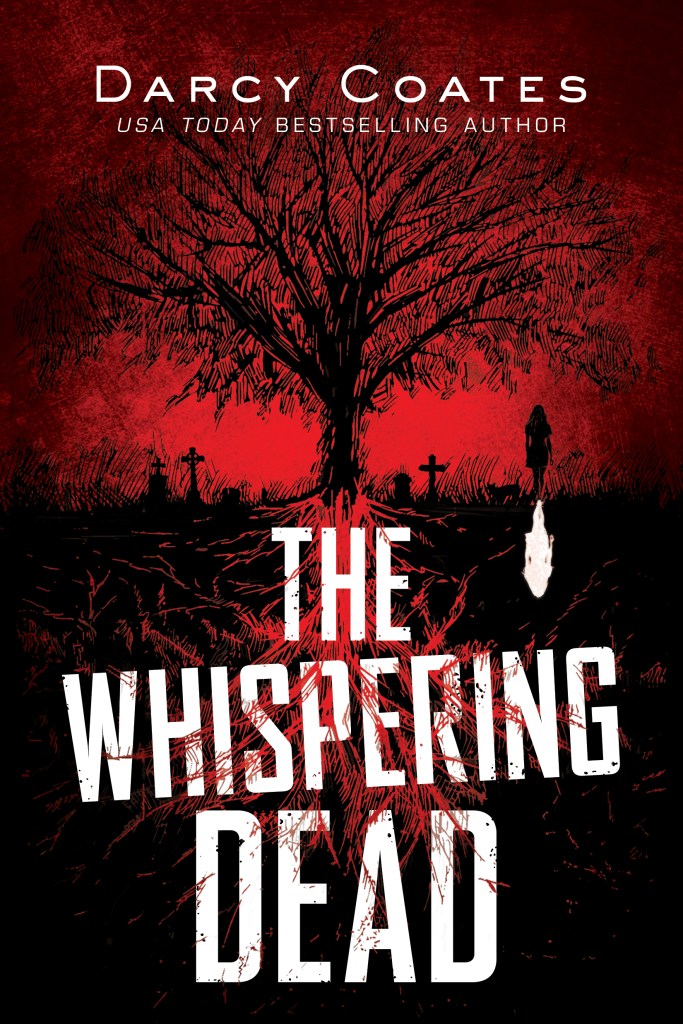
Kate’s Review: “The Whispering Dead”

This post may contain affiliate links for books we recommend.  Read the full disclosure here.

Book: “The Whispering Dead (Gravekeeper #1)” by Darcy Coates

Publishing Info: Poisoned Pen Press, May 2021

Where Did I Get This Book: I received a paperback copy from the publisher.

Where You Can Get This Book: WorldCat | Amazon | Indiebound

Book Description: Homeless, hunted, and desperate to escape a bitter storm, Keira takes refuge in an abandoned groundskeeper’s cottage. Her new home is tucked away at the edge of a cemetery, surrounded on all sides by gravestones: some recent, some hundreds of years old, all suffering from neglect.

And in the darkness, she can hear the unquiet dead whispering.

The cemetery is alive with faint, spectral shapes, led by a woman who died before her time… and Keira, the only person who can see her, has become her new target. Determined to help put the ghost to rest, Keira digs into the spirit’s past life with the help of unlikely new friends, and discovers a history of deception, ill-fated love, and murder.

But the past is not as simple as it seems, and Keira’s time is running out. Tangled in a dangerous web, she has to find a way to free the spirit… even if it means offering her own life in return.

Review: Thank you to Poisoned Pen Press for sending me a copy of this novel!

Up until this point I had read two Darcy Coates novels, both of which were SUPER scary and unrelenting in their horror themes. So when Poisoned Pen Press approached me asking if I was interested in reading more of her work, I leaped at the chance to do so. So for the next few weeks I am going to read and review her “Gravekeeper” Series, which involve a young woman named Keira, who wakes up in a strange cemetery with no memory of who she is, and realizes that she can see ghosts. The first in the series is “The Whispering Dead”, and while I thought I knew what to expect from Coates, it caught me off guard with a difference in tone and imagery. And this is overall a good thing.

Being the first in the series, “The Whispering Dead” has to set the stage, and I thought that it did, for the most part. I did enjoy the ghostly heart of the story, as well as the mystery of why Keira is seeing the ghost of a forlorn woman that wanders the cemetery grounds she is now calling home, AND the mystery of who she is given her lack of memories before waking up in said cemetery. I’m so used to Coates having really scary moments in her books, so the more dark fantasy vibe of this one was a surprise, though it was definitely a welcome one. While there are certainly creepy and spooky moments, be it ghosts wandering a cemetery and looking through windows, or building suspense in seemingly abandoned buildings and landscapes, Coates has some horror-esque elements that are pretty accessible to not just die hard horror fans, but also those who may like ghost stories but perhaps not the really scary stuff that can come with it. I was pretty invested in the reasons as to why Keira can see ghosts, and why there is a specific ghost that keeps popping up and how that ties to the town’s history. I am also interested in just what the deal is with Keira’s memory loss, and who she was before she suddenly woke up with no recollections of who she is. This book lays a lot of groundwork, and my guess is that it’s going to be a multi-book arc.

And I also mostly liked the characters at hand. I’ve seen this series compared to the “Buffy the Vampire Slayer” Scooby Gang as well as other horror/dark fantasy friend groups, and I think it’s pretty accurate. Keira is a good leader/protagonist, and I also like seeing her growing friendships with med student Mason (who may also be a romantic interest? I’m on board!), and with Pastor Adage, who has let her take up residence in the abandoned cemetery groundskeeper cottage. There is also weirdo Goth girl Zoe, who I am warming up to for the most part, but the problem is that she is VERY much a conspiracy theorist and while I know it’s supposed to be kooky and charming, these days conspiracy theorists generally leave a bad taste in my mouth due to the Q stuff and a lot of the racist and anti-Semitic building blocks that create a lot of conspiracies. I don’t think Zoe is that at all! But it just feels a bit uncomfortable. OH, and there is also a cat named Daisy, and we all know how much I love a feline companion. Overall it’s a well rounded cast that complements the tone of the story, and I think it’s charming.

I will be going forth in the series, with “The Ravenous Dead” up next week. I am eager to see what more Keira finds out about her mysterious past, and what ghosts are in store for her visions and second sight. “The Whispering Dead” is a good start to a series I look forward to continuing!

Rating 7: A spooky set up to a series with a quirky cast of characters, “The Whispering Dead” is some horror lite and perfect for people who want to explore Darcy Coates without being scared out of their minds!

Reader’s Advisory:

“The Whispering Dead” is included on the Goodreads lists “2021 Horror Novels Written by Women and Non-Binary Femmes”, and “Bring On the Creepy!”.

Kate’s Review: “Lone Women”

This post may contain affiliate links for books we recommend.  Read the full disclosure here.

Book: “Lone Women” by Victor LaValle

Publishing Info: One World, March 2023

Where Did I Get This Book: I received an eARC of this novel from the publisher via NetGalley.

Where You Can Get This Book: WorldCat | Amazon | Indiebound

Book Description: Blue skies, empty land—and enough room to hide away a horrifying secret. Or is there? Discover a haunting new vision of the American West from the award-winning author of The Changeling.

Adelaide Henry carries an enormous steamer trunk with her wherever she goes. It’s locked at all times. Because when the trunk is opened, people around her start to disappear

The year is 1914, and Adelaide is in trouble. Her secret sin killed her parents, and forced her to flee her hometown of Redondo, California, in a hellfire rush, ready to make her way to Montana as a homesteader. Dragging the trunk with her at every stop, she will be one of the “lone women” taking advantage of the government’s offer of free land for those who can cultivate it—except that Adelaide isn’t alone. And the secret she’s tried so desperately to lock away might be the only thing keeping her alive.

Told in Victor LaValle’s signature style, blending historical fiction, shimmering prose, and inventive horror, Lone Women is the gripping story of a woman desperate to bury her past—and a portrait of early twentieth-century America like you’ve never seen.

Review: Thank you to One World for sending me a link to an eARC of this novel on NetGalley!

Rejoice, horror fans, for we are once again blessed with a stunning new horror story by Victor LaValle. It has been awhile since I’ve dived into a LaValle book, and I was very, very stoked when “Lone Women” ended up in my inbox. And I was even MORE thrilled when Book of the Month had it as a choice for March, because I DO LOVE A PRINT COPY OF A GREAT HORROR NOVEL! I had high expectations for this novel, following a Black woman named Adelaide who decides to try and homestead in Montana in the early 20th Century, and who has a mysterious steamer trunk she just needs to keep an eye on and keep closed. Because that premise alone is VERY enticing, and when you throw in LaValle, you know it’s going to be even moreso. This man knows how to craft a well done horror tale with lots of subversions, after all.

I can’t really talk too much about the horror aspects of this novel, as I really don’t want to spoil too much because I do think that part of the appeal is the slow reveal and the surprises that come with it. What I will say is that LaValle has once again taken something that we’ve seen before, but turned it on its head and made it feel fresh, unique, and tragic on top of the scary. Adelaide is running from a violent moment that has changed the course of her life, and she is bringing with her the literal baggage that comes with that violent moment, and we have no clue as to what it is. But what we do know is that she is desperate to keep that baggage contained, whether it is the actual bag that she has brought with her, or the trauma that has been inflicted upon her and her family due to the circumstances that fell upon them all. I loved the slow tension of the trunk with the lock, and I also loved the slow burn horror elements that were more steeped in realism. I was just as nervous of Adelaide when she was surrounded by suspicious people whose motives we had no clue about as I was worried about just what it was that she was lugging around in the trunk. And I REALLY loved what exactly it was what was in said trunk, as it reminded me of a specific story that I had enjoyed at one point, but have turned my back on as of late due to questions of ethical consumption of it. And that’s all I will say.

And I won’t tell so as not to ruin it. (source)

But it is also the very gritty and realistically bleak historical fiction aspects of this book that jump off the page. LaValle weaves together a tapestry of not only the American imperialist ideals of Manifest Destiny, but also the way that the American Government would use this to its own advantage, and how it could appeal to a group of Othered women. Whether it is Adelaide due to her race as well as her horrific burden, or neighbor Grace and her son Sam who are functioning as a single mother and child trying to make it together, or Miss Bertie and Fiona Wong who are not only women of color but also two lesbians who have to hide who they are, the idea of being ‘lone women’ and trying to make a life in isolation, as well as while carrying various secrets that may keep them emotionally isolated, was profound as hell. The grim realities of trying to make it in an unfamiliar place with harsh winters, the danger of being a woman alone with strangers passing through, the way that the haves will try and take advantage of the have nots, all of it feels very real and unromantic takes on the idea of the West. This book absolutely feels like a Western, but it doesn’t make it seem like a charming simpler time you may find in a John Wayne movie. It highlights the misogyny, colonialism, and racism of that ideal. And I loved that.

“Lone Women” is another fantastic novel by Victor LaValle that takes on horror themes and tweaks them to feel more resonant and poignant than one may expect. I always love LaValle’s horror works, and this one is, I think, my favorite of the lot.

Rating 9: Breathtaking horror and gritty historical fiction rolled into one, “Lone Women” shows the tenacity of outsider women with secrets, some of which are otherworldly.

Reader’s Advisory:

“Lone Women” is included on the Goodreads lists “The Best Historical Horror Novels”, and “Horror to Look Forward To in 2023”.

Joint Review: “A House with Good Bones”


This post may contain affiliate links for books we recommend.  
Read the full disclosure here.

Book: “A House with Good Bones” by T. Kingfisher

Publishing Info: Tor Nightfire, March 2023

Where Did We Get This Book: We received eARCs from Edelweiss+ and NetGalley.

Where You Can Get This Book: WorldCat | Amazon | Indiebound

Book Description: A haunting Southern Gothic from an award-winning master of suspense, A House With Good Bones explores the dark, twisted roots lurking just beneath the veneer of a perfect home and family.

“Mom seems off.”

Her brother’s words echo in Sam Montgomery’s ear as she turns onto the quiet North Carolina street where their mother lives alone. She brushes the thought away as she climbs the front steps. Sam’s excited for this rare extended visit, and looking forward to nights with just the two of them, drinking boxed wine, watching murder mystery shows, and guessing who the killer is long before the characters figure it out.

But stepping inside, she quickly realizes home isn’t what it used to be. Gone is the warm, cluttered charm her mom is known for; now the walls are painted a sterile white. Her mom jumps at the smallest noises and looks over her shoulder even when she’s the only person in the room. And when Sam steps out back to clear her head, she finds a jar of teeth hidden beneath the magazine-worthy rose bushes, and vultures are circling the garden from above.

To find out what’s got her mom so frightened in her own home, Sam will go digging for the truth. But some secrets are better left buried.

Kate’s Thoughts

We are back with another joint review, doing another horror story from T. Kingfisher, and I couldn’t be more thrilled. I really like it when both Serena and I can provide various insights into one book, and Kingfisher may be joining Silvia Moreno-Garcia as one that we both read and review. This time we have “A House with Good Bones”, a haunted house story with dysfunctional family dynamics, insect archaeology, and so many vultures! I can tell you that if you are someone who wants to dabble in horror, but don’t really like feeling the various intense feelings that horror novels can convey, Kingfisher is a good option. This is definitely a haunted house book, but it’s horror-lite, and it’s horror-lite done well!

I enjoyed our protagonist Sam slowly starting to realize that there is something weird going on in her grandmother Gran Mae’s old house, that her mother has now moved into. In life neither Sam nor her mother got along so well with Gran Mae, but now Mom is not only nervous to speak ill of her, she is also following rules that she used to ignore or at least acknowledged were bunk. One can kind of see where this is all going, but that doesn’t make it any less enjoyable. Kingfisher builds up the suspense regarding the weird goings on in the house, be it the vultures that have come to roost on the property, or the sudden ladybug infestation, or the slow recovery of memories of Gran Mae’s weird habits and abusive tendencies when Sam was a child. Kingfisher knows how to balance the suspense and genuinely scary moments with a lot of good humor and quirky characters that make the book a good horror story without more intense elements that could turn some people off. I also liked the way that some of these horror elements manifested, as they felt unique and interesting and outside from how other horror authors may have approached it. I really like how Kingfisher brings in the dark fantasy stuff to spice up the genre a bit, and it always feels like it melds well. And finally I liked the more thematic elements of this story regarding family dysfunction, generational trauma, and the way that parents can sometimes make mistakes that take a toll on their children that may take time to process and heal from. It doesn’t bog down the story with too much melancholy, but I liked that it was an underlying theme.

I enjoyed “A House with Good Bones”! Kingfisher is a great choice for people who want to do horror but aren’t as into visceral or intense scares. It’s a fun and creepy haunted house story to be sure.

Serena’s Thoughts

I second what Kate said: it’s so fun when we get to joint review a book, and T. Kingfisher is another author who intersects well with both of our genres, writing horror and fantasy. Plus, like Kate said, Kingfisher writes the type of horror that is still approachable for those of us who are big fraidy-cats about the very dark stuff. And this book is another perfect example of it!

While I felt like I had a pretty good understanding of where the horror aspects were going, once they actually showed up, they were sufficiently horrific. In particular, the last quarter of the book went into a very creepy place. There were some genuinely freak visuals and the book masters a classic horror trope: the solid ending that feels just off enough to leave you in suspense! But even during these darker moments, there were parts were I was laughing and also feeling strangely sad for the horrible creatures/people. It was a very mixed bag of emotions that worked really well.

I also really liked the themes about family trauma and abusive relationships in families. Again, all of these things were touched on in ways that felt very true to life but never made caricatures of any of the characters involved. Sam was an excellent main character. Her scientific background was unique (lots of interesting tidbits about insects and archeology) and lead her to handling certain scenes with ladybugs with a lot more calm than I would have had, that’s for sure! She also was a great example of casual body positivity. It’s not her entire identity, but she’s comfortable with who she is and how she moves through the world.

Kate’s Rating 8: A creepy haunted house story with family trauma and vultures galore, “A House with Good Bones” is a horror-lite haunted house read that will leave horror fans satisfied.

Serena’s Rating 8: Sufficiently creepy for this fantasy fan while also tackling important themes like family trauma and body positivity.

Reader’s Advisory:

“A House with Good Bones” is included on the Goodreads lists “Suburban Gothic”, and “Horror to Look Forward To in 2023”.

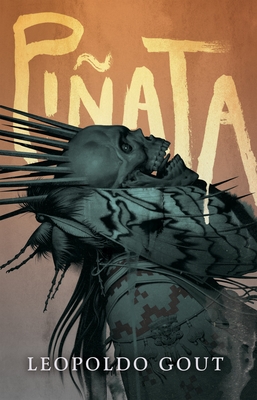
Kate’s Review: “Piñata”

This post may contain affiliate links for books we recommend.  Read the full disclosure here.

Book: “Piñata” by Leopoldo Gout

Publishing Info: Tor Nightfire, March 2023

Where Did I Get This Book: I received an eARC from NetGalley.

Where You Can Get This Book: WorldCat | Amazon | Indiebound

Book Description: A Head Full of Ghosts meets Hereditary in Piñata, a terrifying possession tale by author and artist Leopoldo Gout.

Carmen Sanchez is back in her home country of Mexico, overseeing the renovation of an ancient cathedral into a boutique hotel. Her teen daughters, Izel and Luna, are with her for the summer, and left to fill their afternoons unsupervised in a foreign city.

The locals treat the Sanchez women like outsiders, while Carmen’s contractors openly defy and sabotage her work. After a disastrous accident at the construction site nearly injures Luna, Carmen’s had enough. They’re leaving.

Back in New York, Luna begins acting strange, and only Izel notices the chilling changes happening to her younger sister. But it might be too late for the Sanchez family to escape what’s been awakened

Piñata is a bone-chilling story about how the sinister repercussions of our past can return to haunt us.

Review: Thank you to NetGalley for providing me with an eARC of this novel!

I love it when a horror novel really gets under my skin. The kind that I can’t really shake while I’m reading it, and the kind that just sits on my consciousness when I’m doing other things or when I have finished it. When I saw “Piñata” by Leopoldo Gout on my various timelines and Goodreads feeds, I decided to request it because it sounded fairly promising. Sure, it was a possession story, which tend to be hit or miss for me, but I do love a good social commentary in my horror, and this one sounded like it had some good potential for thoughtful take downs of colonialism. So I started it, thinking it would be interesting at least. And almost immediately after starting this book, I was deeply, deeply unsettled, and knew I wasn’t going to shake this one for awhile. And it’s not even the supernatural beings in this that did that to me.

For someone who doesn’t usually gel with possession stories, “Piñata” is one of those stories that absolutely works for me because it makes it feel unique, or at least turns it a bit on its head. I really liked following Carmen and her daughters Izel and Luna as they spend time in Mexico, and I loved seeing the slowly building unease as Luna starts to behave strangely after an accident at the Church site on a restoration project that Carmen was working on. From Luna not quite acting right, to weird hallucinations of butterflies and a strange old woman, to ghastly imagery of rage filled demons that torment Carmen and those around her, Gout really knows how to create a visceral horror moment. I also loved the subversion of the more traditional Western possession stories and how it incorporates pre-Columbian folklore and mythology, as it feels less about the Christian idea of demons and more about otherworldly beings with a score to settle.

I’m still very much into reading horror novels that take on greater social themes, and “Piñata” may be one of the more harrowing and upsetting ones that I’ve read. The theme here is that of colonialism, and the way that Indigenous people in Mexico (and the greater Americas) were victimized, abused, and destroyed by Western invaders, and in this book it is specifically the Spanish and the Catholic Church. The prologue alone had me floored and shaking with abject horror and rage, as it really sets up the story of angry spirits in a Mexican church that find themselves awakened and hellbent on revenge. Gout doesn’t shy away from the atrocities that the Spanish and the Church perpetuated against Indigenous groups, and it makes for unrelenting horrors as we see the long lasting effects of the colonizers, not just through a possessed child but also through violence in Mexico, dangerous situations at the border, and racism and colorism. It’s upsetting and it should be upsetting.

The one thing that took me out of this book, however, was the uneven pacing of it. I love a slow burn and slow build in my horror, especially when the slow burn knows how to tap into anxiety and to ratchet up the tension until it is practically at the breaking point. I liked the way that Gout carefully builds up the tension regarding Luna’s possession as well as the visions that our characters are seeing. The problem is that when it all comes to a head, and a LOT has to come to a head, a great majority of it happens practically in the last fourth of the book. And it feels like a lot of whiplash as all the action starts to barrel forth and almost in an out of control way. It then leads to a wrap up climax that almost felt too quick on top of all the REALLY fast things leading up to it. It doesn’t ruin the story by any means, it just makes it feel disjointed.

Uneven pacing aside, I thought that “Piñata” was a disturbing read with a lot of really good themes about colonization and the damage it has done and continues to do. Gout just devastated me out the gate and found the horrors within history and applied it to a modern story, and I really enjoyed it.

Rating 9: So many intense moments and such great commentary about the destruction that Colonialism brought to the Americas. While there are some pacing issues, overall “Piñata” is scary and mesmerizing.

Reader’s Advisory:

“Piñata” is included on the Goodreads lists “Latinx Horror/Fantasy”, and “Men of Color Dark Fiction Writers”.

Kate’s Review: “The Girl from Rawblood”

This post may contain affiliate links for books we recommend.  Read the full disclosure here.

Book: “The Girl from Rawblood” by Catriona Ward

Publishing Info: Poisoned Pen Press, March 2023

Where Did I Get This Book: I received a print copy from the publisher.

Where You Can Get This Book: WorldCat | Amazon | Indiebound

Book Description: At the turn of England’s century, as the wind whistles in the lonely halls of Rawblood, young Iris Villarca is the last of her family’s line. They are haunted, through the generations, by “her,” a curse passed down through ancient blood that marks each Villarca for certain heartbreak, and death.

Iris forsakes her promise to her father, to remain alone, safe from the world. She dares to fall in love, and the consequences of her choice are immediate and terrifying. As the world falls apart around her, she must take a final journey back to Rawblood where it all began and where it must all end

From the sun dappled hills of Italy to the biting chill of Victorian dissection halls, The Girl from Rawblood is a lyrical and haunting historical novel of darkness, love, and the ghosts of the past.

Review: Thank you to Poisoned Pen Press for sending me a print copy of this novel!

Even though I hadn’t heard of Catriona Ward until I read “The Last House on Needless Street”, that was hardly her first literary and horror story rodeo. Her actual debut novel is “The Girl from Rawblood”, an award winning Gothic ghost story that is now being re-released. I was fortunate enough to receive a copy of the new edition just in time for an out of country trip that ended up with me sitting on an unplanned layover in Phoenix, as I needed reading material to get through the injustice of it all. I do love going back and seeing previously overlooked debuts of authors I like, as usually it’s fun to see the growth. Well in this case, there wasn’t much growth to be had, and I mean that in the good way. In many ways this doesn’t read like a debut, it reads like a seasoned Gothic author.

The brightest bit was the slow build up and world building of ‘her’, the curse that has been tormenting and killing the Villarca Family of Rawblood for generations. I love a rage filled ghost, and this one was giving me serious “The Haunting of Bly Manor” Lady in the Lake vibes. Ward really does have a talent for really freaky and tragic imagery in her stories, and I really liked just how creepy this curse was, mostly because we do get some is it real or is it not unreliability due to flashbacks of the frantic and frenzied Alonso, Iris’s father who has sheltered her in hopes of saving her, when his isolation of her seems just as terrible in her mind. In true Gothic fashion we are left to wonder if perhaps it’s Alonso’s madness due to generational trauma, romantic loss (more on that soon!) and grief that is the real culprit. But ah, this is Catriona Ward, so ultimately this is, indeed, a haunted house story. But there can be many hauntings, both of the past and ghostly kinds.

There is a lot of time jumping and historical fiction genre exploration in this as well, and that is ultimately what bogged the story down for me just a bit. Firstly, though, the good: I do love a historical Gothic novel with lots of melodrama and angst, and lord knows this book is frothing with it. This is Ward’s debut novel, and in a lot of ways it is a VERY impressive debut, as she has a lot going on and generally knows how to juggle all of it. But it is also a bit bloated, at least for me, in how much we are finding ourselves exploring. We have Iris’s story as she tries to push back against her father’s pleas to never fall in love, but we also go back to see Alonso and his medical school friend/forbidden love interest Charles try to approach this curse as though it is hereditary and more illness based, and see how their relationship grows and deteriorates and ends in, you guessed it, horrible tragedy. And THEN we also jump back to previous Villarcas and family members who have lived in Rawblood and the terrible fates that befell them, and I think that the out of order and abrupt jumps and shifts were a bit too jarring for me.

But having said that, it’s great that “The Girl from Rawblood” is being rereleased, because Ward was showing literary prowess with this as her debut, and prowess as a horror author at that. It all started here.

Rating 7: An eerie premise and an unsettling ghost story, “The Girl from Rawblood” is a chilling historical Gothic tale, though at times the jumps in time dragged a bit.

Reader’s Advisory:

“The Girl from Rawblood” is included on the Goodreads lists “Gothic Historical Fiction”, and “Dual Time Mysteries”.

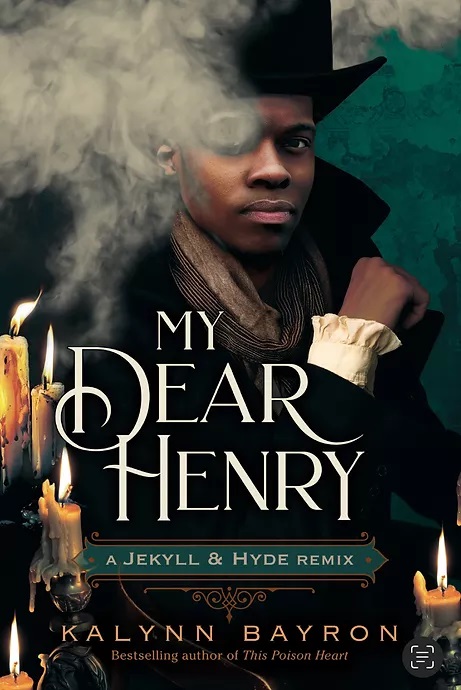
Kate’s Review: “My Dear Henry: A Jekyll & Hyde Remix”

This post may contain affiliate links for books we recommend.  Read the full disclosure here.

Book: “My Dear Henry: A Jekyll & Hyde Remix” by Kalynn Bayron

Publishing Info: Feiwel Friends, March 2023

Where Did I Get This Book: I received an eARC from NetGalley.

Where You Can Get This Book: WorldCat | Amazon | Indiebound

Book Description: London, 1885. Gabriel Utterson, a 17-year-old law clerk, has returned to London for the first time since his life— and that of his dearest friend, Henry Jekyll—was derailed by a scandal that led to his and Henry’s expulsion from the London Medical School. Whispers about the true nature of Gabriel and Henry’s relationship have followed the boys for two years, and now Gabriel has a chance to start again.

But Gabriel doesn’t want to move on, not without Henry. His friend has become distant and cold since the disastrous events of the prior spring, and now his letters have stopped altogether. Desperate to discover what’s become of him, Gabriel takes to watching the Jekyll house.

In doing so, Gabriel meets Hyde, a a strangely familiar young man with white hair and a magnetic charisma. He claims to be friends with Henry, and Gabriel can’t help but begin to grow jealous at their apparent closeness, especially as Henry continues to act like Gabriel means nothing to him.

But the secret behind Henry’s apathy is only the first part of a deeper mystery that has begun to coalesce. Monsters of all kinds prowl within the London fog—and not all of them are out for blood

Review: Thank you to NetGalley for providing me with an eARC of this novel!

I first read “Strange Case of Dr. Jekyll and Mr. Hyde” in college in my favorite class of all time: “Monsters, Robots, and Cyborgs”. Thank goodness for an unofficial Cultural Studies and Comparative Literature minor! We looked at horror, fantasy, and science fiction stories of the past and present and what they said about cultural and societal anxieties, so of course “Jekyll and Hyde” is ripe for the picking. Think about it: a somewhat obsessive scientist creates a potion that can change him from mild mannered academic to a brutish, cruel, uninhibited psychopath, talk about a great way to talk about the complexities of humankind while creating a suspenseful mystery to explore that. So when I saw that one of the “Remixed Classics” books was going to take on this story, I was VERY excited to see how it was going to be reimagined with newer themes and a more diverse perspective for modern young adult audiences. Suffice to say, “My Dear Henry” by Kalynn Bayron was an anticipated read. And in a lot of ways it lived up to my anticipation.

Bayron reimagines the classic tale of a personified split identity and the calamities that follow, by making our protagonists Henry Jekyll and narrator Gabriel Utterson young adults, Black, and queer, and setting them in a Victorian London that will hold those identities against them. This was immediately resonant and very incisive, and it works so well for the themes of the source material while expanding upon them to make them even more complex. It’s especially clever because there are, indeed, questions as to Robert Louis Stevenson’s sexuality and whether these themes were also hidden in his original “Jekyll and Hyde” idea. To expand upon that and to make Hyde less of a symbol for the uninhibited ‘evil’ of man and instead to make it a symbol of uninhibited ability to be oneself is poignant as hell. As Gabriel and Henry are drawn to each other and fall for each other, the cultural mores at the time makes it so that they have to hide their feelings from others, and when they ARE found out it leads to the path of Jekyll to Hyde, and leads to lots of poignancy and pathos. It makes the “Jekyll and Hyde” story all the more tragic, as this Hyde isn’t a violent madman, he’s a manifestation of love that was criminalized and feared. And to make it even more complex, our main characters are Black, and having Black characters set in Victorian England is a great choice for a few reasons. The first is that it makes the marginalization of Gabriel and Henry even deeper, as the racism in English society has already made them vulnerable, just as it has made their fathers, especially Jekyll Sr. (as he is the one we see more of), all the more intent on stifling their sons because of their already targeted identities. The other is that it is so common to see Black narratives in this time and place ignored or questioned, as if Black people didn’t exist in England during this time period, so to counteract this erasure within this story was really, really enjoyable.

And since it is a remix of an old tale, I do want to talk about how effective of a retelling it was. And I thought that in a lot of ways it succeeded, and in a couple ways it didn’t quite capture it. In terms of successes, it does have the characters and the plot points of the original story, either tweaked, reimagined, or adapted to suit the newer narrative and thematic ideas, and it does this really well. You are definitely reading the Jekyll and Hyde story at the heart of the book, when I’ve seen adaptations that just slap on the idea of a reimagining without actually doing the work to make the new ideas coexist with the old. But I do think that one thing that did let me down about this book was that while it is definitely Jekyll and Hyde, it does give it a whole new flavor that kind of takes the suspense and thrills of the original out of it. It’s very possible that because this story is SO old hat that maybe there aren’t really ways to be held in suspense by it anymore, but I wonder if there could have been a way to make it feel like a thriller and to mine a new kind of suspense? I’m unsure.

Overall, I did enjoy “My Dear Henry” and I liked the directions that Bayron took this classic horror story of identity and repression. It’s an effective reimagining and brings out new ideas from a timeless tale.

Rating 8: A clever remix of “The Curious Case of Dr. Jekyll and Mr. Hyde” that takes on the dualities of identity in a society that doesn’t accept certain people for who they are, though it doesn’t capture the suspense that the original had.

Reader’s Advisory:

“My Dear Henry: A Jekyll & Hyde Remix” is included on the Goodreads lists “Black Queer 2023 Releases”, and “Jekyll and Hyde Retellings”.

Kate’s Review: “She Is a Haunting”

This post may contain affiliate links for books we recommend.  Read the full disclosure here.

Book: “She Is a Haunting” by Trang Thanh Tran

Publishing Info: Bloomsbury YA, February 2023

Where Did I Get This Book: I received a finished copy from the publisher.

Where You Can Get This Book: WorldCat | Amazon | Indiebound

Book Description: A house with a terrifying appetite haunts a broken family in this atmospheric horror, perfect for fans of Mexican Gothic.

When Jade Nguyen arrives in Vietnam for a visit with her estranged father, she has one goal: survive five weeks pretending to be a happy family in the French colonial house Ba is restoring. She’s always lied to fit in, so if she’s straight enough, Vietnamese enough, American enough, she can get out with the college money he promised.

But the house has other plans. Night after night, Jade wakes up paralyzed. The walls exude a thrumming sound, while bugs leave their legs and feelers in places they don’t belong. She finds curious traces of her ancestors in the gardens they once tended. And at night Jade can’t ignore the ghost of the beautiful bride who leaves her cryptic warnings: Don’t eat.

Neither Ba nor her sweet sister Lily believe that there is anything strange happening. With help from a delinquent girl, Jade will prove this house—the home her family has always wanted—will not rest until it destroys them. Maybe, this time, she can keep her family together. As she roots out the house’s rot, she must also face the truth of who she is and who she must become to save them all.

Review: Thank you to Bloomsbury YA for sending me a finished copy of this novel!

Gothic horror is a sub genre that I really enjoy, and a lot of the time the haunted house tale can fall into that definition. But I think that a lot of people fall into the trap of expecting a Gothic haunted house tale to be very Western in style and theme, probably thanks to images of tormented white women lost in the moors as they are haunted by ghosts, ennui, and possibly mental instability. Because of that I’m always eager to read non-Western takes on Gothic haunted house stories, and “She Is a Haunting” by Trang Thanh Tran really caught my eye when a promo of it ended up in my inbox. Given that my knowledge of Vietnamese history is pretty limited, the idea of a haunted French Colonial home in Vietnam REALLY clinched it for me. I was really excited to read this book, and it didn’t disappoint.

The horror elements are on point basically right out the gate. As Lily settles in at the isolated, French Colonial house her Ba has taken on for refurbishing in Đà Lạt, Vietnam, it’s almost immediately off. Lily already doesn’t want to be there, as she harbors a resentment for her father for leaving her family in the States when he returned to Vietnam, as well as his coldness to her when he discovered that she is attracted to girls. So she is already in a suffocating mindset, but then Nhà Hoa, or Flower House, is hot and humid, seems to be infested with dying bugs, and just feels unsettled. Tran gets the unease off on the right foot, and as Jade starts experiencing sleep paralysis and having visions of a ghostly woman inside the house, the tension builds and the horror imagery pops. There were a number of moments and bits in this book that just made me shiver, or even gag a little bit because of the nasty descriptions involving bugs, or food, or a little of both. Jade as a character is a little caustic at times, but she’s well explored enough that I worried about her as things get more and more spooky and disgusting during her investigation of the house and its history.

But it’s the themes of colonialism, racism, and generational trauma that really made this one stand out for me. These kinds of themes make metaphors ripe for the picking, and Tran really emphasizes the terrible ways that French colonialism disrupted and destroyed the lives of Vietnamese people. Nhà Hoa has a dark history that is being romanticized to make for a charming historical bed and breakfast, propping up the French style and story of the family that lived there, but left behind is the story of Jade’s Ba’s family, that worked in the house under terrible conditions, and the mysterious ghost bride whose connection to the house is lost to history. The French family that build the home is remembered fondly, so much so that the investors that Ba has on board for the B and B fawn over the history of the couple that lived there, while the couple was using and discarding the Ba’s ancestors, and because of the exploitation that reverberated through the generations he now feels like he has to keep up a connection to this house and to prop up this history, much to Jade’s horror as she finds the dark history and abuses that occurred in the house. It may not be super unique for a horror story about colonialism to have metaphors regarding an unrelenting haunting and a house that seems to have a constant hunger and need to consume, but Tran’s talent is that they can bring these metaphors to life with the aforementioned well executed horror moments, making the supernatural and real life horrors leap off the page in the most disturbing ways. It’s really well done.

“She Is a Haunting” is scary, uncompromising, and deeply unsettling. Fans of haunted house tales, take note. This is one you are going to want to check out.

Rating 8: Disturbing horror and a searing critique of colonialism, “She Is a Haunting” is scary and unrelenting.

Reader’s Advisory:

“She Is a Haunting” is included on the Goodreads list “Queer Horror”, and “Asian Folklore/Mythology/Influence”.

Kate’s Review: “Aliens: Vasquez”


This post may contain affiliate links for books we recommend.  
Read the full disclosure here.

Book: “Aliens: Vasquez” by V. Castro

Publishing Info: Titan Books, November 2022

Where Did I Get This Book: The library!

Where You Can Get This Book: WorldCat | Amazon | Indiebound

Book Description: A groundbreaking Latinx Aliens novel by a rising star Latina author, featuring the fan-favorite character PFC Jenette Vasquez from the hit movie Aliens and the family she is forced to leave behind.

For the very first time, the canonical background of the breakout Aliens hero Jenette Vasquez, as well as the story of the children she was forced to leave behind as written by the rising Latina horror star V. Castro (Queen of the Cicadas).

Even before the doomed mission to Hadley’s Hope on LV-426, Jenette Vasquez had to fight to survive. Born to an immigrant family with a long military tradition, she looked up to the stars, but life pulled her back down to Earth—first into a street gang, then prison. The Colonial Marines proved to be Vasquez’s way out—a way that forced her to give up her twin children. Raised by Jenette’s sister, those children, Leticia and Ramon, had to discover their own ways to survive. Leticia by following her mother’s path into the military, Ramon into the corporate hierarchy of Weyland-Yutani. Their paths would converge on an unnamed planet which some see as a potential utopia, while others would use it for highly secretive research. Regardless of whatever humans might have planned for it, however, Xenomorphs will turn it into a living hell.

Review: Depending on the day and my mood, it’s a toss up between whether “Alien” or “Aliens” is my favorite film in the franchise (admittedly, I don’t really acknowledge any of the other films in the “Alien” universe because I don’t like any of them). They are such different movies in tone and theme and genre. But the one I revisit the most often is “Aliens”, as I do love the rag tag Colonial Marines who find themselves in a REALLY bad situation with a corrupt company, an traumatized expert, and a LOT of hungry and bloodthirsty Xenomorphs. One of the stand out marines is Vasquez, a tough as nails no nonsense brawler soldier who is one of the only women on the team. I love Vasquez as a character. One of the problems with Vasquez is that she is a Latina woman who is portrayed by a non-Latina in brownface. So when I saw that V. Castro, one of my favorite horror authors writing right now, was going to give Vasquez an origin story and explore her legacy in a new Sci-Fi horror novel, I was THRILLED. If there is any author who can reclaim the character of Jenette Vasquez, Castro is the one who can do it, as her horror stories have a Latine lens and perspective, AND she knows how to craft a gross and balls to the wall horror story. So I dove into “Aliens: Vasquez” with high hopes.

Haaa, look at Hicks in the background just amused as heck. (source)

“Aliens: Vasquez” is not only a deeper look into Jenette’s backstory, but it is also an exploration of her legacy after her death on LV-426 at the Hadley’s Hope Colony vis a vis the lives of her twin children Leticia and Ramón. I loved that Castro decided to go this route, as while the backstory for Jenette is great (more on that in a bit), there is only so much to work with there. So to think of it as the whole Vasquez legacy works very well. For Jenette, we see her upbringing in a close knit family that has a share of tragedy involving disease, poverty, and societal racism. Eventually she is charged with a crime she didn’t commit thanks to a corrupt cop, and has to choose between prison and military service. To make matters more upsetting, she eventually finds herself pregnant while enlisted, and is told that she can either abort, or have the babies and give them up never to be seen again, and both scenarios end with her forced sterilization. Given what he know about American history (and very RECENT history too) with government forced sterilization of non-white disenfranchised people, this is all very chilling. I loved seeing Vasquez go from somewhat ambitious teenager to hardened Marine, and seeing the various injustices that got her there.

But then there are the twins, Leticia and Ramón Vasquez, and that is the real heart of the story. We get to see these twins as they are raised by their loving aunt with no memory of their mother, and how this loss sets them on two very different paths. For Leticia, she wants to follow in her mother’s footsteps and joins up with the Marines, hoping to prove herself a worthy warrior not only for her mother, but for their family’s tradition of women fighters. For Ramón, it means gathering enough power that he will never feel powerless again. We mostly follow Leticia, and I felt like I got to know her better, but what we do get to know about Ramón is well conceived and feels very realistic. I thought that the twins paths were very on point for the overall tale, and also for the “Alien” themes, as while Leticia becomes a commando like other badass women in the franchise, Ramón ends up working at Weyland-Yutani, the corporation whose greed and thirst for power is what gets everyone into the Xenomorph mess in the first place. Let’s just say that it’s up to its old tricks, and Ramón feels a lot like Paul Reiser. I liked seeing them have to come together when things with the Xenomorphs go wrong. Because, of course, it goes wrong.

And let’s talk Xenomorphs. You need to have a solid focus on the Xenomorphs and all the action and body horror nastiness that comes with them, and I think, for the most part, Castro achieves this. There are the required ‘Weyland-Yutani just can’t leave it alone!’ themes, just as there are the really gross parasitic moments of chest bursters, but there are new ideas like what if someone tried to cross breed Xenomorphs with other creatures to create other kinds of horrible bioweapons? It’s disgusting and unsettling as hell, and it felt very in character and in universe. My only qualm was that I almost felt like, when it all comes together with the research, the Xenomorphs, and the twins colliding, it almost wasn’t enough action and climax. That isn’t to say that things earlier should have been scrapped or cut. I would argue that this book should have been longer to explore this confrontation between Xenomorphs, a marine, and an enabler as it all comes to a head. Especially when that marine and enabler are twins.

Overall, this is a very worthy addition to the “Alien” universe and I thought that it was a great reclamation of a character that is well loved in a movie fandom. Fans of “Aliens”, you should read this.

Rating 8: A fun exploration of a fan favorite character that moves her beyond Hollywood dated stereotypes, “Aliens: Vasquez” feels right at home in the “Alien” franchise.

Reader’s Advisory:

“Aliens: Vasquez” isn’t included on any Goodreads lists yet, but it would fit in on “Alien Books & Tie-Ins”, and “Latinx Horror/Fantasy”.

Kate’s Review: “The Spite House”

This post may contain affiliate links for books we recommend.  Read the full disclosure here.

Book: “The Spite House” by Johnny Compton

Publishing Info: Tor Nightfire, February 2023

Where Did I Get This Book: I received an eARC from NetGalley.

Where You Can Get This Book: WorldCat | Amazon | Indiebound

Book Description: Eric Ross is on the run from a mysterious past with his two daughters in tow. Having left his wife, his house, his whole life behind in Maryland, he’s desperate for money–it’s not easy to find safe work when you can’t provide references, you can’t stay in one place for long, and you’re paranoid that your past is creeping back up on you.

When he comes across the strange ad for the Masson House in Degener, Texas, Eric thinks they may have finally caught a lucky break. The Masson property, notorious for being one of the most haunted places in Texas, needs a caretaker of sorts. The owner is looking for proof of paranormal activity. All they need to do is stay in the house and keep a detailed record of everything that happens there. Provided the house’s horrors don’t drive them all mad, like the caretakers before them.

The job calls to Eric, not just because there’s a huge payout if they can make it through, but because he wants to explore the secrets of the spite house. If it is indeed haunted, maybe it’ll help him understand the uncanny power that clings to his family, driving them from town to town, making them afraid to stop running. A terrifying Gothic thriller about grief and death and the depths of a father’s love, Johnny Compton’s The Spite House is a stunning debut by a horror master in the making.

Review: Thank you to NetGalley for providing me with an eARC of this novel!

I love seeing what other horror reviewers and horror minded people are all abuzz about. It’s a nice way to get the fingers on the pulse, and while I’ve had success and failings when it comes to following these trends, I really do like to try and cast a wide net for titles on various social media and online platforms. This is how I came upon Johnny Compton’s “The Spite House”, a debut horror novel about a strange and haunted house that a family moves into. The owner has secrets, but so does the family, consisting of Eric and his daughters Dess and Stacy. All of this combined with the hype made me pretty excited for this book. But I can solidly say that this one was pretty mixed for me.

But I will start with what worked first! Compton really knows how to amp up the suspense factor in this book, in two different ways. The first way is the obvious suspense, which is about the haunted Spite House. I loved some of the really freaky ghost moments in this book, whether it was described imagery inside and outside of the house (spectres through windows, hell yes), and the way that our characters, be it Eric or Dess or whomever, would be in a darkened area in the house and would have a moment that would just make my blood run cold. I love a well done haunted house story, and man oh man does this book have some really well done haunted house moments. The other less obvious suspenseful angle was the mystery as to why Eric, Dess, and Stacy are on the run and trying to be incognito. All the reader knows is that they are driving cross country, trying to stay under the radar, and worried that they are going to be spotted or noticed. Compton takes his time to carefully reveal what is going on here. And let me tell you, when we DID find out what it was? My mind was blown. Part of me was like ‘is this a little too out of left field?’ But the louder part of me was like ‘no, shut up, you love this’. And I did.

But this does kind of segue into the aspects that didn’t work as well for me. The first issue is the pacing of this book. I kind of mentioned above that the reveal of why Eric and his kids are running just blew my mind. And it did. Like, I really liked it. BUT, by the time we got to it, we were a good three fourths into the book, with a lot of teasing and drawing out leading up to it. I appreciate holding cards to the vest, but sometimes curiosity can turn to frustration and impatience. And then things kind of got into a whirlwind right before the end, followed by a bit of a drawn out post-climax. Along with that, there are a lot of perspectives in this book. Some of them we get to see multiple times, which makes sense, we absolutely need to get into Eric’s head, and Dess and Stacy’s heads. But there were also the perspectives of some side characters that we only spent the minimal amount of time with, and it didn’t feel necessary, really. If anything it contributed to the lagging pace.

The above said, overall I thought that “The Spite House” had some really strong bits. I definitely want to see what else Johnny Compton comes out with, because the horror moments are unnerving as all get out.

Rating 6: Eerie and unnerving, “The Spite House” is a tense haunted house story. The pacing could have picked up a bit and the number of perspectives get a bit overdone, but the pay off is mostly worth it.

Reader’s Advisory:

“The Spite House” is included on the Goodreads list “2023 Gothic”.