Kate’s Review: “The House on Biscayne Bay”

This post may contain affiliate links for books we recommend.  Read the full disclosure here.

Book: “The House on Biscayne Bay” by Chanel Cleeton

Publishing Info: Berkley, April 2024

Where Did I Get This Book: I received an eARC from NetGalley.

Where You Can Get This Book: WorldCat.org | Amazon | Indiebound

Book Description: As death stalks a gothic mansion in Miami, the lives of two women intertwine as the past and present collide in New York Times bestselling author Chanel Cleeton’s atmospheric new novel.

With the Great War finally behind them, thousands of civilians and business moguls alike flock to South Florida with their sights set on making a fortune. When wealthy industrialist Robert Barnes and his wife, Anna, build Marbrisa, a glamorous estate on Biscayne Bay, they become the toast of the newly burgeoning society. Anna and Robert appear to have it all, but in a town like Miami, appearances can be deceiving, and one scandal can change everything.

Years later following the tragic death of her parents in Havana, Carmen Acosta journeys to Marbrisa, the grand home of her estranged older sister, Carolina, and her husband, Asher Wyatt. On the surface, the gilded estate looks like paradise, but Carmen quickly learns that nothing at Marbrisa is as it seems. The house has a treacherous legacy, and Carmen’s own life is soon in jeopardy . . . unless she can unravel the secrets buried beneath the mansion’s facade and stop history from repeating itself.

Review: Thank you to NetGalley for providing me with and eARC of this book!

At the beginning of the month my family and I went to Florida so that my four year old could experience the joy and chaos that is Disney World, and the nostalgia factor for me (outside of being burnt out to hell by the end of all of it) was ample. Being back in the Sunshine State reminded me of my family trips there when I was little, specifically to, yes, Disney, but also to visit my family in Miami. While Florida is a state that I have a lot of opinions about, I do have a place in my heart for Miami thanks to the time spent there as a kid (as well as a trip in 2017 for my cousin’s wedding celebration). Because of this nostalgia, I was very interested in “The House on Biscayne Bay” by Chanel Cleeton. Not only was it touted as a Gothic mystery, it also had the setting of first half 20th Century Miami. What a combination! I went in with high expectations. And was somewhat disappointed.

First, of course, the things I did like. I absolutely adored the time and place in this book, as well as the descriptions of Marbrisa itself. I so rarely read stories set during the time period that is during or adjacent to World War I, so when it is a timeframe in a book I’m already interested because of the opportunities it opens. In spite of my family connections to Miami, my knowledge of its history is pretty limited, and I really liked the descriptions that Cleeton had about the town as it was growing and the challenges that presented the culture shock, the isolation, the alligators!). And when looking at the timeline that Carmen, Carolina, and Asher are in, I liked the way that the house had changed and transformed and had built up a reputation throughout Miami, and how that was affecting those living there. I also did enjoy our two protagonists across these two timelines we are following, Anna and Carmen. For Anna, I liked that she is a high society woman and wife of a New York businessman, Robert Barnes, and how she is expected to be grateful and thrilled about him building her this house, but instead finds herself trapped and stifled because of being plucked from her comfortable life and plunked down into a whole new community. Without any say. Seeing her have to grapple with this, as well as suspicions about her husband after a death happens at their estate, was really interesting. And for Carmen I liked the perspective of yet another woman being plucked from all she knows (this time her home in Havana after her parents die unexpectedly) and put in a whole new setting with sister Carolina, whom she has a contentious relationship with, and brother in law Asher, who is practically a stranger. And then when Carolina is murdered, she is suddenly alone with strangers in a strange house, possibly with a killer. I really enjoyed Carmen’s resilience and her verve.

But while I did like the melodrama and the way that both Anna and Carmen were maneuvering in their presents in Marbrisa, the two mysteries in both their timelines didn’t grab me the way I had hoped they would. For Anna, the death of a woman named Leonora at their first (and only) lavish party to show off the house has led her to wonder if the drowning was accidental, or something more sinister. For Carmen, there is not only the sudden death of her sister Carolina, but also the lingering question about what happened to Anna, who disappeared years prior. I wasn’t totally swept into the mysteries because, in the case of Leonora, I had a pretty good idea as to what happened from the jump, and in the case of Carolina, while the twists and surprises were well done, I just wasn’t invested in that outcome because I wasn’t as invested in Carolina. I WAS invested in Carmen and worried about her, but that would have been the case even without the mystery. I DID like the Anna Barnes mystery, but one out of three isn’t a resounding average.

“The House on Biscayne Bay” had some really well done historical beats and felt Gothic in all the right ways, but it wasn’t as thrilling as I had hoped it would be. That said, for historical fiction I will be looking into more Chanel Cleeton!

Rating 6: I liked the historical drama and I liked our two protagonists, but for whatever reason the mysteries at hand didn’t capture my attention.

Reader’s Advisory:

“The House on Biscayne Bay” is included on the Goodreads lists “Anticipated Literary Reads for Reader’s of Color 2024”, and “Mystery and Thriller 2024”.

Serena’s Review: “The Familiar”

This post may contain affiliate links for books we recommend.  Read the full disclosure here.

Book: “The Familiar” by Leigh Bardugo

Publishing Info: Flatiron Books, April 2024

Where Did I Get this Book: Edelweiss+

Where Can You Get this Book: WorldCat.org | Amazon | IndieBound

Book Description: In a shabby house, on a shabby street, in the new capital of Madrid, Luzia Cotado uses scraps of magic to get through her days of endless toil as a scullion. But when her scheming mistress discovers the lump of a servant cowering in the kitchen is actually hiding a talent for little miracles, she demands Luzia use those gifts to better the family’s social position.

What begins as simple amusement for the bored nobility takes a perilous turn when Luzia garners the notice of Antonio Pérez, the disgraced secretary to Spain’s king. Still reeling from the defeat of his armada, the king is desperate for any advantage in the war against England’s heretic queen—and Pérez will stop at nothing to regain the king’s favor.

Determined to seize this one chance to better her fortunes, Luzia plunges into a world of seers and alchemists, holy men and hucksters, where the line between magic, science, and fraud is never certain. But as her notoriety grows, so does the danger that her Jewish blood will doom her to the Inquisition’s wrath. She will have to use every bit of her wit and will to survive—even if that means enlisting the help of Guillén Santangel, an embittered immortal familiar whose own secrets could prove deadly for them both.

Review: I’ve had a mixed past reading Leigh Bardugo’s books. I started out really enjoying the first book in her original Grisha trilogy, “Shadow and Bone.” But then I disliked the way the love triangle was handled so much that I was pretty much hate-reading the series by the time I got to the final book. Sure, I liked the ending, but I was pretty put off by the entire experience. Then, however, I picked up the “Six of Crows” duology and absolutely loved it! On top of that, while I haven’t read “Ninth House,” Kate gave it a 10 in her review a few years ago. Sooo, when I saw this book coming out, I thought now was the time to revisit her work. It helps that this book is disconnected from the Grishaverse entirely and was set in a place and time period that I’ve rarely seen tackled in fantasy fiction. And now that I’m finished…well, consider me converted! If this is what Bardugo is producing currently, I’m all in!

There is so much to love about this book that I barely know where to start! But let’s start with something I’m always on the look out for when reading books like this: how well does it blend genres? Here, Bardugo is not only writing a fantasy story, but she’s attempting to blend it into a real time and place in our own world. With that comes a lot of challenges, but when done right, like here, it can be the best of both world. And while Luzia’s magic and the magical competition she finds herself entrenched within drive much of the plot of the story, I think it’s truly the historical setting that breathes life into this book.

This story is rich with all of the intricate details that one looks for from a historical fiction book: the lush descriptions of fashion and architecture, the political maneuvering driving a country’s leaders, the cultural norms and restrictions placed on its people. And central to it all, Luzia’s precarious place in a culture that demonizes “unholy” magic as well as her own Jewish heritage. All of this and more is woven in so neatly alongside fantastical events that it truly begins to feel believable that this was simply a lost element of the historical record. In this way, it very much reminded me of reads like “The Golem and the Jinni” where the historical setting and commentary felt as if they played a more primary role to its fantasy elements.

I also really enjoyed the characters, but especially Luzia herself. She’s a fully formed, complicated character with all of the joys and struggles that come alongside that. Early in the story, numerous characters warn her about the dangers of her own ambitions, and I was truly impressed by the delicate manner in which this was handled. Restricted to a life as a scullery maid, Luzia’s dreams of basic comforts, safety, and the recognition and appreciation of her power are all understandable, especially to the modern reader. She’s never demonized for wanting more. That said, the book never loses sight of the time period and place during which it is taken place. There are no easy solutions to the realities of the world around her; no magical wand-waving that can re-form the world into one where Luzia’s dreams of her future can be easily made true. This is not a story of revolution or grand sweeting changes to a real-world historical time line. Instead, it is a careful exploration of the very real lives that people, especially women, lead. That said, it’s not all doom and gloom.

Woven throughout the story was one of my favorite slow-burn romances that I’ve read in quite some time. Like Luzia, Santangel is a complicated, imperfect being. His story is slowly revealed over the course of the book, and we learn of the backstory that lead him to be who he is now and understand the choices he makes. For much of the book, I was truly concerned about how this love story was going to be resolved, given the restrictions on his character. But, like everything else, this all fell neatly in line by the end of the book, leaving us with a bittersweet, but satisfying ending. And for those concerned, I’d say it veers closer to the “sweet” than the “bitter.” Take from that what you will.

The fantasy elements were also fantastic. It starts off slowly, but the story eventually builds to full-scale, action-packed magical scenes. Honestly, I was kind of surprised by just how far into the fantasy aspect the book leaned at certain points. There were some truly suspenseful scenes, and I enjoyed the way Luzia’s magic was used. There were enough restrictions on what she could do that there was sufficient tension and conflict building throughout the story, but there was also a sense of whimsy, that anything could be possible if it could be dreamed.

Truly, I can’t say enough good things about this book. The writing was incredibly sharp, the character work was deep and complicated, and there was an excellent balance between the increasing danger and stakes of Luzia’s situation and the sweet, slow-burn romance building between her and Santangel. Fans of Bardugo’s work are sure to love this one, and I would also highly recommend it to any fantasy readers, especially those who enjoy historical fiction, as well.

Rating 10: A masterpiece of historical fantasy fiction, with “The Familiar” Bardugo has proven once again why she’s one of the most exciting authors writing in the genre today.

Reader’s Advisory:

“The Familiar” can be found on these Goodreads lists: Jewish Fantasy Genre and Historical Fiction With a Dash of Magic.

Book Club Review: “The Cabinets of Barnaby Mayne”

This post may contain affiliate links for books we recommend.  Read the full disclosure here.

We are part of a group of librarian friends who have had an ongoing book club running for the last several years. Each “season” (we’re nerds) we pick a theme and each of us chooses a book within that theme for us all to read. Our current theme is Centuries, where we were given a random century and had to pick a book based during that time period.  For this blog, we will post a joint review of each book we read for book club. We’ll also post the next book coming up in book club. So feel free to read along with us or use our book selections and questions in your own book club!

Book: “The Cabinets of Barnaby Mayne” by Elsa Hart

Publishing Info: Minotaur Books, August 2020

Where Did We Get This Book: The library!

Where You Can Get This Book: WorldCat.org | Amazon | Indiebound

Century: 18th

Book Description: London, 1703. In a time when the old approaches to science coexist with the new, one elite community attempts to understand the world by collecting its wonders. Sir Barnaby Mayne, the most formidable of these collectors, has devoted his life to filling his cabinets. While the curious-minded vie for invitations to study the rare stones, bones, books, and artifacts he has amassed, some visitors come with a darker purpose.

For Cecily Kay, it is a passion for plants that brings her to the Mayne house. The only puzzle she expects to encounter is how to locate the specimens she needs within Sir Barnaby’s crowded cabinets. But when her host is stabbed to death, Cecily finds the confession of the supposed killer unconvincing. She pays attention to details—years of practice have taught her that the smallest particulars can distinguish a harmless herb from a deadly one—and in the case of Sir Barnaby’s murder, there are too many inconsistencies for her to ignore.

To discover the truth, Cecily must enter the world of the collectors, a realm where intellect is distorted by obsession and greed. As her pursuit of answers brings her closer to a killer, she risks being given a final resting place amid the bones that wait, silent and still, in ‘THE CABINETS OF BARNABY MAYNE’.

Kate’s Thoughts

When I worked at the Science Museum of Minnesota, my main gallery was known as the Collections Gallery, which was kind of a mish mash of items on display that didn’t really fit in anywhere else in the museum. We had artifacts from around the world, a few taxidermied animals, some rocks and minerals and sands on display, some items from quack medical practices, and a literal mummy. I loved working in this gallery and a few of my best friends were people who worked there with me. So with my affection for this kind of collection oddity made me very interested in reading “The Cabinets of Barnaby Mayne”, as the idea of a weird collector with a bunch of cabinets filled with random stuff is very much my wheelhouse.

Well, sadly this book didn’t really gel with me. I am not sure what went wrong, as the collection of oddities is great, I love a historical mystery, and I am always game to read a story in a time period I’m not as familiar with (early 1700s? I can’t think of any other books off the top of my head that I have read that are set during that time frame). I am pretty certain that it is just a matter of Your Mileage May Vary, or just not being in the right mind space, but combining some of the more ‘in time period’ language and the cast of suspects all being pretty similar and not very interesting to me, I wasn’t as enthralled with this book. I did like the banter between Cecily and her friend Meacan, and having two women being the main investigators was also enjoyable. But I think that the mystery itself just didn’t catch my attention too well.

If you like cozy mysteries and you like period pieces that perhaps aren’t as covered as much in the genre, this could be a good fit for you! It just didn’t do much for me.

Serena’s Thoughts

I’m much more the sort of reader who would go for this sort of book than Kate, so it’s probably not a surprise that I enjoyed it a bit more. That said, I also didn’t enjoy it as much as I wanted to, so we have a bit of a mixed bag review headed your way. On one hand, I’m very into historical mysteries like this and there were a lot of aspects of this novel that felt fresh when compared to other entries in this subgenre. For example, while I’ve read a million and one Victorian or Regency period historical mysteries, I haven’t read one set in the early 1700s before. That being the case, I enjoyed the exploration of this tenuous point in history in which much of natural science was still very recent and felt almost as mystical as magic itself. I also enjoyed the two main characters, and this was another point in this book’s favor. Not only have the previous books I’ve read that are similar to this all feature a man/woman duo (often with romantic tension of some sort), but here we had two women who were simply friends and nothing more. It was nice to see a different kind of relationship put at the forefront, and like Kate, I enjoyed the interactions between these two the most of anything during my reading experience.

That said, I also agree with some of her criticisms. Like any good mystery, there were a whole host of potential suspects. The problem was that many of them began to run together in my mind, feeling indistinct from each other and each struggling to capture my attention. I also felt that the pacing of the mystery itself was a bit off. More than once, the plot seemed to offer up convenient answers right away to whatever questions our heroines were currently struggling to answer. It felt less like they were solving a mystery and more like they were simply following a very clear breadcrumb trail to its inevitable conclusion.

Overall, I thought this book was ok. It delivers on the core concepts that readers of this subgenre are often looking for, and even brings in a few new areas of interest. However, nothing really rose to the top for me as I read. The heroines, the villains, the mystery itself: serviceable, but not necessarily very memorable.

Kate’s Rating 5: I liked the concept of an oddity collection and I liked exploring this time period, but for whatever reason this one didn’t really click with me.

Serena’s Rating 7: With some interesting new concepts, this will likely appeal to historical mystery readers, though I do think their is room for growth with regards to characterization and the pacing of the mystery itself.

Book Club Questions

  1. This book takes place in the English countryside in the early 1700s. Did the setting feel authentic to you?
  2. What were your thoughts on the portrayals of a society that is just starting to delve into the scientific process?
  3. Did Cecily’s motivation to solve the murder of Barnaby Maybe seem plausible?
  4. Did you like Meacan as a foil to Cecily?
  5. What were your thoughts on the motivations revealed by various players for their various actions throughout the story? How about the motivations of the murderer?
  6. What did you think of Alice’s character?
  7. Do you buy into the Agatha Christie comparisons to this novel? Do you agree or disagree?

Reader’s Advisory

“The Cabinets of Barnaby Mayne” is included on the Goodreads list “Historical Mystery 2020”.

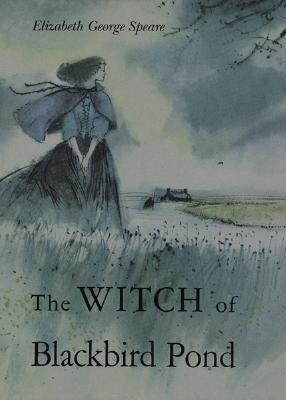
Next Book Club Pick: “The Witch of Blackbird Pond” by Elizabeth George Speare

Kate’s Review: “A Dowry of Blood”

This post may contain affiliate links for books we recommend.  Read the full disclosure here.

Book: “A Dowry of Blood” by S.T. Gibson

Publishing Info: Redhook, October 2022

Where Did I Get This Book: I own it.

Where You Can Get This Book: WorldCat.org | Amazon | Indiebound

Book Description: S.T. Gibson’s sensational novel is the darkly seductive tale of Dracula’s first bride, Constanta.

This is my last love letter to you, though some would call it a confession. . .

Saved from the brink of death by a mysterious stranger, Constanta is transformed from a medieval peasant into a bride fit for an undying king. But when Dracula draws a cunning aristocrat and a starving artist into his web of passion and deceit, Constanta realizes that her beloved is capable of terrible things.

Finding comfort in the arms of her rival consorts, she begins to unravel their husband’s dark secrets. With the lives of everyone she loves on the line, Constanta will have to choose between her own freedom and her love for her husband. But bonds forged by blood can only be broken by death.

Review: Earlier this month I reviewed the book “Thirst” by Marina Yuszczuk, a sapphic historical horror tale in which a woman in modern day Buenos Aires is caught up with a woman vampire who has been around for centuries. I made mention of thinking about the “Buffy” characters Darla and Drusilla as I read, and mused that I wish there had been a prequel book about Darla and Drusilla galavanting around Europe with Angelus and Spike being a sexual foursome together. Well, the synchronicity of the Universe kicked in a bit, because shortly after that review was written up, I picked up “A Dowry of Blood” by S.T. Gibson, which had been ALL OVER my social media feeds from various horror influencers. I bought it on a whim with a birthday book gift certificate from my sister, not sure of what to expect. And then when I began reading, I nearly fell out of my chair. Because as the story went on, it was clear that it was going to scratch that Darla/Angelus/Drusilla/Spike itch and all the nasty complications that come with it.

You should have made it clear they were all sleeping together, you cowards!!! (source)

“A Dowry of Blood” is from the perspective of Constanta, a medieval peasant woman turned bride of Dracula after the Count discovers her near death and changes her into a vampire. It’s Constanta finding a newfound supernatural power and an exciting life with her husband, but also finding his dark and manipulative side as he takes on more romantic companions and manipulates them all into loyalty and servitude. I’ve read a few “Dracula” retellings or spin off remixes, but I had never read one from the perspective of his Brides, and this one is such a dark yet also empowering read. Constanta’s story is one of a woman who finds herself in a bad and toxic relationship, and who has to go through the process of understanding it, accepting it, and extricating herself from it, while also feeling a loyalty to her fellow companions, Magdalena and Alexi. The three of them coming together to lean on each other, while trying to figure out how to remove themselves from Dracula, is a nail biter the closer we get to the eventual showdown, and while Gibson basically lays out the outcome from the jump, the suspense is still there.

I hesitate to call this story a romance, as it can be bleak and unsettling seeing how Dracula can hold such abusive power over Constanta, Magdalena, and Alexi, but at the same time there are shades of romanticism between the Brides (and Husband) as they bond, commiserate, and eventually strive for more. There is certainly intimacy, and I loved seeing the relationships between Constanta, Magdalena, and Alexi grow and evolve and strengthen. Watching Constanta evolve and shift and start to find her own power, even against the vampire that she feels she owes everything to, is at times difficult given the content, but is also a story that feels inherently like an unshackling of abusive chains. Hell, even just seeing Constanta go from a dying peasant to a vengeful vampire, who takes out the men who killed her family and tried to kill her, starts this off on an empowering note and shows that Constanta has it in her, even when she is under Dracula’s spell, or at least under his gaslighting, his manipulations, and his abusive tendencies. Looking back at my up-page comparisons to pop culture, maybe it would be more accurate to say this reads like Darla leaving The Master behind and choosing her lovers over him. Regardless, it’s satisfying as hell.

BUT, that said, there are also some really sumptuous and erotic moments in this book when it comes to Constanta exploring her burgeoning sexuality and intimacy with not only her husband, but also the other spouses. Much like Coppola’s “Bram Stoker’s Dracula”, “A Dowry of Blood” does have a bit of a romantic undercurrent about it in spite of the horror and the more toxic thematics. There are so many descriptors and so many beats that make it feel like an indulgence of beauty and decadence (especially if you take into account the epilogue/novella that is included in the edition I have, “An Encore of Roses”. That one was just full on sexy and spicy, and I HIGHLY RECOMMEND SEEKING IT OUT REGARDLESS), while also keeping the tension and the horror there . It also has a lot of really knowing nods to the source material itself, giving these characters a complicated backstory while also harkening to moments from Stoker’s vampire novel without dwelling or relying too much upon them.

“A Dowry of Blood” was a really enjoyable and bloody good read. I love historical vampire horror, and I love it when an author can bring in romantic elements that feel real, scary, and also tender. If Gibson wrote more stories about this group of vampires, I’d absolutely read them.

Rating 9: Erotic, empowering, indulgent, and bloody as hell, “A Dowry of Blood” is a sweeping and entertaining vampire novel that finds the darkness in an abusive situation, while also finding the light in actual love and support and tenderness.

Reader’s Advisory:

“A Dowry of Blood” is included on the Goodreads lists “Bisexual Vampire Books”, and “Classic Retellings and Spinoffs: Monster Mash”.

Serena’s Review: “Salt & Broom”

This post may contain affiliate links for books we recommend.  Read the full disclosure here.

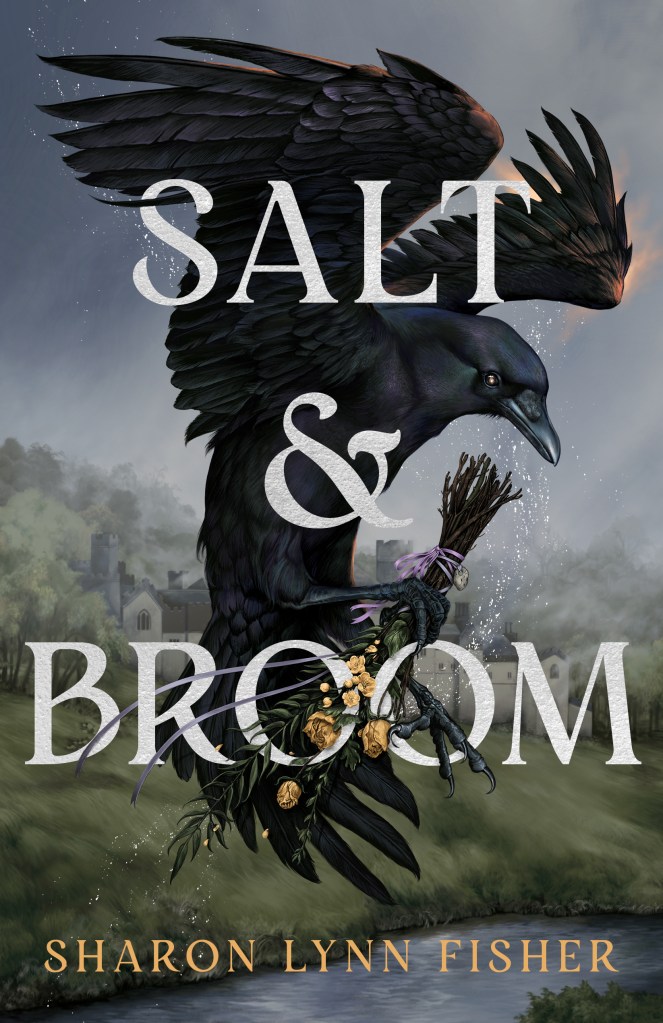
Book: “Salt & Broom” by Sharon Lynn Fisher

Publishing Info: 47North, December 2023

Where Did I Get this Book: Netgalley!

Where Can You Get this Book: WorldCat.org | Amazon | IndieBound

Book Description: A gifted healer unravels the mysteries of a cursed estate—and its enigmatic owner—in a witchy retelling of Jane Eyre .

“Salt and broom, make this room
Safe and tight, against the night.”

Trunks packed with potions and cures, Jane Aire sets out on a crisp, clear morning in October to face the greatest challenge of her sheltered girls’-school existence. A shadow lies over Thornfield Hall and its reclusive master, Edward Rochester. And he’s hired her only as a last resort. Jane stumbles again and again as she tries to establish a rapport with her prickly new employer, but he becomes the least of her worries as a mysterious force seems to work against her. The threats mount around both Jane and Rochester—who’s becoming more intriguing and appealing to her by the day. Jane begins to fear her herb healing and protective charms may not be enough to save the man she’s growing to love from a threat darker and more dangerous than either of them imagined.

Review: No, your memory is not failing you: Kate, not me, was the one to include this book in her Highlights post back in December! But this is a perfect example of the sort of book that has cross-over appeal for Kate and I. For one thing, we both love “Jane Eyre” and thusly any “Jane Eyre” retellings are automatically appealing to us both. From there, I imagine she looked at this one and saw “witchy cozy horror,” and I looked at it and saw “witchy cozy fantasy,” and in truth, it’s a little bit of both. Never fear, however, I didn’t poach this one from her! She confirmed that she didn’t have a full review planned, so I was in the clear!

“Jane Eyre” is a tough nut to crack as far as re-tellings go. I think both Jane and Mr. Rochester are fairly complicated characters in their own right, and their romance is by no means straight forward or easy. But I have to commend Fisher for the version she presents here! This book walks the perfect tight-rope of hitting the main story beats that one expects from a “Jane Eyre” story, while also completely re-imagining large chunks of the story to fit in a fantasy world where witches, ghosts, and fairies exist. It would be very easy for either side of this balance to shift and throw the entire book into disarray, but that’s not a concern here! Instead, the book confidently moves forward in the world its has created, trusting the reader to strike this balance as well. I was also impressed with the overall style and tone of the writing, as capturing the specific “voice” and manner of speaking can be a challenge when adapting older works like this. Again, this ability to capture this tone was all the more impressive since you had to pair this sort of “period piece” voice with all kinds of fantasy terms about witches and magic.

In particular, I really enjoyed the adaptations and liberties the author took with the original story. All of the main plot beats were hit (and even a few minor ones, the sort that will definitely please the fans!), but the author didn’t hold back from truly making this one her own. Several familiar characters are completely re-imagined, while others play roles that are relatively unchanged. Some fairly major plot lines are also changed, but in ways that still hold true to exploring the themes and love story of the original. This include the plot line regarding Mr. Rochester’s wife. Obviously, I don’t want to go into spoilers, but I was very impressed by how this was re-done! And, again, the magical elements tied into all of this in ways that were truly surprising! Going in, I had it in my mind that it would mostly be the same story but with Jane doing a bit of magic here and there. Nope! Major fantasy elements all over the place, but in the best ways!

I also really enjoyed this version of Jane and Rochester. Jane, especially, was a fantastic leading lady. This version captured the same spirit of independence and resolve that we see in the original, but the story also allowed her to explore themes regarding female friendships, motherhood, and family in ways that the original didn’t. Rochester was also excellent, capturing much of the same dark and broody motifs that we expect from this classic romantic hero. That said, I liked some of the updates we got to this version as the original had moments where he came off as a bit, well, jerkish. This Rochester is still reserved and mysterious, but also updated in small ways to appeal to modern romance readers. I especially loved all of the scenes where he and Jane team up to solve the magical mysteries surrounding them.

Overall, I really loved this book! It managed to take a beloved classic story and retain all that makes it great while also adding a fun fantasy spin to the proceedings. I’ll definitely be looking through this author’s back catalog to see what else she’s written and will keep any eye out for anything coming in the future! If you enjoy magical re-imaginings of classic stories, definitely check this one out!

Rating 9: Darkly romantic and mysterious, a perfect book for all “Jane Eyre” fans!

Reader’s Advisory:

“Salt & Broom” is on any relevant Goodreads lists yet, but it should be on Jane Eyre Retellings.

Kate’s Review: “Thirst”

This post may contain affiliate links for books we recommend.  Read the full disclosure here.

Book: “Thirst” by Marina Yuszczuk and Heather Cleary (Translation)

Publishing Info: Dutton, March 2024

Where Did I Get This Book: I received an eARC from the publisher via NetGalley.

Where You Can Get This Book: WorldCat.org | Amazon | Indiebound

Book Description: Across two different time periods, two women confront fear, loneliness, mortality, and a haunting yearning that will not let them rest. A breakout, genre-blurring novel from one of the most exciting new voices of Latin America’s feminist Gothic.

It is the twilight of Europe’s bloody bacchanals, of murder and feasting without end. In the nineteenth century, a vampire arrives from Europe to the coast of Buenos Aires and, for the second time in her life, watches as villages transform into a cosmopolitan city, one that will soon be ravaged by yellow fever. She must adapt, intermingle with humans, and be discreet.

In present-day Buenos Aires, a woman finds herself at an impasse as she grapples with her mother’s terminal illness and her own relationship with motherhood. When she first encounters the vampire in a cemetery, something ignites within the two women—and they cross a threshold from which there’s no turning back.

With echoes of Mary Shelley’s Frankenstein and written in the vein of feminist Gothic writers like Shirley Jackson, Daphne du Maurier, and Carmen Maria Machado, Thirst plays with the boundaries of genre while exploring the limits of female agency, the consuming power of desire, and the fragile vitality of even the most immortal of creatures.

Review: Thank you to Dutton for sending me this eARC via NetGalley!

As many people know, I love vampire horror, but along with that loves comes a pretty picky set of standards. I would love to frame it as ‘passionate’ but I’m sure part of it is being a bit of an elitist/a bit bratty when it comes to vampiric tales. But I couldn’t help but have my attention snagged when access to an eARC of Marina Yuszczuk’s “Thirst” arrived in my inbox. The cover is already eye catching, for one. For another, a horror novel about a female vampire that has a historical element, as well as Sapphic themes, just sounds INCREDIBLY tantalizing. I kept thinking about “The Hunger” and the characters of Darla and Drusilla from “Buffy”. I was hopeful going in.

Honestly just give me an entire prequel book series about these two with Spike and Angellus all being very sexually fluid together. (source)

The first half of this book was amazing. I loved the way that we follow our nameless Vampire from her transformation, to her liberation from her sire, to her need to escape once people in Europe start hunting her and her kind down, to her arrival and time in Buenos Aires. It is such a compelling arc and background for her, examining how she became a vampire and how she slowly accepts it and turns into a predator with a shade of seductive longing. The time and place is so well formed and presented, and the eeriness and horror moments are very well done. I LOVE predatory vampires in vampire fiction, and ones that have a little bit of dangerous eroticism is always a great harkening back to the way vampire lore has always had shades of longing and desire within it. And the explorations of feminine longing and feminine power and agency in this section is so interesting as we see her prey on her victims while also feeling a need for connection as she moves through her existence as times change. I also really enjoyed the setting of Buenos Aires during the Yellow Fever plague and how mass death and illness could make for both a good place to fade into the background, but also a dangerous place as hysteria ramps up and her cover could be blown. I found Part One to be so, so interesting and enthralling.

Which made it even more disappointing when Part Two was a bit lackluster. In this part we have Alma, a modern day woman living in Buenos Aires who is grappling with a divorce, her sensitive son Santiago, and now the impending death of her mother. She soon finds out that the family has had a key to a mausoleum passed down for generations, and now she has to figure out if she’s going to sell the mausoleum or what. I’m sure you can guess who is living in that tomb, which is ABSOLUTELY a great set up. But my problem with Alma’s story was that, while it’s a pretty standard examination of an unhappy woman at a crossroads, I didn’t feel like it tied in SUPER well with the Vampire’s story, as when it goes come together there isn’t much exploration of it before the book was done. I appreciated trying to draw a dichotomy between the feminine struggles that the vampire faced, even as a vampire but also before, as well as the struggles that Alma was experiencing as a woman in the modern times. But there wasn’t enough time with the Vampire and Alma actually connecting and interacting, and because of this certain choices made and plot points that shook out didn’t really work for me because not enough time was spent building up to them. I think that had there been a third part from both Alma’s and the Vampire’s perspectives to see a full picture, as well as more interaction and relationship building, would have really fixed this. But as it was it just felt a bit abrupt.

Overall, “Thirst” is fantastic in the first half and ultimately evens out to a still entertaining read, even if I wanted more from it. I will absolutely be checking out more from Marina Yuszczuk in the future if we get more translations of ehr works.

Rating 7: A fabulous first half followed by a not as fleshed out second half made for a meet in the middle read. But I REALLY loved the historical moments and the concept itself.

Reader’s Advisory:

“Thirst” is included on the Goodreads lists “Girly Pop But Make It Insane”, and “Weird Woman Book Club”.

Kate’s Review: “Earthdivers (Vol.2): Ice Age”

This post may contain affiliate links for books we recommend.  Read the full disclosure here.

Book: “Earthdivers (Vol. 2): Ice Age” by Stephen Graham Jones, Ricardo Burchielli (Ill.), Patricio Delpeche (Ill.), & Emily Schnall (Ill.).

Publishing Info: IDW Publishing, February 2024

Where Did I Get This Book: I received an eARC from NetGalley.

Where You Can Get This Book: WorldCat.org | Amazon | Indiebound

Book Description: Guest artists Riccardo Burchielli ( DMZ ), Patricio Delpeche, and Emily Scnall join Stephen Graham Jones— New York Times best-selling author of The Only Good Indians and My Heart Is a Chainsaw —for a mission to the Ice Age exploring America’s pre-Columbian past!

When Martin and Tawny’s children disappeared, the couple barreled into the desert to track them down at any cost. Instead, they ran afoul of another group of rovers who claimed to be saving the world by traveling through a cave portal to the year 1492 to prevent the creation of America—an idea that defied belief until the grieving parents were lured into the cave and vanished in time and space.

Now alone, Tawny must adapt to the wild marshlands of prehistoric Florida, circa 20,000 BC, and the breathtaking and bloodthirsty megafauna are the least of her problems when she’s caught in a war between a community of native Paleo-Indians and an occupying Solutrean force. Tawny’s odds of survival are in free fall, but she’s a mother on a mission…and she’s holding on to hope that the cave brought her here for a family reunion.

In the tradition of Saga , the next chapter of the critically acclaimed sci-fi epic is here in Earthdivers Vol. 2 . Collects Earthdivers #7-11.

Review: Thank you to NetGalley for providing me with an eARC of this graphic novel!

When I first started Stephen Graham Jones’s fantasy/Sci-Fi time travel series “Earthdivers”, for whatever reason I thought that it was only going to be focused on what the first volume covered: the time travel assassination of Christopher Columbus. Why I thought it was only going to be that is beyond me, but when that arc came to an end at the start of “Kill Columbus”, I wondered where we were going next, with no clue or idea as to what the path was going to be. Who were we going to follow now? Was it still going to be historical fiction time travel-y? Our protagonist’s storyline pretty much definitively ended, what is going to happen now? And then I saw the cover for “Earthdivers (Vol. 2): Ice Age”, and I was blown away. BACK IN TIME TO THE ICE AGE?! HELL YES! And when I saw that we were following another time traveller, this time Tawney, a mother who was searching for her children, I was all the more excited. And shocking absolutely no one, “Earthdivers: Ice Age” is suspenseful, intriguing, and enthralling.

I really love that we are starting to explore stories of other characters in the book who have fallen afoul the mysterious cave. In “Ice Age” our focus is on Tawney, a grieving mother who had been looking for her missing twins when she and her friends were lured into the cave by Emily as an act of self defense. When Tawney wakes up, she is no longer in the 22nd century, but all the way back to the Ice Age and the Paleolithic era of humans. This is such a great choice, narrative wise, as it not only opens up a slew of possibilities as to what stories are going to potentially be told next (after all, there were multiple people who ended up in the cave around the time that Tawney did….), but it also gives us lots of different character possibilities. Tawney was a good first choice, because her motivation is based on her love for her kids, and it drives not only her want to survive in this wholly new setting, but also the choices that she makes while there. I really loved Tawney as a main character for this volume, and I loved the idea of the Ice Age as a setting and having her have to figure out how to survive in this totally new environment. Whether it’s dealing with smilodonts, having to adapt to the cold, or trying to find ways to communicate with the people she meets and connects with, it makes for a gripping story of a stranger in a strange land.

And in true Jones fashion, “Ice Age” also taps into societal injustices that feel very true today and places them even in the Ice Age. I wasn’t sure what to expect with this volume, as I thought that the Ice Age would have different hardships, but Jones keeps with the fighting against colonialism theme, using the clashes between Indigenous people and Solutreans (a controversial theory that Europeans settled in the Americas during the Ice Age by traveling over the frozen waters, HERE is a pretty good write up as to why it’s unlikely and also racist). It’s genius because it’s laying not only another kind of invading force story, but also tapping into Tawney’s inner turmoil about how to proceed when she finds herself protecting and becoming attached to a Solutrean child, as she sees her own children in him. These led to some really emotional beats, as Tawney, unlike Yellow Kid in “Kill Columbus”, draws lines when it comes to children as victims, no matter how much it could seem like a ‘greater good’. I also love how Jones has taken this fringe theory of Solutrean discovery and torn it apart by having Tawney basically fight back against the invading forces with her know how from her own time period. It’s very creative and makes for a really interesting volume! Throw in some more backstory for the Earthdivers and their motivations, as well as world building for the ravaged planet they are trying to reset, and the story arc continues to build on its complexity in very rewarding ways.

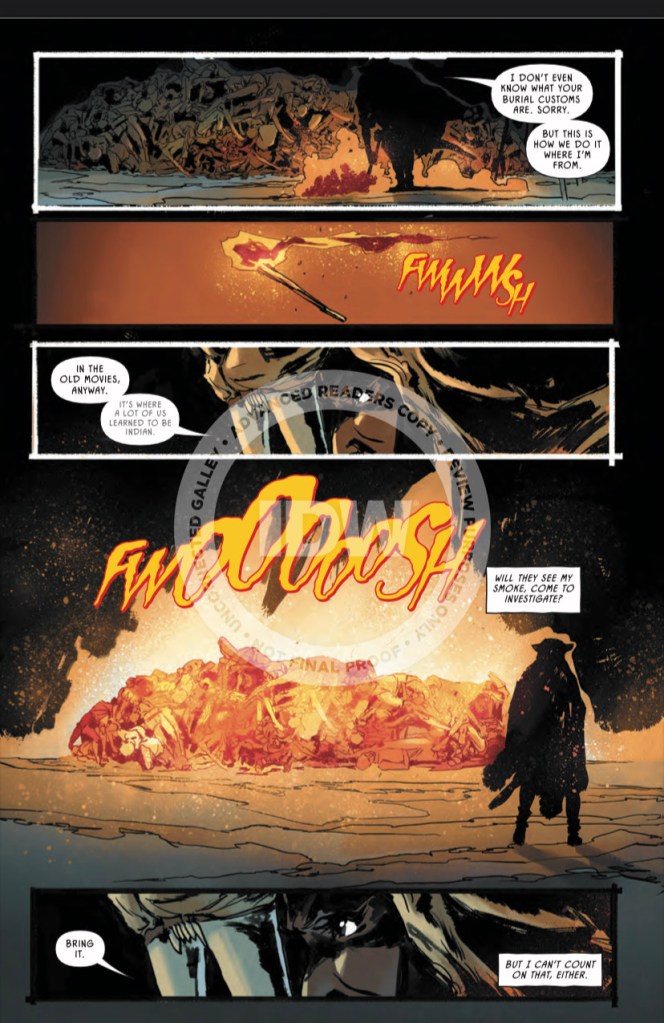
And finally, the artwork. We have some new artists in this volume, Ricardo Burchielli, Patricio Delpeche, and Emily Schnall. I liked the new styles that they brought, as while they still fit in with the previous Volume, they did bring their own aesthetics and signatures to the work.

(source: IDW)

I’m still really digging “Earthdivers” and how outside the box Stephen Graham Jones is taking it. I can’t wait to see who we follow through the cave next, and what time period it’s going to be.

Rating 8: Another creative and intense time travel story from Stephen Graham Jones! I’m loving the world building at the creative time and place.

Reader’s Advisory:

“Earthdivers (Vol. 2): Ice Age” isn’t included on any Goodreads lists as of yet, but would fit in on “Graphic Novels & Comics By The Aboriginal, Indigenous, and Native Peoples of the World”, and “Time Travel”.

Kate’s Review: “Island Witch”

This post may contain affiliate links for books we recommend.  Read the full disclosure here.

Book: “Island Witch” by Amanda Jayatissa

Publishing Info: Berkley, February 2024

Where Did I Get This Book: I received an eARC from NetGalley.

Where You Can Get This Book: WorldCat.org | Amazon | Indiebound

Book Description: Inspired by Sri Lankan folklore, award-winning author Amanda Jayatissa turns her feverish, Gothic-tinged talents to late 19th century Sri Lanka where the daughter of a traditional demon-priest—relentlessly bullied by peers and accused of witchcraft herself—tries to solve the mysterious attacks that have been terrorizing her coastal village.

Being the daughter of the village Capuwa, or demon-priest, Amara is used to keeping mostly to herself. Influenced by the new religious practices brought in by the British Colonizers, the villagers who once respected her father’s craft have turned on the family. Yet, they all still seem to call on him whenever supernatural disturbances arise.

Now someone—or something —is viciously seizing upon men in the jungle. But instead of enlisting Amara’s father’s help, the villages have accused him of carrying out the attacks himself.

As she tries to clear her father’s name, Amara finds herself haunted by dreams that eerily predict the dark forces on her island. And she can’t shake the feeling that it’s all connected to the night she was recovering from a strange illness, and woke up, scared and confused, to hear her mother’s frantic. No one can find out what happened .

Lush, otherworldly, and recalling horror classics like Carrie and The Exorcist , Island Witch is a deliciously creepy and darkly feminist tale about the horrors of moral panic, the violent space between girlhood and adulthood, and what happens when female rage is finally unleashed.

Review: Thank you to NetGalley for providing me with an eARC of this novel!

If a book has references to “Carrie” and “The Exorcist” and adds in the promise of feminist rage in a not as seen setting, I am absolutely going to want to get my hands on it. That is just catnip for me, really. So seeing the description (and FANTASTIC) cover for Amanda Jayatissa’s new horror novel “Island Witch” really, really caught my interest. I love horror that takes on wider societal themes, I love feminist exploration within the genre, and there is also THAT AMAZING COVER. I was really excited to read this book, and had really high hopes. But I’m dismayed to report that they weren’t really met, at least not as much as I had expected them to.

I’ll start with the good, though. What I really liked about this book was how Jayatissa takes on the concepts of misogyny, religious zealotry, and colonialism and imperialism with her setting of 1800s Sri Lanka, as a young woman named Amara is seeing her village slowly turn against her and her father, the local Capuwa (or demon priest, as he performs rituals and exorcisms to ward off demons) when mysterious attacks leave men dead. Amara is an intriguing main character, as she finds herself a target of her community as their Christian belief system sees her and her family as threatening, and starts to realize that there are other dangers beyond the potential demonic attacks. I love how Jayatissa explores the way that Amara’s community, former friends, and even at times family holds her gender against her, her family against her, and her non-Christian beliefs against her, and how Amara’s desperation to clear her father’s name becomes more about clearing her own. Jayatissa doesn’t shy away from violence, sexism, prejudice, and trauma, and Amara’s journey harkens to other feminist horror tales of women taking back their power from those that want to take it away and snuff it out. I also found a lot of the demon lore and other horror aspects to be pretty good, and at times more ambiguous as opposed to cut and dry about good and evil.

But I had a really hard time with the first person perspective of this book, because while trying to show Amara’s coming of age, and her journey to find out the truth about what is happening in her community and both the dead men and the women they left behind, made for a lot of telling instead of showing. I definitely get that Amara is starting out as a somewhat naive and hopeful person, and has to become more hardened as she is finding out dark truths about those around her and the potential demonic activity, but her voice was very stilted, and at times hamfisted in execution. There were many times that it took me out of the story, and her inner thoughts would project a very obvious plot point that was coming up because of how much telling she was doing. It was too bad, because I think that had Amara’s voice been a little more complex this would have connected a lot better with me.

“Island Witch” was a mixed bag for me. I loved the effort and the greater themes, but the narrative style muddled it up a bit.

Rating 6: Overall I liked the themes of misogyny and colonial oppression and group think, but I thought that the voice of the main character was a little more simplistic than I had hoped for, and made it a stilted flow.

Reader’s Advisory:

“Island Witch” is included on the Goodreads lists “Popsugar 2024 #40: A Horror Book Written by a BIPOC Author”, and “Historical Fiction 2024”.

Book Club Review: “An Extraordinary Union”

This post may contain affiliate links for books we recommend.  Read the full disclosure here.

We are part of a group of librarian friends who have had an ongoing book club running for the last several years. Each “season” (we’re nerds) we pick a theme and each of us chooses a book within that theme for us all to read. Our current theme is Centuries, where we were given a random century and had to pick a book based during that time period.  For this blog, we will post a joint review of each book we read for book club. We’ll also post the next book coming up in book club. So feel free to read along with us or use our book selections and questions in your own book club!

Book: “An Extraordinary Union” by Alyssa Cole

Publishing Info: Kensington, March 2017

Where Did We Get This Book: The library!

Where You Can Get This Book: WorldCat.org | Amazon | Indiebound

Century: 19th

Book Description: As the Civil War rages between the states, a courageous pair of spies plunge fearlessly into a maelstrom of ignorance, deceit, and danger, combining their unique skills to alter the course of history and break the chains of the past . . .

Elle Burns is a former slave with a passion for justice and an eidetic memory. Trading in her life of freedom in Massachusetts, she returns to the indignity of slavery in the South–to spy for the Union Army.

Malcolm McCall is a detective for Pinkerton’s Secret Service. Subterfuge is his calling, but he’s facing his deadliest mission yet–risking his life to infiltrate a Rebel enclave in Virginia.

Two undercover agents who share a common cause–and an undeniable attraction–Malcolm and Elle join forces when they discover a plot that could turn the tide of the war in the Confederacy’s favor. Caught in a tightening web of wartime intrigue, and fighting a fiery and forbidden love, Malcolm and Elle must make their boldest move to preserve the Union at any cost–even if it means losing each other

Kate’s Thoughts

It’s a bit of an anomaly that I have read a romance author before reading the book selected for book club should that author be a romance author. But in the case of “An Extraordinary Union”, I actually had read TWO books by Alyssa Cole! One of them was her “Hamilton” inspired novella “That Could Be Enough”, which was cute, and the other was her thriller novel “When No One Is Watching”, which I really loved. So I had read Alyssa Cole before book club met, and I MAY have been the only one? ANOMALY I SAY! And while “An Extraordinary Union” wasn’t the usual book that I pick up on my own, I kind of knew what to expect.

Overall I enjoyed this book. I really liked the idea of spies for the Union during the Civil War, and that one of said spies is a Black woman who has gone deep undercover in hopes of turning the tides of the war. I liked Elle a lot, and I found her motivations believable and was invested in her getting out of her dangerous position while also sticking it to the Confederacy. While I don’t usually do spy books, this one kept my interest because of my background in learning about and presenting this time period at my historical society job. But at the same time Cole balances this aspect with the charming romance between Elle and Malcolm, while also bringing up and parsing out the complications that would arise during this time period for a mixed race couple. I was worried that there might be some sticky aspects to this given the historical context, not only with societal racism, but also misogyny/ misogynoir, but I did feel that Cole did a pretty good job of addressing these things and making sure that Elle and Malcolm were on equal footing, or as close to equal footing as possible.

And this is an ongoing series! So if you like “An Extraordinary Union” and the themes and plot points, you can keep on going! I am considering it, as the set up for the next book is pretty intriguing. Overall I found it to be a solid romance novel with a setting that felt unique.

Kate’s Rating 7: A historical romance filled with intrigue and a backdrop of a critical time during the Civil War, “An Extraordinary Union” is entertaining and sure to please people who like the genre!

Book Club Questions

  1. What did you think of having Elle as a protagonist in this book? Along with that, what were your thoughts on Malcolm as a love interest for her?
  2. What did you think of Cole comparing and contrasting between the two backgrounds that Elle and Malcolm came from, and how they are both from marginalized backgrounds?
  3. What did you think of Susie as one of the antagonists in this book? How did she hold up or subvert the Southern Belle stereotype in literature?
  4. Have you read any fiction books that take place during the Civil War that have stuck with you? What was it about that book or books that resonated?
  5. How does this story compare to other historical romances that you have read?
  6. Would you keep reading on in the series?

Reader’s Advisory

“An Extraordinary Union” is included on the Goodreads lists “#ReadPOC: List of Romance Books by Authors of Color”, and “Historical Romance with Unusual Settings”.

Next Book Club Pick: “Much Ado About Nada” by Uzma Jalaluddin

Serena’s Review: “Projections: A Novel”

This post may contain affiliate links for books we recommend.  Read the full disclosure here.

Book: “Projections: A Novel” by S. E. Porter

Publishing Info: Tor Books, February 2024

Where Did I Get this Book: ARC from the publisher!

Where Can You Get this Book: WorldCat.org | Amazon | IndieBound

Book Description: Love may last a lifetime, but in this dark historical fantasy, the bitterness of rejection endures for centuries.

As a young woman seeks vengeance on the obsessed sorcerer who murdered her because he could not have her, her murderer sends projections of himself out into the world to seek out and seduce women who will return the love she denied―or suffer mortal consequence. A lush, gothic journey across worlds full of strange characters and even stranger magic.

Sarah Porter’s adult debut explores misogyny and the soul-corrupting power of unrequited love through an enchanted lens of violence and revenge.

Review: It’s been a hot minute since I read “Vassa in the Night,” but what I do remember, I remember fondly. I vaguely remember struggling a bit with the characters, but enjoying the world-building and lyrical nature of the story. Don’t quote me on that, but I feel like I can remember some pretty interesting magical concepts, but at the same time, practically nothing about Vassa herself. From these mists of memories, I have to say I’m pleased to see the author jumping over to adult fiction! As is confirmed in this book, I think adult fiction much better suits the strengths found in her lyrical style to storytelling.

I wasn’t sure exactly what to expect when I started this one. The cover is fantastic and was definitely giving creepy vibes, and the book description was leading me to think we’d be following the ghost, Catherine, individually throughout the story. But I wasn’t expecting the multiple time lines and the manner in which the story unfolded. It was both intriguing and frustrating. Intriguing, because the stories explores a large period of time, giving the reader glimpses into many aspects of the world and systems in place. Frustrating, because like Catherine, the reader is left raging at Angus, Gus, throughout the book, longing for his demise, forced to witness him in all of his misogynistic glory again and again.

That said, I really appreciated the look into Gus’s character that we see here. He’s such a lowkey sort of evil, a man who think he deserves the love of those he chooses, and then reacts violently and viscously when he is denied. It’s as terrifying as it is familiar. But what have been a simplistic exploration of this theme rose to a new level through the author’s careful work in this book. The story is presented meticulously and intentionally, using its various timelines to really sharpen the fine point it is making. Catherine is angry, the book is angry, and the author does a diligent job in portraying this anger as justified, warranted, and, in its own terrible way, necessary.

That said, this book is long, coming in at just shy of 500 pages. Given the dark nature of its themes, and the ongoing struggles of its characters, this left the reading experience as somewhat challenging at times. I can’t point to any exact moments that could be cut to winnow down the length, but I do think the book would have been more readable to a general audience if it had been edited down just a bit. That said, if you enjoy the style of writing presented here and become invested in Catherine’s story early on, as I did, the length isn’t a deterrent. If you enjoyed lyrical, historical fiction with strong feminist themes, definitely check this one out!

Rating 8: Ambitious and powerful, Porter weaves a careful tale of misogyny, cruelty, and the anger of a woman who refuses to remain a victim.

Reader’s Advisory:

“Projections: A Novel” is on this Goodreads list: Books I’m Dying to Get My Hands On