Joint Review: “Beauty: A Retelling of the Story of Beauty and the Beast”

41424Book: “Beauty: A Retelling of the Story of Beauty and the Beast” by Robin McKinley

Publishing Info: Harper, October 1978

Where Did We Get this Book: Serena’s owns it, and Kate borrowed it from Serena!

Book Description: Beauty has never liked her nickname. She is thin and awkward; it is her two sisters who are the beautiful ones. But what she lacks in looks, she can perhaps make up for in courage.

When her father comes home with the tale of an enchanted castle in the forest and the terrible promise he had to make to the Beast who lives there, Beauty knows she must go to the castle, a prisoner of her own free will. Her father protests that he will not let her go, but she answers, “Cannot a Beast be tamed?”

Serena’s Thoughts

I originally read this book back in highschool after finding it while browsing through my school library. What a lucky day of my life! I had read a few books by Robin McKinley before this but had somehow missed the fact that she wrote a Beauty and the Beast re-telling (she actually wrote two! Her other book is titled “Rose Daughter” and is a bit more of an adaptation of the tale than a straight re-telling like this one). Fast forward an undefined number of years and “Beauty” is one of a handful of books that I re-read almost on a yearly basis. It’s the epitome of a comfort read for me, at this point. And with that in mind, I’ve found it a bit challenging to review it here for the blog! Unpacking the book as an actual work of fiction outside of my own long history of gushing over it is tricky!

One of the most noteworthy aspects of this tale is its simplicity. There are a million and one Beauty and the Beast adaptations, and they all approach the tale differently with unique additions to the tale and versions of the main characters. What makes “Beauty” stand out is the fact that it really isn’t providing anything extra to the tale: if you could have a novel-length version of the fairy tale itself, no bells or whistles added, this would be it. The tale unfolds in a very familiar way, broken into three parts essentially. There is Beauty’s life through her family’s fall from wealth, then her time adapting to a more simple life and hearing tales about a mysterious woods that one days hits too close to home with her father’s unlucky trip to a strange castle, and then the final third, Beauty’s time in the castle itself, falling in love with a Beast.

I particularly appreciate the fact that McKinley doesn’t rush the first half of this novel. As anxious as I am (and I’m sure many readers as well) to get to the meat of the story, Beauty and the Beast’s love story, this initial build up is important for setting up Beauty as a three dimensional character. We need time to understand Beauty herself, and to grow to love her family as well so that her sacrifice, when it comes, to leave them forever has the emotional weight it deserves.

Due to this greater fleshing out of the beginning of the story, Beauty’s family all get a lot more page time. The sisters, particularly, become their own characters with their own struggles. And, luckily, they are treated much more kindly by McKinley than sisters often fare in fairy tales being neither catty nor selfish.

But, of course, the true joy of the story does indeed come in its second half when Beauty begins her new life at the castle and meets the Beast. Here lies the true brilliance of the story. Under less sure hands we have seen too many incantations of the Beast where he can fall into many character traps, like the overly angsty Beast, or, most likely, the “anger issues are sexy” Beast. The Beast in this story is perfect as a strange, romantic hero. The tragedy of his story and life up to this point is the primary emotion that is brought to the forefront. And it is this sympathy for him upon which Beauty begins to build her feelings. But, even more importantly, McKinley allows her characters to travel the full of arc of a burgeoning relationship. Each are wary of the other (Beauty, for obvious reasons, and the Beast due to the vulnerability he must show to grow close to another human after so long), then through small moments and risks on each character’s part, a friendship develops, and only from there do we begin to see the romance come. McKinley never stumbles in this progression, and its this sure-handedness that makes the story and Beauty and the Beast’s relationship so beautiful and believable.

Re-reading this book for the millionth time, and especially with the new movie on my mind, it strikes me that the original Disney movie might have needed to credit this book for parts of their story. I mean, really, there’s even mention of a dog-like footstool! And this was written before that movie!! Perhaps a questionable lack of attribution on Disney’s part…

Kate’s Thoughts

So I had never actually read “Beauty” until I was at Serena’s house awhile back, and she literally thrust her copy of the book into my hands. I had only read “Sunshine” by Robin McKinley before then, though I had some familiarity with her other works because my mother really likes the “Damar” series. I, too, am a huge fan of the story of “Beauty and the Beast”, as the Disney movie is my favorite Disney movie of all time, and I’ve always enjoyed the fairy tale. Hell, in college I wrote a paper about the symbolism of the Beast in regards to sex and growing up. So yes, Serena was right to toss this my way with the command of ‘read it, read it now’.

I think that the biggest thing that strikes me about this book is that McKinley is very careful to flesh out all of the characters, from Beauty to her sisters to the Beast. While some fairy tales function more on tropes and common themes, McKinley takes these kind of stock characters and explores them a bit more. I was especially happy, like Serena was, that Beauty’s sisters Grace and Hope were also kind and empathetic people. I was worried that there was going to be some of the usual ‘only one girl can be the good one’ malarky, but this book is really kind to it’s female characters. Beauty herself was a wonderful surprise as well, as she is good and kind but has her own weaknesses and is not perfect. I felt a lot of love from her family, which is so rare in so many fairy tales. Seeing them going from wealth to near poverty was a really neat take, giving the story more motivation for the Father to go off, and more motivation for Beauty to make the sacrifices that she ends up making. And I will admit that I was also invested in the love story that befalls upon Grace, who is longing for a long lost love to return to her, even if the odds aren’t in her favor.

And like Serena, I also liked the parts with the Beast and how their relationship progresses. The Beast never really comes off as an actual threat to Beauty, which is a difficult line to treat with this story. I know that a lot of people compare this fairy tale to Stockholm Syndrome (I have a lot of opinions as to why this is incorrect, but that’s another rant for another day), but in “Beauty” it felt more like a mutual understanding between Beauty and the Beast instead of a captive situation. I feel like this gives Beauty the credit she deserves, and it doesn’t let any critiques turn her into a victim in spite of her obvious agency. Her relationship with the Beast is tentative, then sweet, and it was nice seeing them progress and learn about each other.

I think that the best part about this book is that it’s really just fluffy and pure escapism, which sometimes we really just need. There isn’t any unnecessary drama or nonsense, and you know that you’re going to get a happy ending. But even if the ending is guaranteed to be happy, McKinley does a great job of keeping you interested in the journey to happily ever after. If you are a fan of “Beauty and the Beast”, this is definitely a book that you should be picking up. Do yourself this favor!!!

Serena’s Rating 10: My absolute favorite fairy tale re-telling of all!

Kate’s Rating 10: An absolutely lovely retelling of one of my very favorite fairy tales.

Reader’s Advisory:

“Beauty: A Retelling of the Story of Beauty and the Beast” is on these Goodreads lists: “Beauty and the Beast” and “The Best Fairytales and Retellings.”

Find “Beauty: A Retelling of the Story of Beauty and the Beast” at your library using WorldCat!
Serena’s Review: “Wintersong”

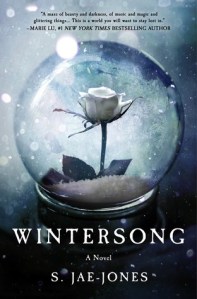
24763621Book: “Wintersong” by S. Jae-Jones

Publishing Info: Thomas Dunne, February 2017

Where Did I Get this Book: ebook ARC from NetGalley

Book Description: All her life, nineteen-year-old Liesl has heard tales of the beautiful, mysterious Goblin King. He is the Lord of Mischief, the Ruler Underground, and the muse around which her music is composed. Yet, as Liesl helps shoulder the burden of running her family’s inn, her dreams of composition and childish fancies about the Goblin King must be set aside in favor of more practical concerns.

But when her sister Käthe is taken by the goblins, Liesl journeys to their realm to rescue her sister and return her to the world above. The Goblin King agrees to let Käthe go—for a price. The life of a maiden must be given to the land, in accordance with the old laws. A life for a life, he says. Without sacrifice, nothing good can grow. Without death, there can be no rebirth. In exchange for her sister’s freedom, Liesl offers her hand in marriage to the Goblin King. He accepts.

Down in the Underground, Liesl discovers that the Goblin King still inspires her—musically, physically, emotionally. Yet even as her talent blossoms, Liesl’s life is slowly fading away, the price she paid for becoming the Goblin King’s bride. As the two of them grow closer, they must learn just what it is they are each willing to sacrifice: her life, her music, or the end of the world.

Review: This book has been marketed as a good read for fans of “Labyrinth,” and while I’m familiar with the movie, I wouldn’t say that I’m a die hard fan by any means. I think I’ve only seen it once? But from what I remember, this book description does seems very close to that story. Perhaps too close? I have read several iterations of the “Goblin King” fairytale, however, and have had a hit or miss run of them. But I’m always intrigued by the basic arc and curious to see what new twists each author will bring to a fairly established story. However, while “Wintersong” is written beautifully, after reading it I wouldn’t list it as one of my top choices for this type of story.

Basically, this story can be split into two halves. The first deals with Liesl’s mission to save her beloved sister Kathe from the clutches of the Goblin King who has stolen her away. For the most part, I very much enjoyed this first half of the book. Liesl’s relationship with her sister is realistically complicated, based in both deep familial love but also challenged by Liesl’s jealously of the perfection she attributes to her sister based on her beauty. While this strained relationship could at times leave Liesl looking a bit selfish and self-centered, I felt like it also tapped into the true undercurrents that develop in many sibling relationships. And the fact that beneath it all Liesl would do anything, even sacrifice herself, to save her sister properly orients both her character and the sisters’ relationship as a positive one.

The second half of the story is where it goes a bit off the rails for me. This is kind of surprising, because as much as I loved the first half, I always knew where the meat of this story would lie: Liesl’s time spent as the wife of the Goblin King. And typically, this is the part of these types of stories that I enjoy the most. That said, it is also the most challenging to write as now the Goblin King must be developed to have more layers beyond villainy and the complicated relationship between him and his stolen bride must be more fully fleshed out.

And while there were elements of this half of the story I did enjoy, I also felt like the novel became a bit confused about what it was trying to do and say. Honestly, it almost feels as if this book would have done better if it had been marketed as an adult fantasy novel. Being pushed into YA territory leaves the physical aspects of the two’s relationship rather strained and almost working against the author’s arc of self-discovery for Liesl. It just felt odd at times.

The Goblin King’s transformation into a tragic, romantic hero also felt like something we have seen too often before. And while that isn’t always a fault (as I said, I’ve read many of these types of novels), this book’s descriptions of him at times seem to take its own angst and oh so tragic beauty too seriously. The lyricism of the novel that serves the story so well in its world building and descriptions of music, begins to feel a bit empty and cliche when it comes to their romantic relationship.

At this point in the review, I would say the book was coming in at a solid 5. I liked the first half, didn’t really like the second half, so a very middle of the road read. However, I won’t spoil it, but I was very disappointed with the end of the novel. I understand what the author was trying to do. However, there are too many questions left unanswered, and, again, the beautiful tragedy of it all seemed to be taking itself too seriously for the type of book this is. I hear there is a sequel in the works, and I do not appreciate books that leave cliff hangers that require readers to continue to get any sense of resolution. Sure, leave the door open and set the stage, but end it in a way that is still satisfying if readers don’t want to continue. So yes, I was unhappy with the end of the book. It may work for some, but it didn’t for me, hence the extra drop in my rating of it.

Serena’s Review and Giveaway: “A Conjuring of Light”

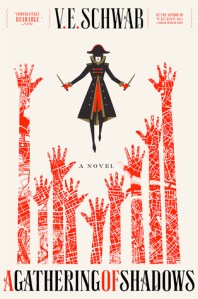
29939230Book: “A Conjuring of Light” by V.E. Schwab
Publishing Info: Tor Books, February 2017

Where Did I Get this Book: I bought it! (And an extra for this giveaway, since, let’s be real: I’m keeping mine!)

Book Description: Londons fall and kingdoms rise while darkness sweeps the Maresh Empire—and the fraught balance of magic blossoms into dangerous territory while heroes and foes struggle alike. The direct sequel to “A Gathering of Shadows,” and the final book in the Shades of Magic epic fantasy series, “A Conjuring of Light” sees Schwab reach a thrilling culmination concerning the fate of beloved protagonists—and old enemies.

Review: While I should have felt completely confident after Schwab nailed the always-challenging middle book of a series, the final book is really what a series lives and dies on and…and…nothing bad must happen to my lovelies, Lila, Kell, and Rhy! And, while bad things do happen in this book (narrative-wise, not quality-wise, thank god), as a closing chapter for the trilogy, “A Conjuring of Light” was everything I wanted and many things I didn’t know I even DID want!

I was lucky enough to have gotten around to “A Gathering of Shadows” only a week or so before this book came out. So I only had to live with that killer cliffhanger for a few days before I rushed out to my local bookstore and purchased this book. I feel true and deep pity for all the other readers out there who had to struggle with it for a whole year! With my approach, and the fact that this book takes off exactly where the previous one leaves off (Lila rushing to Kell’s rescue AGAIN, and Rhy sinking into death-remission), this almost felt like the very long second half of the story that was started in the second book.

The pacing of this book is essentially action-packed from the get go with a few, very few, breaks often in the form of flash back sequences. As the personified dark magic seeps into Kell’s world, the true magnitude of the disaster that our heroes are up against begins to take form. The stakes are impossibly high, and from the beginning it was clear that any hope of winning wasn’t going to come without a steep cost. While the second book highlighted what magic can do as it was put on show during the international competition, this book shows its limitations, especially at the hands of the fragile human magicians with their limited capacity to channel it. The fancy flourishes and tricks prove to be much too little against the seemingly unstoppable force that is the Shadow King.

This book also can be split into two parts. The seemingly futile disaster overtaking Red London, and then a jaunty ship journey, complete with Sea Serpents! If it sounds like those two things wouldn’t mix well, you’d be wrong. And in many ways, this second half of the book was my favorite. It was essentially an odd company adventure romp featuring my favorite characters: Lila, Kell, Alucard, and, bizarrely, Holland.

Lila is, and will always be, my favorite character. And while much of her growth took place in the second novel, we see her really come into her own in this book, recognizing the benefit of staying put every once in a while and the strength to be gained from relationships with others, even with the risk of loss.

Kell, too, was much more filled out coming off the second novel, so his arc was also more limited to simply overcoming this great nemesis. However, there was some interesting nuance added to his relationship with the royal parents, and his relationship with Rhy continues to by my favorite portrayal of brotherhood on page.

And, obviously, Lila and Kell now together….my heart!

The more surprising character arcs came for both Alucard and Holland. With both, but especially with Holland, we are given a much clearer look into their past through flashbacks. Alucard’s story highlights the fact that Red London, as advanced as it is, does struggle with similar prejudices as our own world, a fact that he suffers for greatly.

And Holland. His story came out of left field! While the first book does a good job setting him up as more than a simple villain, this is where we finally see behind the mask and are witness to the complete and utter tragedy that has been his life. Honestly, after seeing it all, Holland turns out to be the strongest character of them all, even given the fact that they largely wouldn’t even be in this whole “Shadow King” mess had it not been for him.

I’ve already written a bunch and I still feel like I’ve barely skimmed the surface of what’s to love about this book and series as a whole. I honestly can’t recommend it enough for fans of fantasy. It’s been a long time since I’ve read a trilogy that feels so perfect in every way. In this case, even the most wild and outlandish praise is well deserved.

Rating 10: A perfect 10 for the whole trilogy.

Reader’s Advisory:

“A Conjuring of Light” is newly released and thus not on many Goodreads lists, but it should be on “Fantasy/SF Atlas–London” and “Magic, Adventure, Romance.”

Find “A Conjuring of Light” at your library using Worldcat!

But wait! There’s more! If somehow you have managed to resist instantly purchasing this for yourself, never fear, I am hosting a giveaway for a hardcover edition of “A Conjuring of Light!”

EDIT: I failed to update the “comment on the blog” question for the giveaway! So instead of favorite murder mystery (darn you, Kate, and your murder mysteries and my own ineptitude when recycling your work!), what is your favorite fantasy novel that was published in the last year?

Click here to enter the giveaway!

Serena’s Review: “A Gathering of Shadows”

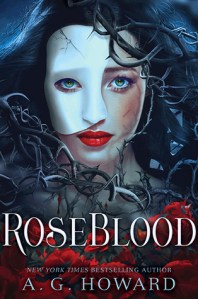
20764879Book: “A Gathering of Shadows” by V. E. Schwab
Publishing Info: Tor Books, February 2016

Where Did I Get this Book: audiobook from the library!

Book Description: It has been four months since a mysterious obsidian stone fell into Kell’s possession. Four months since his path crossed with Delilah Bard. Four months since Prince Rhy was wounded, and since the nefarious Dane twins of White London fell, and four months since the stone was cast with Holland’s dying body through the rift–back into Black London.

Now, restless after having given up his smuggling habit, Kell is visited by dreams of ominous magical events, waking only to think of Lila, who disappeared from the docks as she always meant to do. As Red London finalizes preparations for the Element Games–an extravagant international competition of magic meant to entertain and keep healthy the ties between neighboring countries–a certain pirate ship draws closer, carrying old friends back into port.

And while Red London is caught up in the pageantry and thrills of the Games, another London is coming back to life. After all, a shadow that was gone in the night will reappear in the morning. But the balance of magic is ever perilous, and for one city to flourish, another London must fall.

Review: After the high that was “A Darker Shade of Magic,” I went into “A Gathering of Shadows” with extremely high expectations. And without any ado, this book more than met those!

Second books in a trilogy are a beast. The stage has been set, the characters established, but the grand finale must be held off. Too many series experience the “second book slump” when these delicate balances can’t be met. Often these books come across as filler, so busy holding back that they never present a story of their own. “A Conjuring of Light” shows how you do a second novel right.

The story itself is simple yet effective. Schwab builds her narrative around an Olympics-like competition of magicians that will be held in Red London, using it as a support on which to overlay the character development of Kell and Lila.

Kell is struggling with his new reality, his life forced tied to Rhy’s. With any harm that is done to him affecting Rhy as well, his freedom has been greatly limited by a King and Queen who fear for their son and heir’s life. Further, while Kell struggled with the awe with which the city’s populace viewed him before, after the devastation left in the Black London artifact’s wake, hero worship has shifted to general fear and distrust. Sensing this growing restlessness and unhappiness, Rhy concocts a scheme for Kell to enter the Games in disguise.

Lila, on the other hand, is living her dream. Through a series of flashbacks, we see the way she managed to con her way onto a pirate ship and slowly ingratiate herself with the charming captain and powerful magician, Alucard Emery. She has also slowly been training as a magician and in true “Lila” style has decided that nothing will due but to also enter the Games as a disguised contestant. Her sheer brazenness and over-confidence is unfailingly charming!

While one of my favorite aspects of the first novel was the report that was built up between Kell and Lila, I found myself equally enjoying this extended period of separation. Schwab drew out the tension, ratcheting up reader’s expectations higher and higher, as she had her two main characters circle closer and closer to one other through their experiences in the Games before finally, and satisfyingly, clashing together towards the final third of the novel.

Through Lila’s lessons with Alucard and the Games themselves, Schwab also greatly expands her magical system. While we heard a lot about elemental magic in the first book, we were largely only exposed to Kell’s specific brand of blood magic. Here, however, the full force of what can be done with elemental magic is on display, and it was fascinating!

Behind the scenes, we also begin to see the stage being set for the grand final conflict to come in the last book. Holland, our favorite Antari villain from the first book, has survived and the Black London magic is yet again in play.

As I said, this book seemed to hit all of the marks as as second novel. Schwab carefully uses this book to add layers to her main characters and give them all room to grow and react to the happenings of the first book (we also get more of Rhy in this story, which I loved). The main story arc advances very little, but the Games serve as an architectural framework upon which to hang this character development, provide action, and expand an existing magic system. And behind it all, the building blocks are slotted in place for the final story.

A warning: this book ends on a massive, MASSIVE, cliffhanger. But despair not! The final book is out, and I will have a review for that up on Friday along with a giveaway!

Rating 10: A rare thing indeed, a sequel that meets the same high rating as its predecessor!

Reader’s Advisory:

“A Gathering of Shadows” is included on these Goodreads lists: Thieves and “YA Books with Parallel Universes” (though this book is not a YA title, officially).

Find “A Gathering of Shadows” at your library using Worldcat!

Serena’s Review: “RoseBlood”

While I make an effort to complete most books I read, every once in a while I come upon one  that I just can’t get through. When I find myself repeatedly putting down a book to the point that attempting to finish it is taking up weeks of my time, I sometimes come to the conclusion that a book is a book, not a life and death contract to read until completion. There are too many books in the world that I will never get to to spends days on end trying to finish a book that I already know will not be my cup of tea. Sadly, one such of these books came across my desk recently.

28818314Books: “RoseBlood” by A.G. Howard

Publishing Info: Amulet Books, January 2017

Where Did I Get these Books: the library!

Book Description: In this modern day spin on Leroux’s gothic tale of unrequited love turned to madness, seventeen-year-old Rune Germain has a mysterious affliction linked to her operatic talent, and a horrifying mistake she’s trying to hide. Hoping creative direction will help her, Rune’s mother sends her to a French arts conservatory for her senior year, located in an opera house rumored to have ties to The Phantom of the Opera.

At RoseBlood, Rune secretly befriends the masked Thorn—an elusive violinist who not only guides her musical transformation through dreams that seem more real than reality itself, but somehow knows who she is behind her own masks. As the two discover an otherworldly connection and a soul-deep romance blossoms, Thorn’s dark agenda comes to light and he’s forced to make a deadly choice: lead Rune to her destruction, or face the wrath of the phantom who has haunted the opera house for a century, and is the only father he’s ever known.

There will be spoilers in this post!

Review: I included this book as one of my highlights in January’s post and even there I expressed nervousness going in. The expectation game plays a large part in books like this. I love everything “Phantom of the Opera,” so this being the case I have a critical eye for stories related to it. And while this was definitely part of my struggle with “RoseBlood,” it was combined with some other flaws to the point that I put it down about two thirds of the way through.

This book tries to do two things with “Phantom of the Opera:” present a sequel while also re-telling the classic tale in the modern day featuring our two teen protagonists. As a sequel, nothing about this book worked for me. Perhaps if had simply been a retelling I could have gotten on board, but as a sequel, the author wrote herself into a corner where she had to re-create and “modernize” the Phantom himself while also providing backstory into the original story that would make it fit with her new version. So the Phantom, Erik, becomes a…wait for it…psychic vampire whose method of feeding is siphoning off the emotions of others. And the way he does that is…wait for it…owning a rave where he shows the audience his face nightly and feeds off their fear. Yes. This is a real thing the book does. I can barely take it seriously enough to type it out.

Next, the author creates a paranormal “soulmates” device (but she calls them “twin flames” because apparently she can’t take the term “soulmate” seriously, but somehow “twin flames” is a more acceptable term?) where not only are our main characters “twin flames,” but so were Erik and Christine in the original story. Only she wasn’t “mature” enough to understand the deep love and soul connection she shared with the Phantom. So, now beyond the ridiculousness factor of psychic vampires who own raves, we’ve got a backstory that completely misses the message of deep tragedy in the original and throws Christine under the bus. The relationship between Christine and the Phantom was never a healthy one, and that was the whole point. Erik’s life was one of such deep tragedy that he was broken as a person, not knowing how to express real love for another or how to exist in society. At no point should Christine have ever stayed with him, and to paint her as an immature character who threw away true love does a huge disservice to the character and to the message of the original story.

So those were my concerns with this book as far as it goes as an adaptation of “Phantom of the Opera.” While I can’t say whether or not I would have continued reading had these been my only stumbling blocks, the fact that the novel as a whole reads as a “paint by numbers” YA fantasy was the final nail in the coffin of my ability to complete it.

In other reviews I’ve discussed some of the over-used tropes that can be found in YA fantasy that now feel so tired that they need to be shelved immediately. But this book manages to hit every single one of them, reading almost like a “Twilight” rip-off with only the aforementioned “Phantom” tie-ins differentiating it.

We have a main character with a ridiculous name who is gorgeous and has a special talent that she was born with but can’t control. She goes to a school that she hates (though it’s in Paris and full of rich, beautiful people), and immediately, through no effort of her own, becomes friends with everyone. The popular girls of school also immediately dislike her because they envy her beauty and talent. She meets a mysterious boy who wears a mask even though he, too, is incredibly good looking (this also felt like a very poor use of a “Phantom” tie-in, again missing the point of original that beauty is found beyond one’s face). She discovers they are soulmates, and they immediately fall in love (no stakes in the relationship, no growing to know, appreciate, and love each other, they’re just “destined”). Powers, magic, an attempt on her life. The end. There was just nothing there.

The unique aspects of this story were the connections to the original, and after they were used so poorly, there was nothing left to grab on to. The fact that the book was also over-written and overwrought with pages upon pages of flowery, descriptive language just really killed any interest I had in the story.

Now look, we here at The Library Ladies try to always include positives. And the positive for this is if you are a reader who truly enjoys the formula I described above, then this book will be great for you. And that’s fine! But, for me, nothing about this story worked. And while there are clearly readers who still enjoy this type of story, I also sincerely hope that we begin to move beyond these overly tired YA fantasy staples. They have been so over-used that they almost feel like a parody of themselves at this point. YA fantasy can do (and be) better.

Rating: DNF

Reader’s Advisory:

“RoseBlood” is included on these Goodreads lists: “Retellings of Classic Novels for Children and YA”and “Phantom of the Opera.”

Find “RoseBlood” at your library using Worldcat!


Serena’s Review: “Beastly Bones”

24001095Book: “Beastly Bones” by William Ritter

Publishing Info: Algonquin Young Readers, September 2015

Where Did I Get this Book: audiobook from the library!

Book Description: In 1892, New Fiddleham, New England, things are never quite what they seem, especially when Abigail Rook and her eccentric employer, R. F. Jackaby, are called upon to investigate the supernatural. First, members of a particularly vicious species of shape-shifters disguise themselves as a litter of kittens. A day later, their owner is found murdered, with a single mysterious puncture wound to her neck. Then, in nearby Gad’s Valley, dinosaur bones from a recent dig go missing, and an unidentifiable beast attacks animals and people, leaving their mangled bodies behind. Policeman Charlie Cane, exiled from New Fiddleham to the valley, calls on Abigail for help, and soon Abigail and Jackaby are on the hunt for a thief, a monster, and a murderer.

Review: While I didn’t fall in love with “Jackaby,” the first novel in this series, I was still intrigued enough by the things it had done right (an interesting protagonist, less known supernatural beings, and strong writing) to wish to continue on with the series. Granted, it took a while to get around to this, but I’m glad I finally did! This book brought the same strengths as the last and improved on some of my complaints and concerns as well.

Not long after the events of the first novel, Abigail is still feeling unsure about her role as an apprentice to the paranormal detective Jackaby. She has an established place in the household and has made good friends with the local ghost, Jenny, but she still feels like a failure in many regards, simply not having the necessary wealth of expertise to prove herself a useful assistant to Jackaby. So, when a case pops up in the nearby Gad’s Valley concerning a prehistoric dig, Abigail is excited to join up seeing this as an opportunity to put to use her knowledge of and passion for archeology and prove that she does have something to contribute to the team. Of course, it doesn’t hurt that Charlie, the handsome  policeman/shape-shifter also happens to now live in this area.

As I said, this book doubles down on the strengths it had shown in the first. Many new and fantastic creatures are introduced in this book, some that have a basis in known mythology, but also several others that seem completely new. The shape-shifter kittens, for example, seem to be a unique creation of Ritter’s and one that he fully makes use of. This, too, is something that I very much appreciate about the fantasy elements in this series. Ritter doesn’t simply play lip service to the genre. Even with new creatures like these shape-shifters, Ritter takes the time to develop and extensive history for the beings and to tie them into known history (here we have ties to Darwin and Queen Victoria!) in new and interesting ways. It is clear that while Jackaby has a wealth of knowledge in the paranormal, he is by no means the only person in the world who understands that we walk the earth alongside fantastic beasts.

Another thing I enjoyed from the first book was the supporting characters. We don’t spend as much time at Jackaby’s home in this one as we did in the first, so Jenny’s page time is similarly limited. However, it is clear that Ritter is setting her, and the mystery of her death, up as a focal point for future stories. But in this book we get a whole new set of fun characters. Including a trapper who will hunt anything and who also has a fascination with the supernatural, two dueling archeologists whose snippy interactions were some of the most amusing in the entire book, and the unstoppable Nellie, an independent lady reporter who marches onto the page with her own plan and with no apologies.

The book also improved on the last in a few ways. First, one of my struggles from the first book was with Jackaby himself who I felt came across as a bit “aggressively wacky” and thus not believable as an actual person. Ritter combats this perception in a few ways. For one, Jackaby simply has a bit less page time than he did in the first and I think this was a wise choice. As a character, Jackaby is best served in brief, yet potent, doses. This method still highlights his strengths and interesting quirks, while not distracting from the story itself. Secondly, I enjoyed the more humorous take on Jackaby’s and Abilgail’s relationship,  most notably his horror at being drawn into discussions about her romantic entanglements with Charlie.

While the first book did not shy away from the darker aspects of this paranormal world, I felt like the stakes were raised in this book. In the first book, Jenny was introduced as a rather one-dimensional ghost friend for Abigail. Here we begin to see beneath the surface to what must be the true horror of being stuck in the world after death without the ability to move on. Also, the central mystery is not resolved without serious consequences. I was surprised by some of the risks that Ritter took towards the end of the novel.

Lastly, the story sets the stage for an over-arching plot which I think is an excellent decision. It would be all too easy for these books to start to feel a bit procedural with a new paranormal case that is begun and wrapped up in each book. The potential for a “big bad” whose presence can be traced throughout the series is intriguing.

As a sequel, “Beastly Bones” did everything I asked of it: reinforced the series’ strengths and improved upon its weaknesses. I’m more invested in checking out the third than I was this second book, which is always a step in the right direction!

Rating 8: It’s always fun to see a series grow in strength from a shaky start, and this book bumps the series up as an all-around fantasy recommendation for me.

Reader’s Advisory:

“Beastly Bones” is included on these Goodreads lists: “YA & Middle Grade Historical Mysteries” and “YA Historical Fiction of 2015.”

Find “Beastly Bones” at your library using Worldcat!

Previously Reviewed: “Jackaby”

Serena’s Review: “The Paper Magician”

20727654Book: “The Paper Magician” by Charlie N. Holmberg

Publishing Info: 47North, September 2014

Where Did I Get this Book: the library!

Book Description: Ceony Twill arrives at the cottage of Magician Emery Thane with a broken heart. Having graduated at the top of her class from the Tagis Praff School for the Magically Inclined, Ceony is assigned an apprenticeship in paper magic despite her dreams of bespelling metal. And once she’s bonded to paper, that will be her only magic… forever.

Yet the spells Ceony learns under the strange yet kind Thane turn out to be more marvelous than she could have ever imagined — animating paper creatures, bringing stories to life via ghostly images, even reading fortunes. But as she discovers these wonders, Ceony also learns of the extraordinary dangers of forbidden magic.

An Excisioner — a practitioner of dark, flesh magic — invades the cottage and rips Thane’s heart from his chest. To save her teacher’s life, Ceony must face the evil magician and embark on an unbelievable adventure that will take her into the chambers of Thane’s still-beating heart—and reveal the very soul of the man.

Review: I was very excited when this book showed up for me at the library. The description sounded like something that hit all of my book preferences, and, even better, it’s the first in a completed trilogy! There’s nothing like finding a good series that you can read all at once. Nowadays, I feel like I’m constantly stuck in a waiting game for the next book to be published in the million and one series that I am following all at once! So the ability to truly binge read something from start to finish is an opportunity that I very much value. However, while I did like portions of this book and will ultimately most likely continue the series, I’m also not invested enough to binge it either, which is too bad.

The set up, as mentioned above, is exactly what I like: a spunky heroine set in past period in time where magic is an established element of society. I also always enjoy the apprenticeship angle that is often found in these stories. And while I was recently relieved to find a lack of romance in “Jackaby,” I was warned ahead of time with this one that that was where we would be going, so I had already bought in to this formula. All this in its favor, the book was still very hit and miss for me.

A definite hit was the magic system that the author has created where magicians must “bond” with a type of material. Ceony has dreamed of bonding to metal, a powerful element that would allow her to create and manipulate powerful machines and weapons. But instead she gets assigned to paper, an element that has long been scorned and neglected, resulting in a deficit of this type of magician. I loved the description of this magic system. There was the more expected paper magic (like origami birds that come to life), but also some very creative takes on what one can accomplish with this type of material. At one point Ceony creates a perfect paper fan that is capable of producing massive forces of wind. There’s also a really interesting idea that has to do with bringing to life images read off paper, like scenes from a book brought to shadowy life. And while some of these things seem frivolous (we are likely to judge them similarly to Ceony herself), the author does a great job throughout the latter half of the story really pushing the boundaries of our expectations. There’s an especially interesting twist on the “story reading” magic towards the end that is probably the biggest hook for me to continue the series all together.

Ceony herself is a perfectly fine protagonist. We don’t get a lot from her, really. Through a few flashbacks, we see a bit of what has gone before in her life, but there are as many questions left unanswered as those that are resolved. In particular, there are several references to her fear of water that never get fully explored. And while I’m all for leaving clues for future stories, these felt a bit to roughly placed and stood out in an awkward way.

This is even more noticeable by the strange shift the book takes about halfway through to become a story completely comprised of flashback scenes. The method the author uses to get us to this place is interesting, but I’m not sure this flashback portion is ever quite earned. We’ve barely met Ceony and have had only a few scenes with her mentor, Thane. So, not only do we lose out on any growth in their relationships (all of these scenes take place in a type of alternative dimension where Thane is largely only present as re-incarnations of his past self), but we’re stuck reading half a book’s worth of a deep dive into a character we barely care about. Perhaps if this had happened in a second book in a series it would have played better. But in a book that’s only 220 pages long, we’re not given enough to begin with to sustain this type of ploy.

To end on a good note, I did enjoy the fact that Ceony was left to operate on her own throughout much of this book with only the company of her paper dog, Fennel. Let’s be honest, the dog was probably my favorite character and the only one that ever truly elicited an actual emotion from me!

tumblr_o4a4kmxoos1uqe55wo10_250
Even the Punisher breaks if you threaten the dog! (source)

I will probably continue the series, just based on the strength and uniqueness of the magic system. But I do have some questions as far as the actual quality of the writing (at points it felt very bland and stilted) as well as some of the story arc decisions (like the choice to sink the last half of the story into a flashback sequence for a character who has literally only had about 15 pages of time prior to this).

Rating 6: Very much a “fine” novel. I’m more invested in Fennel, however, than either Ceony or Thane.

Reader’s Advisory:

“The Paper Magician” is included on these Goodreads lists: “Dueling Magicians”and “Female Apprentices Romance.”

Find “The Paper Magician” at your library using Worldcat!

Book Club Review: “The Neverending Story”

27712We are part of a group of librarian friends who have had an ongoing bookclub running for the several years. Each “season” (we’re nerds) we pick a theme and each of us chooses a book within that theme for us all to read. Our current theme is “Book Challenge!” theme. This book comes from a “Pick a book that has been translated from a different language” challenge.
For this blog, we will post a joint review of each book we read for bookclub. We’ll also post the next book coming up in bookclub. So feel free to read along with us or use our book selections and questions in your own bookclub! 

Book: “The Neverending Story” by Michael Ende

Publishing Info: Thienemann Verlag, 1979

Where Did We Get This Book: Kate owns it,

Book Description: This epic work of the imagination has captured the hearts of millions of readers worldwide since it was first published more than a decade ago. Its special story within a story is an irresistible invitation for readers to become part of the book itself. And now this modern classic and bibliophile’s dream is available in hardcover again.

The story begins with a lonely boy named Bastian and the strange book that draws him into the beautiful but doomed world of Fantastica. Only a human can save this enchanted place–by giving its ruler, the Childlike Empress, a new name. But the journey to her tower leads through lands of dragons, giants, monsters, and magic–and once Bastian begins his quest, he may never return. As he is drawn deeper into Fantastica, he must find the courage to face unspeakable foes and the mysteries of his own heart.

Readers, too, can travel to the wondrous, unforgettable world of Fantastica if they will just turn the page….

Kate’s Thoughts

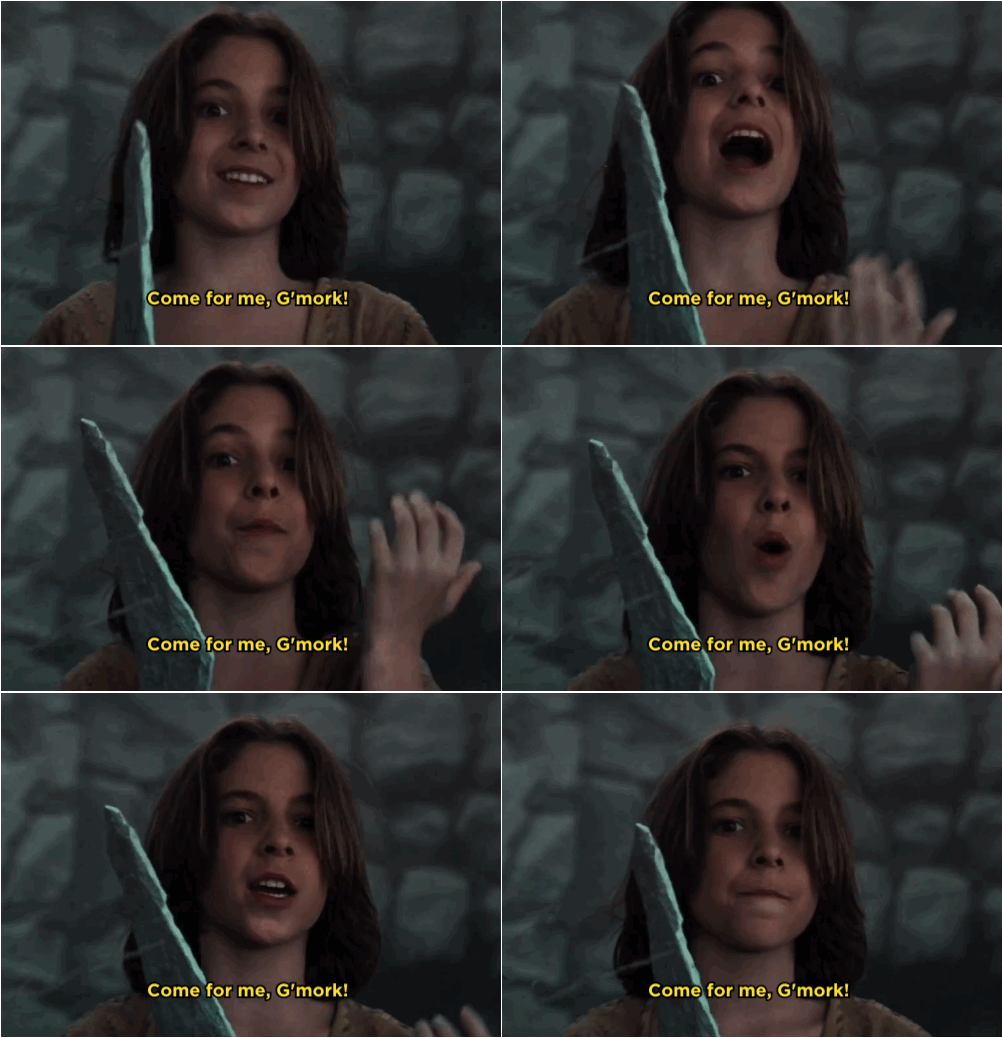
We are finally back to our book club, which means that we are finally back to our book club posts! This time around, the theme was pretty fun; we each came up with two themes that we put into a hat, and then whichever suggestions you drew, you had to pick what theme you wanted to do. One of the suggestions I got was “A book translated from another language.” It was in that moment that I knew exactly what I wanted to do: “The Neverending Story.” I had grown up watching the movie (and its first sequel, “Neverending Story 2”), and I’m pretty sure that I wore out the video cassette of it that we had. What can I say, eight year old Kate had a pretty serious thing for the movie’s version of Atreyu.

giphy15
To  girl me this was SO BADASS!!! (source)

But it took me awhile to actually read the book. The first time was when I was in middle school. I’ve re-read it a few times since then, but it had been awhile. And I knew that going into it I would probably expose myself to criticism and having to rethink one of my favorite books from childhood. But that was actually good for me, in the end.

There are a number of themes that can be found in this book. Sure, there is the usual ‘hero’s cycle’ theme that both Atreyu the warrior and Bastian Balthazar Bux go through. But along with that we get the themes of childhood, broken innocence, grief, and imagination. The book is split into two distinct parts: the first is Bastian acting as a (not actually) passive part of a fantasy story at hand, where the world of Fantastica is falling apart because their leader, the Childlike Empress, is dying. But it’s also because The Nothing is tearing apart the very fabric of its world. But then the second half is about how Bastian, seen as the savior of Fantastica, is taken to a world that is not his own, and is corrupted by the power he is given to save it. While they could easily read as two distinct books, as far as Bastian’s journey goes it comes full circle. I had forgotten that Bastian was such a little punk for the second half of the book, as most of my fond memories come from Atreyu’s journey. But I think that it was a very interesting choice for Ende to make the hero we’re meant to relate to and root for from the get go the one that we’re rooting against by the end. But along with that theme is the ever permeating spectre of grief that haunts the story. Fantastica is falling apart and losing itself, many of its inhabitants dying (including Atreyu’s faithful horse Artax, and don’t even think of telling me that this isn’t one of the saddest moments in movie history, jerks!). But along with that is the fact that Bastian’s mother has recently passed away, leaving Bastian feeling empty and his father lost in his own sadness, and unable to care for his child. Of course Bastian wants to run away from his life; a land of luck dragons and magic and Childlike Empresses has got to be better than the reality he’s living. Even if that land is hard and imperfect as we soon realize it is. Bastian learns that the strongest thing that a person can have is not power, but love, and that his love is needed in his own world, no matter how hard that world is. And Ende created a wonderful cast of characters to help the reader explore these themes, from the brave and loyal Atreyu to the kind and optimistic Falkor the Luck Dragon. God I love Falkor.

There are, of course, some things that left me feeling a bit cringy as I read it. As much as I really, really do love Atreyu, and think that he’s a great character and a wonderful hero for the first half of the book, it complete smacks of European cluelessness that he is clearly based on American Indian Indigenous cultures and merely in a superficial way. While he is himself a complex and well rounded character, the only things we really know about his people and culture is that 1) they hunt buffalo, and 2) they have mystical rights of passage that involve hunting these buffalo, as well as spiritual dreams/connections to said buffalo. It reeked of the ‘Indian as mystic’ trope that is far too prevalent in popular culture and literature. It’s also pretty disconcerting that there are very few women in this book, and the ones that are there are not terribly fleshed out. The Childlike Empress is wise and mysterious, but we know little about her outside of her purity and goodness. The various females Atreyu meets on his journey are just there to give him some info or advice. And then there’s Xayide. She is literally an evil sorceress who is just there to fuck things up for Bastian and turn him against his friends. Not exactly empowering.

All that said, however, I still really enjoyed going back and reading “The Neverending Story.” I think that as an old school fantasy novel it still holds up pretty well, the characters still very beloved and the story still entertaining and wondrous.

Serena’s Thoughts

I was excited when Kate picked this book as her bookclub choice. I feel like my experience of this story is the same as Kate’s which is the same as many girls our age: it all began with a strong crush on Atreyu from the movie. I mean, c’mon, let’s admit that we all loved him!

atreyu
(source)

However, I never made it past the movie version of the story (though I, too, wore out my VHS copy of the film). I did know that the movie only focused on the first half of the book and while I did watch the sequel film once (I remember that they re-cast Atreyu and I’m pretty sure kid!Serena saw that as an unforgivable crime and never looked back), I have no memory of the story. So I was especially curious to get the second half of the book.

But let’s start with the first half! Right off that bat I was horrified…by the fact that the magical land is called “Fantastica” and I’ve known it as “Fantasia” all along! What is this change?? Cuz now I’m all mixed up about it since I’ve known it as “Fantasia” my whole life only now to discover that this was a change from the original! This was a major internal conflict for me throughout the book. But on a more serious note, I very much enjoyed this first half and how true to the book the movie really did stay in this part. There were changes here and there, some that I preferred in the movie (I think the tension was greater in the movie with the First Gate sphynxs than the way they were described to work in the book) and some that I preferred in the book (man, somehow Artax’s death CAN be even more traumatic!)

I very much the extra insight (though its still very minimal) with regards to the relationship between the Childlike Empress and the land of Fantasia itself. While still confusing and never fully explained, I felt like the connection between her, The Nothing, and the land of Fantasia (I just now realized that I’ve been typing Fantasia instead of Fantastica this whole time! See?! It’s hard!) is a better lain out in the book. I also really liked the character of Atreyu. He was heroic in the movie, but here we see even more how impossible his task was when it was given to him and how brave he would have to be to move forward with so little hope of success.

Bastian on the other hand…Look, I never really liked him in the movie and I didn’t really like him here. Though, I will say that I liked him better in the first half of the book than I did in the movie that covered this portion. Here he’s a bit bumbling, but he picks up on what is going on in a more willing way. Maybe it was just the kid actor in the movie, but I never really liked Bastian there. Kid-me always got very annoyed by the way he reacted to the realization that he was in the book. He got angry instead of inspired, and as a kid who always wanted to live in a book, too, I was never impressed by him.

But then we get to the second half and now I feel completely justified in my initial dislike of him as a kid. Maybe that actor was just channeling this portion of the character all along and was simply done a diservice by only portraying the first half’s version who is supposed to be the more sympathetic of the two. I had a harder time with this portion and I can see why the movie stuck to the first half of the book. It’s just always going to be a bit of a hard sell when you main character turns into a real brat. As Kate mentioned, there are some lovely themes of grief and love throughout this all, but I’m still a bit biased towards the first half. Though this is honestly probably due to the movie’s lasting influence on me. Oh well!

Kate already covered a few of the problematic issues of the book, so I won’t go into them myself. They were distracting, but I wouldn’t say anything was overly offensive to a point that it affected my reading of the story. Just a bit unfortunate, ultimately.

All told, I very much enjoyed this book! While I enjoyed the first half more than the second, it was an interesting read altogether. I imagine especially for the time the “metaness” of the story itself was particularly interesting, and, even now when this approach has been explored in other books (“The Princess Bride” comes to mind a bit), it still has some fresh takes on a story-within-a-story.

Kate’s Rating 9: Though it is certainly not perfect and has some flaws that I had a hard time overlooking, “The Neverending Story” is still a fun and wondrous fantasy book with lots of deep and meaningful themes and lovely characters.

Serena’s Rating 8: I second what Kate said! One point lower for me as I did find myself struggling a bit at times with my increasing dislike of Bastian, but still a thoroughly enjoyable read!

Book Club Questions:

1) What do you think about the world of Fantastica and how it’s influenced by our world? Is the thought of readers having influence on stories a theme that you enjoyed?

2)Ende clearly took some influence from American Indian cultures/stereotypes when he created the character of Atreyu. How do you feel about him as a character throughout this story? What do you think of his portrayal?

3)Bastian starts out the story as a passive character who is merely reading a book, but finds out that he has the ability to influence the world of Fantastica. What did you think of his journey from the beginning of the story to the end?

4)In this book there is the constant spectre of devastation, grief, and loss, be it the destruction of Fantastica by the Nothing to the loss of Bastian’s mother. What do you think Ende was trying to say about these feelings of despair and grief within human nature?

5)There are many instances within this book where Ende would hint at other stories and adventures of certain characters, but would say ‘but that’s another story and shall be told another time’. Which of these stories would you most want to learn about?

Reader’s Advisory:

“The Neverending Story” is included on these Goodreads lists: “Doors, Portals, Gates”, and “Quests”.

Find “The Neverending Story” at your library using WorldCat!

The next book club book is “Escape from Mr. Lemoncello’s Library”!

Serena’s Review: “Jackaby”

20312462Book: “Jackaby” by William Ritter

Publishing Info: Algonquin Young Readers, September 2014

Where Did I Get this Book: the library!

Book Description: Newly arrived in New Fiddleham, New England, 1892, and in need of a job, Abigail Rook meets R. F. Jackaby, an investigator of the unexplained with a keen eye for the extraordinary–including the ability to see supernatural beings. Abigail has a gift for noticing ordinary but important details, which makes her perfect for the position of Jackaby’s assistant. On her first day, Abigail finds herself in the midst of a thrilling case: A serial killer is on the loose. The police are convinced it’s an ordinary villain, but Jackaby is certain it’s a nonhuman creature, whose existence the police–with the exception of a handsome young detective named Charlie Cane–deny.

Review: This was actually a book club book that I read a few years ago, but I wanted to review it here on the blog since I’m currently reading the sequel and I’m a librarian, so I’m naturally a completionist! Gotta have em all!

When this book showed up on our bookclub list, I was very excited. It was marketed as “Doctor Who” meets Sherlock Holmes, and while I’m not a complete nut for “Doctor Who” all told, I do love its wacky take on fantasy and science fiction. So combining that with “Sherlock Holmes” (my love of which has been well documented), seemed like it should be something that would be right up my alley! Ultimately, while I did like it, it was a bit more on the “meh” end of things than I would have liked.

Abigail Rook, fresh off the boat with dashed dreams of being an archaeologist like her father in hand, falls into a strange apprenticeship with an even stranger man: Jackaby, a paranormal investigator. Story aside (I’ll get to that a bit later on), this book lives and dies on these two main characters and right here is where we get into the general feeling of indifference.

Abigail herself is a likable character. Her personality, drive, and ability to make her way, even as ineptly as she does here, did feel a bit out of character for the time period. Yes, we’re on the cusp of the turn of the century, but there would still be some harsh realities facing her as a young woman alone in a new country. There’s nothing egregious going on as far as anachronisms or anything, but Abigail did feel a bit out of place for the time. That aside, I did enjoy her as a protagonist. She serves as our eyes into this new world, and her confusion is our confusion. As the story progresses, it becomes clear what role she will play as the Watson to Jackaby’s Holmes. Jackaby is nothing if not dense when it comes to social clues, and here is where Abigail fits in this puzzle. It’s not a super creative take, but it works for the story and she plays her part well.

I especially enjoyed the way Ritter approaches the small amount of romance in this story. Even that sentence is misleading as any romance that is seen here is strictly in the foreshadowing category. But what is most relieving is the fact that it is clear that this romantic angle will decidedly NOT focus on Abigail/Jackaby. I had definite concerns that this was going to be the romantic couple of the series, or *shudders* one corner of a love triangle. But, thankfully, we are introduced to a new character outside of the primary duo who seems to be set up to play this role going forward.

Jackaby himself was…ok? Honestly, I think some of my problems with the book had to do with him as a character. He was a bit too “preciously wacky,” if that makes sense? He’s obviously a creation based on  both Holmes and the Doctor, but the portrayal definitely falls more closely to the latter. It’s simply not unique enough. Jackaby could practically BE the Doctor, and it starts to feel derivative rather quickly.

To end on a good note, the world-building and the paranormal elements that were included were interesting and more unique. The villain character and several of the other beings were not the ones we’re used to seeing in this type of story, and I enjoyed diving into some of the history of these creatures. The supporting cast is also interesting, including the previously mentioned love interest who turns out to be more than he seems, as well as Jackaby’s current roommates, a ghost woman with unfinished business, and Jackaby’s previous apprentice who now lives an unfortunate, if still scholarly, life as a duck.

There were definitely strengths of the book, but it’s always going to be a struggle if the title character doesn’t live up to expectations. That said, if you enjoy “Doctor Who” and Sherlock Holmes this still might be a fun book to check out. Stay tuned for my upcoming review of the sequel “Beastly Bones.”

Rating 6: If I could, I’d give it a solid 6.5. Better than average, but rather underwhelming.

Reader’s Advisory:

“Jackaby” is included on these Goodreads lists: “YA & Middle Grade Sherlock Holmes” and “Victorian Spiritualism Fiction.”

Find “Jackaby” at your library using Worldcat!


Serena’s Review: “A Darker Shade of Magic”

22055262Book: “A Darker Shade of Magic” by V.E. Schwab

Publishing Info: Tor Books, February 2015

Where Did I Get this Book: audiobook from the library!

Book Description: Kell is one of the last travelers–magicians with a rare, coveted ability to travel between parallel universes connected by one magical city.

There’s Grey London, dirty and boring, without any magic, and with one mad King–George III. Red London, where life and magic are revered–and where Kell was raised alongside Rhy Maresh, the roguish heir to a flourishing empire. White London–a place where people fight to control magic and the magic fights back, draining the city to its very bones. And once upon a time, there was Black London. But no one speaks of that now.

Officially, Kell is the Red traveler, ambassador of the Maresh empire, carrying the monthly correspondences between the royals of each London. Unofficially, Kell is a smuggler, servicing people willing to pay for even the smallest glimpses of a world they’ll never see. It’s a defiant hobby with dangerous consequences, which Kell is now seeing firsthand.

Fleeing into Grey London, Kell runs into Delilah Bard, a cut-purse with lofty aspirations. She robs him, saves him from a deadly enemy, and finally forces Kell to spirit her to another world for a proper adventure.

Now perilous magic is afoot, and treachery lurks at every turn. To save all of the worlds, they’ll first need to stay alive.

Review: Apparently, I picked up this book right when my bookclub friend Alicia was looking for a book gift for me for our bookclub gift exchange ruining all of her plans. But…#NOREGRETS! Sorry Alicia! I already waited too long to get to this gem, a fact that was even more underlined once I discovered what I had been missing. This is a good example of being bit in the butt by being too gunshy of books that have been extremely hyped, since it well deserved all the mass praise it has received over the last few years!

In this book, there are three (or…four?) Londons based in different worlds, all with varying levels of magic. Grey London (our London) is practically magic-free, Red London is thriving with a healthy relationship with magic and magic users, White London is slowly dying, starved for magic, and then…Black London, a place many have forgotten ever actually existed outside of its own cautionary tale of what happens when greed, gluttony, and power mix too closely with magic. These worlds are all disconnected from each other, a decision that was made to protect the worlds when Black London began its descent. Kel is one of two beings left with the ability to travel between these worlds.

Right there you have a great set up for a new fantasy world. Not only is there one new world, but a whole set of them with various interactions and politics between them. Through Kel, we see these three worlds (Black London remains a threatening presence looming in the background and the source of the book’s primary conflict, but not an actual place that is visited in the book. I hope this changes in future stories!). I loved the time that was spent in each of these worlds. They are all so fully realized and populated, from the named characters we interact with in each, to the general feeling and culture of the populace. Each world is full of rich detail, and I couldn’t ever decide which was the most exciting to spend time in. Well, maybe Grey London, our London, was the least interesting. But there lives Lila! So, I don’t know!

Speaking of Lila, I was so excited to realize that she plays a much more integral role to this story than I had been lead to believe by the book description. In reality, this is a dual protagonist book featuring both Kel and Lila.

Lila is a Grey London resident, a thief, and a young woman who is desperately looking for something more out of life. Namely, she wants to be a pirate. This sounds silly, typing it out, but one of the things I most loved about this character was her unwillingness to apologize for what she wanted out of life and the decisions she made pursuing these goals. Obviously, being a thief, Lila’s outlook on morality is skewed by her own experience growing up in extreme poverty and a life full of danger and uncertainty. What was fascinating about Lila was the evolution of the reader’s understanding of her throughout the story. Even finishing it, I’m not quire sure where the line is drawn between the brash, hyper confident, bold persona that she has created to survive, and her actual core being. Her moments of vulnerability gave small glimpses further in, but it was also gratifying to discover that, while some of this seeming persona was built up as a survival tactic, Lila is also just Lila: foolishly brave and lovably standoffish. Her characterization could have easily slipped into stereotypes, but Lila practically jumps off the page as a fully formed, fully flawed, character.

Kel, too, was a great character. I particularly enjoyed the inner struggles we see within him with regards to his strained relationship with the royal family of Red London who have raised him as their son, but also rely on him as a valuable tool due to his power, and, though he doesn’t remember, likely stole him away from his original family when young. I especially loved the relationship he has with the crown prince, Rye. It was a lovely example of male friendship and  brotherly love, full of tension, heartbreak, and affable goodwill.

Together, Kel and Lila are great duo. Their characters bounce off each other perfectly, and I pretty much just want to read a whole book series of just these two going off on madcap adventures, Kel full of exasperation with Lila the whole way.

I haven’t even talked about the plot or villains, but they were much darker than I had initially thought when picking up this book. The mad twins who rule White London, in particular. I also loved the increasing knowledge of the uses, limitations, and dangers of the magic system in these worlds that readers slowly discover throughout the course of the story. None of it felt like convenient wand-waving, but parts of a larger system that we as readers are only scraping the surface of. I’m excited to see where the author goes with this aspect of the story as well.

I’ve already gone on and on and only touched upon a few of the points of this story that I loved! 2017 has just started, but I’m pretty sure I’ve already found a Top 10 inclusion for the year!

Rating 10: Loved it. Loved everything about it. Characters, world building, magic system, adventure, danger, family, friendship, romance!

Reader’s Advisory:

“A Darker Shade of Magic” is included on these Goodreads lists: “Most Interesting Magic System” and “Books with parallel world.”

Find “A Darker Shade of Magic” at your library using Worldcat!