Kate’s Review: “Miracle in the Andes”

This post may contain affiliate links for books we recommend.  Read the full disclosure here.

Book: “Miracle in the Andes: 72 Days on the Mountain and my Long Trek Home” by Nando Parrado

Publishing Info: Broadway Books, May 2007

Where Did I Get This Book: I own it.

Where You Can Get This Book: WorldCat.org | Amazon | Indiebound

Book Description: In the first hours there was nothing, no fear or sadness, just a black and perfect silence.

Nando Parrado was unconscious for three days before he woke to discover that the plane carrying his rugby team, as well as their family members and supporters, to an exhibition game in Chile had crashed somewhere deep in the Andes. He soon learned that many were dead or dying—among them his own mother and sister. Those who remained were stranded on a lifeless glacier at nearly 12,000 feet above sea level, with no supplies and no means of summoning help. They struggled to endure freezing temperatures, deadly avalanches, and then the devastating news that the search for them had been called off.

As time passed and Nando’s thoughts turned increasingly to his father, who he knew must be consumed with grief, Nando resolved that he must get home or die trying. He would challenge the Andes, even though he was certain the effort would kill him, telling himself that even if he failed he would die that much closer to his father. It was a desperate decision, but it was also his only chance. So Nando, an ordinary young man with no disposition for leadership or heroism, led an expedition up the treacherous slopes of a snow-capped mountain and across forty-five miles of frozen wilderness in an attempt to find help.

Thirty years after the disaster Nando tells his story with remarkable candor and depth of feeling. Miracle in the Andes—a first person account of the crash and its aftermath—is more than a riveting tale of true-life adventure: it is a revealing look at life at the edge of death and a meditation on the limitless redemptive power of love.

Review: This past winter a friend and I kind of became momentarily obsessed with the story of the Old Christians Rugby Team from Uruguay whose plane crashed in the Andes. It started when “Last Podcast on the Left” covered it and we were texting back and forth, then we both watched “Society of the Snow” separately, and THEN we got together to watch the 1992 film “Alive”, the first movie adaptation about the amazing survival story, which stars Ethan Hawke. Hawke plays Nando Parrado, one of the rugby players who eventually trekked down the mountain to find help. Mind you he did this with his companion Roberto Canessa after being on this mountain for two months, in the cold, and becoming weaker and weaker and more and more malnourished (yes yes we will talk about that in a bit). I decided that the next obvious step in my hyperfixation was to read about it, and I got Parrado’s memoir “Miracle in the Andes:72 Days on the Mountain and My Long Trek Home”. Because Nando Parrado is such a badass, and I wanted to read it from his perspective. So this Spring I finally got around to reading it, and yep. Badass.

Nando Parrado tells an immersive and intense story, jumping right in from when he awakens for a multi-day coma and finds that the airplane that was carrying his rugby team, as well as some fans and family members, has crashed in the peaks of the Andes during a flight from Uruguay to Chile. If you’ve seen “Alive” or “Society of the Snow” or have ready any of the other books about this crash, you know that for those who didn’t die on impact it was a grueling ordeal to survive, and in order to do so the remaining survivors had to resort to anthropophagy, or the consumption of the dead (it’s not cannibalism; that implies killing specifically for the food or with some ritualistic purpose). Parrado talks about the time on the mountain, his memories of his experience being brought to vivid life through his descriptions and his ruminations, reading like a Krakauer book (and I mean, the new edition has a cover that looks a LOT like the style you see on Krakauer’s books, AND it quotes him, so I’m not far off at all). I felt like I was seeing everything he was talking about, and while I was familiar with the story due to my hyperfocus on it this past winter I still found him recalling details that I wasn’t aware of, and having his insight added a whole other layer to it. Especially since he was so insistent on going by foot to find rescue almost from the jump, and was almost always one of the ones to be honest and pragmatic even in the most horrifying of situations. Parrado doesn’t mince words when it comes to how he lobbied to eat the flesh of the dead passengers because he knew that it was the only way to survive in the long term while developing a plan, and I really enjoyed how matter of fact he was about his experiences and the huge role that he played without seeming like a blowhard. Because if anything he has earned the right to be a blow hard, as their ultimate rescue was due in large part to him and his tenacity and bravery, marching down that mountain with Roberto Canessa after two months of being stranded in the middle of nowhere while their environment did everything it could to kill them. It is such an amazing story, and from his POV it’s all the more amazing.

But what struck me most about this memoir was Parrado’s candor about the way his survival experience reshaped the way that he thought about faith and God, and how he redefined (or the very least reexamined) his own faith and views of fate, destiny, and what a miracle is. While many of his teammates seemed to lean more into their faith after they were rescued, Parrado had a different circumstance than many of the people on the plane, in that he was traveling with his mother and sister, and they both died. So while many of those survivors were thinking that their survival was an act of God, Paraddo felt differently. To him, he couldn’t wrap his head around a miracle of survival not including everyone on the plane, and decided that it wasn’t going to be God to save everyone, and it had to be themselves. Parrado had the inner strength and drive to get off that mountain, and he and Canessa surely achieved a miraculous feat by traveling for MILES in the state their bodies were in, with no climbing experience, in treacherous environmental conditions, and getting a rescue mission started with their journey down, but he is very honest with being basically unable to credit a higher power with the survival. That isn’t to say that he’s a full on cynic; on the contrary, he does believe in the miracle of a human’s ability to love and how that can drive a person to do amazing things, and finding the miraculous within that. His love for his father and other sister really kept him going, as he wanted to be able to come back so that their grief, while still monumental, wouldn’t have included grieving over him along with his mother and sister. It struck me as a different conclusion than so many survival stories come with, and while those experiences aren’t bad by any means (experience is, after all, subjective), it was just fascinating seeing a different perspective that felt almost humanist at its heart, especially when so many of his compatriots feel like something divine was at work. All of this being presented in his own words makes it all the more fascinating, and his writing style is so easy to follow that I felt like I had no problem getting into his head as I was reading.

“Miracle in the Andes” is a nail biting and inspirational memoir about survival in a nearly hopeless situation, told by a man who not only lived it, but also led the way to salvation. I cannot recommend it enough to people who love survival tales.

Rating 8: An immersive and awe-inspiring (and at times devastating) tale of survival against the odds and the triumph of the human spirit, “Miracle in the Andes” is a heart pulsing memoir with lots of honestly, introspection, and hope.

Reader’s Advisory:

“Miracle in the Andes” is included on the Goodreads lists “Best True Survival Stories”, and “Non-Fiction Disaster Books”.
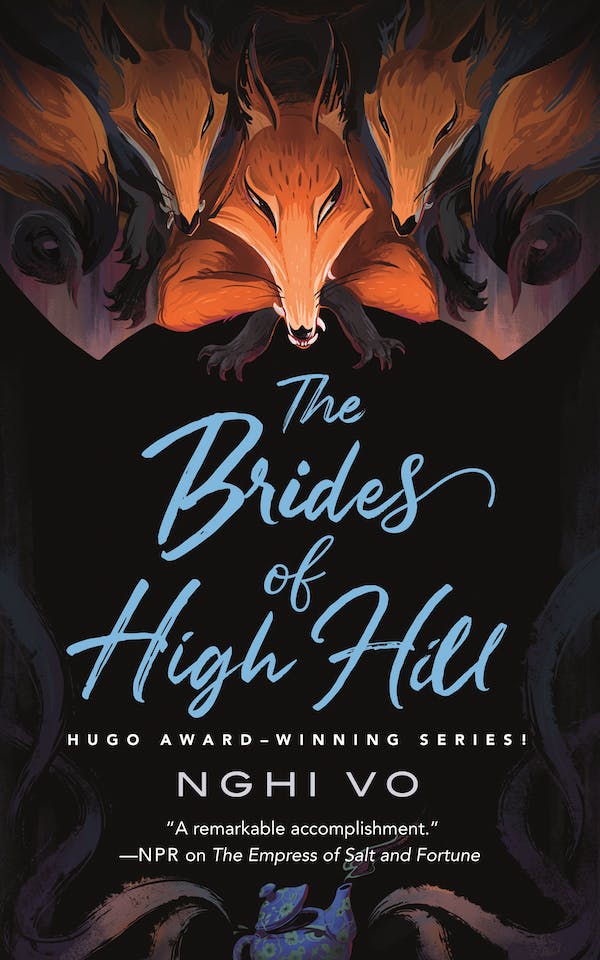
Serena’s Review: “The Brides of High Hill”

This post may contain affiliate links for books we recommend.  Read the full disclosure here.

Book: “The Brides of High Hill” by Nghi Vo

Publishing Info: Tordotcom, May 2024

Where Did I Get this Book: Netgalley!

Where Can You Get this Book: WorldCat.org | Amazon | IndieBound

Book Description: The Cleric Chih accompanies a beautiful young bride to her wedding to an aging lord at a crumbling estate situated at the crossroads of dead empires. But they’re forgetting things they ought to remember, and the lord’s mad young son wanders the grounds at night like a hanged ghost.

The Singing Hills Cycle has been shortlisted for the Lambda Literary Award, the Locus Award, the Ignyte Award, and has won the Hugo Award and the Crawford Award.

Review: I haven’t read the other books in this series, but I’ve heard a lot about them! And being the lazy reader that I am sometimes, after dutifully checking through the previous books, I decided I was more than capable of just jumping right in on the fourth book! It helps that these are all stand-alone stories that feature the same lead character, so this wasn’t really much of a feat on my part at all. And, while it may have taken a while, I’m glad that I’m finally aboard this hype train!

Other than a passing review of the other books’ plots, I wasn’t exactly sure what sort of fantasy novel I’d be getting here. This being the case, I also can’t speak to how well this one follows in tone to the previous books. But whether it is diverging from a norm or typical of the series, this is exactly the sort of fantasy story I like! I’ve made no effort to hide my glee that gothic fantasy has been having a moment in the sun recently, and I was incredibly excited to realize that what we were getting in this book. It also might not surprise the savvy fantasy reader that this is a loose retelling of the “Bluebeard” fairytale. Gothic fantasy plus fairytale-retelling: just my cup of tea!

I very much enjoyed the balance of fantasy and horror elements in this story. For such a short book, it was very successful at building a sense of suspense and dread. There was an almost claustrophobic feel to the entire story, which I think works perfectly for gothic stories which often take place in confined spaces. Our main character also seemed to struggle to find their footing in this situation, having the goal to protect the bride not being unclear about what was going on or how to move forward. This precarious-feeling narration only increaed the disturbing mood of the story as a whole.

I also very much enjoyed the final quarter or so of the book. There were a lot of twists and turns, as well as a rather open-ended nature to the conclusion. That being the case, it’s hard to really write much of a review about the plot itself as many of my thoughts would quickly veer into the territory of spoilers.

I also liked the main character. Now, this is probably where I missed the most, jumping in on the fourth book in the series. I simply was not as familiar with this protagonist to know what was new to them in this book versus what was drawing on information that readers should have picked up from the previous books. That said, I don’t feel as if I missed out too overly much, but if you have the time, reading the first few books would likely add to the experience of this one.

Overall, I really liked this book and can understand why the series has received the acclaim it has! I’m going to add the previous books to my TBR for sure (though given the ridiculous length of that list, I make no promises!)!

Rating 8: Mixing gothic fantasy/horror with a fairytale retelling leads to an excellent, creepy, thrill of a ride!

Reader’s Advisory:

“The Brides of High Hill” can be found on these Goodreads lists: East Asian Fantasy and Can’t Wait Sci-Fi/Fantasy of 2024

Kate’s Review: “Together in a Broken World”

This post may contain affiliate links for books we recommend.  Read the full disclosure here.

Book: “Together in a Broken World” by Paul Michael Winters

Publishing Info: Ninestar Press, L.L.C., May 2024

Where Did I Get This Book: I received an ARC from the publisher vis a vis Pacific and Court.

Where You Can Get This Book: Amazon | Indiebound

Book Description: Two boys fall in love in a deadly world, but it’s the secrets they keep that might kill them.

Seventeen-year-old Zach was visiting his uncle in a small Montana town when a mysterious illness ripped through the world. Most died, but those who survived the Infection became mindless killers, spreading the disease with a single scratch. Now, a year later, civilization lies in ruins, and Zach is the town’s sole survivor. Desperately lonely, he longs to return to his family in Seattle, but his fears hold him captive.

Eighteen-year-old Aiden is on a critical mission for the covert Scientific Collective, delivering vials whose contents could cure the Infection. Tortured by his boyfriend’s death, he welcomes the risks of the perilous journey. When a militia attacks Aiden, he flees to Zach’s town.

The boys escape together and soon form a bond as they comfort each other in this desolate and broken world. The farther they travel, the more their affection grows, as do the forces pulling them apart. But their greatest threats are the secrets they keep. Zach hides details of his uncle’s death, and Aiden conceals the vials’ sinister origins. In order to survive, they’ll have to confront the truths that could tear their love apart.

Review: Thank you to Pacific & Court for sending me an ARC of this novel!

It’s been a bit since I’ve covered a straight up post-apocalyptic story here on the blog, and now that we are finally past the more acute stages of the waning pandemic I’m feeling less of an anxiety spike when I read these kinds of stories as of late. So when “Together in a Broken World” by Paul Michael Winters ended up in my hands, I was eager to give it a go! You already had me at a post-apocalyptic setting, but then you add in a romance between two flawed but good hearted characters struggling to survive, and I am even more on board! And “Together in a Broken World” really met my expectations!

Given that Pride month starts in a few days, I will first talk about what a lovely queer romance it is as the beating heart of this story. Zach and Aiden are two strangers trying to survive in a world that has been ravaged by an infection that turns people into, essentially, zombies, and have been left adrift in different ways. For Zach it’s being the last person left in the small town he had been visiting right before things went to hell. For Aiden it’s working as a courier for a group that is trying to find a cure, which has made him a target of those who are in direct conflict with that for whatever reason that may be. It makes their lives very lonely, so seeing them meet and forge a connection with each other makes for a great set up for a really sweet romance. I love a slow burn, and this one is definitely that given that they are both understandably standoffish at first. But I really enjoyed watching them get to know each other, and to connect after they have been so alone and so haunted by their loneliness and regrets and fears. It feels like “Heartstopper” meets the episode “Long, Long Time” from “The Last of Us”, and Winters really captures the soaring love as well as the deep heartache and sadness of their circumstances, and the traumas they have faced which can lead to some bad decision making. I was rooting for them from the jump.

And since this is a post-apocalyptic tale, it’s only natural to talk about the world building on how the world has gotten to this point of the collapse of civilization. Winters has a pretty well thought out end of the world scenario, that combines natural disaster with fast spreading novel pathogen to create a wasteland of infected people and those who are uninfected, but left to total chaos and a “Mad Max” like reality of nomadic and isolated lives trying to hide from violent opportunists. Any good zombie story will make it clear that it’s actually the humans who are the true threat, and I thought that “Together in a Broken World” achieved that with a unique and suspenseful premise, particularly as Aiden is trying to bring a potential cure through hundreds of miles of dangerous wasteland with threats from all sides. I especially enjoyed the tidbits about Aiden running from an extremist militia that doesn’t trust the Scientific Collective, the group that is trying to find a cure, and wants to hinder him at all costs because of their conspiracy theorist nonsense and delusions, as it adds a whole other layer to an already fraught survival tale. It fits right in with other end of the world thrillers, and as an aficionado of the genre I was a fan.

I definitely recommend “Together in a Broken World” for not only young adults who enjoy end of days thrillers, but anyone who likes the sub genre. And hey, as I said, Pride Month is right around the corner, so if you are looking for LGBTQIA+ rep in your reading, add it to the list!

Rating 8: A suspenseful thriller and also a lovely romance, “Together in a Broken World” is about queer joy in the face of great adversity, as well as some pretty cool end of the world mythos.

Reader’s Advisory:

“Together in a Broken World” is included on the Goodreads list “2024 Queer YA Books”.

Serena’s Review: “The Hedge Witch of Fox Hall”

This post may contain affiliate links for books we recommend.  Read the full disclosure here.

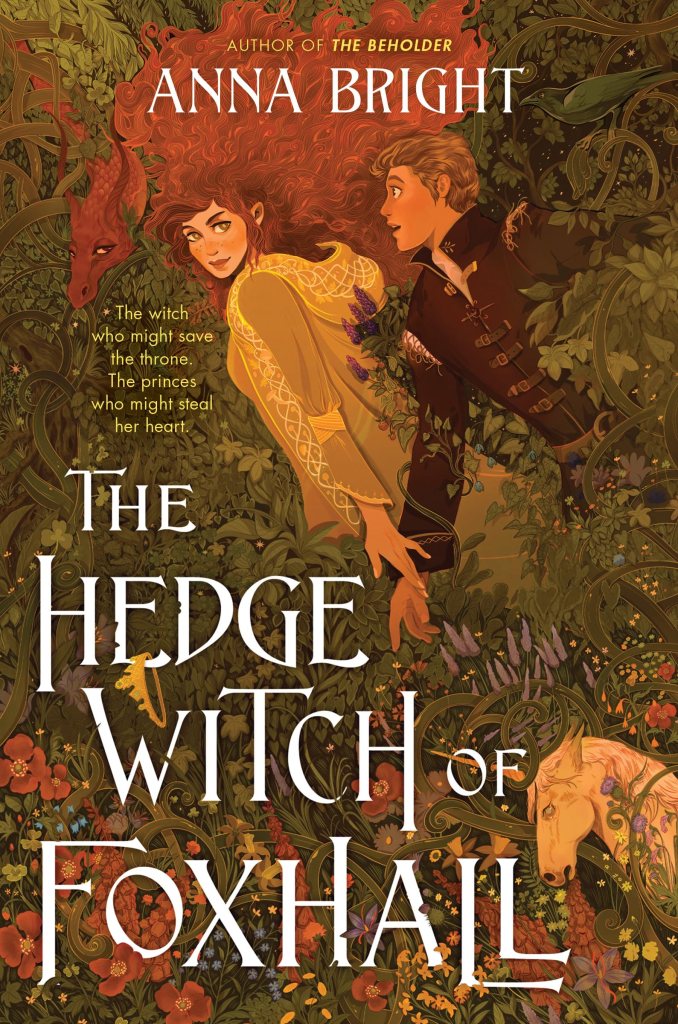
Book: “The Hedge Witch of Foxhall” by Anna Bright

Publishing Info: HarperTeen, March 2024

Where Did I Get this Book: from the publisher!

Where Can You Get this Book: WorldCat.org | Amazon | IndieBound

Book Description: In this gorgeous stand-alone fantasy romance perfect for fans of Margaret Rogerson and Allison Saft, a rebellious witch undertakes a last-ditch quest to restore magic to medieval Wales—as two princes vie for her heart.

Ffion is the last hedgewitch in Foxhall. To work her magic, she takes only what nature can spare, unlike the witches of the powerful Foxhall coven, who sacrifice whole forests to fuel their spells. But across the warring kingdoms of Wales, all magic is fading. Even the dragons have vanished.

Prince Taliesin would love nothing more than to watch magic die. But when his father charges Tal and his brother, Dafydd, with destroying King Offa’s dyke—the massive earthen wall raised by their Mercian enemies to the east, which may be the cause of magic’s disappearance—he begrudgingly seeks aid from a witch.

Because whichever prince succeeds in destroying the dyke will win the throne, and Tal is willing to do whatever it takes to become king. Even if the Foxhall coven refuses to help him. Even if he’s forced to team up with a spitfire hedgewitch who hates him almost as much as he hates her magic. And even if Dafydd proves to be a worthier rival than he anticipated…for the crown, and for Ffion’s heart.

Review: This book has flown very under the radar as far as YA fantasy releases this spring season. And it’s really too bad, because this is definitely one of those cases where the “read-alike” authors, Allison Saft and Margaret Rogerson, both very popular for good reason, are perfectly paired with this title! There were perhaps a few stumbles here and there, but the basic bones of this book (its lovable characters, its whimsical fantasy elements, and the sweet romance at its heart) are just the sort to appeal to many readers looking for their next cozy fantasy read!

I really loved pretty much everything about this book! This was especially surprising because when I started it I had some concerns about the formatting, with the narrative split between three different characters: Ffion, and then the half-brothers, Tal and Dafydd. It also seemed to be split evenly, with the story formulaically alternating from one character, to the next, to the next, and repeat. But, after I started reading, I was pleased to see that even though they had equal numbers of chapters, Dafydd’s were much shorter than the other two, letting me focus in on Tal and Ffion for much of the story.

And really, it’s with these two characters that the story really lives and dies. Through both characters, we explore a wide spectrum of challenging relationships with parental figures, with both Tal and Ffion largely shaping their lives around decisions made in direct correlation with their struggles with their parents. Further, they each have an intriguing arc of self-discovery and self-acceptance. Tal, especially, starts the story with a very specific understanding of himself, but over the course of the book, he comes to a new view on his role in the world, while still staying true to his core character. And, for her part, Ffion was simply great in every way! She’s the kind of spunky but sympathetic character that I love rooting for. Aggressively independent, much of her story is coming to learn how to rely on and trust others.

I also loved the romance between Tal and Ffion. Their prickly relationship was laugh-out-loud funny at times, and the author perfectly nailed the type of “showing” moments that demonstrated their growing love for one another. For a book where we had both characters’ perspectives, it was refreshing how little time each of them devoted to mentally reflecting on their relationship with one another. Instead, the reader was often given small moments, often viewed from the opposite character’s perspective, to see their love blossom.

Now, as you may have noticed, we haven’t talked much about Dafydd. You might think this is because I absolutely hated this character or something, but surprisingly, I actually ended up very much enjoying him on his own merits. That said, his story largely felt tacked on to Tal and Ffion’s throughout much of the book. He has an arc of his own that was satisfying (especially given the small page count he was given to cover it), but many of his chapters, especially in the first half, felt largely unnecessary to the primary conflict and story on hand. Worst of all, the author used him to set up a love triangle, one that didn’t even really come into play until after the 50% marker, which is way too late for it to have any real weight. Luckily, it seems the author was aware of this, and the characters themselves reflect on the pre-existing camaraderie (if not love, yet) between Tal and Ffion. But even in this best case scenario, it once again put Dafydd in a superfluous position. In almost every way that matters, he would have been just as successful as a side character who never had POV chapters of his own. That said, he would also be a great main character in his own right, so it was a weird mixture of things where the character was good, but he wasn’t used well in the story we found him in.

So that’s most of my review, and it’s all character focused! But I will say that the book is solid in every other regard as well. The pacing is steady, the writing style is engaging, and the mystery at the story’s heart was compelling (if perhaps a bit predictable.) There were also some incredibly heart-wrenching scenes, especially in the beginning, that I wasn’t expecting. But, without getting into too many spoilers, everything does work out in a satisfying manner in the end. There were tears, however.

Overall, this was a thoroughly fun read! I had some quibbles about the love triangle and the third main character, but the strength of the first two and their romance was more than enough to carry me through! I’ll definitely be checking out more from this author in the future, and, as the blurb says, if you’re a fan of Saft or Rogerson, this is definitely one to add to your TBR pile!

Rating 8: Full of magic, romance and adventure, this was the perfect stand-alone fantasy story I was looking for!

Reader’s Advisory:

“The Hedge Witch of Foxhall” can be found on these Goodreads lists: Epic High Fantasy/Romance/Mythology in 2024 and The Most Beautiful Covers of 2024.

Blog Tour: “When We Were Silent”

This post may contain affiliate links for books we recommend.  Read the full disclosure here.

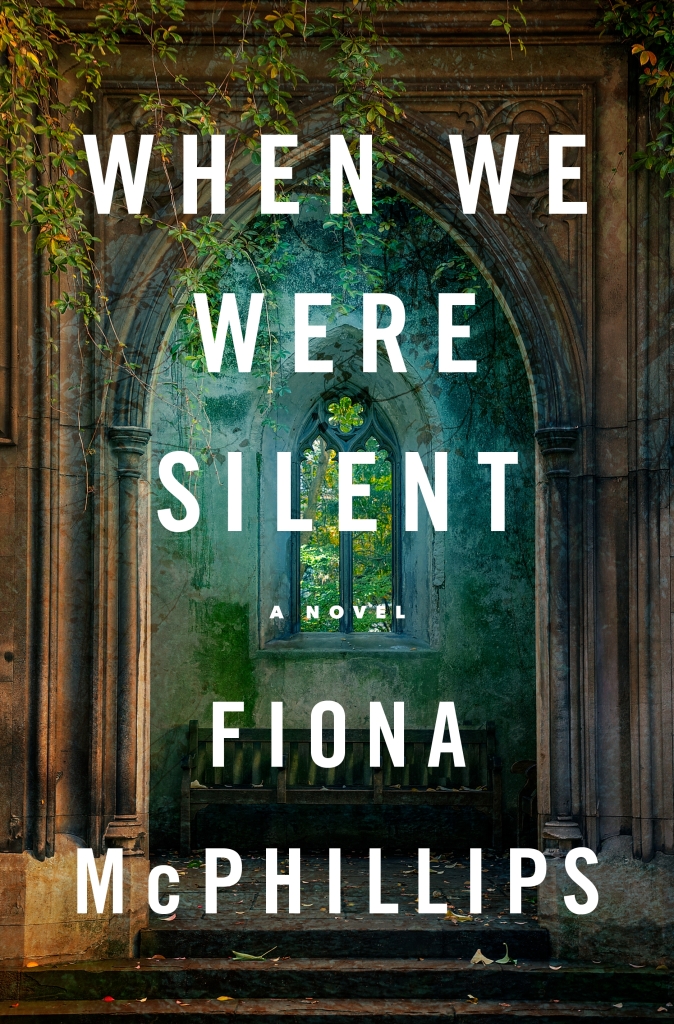
Book: “When We Were Silent” by Fiona McPhillips

Publishing Info: Flatiron Books, May 2024

Where Did I Get This Book: I received an ARC from the publisher.

Where You Can Get This Book: WorldCat.org | Amazon | Indiebound

Book Description: An outsider threatens to expose the secrets at an elite private school in this suspenseful debut novel

Louise Manson is the newest student at Highfield Manor, Dublin’s most exclusive private school. Behind its granite walls are high-arched alcoves, an oak-lined library…and the dark secret Lou has come to expose.

Lou’s working-class status makes her the consummate outsider, until she is befriended by some of her beautiful and wealthy classmates. But after Lou attempts to bring the school’s secret to light, her time at Highfield ends with a lifeless body sprawled at her feet.

Thirty years later, Lou gets a shocking phone call. A high-profile lawyer is bringing a lawsuit against the school—and he needs Lou to testify. Lou will have to confront her past and discover, once and for all, what really happened at Highfield. Powerful and compelling, When We Were Silent is a thrilling story of exploitation, privilege, and retribution.

Review: Thank you to much to Flatiron Books for sending me an invitation to participate in this blog tour!

When Flatiron Books approached me to be a part of the Blog Tour for Fiona McPhillips’s debut novel “When We Were Silent”, I was definitely interested, but also a little nervous judging by the plot. I knew that it sounded very interesting and that I wanted to check it out, but I also knew that the themes present, specifically that of a prestigious Catholic high school in Dublin covering up sexual abuses of teenage girls to protect a predatory teacher, would almost certainly set off a rage trigger as I was reading. But it intrigued me, and I went in, steeling myself to the themes, and I am glad that I did, because “When We Were Silent” is absolutely harrowing.

McPhillips is a journalist, and this is her debut novel, but reads like she’s been writing literary fiction for years. We have two timelines at hand, and she blends them together seemlessly. In the present we meed Louise “Lou” Manson, a professor living in Dublin who is approached by a lawyer about testifying in a lawsuit against Highfield Manor, as she herself had been a whistleblower of sexual abuse that, at the time, went unheard. At least until someone ended up dead. In the past we see Lou as a lower class student trying to fit in, while also trying to get revenge and retribution for a friend who had been raped by a popular swim coach, and who Lou is trying to expose in a time where the abuses of girls within a Catholic institution were almost assuredly covered up. And how she herself becomes one of his victims in her pursuit, and how she isn’t believed and villified. As we jump through the two times we see who Lou was before, and who she is now, and how the trauma, rage, regret, and lack of closure has defined her life, as well as the loves of other girls who were victimized. It is an unflinching look at predation and child sexual abuse within a religious institution, and it does not hold back (and this, of course, comes with many many content warnings of rape, abuse, suicide, gaslighting, and many other things). I found this to be a very difficult read at times, but McPhillips handles these very heavy themes with respect and care, and it never felt exploitative or like it was crossing a line, at least for this reader. It also makes the stakes of the mystery at the heart of this novel all the higher, and it makes the two comparisons of Lou then and Lou now very complex. It’s also a good comparison about how there has definitely been progress made when it comes to sexual abuse of minors and taking it seriously, though it also shows that some things haven’t changed much. It’s honest and raw and very emotional.

And back to the mysteries of this book, there are two at play. The first is the question of who actually died in the past narrative of they story. The second is the question of who is trying to intimidate Lou into not cooperating with the lawyer/testifying in the present, as she starts receiving mysterious anonymous messages trying to silence her. But while these mysteries are certainly compelling and kept me reading and interested, they are a bit of a footnote in this novel, never overhyped and never used as twists or gotchas. This is a mystery to be sure, but it’s moreso a literary work about trauma, abuse, privilege, corruption, and justice. It’s more about a woman who never got justice and was unfairly maligned because she spoke her truth, and how that has haunted her in the years since. It’s at times devastating, but it also a searing indictment of institutions that enable and cover up abuses to keep a hold on their own power, as well as an indictment of a greater culture that normalizes all of this. It’s rightfully angry and it’s powerful.

“When We Were Silent” is a difficult read, but it’s an important one. I will absolutely be checking out what Fiona McPhillips brings us next, because this was a great debut.

Rating 8: Harrowing, heartbreaking, and a rallying cry. “When We Were Silent” is a great debut from an author I am going to definitely follow going forward.

Reader’s Advisory:

“When We Were Silent” is included on the Goodreads list “52 Book Club 2024: #13 An Academic Thriller”.

Serena’s Review: “Romancing Mister Bridgerton”

This post may contain affiliate links for books we recommend.  Read the full disclosure here.

Book: “Romancing Mister Bridgerton” by Julia Quinn

Publishing Info: Avon, July 2002

Where Did I Get this Book: from the library!

Where Can You Get this Book: WorldCat.org | Amazon | IndieBound

Book Description: Everyone knows that Colin Bridgerton is the most charming man in London. Penelope Featherington has secretly adored her best friend’s brother for…well, it feels like forever. After half a lifetime of watching Colin Bridgerton from afar, she thinks she knows everything about him, until she stumbles across his deepest secret…and fears she doesn’t know him at all.

Colin Bridgerton is tired of being thought nothing but an empty-headed charmer, tired of everyone’s preoccupation with the notorious gossip columnist Lady Whistledown, who can’t seem to publish an edition without mentioning him in the first paragraph. But when Colin returns to London from a trip abroad he discovers nothing in his life is quite the same – especially Penelope Featherington! The girl haunting his dreams. But when he discovers that Penelope has secrets of her own, this elusive bachelor must decide…is she his biggest threat – or his promise of a happy ending?

Review: With the new season of “Bridgerton” due to come to Netflix sometime in the next few months, I thought it was about time to go back and check out the book that this season is based on. The show is now out of order from the books, having skipped the third book (Benedict/Sophie’s season) and gone straight to Colin and Penelope. For the show, I think this makes a lot of sense given the focus on Penelope’s arc over the second season. But the book series didn’t have this same emphasis, so here we are in the fourth book.

While this book didn’t reach the high point that was the second book for me, I did enjoy this one quite a bit. Much of this comes down to the sheer charm that is Penelope. She’s an excellent main character, with all of the charm and wit you could want, but also a compelling story seeing tackle her insecurities and come into her own. But while I liked how the reveal of Lady Whistledown’s identity was handled, it did feel like a strange balancing act as far as the writing actually went. The reader is privy to much of Penelope’s inner thoughts before this, and it’s strange that this particular fact wouldn’t have surfaced earlier.

Colin is a bit more rough as a romantic lead, however. He was excellent in the first three books, always funny and affable, and while we see some of that here, he also becomes fairly insufferable at times. In particular, he didn’t fair overly well with his jealousy over Penelope’s success as Lady Whistledown. And I simply couldn’t make myself very interested in his own attempts at being an author. Instead, this focus seemed to undercut Penelope’s own story in some ways, with her having to reveal her identity and then retreat into the background as Colin moved to the forefront as an author who could publish under his own name, being a man and all. I get the historical limitations, but I hope the show changes some of how this is handled. I also keenly felt the loss of the funny Colin that we saw so much more of in the first few books.

That said, this book, as a whole, was quite funny. The scene where Colin and Penelope announce their betrothal to her family had me laughing out loud and re-reading it several times. I do hope the show finds a way of recreating this scene in some way, as it was hilarious. I also enjoyed all of the scenes with the larger Bridgerton crew. Eloise, in particular, had an interesting mini arch in this book. The show has changed several things already with the friendship between Eloise and Penelope, so I’m curious to see how they manage this set-up in the show. Given some of the events here, it naturally leads into Eloise’s story being the next up. So…is Benedict just going to be skipped forever??

Overall, I did enjoy this book, mostly down to the strength of Penelope as a leading lady. Colin was frankly a bit of a disappointment, given how great he had been in the previous three books. But I’m also all set to go on Eloise’s story! Though, if I’m trying to keep these reviews timed to around when the corresponding season is going to drop on Netflix…you’ll be hearing more from me in 5 years or so.

Rating 8: A sweet romance and some truly hilarious scenes, though I was a bit underwhelmed with Colin’s shift in personality and the second act role that his writing took on.

Reader’s Advisory:

“Romancing Mister Bridgerton” can be found on these Goodreads lists: “I’ve Loved You for Years” and Falling in Love with Best Friend/Best Friend’s Brother/Brother’s Best Friend

Book Club Review: “The Witch of Blackbird Pond”

This post may contain affiliate links for books we recommend.  Read the full disclosure here.

We are part of a group of librarian friends who have had an ongoing book club running for the last several years. Each “season” (we’re nerds) we pick a theme and each of us chooses a book within that theme for us all to read. Our current theme is Centuries, where we were given a random century and had to pick a book based during that time period.  For this blog, we will post a joint review of each book we read for book club. We’ll also post the next book coming up in book club. So feel free to read along with us or use our book selections and questions in your own book club!

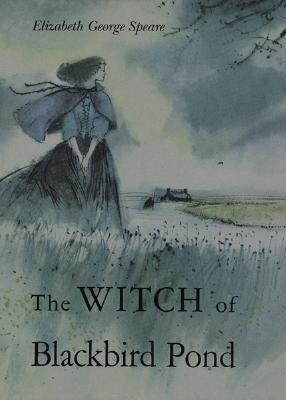
Book: “The Witch of Blackbird Pond” by Elizabeth George Speare

Publishing Info: Houghton Mifflin, 1958

Where Did We Get This Book: The library!

Where You Can Get This Book: WorldCat.org | Amazon | Indiebound

Century: 17th

Book Description: Orphaned Kit Tyler knows, as she gazes for the first time at the cold, bleak shores of Connecticut Colony, that her new home will never be like the shimmering Caribbean island she left behind. In her relatives’ stern Puritan community, she feels like a tropical bird that has flown to the wrong part of the world, a bird that is now caged and lonely. The only place where Kit feels completely free is in the meadows, where she enjoys the company of the old Quaker woman known as the Witch of Blackbird Pond, and on occasion, her young sailor friend Nat. But when Kit’s friendship with the “witch” is discovered, Kit is faced with suspicion, fear, and anger. She herself is accused of witchcraft!

Kate’s Thoughts

I read “The Witch of Blackbird Pond” in grade school, but I hadn’t ever revisited it and I can’t even tell you why, because I remember that I enjoyed it. I think that it was always in the back of my mind when it comes to children’s literature, but as time went on it just kind of fell further and further back. So when it was the choice for the 17th Century for our book club theme, I was eager to go back and re-read a book that I read as a ten year old through the eyes of an almost forty year old. And I’m happy to report that it holds up pretty well! But then, that’s probably because some things haven’t really changed, either from the McCarthy Era, when the book was written, or the times of witchcraft panic, when the book takes place.

I think that Speare did a really good job of laying out some pretty heavy topics, like prejudice, Othering, religious panic, and misogyny, in a way that is easily digestible for a middle grade audience. I found Kit to be an interesting heroine that is easy for a young reader to relate to, and her story of befriending a Quaker in a Puritan community who is rumored to be a witch (because OH NO SHE’S A QUAKER) is engaging, and at times quite suspenseful, given that the town starts to think that both Kit and Hannah (the so called witch) are up to no good and devilry, all because they are different and therein seen as untrustworthy outsiders. As mentioned above, this was initially written as a metaphor for McCarthyism and the Red Scare, where people were turning on and accusing others of being Communists and blacklisting them. But it’s so typical that we see this over and over in American history, and are seeing a form of it play out again right now with LGBTQIA+ people, and immigrants, and other marginalized groups. Some things never change, and hate towards the Other is one of those things. But that just makes the book relevant still, and it’s written with a keen eye that makes it all the stronger.

“The Witch of Blackbird Pond” is another classic children’s lit book that is still timely and interesting, and I am happy that book club gave me the push to give it another go!

Serena’s Thoughts

Like Kate, I read this one as a upper grade schooler/middle schooler. But I’ve also read it several times since. I believe I read it again during high school at some point. And then in my mid-twenties when I was building up my book collection, I stumbled upon a copy of this book on the “free” shelf at my local library, so I grabbed it and, of course, read it again right away! So, while it’s probably been a decade since my last re-read, I’m fairly familiar with the overall story. And given that I’ve somehow managed to read it across every decade of my life so far, I think it’s safe to say that both A.) I like it, and B.) it’s the kind of book that has a lot of cross-over appeal, no matter the age of the reader!

A few things stood out to me in this re-read. Like Kate mentioned, there’s a universal appeal to this story. Not only is Kit the sort of protagonist who will always speak to teens and younger readers (her combination of spunk as well as frustration with the rules around her), but the story talks on perennial struggles of humanity and society. Kate already talked about the Other-ing of those who are different, and the ways in which groups of people can spiral out of control into fear and desperation quite quickly and completely irrationally. But one aspect that I had focused less on in the past were the book’s secondary themes of capital “A” acceptance. In that, while the story is very much focused on the “witches” and the typical sorts of “others” that we know have been feared and hated throughout history (and whose counterparts are easy to spot today as well), it also subtly draws attentions to the sorts of judgements that we make at everyday moments, judgements that often reduce people to their worst characteristics without touching on the rest of their being, their context, or their priorities in life.

First of all, we see this in Kit herself, the heroine and “good guy” of our story, but also a character who grew up with slaves and very much has not thought about the realities of this horror until it is bluntly pointed out to her. This is, of course, very much of the time. And while the story doesn’t excuse Kit, it also presents this flaw of hers alongside all of the elements that still make her the heroine. She learns, and to learn, it requires others to see her flaws and, instead of shunning and shaming, to help her grow.

Further, we also see this in Kit’s uncle, a character who can be incredibly unlikable for much of the story. But as the plot progresses, we see Kit’s estimation of him slowly adjust as she’s exposed to more and more of his core personality, seeing what he cares about most and how that shapes his views. By the end, she recognizes him as the flawed individual he is, but also someone who loves his family and is doing what he thinks is best, even if there are choices that Kit doesn’t agree with or understand. So, while I think the core theme around witches and Other-ing is just as important as ever, in this re-read, I appreciated the time and care the book took to look as these lesser versions of similar judgements and how important it is to humanize those we don’t understand.

Kate’s Rating 8: A classic in children’s literature that feels as timely as ever, “The Witch of Blackbird Pond” is a powerful book about being Othered and ostracized by those who fear things that are different.

Serena’s Rating 8: For a short-ish, young adult book, this story still packs a powerful punch regarding themes of acceptance, Other-ing, and the ways in which people can let fear drive their life.

Book Club Questions

  1. There are several different women characters in this book. If you were living in this time period, which of these characters would you like to trade places with if only for a moment?
  2. What are your thoughts on Puritan Society as portrayed in this book?
  3. There are a few mentions of the slave trade and slavery in this book, as Kit comes from a plantation on Barbados. What were your thoughts on how it was addressed? Do you think it reflects the time that it was written?
  4. There were multiple romantic relationships in this story. Did you have a favorite couple?
  5. Are there any more modern books with similar settings or themes to this book that you have enjoyed? What were they? What made them different from this one? How are they similar?
  6. What did you think about the conclusion of the story? Did it feel realistic to you?

Reader’s Advisory

“The Witch of Blackbird Pond” is included on the Goodreads lists “Teen Historical Fiction”, and “Wise Women, Witches, Midwives, Healers, and Strong Girls!”.

Next Book Club Pick: “What The Wind Knows” by Amy Harmon

Serena’s Review: “The North Wind”

This post may contain affiliate links for books we recommend.  Read the full disclosure here.

Book: “North Wind” by Alexandria Warwick

Publishing Info: S&S/Saga Press, May 2024

Where Did I Get this Book: ARC from the publisher!

Where Can You Get this Book: WorldCat.org | Amazon | IndieBound

Book Description: Wren of Edgewood is no stranger to suffering. With her parents gone, it’s Wren’s responsibility to ensure she and her sister survive the harsh and endless winter, but if the legends are to be believed, their home may not be safe for much longer.

For three hundred years, the land surrounding Edgewood has been encased in ice as the Shade, a magical barrier that protects the townsfolk from the Deadlands beyond, weakens. Only one thing can stop the Shade’s fall: the blood of a mortal woman bound in wedlock to the North Wind, a dangerous immortal whose heart is said to be as frigid as the land he rules. And the time has come to choose his bride.

When the North Wind sets his eyes on Wren’s sister, Wren will do anything to save her—even if it means sacrificing herself in the process. But mortal or not, Wren won’t go down without a fight…

Review: I’ve had some trouble recently with fantasy/romantasy stories that are billed as read-alikes to “Beauty and the Beast” or “Hades and Persephone.” To be fair, these are fairly difficult romances to represent in a way that both tells a good love story but also doesn’t make one or both characters fairly unlikable or hard to empathize with. Too often the “Beauty/Persephone” character gets too easily distracted by the hero’s hotness to remember she’s angry and a prisoner. And too often the “Beast/Hades” character is more of a raging a**hat than a romantic interest. All of that to say, I was both excited and nervous to pick up this book, which clearly was going to a tell a story involving these types of characters.

Well, this is how you write these sorts of characters! The story itself is great as well, but I really think that books like this really live and die on how well the main characters are represented. And here, both of them are fantastic. Wren, of course, being our perspective character, was the most important of the two, and I really enjoyed her character arc. As I mentioned above, here is a heroine who retains her sense of self, not one to be distracted into forgetting her anger or suspicion by the sight of a chiseled jaw. Instead, Wren’s story focuses more on her own journey, one that tackles not only trust, but also coping with her life choices (particularly her struggle with alcoholism) and with the toxic familial relationships that have severely impacted her sense of self. While I think the discussion of addiction was well handled, I was even more impressed by the way this author navigated the complicated sibling relationship between Wren and her twin sister. Wren’s story is one of coming to understand how she has previously defined herself and reclaiming her own agency over her actions, choices, and life.

And while she is exploring these concepts, a significant amount of the story is still devoted to her challenging relationship with the North Wind. She doesn’t trust this man, and indeed, I was pleased to see her following through on her distrust and anger throughout a large chunk of the book, almost the entire first half. This very much makes the story a slow burn romance, of the sort that I prefer. Because as both Wren and Boreas come to understand one another, we slowly see them dropping their shields. Love cannot come from lust alone, and this book does an excellent job of prioritizing their growing emotional connection before delivering the goods in the spicey scenes. I also loved the excellent snark and banter between the two, something that continues throughout the book, even when the characters begin to grow closer. Their dynamic is compelling to the end.

I also enjoyed the North Wind and his story. The book doesn’t shy away from grappling with the harsher points of his character, and I was also surprised with some of the reveals that came later in the story. There were some real wallops that come in heavy towards the end of the book, which I think helped add some true depth to this character. He’s also the quiet, stoic romantic hero that always particularly appeals to me, so there’s that.

Aside from the characters, I very much enjoyed the world-building that went into this story. There were many familiar elements, but it also all came together in interesting ways. I also know that this is the first book in a series, each seeming to follow one of the four brothers, the gods/Winds. That being the case, we meet a few characters here that are sure to show up in future books, and I’m especially interested in how one character will be dealt with, given the events of this story.

Overall, if you enjoy romantasy, this is a great slow-burn romantic tale. There was an excellent balance between the fantasy and the love story, and the two main characters were well-written and conceived. I’ll definitely be picking up the next book when it comes out!

Rating 8: A perfect example of how to blend the fantasy and romance genres, with two incredible characters at its heart!

Reader’s Advisory:

“The North Wind” can be found on these Goodreads lists: Feel-good romantasy and Best Books About Mythology

Kate’s Review: “Rabbit Rabbit Rabbit”

This post may contain affiliate links for books we recommend.  Read the full disclosure here.

Book: “Rabbit Rabbit Rabbit” by Nadine Sander-Green

Publishing Info: House of Anansi Press, April 2024

Where Did I Get This Book: I received an ARC from Zg Stories.

Where You Can Get This Book: WorldCat.org | Amazon | Indiebound

Book Description: A woman’s coming-of-age through a toxic relationship, isolation, and betrayal―set against the stark landscape of the far north.

Millicent is a shy, 24-year-old reporter who moves to Whitehorse to work for a failing daily newspaper. With winter looming and the Yukon descending into darkness, Millicent begins a relationship with Pascal, an eccentric and charming middle-aged filmmaker who lives on a converted school bus in a Walmart parking lot. What begins as a romantic adventure soon turns toxic, and Millicent finds herself struggling not to lose herself and her voice.

Events come to a head at Thaw di Gras, a celebration in faraway Dawson City marking the return of light to the north. It’s here, in a frontier mining town filled with drunken tourists, eclectic locals, and sparkling burlesque dancers, that Millicent must choose between staying with Pascal or finally standing up to her abuser.

In the style of Ottessa Moshfegh’s honest exploration of dysfunctional relationships, and with the warmth and energy of Heather O’Neill, Rabbit Rabbit Rabbit illuminates what it’s like to be young, impulsive, and in love in one of the harshest environments in the world.

Review: Thank you to Zg Stories for sending me an ARC of this novel!

While I am usually a person who loves predictability and not so much spontaneity, one of the areas where I DO tend to divert from the norms is my reading. And while that isn’t shown as much on the blog, I found myself compelled to dip my toes outside of my usual genres when the book “Rabbit Rabbit Rabbit” by Nadine Sander-Green came across my path. I was wholly taken with not only the setting of a small town in The Yukon (far up North small towns are very near and dear to my heart, even if my frame of reference is more Minnesota and Wisconsin versus Canada), and it sounded like an interesting character study of a woman trying to find herself, and unfortunately being targeted and manipulated by a toxic older man. So while it MAYBE had some thriller potential due to the latter bit of that, I felt that even if it was ultimately not a thriller, I still wanted to give it a go. And I’m happy I did, because “Rabbit Rabbit Rabbit” hit a nerve in a good way.

“Rabbit Rabbit Rabbit” is a contemporary novel that follows Millicent, a twenty four year old woman who has uprooted her life to take a job at a small town newspaper in an isolated community in The Yukon called Whitehorse. Her only initial connection is her roommate Sophie, a friend from university whom she has drifted from, and her new job has left her with a serious case of imposter syndrome as she is at her heart a poet, not a journalist. The small town setting is both claustrophobic, but also striking and very grounded. I could imagine Whitehorse, I could almost see all the people, and the dark winter landscape as Millicent tries to adjust. I also got a full sense for the community as a whole and the very real issues that happen within the time and place, with references to relevant social issues in the Yukon in regards to politics and the First Nations people who are living there, and the ins and outs of a dying newspaper that Millicent works for. It’s a quieter novel, but I found it very engaging perhaps in part because of that. Millicent is a bit of a fish out of water, and her isolation, even from her supportive roommate and coworkers, makes it easy for her to be drawn to Pascal, a local eccentric who fancies himself and artist and is living a transient lifestyle in a bus like a mercurial bohemian. His eccentricity makes him stand out in this setting, which is so well drawn out by Sander-Greene that his appeal, at least on the surface, is wholly believable (and more on him in a bit).

Another thing I enjoyed about this book is how straight forward it is in terms of the plot and narrative. As we follow Millicent’s story, there are few bells and whistles, very little melodrama, no twists, and no big reveals to upend expectations of the plot. Instead we just have a very clear cut story about a young woman who is trying to find herself in a new environment that can feel quite isolating, and who becomes wrapped up with a manipulative and charismatic man in the hunt for connection. And this thread in the book was what stood out to me the most, this portrayal of a toxic relationship and how a smart young woman could find herself entangled within it. Pascal is absolutely a villain in this book, but his villainy is very well done in that it is very subtle and very easy to see why Millicent, who is yearning for connection and with an idealistic view of the world, could be sucked in by him. He’s charming, his life seems artistic, romantic, and interesting, and how many times have we heard of older men preferring the company of young women because of, at least in part, how much they can control them, and manipulating them to feel connected and genuine. Pascal is sinister as hell, but he never feels like an moustache twirling antagonist that is over the top with his malevolence, and if anything that makes him that much scarier.

“Rabbit Rabbit Rabbit” was a gratifying shift from my usual genres, with a powerful new voice for contemporary and literary works. I will certainly be looking out for more works by Nadine Sander-Green in the future!

Rating 8: A compelling, quiet, and intense story about isolation, identity, and finding oneself in the face of abuse and hardship.

Reader’s Advisory:

“Rabbit Rabbit Rabbit” isn’t on any Goodreads lists as of now, but it would fit in on the Goodreads list “The Yukon”.

Serena’s Review: “Ruthless Vows”

This post may contain affiliate links for books we recommend.  Read the full disclosure here.

Screenshot

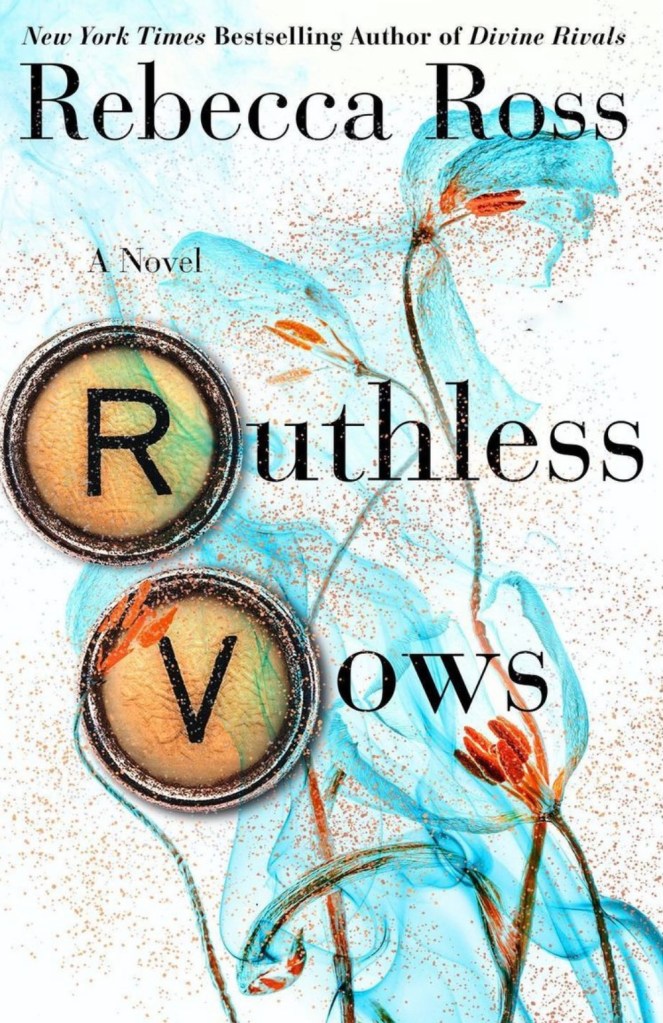
Book: “Ruthless Vows” by Rebecca Ross

Publishing Info: Wednesday Books, December 2023

Where Did I Get this Book: own it!

Where Can You Get this Book: WorldCat.org | Amazon | IndieBound

Book Description: Two weeks have passed since Iris Winnow returned home bruised and heartbroken from the front, but the war is far from over. Roman is missing, and the city of Oath continues to dwell in a state of disbelief and ignorance. When Iris and Attie are given another chance to report on Dacre’s movements, they both take the opportunity and head westward once more despite the danger, knowing it’s only a matter of time before the conflict reaches a city that’s unprepared and fracturing beneath the chancellor’s reign.

Since waking below in Dacre’s realm, Roman cannot remember his past. But given the reassurance that his memories will return in time, Roman begins to write articles for Dacre, uncertain of his place in the greater scheme of the war. When a strange letter arrives by wardrobe door, Roman is first suspicious, then intrigued. As he strikes up a correspondence with his mysterious pen pal, Roman will soon have to make a decision: to stand with Dacre or betray the god who healed him. And as the days grow darker, inevitably drawing Roman and Iris closer together…the two of them will risk their very hearts and futures to change the tides of the war.

Previously Reviewed: “Divine Rivals”

Review: Sometimes I find it difficult striking a balance between keeping up with all of the new releases that I’m sure readers are looking for reviews for while also not slipping behind on books that are parts of a series and have sequels coming out during that same period of time. So, alas, here we are several months after the fact for a review for the second half of the wildly popular “Letters of Enchantment” duology. *les sigh*

I’ve been a big fan of Ross’s stories for a while now, so I have been incredibly pleased to see this duology so well received by many readers who are new to her work. That said, while I do like this book and its predecessor, I have to make a small plug for some of her earlier books, which I think are even stronger! But, of course, the focus of this review is this book. The last one ended on a huge cliffhanger, so I went into this one with a lot of pent up anxiety about where the story would go from here! The book picks up two weeks after the events of the previous book, with Iris back in the city and Roman behind enemy lines with his memories wiped.

I was a bit concerned about how this story would play out with our two main characters separated once again and with Roman’s lack of memories, but I was pleased with the way this was dealt with. The author doesn’t wipe the board completely clean, but instead neatly maneuvers the characters through a series of events that keeps the focus strong on their romance. While I still think the first book’s love story was the stronger of the two, I will always appreciate sequels that allow the love story to move further forward, instead of resetting it completely. Yes, we have to see these two rediscover each other to some extent, but we also get a fairly significant portion of the story that deals with them reconciled and moving through the next stages of their relationship.

I also really enjoyed the scenes we had from Roman’s perspective, the chance to see behind enemy lines and meet the big bad that was so often discussed in the first story. I particularly enjoyed the exploration of the soldiers who had been forcibly recruited, all struggling with memory loss and fighting for a cause they didn’t choose. In Iris’s chapter, we explored themes of loyalty, resistance, and the experiences of the civilians in a city under siege. Like the first book, these scenes of warfare were all incredibly powerful, presenting some of the many moral challenges faced by those in these situations.

I do think the book struggled a bit with how Dacre himself was dealt with. There were several points in the story where I struggled to understand some of his decision making. For such a powerful god, it didn’t make sense that he was relying on Roman and even Iris so much in the ways that he did. How these two weren’t outright murdered several times is frankly beyond me. But, believability aside, I still liked the overall themes of this book enough to not be too put off by that.

Overall, this was an excellent sequel to an excellent duology! Fans of the first book are sure to love it (who am I kidding though, all of the big fans have already read it by now!) and, with a conclusion as solid as this one, the entire duology is one I’d recommend to readers looking for a fresh take on a YA fantasy novel!

Rating 8: Love, war, and the impossible choices found therein, this duology is one of the best in YA fantasy out there!

Reader’s Advisory:

“Ruthless Vows” can be found on these Goodreads lists: Best YA Sequels and Romantasy.