Serena’s Review: “Gifted & Talented”

This post may contain affiliate links for books we recommend.  Read the full disclosure here.
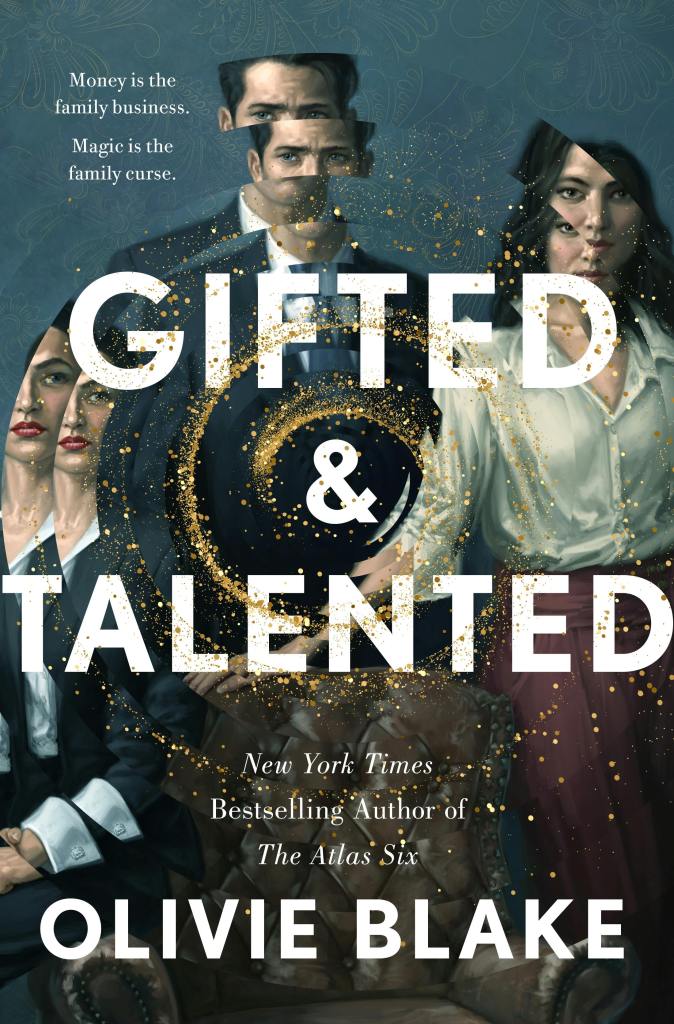
Book: “Gifted &Talented” by Olivie Blake

Publishing Info: Tor Books, April 2025

Where Did I Get this Book: ARC from the publisher!

Where Can You Get this Book: WorldCat.org | Amazon | IndieBound

Book Description: Thayer Wren, the brilliant CEO of Wrenfare Magitech and so-called father of modern technology, is dead. Any one of his three telepathically and electrokinetically gifted children would be a plausible inheritor to the Wrenfare throne.

Or at least, so they like to think.

Meredith, textbook accomplished eldest daughter and the head of her own groundbreaking biotech company, has recently cured mental illness. You’re welcome! If only her father’s fortune wasn’t her last hope for keeping her journalist ex-boyfriend from exposing what she really is: a total fraud.

Arthur, second-youngest congressman in history, fights the good fight every day of his life. And yet, his wife might be leaving him, and he’s losing his re-election campaign. But his dead father’s approval in the form of a seat on the Wrenfare throne might just turn his sinking ship around.

Eilidh, once the world’s most famous ballerina, has spent the last five years as a run-of-the-mill marketing executive at her father’s company after a life-altering injury put an end to her prodigious career. She might be lacking in accolades compared to her siblings, but if her father left her everything, it would finally validate her worth—by confirming she’d been his favorite all along.

On the pipeline of gifted kid to clinically depressed adult, nobody wins—but which Wren will come out on top?

Review: I’m one of those viewers who both recognized and appreciated the brilliant writing and acting found in “Succession” but who also struggled to enjoy the actual process of watching it. As a media consumer (books, movies, or shows), I’ve found that I struggle the most with stories where I can’t find a likable character to cling to. They don’t need to be perfect or strictly heroic, but just…likable. Jesse Pinkman from “Breaking Bad” is the perfect example of the sort of character I need to find to truly enjoy a story. So, when I saw that Olivie Blake was coming out with a new book and that it definitely was giving off strong “Succession” vibes, I was interested, but also a bit wary. That show was a slog at times of just hating everyone and everything they did. Would this book follow in its footsteps? Well, yes and no.

On the good side, I think some of Blake’s flowery, evocative style of writing worked really well with this sort of story. At best, everyone in this book is incredibly flawed, and Blake uses them and the situations they keep finding (creating!) themselves in to offer many beautifully crafted insights into the world as a whole. Commentary on power, ambition, and, of course, the complicated nature of siblings, with all of the competition and resentment that can be tied up in such a unique relationship. Here is someone who is the only other person/people in the world who truly understands your history, who’s seen it all, the good, the bad, the ugly. You love them; you can’t hide from them. I’ve struggled with Blake’s writing style at times in the past, but I think it paired really well with this sort of story.

That said, I am starting to put together the dots on the sorts of characters Blake has been writing lately. Namely, the kind that are found in things like “Succession.” In that way, she was perfectly positioned to write this sort book. But on the other hand, I’ve had a harder and harder time connecting with her books because I feel as if she always writes characters who I end up really disliking. They’re not just morally grey, they’re often rude, selfish, stubborn to the point of idiocy, etc. And while here these characters fit in well with the sort of story she was trying to write, I can’t say I enjoyed them any more for it. I kept banging my head against a wall, as I jumped from character to character who couldn’t help shooting themselves in the foot with terrible approaches to life and how they treat others.

I’ll also say that I question the necessity of the fantasy elements in this book. There are definite comparisons to “The Umbrella Society” (some were a bit too close, honestly, and made it feel less creative on its own), but, for the most part, the magic was so far in the background to the interpersonal dynamics that I’m not sure if it was serving much of a purpose. Other than staying true to the sort of books that Blake has written in the past and that her fans expect from her. But here at least, I think the book might have been better served to have remained a straight contemporary fiction novel. As it stands, I don’t think the sparce fantasy elements truly contribute much to the book itself. Those who are going in as hardcore fantasy readers will be left with a book that feels thin in this area.

Overall, this was an ok read. I will say, as a reader who has struggled with Blake’s style of writing in the past (sometimes it can veer into the land of pretentiousness), I think that the themes and subject matter of this book were well suited to her talents and the book shone brightest in its use of language to describe some of these darker currents. However, all of the characters were so unlikable that I can’t say I actually enjoyed my reading experience. Looking back, I think that’s been the difference for me with her books that I’ve enjoyed vs. those I didn’t. And it was unfortunate that this largely fell in the latter category. However, fans of Blake’s style should definitely check this out, especially if you’re the sort of reader who enjoys truly morally compromised characters!

Rating 7: Some poignant commentary on themes of sibling rivalry and ambition was held back a bit for me by a cast of truly unlikable characters.

Reader’s Advisory:

“Gifted & Talented” can be found on this Goodreads list: 2025 Adult Fantasy & Science Fiction and

Serena’s Review: “The Gods Time Forgot”

This post may contain affiliate links for books we recommend.  Read the full disclosure here.

Book: “The Gods Time Forgot” by Kelsie Sheridan Gonzalez

Publishing Info: Alcove Press, April 2025

Where Did I Get this Book: Netgalley!

Where Can You Get this Book: WorldCat.org | Amazon | IndieBound

Book Description: Manhattan, 1870. Rua knows only two things: her name, and that she has no memories. So when the wealthy Harrington family mistakes Rua for their missing daughter, Emma, Rua goes along with the charade, hoping for answers about who she really is. As she tries to blend into a society she doesn’t remember, she’s drawn to a firmly off-limits the Lord of Donore, a newcomer to Manhattan society who is somehow familiar to Rua.

Finn is new to this side of the Atlantic and knows that the best way to fit in as Lord of Donore is to make friends in high places and play by the rules of society. He knows he shouldn’t become involved with a mysterious, recently missing debutante, but he’s intrigued by Emma Harrington, and Finn has an uncanny feeling that this isn’t the first time they’ve met. 

With societal pressures mounting on both sides, Rua is determined to discover the truth about the missing Harrington daughter and her own past. But when her memories begin to return, they’re of a world far stranger than New York and traced in dark magic.

As ancient secrets unfurl in Rua’s memory, Rua and Finn are forced to uncover the mystery of their past and try to save their future. In this gritty and glittering romantasy, nothing and no one is as they seem.

Review: Looking back on my reading experience of this book and what I think will likely happen for other readers as well, I keep coming back to “expectations vs. reality.” No one is done any favors when a book is set up as one thing, but then turns out to be very different. There are two primary areas where this happened: the marketing of this book’s genre and the book summary’s explanation of the romance.

So, first off, the genre expectations. This is marketed as a romantasy title. As we discussed in my subgenres post from a few weeks ago, this would mean the book is first and foremost a romance novel but situated within a fantasy setting. Now, the summary does explain that this book is also set in a particular point in history, so it can only be expected that an exploration of life in this place and time will make up a portion of the book. The problem here is that this actually took up the majority of the book! I got over the half way mark in this book before even remembering that this had been promoted as a romantasy…and other than a few throwaway lines here or there, there had been zero actual fantasy elements involved. I enjoy historical fiction, so it’s perhaps not surprising that I got as far as I did before this became apparent. But for readers who go in with the expectation of a romantsy novel, I think there will be disappointment.

Even on the historical front, I did struggle to really enjoy this book. There were a lot of ball room scenes and society scenes that simply began to feel repetitive, with many people behaving as the worst versions of characters from Bridgerton. Not only these settings, but the fact that every single time, these events would result in Rua making some “shocking” statements about how messed up all of these restrictions were. But more often than not, it just came across as Rua saying the most brain-numbingly obvious fact in the most abrasive manner possible. I think there are ways to write characters who defy societal expectations and thus draw attention to its flaws, but Rua was like a bull in a China shop in all of the worst ways.

The second problem came down to the romance and, again, how it is marketed in the book summary. As you can see above, the summary clearly pairs Rua with a character named Finn. Several paragraphs give us a brief overlay of their story together. But then I picked up this book and discovered, oh wait, it’s another love triangle and a character named Annette (who is NOWHERE TO BE SEEN in the book summary) is going to play a role in the romance. Again, poorly managed expectations don’t benefit anyone! Some readers really enjoy love triangles, but looking at this book description, they’d have no idea that this was a straightforward MF love story. Conversely, other readers (like me) don’t enjoy love triangles and try to avoid them. I know myself well enough to know that almost all love triangles set back my reading experiences fairly significantly, so I try to avoid requesting/reviewing those titles, as I don’t love writing critical reviews, especially when I know this aspect of it is totally subjective.

The story also struggles with its pacing. As I said above, the first half to 75% is largely focused on Rua’s experiences living in this society. But then the last quarter is a mad whirlwind, trying to wrap up all of the plotlines. It is here, too, where the fantasy elements finally really show up.

All of this to say, this book wasn’t for me, but that’s because I wasn’t the correct reader for it! (Well, I could get behind the historical stuff, but I just wasn’t expecting it as much when I went in.) I think there are readers out there who will enjoy this one, but I do think it would have been in this book’s best interest to be more straightforward about the romance tropes at its heart as well as the primary genre focus of the story.

Rating 6: Unfortunately, this one didn’t work for me. There was less fantasy than I was expecting, and I felt blindsided by yet another love triangle.

Reader’s Advisory:

“The Gods Time Forgot” can be found on these Goodreads lists: Victorian Fantasy and 2025 Debut Novels.

Serena’s Review: “Chaos King”

This post may contain affiliate links for books we recommend.  Read the full disclosure here.

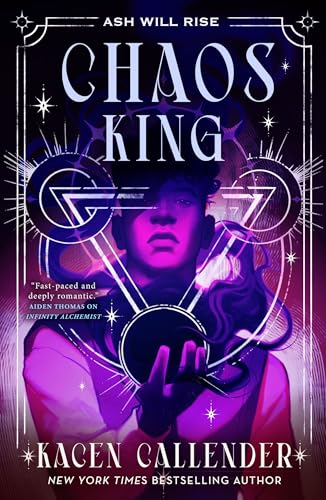
Book: “Chaos King” by Kacen Callender

Publishing Info: Tor Teen, April 2025

Where Did I Get this Book: ARC from the publisher!

Where Can You Get this Book: WorldCat.org | Amazon | IndieBound

Book Description: Ever since he rose up against his father and saved New Anglia from destruction, Ash has been struggling to adapt to his new life. He has nightmares every night, haunted by strange black orbs and his screaming dead mother. Ash is sure she’s trying to warn him that the world is still in danger, and becomes determined to find a way to speak to her again―but communicating with the dead isn’t easy, even for an alchemist as powerful as Ash.

Previously Reviewed: “Infinity Alchemist”

Review: I didn’t love the first book in this series, but many of its problems also may have came down to all the elements a first book must tackle. Given more familiarity with the characters in this second go-around, I was interested to see where the story would go from there!

I will say, I did like this one better than the first. For one thing, I think the pacing was more balanced here. This makes sense, as it didn’t have to do nearly has much heavy lifting with regards to introducing the basic structures of this society and magic system. That being the case, the story had more free rein to dive straight into the main plot and several intense action sequences. This same benefit extended to the characters. While I still don’t love multiple love interests, the longer I’ve spent with all three of these people, the more I came to care about their various travails.

However, I still found myself struggling with the swapping pronouns for one of the characters. Inclusivity is important, but there are practical realities of reading a story via the written word that does create barriers to how this sort of character is presented. As it stands, swapping pronouns often throughout the story left me struggling to piece together who was saying/doing what. And this markedly detracted from my ability to stay connected to the plot, as I had to constantly come out of the story to piece together sentences and scour previous bits for context clues. Like I said in my original review, I’m not sure what the solution is here, but I think in light of the very real limitations of the written word, simply sticking with “they” as a pronoun would have greatly improved the writing in this book.

I did enjoy the themes explored here. This society has very real boundaries placed on its people, and we see the struggles our characters go through. Beyond that, we have the exploration of themes regarding religion and magic, and the lengths people are pushed to in their devotion to their beliefs. Revolution stories are always a good time in fantasy!

That said, the book has an odd ending. I thought this was a duology when I picked this one up, but the end definitely leaves the door open for more, with several questions left unanswered. Ultimately, I think if you enjoyed the first book, this one will definitely hold up as a good sequel. Even for those who didn’t love the first book, this was definitely an improvement!

Rating 7: While it’s an improvement on the previous book, I still struggled with the readability at times, and the ending had me scratching me head a bit.

Reader’s Advisory:

“Chaos King” can be found on this Goodreads list: 2025 Dark Academia Releases.

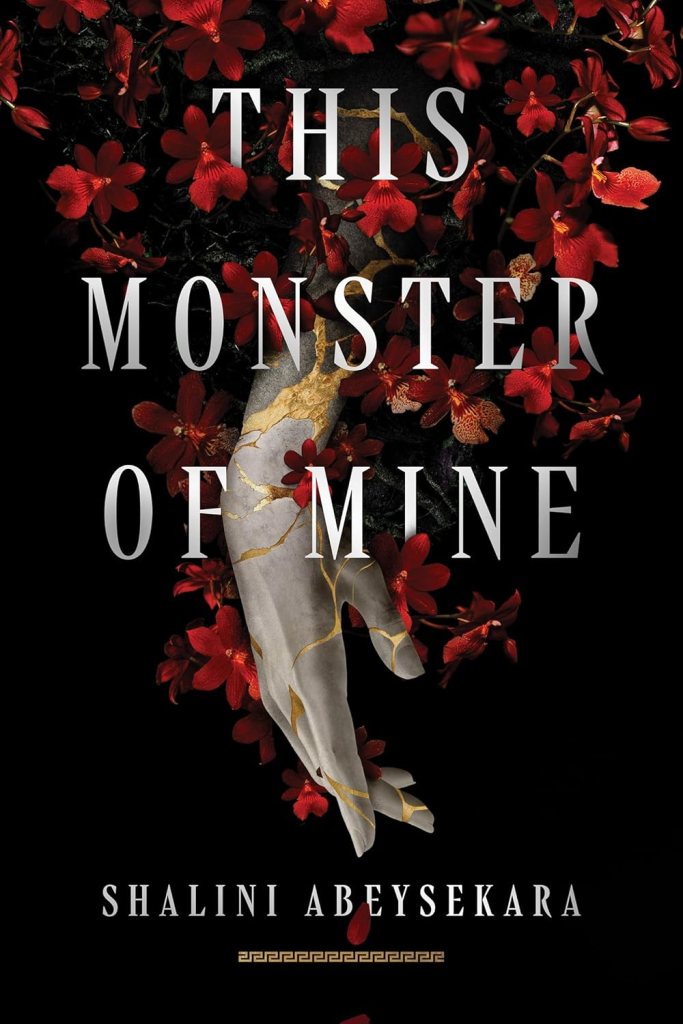
Serena’s Review: “This Monster of Mine”

This post may contain affiliate links for books we recommend.  Read the full disclosure here.

Book: “This Monster of Mine” by Shalini Abeysekara

Publishing Info: Union Square & Co., April 2025

Where Did I Get this Book: ARC from the publisher!

Where Can You Get this Book: WorldCat.org | Amazon | IndieBound

Book Description: Eighteen-year-old Sarai doesn’t know why someone tried to kill her four years ago, but she does know that her case was closed without justice. Hellbent on vengeance, she returns to the scene of the crime as a Petitor, a prosecutor who can magically detect lies, and is assigned to work with Tetrarch Kadra. Ice-cold and perennially sadistic, Kadra is the most vicious of the four judges who rule the land – and the prime suspect in a string of deaths identical to Sarai’s attempted murder.

Certain of his guilt, Sarai begins a double life: solving cases with Kadra by day and plotting his ruin by night. But Kadra is charming and there’s something alluring about the wrath he wields against the city’s corruption. So when the evidence she finds embroils her in a deadly political battle, Sarai must also fight against her attraction to Kadra – because despite his growing hold on her heart, his voice matches the only memory she has of her assailant…

Review: This is going to be a very strange review to write, mostly because it was a very strange book to read. I’m honestly having a hard time thinking of a book that was more of a roller coaster ride than this one. One minute I’m loving it, whipping through action scenes, swooning over the love interest. The next, I’m irate, considering DNFing, franticly scanning other reviews to see if I’m way off base or totally missing something.

Beyond the whiplash that this experience created, I was also off balance due to the fact that my usual points of interest/concern were reversed. I’m a character reader first and foremost, and more often than not, if I get through a book I’m otherwise struggling with, it comes down to the strength of the characters or the narrative voice. Here, however, the characters (more, the main character) was the problem, but the writing itself was so good that it carried me through the real deep troughs I experienced otherwise. The author simply has an excellent style and voice! The world-building was perfectly crafted, the dialogue all felt believable, hitting all of the right notes in its humorous, serious, or romantic moments. And the exploration of its themes regarding law and justice were *chefs kiss.*

And, again, when I wasn’t getting bogged down in the main character, I really enjoyed the romance! The story is a true slow burn, and while the romance is important to the story, it doesn’t overshadow the other serious aspects of the story, such as the aforementioned themes regarding justice or the mystery behind what happened to Sarai. And, for his part, Kadra was an excellent romantic interest in his own right! Strong, but compassionate. Filled with purpose, but also focused on Sarai as she works through her trauma. And, honestly, a hell of a lot more patient with her more ridiculous moments that I ever would have been.

And then, there’s Sarai. Now, if she had simply been an unlikable heroine through and through, we probably wouldn’t be here, good writing bedamned. No, instead, she has a lot of strengths as a narrator! I enjoyed most of her inner voice, and her motivations and magical abilities were all very interesting. The problem, however, came down to her approach to discovering the truth behind the attempt on her life. To get into my feelings with this, I’m going to have to go into some spoilers of actions in the first half of the book. For those who want spoiler free, I’ll just say she makes wild leaps of logic throughout that make zero sense. The rest of this review, however, will be a bit more in-depth with my problems here.

SPOILERS BELOW!

So, a little backstory: years ago, someone attempted to kill Sarai. The nature of the crime left her body and mind broken, with all but the barest fragments of memory of the event wiped from her mind. All she does remember is a specific voice, one that instructs another person to patch her up and get her out of the city, granted in a rough and tough tone of voice. In the years since, there has been a suicide spree, with many individuals with magical abilities like Sarai seeming to kill themselves in odd ways. Years later, she returns to try to discover what happened and who tried to kill her. Almost immediately, she recognizes the voice from her memories as Kadra.

Now, as readers, we know that Kadra can’t have been the attempted murderer, simply because we know we’re reading a romantic fantasy novel and he’s the romantic interest. Sarai couldn’t (and shouldn’t!) think this way, too. However, from the memories she does have, even she admits early in the book that whomever the voice belonged to was responsible for patching her up and could have very well been there for other reasons than being the person behind the attempt on her life. I read a paragraph from her saying just this and I thought, “Great, phew! We got the obvious bit out of the way right from the start and reinforced the idea that the true mystery here is why Kadra was there, why he helped her, and why he banished her out of the city.”

Unfortunately, no. In the very next chapter, Sarai is full-on convinced that Kadra must have been the one to try to kill her (somehow immediately forgetting/disregarding the fact that he then, inexplicably, saved her?? Why he wouldn’t have just finished her off for good is simply…never mentioned or thought of). What’s worse, Sarai begins to suspect that Kadra must also be behind the deaths of the others like her, those who have been supposedly committing suicide.

Early in their time working together, Kadra and Sarai go to the morgue to look over the body of the most recent “suicide victim.” While there, Sarai witnesses Kadra fighting with the coroner over the manner of death, insisting that it couldn’t be a suicide (something that Sarai agrees with, after viewing the body). The coroner, on the other hand, is sure it’s a suicide and has ruled it as such. What’s more, she’s sick of Kadra coming by FIVE OR SIX TIMES before this over the last few months to argue this very point! Sarai, internally, goes on to think this: “Aha! Kadra must be behind this! He’s perfectly positioned himself to cover up his crimes by being the investigator behind them!!”

Girl, what?? No one thought this guy was murdered EXCEPT Kadra! If it wasn’t for him, this guy would have been buried and listed as a suicide months ago! And yet somehow, Sarai, dumb dumb that she is, has decided that it’s totally reasonable and smart that a murderer would stage an elaborate scene to make a crime look like a suicide, and then, after completely getting away with it, spend the next few months arguing with a coroner, insisting that it was, in fact, a murder! It honestly boggled my mind.

Next, a few days later, Kadra decides that he and Sarai should go inform the family that this guy didn’t commit suicide but was killed and that they’re looking into it. Sarai, SUPREME DUMB DUMB that she is, thinks to herself this: “Great! Maybe while I’m there I can uncover proof that Kadra was behind it!!”

Girl, WHAT?!?! You think that Kadra murdered this guy, set up an elaborate staged suicide, called that very same staging into question, and is now going to take a woman with incredible magical abilities back to the home of the victim where he just so happened to leave around evidence that explicitly condemns him?? What is he getting out of this?? How is this helping him and not, as any normal person would think, clearly revealing him to be the only person most likely to have NOT killed these people. And again, throughout this, Sarai never deals with the fact that her theory of Kadra as the man behind her own murder attempt is completely blown out of the water by the simple fact that he WAS THE ONE TO SAVE HER!

The face-palming throughout all of this was frankly appalling. I won’t go into more details, but these flaws in thinking and ridiculous theorizing continued on well over the halfway mark in the book. Later, there are even more “revelations” that Sarai takes as confirmation of Kadra’s guilt, all of which are equally as stupid as the two examples I listed above. Even writing about it now, I’m getting mad about it all again.

What’s worse, as I said, so much about this book was clicking so well for me! The writing was so strong, the story-telling was good, Kadra was excellent! All the right pieces were there. But somehow, it feels like the author went astray with Sarai herself, as if she knew she wanted to create this suspicion between Sarai and Kadra, but couldn’t quite manage to make it actually work. So, instead, Sarai is just an idiot who thinks completely illogical things, just to maintain the mystery element behind Kadra and his involvement.

All of this said, I’ll definitely check out another book by this author. I think she’s got great potential, and with a few tweaks, I could have loved this book! Unfortunately, I couldn’t get past Sarai herself; I can’t remember the last time I read a book where a main character was this flawed in their reasoning for so long. However, other readers may be less bothered with it, particularly if characters are less important for you. The vibes of the story and the romance itself were very good!

Rating 7: I’d give this a 6 just for Sarai herself. But the actual writing and world-building deserves enough praise to bump it up to a 7.

Reader’s Advisory:

“This Monster of Mine” can be found on this Goodreads list: 2025 Debut Novels.

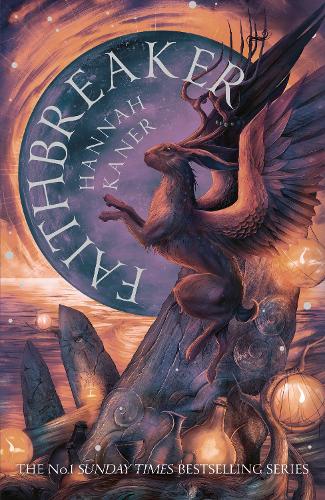
Serena’s Review: “Faithbreaker”

This post may contain affiliate links for books we recommend.  Read the full disclosure here.

Book: “Faithbreaker” by Hannah Kaner

Publishing Info: HarperVoyager, April 2025

Where Did I Get this Book: Edelweiss+

Where Can You Get this Book: WorldCat.org | Amazon | IndieBound

Book Description: War has come. The fire god Hseth is leading an unstoppable army south, consuming everything in her path. Middren’s only hope of survival is to unify allies and old foes against a common enemy.

Elo navigates an uneasy alliance with Arren; his friend, his enemy, and his king. Now they each must decide how much they’re willing to sacrifice to turn the tides of war.

Meanwhile, Inara joins her mother on their ship, the Silverswift, to seek aid. Still grappling with her powers, Inara must reconcile who she is and where she belongs, while Skediceth has to question if their bond will be enough to keep them safe.

Kissen has no allegiance to the old ways of Middren. But, as she tries to find her family, she is forced to question what, and whose, future she is fighting for.

Previously Reviewed: “Godkiller” and “Sunbringer”

Review: I’ll be honest, I’ve put off writing this review for a bit. On reflection, this trilogy has been a challenging experience. Mostly because the first book hit it out of the park for me, and now each subsequent book has been a step further and further away from that high. While this book does stick the landing of the overall plot itself, it wasn’t enough to temper my disappointment with various other aspects of the story.

But let’s start with the good. Like the two books before it, this one capitalizes on the intricate world-building that has been created over the course of the trilogy. There’s been excellent exploration of themes regarding religion, devotion, and the extremes to which individuals can be driven to under the influence of strong ideologies. This one continued in these veins. And, like I said, while it takes a while to get everything and everyone in place, the final confrontation and climax of the trilogy hits well.

The pacing is also fairly slow throughout. But this is true for the first two books as well, so readers should essentially expect a similar reading experience to those stories. Personally, I think the slower pacing works for the sort of story being drawn here. Never does this series claim to be an action-packed romp. But instead, it’s very character-based, and, as such, spends a lot of time in various characters’ heads exploring their personal arcs.

Now, unfortunately, we get to my complaints. First off, from the start I’ve mentioned that delicate balance that has been struck between the shared POVs. In the first book, all three POV characters were strong enough to make this approach work well. And, as they all spent the majority of their time together, these different POVs didn’t take us away from the two other characters, allowing the reader to still spend time with them all. In the second book, one of my complaints had to do with the lessening impact of these various POVs. Inara remained mostly the same, but Elo’s story took a massive dip, with much of his subplot feeling tacked on. And, in a strange turn, the excellence of Kissen’s chapters only served to further undermine the story, as it began to feel as if any chapters focused on the other two dragged even more than they should have in comparison.

Well, here, where I had so many hopes now that our main trio were finally reunited, this problem has only been expanded upon. Not only do they get immediately broken up into various groups again and sent off in different directions, but the story added in TWO more POVs. And, honestly, I couldn’t have cared less about Arren or Hestra! Not only did these chapters feel as if they were taking up precious page space from the characters I actually cared about, but in Arren’s case, the entire project behind him was DOA.

I get that the author thought that this added POV for him was necessary to attempt to make him a sympathetic character, but frankly, it was too little too late. I couldn’t simply sweep under the rug all of the actions I’d seen from this character in the first two books. Perhaps if these chapters were attempting to simply lighten opinions on him some, it would have worked. But to attempt to re-create him as a romantic interest for Elo? NO THANK YOU! I was so upset by this switch. Not only did it feel like the excellent dynamic that was created between Elo and Kissen was swept under the rug for no apparent reason (and frankly, this is the kind of stuff that just makes me furious because it makes me feel as if the author set me up for disappointment from the start), but Elo’s entire story has played out in him coming to realize what he deserves and what he doesn’t. What he absolutely doesn’t deserve is to end up with a character like Arren, who treated him so poorly and, frankly, betrayed him to a point that even if forgiveness could happen, romantic love certainly shouldn’t.

And it was more of the same for Kissen. Yes, her natural charisma as a character carried this new relationship further than my total disinterest in Elo’s relationship. But still. This felt like a late-game switch that simply wasn’t necessary and wasn’t set up to succeed. We had two entire books with plenty of other lore and action that needed to be resolved in the rather short page count of this last book. To attempt to wrap all of that up while also adding in two new relationships that only really appear in this last book? Something’s got to give, and it was with these romances.

It’s hard to be objective with this book. Once I saw where things were going with these new romances, I was so frustrated with the trilogy as a whole that I had a hard time focusing in on the rest of what the story was trying to accomplish. There was a solid ending, and one that pulled at the heartstrings in some meaningful ways. But what I loved best about this series were the three main characters. And as the trilogy wore on, it felt like more and more, that’s where the story struggled. Readers who are perhaps less invested in the main trio as a core group may enjoy this more than me. And that said, I do enjoy this author’s style of writing, so I’ll definitely check out what comes next (though, I’ll be honest, if it’s another series, I might wait for it to complete before starting up, so I know what I’m getting into. I really hate having the rug pulled out from under me, and it’s one of the few grievances that I have a hard time forgiving in authors.)

Rating 7: For me, personally, this was probably a 6. But as I know that I got caught up in my feelings, I’d say that on a whole, this one was still a solid conclusion to the trilogy, just not as good as the first book.

Reader’s Advisory:

“Faithbreaker” is on this Goodreads list: 2025 Adult Fantasy & Science Fiction.

Serena’s Review: “Exquisite Ruin”

This post may contain affiliate links for books we recommend.  Read the full disclosure here.

Book: “Exquisite Ruin” by AdriAnne May

Publishing Info: Gallery Books, March 2025

Where Did I Get this Book: ARC from the publisher!

Where Can You Get this Book: WorldCat.org | Amazon | IndieBound

Book Description:

Review: Sadaré wakes in a labyrinth, remembering nothing except that she is a powerful sorceress. Her only companion is a hostile immortal named Daesra—beautiful, dangerous, and demonic—who bound his divine soul for power and revenge.

Despite their animosity, the two have no choice but to work together to reach the center and defeat the monster who prevents their escape. But the longer they wander, the more deadly and alive the maze becomes—and the more Sadaré finds herself drawn to Daesra in ways she can’t explain.

As sorceress and demon develop a tenuous truce, the labyrinth gives Sadaré glimpses of their shared history of passion and pain that make her question everything she knows. Unlocking the secrets of her past may be the only way to survive and heal their entwined fates—but as she learns more about the betrayals that brought them to the labyrinth, Sadaré begins to fear that the monster at the center could be Daesra … or even herself.

Review: Regardless of my “hit and miss” track record with the romantasy genre, I was immediately intrigued by this one given its ties to the Minotaur myth. What a unique story! The only other version I know of that tackles this myth was the excellent short story by Naomi Novik in her latest short story collection. Now, that entire collection was probably my favorite short story book ever, so the bar was fairly high. But still, given how rarely this tale has been adapted, I felt confident that there was still a lot of room for exploration, especially with a romance angle added on.

That said, I didn’t pay tons of attention to the summary, and when I opened it up and started reading and realized that it was an amnesia story…I was less than thrilled. Totally subjective take, but amnesia is one of my least favorite tropes. For one thing, I think it’s very rare that an author can properly pull it off, and we saw plenty of examples of this stumbling block here: Sure, Sadare claims to remember nothing, but again and again, she makes assertations about her own history/motivations/preferences that she couldn’t possibly know. It’s hard to truly write a blank slate character, as would be true of an actual amnesiac, and Sadare is definitely not it. Beyond that, I have little tolerance for much of the flip-flopping we got from her, one minute drawn to the MMC and the next fearing and hating him once again, often with little given on the page to motivate a change from one emotion to the other.

The writing was also fairly stilted and it took me a long time to get invested. I think this comes down to an over-reliance on a telling vs. showing style. Sentence after sentence begins with Sadare saying “I…” did something/said something/thought something. As this was an early version, more polishing could be done here before the finished copy comes out, but often those changes are things like missed words or spelling rather than sweeping style changes.

So far this has been rather negative, but I do want to touch on what I did like. Whenever the story was given some breathing room from the romantic tension, I liked the exploration of the original myth and their wanderings through the maze. It could feel a bit repetitive at times with dead end met after dead end. But, on the other hand, this is a story about two individuals trapped in a maze. It should feel hopeless at times!

There were the pieces of a lot of good things here. I think both Sadare and the MCC had good foundations and the world-building was also very interesting. I think this author simply still needs some room to grow as far as the actual quality of the writing itself. With a more solid grip on the basics, this could have been a great read! As it stands, I think it will definitely appeal to the romantasy readers who enjoy monster fics. But if you’re generally a fantasy reader first and foremost, this might not be for you.

Rating 7: A unique romantasy with some creative world-building, but it was held back by an overly “telling” style of writing.

Reader’s Advisory:

“Exquisite Ruin” can be found on this Goodreads list: Greco – Roman Fantasy.

Serena’s Review: “The Prince Without Sorrow”

This post may contain affiliate links for books we recommend.  Read the full disclosure here.

Book: “The Prince Without Sorrow” by Maithree Wijeskara

Publishing Info: Harper Voyager, March 2025

Where Did I Get this Book: ARC from the publisher!

Where Can You Get this Book: WorldCat.org | Amazon | IndieBound

Book Description: A prince born into violence, seeking peace.

Prince Ashoka is the youngest son of the tyrannical Emperor Adil Maurya. Considered an outcast by his father for his rejection of the emperor’s brutal onslaught against the witches of the empire, Ashoka longs for change. When the sudden and unexpected death of his father leaves the monarchy in disarray, Ashoka is sent to govern a tumultuous region annexed by Emperor Adil that is terrorized by nature spirits—a task many see as doomed to fail. Suspected by a disdainful governor and evaded by distrustful witches, Ashoka must question his rigid ideals and fight against becoming the one person he despises the most—his father.

A witch shackled by pacifism, seeking revenge.

Shakti is a a witch bound by a pacifist code. After witnessing the murder of her aunt and village at the hands of the emperor, Shakti hurtles down a path of revenge, casting a curse with unexpected consequences. Posing as a maidservant in the famed palace of the Mauryas and armed with newfound powers beyond her imagination, Shakti attempts to dismantle the monarchy from within by having the royal progeny ruin themselves and turn their father’s legacy into nothing but ash.

In a world where nature spirits roam the land, and witches are hunted to extinction, Ashoka and Shakti will be forced to grapple with the consequences of to take it for themselves or risk losing it completely.

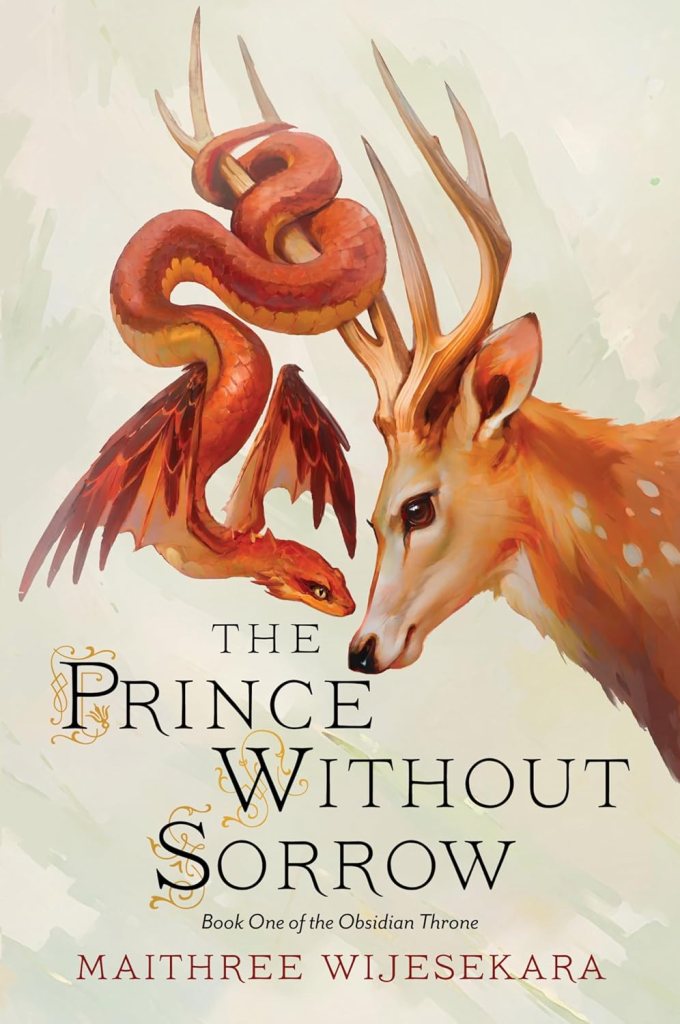
Review: I have to say, the cover was doing a lot of heavy lifting for me with this one! I don’t know if I even really looked at the summary much before requesting it! It’s such a lovely, unique image, one that definitely stands out from the typical fantasy crowd!

That said, the book didn’t quite live up to my high expectations. On the other hand, what it does have to offer feels very unique to the genre, so readers looking for a new entry point to fantasy fiction may appreciate what this one has to say. I was particularly intrigued by the exploration of pacifism and the building conflict between the main characters with regards to their approaches to moving through this world. We have one character who is actively trying to approach the world in a less violent manner, and another whose life has been one tragedy after another and who feels shackled by the restraints of nonviolence taught to her.

That said, I don’t feel like the author took full advantage of this premise. By the end of the book, I was left wondering if I had somehow missed the point that was trying to be made? But I also suspect that while a lot of interesting questions regarding pacifism and necessary violence were introduced, the author was unwilling to truly stake a position on these issues, which, ultimately, undercut much of what was presented here.

I also thought the magic system itself was fairly wobbly. The witches can’t use their powers without accruing bad karma, but Shakti is seemingly rewarded for doing just this? And then, later in the story, the other witches are also convinced to do away with what we’ve been told is a deeply held moral conviction? It all felt a bit too convenient. Add that on top of several other conveniences (the good guys and bad guys are almost cartoonishly one dimensional at times and very prone to giving speeches that clear up everything for every one), the story telling itself felt shaky. This was compounded upon by some structural issues with the writing like over-use of certain words and unclear metaphors.

All of that said, I do think there are readers for this book! As I said, the themes regarding pacifism were strong (even if I wish more had been done) and I did like the two main characters, which goes far for me. If you’re looking for a new-feeling fantasy novel, this may be one to check out!

Rating 7: There were strong themes regarding justified violence and pacifism, but some of the other story elements tripped up my reading experience in the end.

Reader’s Advisory:

“The Prince Without Sorrow” can be found on this Goodreads list: 2025 – Paranormal Romance (Standalones and 1st in Series).

Joint Review: “The Bane Witch”

This post may contain affiliate links for books we recommend.  Read the full disclosure here.

Book: “The Bane Witch” by Ava Morgyn

Publishing Info: St. Martin’s Griffin, March 2025

Where Did We Get This Book: ARC from the publisher/Netgalley

Where You Can Get This Book: WorldCat.org | Amazon | Indiebound

Book Description: Piers Corbin has always had an affinity for poisonous things – plants and men. From the pokeweed berries she consumed at age five that led to the accidental death of a stranger, to the husband whose dark proclivities have become… concerning, poison has been at the heart of her story. But when she fakes her own death in an attempt to escape her volatile marriage and goes to stay with her estranged great aunt in the mountains, she realizes her predilection is more than a hunger – it’s a birthright. Piers comes from a long line of poison eaters – Bane Witches – women who ingest deadly plants and use their magic to rid the world of evil men. Piers sets out to earn her place in her family’s gritty but distinguished legacy, all while working at her Aunt Myrtle’s cafe and perpetuating a flirtation with the local, well-meaning sheriff to allay his suspicions on the body count she’s been leaving in her wake. But soon she catches the attention of someone else, a serial killer operating in the area. And that only means one thing – it’s time to feed. In Ava Morgyn’s dark, thrilling novel, The Bane Witch, a very little poison can do a world of good.

Serena’s Thoughts

There are a few go-to authors that Kate and I like to joint review, as we’ve both reliably enjoyed their books in the past. This author, I believe, is new to both of us! But we’ve both enjoyed “Practical Magic,” so with a comparable like that, plus the promise of a thriller-like mystery at its heart, we both thought this would be a good candidate to check out!

Unfortunately, for me, this was just ok. And part of that is the simple fact that it skewed further into the thriller genre and away from the fantasy genre than I typically prefer. So that’s nothing against the actual quality of that portion of the story (see Kate’s opinions there for a more reliable source on this genre!), but it does speak to the balance of this book. And I think for fantasy readers, specifically those looking for a read-alike for “Practical Magic,” this might feel like a bit of a let down. Instead, I think the “Gone Girl” reference made a lot more sense, and better fit, tonally, with what this book had to offer. Sure, the witchy stuff was definitely there, but the general plotting and themes fell much more in line, I think, with a thriller than with a typical fantasy story.

I also struggled to really enjoy Piers herself. In the beginning, she comes across as incredibly competent and thoughtful, as one would need to be to successfully pull of faking one’s own death. However, as the book continued, and especially towards the end, she began to make an increasing number of ridiculous decisions that just didn’t vibe with the sort of person we had first been introduced to. Her actions and various plot points felt jammed together in unnatural ways that served to push the story forwards in the direction the author wanted to go, but didn’t necessarily make sense on their own.

For me, this was just an ok read. I didn’t think the magical elements really lived up to my hopes, and I didn’t really connect with its thriller roots. I also struggled to enjoy Piers as a main character. However, readers how are more interested in the mystery and the serial killer angle might enjoy this more than I did!

Kate’s Review

Well, Serena knows me very well, because this one worked for me on many levels! Part of that was the mystery and thriller elements, to be sure, as I love a story with a serial killer and a woman who has to play a cat and mouse game with him. I also liked the suspense that builds up within the book as the story goes on, whether it’s due to the aforementioned killer that Piers is trying to track, albeit against her will, or the stress involving her abusive ex husband Henry and the cops on her tail after her faked death. Heck, I even liked the suspense regarding whether or not the other bane witches are going to accept Piers into their circle. I will say that as we got closer to the end, things went a little bit off the rails, which put a bit of a wrench in the pacing and how I connected to the story, but I thought that the plot itself was strong enough that I wasn’t too put off by it.

But what worked the most for me were the magical systems that Morgyn created for this book, as the idea of a witch being able to consume poison and transfer it to dangerous and deadly men to take them out is SO appealing to me as a horror reader who also loves witchy books. And I actually disagree with Serena a little bit, because I did get “Practical Magic” vibes from this, specifically the darker themes of that movie (I may not be speaking for the book, it’s been awhile since I’ve read it so lets just stick to the film) like violence against women, women taking their power into their own hands in dire circumstances, and the complicated relationships between families where estrangement and trauma is a very real wedge between people. So many of these things really click for me in my witch fiction, and I thought that Piers coming into her own as a dangerous but righteous bane witch was a fun and engaging arc (though I definitely agree that she does make some REALLY dumb decisions in the later third of the novel, no arguments there). And I always like witch stories that work outside the expected box, or outside of what we usually see in the sub-genre, and a bunch of mountain witches using poison magic was VERY fun and not something that I see as much.

Overall I found “The Bane Witch” to be a really entertaining witch tale, hitting all of the notes I had hoped it would.

Serena’s Rating 7: An interesting concept with the poison magic, but I struggled to connect to Piers and wanted more from the fantasy elements in the story.

Kate’s Rating 8: A fun and deliciously wicked witch tale with poison, empowerment, and a unique magical system. Add in a solid suspense vibe and it’s overall a winner.

Reader’s Advisory

“The Bane Witch” is included on the Goodreads lists Vampires and Werewolves and Witches…Oh My! and Poisonous Plant Fiction Titles.

Serena’s Review: “Nightweaver”

This post may contain affiliate links for books we recommend.  Read the full disclosure here.

Book: “Nightweaver” by R.M. Gray

Publishing Info: Little, Brown Books for Young Readers, March 2025

Where Did I Get this Book: Edelweiss+

Where Can You Get this Book: WorldCat.org | Amazon | IndieBound

Book Description: Six hundred years ago, Nightweavers, cursed beings with untamed power, claimed the continents for their own. The ocean was meant to be a safe haven for humanity, including seventeen-year-old Aster Oberon and her pirate family. But after Aster’s brother is killed in an epic battle at sea against Nightweavers, Aster and her family are thrust into a new life on land.

When a handsome Nightweaver named Will offers the Oberons protection and work at his opulent estate, Aster is suspicious. As the arrogant and entitled right hand to the wicked prince, Will is everything that she has been taught to hate. But as he shows empathy and kindness, Aster can’t ignore a blooming attraction. And even more, Will opens her eyes to a new There are monsters worse than Nightweavers, monsters who may be behind her brother’s death.

As Aster hunts the creatures responsible, dark secrets threaten to unravel everything she once believed about her family, herself, and her world.

Review: Well, while “The Otherwhere Post” reminded me earlier that YA fantasy can still work for me, unfortunately this book reminded me why I also often struggle with the genre. That’s not to say it was all bad, not by any means. More that I think this is the exact sort of book that will work well for its actual target audience of teen fantasy readers. However, adults who often stray into YA fantasy for their reads may have more frustrations with it, like I did.

Let’s start with some good things! I definitely went in intrigued by the pirate angle of the story. This felt particularly fresh in the current YA fantasy genre, and what bits of this we got were all good. Unfortunately, we get most of the actual pirate stuff in the first 25% of the book; after that the story re-located to the land and spends the majority of the rest of the story there. This seems like a missed opportunity to me, but I did enjoy those bits we got at the beginning. On top of that, there were a lot of different tropes here that readers may enjoy, including multiple love interests, chosen one plots, and various kingdoms that have their own goals and politics.

Personally, I found this plethora of tropes to be counterproductive. Some may enjoy this barrage, but for me, I prefer a more tightly focused story. By the end, the author seemed to be throwing every trope she could find at the wall and seeing what would stick, including a late reveal about the heroine that was so predictable I almost put the book down. In so many ways, this read like too many other YA fantasies I’ve read. It included a ton of things, but didn’t do any of them notably well.

I also didn’t enjoy the main character. She had some strengths, like bravery and such, but she was also clueless to the many obvious things going on around her. Beyond that, the inner voice for this character was simply rather dull. Again, nothing aggressively bad here, but more just bland. Some readers may enjoy her more than I did, particularly actual teen readers. The love interest(s) were equally bland, with some of them disappearing from the page for longer than they were on it, it seems!

Overall, there were some good ideas here, but the entire thing began to feel a bit predictable and mediocre. The author didn’t take advantage of the one truly unique aspect of her story, the pirate angle, and instead pursued story beats that we’ve seen a million times before. The pacing was also incredibly uneven throughout, which left me feeling behind the story at times and, at other moments, as if we hadn’t moved forward at all. Like I said, however, there will be readers for this book! I just think it’s the kind of YA fantasy that reads much better in its actual age range, without much crossover appeal to adults readers.

Rating 7: A YA fantasy that will probably be best enjoyed by actual teen readers; adult fantasy fans may feel underwhelmed by the predictable plotting and rather flat characters.

Reader’s Advisory:

“Nightweaver” can be found on this Goodreads list: YA Novels of 2025.

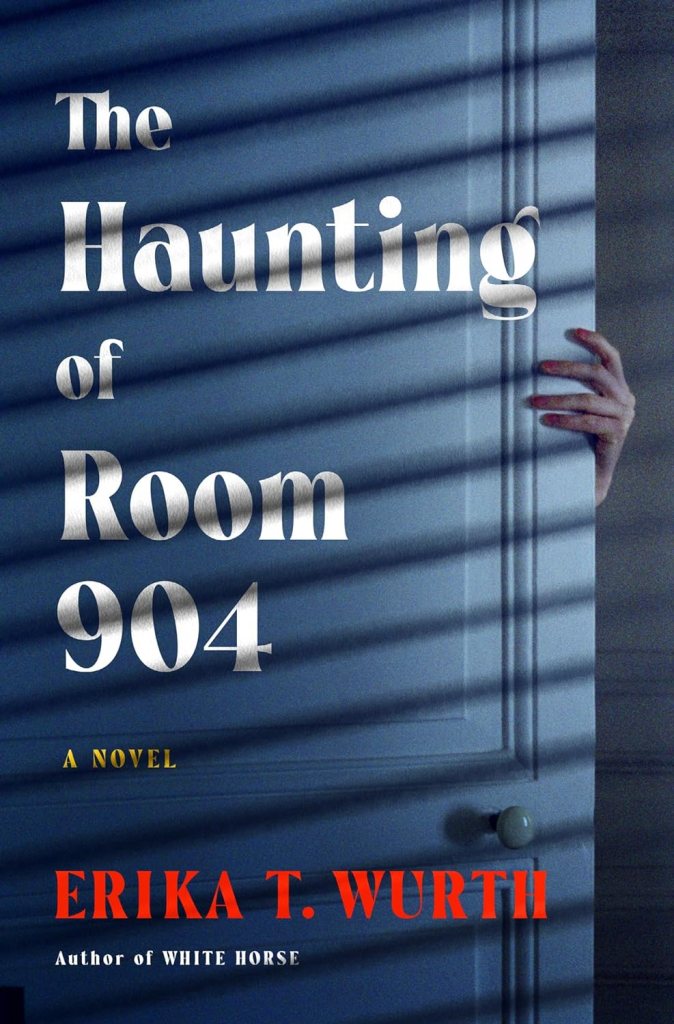
Kate’s Review: “The Haunting of Room 904”

This post may contain affiliate links for books we recommend.  Read the full disclosure here.

Book: “The Haunting of Room 904” by Erika T. Wurth

Publishing Info: Flatiron Books, March 2025

Where Did I Get This Book: I received an eARC from NetGalley.

Where You Can Get This Book: WorldCat.org | Amazon | Indiebound

Book Description: From the author of White Horse (“Twisty and electric.” —The New York Times Book Review) comes a terrifying and resonant novel about a woman who uses her unique gift to learn the truth about her sister’s death.

Olivia Becente was never supposed to have the gift. The ability to commune with the dead was the specialty of her sister, Naiche. But when Naiche dies unexpectedly and under strange circumstances, somehow Olivia suddenly can’t stop seeing and hearing from spirits.

A few years later, she’s the most in-demand paranormal investigator in Denver. She’s good at her job, but the loss of Naiche haunts her. That’s when she hears from the Brown Palace, a landmark Denver hotel. The owner can’t explain it, but every few years, a girl is found dead in room 904, no matter what room she checked into the night before. As Olivia tries to understand these disturbing deaths, the past and the present collide as Olivia’s investigation forces her to confront a mysterious and possibly dangerous cult, a vindictive journalist, betrayal by her friends, and shocking revelations about her sister’s secret life.

The Haunting of Room 904 is a paranormal thriller that is as edgy as it is heartfelt and simmers with intensity and longing. Erika T. Wurth lives up to her reputation as “a gritty new punkish outsider voice in American horror.”

Review: Thank you to NetGalley for providing me with an eARC of this novel!

It is always a double edged sword when it is time for me to approach a book that I have been very much looking forward to. I always try to temper my expectations, because in my own mind something I am SO excited about can get so hyped up. This was always in the back of my mind when I was getting ready to read “The Haunting of Room 904” by Erika T. Wurth. There were so many things I was excited about with this title. It’s a haunting story, and I LOVE a haunting story. It has a medium, and a somewhat reluctant one at that. And it’s Wurth’s newest horror novel, and after how much I loved “White Horse” this one was really, really anticipated. So combining all of these things had be buzzing with excitement and nervousness. The verdict? The nervousness was a LITTLE warranted…

Starting with the positives, I do have a good amount to say. For one, Wurth always knows how to tease out a creepy image onto the page, and for me, there are so many things you can do with ghosts in regards to creepy imagery. There were so many moments here that really unnerved me, be it sobbing ghosts being described in mirrors to uncanny movements of other supernatural beings that Olivia encounters, we have a lot of really great material that really stood out in my mind’s eye, horror wise. I also enjoyed the way that Wurth described and built up the aspect of Olivia’s paranormal investigations, and how we got to see a few of her clients and cases in action. I’ve been a huge fan of the concept of ghost hunting ever since I first saw “Ghostbusters” as a little girl, and I liked the lore and process that Wurth brought through in this story in regards to some of the cases. But the part of this book that stood out to me the most was how Wurth ties the concepts of trauma, generational or otherwise, to the story at hand, not only through Olivia’s family and the loss of her sister, but also through the exploration and connection to the Sand Creek Massacre, one of many horrendous acts of violence against Indigenous People by the United States Government. The chapters that follow the Massacre are devastating and the way that it intersects with the story at hand made it all the more emotionally powerful for me. I also really enjoyed Olivia as a character, with her snark and her scrappiness but also her vulnerability. She’s very easy to root for.

However, I did think that some of the pacing felt a little bit off, and that there was sometimes a bit TOO much stuffed into the story. We had some awkward transitions sometimes, and while parts of the story felt a bit slow, others felt rushed. In terms of overstuffing the story, I liked how we got to see different cultural themes brought into the book, but sometimes it felt like it was going a bit off track from the story that was laid out. For example, there was a piece of the puzzle involving a Golem and a Dybbuk Box and that didn’t feel like it was explored enough to have a solid reason to have it there (especially since the entire concept of a Dybbuk Box is based on a hoax and has perpetuated Jewish stereotypes and exploited Jewish folklore for modern sensationalistic ghost hunting motives; to be fair, though, Wurth does mention the original Dybbuk Box as a hoax). Especially when there were probably other ways that these puzzle pieces could have fit together that didn’t feel like we were getting off into the weeds.

So while this didn’t quite live up to my expectations, I still found “The Haunting of Room 904” to be an unsettling and very emotional ghost story, be the ghosts actual ghosts or the ghosts that still haunt American history.

Rating 7: Though it was a bit muddled at times, overall I found “The Haunting of Room 904” to be creepy, emotional, and a calling out of the way that atrocities of colonialism still haunt Native populations in America.

Reader’s Advisory:

“The Haunting of Room 904” is included on the Goodreads lists “Indigenous Books 2025”, and “Horror to Look Forward to in 2025”.