Serena’s Review: “A Flame in the North”

This post may contain affiliate links for books we recommend.  Read the full disclosure here.

Book: “A Flame in the North” by Lilith Saintcrow

Publishing Info: Orbit, February 2024

Where Did I Get this Book: ARC from the publisher!

Where Can You Get this Book: WorldCat.org | Amazon | IndieBound

Book Description: An elemental witch and her shieldmaiden journey into a world of ancient myth and unexpected destiny in this sweeping Norse-inspired epic fantasy from New York Times bestselling author Lilith Saintcrow.

The Black Land is spent myth. Centuries have passed since the Great Enemy was slain. Yet old fears linger, and on the longest night of the year, every village still lights a ritual fire to banish the dark.

That is Solveig’s duty. Favored by the gods with powerful magic, Sol calls forth flame to keep her home safe. But when her brother accidentally kills a northern lord’s son, she is sent away as weregild—part hostage, part guest—for a year and a day.

The further north Sol travels, the clearer it becomes the Black Land is no myth. The forests teem with foul beasts. Her travel companions are not what they seem, and their plans for her and her magic are shrouded in secrecy.

With only her loyal shieldmaid and her own wits to reply upon, Sol must master power beyond her imagination to wrest control of her fate. For the Black Land’s army stirs, ready to cover the world in darkness—unless Sol can find the courage to stop it.

They thought the old ways were dead. But now, the Enemy awakens…

Review: This is the second Norse-inspired fantasy I’ve read this month! It’s funny how these trends come and go; even as I go through what I though was a fairly randomly-ordered TBR list, I often find myself reading books with strong similarities to one another. I’ve read a decent amount of fantasy fiction that draws from Norse mythology, and have typically enjoyed them quite a bit, so this was an obvious pick for me. On top of that, I love the idea of taking a typical fantasy duo (the hero and his shield) and switching it to a female heroine/witch and her shieldmaiden. I still enjoy the former as well, of course, but it’s nice to see such variety popping up throughout SFF.

This book is a bit tough to review, simply because some of my struggles with the book came down more to my needing to properly categorize the type of book I was reading. Starting out, it was clear that this book was aiming for a specific sort of high fantasy, the kind that uses dense language, both in the vocabulary chosen and in the longer sentences structures used, and also is playing a long game as far as pacing and plotting go. The story takes its time laying out its world, its characters, and even getting to what seems to be the true action of the story.

As I continued to read, at some point it occurred to me to compare this read to “Lord of the Rings,” and frankly, that kind of saved the experience for me. Both books have a similar dense sort of feeling, the kind that can be overwhelming to begin with, and the sort that then pays off later. Similarly, there were a few world-building aspects that were simply dropped in with very little explanation. For example, at one point they refer to the “All Mother” which, of course, seems like a similar character as Odin the “All Father.” Changes like this are, of course, fine, but then I was left a bit unsure as to where I was supposed to be placing this world. Are we in some sort of alternate world where there is an All Mother instead of an All Father? Or is this our world with magic and this is just changed? Things like this aren’t necessarily a big deal or bad, but it does add to the initial challenge with the point of entry to the story. The reader really has to work for it get dive in.

But this slow pacing did pick up towards the end, and this is where the LOTR comparisons worked even better. If read as the rather slow-paced entry to a grand spectacle, a sprawling series, the dense nature of this book is easier to digest. I also really liked Solveig and her shieldmaiden as characters. The author did a fantastic job with these two, balancing their fierceness with the sort of sly reserve that they would need to employ in the world in which they are living.

This is the kind of book that I would definitely recommend for a specific sort of fantasy reader, those who like epic fantasy and are willing to put in the time with denser language and a slow plot. Readers who want to be immediately drawn in to an action-packed story will likely struggle this one. But, like I’ve said earlier, if you like “Lord of the Rings” and can remember some of the slower parts, especially in “Fellowship,” this book does seem to promise an intriguing series overall!

Rating 7: Tough to get into but well worth it in the end, I think.

Reader’s Advisory:

“A Flame in the North” isn’t on any relevant Goodreads lists currently, but it should be on Vikings and Viking-Inspired Fantasy.

Serena’s Review: “To Cage a God”

This post may contain affiliate links for books we recommend.  Read the full disclosure here.

Book: “To Cage a God” by Elizabeth May

Publishing Info: DAW, February 2024

Where Did I Get this Book: ARC from the publisher!

Where Can You Get this Book: WorldCat.org | Amazon | IndieBound

Book Description: To cage a god is divine. To be divine is to rule. To rule is to destroy.

Using ancient secrets, Galina and Sera’s mother grafted gods into their bones. Bound to brutal deities and granted forbidden power no commoner has held in a millennia, the sisters have grown up to become living weapons. Raised to overthrow an empire―no matter the cost.

With their mother gone and their country on the brink of war, it falls to the sisters to take the helm of the rebellion and end the cruel reign of a royal family possessed by destructive gods. Because when the ruling alurea invade, they conquer with fire and blood. And when they clash, common folk burn.

While Sera reunites with her estranged lover turned violent rebel leader, Galina infiltrates the palace. In this world of deception and danger, her only refuge is an isolated princess, whose whip-smart tongue and sharp gaze threaten to uncover Galina’s secret. Torn between desire and duty, Galina must make a choice: work together to expose the lies of the empire―or bring it all down.

Review: Let’s just say, I’m glad this is the cover for the U.S. version of the book. Check out the U.K. one if you don’t believe me! I mean, it’s definitely a statement…but it’s also not the type of cover I’d necessarily want starting out at me from my shelves! However, what truly caught my interest was the promise of a Russian-inspired fantasy world in which two sisters head up a rebel cause. I mean, that checks a pretty decent number of my personal preferences right there. Add in a dash of romance, and yep, I was excited to check this one out!

This book was a very hot and cold affair as far as my changing enjoyment levels throughout the story. It started off great, I will say. I was immediately drawn in to both Sera and Galina’s narration and their different styles. Here, finally, was a case where the two POVs felt distinct but each was enjoyable. I even felt fairly confident that the prickly but powerful Galina was going to be my favorite of the two. However, this strong start didn’t last. Much to my dismay, as the book progressed, we were introduced to a whopping three OTHER POV characters. And five…five is just too many.

And in this case, it was incredibly apparent that at least two of them had no business having POVs at all. We had a fair number of chapters from one of the Queen’s handmaidens, and yet every single chapter we heard from her, she literally went through the same exact story beats: the Queen killed her sister when her sister was a handmaiden, the Queen is violent and may kill her at any moment, she hates the Queen. Rinse and repeat and get ready to hear the same story about six more times, all to conclude in…yeah, nothing really. From there, we also got a handful (maybe three or four? not enough to amount to anything, that’s for sure) of chapters from Sera’s love interest, Vitaly. Again, this character had no arc or story of his own. The entire purpose of his chapters, apparently, was to give readers a glimpse into his mind as he repeated over and over that he was a bad guy, but he’d do anything for Sera. Which…we’d already heard him say aloud several times to Sera herself, thus completely negating any reason to hear directly from this character himself.

Lastly, we also had chapters from the Princess Vasilisa’s perspective. These, at least, were more worthwhile in that Vasilisa has the remnants of an arc to be found, in that she has had a troubled upbringing with her mother, the Queen, and must face the reality of her mother’s violent and unchanging nature. I’ll also say that this character having POV chapters was fairly necessary for this romance. Not for the reasons you’re thinking though! But because if she didn’t, we’d have had about a grand total of three interactions between her and Galina to build up a romance. As it stands, I really struggled with this romance either way. It’s classic instalove, and if you actually add up the time Galina and Vasilisa spend together, it rounds out to a few hours! Total! Before they’re professing love and Galina is insisting to Sera that Vasilisa will turn on her mother and side with the rebels. And she’s right, a few hours was all it did take! It’s all pretty crazy, and the focus on this romance was one of the reasons my interest in Galina’s storyline dropped quickly from my favorite to one I barely cared about.

Sera, instead, became my favorite character and actually took up the bulk of the action of the book. She’s the only one who is truly doing anything much of the time, and almost all of the action scenes come through her storyline. And if we had taken out Vitaly’s unnecessary chapters which I think managed to actually hurt the romance, I would have enjoyed this second chance love story as well.

Honestly, this book was a bit of a hot mess. The world-building and fantasy elements (the idea of gods being caged within people who can then harness their powers) all had a lot of potential. But the story fell apart due to failures of craft. There were moments when the writing was incredibly strong, but others when it felt all over the place. And then, worst of all, the decision to include so many POV characters, especially when so many of them had no real arcs of their own, really hurt the overall book. If things had been kept to just Sera and Galina’s stories, I think the story would have been massively more successful. As it stands, the bones of a good book can be seen in this one, but the author got into her own way too many times for it really come together. If you enjoy large casts of characters, however, you may still want to give this a shot. Sera’s story is still enjoyable, if you go in focusing on that.

Rating 7: I enjoyed one of the main characters a lot; unfortunately, she was one of five POVs, which drastically reduced my overall experience.

Reader’s Advisory:

“To Cage a God” can be found on this Goodreads list: Russian motifs in fantasy

Book Club Review: “An Extraordinary Union”

This post may contain affiliate links for books we recommend.  Read the full disclosure here.

We are part of a group of librarian friends who have had an ongoing book club running for the last several years. Each “season” (we’re nerds) we pick a theme and each of us chooses a book within that theme for us all to read. Our current theme is Centuries, where we were given a random century and had to pick a book based during that time period.  For this blog, we will post a joint review of each book we read for book club. We’ll also post the next book coming up in book club. So feel free to read along with us or use our book selections and questions in your own book club!

Book: “An Extraordinary Union” by Alyssa Cole

Publishing Info: Kensington, March 2017

Where Did We Get This Book: The library!

Where You Can Get This Book: WorldCat.org | Amazon | Indiebound

Century: 19th

Book Description: As the Civil War rages between the states, a courageous pair of spies plunge fearlessly into a maelstrom of ignorance, deceit, and danger, combining their unique skills to alter the course of history and break the chains of the past . . .

Elle Burns is a former slave with a passion for justice and an eidetic memory. Trading in her life of freedom in Massachusetts, she returns to the indignity of slavery in the South–to spy for the Union Army.

Malcolm McCall is a detective for Pinkerton’s Secret Service. Subterfuge is his calling, but he’s facing his deadliest mission yet–risking his life to infiltrate a Rebel enclave in Virginia.

Two undercover agents who share a common cause–and an undeniable attraction–Malcolm and Elle join forces when they discover a plot that could turn the tide of the war in the Confederacy’s favor. Caught in a tightening web of wartime intrigue, and fighting a fiery and forbidden love, Malcolm and Elle must make their boldest move to preserve the Union at any cost–even if it means losing each other

Kate’s Thoughts

It’s a bit of an anomaly that I have read a romance author before reading the book selected for book club should that author be a romance author. But in the case of “An Extraordinary Union”, I actually had read TWO books by Alyssa Cole! One of them was her “Hamilton” inspired novella “That Could Be Enough”, which was cute, and the other was her thriller novel “When No One Is Watching”, which I really loved. So I had read Alyssa Cole before book club met, and I MAY have been the only one? ANOMALY I SAY! And while “An Extraordinary Union” wasn’t the usual book that I pick up on my own, I kind of knew what to expect.

Overall I enjoyed this book. I really liked the idea of spies for the Union during the Civil War, and that one of said spies is a Black woman who has gone deep undercover in hopes of turning the tides of the war. I liked Elle a lot, and I found her motivations believable and was invested in her getting out of her dangerous position while also sticking it to the Confederacy. While I don’t usually do spy books, this one kept my interest because of my background in learning about and presenting this time period at my historical society job. But at the same time Cole balances this aspect with the charming romance between Elle and Malcolm, while also bringing up and parsing out the complications that would arise during this time period for a mixed race couple. I was worried that there might be some sticky aspects to this given the historical context, not only with societal racism, but also misogyny/ misogynoir, but I did feel that Cole did a pretty good job of addressing these things and making sure that Elle and Malcolm were on equal footing, or as close to equal footing as possible.

And this is an ongoing series! So if you like “An Extraordinary Union” and the themes and plot points, you can keep on going! I am considering it, as the set up for the next book is pretty intriguing. Overall I found it to be a solid romance novel with a setting that felt unique.

Kate’s Rating 7: A historical romance filled with intrigue and a backdrop of a critical time during the Civil War, “An Extraordinary Union” is entertaining and sure to please people who like the genre!

Book Club Questions

  1. What did you think of having Elle as a protagonist in this book? Along with that, what were your thoughts on Malcolm as a love interest for her?
  2. What did you think of Cole comparing and contrasting between the two backgrounds that Elle and Malcolm came from, and how they are both from marginalized backgrounds?
  3. What did you think of Susie as one of the antagonists in this book? How did she hold up or subvert the Southern Belle stereotype in literature?
  4. Have you read any fiction books that take place during the Civil War that have stuck with you? What was it about that book or books that resonated?
  5. How does this story compare to other historical romances that you have read?
  6. Would you keep reading on in the series?

Reader’s Advisory

“An Extraordinary Union” is included on the Goodreads lists “#ReadPOC: List of Romance Books by Authors of Color”, and “Historical Romance with Unusual Settings”.

Next Book Club Pick: “Much Ado About Nada” by Uzma Jalaluddin

Serena’s Review: A Fate Inked in Blood

This post may contain affiliate links for books we recommend.  Read the full disclosure here.

Book: “A Fate Inked in Blood” by Danielle L. Jensen

Publishing Info: Del Rey, February 2024

Where Did I Get this Book: Netgalley!

Where Can You Get this Book: WorldCat.org | Amazon | IndieBound

Book Description: A shield maiden blessed by the gods battles to unite a nation under a power-hungry king—while also fighting her growing desire for his fiery son—in this Norse-inspired fantasy romance from the bestselling author of The Bridge Kingdom series.

Bound in an unwanted marriage, Freya spends her days gutting fish, but dreams of becoming a warrior. And of putting an axe in her boorish husband’s back.

Freya’s dreams abruptly become reality when her husband betrays her to the region’s jarl, landing her in a fight to the death against his son, Bjorn. To survive, Freya is forced to reveal her deepest secret: She possesses a drop of a goddess’s blood, which makes her a shield maiden with magic capable of repelling any attack. It was foretold such a magic would unite the fractured nation of Skaland beneath the one who controls the shield maiden’s fate.

Believing he’s destined to rule Skaland as king, the fanatical jarl binds Freya with a blood oath and orders Bjorn to protect her from their enemies. Desperate to prove her strength, Freya must train to fight and learn to control her magic, all while facing perilous tests set by the gods. The greatest test of all, however, may be resisting her forbidden attraction to Bjorn. If Freya succumbs to her lust for the charming and fierce warrior, she risks not only her own destiny but the fate of all the people she swore to protect.

Review: I was really excited when I saw this book was coming out this spring. For one thing, I would have been interested purely on the cover alone. I really like the style of this art, and I think it’s a great example of a cover effectively conveying exactly the sort of book you’ll be picking up. It’s also nice to see character art on a cover that isn’t super cheesy. But, beyond this, I’ve had this author on my TBR list for a while now. I know her “Bridge Kingdom” series is incredibly popular, but I just haven’t managed to getting around to picking it up. So this was a great in for me to start up with this author without having to commit to a multi-book series.

However, this book did leave me with a lot of mixed feelings. I’ll say right off the bat that I’m still very interested in reading this author’s original fantasy series. Reading this book, it’s easy to see that she’s a compelling author, and several of her strengths are just the sort that I look for in my fantasy authors. Her descriptions are clear, her prose runs smoothly, and her dialogue and banter are both funny and earnest. On this last point, I think that too often we forget how important good dialogue is to the appreciation of a story. I’ve read other books where everything else is perfect, but the dialogue itself is written in a way that is either cringey, corny, or simply doesn’t fit with the rest of the vibe of the story. Here, however, I often found myself enjoying the dialogue more than anything else!

There was also strong evidence that the author can write interesting characters. I think the love interest character, in particular, was very effective. I really appreciated that the book was told from a single POV, demonstrating the author’s strong abilities with characterization in that I felt like I understood and knew Bjorn just as well as Freya, even without seeing inside his head. See?? Authors take note! It is possible to write compelling love interests who don’t need chapters to themselves so they can just tell the reader how they’re feeling at all times. You know, showing instead of telling and all of that.

However, on the other side of the character coin, I did struggle with Freya’s character. It was tough, because throughout a lot of the book, I really enjoyed this character and her voice. She had a lot of the bullet point character traits I look for in my heroines, and even had a decent number of action scenes where we got to see these traits at work! But she was also incredibly frustrating to read. About halfway through the book, I found myself continuously putting the book down and trying to understand why I was struggling to remain connected to the story. And part of what I came up with was the fact that Freya’s own story had very few stakes, arc, or motivation Yes, there is action and violence and drama, but Freya herself is only every reacting to the things going on around her. Even worse, while Freya tells us why she’s choosing to allow others to determine her choices, the reader is never given a compelling reason to understand this choice. She must protect her family…but we never see most of her family and those we do see treat Freya terribly in the brief number of pages they have. So, throughout the bulk of the story, we have a character whose entire drive comes down to a choice that makes very little sense to the reader centered around characters the author has made clear are not worthy. It’s fine to write a character who’s been blinded to the realities of those she loves, but we just didn’t get that character work for Freya. She just tells us that she has to protect them…and that’s it. Nothing about why she’s so sure of this belief in the face of their poor treatment. Nothing showing us moments of kindness that she would use to justify her own mistreatment. Just…nothing.

Beyond that, the story was also incredibly frustrating with its central premise. It’s not a spoiler since it’s right there in the book description, but the entire plot is driven around a prophesy that whomever control’s Freya’s fate will reunite the land. Well, I give you approximately one guess to put together the clues of this fate and how exactly it works. Which, fine, I think there is a way to tell a story like this, even if some of its conclusions are obvious to the reader. But it wasn’t just the fact that Freya seemed completely oblivious to the obvious interpretation of this prophesy, it’s the fact that she paired this cluelessness with other wild jumps of logic and assumptions. Throughout the middle portion of the book, she jumps to a pretty crazy assumption, and then, even in the fact of others pointing out this wild leap, and even when she herself acknowledges that she has no real reason to believe this thing other than her own biases, she just…goes right on doing it! And, of course, there are a million clues that makes the reality of the situation obvious to the reader, which just makes Freya’s determined cluelessness all the more frustrating to put up with .

So, that was a fairly big rant. But Freya’s character arc and characterization was a huge struggle for me for much of the middle portion of this book. Which was really frustrating because at other times, I was completely into this world, this plot, and, even Freya herself. There were wild swings in my enjoyment levels; at times I thought I’d be rating this around a 9 and at others, I almost quit. But, overall, I do think there were a lot of strengths to be found in this book. I liked the world-building and the overall plot. And I can see signs that she also knows how to write some fantastic characters. I’m not exactly sure what happened here, honestly. I’ll probably pick up the second book, however, to see where the story goes. And I’m definitely curious about the author’s other books. Was Freya an exception that proves the rule?

Rating 7: There were a lot of good bones to this story, but the main character’s arch was nonexistent for much of the book which ultimately left it feeling a bit flat.

Reader’s Advisory:

“A Fate Inked in Blood” can be found on this Goodreads list: Upcoming Romantasy Releases 2024

Serena’s Review: “Heartless Hunter”

This post may contain affiliate links for books we recommend.  Read the full disclosure here.

Book: “Heartless Hunter” by Kristen Ciccarelli

Publishing Info: Wednesday Books, February 2024

Where Did I Get this Book: ARC from the publisher!

Where Can You Get this Book: WorldCat.org | Amazon | IndieBound

Book Description: On the night Rune’s life changed forever, blood ran in the streets. Now, in the aftermath of a devastating revolution, witches have been diminished from powerful rulers to outcasts ruthlessly hunted due to their waning magic, and Rune must hide what she is.

Spending her days pretending to be nothing more than a vapid young socialite, Rune spends her nights as the Crimson Moth, a witch vigilante who rescues her kind from being purged. When a rescue goes wrong, she decides to throw the witch hunters off her scent and gain the intel she desperately needs by courting the handsome Gideon Sharpe – a notorious and unforgiving witch hunter loyal to the revolution – who she can’t help but find herself falling for.

Gideon loathes the decadence and superficiality Rune represents, but when he learns the Crimson Moth has been using Rune’s merchant ships to smuggle renegade witches out of the republic, he inserts himself into her social circles by pretending to court her right back. He soon realizes that beneath her beauty and shallow façade, is someone fiercely intelligent and tender who feels like his perfect match. Except, what if she’s the very villain he’s been hunting?

Review: I debated requesting this book for a while. This author has been very hit and miss for me in the past. While I struggled a bit with the first book I read by her (“The Last Nimsara”), I barely managed to not DNF the second book in the trilogy (“The Caged Queen”) and never even bothered with the third one. That said, I do remember thinking that the overall quality of writing was high and that the characters, especially in the first book, were fairly good. Those are two pretty foundational aspects of storytelling, so if an author has those in hand, I always feel like there’s a decent chance that a book by them will work for me. But, while this book didn’t sink to the lows of “The Caged Queen,” it also didn’t change my opinion massively about this author. Let’s get into the details!

I’m going to start off with a point that may at first seem tangential, but I swear, I have a point. A few weeks ago, a reader left a comment on one of my more negative reviews expressing relief that they had passed on the book in question. Specifically, they mentioned being glad that they have a fairly thorough vetting process before accepting books for review. Now, I also vet my book choices, trying to balance what I prefer in my own read alongside trying to cover the books that I know many people are interested in and those for which they may appreciate having reviews that provide some insights. And there’s a whole debate going on currently about how much or little publishers/marketers should rely on tropes when advertising their books. You can definitely see where publishers are falling into the trap that a popular trope is all you need to make a popular book. But, for this kind of vetting process, some basic tropes up front can be very helpful in either grabbing my attention or warning me away. And (finally, my point) this book failed to mention anywhere in its book description that the love stories is not only a love triangle, but a love triangle with two brothers as the options. *sigh* Frankly, if I had know that, I could have steered clear.

I won’t go on and on about the love triangle itself, but I always find the whole “brothers” thing kind of icky in a love triangle. Add on that it’s barely a love triangle since once of the love interests has a POV and the other doesn’t, so you always know which way this is going. And it’s all the more frustrating when the one who is the (of course) enemy is set up as this great love, and the other is the solid guy who’s been Rune’s friend and support system for years. You know, helping her, keeping her secrets…not trying to genocide her people like certain (oh so hot) other brothers.

Anyways, that last point gets to one of my main struggles with this book: the characters. For one thing, it falls into the trap that I find all too often in YA where its main characters have to be teenagers for it to be YA, but the things they’ve accomplished already in life are so incredibly unbelievable in the time they’ve had to do them that my suspension of disbelieve is immediately and thoroughly broken right from the start. Why oh why can’t authors just age up their characters to their early to mid 20s, call it a NA book, and probably get the exact same readership out of their book, but at least now it’s all plausible? I honestly don’t understand it.

I also just didn’t buy the primary “love story” between Rune and Gideon. I’ve read other witch/witch hunter love stories, and there have been some that definitely prove this set up can work. But for me to buy any burgeoning love story, the witch hunter has to have a pretty serious change of heart and regret sequence. But…Gideon just seemed fine with his choices of genocide? Because he had been hurt by a witch? It read as strange, and, more over, it really made me struggle to understand Rune’s willingness to overlook the realities of this guy she was becoming so interested in.

The book also tackles some fairly serious topics about sexual assault, and I’m not sure how well it was handled. I don’t really feel that the book gave this serious topic the framing it needed to be useful. Instead, it felt more like shock value and as a way to justify the things that the characters were thinking and doing. The seriousness of this subject also paired strangely with some of the “Bridgerton”-like aspects of the story, when the book would switch into “society mode” with a strong focus on fashion and gossip. And, look, I enjoy “Bridgeton” and enjoy a good “fantasy of manners” as much (if not more!) than the next person, but it paired very strangely with some of the darker tones of this book.

Overall, I struggled to enjoy this one. Again, the writing itself was strong enough, but the author makes choices with her characters, especially with their romances, that just don’t work for me. However, that said, I do think there are a decent number of readers who will enjoy this one, especially if you’re a fan of this author’s previous work. And, I do think this is a case where the use of tropes in the book description might have helped get this in the right readers’ hands, as well as changing it from YA (why?!?!?) to NA.

Rating 7: For me, this was a 6, but I’ll admit this came down to some very specific preferences of my own. Readers who have a more flexible approach to their romances may enjoy this one!

Reader’s Advisory:

“Heartless Hunter” can be found on these Goodreads lists: Fantasy Romance and Female fantasy authors – Children’s, YA and adult.

Serena’s Review: “The Dark Fable”

This post may contain affiliate links for books we recommend.  Read the full disclosure here.

Book: “The Dark Fable” by Katherine Harbour

Publishing Info: Bloomsbury YA, January 2024

Where Did I Get this Book: ARC from the publisher!

Where Can You Get this Book: WorldCat.org | Amazon | IndieBound

Book Description: Magical heists. Deadly secrets. Come along for the ride . . . if you dare. This heart-stopping, seductive fantasy is perfect for fans of Six of Crows .

Evie Wilder is an orphan who has gone through most of her life unnoticed . . . until she’s caught up in a dramatic heist and captures the attention of the Dark Fable. They have chosen her for a she can turn invisible. This skill would make Evie a treasured asset to the legendary group of thieves known for spiriting away obscure and occult artifacts.

Evie cannot resist their allure and is eager to join this newfound family. But she discovers there are more skeletons in the Dark Fable’s past than she could have ever imagined. And these secrets might be the answer to her own tragic past.

No one is who they seem to be and the price of uncovering the Dark Fable’s cryptic history just might be fatal . . .

Review: I honestly am starting to wonder if there has ever been another book as popular to name drop when attempting to hype an upcoming YA fantasy novel as “Six of Crows.” I mean, that book has been out for years and years now. There have been many other popular YA books since then, as well. And while there are other contenders (“Uprooted” sure had a run there for a while), I don’t think there’s any underestimating just how many books have been heralded as the next “Six of Crows.” But if producing another “Six of Crows” was as easy as it is to name-drop it, well, we’d have about a million excellent heist books on our hands! As it stands, it is not that easy, and instead we have an almost overwhelming number of found family/thief books that are mostly…ok. And this one, while definitely not the worst I’ve seen, is yet another continuance in a years-long trend.

One thing this book definitely did not lack was creativity and ideas. The author not only creates a huge cast of characters, but she equips them all with a plethora of magical abilities and detailed (often traumatic) histories. She also didn’t hold back in her descriptions of said characters; perhaps diving into exactly what they were wearing a few too many times for my taste. I felt like I had a very good, very superficial understanding of who everyone is, but not much more than that. While I was impressed by the large scope, the actual character development felt lacking. For a book with many characters, you’d think a larger focus would have been placed on creating more in-depth relationships between them. But, instead, I felt like I was quickly given the parameters within which they all engaged with one another, and not much more was established beyond this initial insight. And, again, because the cast of characters is so large, a decent chunk of the beginning of the novel must be devoted to Evie meeting each and every one of these characters, which puts an immediate stumbling block in front of the pacing right from the get go.

I also felt like the plot was a bit muddled at times. Again, there is no lack of ideas and the action kept on coming throughout much of it. But, in a weird way, there’s this thing when reading where too much going on can result in just as much boredom and disconnect as too little. And here, we definitely had the former. While seemingly important and exciting events were constantly unfolding, I felt myself loosing interest and drifting away from the primary story itself.

Towards the end of the book, there were a decent numbers of twists and turns that were able to draw me back into the story. So if you’re invested enough early on, I do think the book can offer up a decent payoff for those who stick it through. I also think the writing itself was approachable and fairly strong, and if I had gotten a bit more in actual character development and perhaps a bit less of some of the superficial descriptions, this book might have worked better for me. As it is, this was a bit of a middling book for me. If you’re a die-hard found-family/fantasy heists reader, than this one might be worth checking out. But if you’re already on the fence about yet another “Six of Crows” read-alike, then I don’t think this one is really going to blow your mind.

Rating 7: Approachable and even at times fun, but too little actual character development really sank this one for me.

Reader’s Advisory:

“The Dark Fable” can be found on this Goodreads list: YA Releases January 2024.

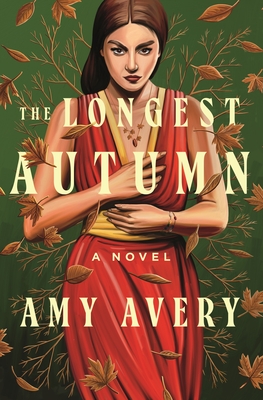
Serena’s Review: “The Longest Autumn”

This post may contain affiliate links for books we recommend.  Read the full disclosure here.

Book: “The Longest Autumn” by Amy Avery

Publishing Info: Flatiron Books, January 2024

Where Did I Get this Book: ARC from the publisher!

Where Can You Get this Book: WorldCat.org | Amazon | IndieBound

Book Description: Tirne is one of four humans rigorously selected to usher the turn of the seasons into the mortal world. Every year, she escorts the taciturn god Autumn between the godly and human realms. Autumn’s seasonal stay among mortals brings cooler weather, changing leaves, and the harvest of apples and gourds until Winter takes his place.

This year, the enchanted Mirror that separates their worlds shatters after Tirne and Autumn pass through, trapping both of them in the human realm. As the endless autumn stretches on, crops begin to fail and the threat of starvation looms. Away from the magic of the gods’ home, Tirne’s debilitating headaches return with a vengeance. Worse, Autumn’s extended stay in the human realm turns him ever more mortal and vulnerable, stirring a new, forbidden attraction to Tirne.

While the priesthood scrambles to find a way to reassemble the Mirror, Tirne digs into the temple’s secrets and finds an unlikely ally—or enemy—in the enigmatic sorcerer and master of poisons, Sidriel. Thrown into a world of mystery, betrayal, and espionage as she searches for the truth, might Tirne lose her morals, her hard-earned position, and the illicit spark between her and Autumn?

Review: I have to say, I barely made it past the cover on this one. I don’t know what it is, but it doesn’t read “fantasy” to me. Instead, it looks more like some sort of historical, literary fiction type book (nothing wrong with those, just not my preference!). But once I actually looked at the book description itself, it definitely sounded like something up my alley! I’ll be curious to see if other readers had similar feelings. We all say not to judge a book by its cover, but in reality, that’s the first thing a perspective readers sees and, try or not, they make a lot of assumptions about the type of book it will be based on this initial glance. And, while this book wasn’t a perfect book for me, I do think there are a good number of fantasy readers who will enjoy this, and I’d hate for them to miss it simply because the cover looks like what you’d find for another book entirely.

When thinking back on my reading experience of the book, I find myself coming away with the thought that I still liked the overall idea of the book more than the actual thing itself. In that, I thought the world, magic, and characters all sounded interesting. There was almost the feeling of it being a re-telling of some ancient Greek myth (though it isn’t). It had nice nods to the struggle of chronic pain, and the approach to romance was more realistic than you often see. However, all of these things still never quite came together the way I liked.

For one thing, I found Tirne to be a very passive character, spending much of her time dealing with her chronic migraines and simply reacting to and trying to survive the various challenges thrown at her. And while I think this kind of representation of chronic pain is useful, it also began to feel as if it was Tirne’s only character trait. Beyond this, it seemed that much of the story’s plot and mystery was hung on Tirne’s struggles to deal with these debilitating headaches. I found myself increasingly wanting more not only from Tirne as a character but also from the story itself. Representation of chronic pain, no matter how good, is not a story in and of itself.

And, while I appreciated some of the nods towards more realistic romances, I also felt mislead on this front by the book’s overall description. I was expecting the love story to play a more important role in the book, but instead I found myself feeling rather adrift, not knowing who I was meant to be rooting for or whether the romance was actually going to be important to the story at all. Things ended in a satisfactory way, but not necessarily in the way that most romance readers will be looking for. So, again, kind of like the cover art, I’m concerned that this book won’t easily find its way to the readers who will most appreciate it. Instead, readers looking for a romantic fantasy story may find themselves a bit disappointed by the love story that is presented here.

I also never felt myself becoming overly invested in any of the side characters. The book is written in first person which can sometimes run into this problem. And its unfortunate that Tirne felt as passive as she did, since establishing a solid main character is the primary strength of this style of writing. But the weaknesses that can be found do often come down to the portrayal of side characters, as we only have the limitations of the main character’s perceptions of them to really paint any sort of picture. This was definitely the case with this book, as I can’t point to a single side character who really stood out to me.

Overall, this book was fine. It was a fast, easy read, but it wasn’t exactly the story I was looking for when I picked it up. Fantasy readers who are less interested in the romance may find themselves enjoying it more. And those looking for a heavy focus on chronic pain may also find this to be a good match for them.

Rating 7: A bit lackluster with its main character, and I felt like there was a bait-and-switch in the overall concept of the book as presented in the description.

Reader’s Advisory:

“The Longest Autumn” isn’t on any Goodreads lists yet, but it should be on Best Books To Read In Autumn.

Serena’s Review: “Once a Queen”

This post may contain affiliate links for books we recommend.  Read the full disclosure here.

Book: “Once a Queen” by Sarah Arthur

Publishing Info: WaterBrook, January 2024

Where Did I Get this Book: ARC from the publisher!

Where Can You Get this Book: WorldCat.org | Amazon | IndieBound

Book Description: When fourteen-year-old Eva Joyce unexpectedly finds herself spending the summer at the mysterious manor house of the English grandmother she’s never met, troubling questions arise. Why the estrangement? What’s with the house’s employees and their guarded secrets? Why must Eva never mention trains, her father, or her favorite childhood fairy tales?

After strange things start happening in the gardens at night, Eva turns to the elderly housekeeper, gardener, and the gardener’s great-grandson, Frankie, for answers. Astonishingly, they all seem to believe the fairy tales are true–that portals to other worlds still exist, though hidden and steadily disappearing. They suspect that Eva’s grandmother was once a queen in one of those worlds.

But Eva’s grandmother denies it all. After a horrific family tragedy when she was young, her heart is closed to the beauty and pain of her past. It’s up to Eva, with Frankie’s help, to discover what really happened, whether family relationships can be restored, and if the portals are closed forever. As she unravels generational secrets, Eva wrestles with the grief of a vanishing childhood–and the fear that growing up means giving up fairy tales forever.

Review: I don’t typically read books on the younger side of YA (or at least, ones that feature characters who are on the younger side, such as 14-year-old Eva in this one). I’ve found that more and more I’ve struggled to connect to YA fiction, especially when it reads on the younger side. There are still ones out there that fully grab my attention, and I can think of a number that rose to truly high levels. But, either it’s me or its the subgenre, but I feel like there have been more and more tropes, and less and less original content. That being the case, I was almost more intrigued to try this book, in that it was well outside of my usual YA fare, brushing shoulders more with middle grade fiction than anything else. And while it didn’t fully work for me, I do think it was a pleasant, satisfying read, especially for those who are looking for a good middle grade fantasy novel.

Let’s start with what I liked! In a lot of ways, this book will read as cozily familiar for classic fantasy fans: you have a mysterious manor house full of nooks and crannies and even more mysterious relatives who hint at secret pasts. It’s clear that the author was influenced by books like C.S. Lewis’s “Narnia” series and similar classic portal fantasies. But while it is referential to other fantasy stories, it also felt unique enough to hold its own. I enjoyed exploring alongside Eva as she discovered more and more about her family history.

That said, for the first 75% of the book, the pacing was fairly sluggish. It’s a long wait to actually see the main character dive into any real action or really put together all that she’s learning. It takes even longer for any of the actual portal fantasy elements to come into play. In this way, it was a bit of a frustrating read for me. However, I can see readers who are less familiar (or less interested in) fantasy feeling differently, that the magical elements were merely sprinkled on top of an interesting family-drama-centric middle grade story.

I also enjoyed the exploration of Eva’s relationship with her grandmother, a relation that has largely been an unknown entity in her life up to this point. As her grandmother’s history was revealed, I was intrigued to learn how her grandmother had ended up where she was and why she had made the choices she did. The idea of a granddaughter helping her grandmother rediscover her belief in fairytales is just as cozy at it sounds.

All of that said, I still struggled to get through this book. For me, I was looking for a bit more action and a bit more time spent in other magical worlds. However, I do think it will connect better for readers looking for a cozy fantasy novel with a strong focus on familial relationships and histories.

Rating 7: More successful as a family history story than a portal fantasy, but I do think middle grade cozy fantasy readers will enjoy this one more than I did!

Reader’s Advisory:

“Once a Queen” can be found on this Goodreads list: YA Novels of 2024

Serena’s Review: “Somewhere in the Deep”

This post may contain affiliate links for books we recommend.  Read the full disclosure here.

Book: “Somewhere in the Deep” by Tanvi Berwah

Publishing Info: Sourcebooks Fire, January 2024

Where Did I Get this Book: ARC from the publisher!

Where Can You Get this Book: WorldCat.org | Amazon | IndieBound

Book Description: Seventeen-year-old Krescent Dune is buried under the weight of her dead parents’ debt and the ruinous legacy they left behind. The only way she can earn enough money to escape her unforgiving island is by battling monstrous creatures in an underground fighting pit. After a fight goes terribly wrong, she’s banned from the pits. Now hopeless, she is offered a deal: in exchange for the erasure of her debts, she must join and protect a hunting party for a rescue mission deep within the mining caves beneath the island.

Krescent is determined to keep her head down and fulfill her role as the dutiful bodyguard, even though she is trapped underground with her childhood enemy and a company of people who would gladly kill her if they knew who her parents were. As they come across creatures she believed only existed in legends, it becomes clear they are in far more danger than she could have imagined. But someone doesn’t want her to make it out alive. And she’ll have to figure out who before she’s left alone… in the dark.

From the author of Monsters Born and Made comes an action-packed South Asian inspired fantasy that will have your heart racing at every turn.

Review: I immediately clicked to read more about this book when I spotted this cover. It’s so unique and strange! Paired with the title, you get a vague sense of a sea creatures, alien worlds, and a sense of wonder and danger. Which, reading more about it, pairs perfectly with the type of story this proports to be! It’s also very original from the covers you typically see for YA fantasy, so it does a good job of allowing the book to stand out from the crowd right off the bat. But let’s get into the book itself.

So, I did struggle with this book, but it was more on the side of my failing to really connect to or become invested in the story itself. Some of this is surely down to my preferences, and other parts of this can come down to weaker elements in the book. But, that said, there were also a lot of strengths and I do think there are definitely readers out there who will like this book.

For one thing, it is definitely a breath of fresh air in the current YA fantasy environment. As much as I love fairytales and witchy fantasy stories, we’ve seen a good number of them over the last few years. But this book treads new ground feeling slightly sci-fi and slightly post-apocalyptic, all while exploring a very unique world made of an island and its deep, dangerous cavern system. I really enjoyed the creative creatures that populated this world, and the culture and society that had been built up around surviving in this sort of harsh landscape. All of these elements also creates the perfect stage on which to place a fast-moving, action-packed plot. The pacing starts out fasts, keeps going fast, and then wraps up fast.

That said, I struggled to really connect to the story that was being told. It is one of those cases where there is nothing actively wrong that I can point to, either in the style of writing or the characterization, but more a situation where everything felt a bit watered down. Krescent Dune (well, I guess I can point to that character name as highly questionable) is your generic YA heroine: strong, brave, but also conveniently obtuse about the motivations of those she claims to know best (we’ll get to that). The writing, for its part, was also…serviceable? Again, nothing wrong with it, but it also felt incredibly generic, with a limited vocabulary and fairly repetitive approach to sentence structure. Like I said, none of it is bad, but it was also the type of writing that doesn’t necessarily draw you in. It tells the story, but not much else.

I also went in with high hopes for the romance. We’ve seen a good number of enemies-to-lovers romances, and of course I love those as well. But I was excited going into this one with the promise of a friends-to-lovers story (I will say that the book description seems to be intentionally misleading on this point, which I find very annoying, especially as romance tropes/types are very subjective as far as what readers do and don’t enjoy). And while I did still appreciate this change in tone and approach to a love story, I was also fairly frustrated by much of it. Like I hinted at earlier, much of the tension in the romance was centered around Krescent’s inability to see what was right in front of her: Rivan’s feelings for her. Of course, there are ways to make this sort of relationship drama work, but I do think it takes a certain skill to create a love story where you main character has to be oblivious to the motivations of someone she knows well without also coming across as a bit of a dunderhead herself. It also wasn’t helped that much of their relationship was completely dependent on the reader being told that they have had this long-standing friendship, more than showing these moments between them.

So, I don’t really know where to leave things. I think that some readers will enjoy this book for sure, but I also wasn’t blown away by anything it had to offer. If you’re highly anticipating this one, definitely give it a shot. But if you’re on the fence, there might be other ones you want to check out first.

Rating 7: While the author created a unique world and had some interesting creatures, I struggled to stay invested in the story.

Reader’s Advisory:

“Somewhere in the Deep” can be found on this Goodreads list: Can’t Wait Sci-Fi/Fantasy of 2024

Serena’s Review: “Unbound”

This post may contain affiliate links for books we recommend.  Read the full disclosure here.

Book: “Unbound” by Christy Healy

Publishing Info: Blackstone Publishing, January 2024

Where Did I Get this Book: NetGalley!

Where Can You Get this Book: WorldCat.org | Amazon | IndieBound

Book Description: Rozlyn Ó Conchúir is used to waiting—waiting for the king, her father, to relent and allow her to leave the solitude of her tower; waiting for the dreaded and mysterious Beast of Connacht to at last be defeated; waiting for the arrival of the man destined to win her heart and break the terrible curse placed on her and her land. So, when she meets Jamie—a charming and compelling suitor—she allows herself to hope that her days of solitude and patience are at long last over.

But as she finds her trust betrayed and with newer, more sinister threats arising, Rozlyn learns that some curses are better left unbroken …

For fans of Hannah Whitten and Rebecca Ross, Unbound is a gender bent re-imagining of the classic tale of a monstrous beast and the beauty determined to tame it, set against the lush backdrop of Irish mythology and folklore.

Review: I’m not really sure which came first: my love of Irish folklore fantasy or my love of Juliet Mariller’s books. I suspect the latter likely lead to the former. Either way, through no real study on my part, I’ve become fairly familiar with Irish mythology, legends, and folk tales/characters, so whenever I spot a book purporting to be about these topics, I’m always eager to check it out and see how it compares to the other stories I’ve read. But, while I’m a big fan of both Hannah Whitten and Rebecca Ross, I sure do wish that Marillier would get her due for books like this! While I can see the similarities to those authors, Marillier’s works are a perfect read-alike to this author’s style and general concept. Plus, she’s a very under-the-radar author who I just wish more fantasy readers were aware of, so I’ll do my part and plug her here now!

I will say, subjectively, I very much enjoyed this one from start to finish; that said, objectively there are some quibbles to be found with parts of it. The style of the writing (very lyrical and fairytale-feeling) is just the sort I enjoy, with sweeping prose and beautiful turns of phrase. Like the best fairytales, the style could take on the tone of a how one might imagine a storyteller presenting the fable to an audience around a fire at night.

However, on the other side of this, there were many blatantly anachronistic aspects to the writing and world-building. These are always tough things to point out about historical fantasy books like this, because if you wanted to, almost every book in the subgenre likely strays outside of the strict boundaries of historical accuracy. Plus, one can always say it’s fantasy, so are there really any historical rules to be applied here and isn’t this just nit-picking? Healy writes in her author’s note that she was conscious of these anachronisms and left them in intentionally, using pretty much this exact reasoning about fantasy. But, on the other hand, she chose to seemingly set this in the “real world” and even included the exact year before each chapter (needed for plotting reasons that we’ll talk about next) which firmly and repeatedly sets it in the reader’s mind that this is in fact taking place at a specific point in history.

I wish, instead, that she had simply created a new world and year system. Really, no great world-building or changes would have needed to be made. Just come up with the name of a fantasy world, make an obviously different calendar system, and ta da! Many of these anachronisms go away! As it stands, many of them will only really be noticeable to those who know a lot about the time period and the import histories of things like chocolate. But others, like the repeated use of the word “okay” in dialogue, really do stand out as distracting.

The inclusion of the years at the start of each chapter heading are very important however, whether using a fictitious calendar system or not, as the story is told in a very non-linear fashion with many jumps forward and backward in time. Now, I’m on record through my various reviews as enjoying this sort of fragmented story-telling. I enjoy meeting characters who clearly have a long, complicated history with one another and then jumping around through their stories to slowly piece together how they came to be in this state. I think, when done right, it can create some excellent stakes to the plot right from the start. But it also requires the reader to trust that the author will bring answers eventually and be patient with not understanding exactly why characters say and do what they do currently. So, for some readers, this may be a challenging read, as the story does very much jump around in time between the current situation, the past, and then, even more strange, a several-centuries-long jump that comes about halfway through the book. Even for me, this half-way-through jump and the introduction of new characters was a big ask on the author’s part. It all ties together nicely, but I think some readers might struggle to stick it through.

I also do not like the fact that this book has been marketed as a gender-swapped “Beauty and the Beast.” If you squint, yes, you can see how the promoters got there, but there are really no elements of the actual plot of that tale to be found in this book. It’s more, we seem to have come to the point where anytime there is ever a vaguely (reallllly vague sometimes) monstrous character and a love story, marketers can’t help but shout “Beauty and the Beast re-telling!” at the top of their voices, forgetting that a “re-telling” implies that the story itself should be similar to the original fairytale. It’s misleading to readers to call books like this re-tellings and more likely to result in disappointed readers leaving negative reviews and thus out-pacing any gains that had been hoped for in using this fairytale as a lure in the first place! It’s even more frustrating in this case because there are actual Irish folklore characters that are obviously the inspiration for much of this book.

So it’s tough to sum this all up. I did enjoy this book, overall. I think the writing was fairly high for a debut novel, and I’m especially looking forward to any future books by the author when, perhaps, some of my quibbles will be improved upon. I think there were a few stylistic choices that a good editor could help with. And then, as far as the plotting, I do think it will be challenging to some readers, but it worked for me, so it’s something to keep in mind going in, whether or not this will work for you!

Rating 7: Overall, a very solid debut book, though I do wish some work around had been used for the anachronism, either changing the world itself or editing out some of them.

Reader’s Advisory:

“Unbound” can be found on these Goodreads lists: Fairy Tales for Grown Children and Fantasy Romance.