Kate’s Review: “Before The Fall”

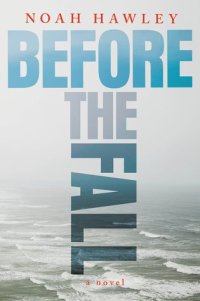
26245850Book: “Before the Fall” by Noah Hawley

Publication Info: Grand Central Publishing, May 2016

Where Did I Get This Book: The library!

Book Description: On a foggy summer night, eleven people–ten privileged, one down-on-his-luck painter–depart Martha’s Vineyard headed for New York. Sixteen minutes later, the unthinkable happens: the passengers disappear into the ocean. The only survivors are Scott Burroughs–the painter–and a four-year-old boy, who is now the last remaining member of a wealthy and powerful media mogul’s family.

With chapters weaving between the aftermath of the tragedy and the backstories of the passengers and crew members–including a Wall Street titan and his wife, a Texan-born party boy just in from London, a young woman questioning her path in life, and a career pilot–the mystery surrounding the crash heightens. As the passengers’ intrigues unravel, odd coincidences point to a conspiracy: Was it merely dumb chance that so many influential people perished? Or was something far more sinister at work? Events soon threaten to spiral out of control in an escalating storm of media outrage and accusations–all while the reader draws closer and closer to uncovering the truth.

The fragile relationship between Scott and the young boy glows at the heart of this novel, raising questions of fate, human nature, and the inextricable ties that bind us together.

Review: For the past couple of years I have been OBSESSED with the FX show “Fargo”. I love the movie, but the show has knocked it out of the park the two seasons it has been on, with a third coming up in the nearish future. I seriously can’t wait because I LOVE this show, and I love how it portrays the deep and violent underbellies of Minnesota life. While still being so damn Minnesotan.

giphy5
(source)

Little did I realize that Noah Hawley, the showrunner for that series, is also an author. I didn’t realize this until after I had checked out his most recent novel “Before The Fall”, and once I did I was pretty damn excited and even more intrigued by it. Hawley has a skill for writing and creating complex and nuanced characters, as seen in Bear and Peggy and Molly and Lorne Malvo on the show he’s in charge of. It shouldn’t be much surprise that he brought that same skill and nuance to a number of his characters in “Before The Fall”. Well, a few of them anyway.

Since the cast is characters is pretty big and their fates sealed from the get go, Hawley only has to really show a little bit of motivation for how each person got on this ill fated plane, and what role, if any, they played in it’s crash. Much of the focus, however, is on former addict and down on his luck painter Scott, an artist with a need to try and understand tragedy and accidents even before he survives a plane crash. Scott is by far the most interesting character in this book, because it is mostly through his eyes that we see the aftermath of such a tragedy. I liked Scott as a character, a pretty good guy trying to figure himself out who finds himself the center of a tragedy, and the person that everyone is trying to get answers from. He wasn’t necessarily a hero in a stereotypical sense; he did what he could in an emergency and was able to save himself and J.J., the four year old lone survivor to a media fortune. But of course the fact he isn’t perfect or the ideal heroic figure, that works against him in the eyes of some, which was a fascinating angle to take. He is a wonderful foil to Eleanor, J.J.’s aunt through his mother, who has been thrust into motherhood while in intense grief. Both Scott and Eleanor care very deeply about J.J., but neither of them really know how to adjust to their new roles that have been heaped upon them, be it hero or mother. It seemed kind of on the nose that Eleanor’s husband Doug was just the worst, more interested in dollar signs than his wife or nephew as they navigate their grief, but he just goes to show that Eleanor is strong, and deep. Perhaps his two dimensional characterization is just there to bolster her when she can stand on her own two feet, but I liked having a clear person to hate, so that’s fine!

And along with that, we see how the world tries to make sense, and tries to point fingers towards blame, and how the media (especially media with vested interests in outcomes) can drive a narrative. The media has been accused of influencing people’s opinions a lot lately, especially in the sense of putting info out there that isn’t totally true, or is flat out false. “Before The Fall” focuses a lot on this plot point, as one of the victims, David Bateman, was the head of a Fox News-esque network that is very controversial because of how it spins things or emphasizes sensationalism over facts. The face of the network, Bill Cunningham, is both incredibly stereotypical and yet one of the more intriguing character in the book, as his need to know what happened to his friend and mentor completely clouds his already super cloudy professional judgement. This of course leads to a very bloodthirsty Witch Hunt that his viewers, and other media, partake in. On one hand you feel for him because he’s very clearly in mourning, but on the other he’s such a bastard for exploiting this tragedy for ratings that you can’t help but hate him as well. So yeah, a bit stereotypical, but at the same time you kind of have to wonder about him. He never really gets a full exploration like many of the other players, but isn’t just flat and boring in his wretchedness like Doug. Friggin’ Doug.

I enjoyed how this book slowly revealed the backstories of the victims of the plane crash, showing the things happening in their immediate lives right before their deaths, or in some cases the events that REALLY put them on this path. I do think that it was kind of a fizzle out in some ways, however, as while we get all this background, so much of it doesn’t really end up being totally relevant to the plot and the outcome. But then, that in and of itself is kind of perfect, because that’s the point. Sometimes things happen, randomly, coincidentally, and these things may not actually matter in the long run, at least at the end of all things. These things may just happen but other things outside of your control can change your destiny. That’s the problem Cunningham never quite figures out, and while some may find it to be pointless, I find it poignant as all get out. And so very “Fargo”.

So while it ended up taking me on a long chase and sometimes superfluously, I did end up really enjoying “Before The Fall”. The twists and turns were a fun ride, and I liked how it ended even if it wasn’t what I have come to expect from thriller mysteries such as these. I say check it out.

Rating 8: A well characterized thriller with a lot of interesting plot paths. Though some characters are flat and obvious, many are very intricate and fascinating, and the ideas the book explored were very good.

Reader’s Advisory:

“Before the Fall” is included on these Goodreads lists: “Best Books of Secrets”, and “What She’s Reading This Summer”.

Find “Before The Fall” at your library using WorldCat!
Serena’s Review: “Den of Wolves”

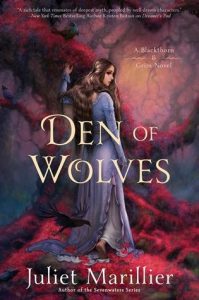
22567184Book: “Den of Wolves” by Juliet Marillier

Publishing Info: Roc, November 2016

Where Did I Get this Book: I bought it!

Book Description: Healer Blackthorn knows all too well the rules of her bond to the fey: seek no vengeance, help any who ask, do only good. But after the recent ordeal she and her companion, Grim, have suffered, she knows she cannot let go of her quest to bring justice to the man who ruined her life.

Despite her personal struggles, Blackthorn agrees to help the princess of Dalriada in taking care of a troubled young girl who has recently been brought to court, while Grim is sent to the girl’s home at Wolf Glen to aid her wealthy father with a strange task—repairing a broken-down house deep in the woods. It doesn’t take Grim long to realize that everything in Wolf Glen is not as it seems—the place is full of perilous secrets and deadly lies…

Back at Winterfalls, the evil touch of Blackthorn’s sworn enemy reopens old wounds and fuels her long-simmering passion for justice. With danger on two fronts, Blackthorn and Grim are faced with a heartbreaking choice—to stand once again by each other’s side or to fight their battles alone…

Review: I had this book pre-ordered on Amazon, so it showed up the day after it was released, and I was ready. Door closed. Husband, I’ll see you later. I’m going to READ THIS BOOK NOW.

Per the usual, Blackthorn and Grim’s lives are once again caught up in the mysteries of their neighbors. These two never get any peace! This time it comes in the form of a neighboring landholder, Tola, his daughter, a mysterious stranger, and a fantastical heartwood house that Grim is recruited to help build. After befriending the outcast and half-crazed builder, Bardan, Grim begins to suspect a dark secret lingering between the builder and the lord Tola. Blackthorn, for her part, befriends Tola’s daughter, Cara, whose fears of failure and disapproval severely impact her ability to speak to others, but who has a fey-like connection to the woods of her home in Wolf Glen and the birds that inhabit it.

This book follows the established format laid out in the first two stories. Chapters alternate between Blackthorn and Grim’s perspectives, as well as that of a third party character. Here, we have both Cara and Bardan’s perspectives, though Cara is given more page time than Bardan. His own narrative being one filled with confusion, amnesia, and a prevailing madness, Bardan’s chapters only begin to become clear as the story and mystery unfolds, making this uneven allotment more understandable. Cara’s chapters were very enjoyable, over all. Her character is one who is crippled by anxiety, and she represents a unique voice in a story like this, providing insight into challenges that many people face outside of a fantasy setting.

In the first two books, my main criticism (not that it was a strong one or that there were many to begin with) was with these side narrators. Oran was, quite simply, rather boring in the first book. And in “Tower of Thorns,” Geiléis revealed herself as a slightly unsavory character right from the beginning. With both of these, their chapters often felt frustrating, leaving me wanting to rush through to get back to Blackthorn and Grim. Here, Bardan, but especially Cara, are much more enjoyable characters on their own, alleviating some of this tension between page time given to their own stories and that of our main characters.

The mystery itself was a bit easy to guess. I’ve read a lot of Marillier’s books, so this could be simply due to the fact that I am very familiar with her storytelling and the ties she creates between the tale being told in the book itself and the mini folktales often sprinkled within. That being said, I still very much enjoyed watching things unfold, and there were still a few unexpected twists thrown in at the end.

Blackthorn and Grim are, of course, the main selling point of this entire series and that remains true in this book. I didn’t go through and count pages, but I felt that Grim’s narrative was more prominent than  Blackthorn’s in this story. At the very least, he’s closer to the action. But given the events of the last book, most notably the emotional revelations that came through on Grim’s part, I felt like this book needed to give Blackthorn more space from the action to reflect on herself and her own feelings and relationship with Grim. So, while this may have left her a bit more disconnected from solving the mystery itself (though she definitely plays a large role, don’t get me wrong), I was very satisfied to follow her more introspective story arc.

My one criticism of this book comes down to outside factors beyond the story itself. Marillier’s publisher only signed a contract for a three book series, though the author set up the books to be a longer-running series. With that in mind, she needed to write this book in a way that it could stand either as the end of a trilogy or as a middle point in an ongoing series should the publisher decide to pick it up for more. This created a very awkward position for the book to inhabit. Parts of the story felt rushed, particularly with regards to Blackthorn’s ongoing vendetta against the high lord who did her such wrong in the past. And, even, the progression of her relationship with Grim, while still very satisfying, did at times also feel that it might have benefited from an additional book to properly complete the slow-burn approach laid out in the first two novels.

The ending does its job though. It can serve as the final part of a trilogy, but does leave the door open for sequels, should the publisher so choose. Obviously, I would love to read more of this series. Blackthorn and Grim are both very unique narrators to the genre, both being older, more broken individuals than are commonly seen. Either way, however, this book did not disappoint, and I will happily shelve it right next to all of the other Marillier books I have bought (which is all of them).

Rating 9: Loved it! The only mark against it is its need to serve as two things as once, both the final third of a trilogy or the middle book of a series.

Reader’s Advisory:

“Den of Wolves” is a new book and isn’t on many Goodreads lists yet, but it should be on “Irish Myth and Folklore.”

Find “Den of Wolves” at your library using WorldCat.

Previously Reviewed: “Dreamer’s Pool” and “Tower of Thorns”


Kate Re-Visit Review: “Transmetropolitan (Vol.1): Back on the Street”

22416Book: “Transmetropolitan (Vol.1): Back on the Street” by Warren Ellis, Darick Robertson (Ill.)
Publishing Info: Vertigo, 1998

Where Did I Get This Book: I own it.

Book Description: After years of self-imposed exile from a civilization rife with degradation and indecency, cynical journalist Spider Jerusalem is forced to return to a job that he hates and a city that he loathes. Working as an investigative reporter for the newspaper The Word, Spider attacks the injustices of his surreal 23rd Century surroundings. Combining black humor, life-threatening situations, and moral ambiguity, this book is the first look into the mind of an outlaw journalist and the world he seeks to destroy.

Review: I’m going to be honest, readers. I was utterly dismayed and ashamed of the way that our Presidential Election ended up. And angry. And as I woke up the next morning and confirmed the news, on friend Kevin had a post on his Facebook wall involving “The Smiler” from the comic series “Transmetropolitan”. More on him as the series goes on. And in that moment, I knew that I needed to re-read that series. Be it inspiration, perfect timing, or personal therapy, I went to my book shelf and grabbed “Back on the Street”. I needed Spider Jerusalem in that moment. And re-discovering him and his strange, obscene, and digitized future that’s drenched in filth, insanity, greed, and cynicism, was a small comfort. Because God, did I miss Spider.

“Transmetropolitan (Vol.1): Back on the Street” throws us into a future scape where humans have evolved technologically, but have fallen into absolute indifference, moral squalor, and a very divided society. Spider Jerusalem is a journalist who is in self-imposed exile up in the mountains. And he doesn’t even come back because he wants to make the world a better place, or to bring the ethics and integrity of journalism back to the forefront in a corrupt society. Oh no. He comes back because he owes his publisher some books he hasn’t written and he doesn’t want to get sued. Boy is he resentful of this fact. And that is the heart of Spider Jerusalem. He hates the society that he has been forcefully thrown back into, and even though he is at his heart a good person, he is so cynical and bitter and pissed that he doesn’t even like the fact that he’s a good person. He has a drinking problem, he has a drug problem, and he has a foul mouth and a sour attitude. But he is by far one of the most endearing comic book characters I have ever encountered in all the years I’ve read comics. Though in Volume 1 we haven’t quite gotten into the heart of the series, it is already giving hints as to what to expect while still speaking for itself. “Back on the Street” is an arc that could easily stand on its own two feet, and give us a story and a moral that we could get behind and be comfortable with. I love Spider and I love how snarky and Hunter S. Thompson-y he is (I mean, it’s pretty common knowledge that he’s an homage to that amazing Gonzo journalist), and he makes me smile and laugh just as much as he makes me think. He is a hero that this world needs, a madman who is just mad enough to take on the madness of the world that he lives in. His shining moment is when he exposes the police violence towards a group of disenfranchised people called Transients, people who have taken on mutated Alien qualities who are trying to live their lives in peace in one small part of the city. As the police rain down violence upon them, Spider jumps in and broadcasts it to the world, speaking up and fighting for their right to exist, in his own brash and evocative Spider way. You cannot help but stand up and cheer as you read his musings against politics corruption, and the media. He is so well written and so well rounded, a flawed but inspirational character with a lot to say about the world he lives in and the world we live in too.

Spider aside, the setting that Ellis has created is so damn perfect and layered. The City (no further name given so that it can be any city) is filled with so many different and strange people, all of whom are frantic and overbearing. It’s dirty and anxious and you get a sense of unease being in it. Ellis’s City is really a character in and of itself, a personality that is basically unbearable within a place that I would never, ever want to live. Ellis has also made a number of really great supporting characters that manage to shine through past Spider and his grandiosity. You have his greedy and opportunistic boss, Royce, who takes Spider onto his team, albeit nervously. There’s Spider’s Cat, a two faced mutant feline with just as bad an attitude as Spider. But my very favorite this far is Channon, Spider’s assistant whom he met when he took shelter in a strip club while covering a volatile story. Channon could have easily been the butt of jokes at her expense, being a former sex worker and the straight man to Spider’s antics, but she is a force to be reckoned with who provides an anchor to him and a voice of reason he must listen to. Channon is the best and I love the balance she brings to the story. If it was just Spider being crazy, yeah, it would probably get a bit old. Channon humanizes him, but doesn’t neuter him. It’s a great dichotomy.

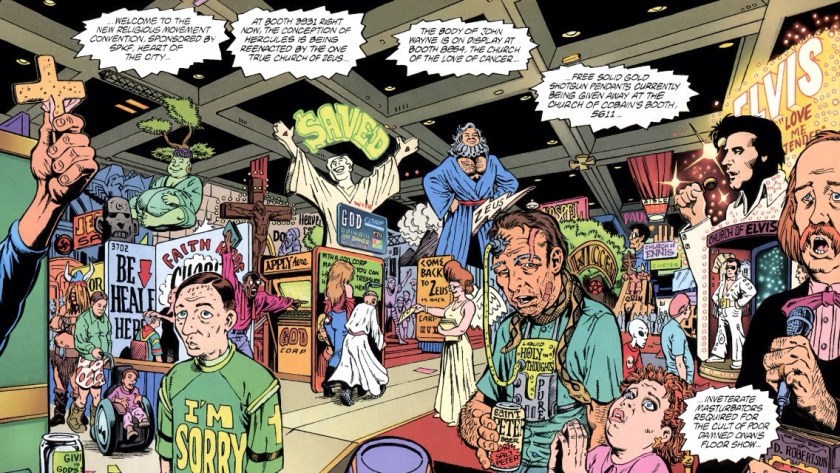
And finally I need to talk about the art. I LOVE the style that Darick Robertson brings to this story. His pictures of The City are so fraught with confusion and insane details, you can see so many different stories nad messages in just one frame.

x0paigw
(source)

I mean, holy crap. Just look at this. There is so much to see, and there is so much going on, but it never really crosses the line into too much. I love the style because it feels like it matches the content. Over the top and edgy, but filled with a lot of heart.

And I would be remiss if I didn’t talk about the introduction of our first main antagonist: The Beast, aka the President of the United States. Just one question for Warren Ellis: are you a soothsayer, sir?

spider
Too real. (Vertigo Comics)

So I bet you can understand why I felt a need to go back and re-read this book.

“Transmetropolitan (Vol.1): Back on the Street” is the beginning to an amazing series, and I had totally forgotten just how fun it right from the very start. It’s just what I needed. It’s vulgar and it’s brash and over the top, but it’s so darn therapeutic. And it’s a classic. Welcome back into my life, Spider Jerusalem.

Rating 10: A biting and hilarious satire of politics and journalism, “Transmetropolitan (Vol.1): Back on the Street” is a wonderful start to a classic and tremendous series. Spider Jerusalem endures.

Reader’s Advisory:

“Transmetropolitan (Vol.1): Back on the Street” can be found on the following Goodreads lists: “Best of Cyberpunk”, and “Bibles for the Revolution”.

Find “Transmetropolitan (Vol.1): Back on the Street” at your library using WorldCat!

Joint Review: “One Was Lost”

28321033

Though we do tend to read different genres, there is sometimes overlap in the books that we pick up and devour. When this happens, we decide to do a joint review, giving our thoughts through our own personal lenses of what we look for in reading material. When we were putting together our October Highlights post, we discovered that we each had picked this book. Obviously, a joint review was in order!

Book: “One Was Lost” by Natalie D. Richards

Publishing Info: Sourcebooks Fire, October 2016

Where Did We Get this Book: the library!

Book Description: Damaged. Deceptive. Dangerous. Darling. Are they labels or a warning? The answer could cost Sera everything.

Murder, justice, and revenge were so not a part of the plan when Sera set out on her senior camping trip. After all, hiking through the woods is supposed to be safe and uneventful.

Then one morning the group wakes up groggy, confused, and with words scrawled on their wrists: Damaged. Deceptive. Dangerous. Darling. Their supplies? Destroyed. Half their group? Gone. Their chaperone? Unconscious. Worst of all, they find four dolls acting out a murder—dolls dressed just like them.

Suddenly it’s clear; they’re being hunted. And with the only positive word on her wrist, Sera falls under suspicion…

Serena’s Thoughts

Whelp, I knew going in that this book was either going to be a great hit or potentially a big miss for me. A little background: I grew up in a very, very rural part of northern Idaho. I’m talking “only had an outhouse/had to sno-mobile 5 miles in during the winter/wood stove for heat and cooking/solar power/etc” type of remote. That  being the case, I spent large portions of my childhood running around in the woods with my sister. So, for one, the woods aren’t a natural “fear factor” for me. And for two, I grew up learning a lot about how to survive in these types of situations. All of that said, because of this, I always find myself gravitating to books like these that focus on the experiences of others in the woods, just because I love the setting. But that also means that I approach these types of stories from a hyper critical standpoint, which isn’t the book’s fault. So I have to spend a lot of time balancing my personal reaction to a book like this against that of the average reader. But, since we’re joint reviewing this, Kate will be here to give her perspective as the  non “woodland wild child” reader!

But first, I don’t want to give the impression that this book was a complete failure for me. I feel like the main cast of characters were very likable. They were a diverse group (if perhaps a bit too stereotypical), and I liked the attention that was spent addressing the difference challenges that each of these teens had faced in the typical highschool experience. Sera herself was a very good narrator. While the writing and voice were rather simplistic, she was likable and for the most part I was fully on board with her as a protagonist. There was an interesting backstory with her mother and with the impact that this relationship has had on Sera’s own life and sense of self. I wish there had been even more on this, as the ending felt a bit rushed with her ability to resolve what has to be a huge, ongoing personal conflict. There was also a romance that, while I still don’t feel that it was necessary and had an overly dramatic backstory that proved to be a let down when it was revealed, wasn’t as terrible as I first suspected. Just wish there was less of it.

But, as I mentioned in the beginning of this post, I had some very specific issues with this book, and what frustrates me the most is that much of it comes down to poor research on the author’s part. Look, I know this book is about teens out in the wilderness and that, due to this, they aren’t going to know all the ins and outs of wilderness survival. However, they make SO MANY WILDLY BAD DECISIONS!

About a third of the way in, after they wake up with the words written on their wrist, there are a few chapters that are made up of just one bad decision after another. There’s the very basics that most people know: never wander off. If you’re completely lost, stay put. Here, not only are they not lost, but they have a perfectly good trail with only a three days’ walk out, which in the grand scheme, really isn’t much. So it’s a million times more stupid to instead go wandering out into the wilderness with the hope that you might not get turned around and you might find the road and maybe rescuers will find you even though you are now putting miles between yourself and where they would know to look.

Then there are more specific things that are just common sense. Obviously, water is your most important priority (after not wandering off! And not fixating on food, which they do. Obsessively. For the record, you can live three weeks without food and do not, in fact,  start feeling massive effects after ONE DAY).  And maybe, maybe, river water is a safer bet than water that is being left for you by a madman who has ALREADY POISONED YOUR WATER ONCE! Any bacteria in a river (if there even is any, fast moving water is usually a safe bet as long as it’s not draining directly out of a cow field) is going to be curable once you’re found. And if you’re not found…you have bigger problems.

And then, just because you shouldn’t camp near a river that may flood, this does NOT somehow make it too dangerous to follow (civilization is found near water). Like, what do they think is going to happen? The river is somehow going to instantaneously flood enough to take them out in seconds if they’re walking along it? Walk a ways above the water line, for crying out loud.

The story was much stronger when it simply focused on the thriller aspects and left aside any survival choices. After this initial string of events ends, the mystery/thriller aspects picked up again and I was able to shut my brain off for a good portion. And if it had maintained this until the end, I might have given the book a pass. Unfortunately, near the end, it lost me again with what was the last straw for me as far as poor research goes. Sera has a cut hand. They find peroxide to put on it. And then there are several paragraphs about how horribly painful it is applying the peroxide….

957
Annndd…I’m out. (source)

Peroxide is painless. The author clearing didn’t do one iota of research and simply failed to spend the time differentiating between rubbing alcohol and peroxide. Which, look, I get that it’s a small thing. But after all the rest, it was the final straw to my patience with this book. If you, an author, are going to write a survival story about teens in the woods, it is not too much to ask that you do basic research. And I, the reader, expect more. There was some more nonsense about finding a 4 wheeler but not leaving immediately because “Omg, cliffs!”…as if headlights aren’t a thing. And the fact that they find a RV along with the 4 wheeler, but somehow  there are no roads (how did it get there??) necessitating said wandering in the woods. And…I was done with the book at this point.

Kate’s Thoughts

And then there’s me, City Girl Kate! I was raised in the city, by two parents who grew up on farms and decided that nature just wasn’t their bag once they could escape it. So nature isn’t MY bag either! And therefore, I went into “One Was Lost” with less knowledge about what the dos and don’ts are when it comes to wilderness trekking and survival. While some of the obvious mistakes jumped out at me, most of the others Serena mentioned went right over my head. I’d probably die in the woods, because I’m pretty clueless.

giphy4
Oh, you can drink fast running water? Huh! (source)

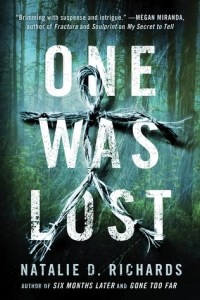
So I guess I was kind of able to go in with less critical eyes in my head, at least when it came to the survival skills trope. HOWEVER, when it came to horror tropes and thriller plot points, I too had a harder time swallowing “One Was Lost”. I was hoping for some kind of “Blair Witch Project” story (For crying out loud, the cover alone is a nod to it), but sadly it didn’t quite live up to the expectations that I placed upon it. Perhaps unfairly, but placed upon nonetheless.

I did like the characters that we followed, I want to make that perfectly clear. Sera was a relatable and interesting protagonist, whose baggage is kind of unique when looking at YA protagonists. I liked her backstory and I thought that it was believable enough to explain some of her reasoning and decisions she made down the line, as well as parallel some of the revelations as they were exposed. I agree with Serena that the romance she had with Lucas was a bit unnecessary, though I did like Lucas and the foil he provided when verbally sparring with Sera. Emily and Jude were also interesting enough, though we didn’t get to see as much of either of them so they fell a bit more into their stereotypes (Emily as the quiet victimized girl, Jude as the spoiled and privileged adoptee. Side note, I think Jude could have been VERY interesting being a transracial adoptee of two gay men, but that wasn’t focused on at all). I think that their introductions were a little rushed, as we pretty much hit the ground running. As the plot kept going and as they all found themselves in worse and worse situations, I got a pretty good idea as to what was going on, at least in terms of who was probably harassing them and stalking them. Maybe not in the bigger picture as to motive, granted, but I called who the culprit was long before the big reveal. I know that I’m a horror girl and a thriller girl, and I know what to look for. But there were things that tipped me off and they are things that have been seen in many, many other stories of both genres.

I also found myself rolling my eyes when the urban legend/ghost story that was told had to do with “Cherokee Spirits” living in the woods. Jeeze. Why is it that sometimes these stories feel a need to trot out Indigenous stories while totally butchering them? It was uncomfortable for me, especially given the recent dust up with “The Continent”. Luckily this was kept to a minimum, but really, it shouldn’t have been in there in the first place.

So for me, “One Was Lost” was also a disappointment, though I did like Sera and the personal journey that she went through. I just wish that this book had done more, because the potential really was there, and I wish that some choices that were made had been taken out before publishing.

Serena’s Rating 5: A strong premises and lead character, all foiled by very poor research that kept kicking me out of the story.

Kate’s Rating 5: I liked the characters and I liked the backstory, but the plot was a bit too predictable for me, and some of the storytelling devices were a bit aggravating.

Reader’s Advisory:

“One Was Lost” is a new book so it isn’t on many Goodreads lists yet, but it should be on “Wilderness Horror Stories.”

Find “One Was Lost” at your library using WorldCat!


Serena’s Review: “The Girl Who Raced Fairyland All the Way Home”

18961360Book: “The Girl Who Raced Fairyland All the Way Home” by Catherynne M. Valente
Publishing Info: Feiwell and Friends, March 2016

Where Did I Get this Book: the library!

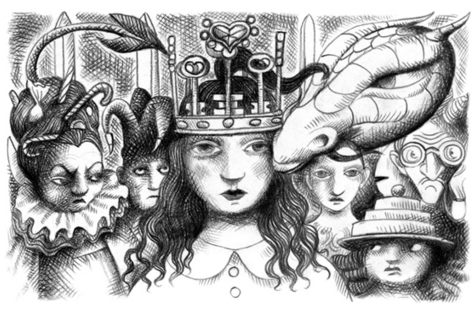
Book Description: Quite by accident, September has been crowned as Queen of Fairyland – but she inherits a Kingdom in chaos. The magic of a Dodo’s egg has brought every King, Queen, or Marquess of Fairyland back to life, each with a fair and good claim on the throne, each with their own schemes and plots and horrible, hilarious, hungry histories. In order to make sense of it all, and to save their friend from a job she doesn’t want, A-Through-L and Saturday devise a Royal Race, a Monarckical Marathon, in which every outlandish would-be ruler of Fairyland will chase the Stoat of Arms across the whole of the nation – and the first to seize the poor beast will seize the crown. Caught up in the madness are the changelings Hawthorn and Tamburlaine, the combat wombat Blunderbuss, the gramophone Scratch, the Green Wind, and September’s parents, who have crossed the universe to find their daughter…

Review: I delayed it for a few months, but here we are at last, woefully at the last book in the “Fairyland” series. But there are two things bolstering my spirits after finishing this series. 1.) It ended on such a great note! Always a concern that somehow something so good will be bungled and tarnished forever by a whiff on the ending. And 2.) now that it has been finished, and finished so well, I can happily go out and purchase the entire series and re-read them to my heart’s content!

Per my usual review method for this series, I’m going to include some of my favorite quotes from the book. If I’ve said it once, I’ve said it a million times: the writing in this series is so beautiful and has to be its biggest selling point.

“One of the awful secrets of seventeen is that it still has seven hiding inside it. Sometimes seven comes tumbling out, even when seventeen wants to be Grown-Up and proud. This is also one of the awful secrets of seventy.”

We’ve watched September grow up throughout these books. If the theme of the entire series could be summed up, it would be: growing up is a terrible, onerous process and then once you get there, you realize it was all kind of a hoax to begin with. Throughout all of the books, I very much enjoyed Valente’s razor sharp views on childhood. It’s all too easy to let childhood morph into a time and place of wildflowers and carefree days, and as adults forget the truly awful parts about it. The helplessness, the lack of freedom, the unassuredness, the constant changes both in yourself and in how the world see/treats you.

“We have all of us got it jumbled up. You never feel so grown up as when you are eleven, and never so young and unsure as when you are forty. That is why time is a rotten jokester and no one ought to let him in to dinner.”

New to this book, we meet Septemeber’s parents and her Aunt more fully! The interlude chapters document their journey. It was particularly enjoyable reading about their experiences, both in Fairyland and as the ones who were left behind by a wandering September. We always hear about the kids who get swept off to magical lands, but nothing about the poor parents who are left missing their children. Further, the reminder that these same parents and adults were once children and had adventures of their own.

“The Land of Parents is strange and full of peril.”

While Hawthorne and Tamburlaine do play a role in this story, it was again September’s story and her friends that we follow throughout the book. However, Blunderbuss, the combat wombat, plays a much larger role than I had expected and it was awesome. She is by far the best new addition to group from the last few books. Her acerbic wit and blunt way of speaking often provided the most hilarious bits of the story. And her contribution to the ending was as surprising as it was welcome.

“You gotta be nice to strangers even when they are the worst, because they don’t know you well enough to understand how shut your big face can mean I’ve missed you more than the whole world can know.”

And, finally, I cannot end this review without talking a bit about my darling pairing of September and Saturday. I have to say, this was my biggest concern about the story and one of the reasons I held off reading this book for so long. How could this be resolved in a way that wasn’t going to be heart breaking somehow? And, while the ending wasn’t anything like I could have expected, it was so, so satisfactory. So, go forth dear readers without fear on this account!

“The tales lovers tell each other about how they met are hushed and secret things. They change year by year, for we all meet many times as we grow up and become different and new and exciting people–and this never stops, even for a minute, even when we are ninety.”

I really can’t rave enough about this book. While “The Boy Who Lost Fairyland” was very good, it did feel like a step away from the Fairyland books that I had come to love. So I was a bit concerned when starting this one that maybe the magic had worn off just a little. But this book comes roaring back, and I would say it most closely rivals my love of the first book in the series. When/if I have children, this series will definitely be making an appearance on the must-read-aloud list. If you like fantasy, especially of the sweet and nonsensical kind, ala “Alice in Wonderland,” don’t miss out on this series!

And with that…

“Endings are rubbish. No such thing. Never has been, never will be. There is only the place where you choose to stop talking. Everything else goes on forever.”

19312407

Rating 9: An amazing story on its own, but also an unexpected and poignant ending to the series as a whole.

Reader’s Advisory:

“The Girl Who Raced Fairyland All the Way Home” is included on this Goodreads list: “own the Rabbit Hole in Children’s Fantasy” and Best Chapter Books for Young Girls

Find “The Girl Who Raced Fairyland All the Way Home” at your library using Worldcat!

Previous Reviews: “The Girl Who Circumnavigated Fairyland in a Ship of Her Own Making” and “The Girl Who Fell Beneath Fairyland and Led the Revels There,” and “The Girl Who Soared Over Fairyland and Cut the Moon in Two” and “The Boy Who Lost Fairyland”

Kate’s Review: “The Women in the Walls”

28367592Book: “The Women in the Walls” by Amy Lukavics

Publishing Info: Harlequin Teen, September 2016

Where Did I Get This Book: The library!

Book Description: Lucy Acosta’s mother died when she was three. Growing up in a Victorian mansion in the middle of the woods with her cold, distant father, she explored the dark hallways of the estate with her cousin, Margaret. They’re inseparable—a family.  

When her aunt Penelope, the only mother she’s ever known, tragically disappears while walking in the woods surrounding their estate, Lucy finds herself devastated and alone. Margaret has been spending a lot of time in the attic. She claims she can hear her dead mother’s voice whispering from the walls. Emotionally shut out by her father, Lucy watches helplessly as her cousin’s sanity slowly unravels. But when she begins hearing voices herself, Lucy finds herself confronting an ancient and deadly legacy that has marked the women in her family for generations.

Review: Halloween seems like it was so long ago, and yet I’m still digging into the books that I put on my list for Horrorpalooza that didn’t quite make the cut, timing wise. True, it was a long list so that’s to be expected. The next one that didn’t quite get the timing right is “The Women in the Walls” by Amy Lukavics. Lukavics wrote one of my favorite horror stories last year, “Daughters Unto Devils”. It was one of the scariest books I read last year, and it was a reminder that YA horror can have serious chops if you get the right writer. Seriously, horror fans need to check it out and how. So I was very excited when I found out that she had another one coming out, and digging into it was something I was very much looking forward to.

I think that there were a couple of mitigating factors that made this book not as engrossing as “Daughters Unto Devils” was, specifically that I was reading it during Election Week. And hey, let’s be honest, given how I felt about how that all went down, it would have taken a SERIOUSLY engrossing and charismatic read for me not to be totally distracted and brought down while reading it. But at the same time, “The Women in the Walls” just didn’t quite hook me the way that “Daughters Unto Devils” did. True, I can’t be sure if the extenuating circumstances had any blame, but as I read this book I wasn’t as scared or enthralled as I’d hoped to be. To begin, I didn’t feel as much of a connection to Lucy, or protagonist, as I wanted to. I understood her plight and sympathized for her, of course, but I didn’t feel like there was much heart to her through actions as much as her narration told me why there was heart to her. That is one of the perils of first person narration. I didn’t want Lucy to tell me that she was close with her aunt Penelope, or that she was best friends with her cousin Margaret, or that she resented her Dad because he was keeping secrets from her. I wanted to see it through action. I also just wasn’t as empathetic to her as I was probably supposed to be, and some of her character traits seemed a bit trite and just there to foster sympathy as opposed to give her actual depth.

But, the good news is that this book does have a lot of really scary and creepy moments and themes in it. Lukavics still doesn’t hold back when it comes to putting some upsetting imagery in her stories. Be it a desolate cemetery in the middle of the woods, a faded blood stain on an attic floor, or a bag full of human teeth, there were many moments where shivers were sent up my spine. She took a few old hat tropes and made them fresh and interesting, which is definitely a plus for me. She also does a very good job of building dread and letting unsettling moments slowly evolve into something that is so far beyond what you’d expected. There are definitely some parts of this book that made me squirm, and I don’t squirm that easily. So as a pro-tip, I would just suggest that if you have a thing about insects, well….. tread carefully.

giphy3
I have a thing about insects…(source)

I love that Lukavics has the guts to put some Stephen King levels of fear and shocks into her books for teens, because I think that some teens (especially seasoned horror fans) want to have scarier and grittier stories. I would have loved to have these books when I was a teen, as seeing teen girls in horror literature wasn’t something that I was used to back then because if I wanted horror, I had to go to the adult section. To be fair, YA literature wasn’t as prominent when I was that age, but even these days a lot of the teen horror is pretty tame and wouldn’t have satiated me even then. By having books like Lukavics’ available it says that this is a genre that can be for you too, ladies. Okay, soapbox moment here. Horror as a genre is still kind of a Boys Club in a lot of ways, so getting women writers in there to write books that teen girls are going to read really brings me great joy. Even if some of the stuff in this book also had me totally yucked out. I know it’s strange, but to me that’s a good thing.

So I guess that while I wasn’t as invested in this story as I had hoped I would be, I still did enjoy quite a bit about “The Women in the Walls” and what it gives to the genre as a whole. I’m definitely still considering myself a fan of Lukavics’, and I will be seeking out whatever books she puts out there. This is the kind of YA horror I want to see.

Rating 6: Though I wasn’t too fond of the main character and though it sometimes was too on the nose, I enjoyed the scary and horror moments of “The Women in the Walls” quite a bit.

Reader’s Advisory:

“The Women in the Walls” isn’t really on any Goodreads lists yet, but it would fit in on the following lists: “Haunted Houses”, and “Gothic YA”.

Find “The Women in the Walls” at your library using WorldCat!

Serena’s Review: “The Copper Promise” Part 4: “Upon the Ashen Blade”

19858251Book: “Upon the Ashen Blade” by Jen Williams
Publishing Info: Headline, January 2014

Where Did I Get this Book: the library!

Book Description: Demons and gods, revenge and lies, and still the dragon moves slowly north. Wydrin, Sebastian and Frith now have the tools that could end the destruction, but a vast army lies between them and victory, and time is running out. The race is on to stop Y’Ruen before all of Ede is under her flame.

Review: We’ve arrived at the the fourth and final novella that makes up “The Copper Promise” and our heroes have a lot to do. Wydrin: save her brother’s life. Sebastian: figure himself out and deal with the pesky little demon he’s sold his soul to. Frith: complete his journey to not being an unlikable, arrogant, ass while escaping a crow god. All: deal with the dragon bent on destroying the world with her fire and brood army. So, you know, a reasonable task for about 110 pages of story!

As mentioned in the last review, we were left on cliffhangers in all three stories. But not to fear, these were wrapped up fairly quickly at the beginning of this. So, too, our merry band were speedily re-united. While I enjoyed the three separate storylines for each that we got in the last book (a bit to my surprise!), I was very happy to have our heroes back together. It has become more and more clear that Wydrin is who has been holding things together for her and Sebastian for the last few years. Not only does he make very bad decisions without her (as we saw last time), but the guy is just too serious for his own good and has some major self-esteem issues to work through. Wydrin’s sense of humor, and sense of support, were badly needed by both him and Frith.

Frith’s cliffhanger was solved a bit too easily for my taste, but, due to the page count and long list of tasks mentioned above, this wasn’t all that surprising. It did lead to another mini adventure for the group that I very much enjoyed. The settings and magic systems that these novellas use have a very “classic high fantasy” feel to them that is refreshing in this day and age. All too often, fantasy now reads very dark, grim, and full of anti-heroes and political maneuvering.

giphy2
Yes, yes, but sometimes can’t we just have fantasy fun?? (source)

I particularly enjoyed the pieces of this story that came together through connections to the previous three novellas. The added chapter perspectives from the point of view of the members of the brood army paid off in a great way, particularly in bits where there were clever nudges to the reader that weren’t picked up on by our unknowing heroes. And Frith’s backstory was resolved in a satisfactory manner. I wasn’t quite sure where the author was going with this for a while, as the storyline seemed sprinkled in amidst the larger plot conflict of the dragon in strange ways at times.

I really only have two complaints. The first is completely unsurprising and expected: this section was too short to do justice to the many dangling storylines left to be wrapped up. Especially, I would have liked more time with Sebastian and the brood army since the relationship between the two was built up quite a lot in the second and third story. My second complaint has to do with a portion of Wydrin’s story that I felt was ultimately taking up page time that could have been used elsewhere (in the aforementioned Sebastian/brood army bits, or in the epic battle at the end, or simply in giving more time to the evolving relationship between Wydrin and Frith). Really, there were plenty of places that could have used the page time, and I had largely forgotten about this antagonist already. There were elements here that tied into the resolution of the entire story, but I wish there had been a way to deal with this in a manner that didn’t take up as much time. Or maybe just make the whole section longer, and I wouldn’t have cared as much about the pages devoted to this section if they had no impact on the other story components.

Struggles with the limited page time allotted to ending this novella series aside, I very much enjoyed this last entry in the series. I would guess that to read this oneself, you are most likely to come across “The Copper Cat” edition that includes all four novellas. As I mentioned in my first post, I’m not sure how successful this story would be if approached as a traditional fantasy novel in one pieces. The pacing would be strange throughout the entire book, and the changes in storytelling would be very jarring (having the brood army chapters in there for 100 pages without any explanation and then suddenly disappearing, then having another 100 page section told with the three different plots lines, etc). I think the author/publisher would have done themselves a favor if it had been marketed more clearly as a compilation of four novellas. As it stands, without doing extra research and discovering this for oneself, many readers could be left with a bad taste in their mouth simply due to these pacing challenges. It’s really too bad. A simple note on the cover along with marked section titles would have done the trick. But, especially if one goes in knowing this to begin with, I would highly recommend this to readers who enjoy more traditional, slightly campy fantasy adventure stories.

Rating 8: A good ending, though too short to fully do the many plot points justice.

Reader’s Advisory: 

“Upon the Ashen Blade” isn’t included on any lists on its own, but the compilation “The Copper Promise” is on this list “Books You Wish More People Knew About.”

Find “Upon the Ashen Blade” at your library using WorldCat!

Previously Reviewed:Ghosts of the Citadel” and “Children of Fog” and “Prince of Wounds”

Kate’s Review: “Outcast (Vol.2): A Vast and Unending Ruin”

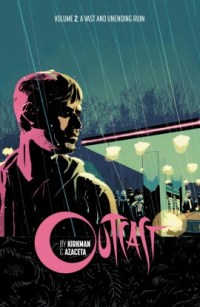
25570825Book: “Outcast (Vol.2): A Vast and Unending Ruin” by Robert Kirkman, Paul Azaceta (Ill.).
Publishing Info: Image Comics, October 2015

Where Did I Get This Book: The library!

Book Description: Kyle Barnes has been plagued by demonic possession all his life. In light of recent revelations, he finally feels like he’s starting to piece together the answers he’s looking for. But while he feels a new sense of purpose… is Reverend Anderson’s life falling apart?

Review: In the last collection of “Outcast”, it was pretty clear that the first few comics in this series were laying the groundwork for everything that was going to come after. I was willing to be patient for Volume 1, but I hoped that Volume 2 we’d start seeing more than a brooding Kyle, an earnest and somewhat zealous Anderson, and those around them. I’m pleased to say that “A Vast and Unending Ruin” definitely put it’s characters into the thick of it’s first story arc. The set up is done and we are seeing how it’s all fitting together! Which is a good thing, because I’ll be honest, it was getting a little tiresome to have so much set up in Volume 1 without seeing that much payoff.

One of the biggest developments in “A Vast and Unending Ruin” is that while Kyle and Anderson are definitely on the same side in this battle between themselves and the demons that are possessing those around them, it’s made very clear that they have very different opinions of how to handle and proceed. While Anderson is thinking in the terms of good vs evil and God vs Satan, Kyle isn’t totally convinced that it’s as clear cut as that. Anderson thinks that any of the consequences are going to be positive so long as the person they are trying to help is freed from the demonic grasp, a narrative that is very prevalent in your typical demonic possession story. While there are some vessels that do end up okay in the end (a la Regan McNeil in “The Exorcist”), there are others who do not (a la Emily Rose in “The Exorcism of Emily Rose”). While sometimes these stories would make you think that so long as they are no longer possessed, everything is okay, because they are now being welcomed into heaven and their soul is saved. But Kyle doesn’t buy that, as he has seen those who haven’t turned out okay, like his mother. It’s easy for Anderson to say that all is well, but Kyle’s mother has been in a catatonic state for years now. So how can he agree with that? This conflict between the two main protagonists is going to be interesting as time goes on, especially since Kyle isn’t totally convinced that this is just a Biblical kind of situation. It’s an interesting theme to tackle, and hopefully it’s sustainable for awhile, at least until the next big conflict comes.

I also think that it’s important to talk about the women’s roles in this one since I touched on it the review of Volume 1. I’m happy to say that there was some expansion when it came to the lady characters in “A Vast and Unending Ruin”, as we finally got to see Allison interact with Kyle in person, not just with him calling and hanging up. Allison is torn, as she still loves her ex husband, but believes that he attacked their daughter, Amber, and nearly killed her. The ultimate tragedy of this whole situation is that it was actually Allison who attacked Amber while in a state of possession. Kyle took the fall for this, as his whole life demons have been hurting those he loves most, and the only way to keep Allison and Amber safe is to keep them away from him. This interaction gave Allison more depth, as she is neither the wife who is all forgiving, nor it she portrayed as a shrew or a bitch. I felt that her conflict of emotions, fear for their daughter and anger at Kyle versus her emotions for him that linger, made perfect sense based on what she believes to be true. I knew it would be hard to portray that conflict she’s facing, but Kirkman did a very good job writing it. We also got to see a bit more with Mildred and her connection to Sidney (who continues to be fairly mysterious, though we are starting to see some of his motivations), which just raises more questions. But the person that I’m most concerned about, character wise, is Megan, Kyle’s sister. Remember how I said that she didn’t seem like someone who needed to be rescued, despite her back story? Welllllll, I take that back now, given one of the plot points that happened in this collection (no spoilers here, though I’ll probably HAVE to talk about it come Volume 3, so keep that in mind). I’m one of those people who definitely takes issue with women being used as tools to make male characters upset or hurt or vengeful, and I’m really worried that Megan is going to be the second female in this story (along with Kyle’s mother) to fall victim to something terrible in order to make him more brooding and sad. But, we aren’t there yet! So there’s still hope it doesn’t go in this direction…

So overall, I am still enjoying “Outcast” with Volume 2, as it has started to expand on it’s story and we’re seeing the first bits of conflict beyond just exposition. There are still lots of questions to be answered, but it feels like we’re on the track to discovering at least part of what is going on. I’ll be going on to Volume 3 in the nearish future!

Rating 8: The story is finally progressing a bit faster, and we’re getting some more well thought out character development. I have issues with how Megan’s character may be going, but I’m going to give it the benefit of the doubt for now.

Reader’s Advisory:

“Outcast (Vol.2): A Vast and Unending Ruin” isn’t on many Goodreads lists that match the themes, so like I said before, if you like “Hellblazer”, “Hellboy”, and “Chilling Adventures of Sabrina”, this is similar.

Find “Outcast (Vol.2): A Vast and Unending Ruin” at your library using WorldCat!

Previously reviewed: “Outcast (Vol.1): A Darkness Surrounds Him”.

Who Rules The World? Girls!: Books With Women Who Kick Ass

Look, no mincing words here. We’re very disappointed with how last weeks Presidential Election turned out. We’re sure you guys can guess why, though that shouldn’t be too hard because the list is long and terrifying. But there were a few small glimmers of hope on Election Night. In our own Minnesota, Ilhan Omar became the first Somali-American  to be elected to the Minnesota House. Tammy Duckworth won the Senate seat in Illinois. And Kate Brown secured the Governorship of Oregon. In honor of the women who didn’t win and the women who did, we’ve put together a list of books with inspirational women, be they fictitious or not, to share with you all.

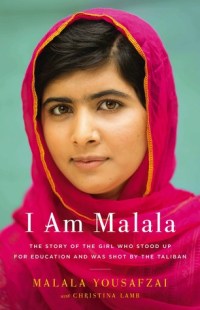
17851885Book: “I am Malala” by Malala Yousafzai and Christina Lamb

Publication Info: Little, Brown and Company, October 2013

At fifteen years old, Nobel Peace Prize recipient Malala Yousafzai was an outspoken activist for women’s and girls’ education in Pakistan. At the time the Taliban had moved into her home country and had started imposing that girls not be allowed to go to school, and Malala spoke against this. It was because of this that she was shot in the head while riding a bus to school. She survived, and her story has taken the world by storm, putting a spotlight on education for women the world over. Malala’s memoir details her life before her activism, the fallout after her attempted murder, and how she continues to strive and fight for the right for girls to go to school. It’s poignant, inspirational, and incredibly relatable, and you see her courage and determination in her writing and storytelling.

5960325Book: “Shanghai Girls” by Lisa See

Publication Info: Random House, May 2009

Starting in pre-WWII Shanghai and moving through the Red Scare era of Los Angeles, “Shanghai Girls” tells the story of two remarkable Chinese women who live and fight against adversity. Pearl and May are sisters growing up in 1930s Shanghai and having the time of their lives. But then their father informs them that he has sold them as brides to pay off his debts, and they are going to marry two Chinese men who are moving to Los Angeles. But before Pearl and May can join their husband (in Pearl’s case) and future husband (in May’s), the Japanese invade. Their fight for survival in China is devastating, and their adjustment to life in America is jarring. But both Pearl and May show strength and resolve in spite of the horrors and hardships that fall upon them, and their fight against oppression of all kinds will inspire you.

5805Book: “V for Vendetta” by Alan Moore and David Lloyd
Publication Info: Vertigo, 1990

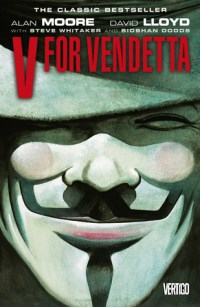
Though many people probably immediately think of V, the Guy Fawkes mask wearing vigilante, in the groundbreaking comic by Alan Moore, “V for Vendetta” also features Evey Hammond, his mentee turned critic turned partner. Evey turns from a victim within the dystopic London she lives in to someone who is actively fighting against the oppressive system, and could be argued to be the true protagonist in this story. V is very much the symbol of the revolutionary ideals at their most extreme. Evey is there to show how a normal woman can take power back in her life and help lead a revolution, and not only shape it, but claim it as her own and keep it going. She has her moments of self doubt and struggle, and questions the morally ambiguous decisions that come before her. She’s a tough gal with a lot to relate to.

2767052

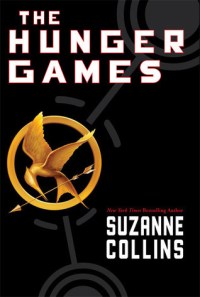
Book: “The Hunger Games” by Suzanne Collins

Publication Info: Scholastic Press, September 2008

Okay, so maybe this is an obvious one. But it’s hard to deny that Katniss Everdeen from District 12, aka The Girl on Fire is a force to be reckoned with within her story. A girl who comes from humble beginnings in a poverty stricken society offers herself up to a battle to the death to save her sister, only to spark a revolution. Sure, the love triangle is a bit much, and sure, last book in the series has a lot of criticism thrown its way, but Katniss is always a well rounded and reluctant hero, with realistic problems and a fortitude that leaps off the page. “The Hunger Games” is the start of her journey, and Katniss really is at her best here.

25953369Book: “Hidden Figures” by Margot Lee Shetterly

Publication Info: HarperCollins World, September 2016

So many stories have been suppressed and removed from history when it comes to scientific achievement, and a new book and movie are making waves about some ingenious women who made their mark in the mathematics field. A group of African American women working for NASA were some of the pioneers behind the space race, working numbers and data that would eventually propel rockets into the air and send man into space. Though their story has been overlooked for a long time, a newly published book shows that these women were essential to the propulsion of the American Space Race. If you like science and STEM things along with American history, this could be the book for you.

28502749Book: “Rad Women Worldwide” by Kate Schatz and Miriam Klien Stahl (Ill.)

Publication Info: Ten Speed Press, September 2016

Why have one or two awesome ladies in a book when you can have a whole lot of them?! In this collection of biographies and essays, a large number of women from all over the world are given their time in the spot light. The backgrounds run the gamut, from artists (like Frida Kahlo) to musicians (like punk icon Poly Styrene to world leaders (like Hatsepshut). This collection for younger readers will open a world of really neat ladies who will inspire kids for all kinds of reasons.

There are, of course, many more super inspirational books about women, fiction and non fiction alike. What are some of your favorites? Let us know in the comments!


Serena’s Review: “The Queen of Attolia”

40158Book: “The Queen of Attolia” by Megan Whalen Turner

Publishing Info: Greenwillow Books, April 2000

Where Did I Get this Book: the library!

Book Description: Revenge
When Eugenides, the Thief of Eddis, stole Hamiathes’s Gift, the Queen of Attolia lost more than a mythical relic. She lost face. Everyone knew that Eugenides had outwitted and escaped her. To restore her reputation and reassert her power, the Queen of Attolia will go to any length and accept any help that is offered…she will risk her country to execute the perfect revenge.

…but
Eugenides can steal anything. And he taunts the Queen of Attolia, moving through her strongholds seemingly at will. So Attolia waits, secure in the knowledge that the Thief will slip, that he will haunt her palace one too many times.

…at what price?
When Eugenides finds his small mountain country at war with Attolia, he must steal a man, he must steal a queen, he must steal peace. But his greatest triumph, and his greatest loss, comes in capturing something that the Queen of Attolia thought she had sacrificed long ago…

Review: Well, as predicted, I’m well on my to zipping through this entire series well before the publication of the newest book (expected sometime next spring). But I just can’t help myself!

Coming off the strength of the last book, I was very excited picking up this book to discover what new adventures Gen would get himself into next! So I was a bit dismayed when I soon realized that the format of this book has changed from the first. “The Thief” was told from Gen’s first person perspective. This book is not only told from a third person perspective, it also has widened the cast to include chapters from other characters. But I should have had faith! This book was even better than the last, and this change in format is largely responsible for the improvements.

The first person perspective often seems like the more intimate style of storytelling. You’re living fully in a character’s head, so of course readers feel more closely connected to a character written this way. However, as I’ve discussed before, there are also limitations to this type of storytelling. Here we see the strengths of the third person approach. In many ways, it better suits the type of story that Whalen Turn is trying to tell. After pulling the rug out from under readers the way she did at the end of the first book, the author couldn’t use the same trick twice. We all know how clever Gen is and won’t be fooled again! Or will we…

A third person perspective and the increased use of other characters allowed the plot to become that much more intricate, especially given the shift in tone that this story takes. The first was largely an adventure/heist story. This is political intrigue, and very smart political intrigue at that. Often in YA, political intrigue seems to be dumbed down to such an extent that you can barely call it “intrigue.” Not so here. And the added character perspectives, most notably, those of the Queen of Attolia, add so much to this broadened take on the relationships between our main characters and the countries they rule.

I can’t say enough how impressed I am with the tale that was built for the Queen of Attolia (the character, not to be confused with the title of the book itself!). After the first book, I had her comfortably slotted into the “evil queen” character type and nothing more. Low and behold, Whalen Turner had miles more of character development in store for her.

And, of course, I can’t end this review without specifically talking about Gen. While we get less of him, I feel that by the end of this book, I understood this complex, flawed, but brilliant character that much more. The author makes a very brave choice with regards to Gen early in this book, and I was thrilled that she didn’t take any easy outs with how she dealt with the fallout of this choice. Honestly, like I said earlier, I thought that after being fooled once I would be enough on the look out to spot plot developments in this book. But not so. I was shocked when it happened, and even more shocked with the brilliant way that Whalen Turner faced her building narrative straight on, all while cleverly pulling the wool over readers’ eyes.

I can’t rave enough about this series. There is a lot more political maneuvering in this book than in the first (and than is often found in YA fantasy). But these days, with “Game of Thrones” at the the height of its power, I feel that this series is primed for a resurgence.

Rating 10: Brilliant plotting, complex characters, gutsy risk taking that pays off!

Reader’s Advisory:

“The Queen of Attolia” is included on these Goodreads lists: “Political themed YA fiction” and “Most Intelligent Plots.”

Find “The Queen of Attolia” at your library using WorldCat.

Previously Reviewed: “The Thief”