Serena’s Review: “The Knife of Never Letting Go”

Book: “The Knife of Never Letting Go” by Patrick Ness

Publishing Info: Walker, May 2008

Where Did I Get this Book: own it

Book Description: Prentisstown isn’t like other towns. Everyone can hear everyone else’s thoughts in an overwhelming, never-ending stream of Noise. Just a month away from the birthday that will make him a man, Todd and his dog, Manchee—whose thoughts Todd can hear too, whether he wants to or not—stumble upon an area of complete silence. They find that in a town where privacy is impossible, something terrible has been hidden—a secret so awful that Todd and Manchee must run for their lives.

Review: I read this book way back when it first came out, but given that the movie adaptation, “Chaos Walking,” is coming out soon, I thought now was the perfect time for a revisit. As it has been over ten years since my first read, I only remembered a few very basic things about the overall plot and style of the book. So really, it was almost like an entirely new experience this go around! One thing stayed the same, however: I really like this book.

Todd’s world is one filled with Noise. Where animals speak their simple animal words and men project their every thought in blasts of emotion, there is no escape from the barrage. But so has life always been for Todd, the youngest member of a town of settlers who came to this planet hoping for a new life. Instead, what they found was tragedy and challenge. Or so Todd has been told. But only weeks before Todd is set to become a man and join the rest of the town as a full-fledged adult, he discovers something that shouldn’t exist: a spot of silence in a chaotic world. And with that discovery, his entire understanding of his world, his people, and his history is blown wide open, and he finds himself running for his life.

The first thing that stands out when reading this book is the style of writing. It’s first person perspective, which is unique enough, though less so in YA. But more notably, the narration is very much written in a stream of conscience style. Todd’s thoughts are hectic, incomplete, with short bursts of feeling, sprinkled with hints of description only when needed. It’s definitely the sort of style that takes a bit of time to get used to. By necessity, the world-building and history of the story comes out in small tidbits seemingly dropped in at random. Todd’s habit of often starting sentences only to stop them can be frustrating at times. But this also all adds to the tension and chaos that is inherent to this world. All on its own, this style of writing does more to convey what life would be like on this strange planet where men’s thoughts are projected out for all to see than any elaborate description ever could.

The short, quick style of writing also effectively illustrates the tension and drive that is at the heart of this story. Todd spends the majority of the book fleeing, and the hectic style of the sentences almost makes it read as if he is panting out these lines as he tries to catch his breath while running, always running. The story is a fast read, though, and I blew through the entire thing in almost a day.

It’s hard to talk about much in this book without revealing one secret or another. There are a few reveals that I think were projected well-enough that many readers will pick up on them. But there were others that served as legitimate surprises. By the end, there also seemed to be a decent about of history and reveals that were simply left to be discussed in the next book. Ness really doesn’t make much of an effort to even pretend that this book could be read as a standalone story, and it definitely ends on a big cliffhanger, so be warned that if you start it, you’re pretty much committing to the entire trilogy!

Todd is an excellent character in his own right. He can be just as frustrating as he is endearingly naïve. And alongside the reactions to extraordinary circumstances, we also see the fact that he’s just a teenage boy, with all of the conflicting motivations and emotions that come with that. Much of Todd’s narration is fixated on the fact that he will become a man, according to the traditions of his colony, in about a month’s time. So, too, then the story is focused on the messy, painful process of Todd actually making this transition in the story.

As I said, this story is definitely written as the first in a trilogy. It’s a fast read, full of action and heart-break, and I already have the next two books purchased and downloaded onto my Kindle. I’m also really excited to see what the movie version has to offer, and I think Tom Holland is perfectly cast (though what isn’t he amazing in??)

Rating 9: A deceptively action-packed story hides a emotional wallop behind its unique style of writing.

Reader’s Advisory:

“The Knife of Never Letting Go” is on these Goodreads lists Books that should get more attention and Teenagers . . . IN SPACE!

Find “The Knife of Never Letting Go” at your library using WorldCat!

Serena’s Review: “We are the Fire”

Book: “We are the Fire” by Sam Taylor

Publishing Info: Swoon Reads, February 2021

Where Did I Get this Book: Edelweiss+

Book Description: In the cold, treacherous land of Vesimaa, children are stolen from their families by a cruel emperor, forced to undergo a horrific transformative procedure, and serve in the army as magical fire-wielding soldiers. Pran and Oksana―both taken from their homeland at a young age―only have each other to hold onto in this heartless place.

Pran dreams of one day rebelling against their oppressors and destroying the empire; Oksana only dreams of returning home and creating a peaceful life for them both.

When they discover the emperor has a new, more terrible mission than ever for their kind, Pran and Oksana vow to escape his tyranny once and for all. But their methods and ideals differ drastically, driving a wedge between them. Worse still, they both soon find that the only way to defeat the monsters that subjugated them may be to become monsters themselves.

Review: Two books in a row that I requested based on intriguing covers! Plus a bunch of other things of course: fire magic, a central romance, and whatever those antlers are that they’re wearing in the cover art! This is the first book for this author, so it’s also always nice to support a new voice to the genre. While I did have some criticisms of the story in the end, overall, this was a fun, fast read.

Pran and Oksana share the same tragic story as most of their fellow soldiers: forcibly stolen from their families at a young age and then experimented on and trained to be fire warriors. Not only are the experiments that give them their abilities painful and cruel, there’s no guarantee they’ll even survive their training, all for the privilege of fighting for a nation that has invaded their own lands. But Pran and Oksana aren’t content to simply survive; they want to do away with the entire system. The struggle that follows will test their individual abilities and strengths as well as the heart of their relationship itself.

To start off, this book was very readable. A weird bit of praise for a book that is mean to be, you know, read, but it’s something that more than enough books still fail at anyways. The writing was perhaps simple, but it moved at a quick pace and I found myself blowing through the story in only a day or two. The story of two soldiers forced into battle and working against a tyrannical system and ruler is compelling and the action is tense. The story also doesn’t shy away from the brutality of the world it has built. I originally started questioning whether the book was actually going to demonstrate how bad things were (our hero and heroine escape horrible situations a few times too many to be entirely plausible), but the author really goes there about half way through with a pretty dark scene. It’s a weird thing to say, but I think this book might have benefited from leaning even more into this darker aspect of the story.

Like I alluded to earlier, Pran and Oksana, as interesting as they are as characters, did seem to have pretty obvious plot armor throughout the story. All main characters have this to some extent, but it depends on an author’s ability how well this fact can be masked. Here, it was less so. But simply as characters, Pran and Oksana do well enough. We see how the way they were forced into service has impacted all of their decisions going forward, for better and for worse. Their various relationships with the idea of family and the homes that they left behind drive them each to imagine a better life but direct them down very different paths to accomplish it.

I also liked the fact that the romance is already established at the beginning of the book. Yes, drama is added to give an arc to this relationship, but a story built around the challenges found in a previously strong romance is definitely unique among so many others that focus only on the beginnings. I could have used a bit more fleshing out, here, however. The story refers back to a few scenes that build up how these two came together, but perhaps a extending these into actual flashbacks might have helped make the romance feel more fully fleshed out as a whole.

My main criticism of the story is a bit hard to put my finger on. I think what it comes down to was that everything was a bit too simply described. There are the broad strokes of a world. The broad strokes of a magic system. The broad strokes of characters and their motivations. But I never felt like I was getting any details. I couldn’t describe the fort in which they lived. I couldn’t tell you what any characters looked like other than Pran and Oksana (and even there all I really knew for sure was that Oksana had red hair and what we see on the cover). I didn’t have a good sense of scope of the nations they each came from. It felt a bit like the author was writing a “just the fun bits” type of novel. I have read and liked a good number of fan fiction pieces, so I don’t say this as a heavy ding, but it kind of felt like those stories can: a bit simplistic with an over emphasis on the main characters’ inner thoughts and feelings at the detriment of fleshing out the world and story itself.

But like I said, this was a fun, fast read, if not fully realized. Fans of romantic fantasy who don’t require much deep world-building or intricacy to their magic systems will likely enjoy this book. Also, fans of the show “The 100″…the cover art looks bizarrely like Bellamy and Clarke, I think. A ship that I followed until it crashed and burned, so this was a bit like fan fiction in that sense too: wish fulfillment.

Right?! You see it too!

Rating 7: A sweet romance if a bit unsupported in other aspects of the story.

Reader’s Advisory:

“We are the Fire” is on these Goodreads lists: Monsters and Magic Society and YA Fantasy Standalone Books.

Find “We are the Fire” at your library using WorldCat!
Serena’s Review: “Fireheart Tiger”

Book: “Fireheart Tiger” by Aliette De Bodard

Publishing Info: Tor.com, February 2021

Where Did I get this Book: Edelweiss+

Book Description: Quiet, thoughtful princess Thanh was sent away as a hostage to the powerful faraway country of Ephteria as a child. Now she’s returned to her mother’s imperial court, haunted not only by memories of her first romance, but by worrying magical echoes of a fire that devastated Ephteria’s royal palace.

Thanh’s new role as a diplomat places her once again in the path of her first love, the powerful and magnetic Eldris of Ephteria, who knows exactly what she wants: romance from Thanh and much more from Thanh’s home. Eldris won’t take no for an answer, on either front. But the fire that burned down one palace is tempting Thanh with the possibility of making her own dangerous decisions.

Can Thanh find the freedom to shape her country’s fate—and her own?

Review: I’ll admit that this was another book that pulled me in on the strength of the cover art alone. I mean, that’s just a gorgeous cover, and there’s no second opinion about it! The description comparing it to “Howl’s Moving Castle” and “The Goblin Emperor” couldn’t help but add more intrigue. Plus, it’s a novella, which I haven’t read one of for quite a while. Unfortunately, it didn’t quite live up to all of those expectations!

Life as a political hostage is not easy, but then no one ever expects it to be. More surprising for Thanh, a princess returning home at long last, is that her homecoming proves to have its own set of challenges. Haunted by a first love now thrown back in her path who sees her own path forward, Thanh begins to understand that she will need to evolve. As a passive hostage, her life had been simple. But as princess, wielding great power and responsibility, she has choices, some of which could impact the future of her entire country.

While I can think of several good examples of novellas that I’ve read in the past (Seanan McGuire’s entire “Wayward Children” series, for example), unfortunately, this book highlights much of how to do them wrong. With the strict word count limit imposed on writing a shorter story, the author has to be incredibly efficient with world-building and character development. And even then, you can’t spend too much time on it, necessitating that both the world, story, and character are fairly interesting and compelling on their own from the very start. And in these key areas, this book fails the test.

Particularly, Thanh herself is a fairly paper-thin character. She doesn’t stand out in any bad ways, but she’s also not very interesting and lacks the charisma needed to drive a short story like this. Her lack of a strong voice makes the necessary info-dumping portions of the story stand out more than they should. Beyond that, I found the character to be a bit unlikable, seeming to wallow in self-pity more often than not and easily distracted by her own personal dramas over the larger state of affairs going on around her.

I also was very uninvested in the love interest and romance of this story. We simply aren’t given enough here to care. Ephteria’s attraction is almost entirely contained in the author’s telling rather than showing style. She has blue eyes…that’s about all we get. But Thanh spends pages upon pages obsessing over her, and the readers are stuck there with her, just not understanding why. The thin depiction of this relationship is mirrored in Thanh’s other relationships as well, with her mother, and with another young girl she befriends.

Beyond this, the writing didn’t work for me. I found it often to be jarring and uninspired, pulling out cliches when you’d most expect them and not helping to build any tension as the story worked its way through its plot points. The dialogue was at times particularly egregious, with some of the villains just one mustache-twirl away from being comical.

There may have been a good story here somewhere if the author had had more word-count to work on. But I’m also not convinced that the characters, world, or overall plot could have supported an increased page count. It’s kind of a chicken or the egg thing: did the page count limit the creativity of the characters and flow of the writing, or were these aspects weak on their own and would have just struggled more in a full-length novel?

Rating 6: Pretty disappointing overall. Though the cover is still one of the best I’ve seen in a while.

Reader’s Advisory:

“Fireheart Tiger” is a new title so it isn’t on too many Goodreads list, but it is on Upcoming 2021 SFF Books With Female Leads or Co-Leads.

Find “Fireheart Tiger” at your library using WorldCat!

Serena’s Review: “The Dragon Republic”

Book: “The Dragon Republic” by R. F. Kuang

Publishing Info: Harper Voyager, August 2019

Where Did I Get this Book: from the library!

Book Description: Three times throughout its history, Nikan has fought for its survival in the bloody Poppy Wars. Though the third battle has just ended, shaman and warrior Rin cannot forget the atrocity she committed to save her people. Now she is on the run from her guilt, the opium addiction that holds her like a vice, and the murderous commands of the fiery Phoenix—the vengeful god who has blessed Rin with her fearsome power.

Though she does not want to live, she refuses to die until she avenges the traitorous Empress who betrayed Rin’s homeland to its enemies. Her only hope is to join forces with the powerful Dragon Warlord, who plots to conquer Nikan, unseat the Empress, and create a new republic.

But neither the Empress nor the Dragon Warlord are what they seem. The more Rin witnesses, the more she fears her love for Nikan will force her to use the Phoenix’s deadly power once more.

Because there is nothing Rin won’t sacrifice to save her country . . . and exact her vengeance.

Previously Reviewed: “The Poppy War”

Review: I read “The Poppy War” over the summer. And while I really enjoyed it (it even made it onto my Top 10 list for the year!), it was also a super hard read. Kuang doesn’t back away from the awful realities of war, and how often the innocents are the ones to suffer the worst. That being the case, while I knew I wanted to continue with the series, I had to give myself a break before getting to the next one. So, about six months later, now is the time! Plus, the third book just came out a month or so ago, so I want to get to that one in a somewhat timely way.

The Poppy War has ended due to the extreme measures taken by Rin at the end of the last book. But the Empress remains and Rin’s vengeance has not been completed. However, even a powerful fire shaman such as herself cannot take on the Empress alone. Not to mention the opium she has been using to control the Phoenix’ voice in her head has consumed more and more of her life. When she’s approached by the Dragon warlord to join a new cause, a new war, Rin sees her only path forward. And is a soldier without a war, anyways? Rin’s not sure she wants to find out.

I enjoyed this second book even more than the first. In “The Poppy War,” there was a bit of a jarring tonal shift from the first half which read like a boarding school/coming-of-age story and the second half that was pure war and pure devastation around every corner. It got darker and darker and ended pretty much in the darkest place yet. This second book not only had to move Rin’s story forward from a seemingly impossible personal low, but it also must set up Rin’s path forward in her path for vengeance against an almost all-powerful foe. And while it fully explores the challenges of both of these things in very satisfying ways, that’s all covered in about the first third of the book! And instead, the author takes us into an even more complicated brewing conflict where Rin’s abilities could be the crux of everything.

The story once again dives into the complicated nature of warfare, loyalty to one’s country, and making the tough decisions when weighing the balance of the greater good. For one thing, it explores whether “the greater good” is even a thing in these types of decisions. Alongside these themes, however, this book also explores concepts of religion and cultural power with the introduction of the Hesperians, a sophisticated society that has largely stayed out of previous wars but are beginning to makes moves in this book. Rin is a great character to explore these themes alongside. While she has shamanic powers, she’s by no means devote. She can see both the appeal and the danger in these others with their monotheistic faith.

There were also a bunch of twists and turns in this story. At this point, I’ve come to assume that almost every person in power is terrible, only telling part of the truth, and looking to exploit Rin somehow. But I never can quite pin down the intricate motives and histories that behind the decisions everyone is making. What’s more, we had some pretty big reveals about side characters in this book that I definitely didn’t see coming at all! Rin’s own story took a few pretty massive shifts that I didn’t expect, and I loved it all.

I also appreciated that, while this book is still dark, it wasn’t quite as tough to get through as the first one. This could also be simply because I was more prepared for what I was getting into, and Rin herself was more hardened to what she was seeing and doing. Fans of the first book are sure to love this second one. And I can guarantee that the wait time between this second book and the third will be much shorter than my wait between the first and second!

Rating 9: Excellent and somehow even stronger than the first!

Reader’s Advisory:

Strangely, “The Dragon Republic” isn’t on any Goodreads lists, but it should be on Asian Speculative Fiction by Asian Authors — #ownvoices.

Find “The Dragon Republic” at your library using WorldCat!
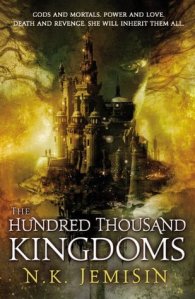
Serena’s Review: “The Hundred Thousand Kingdoms”

Book: “The Hundred Thousand Kingdoms” by N.K. Jemisin

Publishing Info: Orbit, February 2010

Where Did I Get this Book: audiobook from the library

Book Description: Yeine Darr is an outcast from the barbarian north. But when her mother dies under mysterious circumstances, she is summoned to the majestic city of Sky. There, to her shock, Yeine is named an heiress to the king. But the throne of the Hundred Thousand Kingdoms is not easily won, and Yeine is thrust into a vicious power struggle.

Review: Technically, this was a re-read for me. I picked it up originally right when it came out, so about ten years ago now. I really enjoyed it then, but for some reason didn’t continue on with the series. Well, I decided that now was a good time to revisit Jemisin’s first trilogy, so I picked up the second book from the library and started out. Whelp, turns out I remembered basically nothing from this first book and was super confused right out of the gate, so a re-read was definitely in order before continuing on. And I’m very glad I did! I had a few vague ideas about what this book was about, but I really had forgotten just how detailed and rich this story is.

Yeine Darr had only recently come into her role as the leader of her small sub-nation. Challenging as this new role is, it is nothing to the sudden upheavel to her life when she is summoned to the grand city of Sky and finds herself thrust into the middle of a political battle. From small provincial leader, she’s now one of three potential heirs to the ruler of the entire land. But there is much more going on than a simple political struggle: Gods are involved. As Yeine works to uncover the mysteries of her own past, she begins to unravel a complicated history of her own world that has been hidden for centuries. But what can a country nobody such as herself do in this grand opera of gods and magic?

What I remembered about this book could mostly be summed up as “girl goes to palace and falls in love with some sort of dark, magical being.” Which…is somewhat accurate but also so, so much less than what this book is really about! For one thing, I forgot just how skilled Jemisin’s writing and world-building was in this book. Having now read more of her work, this isn’t as surprising, I guess, but when I first read it, it’s a wonder I didn’t just immediately continue on!

In the midst of an action-packed story centered around a complicated mystery, Jemisin still somehow manages to introduce a large cast of characters, build up an intricate world full of an entire pantheon of gods and various nationalities, and create a magic system within which it all operates. And on top of all that, the story never falls into any “info dump” traps. Instead, our narrator casually introduces various aspects of this world and drops hints here and there that slowly begin to paint an intricate picture in the reader’s mind. Indeed, the image is almost fully complete before you even realize that one was being built in the first place!

I’ve also talked before about the challenges of writing first person narratives and how rare it is to find this style of writing in adult fiction. As challenging as it is to build a new fantasy world and magic system on its own without resorting to long, info-dumping paragraphs, it’s even harder to do it in a natural-seeming way coming directly from the mouth of a character who would already be familiar with all of these things and have no natural reason to be speaking it out loud. To tackle this challenge, Jemisin relies on a nice little trick where her narrator is recounting her own story to some unknown audience. While Yeine’s story largely plays out chronologically, it’s clear that the narrator herself is speaking after the fact in the recounting of this story. In this way, little tidbits of information and sneak peaks into events coming up are dropped throughout the narrative, building suspense in the story itself and building curiosity as to how the past Yeine whom we are following along with comes to be the one who is narrating and clearly has a different perspective on her entire world. It’s a really clever technique, and one that we see Jemisin utilize to great effect in many of her works.

I also really liked the cast of character Jemisin builds up around Yeine. The gods themselves are all very complicated, neatly balancing extreme charisma and appeal alongside an ever-present, trigger-haired sense of impending violence. And the humans aren’t much better. Indeed, in many ways, this book emphasizes just how much worse the humans are than the gods who are thought to not possess any sense of humanity themselves. Alongside the perils of power and the quest to retain it, the story explores the darker themes of love and the choices it will lead the unwary towards.

I really enjoyed revisiting this story. I really had forgotten most of it, and it was a joy to rediscover some of Jemisin’s earlier work. This is a fantasy novel that is fully reveling in being a fantasy novel. It checks all the boxes I look for in this sort of story. If you’re a fan of Jemisin’s work and haven’t gotten around to reading some of her earlier stuff, I definitely recommend checking this out!

Rating 9: Complicated and rich, Jemisin proves why she was a force to be reckoned with right from the very start!

Reader’s Advisory:

“The Hundred Thousand Kingdoms” is on these Goodreads lists: Best “Strong Female” Fantasy Novels and Diversity in Fantasy and Science Fiction.

Find “The Hundred Thousand Kingdoms” at your library using WorldCat!
My Year with Jane Austen: “Death Comes to Pemberley”

I could probably continue on an entire extra year reviewing various adaptations and interpretations of Jane Austen’s works. There are plays, spin-off books, modern adaptations, the list goes on and on. Every year it seems there is a new version coming out in some form or another and this last year was no exception. Not only did we get a new feature film of “Emma” but the BBC also released an 8-part mini series of Austen’s unfinished work “Sanditon.” So I wanted to briefly touch on my thoughts of both those and to add in one other adaptation that has been a favorite of mine for quite a while, “Death Comes to Pemberley,” both the book and the 3-part mini series.

Mini Series: “Death Comes to Pemberley”

I’ve read the book this was based on as well (same title and written by P.D. James), but I wanted to focus on the mini series adaptation here as, ultimately, I enjoyed it the most of the two. The book was a solid “Pride and Prejudice” sequel; frankly, it’s probably the best, and only, sequel I’d recommend to people. So the fact that I liked the mini series more is in no way a ding against the book itself. I only read it the one time, so I also wouldn’t bet against my not remembering it well enough to give it the credit it deserves. But on to the mini series itself!

As I mentioned above, this story is a sequel to “Pride and Prejudice.” It takes place mostly at Pemberley and occurs 5 or so years after the book (Darcy and Elizabeth have a 4-ish son, so I’m just guessing, if they mentioned it in the movie/book, I don’t remember). The story is a murder mystery at its heart, revolving around Wickham (who else!) who has been accused of killing his dear friend Denny while in Pemberley woods. The show is a three part mini series that slowly follows Elizabeth and Darcy as they try to put together the clues as to what really happened and whether or not Wickham is innocent or guilty. Along the way, we meet a cast a familiar faces and are given extra information about their histories that wasn’t provided in the original story. We also meet a few new characters, but it’s mostly a returning cast, though the focus is more on characters who played only small roles in the original book, like Georgiana and Colonel Fitzwilliam.

This mini series succeeds at both of its main goals: It is a worthy (and believable!) sequel to a beloved story that ended in such a way that a sequel would typically feel completely unnecessary; and it holds up as a compelling murder mystery in its own right. Had this story been almost exactly the same but with original characters, it would likely be almost just as good (though more fleshing out for characters would obviously be necessary since you couldn’t count on general familiarity and previous knowledge). That is a truly extraordinary feat.

Obviously, much of this comes down to James’ heavy lifting with her book. But I’d wager that of all of the Jane Austen adaptations, “Pride and Prejudice” is the only one with a film/mini series that is almost as beloved and the book itself. Just like James’ had an uphill battle in writing a sequel to the book, this mini series was attempting to re-cast and continue the stories of characters whom many thought couldn’t be improved upon from Colin Firth and Jennifer Ehle’s version. Both Matthew Rhys and Anna Maxwell Martin perfectly balance carrying forward characters who have already been seen on screen several times while keeping them familiar as well as bringing their own twists and mannerisms.

I really liked the mystery itself, too. There are plenty of red herrings and possible scenarios that can lead viewers down false trails. Even better, every aspect reveals new layers to Pemberley, its family, and the people that have lived on the estate for generations. I particularly liked the exploration of Darcy and Georgiana’s feelings towards stewardship and Pemberley. It’s an interesting topic, especially when contrasted with Elizabeth’s experience of life, that while they generally see eye to eye on many things, this is simply something that she can’t really understand. This feeling of responsibility to a place, its people, and one’s own history.

I also really liked the brief moments that showed us some of the challenges that Elizabeth faced (faces) as the new lady of Pemberley. It’s obvious that she’s not the lady of the house that anyone would have expected and with that would come its own set of trials. We also get a look into the insecurities and doubts that both Darcy and Elizabeth still struggle with. Yes, the ending of “Pride and Prejudice” was happily ever after, but marriage has its own set of challenges and one’s personal demons don’t simply disappear when one’s true love shows up.

The only ding I have against this adaptation is its depiction of Colonel Fitzwilliam (again, this was following the book’s lead so it’s not unique to the mini series itself). Personally, I really like what they do with the character here. So my quibble is more about continuality and what feels like a pretty thorough character re-write from what we’re given in the original novel. True, the novel really doesn’t show us much, but we have Darcy’s own esteem for the Colonel and his dual role in bringing up Georgiana to speak to his general good character. But unless you’re a die-hard Fitzwilliam fan, the changes shouldn’t be that distracting.

I really enjoy this mini series, and it’s my regular rotation of Jane Austen re-watches. Like I said, it’s the only worthy sequel to “Pride and Prejudice” I’ve come across, and it also checks all the boxes as a good historical mystery, another favorite of mine. If you haven’t read the book or watched this adaptation, I definitely recommend it for all Jane Austen fans!

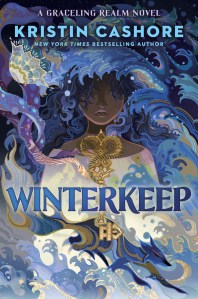
Serena’s Review: “Winterkeep”

Book: “Winterkeep” by Kristin Cashore

Publishing Info: Dial Books For Young Readers, January 2021

Where Did I Get this Book: Edelweiss+

Book Description: Four years after “Bitterblue” left off, a new land has been discovered to the east: Torla; and the closest nation to Monsea is Winterkeep. Winterkeep is a land of miracles, a democratic republic run by people who like each other, where people speak to telepathic sea creatures, adopt telepathic foxes as pets, and fly across the sky in ships attached to balloons.

But when Bitterblue’s envoys to Winterkeep drown under suspicious circumstances, she and Giddon and her half sister, Hava, set off to discover the truth–putting both Bitterblue’s life and Giddon’s heart to the test when Bitterbue is kidnapped. Giddon believes she has drowned, leaving him and Hava to solve the mystery of what’s wrong in Winterkeep.

Lovisa Cavenda is the teenage daughter of a powerful Scholar and Industrialist (the opposing governing parties) with a fire inside her that is always hungry, always just nearly about to make something happen. She is the key to everything, but only if she can figure out what’s going on before anyone else, and only if she’s willing to transcend the person she’s been all her life.

Review: Well, we’ve finally arrived at the long-awaited (really, was anyone actually waiting on this? I think it took most fans by surprise!) fourth book in the “Gracely Realm” series. I’ve enjoyed my re-read so far, though the high of the first two has definitely been dampened by what I felt was a lackluster showing in “Bitterblue”. But given that it has been almost a decade since that book was published, I was curious to see which version of the author’s writing we’d get here: the fast-action, heartstring- pulling story that we saw in the first two, or the more slow, somewhat bloated story that was last one?

It’s been four years since the events of “Bitterblue” and the world has once again expanded. Winterkeep is a distant land whose society is largely focused on politics and industry. With fantastical airships and the knowledge of powerful resources, Winterkeep’s society is at an impasse over the progression of its industry over the environmental effects of some of the resources needed to power those advancements. When two of her envoys die under mysterious circumstances, Bitterblue takes it upon herself to visit this distant land. Things quickly go wrong, and she and her party are left to unravel the mystery at the heart of Winterkeep alongside a local teenage girl, Lovisa, whose parents are somehow connected to it all.

So, I’ll just get it out of the way early: this, sadly, fell much more into the “Bitterblue” school of book than the “Graceling” type which in turn means it was a bit of a disappointment for me. But I’ll start with what I did like. In many ways, I feel like the writing was stronger in this book than in “Bitterblue.” That book was almost oppressively gloomy and serious, whereas here, while the story still tackled serious topics and had darker moments, there were also several funny lines and observations throw in. Bitterblue herself was a much more likable character for having some of these funnier lines/thoughts early in the book which immediately endeared her to me.

I also liked Giddon’s chapters. He was a strong point in “Bitterblue,” so it was great to see Cashore recognize his potential and make him a POV character here. His relationship with Bitterblue was also much more interesting in that book than her romance with Saf, so I was happy to see their friendship/romance take precedence. We also get chapters from a telepathic fox, a special type of animal that is common in Winterkeep and bonds with humans, as well as chapters from a mysterious ocean monster.

But I struggled to connect to Lovisa, and that proved to be a fairly large failing for my enjoyment of the story. As the only native human character we have for Winterkeep, much of the world-building and deeper insight into this world comes through this character. I think there are a few problems here. For one thing, Lovisa simply didn’t have a strong inner voice or particularly compelling character. Those funny lines I mentioned with Bitterblue? None to be found with Lovisa. I’m not asking for a joke a minute, but her voice simply didn’t have any particular aspect to it that made it stand out, which leads to my second problem.

Much of Lovisa’s chapters and inner thoughts are devoted to long reflections on Winterkeep’s political situation and the challenges of balancing industry and environmentalism. Fairly early in the book, I read one of her chapters that devoted almost half of her page count to long paragraphs on these topics. And there simply wasn’t much there! The entire “debate” about environmentalism is a very thinly veiled depiction of our own struggles in this world. And the politics involved are just the same, a very watered down version of the U.S. two party system with entrenched viewpoints on both sides. There are plenty of good ways of using a fantasy novel to get out modern debates, but these were so washed out and thin that they didn’t actually get at any new ideas or add anything of value to the overall conversation. Plus it’s a fantasy novel which usually gives authors a lot of creative leeway to present these ideas in unique and interesting ways. Not so here, unfortunately. The two parties are called the Scholars and Industrialists, for heaven’s sake! And poor Lovisa’s chapters are just full of this stuff, going on and on.

Which gets to my final complaint: this book is way too long. Just like “Bitterblue,” the story begins to feel like a slog fairly early into the first third of the book. The action dies down, the mystery drags on and on, and then finally we get to the resolution, only to find that there’s a significant page count left to get through. In which, again, nothing much happens and the whole thing could have been wrapped up in half the time. This book seriously needed the firm hand of an editor who wasn’t afraid to make great big slashes through some of this.

By this point, it’s clear that Cashore is the type of author who likes to write about issues. Unfortunately, I feel like the books in which she focuses on this the most are her weakest. “Graceling” and “Fire” both touched on some pretty important topics about self-acceptance and the responsibility and dangers of great power. But when the stories delved into more broad topics like they did in “Bitterbue” and here, these issues seemed to consume the book, its characters, and any attempts to build up tension. Fans who enjoyed “Bitterblue” will probably be more pleased with this entry than those who struggled with that book.

Rating 6: Overall, pretty disappointing and bogged down by uninteresting takes on social and political statement pieces.

Reader’s Advisory:

“Winterkeep” is a newer book so it isn’t on many Goodreads lists, but it is on YA Novels of 2021.

Find “Winterkeep” at your library using WorldCat!

Serena’s Rev-Up Review: “Bitterblue”

Book: “Bitterblue” by Kristin Cashore

Publishing Info: Dial, May 2012

Where Did I Get this Book: own it!

Book Description: Eight years have passed since the young Princess Bitterblue, and her country, were saved from the vicious King Leck. Now Bitterblue is the queen of Monsea, and her land is at peace.

But the influence of her father, a violent psychopath with mind-altering abilities, lives on. Her advisers, who have run the country on her behalf since Leck’s death, believe in a forward-thinking plan: to pardon all of those who committed terrible acts during Leck’s reign; and to forget every dark event that ever happened. Monsea’s past has become shrouded in mystery, and it’s only when Bitterblue begins sneaking out of her castle – curious, disguised and alone – to walk the streets of her own city, that she begins to realise the truth. Her kingdom has been under the thirty-five-year long spell of a madman, and now their only chance to move forward is to revisit the past.

Whatever that past holds.

Two thieves, who have sworn only to steal what has already been stolen, change her life forever. They hold a key to the truth of Leck’s reign. And one of them, who possesses an unidentified Grace, may also hold a key to her heart . . .

Previously Reviewed: “Graceling” and “Fire”

Review: So this re-read has been one of discoveries so far. I discovered first that “Graceling” held up really well in the ten plus years since it was first published, even given the boom of similar YA fantasies novels that have come out since. I discovered that while I still prefer “Graceling” overall, I actually liked the romance in “Fire” better. And with “Bitterblue” I discovered…I actually hadn’t read this one before?? I own a copy, and I think I must have skimmed through it at some point, but a full, cover-to-cover read? Nope! Given my takeaway at the end of this read, I suspect I may have skimmed some Goodreads reviews when this came out and put it on the back-burner, being a bit wary. Because, yes, for me, this was quite the step down from the highs of “Graceling” and “Fire.”

Bitterblue has been queen of Monsea since she was ten and her sociopathic father was killed at the hands of Bitterblue’s strongest protector, Katsa. In the years since, Bitterblue has struggled to put her broken country back together. But with endless paperwork and little contact with her actual people, Bitterblue begins to suspect that her efforts aren’t accomplishing much. She takes matters into her own hands and sneaks out to wander the streets of her city and see the state of things for herself. What she discovers opens the floodgates and she is suddenly overwhelmed with all of the mysteries and secrets that have lurked from the time of her cruel father’s reign.

So, overall, I really didn’t love this book. It was so surprising and disappointing to have a reaction like this after just loving both books that came before! But, unfortunately, I think there were several things that worked against it. Not least of which is the fact that I think that even its strengths ultimately work against it when compared to the books that came before. Namely that Cashore’s strengths for creating interesting new worlds and great fantastical elements weren’t allowed any room to grow here. We’ve already been introduced to Monsea, and while the story does show us around the city itself and has some new things to add here, the world itself is largely familiar. The magic, too, is familiar. We may meet a few new Gracelings, but their abilities and their place in the world are already understood. So, too, we already know about the Seven Realms and, largely, how they differ from one another and interact with each other. All of this works to undercut much of what made the first two books so great: Cashore’s deeply imaginative new worlds and magic systems.

And while both of the first two books were slower reads overall, this one really seemed to drag on. It’s much longer than the first two, and nothing in the story really justifies this length. Bitterblue is constantly beset with new mysteries and new roadblocks on any progress she’s making on the ones that came before. More than once she simply gives up and returns to her paperwork in her tower. This is just as boring and anti-climatic for the reader as it’s said to be for her. What’s more, many of the mysteries are built around the seemingly crazy actions of many of the characters around her. But they are so random and so off-the-wall that with the lack of understanding around them comes also the lack of caring. Unlike the books before where it felt like clues were being laid down that reader’s could begin to piece together for themselves (part of what kept the pacing better in those books), here, it all feels too disconnected to any logic or overall plan to really engage the reader.

I also really, really disliked the romance in this book. This was truly shocking as the other books in this series had two of my favorite romances ever. But here, nothing really works about it. Saf is a terrible romantic hero. When he’s not annoyingly immature (it’s never a good sign when you’re heroine herself calls the hero this and she’s completely right!), he’s outright rude and mean to Bitterblue. And all of this is when he’s even on the page at all, for there are large chunks of the story where he’s nowhere to be seen. From a personal reading perspective, his absence isn’t missed as when he was around I was mostly frustrated by him. But from the perspective of trying to build a compelling romance, it’s hard to do when you’re romantic hero is nowhere to be found for the last half of the book. And the end was only satisfying because it was ultimately unsatisfying, essentially!

I did like Bitterblue as a character, but I think the romance and the plodding storyline both did her a massive disserve. It was also confusing trying to understand why Bitterblue was suddenly noticing all of these things around her. Presumably she’s been acting as queen for the last 8 years, and while she was too young initially to take notice, it’s hard to understand what was distracting her from it all for the last few years. There’s no obvious impetus for any of it, really. “Winterkeep” will also feature Bitterblue, so I’m excited to see how the character fares when put in a different (hopefully better!) story. We’ll find out next week when we finally get to “Winterkeep” itself!

Rating 6: Very disappointing. It has some serious weaknesses on its own, but it’s definitely not helped by the fact that the two before it were such hits for me.

Reader’s Advisory:

“Bitterblue” is on these Goodreads lists: YA Second World Fantasy and Best Kick-Ass Female Characters From YA and Children’s Fantasy and Science Fiction.

Find “Bitterblue” at your library using WorldCat!

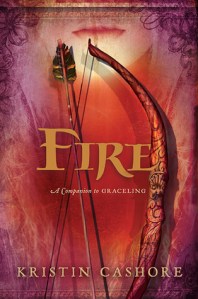
Serena’s Rev-Up Review: “Fire”

Book: “Fire” by Kristin Cashore

Publish: Dial Books, 2009

Where Did I Get this Book: own it!

Book Description: It is not a peaceful time in the Dells. The young King Nash clings to his throne while rebel lords in the north and south build armies to unseat him. The mountains and forests are filled with spies and thieves and lawless men.

This is where Fire lives. With a wild, irresistible appearance and hair the color of flame, Fire is the last remaining human monster. Equally hated and adored, she had the unique ability to control minds, but she guards her power, unwilling to steal the secrets of innocent people. Especially when she has so many of her own.

Then Prince Brigan comes to bring her to King City. The royal family needs her help to uncover the plot against the king. Far away from home, Fire begins to realize there’s more to her power than she ever dreamed. Her power could save the kingdom.

If only she weren’t afraid of becoming the monster her father was.

Previously Reviewed: “Graceling”

Review: Unlike “Graceling,” I never got around to re-reading “Fire” closer to when I read it the first time. Not that I didn’t really enjoy it then, just that, like I said, the TBR list was just starting to get out of control around this time. So going into this re-read, I remembered even less about this book than that. That made it lots of fun to read now as it almost felt like an entirely new book, but one that I already knew I’d enjoy! Win win!

The Dells is a colorful land, marked by the bright, over-powering beauty of its monsters: blue horses, purple raptors, pink mice. But Fire is the only human monster after the death of her cruel father several years prior. Her extreme beauty inspires both wonder and hatred from those around her, so Fire’s life world has been small to stay safe. She also greatly fears the mind control abilities that come alongside her beauty. But when a prince arrives on her doorstep requesting her aide to save the king, Fire is obligated to venture out and put her abilities to the test.

While this is technically a prequel to “Graceling,” it most ways it stands a lone. We have one character (albeit an important one!) who crosses over, but their page time is limited so even there we’re left with mostly new material. I really loved the world-building that went into the Dells and the creativity around the native monsters and how their powers worked. The animals themselves are quite terrifying, especially the monster raptors that seem to constantly lurk in the sky. Though this was also the one point where I was confused. Are these regular raptors, like hawks and falcons that aren’t that big? Or are these some type of unique bird of prey that is bigger? They seemed to be discussed and treated as pretty severe threats to people which was confusing if we’re talking about smaller birds of prey. Not really a big deal, but it was something I kept getting caught up on throughout the story.

Fire herself is an incredible creation. It makes complete sense that extreme beauty would inspire both love and hatred, and seeing how this plays out in Fire’s every day existence was really intriguing. She has some strong abilities, but we also see how very vulnerable her monster looks are to her. She attracts monster animals who want to eat her, and humans aren’t much better, either becoming obsessed with her (often in the grabby, forceful kissing manner) or essentially go mad and want to kill her. Her life seems very challenging, full of fear and tension. This makes it all the more touching to see her begin to form real relationships with the other characters in this book, because we’ve been prepped to understand just how many challenges there are in this for Fire.

I really liked the romance in this book, perhaps even more than I did the one in “Graceling.” Everyone loves a good “enemies to lovers” romantic plot line, and as much as I liked Po, Brigan checked off more on my romantic hero wish list, like steady and a bit solemn. While Katsa and Po were all about the fiery drama, Fire and Brigan have a slow build that is beautiful to watch unfold.

This book was a bit slower than “Graceling,” and the villain(s) were also a bit underwhelming. We see the return of one evil character, and they’re good for the small amount of page time we get from them. But what accounts for the main antagonist and challenge was a bit to removed from the story to feel too invested in it. By the nature of her being, Fire’s work is mostly done from the safety of the castle and is largely passive with most of the action taking place off-page.

I really enjoyed re-reading this book. I really remembered very little of it, and I was pleased to find the romance, in particular, even better than I had remembered. Next up is “Bitterblue!”

Rating 9: A quieter, more introspective book than “Graceling,” but also a bit more heart-breaking (in a good way!) overall.

Reader’s Advisory:

“Fire” is on these Goodreads lists: Original Stories . . . a Breath of Fresh Air and Princes, Other Worlds and Future Lands.

Find “Fire” at your library using WorldCat!

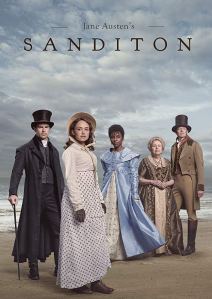
My Year with Jane Austen: “Sanditon” [2019]

I could probably continue on an entire extra year reviewing various adaptations and interpretations of Jane Austen’s works. There are plays, spin-off books, modern adaptations, the list goes on and on. Every year it seems there is a new version coming out in some form or another and this last year was no exception. Not only did we get a new feature film of “Emma” but the BBC also released an 8-part mini series of Austen’s unfinished work “Sanditon.” So I wanted to briefly touch on my thoughts of both those and to add in one other adaptation that has been a favorite of mine for quite a while, “Death Comes to Pemberley,” both the book and the 3-part mini series.

Mini-Series: “Sanditon”

I promise I’ll leave a positive review for one of these “extra” Jane Austen reviews that I’m doing in January. Alas, like “Emma” [2020], this is not one of them. Unlike “Emma,” however, I am more in-line with the general reception of this mini series. All and all, I think most Jane Austen fans were supremely disappointed by it, not least because of how it ends. Let’s dive into my complaints, shall we?

(NOTE: There will be spoilers in this review.)

The whole thing starts from a false premise: that there’s even a story here to adapt. Austen had only written eleven chapters of this story before her death. For reference, Emma has fifty-five chapters, so by comparison, eleven chapters is only scratching the surface of whatever story Austen had in mind. All we really get from these opening chapters is the introduction of our heroine, Charlotte, her relocation to an up-and-coming beach town called “Sanditon,” and the arrival of a potential love interest in the form of the fashionable Sidney Parker. Story-wise, it’s not much. There are the typical cast of side characters as well, but not much as far as clues to Austen’s overarching plot or themes. In most ways, she’s just finished setting the scene and not much else. It was always going to be a fool’s errand to try to expand that out into a mini series and to call it a “Jane Austen adaptation” is really pushing the limits of that term.

Perhaps in the right hands a compelling story could have been made. But sadly, this mini series ain’t that. It falls into too many traps that many modern adaptations risk and, at its heart, seems to miss the overall tone and heart that makes up all Jane Austen stories. To most fans’ chagrin, the story succumbs to the inane need of modern series to be “gritty” and “push the limits.” There are overtly sexual scenes in the very first episode (some of them even bizarrely going a very “Game of Thrones” route, none the less…). And many, if not most, of the characters introduced are supremely unlikable. For some reason, it seems that many directors and screenwriters often confuse writing a character with layers and depth with just writing supreme jerks, and we see plenty examples of it here. The romantic interest is immediately an a-hole to Charlotte, and not in the endearing, prideful “Darcy-esque” way that is the only acceptable form of this behavior in an Austen story.

Gone is the joy. Gone is the wit. And, worst of all, gone is the happy ending. It seems as if the director intentionally ended the series this way in a fit of over-confidence that the series would be picked up for a second season. Indeed, this is the only acceptable reason for ending an Austen story this way. There are plenty of historical fiction stories to be told where the happy, romantic conclusion is not a given. But those are not the stories that Austen wrote. She even said it herself, “let other pens dwell on guilt and misery.”

Every Austen fan who went into this series happily hoping to get one last shot at a new Austen story would have had this one, simple expectation: that the hero and heroine would end up together and happy at the end. Whatever happened from the start to the finish was open for exploration and interpretation. But this ending was a must. Instead, the series not only denies our hero and heroine this happiness, but it essentially resets the story by sending Charlotte back home where her future is once again limited and likely dull. I’ll be blunt: this ending is inexcusable for a Jane Austen adaption and, apart from any other stumbling blocks (of which there were many) would be enough to write this entire thing off on its own.

Unlike “Emma,” which I think I disliked for fairly subjective reasons but is sure to please many fans, this mini series really has nothing to recommend it, as far as I’m concerned. Perhaps for general historical fiction fans it would be an ok watch. But any fan of Jane Austen should simply steer clear, as “Jane Austen” this is not.