Serena’s Review: “The Dragon of Jin-Sayeng”

Book: “The Dragon of Jin-Sayeng” by K. S. Villoso

Publishing Info: Orbit, May 2021

Book Description: Queen Talyien is finally home, but dangers she never imagined await her in the shadowed halls of her father’s castle.

War is on the horizon. Her son has been stolen from her, her warlords despise her, and across the sea, a cursed prince threatens her nation with invasion in order to win her hand.

Worse yet, her father’s ancient secrets are dangerous enough to bring Jin Sayeng to ruin. Dark magic tears rifts in the sky, preparing to rain down madness, chaos, and the possibility of setting her nation aflame.

Bearing the brunt of the past and uncertain about her future, Talyien will need to decide between fleeing her shadows or embracing them before the whole world becomes an inferno.

Previously Reviewed: “The Wolf of Oren-Yaro” and “The Ikessar Falcon”

Review: This series started out from a fairly noncommittal position for me. I had never heard of the author before, and was, frankly, a bit put off by the series title “Chronicles of the Bitch Queen.” But, on the other hand, I have a very hard time resisting an adult high fantasy story that features a grown woman protagonist. Add to that that she’s a warrior queen. And thankfully, I let my general genre preferences rule the day, because I’ve absolutely adored this entire series. I’ll just spoil the lead here: this was the perfect conclusion to what had been an excellent series up to this point already.

The queen has finally made it home. But what had seemed like such an insurmountable challenge for the last two books was only the beginning. Her nation and its people hang together by only the merest threads. Distrusted and, often, disliked, Talyien must navigate the fraught waters full of suspicious and ruthless lords, ambitious foreign nationals, and her own perilous position as she attempts to save the son who has been stolen away from her. With the few people who remain that she trusts and depend on, Talyien must work to carve out a future for herself and her country.

Bizarrely, sometimes it’s the most hard to write reviews for a series of books where every entry is fantastic. When you’ve already raved about plotting, characters, and world-building in two earlier reviews, what do you say in a third about a book that was equally strong on all of those points?? But I’ll give it a go!

The world-building has always been fantastic in this series. But in many ways, the fantasy elements involved have been sparse and only sprinkled in here and there. We’ve heard a few mentions of dragons and the threat they had posed in times long ago, but no one thinks much about them now other than recognizing fortifications built to resist them, now crumbling with time. So I was very excited to see the dragons themselves begin to play more of a role in this book. I didn’t necessarily need this added level of straight fantasy, but I’m never going to say no to dragons!

I also liked the continued exploration of parenthood and the expectations and burdens set upon each generation from the one that came before it. We’ve seen this play out in Tali’s memories of her father, and here we get an even deeper insight into why the brutal warlord made many of the choices he did. We also see Tali and Rayyel begin to understand that they are now this generation, that their choices will shape the country and will be the bright path or heavy burden set upon not only their son but the generation of children growing up right now. It’s a very human realization and shift, and one that is strange to experience. It’s the high fantasy, grand scale version of a grown child realizing that they’re now responsible for hosting holidays! Much more complex than that, of course, but sometimes these simplest, most relatable feelings are the ones that take hold the strongest. Even when you have dragons!

I was also happy to see more of Thanh, Tali’s beloved son. For most of the series up to this point, mother and son have been separated by an ocean. And while we hear Tali’s frantic thoughts and worries over him, her deep love for him driving all of her choices, we never get to actually see their relationship in person. Not only were the two of them lovely together, but I also enjoyed Thanh as a character in his own right. There was also a shift in Rayyel, Thanh’s estranged father. Up to this point, he had been a fairly villainous character. So I was happy to see more given to his character to soften some of these aspects and make him more sympathetic.

Beyond that, everything I’ve raved about in the first two books remains true here! Tali is an excellent leading lady, flawed but constantly taking action and moving forward with the cards life has dealt her. I enjoyed the way the romantic plot line continued to unfold. And I was very impressed by the way all of the loose ends were tied together in a satisfying way here at the end of the trilogy. Fans of this series will love this thrilling conclusion! And don’t forget to enter our giveaway to win a copy of this book!

Enter the giveaway!

Rating 8: A fantastic end to this trilogy with higher stakes than ever while focusing on themes of parenthood and the burden of responsibility.

Reader’s Advisory:

“The Dragon of Jin-Sayeng” is a newer title, so it isn’t on that many Goodreads lists. But it is on Fantasy Books Releasing in 2021.

Find “The Dragon of Jin-Sayeng” at your library using WorldCat!

Giveaway: “The Dragon of Jin-Sayeng”

Book: “The Dragon of Jin-Sayeng” by K. S. Villoso

Publishing Info: Orbit, May 2021

Book Description: Queen Talyien is finally home, but dangers she never imagined await her in the shadowed halls of her father’s castle.

War is on the horizon. Her son has been stolen from her, her warlords despise her, and across the sea, a cursed prince threatens her nation with invasion in order to win her hand.

Worse yet, her father’s ancient secrets are dangerous enough to bring Jin Sayeng to ruin. Dark magic tears rifts in the sky, preparing to rain down madness, chaos, and the possibility of setting her nation aflame.

Bearing the brunt of the past and uncertain about her future, Talyien will need to decide between fleeing her shadows or embracing them before the whole world becomes an inferno.

Previously Reviewed: “The Wolf of Oren-Yaro” and “The Ikessar Falcon”

Giveaway Details: I’ve been pleased to be able to host giveaways for the first two books in this series, so I was incredibly excited to receive an extra copy to host another one for this last book in the trilogy. Given the building tension and ever-growing stakes in the story, fans of the series will likely be as eager to get their hands on this last installment as I was.

In many ways, this trilogy reads like the story that I wish “Game of Thrones” had allowed Daenerys to have. Women, especially queens who must make the same incredibly tough calls that kings have had to make for ages, balancing the weight of evils and the sacrifices necessary for the greater good, are just as capable of being as ruthless and driven as men without it indicating some sort of madness. I could rant forever about that particular choice, especially as it plays out in the show. But, thankfully, in Talyien we find a queen truly worth rooting for. She is a warrior and a woman and, simply, a person who is flawed, has insecurities, has made poor choices, but also has an inner strength and drive that sees her rising to the challenges before her.

All three books have, in their own way, seen Talyien’s situation become more and more dire. Queen though she may be, she is still vulnerable to the maneuverings of the men that surround her. Worse, in this book, we see the lingering damage that even a dead man, her own father, can wreak on her life. I’m so excited to see how everything plays out. It feels like there are a bunch of moving pieces and many issues coming in to roost.

I’ll post my full review this coming Friday. But in the meantime, make sure to enter to win a paperback copy of “The Dragon of Jin-Sayeng!”

Enter to win!

Serena’s Review: “The Midnight Bargain”


Book: “The Midnight Bargain” by C.L. Polk

Publishing Info: Erewhon, October 2020

Where Did I Get this Book: Edelweiss+

Book Description: Beatrice Clayborn is a sorceress who practices magic in secret, terrified of the day she will be locked into a marital collar that will cut off her powers to protect her unborn children. She dreams of becoming a full-fledged Magus and pursuing magic as her calling as men do, but her family has staked everything to equip her for Bargaining Season, when young men and women of means descend upon the city to negotiate the best marriages. The Clayborns are in severe debt, and only she can save them, by securing an advantageous match before their creditors come calling.

In a stroke of luck, Beatrice finds a grimoire that contains the key to becoming a Magus, but before she can purchase it, a rival sorceress swindles the book right out of her hands. Beatrice summons a spirit to help her get it back, but her new ally exacts a price: Beatrice’s first kiss . . . with her adversary’s brother, the handsome, compassionate, and fabulously wealthy Ianthe Lavan.

The more Beatrice is entangled with the Lavan siblings, the harder her decision becomes: If she casts the spell to become a Magus, she will devastate her family and lose the only man to ever see her for who she is; but if she marries—even for love—she will sacrifice her magic, her identity, and her dreams. But how can she choose just one, knowing she will forever regret the path not taken? 

Review: I requested this one last fall, mostly because I always like historical fantasy novels and because of the simple, but beautiful, cover art. Romance is always a plus too! But here we are in the spring of 2021 before I finally got around to it. Part of that is due to my own poor management of my TBR pile, of course. But my recent enjoyment of “Sorcerer to the Crown,” a title to which this one sounds similar, was really the kick in the pants I needed top finally pick this one up. Unfortunately, that same comparison that spurred my renewed interest is also the thing that ultimately hurt this book for me in the end.

For Beatrice, the life path laid out before her is as set-in-stone as it is unwanted. With a destitute family depending on her, she unhappily looks ahead to a life where she will be forced to give up her magic in order to marry well and restore her family’s prospects. In her efforts to avoid this life, Beatrice pursues a powerful, magical book that will unlock her abilities and make her a Magnus. But as she gets closer and closer to this opportunity, the choices before her become harder and harder. When she meets an intriguing young man, she begins to realize that she will have to lose one of her loves: a beloved husband or her magic.

While I didn’t love this book, there were a few things that stood out to me on the positive side. I thought the integration of the magical system and the Regency world-building was interesting and unique. It was fairly simplistic, but in some ways I think that worked well for this book that was trying to span at least three different genres: fantasy, historical fiction, and romance. And what included was interesting in its own right, with the grimoires and the summoning of spirits at the heart of the fantasy. I also thought the complication of the dangers magic posed to childbearing was an interesting, if a bit heavy-handed, wrinkle to throw in the fold.

However, there were a few too many things that got in the way of my enjoying those aspects of the story too much. Immediately, I struggled with the writing. There is a lot of telling and a distinct lack of showing in the style of the story. And this is especially tedious in the beginning of the story where many bits of information are rather inexpertly dumped on to readers with very little done to obscure this goal. This is a personal preference, of course, but I also found myself becoming increasingly distracted and annoyed by the use of exclamation points in the writing. Not simply in dialogue, but in the actual description of events. It made many of these passages read as juvenile and a bit ridiculous.

I also found the main character fairly unlikable, coming across more annoying than fierce. The love story was also very superficial. It’s pretty much your typical insta-love story, and from there all the “drama” feels artificial and contrived. None of which helps the main character’s likability in the least. The conflict between her (instant) love with the hero, who seemed like obviously a genuinely good guy right from the start, and retaining her magic began to lose its weight fairly early.

The story itself had strange pacing, seeming to drag for long periods in the middle only to pick up again, briefly, towards the end. This wasn’t helped by the fact that, all told, it’s a fairly straight-forward and predictable affair. I struggled quite a bit to maintain interest, which is always a fairly bad sign when I reflect back on my feelings on a book. Overall, I think there are likely better examples of books like this, “Sorcerer to the Crown” (obviously) and also “The Dark Days Club” and its sequels come to mind.

Rating 6: A unique idea falters under poor pacing and a plot that veers to closely to predictable tropes.

Reader’s Advisory:

“The Midnight Bargain” is on these Goodreads lists: Fantasy of Manners and Something Wicked This Way Comes.

Find “The Midnight Bargain” at your library using WorldCat!

Serena’s Review: “Black Water Sister”

Book: “Black Water Sister” by Zen Cho

Publishing Info: Ace Books, May 2021

Where Did I Get this Book: Edelweiss+

Book Description: Jessamyn Teoh is closeted, broke and moving back to Malaysia, a country she left when she was a toddler. So when Jess starts hearing voices, she chalks it up to stress. But there’s only one voice in her head, and it claims to be the ghost of her estranged grandmother, Ah Ma. In life Ah Ma was a spirit medium, the avatar of a mysterious deity called the Black Water Sister. Now she’s determined to settle a score against a gang boss who has offended the god–and she’s decided Jess is going to help her do it.

Drawn into a world of gods, ghosts, and family secrets, Jess finds that making deals with capricious spirits is a dangerous business. As Jess fights for retribution for Ah Ma, she’ll also need to regain control of her body and destiny. If she fails, the Black Water Sister may finish her off for good.

Review: I was obviously on a bit of a Zen Cho kick recently. In reality, I had requested this one from Edelweiss+ thinking it was part of her “Sorcerer Royal” series. And with that in mind, thought to myself “Oh, shoot! I need to read the second one before this one comes out!” So, off I went to read/review that book. Only to get to this one and discover that this is not, in fact, part of the series and is instead a modern, stand-alone fantasy. Little peak behind the oh, so exciting review process, and my own inability to properly research the books I request!

Sometimes the voices in your head are real. Sure, Jess figured it was just the stress of moving back to a homeland she doesn’t remember, not having two cents to rub together, and feeling locked away from her true self. But when mediums run in your family, there just might be another cause to strange voices. When Jess’s deceased grandmother begins speaking to her about feuds and powerful deities, Jess finds that uncovering her true identity may be much more complicated than she had thought.

First off, props to the cover artist. It’s a beautiful work of art, and it fits the overall feel of the book perfectly. Silly me should really have been able to pick up on the fact that of course this wasn’t in the “Sorcerer Royal” series just based on that, but…yeah, I have no excuses here.

It’s hard to evaluate this book because I was honestly a bit disappointed that it wasn’t part of her historical fantasy series. But that’s on me and not the book. I also don’t typically read a lot of contemporary fantasy. However, the story of a young woman getting tangled up in a feud between gang leaders and a centuries-old deity? Heck yeah! Like Cho’s work in her other series, the magical elements in this book were excellent. I particularly liked the god-like being at the heart, the titular Black Water Sister. I also liked the ghosts and how they were described/used in the story.

However, the characters and writing, two aspects of Cho’s “Sorcerer” series that I found particularly compelling, were less strong here. The tone and style used in that series, the type of “historical” writing that you see in Jane Austen novels and other books of that time, is incredibly challenging. It relies on long, drawn-out sentences and an extensive vocabulary. It’s hard to master, but Cho excelled. So, here, with the much more straight-forward style of writing found in any old contemporary book…it all kind of just fell flat. There were a few lines of dialogue that were witty and clever, but the descriptions, actions, general prose didn’t really stand out or capture me in any way.

I also had a really hard time liking Jess herself. There’s a reason I don’t typically read contemporary books. I’m not very interested in family dramas or the coming-of-age stories you often find in these types of stories. Jess is definitely going through one of these “needs to find herself” moments, and I really struggled to care. As a character, she didn’t feel very distinct or unique, and any actions she took were often forced upon her. Her relationship with her secret girlfriend flounders because of this very thing: Jess’s inability to take action in her own life and come out to her parents. That on its own is understandable, as it’s a very tough thing for those in the LGBT community. But when it is just one example of an ongoing, central trait for the main character in this book? It made for some dull reading.

In the end, this book wasn’t really my thing. Fans of contemporary fantasy will likely enjoy it more. The real strength to be found here was in Cho’s descriptions of Malaysia, and Jess’s experiences returning to a homeland she didn’t recognize. But the characters and writing felt a bit flat. Those looking for a book that is similar to Cho’s “Sorcerer” series should be warned that that is definitely not what’s in store here. Take it or leave it as to whether that’s a good thing for you or not!

Rating 6: An interesting look into Malaysia with a unique fantasy overlay, but the main character was too frustrating for me to fully enjoy this read.

Reader’s Advisory:

“Black Water Sister” can be found on these Goodreads lists: 2021 Books by Women of Color and 2021 Queer SFF.

Find “Black Water Sister” at your library using WorldCat!
Diving into Sub-Genres: Space Opera

We each have our own preferred genres of choice. Kate loves horrors and thrillers, really anything that will keep her up at night! And Serena enjoys escaping through hidden doors into realms of magic and adventure. We also read mysteries, historical fiction, graphic novels, etc. etc. And that’s not even counting the multitude of sub-genres contained within each greater genre. In this series, one of us with present a list of our favorites from within a given sub-genre of one of our greater preferred genres.

The term “space opera” was originally coined as a dismissive term applied to some science fiction. It was essentially a variation on the term “soap opera” and was used to convey a similar, high-minded rather snobby view of the book being described. Often, these would be ensemble cast stories featuring a space ship, a crew, and the shenanigans they would get into. The use of the term often indicated that the reviewer thought there wasn’t enough “hard science” in the story, and the book had an over-reliance on character beats and corny adventures.

“Star Wars” is the classic example of a space opera film. It’s light-hearted, features a story that revolves largely around the personal stories of its characters, jumps from planet to planet, and isn’t too interested in getting into the how’s and why’s of how its space elements work (how is the “Force” different than magic? how does the Death Star’s planet killing ray actually work in space?, etc.) However, over the last several decades, the term has begun to not only be used in a much less negative light (science fiction reviewers must have realized everyone seems to love “Star Wars” and “Star Trek”), but it has also begun to describe a different sort of science fiction story altogether.

Today’s space opera is essentially the science fiction equivalent of epic fantasy more than anything else. There are no hard and fast rules (like all sub-genres, really), but more often than not, modern space operas operate on a grand scale. There are multiple planets and space systems with layered political maneuverings taking place between these players. Most stories include interstellar travel with characters who move between various locations and who are influenced or influencing the larger movements between these forces. While there is still an emphasis on adventure and character, the stories are often of a more serious nature, veering even further away from the “soap opera” caricature from which the term was derived.

Here is a list of some examples of space opera science fiction. I’ve read most of them, but not all, and have varying opinions on my enjoyment of some. But each, in their own way, helps represent the scope and range to be found within this sub-genre.

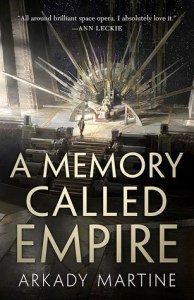
Book: “A Memory Called Empire” by Arkady Martine

This and its sequel, “A Desolation Called Peace,” are the two most recent space opera science fiction books I’ve read recently. They are also perfect examples of what the sub-genre represents to modern readers. The title itself makes the grand scale of the story clear. This isn’t a book concerned only with the small happenings on one planet. It covers and entire Empire and the continuous tug and pull this sprawling force on the outlying stations and planets that have not yet been consumed into this grand, but overwhelming, force. But on a smaller scale, the story follow the more straight-forward adventure of a diplomat who finds herself entangled in the political maneuverings within the Empire itself, all while trying to maintain her own entity and that of the independent station that she represents. On top of all of that, there’s a clear, focused use of scientific advancements that allow these societies to exist. They all feel appropriately futuristic, but they are also easy to imagine as the next step to technologies we see in our own world currently.

Book: “Red Rising” Saga by Pierce Brown

“Red Rising” is an example of a series that starts out with a book that only walks the line of space opera but is the beginning to a set of books that definitely fits the bill. On its own, “Red Rising” can be summed up as “Hunger Games in space,” essentially. There is reference to the multitude of planets and systems that make up this universe, but the story itself feels more contained and insularly focused. But as the series continues, the focus broadens and by the end, the story is fully re-focused on huge battles and political movements that are reshaping the way these planets and systems have organized themselves. These books also have a stronger helping of action than “A Memory Called Empire.” In the beginning, we see smaller fights between the young adults battling each other to earn spots in the greater spectrum of society. And from there we see action-packed space battles with large forces coming together with a clash. While we have one hero, he is surrounded by a larger cast of characters, another common trait found in space operas where the stories follow ensembles and ships with large crews.

Book: “The Word for World is Forest” by Ursula K. LeGuin

This is a classic example of “space opera.” It’s also part of a very loose series (there are concepts and references to technology that are the focus of other books, but it can be read as a standalone story). This book stands out from the first two I highlighted in that it has the more old-fashioned space opera focus on interactions between humans and the native alien species of the planets they encounter (the first two I mentioned above are mostly focused on the politics between various human factions). The story itself follows a fairly traditional colonization conflict. The human race show up at a planet whose environment is essentially one huge forest. The native people have built their entire system of life around this habitat. They are also unfamiliar with the concepts of tyranny and slavery, so the culture clash is real and painful. When a terrible event sparks resistance, the trajectory of both cultures is changed forever. The story definitely is of the time it was written (the late 70s), but it’s an excellent example of classic space opera.

Book: “Leviathan Wakes” by James S. A. Corey

I mean, it’s right there on the front page: “kickass space opera.” But it would also be fairly impossible to create this list currently without including this book, the first in the “Expanse” series that inspired the popular Amazon show. While “Star Trek” reigns alongside “Star Wars” as some of the most popular space operas stories to grace the silver and big screens, the “Expanse” series is one of the few, popular science fiction shows that is currently running. Fantasy seems to be in vogue a bit more at this time (the lasting affect of “Game of Thrones,” likely). Like “Red Rising,” “Leviathan Wakes” focuses on the politics of various human colonies within our solar system, Mars, the Moon, and the Asteroid belts. But it also narrows in on a group of individuals who begin to uncover secrets that will forever shake the boundaries of these systems and their conflicts. It deftly balances the grand scale of various factions within the solar system with the smaller, personal stakes of one ship’s crew and a few key players. It’s a long-running series and definitely one to check out if you’re interested in a multi-book space opera story.

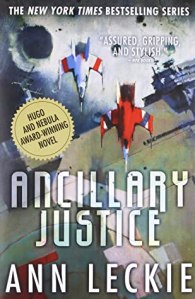
Book: “Ancillary Justice” by Ann Leckie

This is space opera at its most removed. The story is set far in the future and features such a shift in the culture and world-building that in many ways very little is recognizable. Which makes the book particularly challenging and definitely one that will likely only appeal to the strongest science fiction fans. In a time where gender is essentially not even recognized and “she” pronouns are used to identify everyone, a individual crew member who was once a great starship wanders a remote planet. With a sharp focus on loss and the collective nature of a ship and its crew, the story is a slow build of redemption and justice. It’s probably one of the hardest books to tackle on this list, but it is also very beloved by many science fiction fans and an award-winner to boot.

Book: “A Long Way to a Small, Angry Planet” by Becky Chambers

This is a more recent example of a science fiction novel that meets the more classic definition of space opera. It features a crew made up of quirky individuals, both alien and human, and the story essentially follows their adventures as they travel the galaxy. It’s more light-hearted than any of the other books on this list and places a greater emphasis on the characters themselves and how their escapades affect each of them individually. It’s not a soap opera, by any means, but it’s definitely the kind of book that the original penners of the term “space opera” would have thought was beneath the dignity of “true” science fiction. It’s a fun read and probably the most approachable book on this list for those looking to dabble their feet into science fiction and “space opera.”

What’s your favorite space opera??

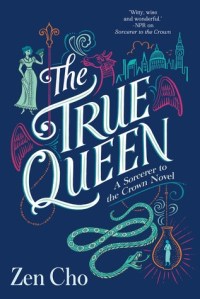
Serena’s review: “The True Queen”

Book: “The True Queen” by Zen Cho

Publishing Info: Ace, March 2019

Where Did I Get this Book: from the library!

Book Description: When sisters Muna and Sakti wake up on the peaceful beach of the island of Janda Baik, they can’t remember anything, except that they are bound as only sisters can be. They have been cursed by an unknown enchanter, and slowly Sakti starts to fade away. The only hope of saving her is to go to distant Britain, where the Sorceress Royal has established an academy to train women in magic.

If Muna is to save her sister, she must learn to navigate high society, and trick the English magicians into believing she is a magical prodigy. As she’s drawn into their intrigues, she must uncover the secrets of her past, and journey into a world with more magic than she had ever dreamed. 

Previously Reviewed: “Sorcerer to the Crown”

Review: Kate and I both read “Sorcerer to the Crown” for bookclub a few months ago. It had been my pick, a book that had been sitting on my shelf inexplicably unread for years. Boy could I have kicked myself for that after getting through with it! I loved the fantasy of manners feel of the book, and the main characters were incredibly compelling. I also liked how the book tackled complicated issues surrounding race, identity, and sexism all within a book that, overall, still felt light0hearted and fun. With all that to recommend it, I was fully committed to continuing on with the series as soon as possible. And, while I didn’t enjoy this one quite as much of as the first, I still had a blast reading this second entry.

Muna and her sister Sakti wake up on a beach with no memory of who they are or where they came from. They know they are sisters, but nothing else. Muna is satisfied to lead a quiet life, but when Sakti begins to succumb to a curse that sees her slowly disappearing, Muna must venture forth to save her sister. But with no magic to her name, Muna’s task is a perilous one. In a foreign country, and with the aide of the powerful Sorcerer to the Crown, Prunella, Muna must convince everyone that she is in fact a powerful magical force in her own right. Soon, she is more steeped in magic and magical beings than she ever would have wished. But to save her sister, Muna will brave most anything.

One of the main things that still stands out to me when now reading this second book by Cho is the perfect marriage of old-fashioned-style writing and unique, fantasy elements. If there weren’t dragons and talk of the land of Fae in every other sentence, it would be easy to imagine one is simply reading a good Jane Austen novel or any other historical fiction story written in that time. Now, the mileage of that style of writing really varies from reader to reader as, indeed, it’s a style that lends itself towards long, drawn out sentences. But I love this type of verbose writing, so this kind of book is right up my alley.

10 Most Unforgettable JUSTIFIED Quotes | Movie TV Tech Geeks News
Regency authors and Boyd Crowder apparently have a lot in common.

I was also pleased to see that while Muna has the majority of the POV chapters, we also returned to Prunella as well. In fact, the contrast between the two almost made each stronger. Prunella was still her confident, action-oriented self. However, Muna was a much more reserved character. From the start, she is only pushed into this adventure in a desire to save her sister. For herself, she would have been happy with a quiet life, only faintly disturbed by her missing memories. She was an excellent foil to Prunella, and, while the two faced similar barriers to their roles in society (as women, and, worse, women with magical abilities), we see how Muna is affected by these forces and reacts differently than Prunella.

I also enjoyed the additional layers that were added to the fantasy elements in this story. Most especially, I enjoyed the deeper look into the world of Fae itself, with its strange habits and fearsome (and sometimes very funny!) cast of characters. It was also interesting seeing how various nations understood this magical world, and the different ways they approached their relationship with this powerful place and its people.

Once again, the book also delved into some social aspects and themes that aren’t often found in a historical work like this. I’m not quite sure if this was as successful as the first book was, however. The romance between the two women, for one things, feels very out of the blue and tacked on at the very end. It is definitely possible to read this as a building romance between the two the entire time, but when one character is in a straight relationship for almost the entire book only to suddenly switch at the end…it’s just not very deftly handled.

Overall, I really enjoyed this book. It contained much of what I enjoyed from the first book, and Muna was a fantastic new main character. I’m still very intrigued by this world and would love to re-visit it whenever Cho chooses! Fans of the first book should definitely check this one out!

Rating 8: A smart, Regency fantasy that continues to build on the excellent foundation of social commentary that the first book established.

Reader’s Advisory:

“The True Queen” is on these Goodreads lists: LGBT Scifi and Fantasy 2015-2020 and Asian Adult Fiction 2018.

Find “The True Queen” at your library using WorldCat!

Serena’s Review: “The Shadow in the Glass”

Book: “The Shadow in the Glass” by J.J.A. Harwood

Publishing Info: HarperVoyager, May 2021

Where Did I Get this Book: Edelweiss+

Book Description: Once upon a time Ella had wished for more than her life as a lowly maid.

Now forced to work hard under the unforgiving, lecherous gaze of the man she once called stepfather, Ella’s only refuge is in the books she reads by candlelight, secreted away in the library she isn’t permitted to enter.

One night, among her beloved books of far-off lands, Ella’s wishes are answered. At the stroke of midnight, a fairy godmother makes her an offer that will change her life: seven wishes, hers to make as she pleases. But each wish comes at a price and Ella must to decide whether it’s one she’s willing to pay it.

Review: I’m always up for a good fairy-tale retelling. The story of “Cinderella” is probably right up there with “Beauty and the Beast” as a favorite in the genre as well. There are a bunch of them out there, with some I like better than others. “Ella Enchanted” will probably always be my favorite, and I was alone in the crowd as being underwhelmed by “Cinder.” But it’d been a while since I’d read one, and the summary for this version seemed to indicate a darker take on the classic tale. The darkness delivered. The rest of the book….well.

Ella had once had a future. One filled with coming out balls, high society, and if she was fortunate, a wealthy marriage. But when her wealthy sponsor and the lady of the house dies, Ella finds herself in very different circumstances. Now, a lowly maid with no prospects, Ella spends her nights sneaking into the library and dreaming of what once was. When she triggers a magical event and a powerful fairy appears offering her a way out, Ella is quick to bargain. But as she wishes for more and more, will the price be more than she is willing to pay?

So, like always, I’ll try to start this review with the things that I liked. The biggest pro I have for this book unfortunately ties into a negative aspect as well, but we’ll go for the good side first. The story is definitely a darker re-imaging of the classic tale. There were moments that were legitimately creepy, and I enjoyed the way these darker portions of the story built one upon another, ramping up the tension and sense of inevitable doom as the story progressed. This is definitely not the floofy, Disney version of Cinderella, and it was refreshing to read a very different take on a well-covered story.

On the other hand, this darkness began to overwhelm the story. The deep dive into the psychological aspects of what having wishes that will grant you almost anything can do to one’s own moral compass began to feel a bit exhausting. Ella continues to make the same mistakes over and over again, seemingly learning very little from her previous errors. It also ends up making Ella a very unlikeable character much of the time. She quickly becomes incredibly greedy and self-centered. And while I thought this exploration of what wishes can do to a person was interesting enough, the actual reading experience of it was not very enjoyable.

As part of this dark feel to the book, the story delves into a few tougher issues. They weren’t botched by any means, but I also am not sure the author really covered them as well as I would have liked. The atmosphere of the story is very grim and it did begin to feel stifling at times, made all the harder by my dislike for the main character.

I appreciate that this story wasn’t like many other cookie-cutter versions of the “Cinderella” fairytale, and at times the Gothic feeling of the story was quite successful. The version of the fairy godmother, in particular, was striking. But between the almost oppressive tone of the story and unlikable main character, it wasn’t for me. Those you enjoy darker fairytales might enjoy this, but if you’re a reader who goes into books hanging most of your hopes of enjoyment on your main lead, this probably isn’t for you.

Rating 6: Not to my taste, but an interesting take on a darker version of “Cinderella.”

Reader’s Advisory:

“The Shadow in the Glass” is a new book, so it isn’t on many Goodreads lists, yet. But it is on 2021 Gothic.

Monthly Marillier: “Seer of Sevenwaters”

“Monthly Marillier” is a review series that is, essentially, an excuse for me to go back and re-read one of my favorite author’s back catalog. Ever since I first discovered her work over fifteen years ago, Juliet Marillier has been one of my favorite authors. Her stories are the perfect mixture of so many things I love: strong heroines, beautiful romances, fairytale-like magic, and whimsical writing. Even better, Marillier is a prolific author and has regularly put out new books almost once a year since I began following her. I own almost all of them, and most of those I’ve read several times. Tor began re-releasing her original Sevenwaters trilogy, so that’s all the excuse I needed to begin a new series in which I indulge myself in a massive re-read of her books. I’ll be posting a new entry in this series on the first Friday of every month.

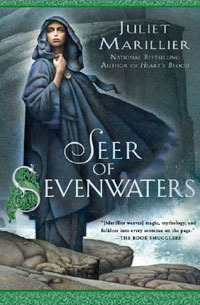
Book: “Seer of Sevenwaters” by Juliet Marillier

Publishing Info: Roc Hardcover, December 2010

Where Did I Get this Book: own it!

Book Description: The young seer Sibeal is visiting an island of elite warriors, prior to making her final pledge as a druid. It’s there she finds Felix, a survivor of a Viking shipwreck, who’s lost his memory. The scholarly Felix and Sibeal form a natural bond. He could even be her soul mate, but Sibeal’s vocation is her true calling, and her heart must answer.

As Felix fully regains his memory, Sibeal has a runic divination showing her that Felix must go on a perilous mission-and that she will join him. The rough waters and the sea creatures they will face are no match for Sibeal’s own inner turmoil. She must choose between the two things that tug at her soul-her spirituality and a chance at love…

Review: Unlike the first Sevenwaters trilogy which jumps generations with each book, the second trilogy remains focused on one generation: the daughters of Sean and Aisling. We’ve met, or heard reference to, them all before either in “Child of the Prophesy” or the previous book, so there’s an element of familiarity and expectation on each’s story from the start. Clodagh was a fantastic first pick for this new set of books, and it seemed only natural that Sibeal, her reserved, mystical younger sister would be the next choice. Unfortunately, for as much as I liked Sibeal’s character in “Heir to Sevenwaters,” her story has been one of my less favorite Marillier books, and so it remained with this re-read.

Even without the power of a seer, Sibeal believes she knows what will come of her life. She is soon to take her final vows to become a druid and join her brethren in the services they provide, that of wisdom, story-telling, and powerful, magical insight into the world around them. But this clear, straight path takes a sudden turn when Sibeal discovers a young man washed up on the shore with no memory of who he is. Suddenly, her life becomes much less clear and mysteries appear around every corner. For his part, Felix knows next to nothing about himself, with only dire hints at his own past and what paths he had been trodding before meeting Sibeal. Together, each must take on a perilous journey not only of self-discovery but to unlock wonders in the very world itself.

I really liked what we got from Sibeal in “Heir to Sevenwaters.” She didn’t have much page time, but she was a refreshing breath of fresh air in the midst of a family who was all treating Clodagh fairly poorly. Sibeal, alone, believed Clodagh and provided what support she could in the journey set out before her sister. Alas, as a main character, Sibeal wasn’t nearly as compelling. For one thing, her voice and perspective are not as distinct and unique as I had hoped. In too many ways, she seems similar to the other female protagonists we’ve seen in these stories and lacks the spark needed to make her stand out from the pack.

What’s worse, for the first time in this series, the narrative is split between Sibeal’s chapters and Felix’s, the romantic interest. And his are even worse than hers. Not only does the bare fact that splitting the narrative this way lesson the page time we have to get to know Sibeal as a character (perhaps this extended page count would have allowed for more development for her), but Felix himself brings next to nothing to the story. Amnesia stories are tough in this way, and Marillier falls into the same trap that many authors do with this type of arch: there’s just not enough to build upon when your character doesn’t know himself or his history. Beyond that, Felix’s chapters feel almost too similar to Sibeal’s. I’m not saying that there is a “male” and “female” way of thinking/speaking, but I definitely don’t want my two main characters to sound almost indistinguishable.

I also didn’t enjoy the overall story in this one as much as I have in Marillier’s previous Sevenwaters books. The mystery itself was fairly obvious, with numerous clues laid down well in advance of any characters piecing them together. It also all felt disconnected from the rest of the Sevenwaters story. In many ways, I feel like you could almost lift this book out of the series and no one would miss it.

Marillier’s writing remains strong, but with weaker characters and a weaker story overall, some of her tried and true go-toes become a bit more obvious as well. Some of her turns of phrase feel a bit tired and over-used, even. I did enjoy reading the final act of the story, where I felt like the pace picked up a bit more and my interested was piqued somewhat. But overall, it wasn’t enough to justify the rest of the story.

I remember being very disappointed when I read this book and wondering whether it might not be for the best that Marillier just hang up the Sevenwaters series altogether. Luckily (spoilers!), I did enjoy the last book in this series quite a bit, so that helped me recover from this reading experience. Luckily there are very few duds in her work, but this is definitely one of them.

Rating 6: The weakest Sevenwaters book of the lot with two main character, neither of whom are particularly interesting.

Reader’s Advisory:

“Seer of Sevenwaters” is on these Goodreads lists: Hidden Gems: YA-Fantasy Novels and Best Reconciliation Romance Books.

Find “Seer of Sevenwaters” at your library using WorldCat!
Serena’s Review: “The Princess Knight”

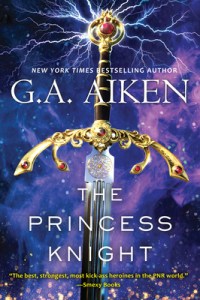
Book: “The Princess Knight” by G.A. Aiken

Publishing Info: Kensington, November 2020

Where Did I Get this Book: NetGalley!

Book Description: Gemma Smythe dedicated her life to the glory of battle. With her fellow War Monks, she worshipped the war gods, rained destruction on her enemies, and raised the dead when the fancy took her. Until her sister Keeley became the prophesied Blacksmith Queen, and Gemma broke faith with her order to journey to the Amichai Mountain and fight by Keeley’s side.

The Amichai warriors are an unruly, never-to-be-tamed lot, especially their leader-in-waiting, Quinn. But when the War Monks declare support for Gemma’s ruthless younger sister Beatrix, the immaturity of her key ally is the least of Gemma’s problems. She has to get to the grand masters, dispel their grudge against her, and persuade them to fight for Keeley and justice. If her conviction can’t sway them, perhaps Quinn’s irritating, irreverent, clearly unhinged, ferocity will win the day . . .

Previously Reviewed: “The Blacksmith Queen”

Review: I read “The Blacksmith Queen” a few years ago and enjoyed it well enough for the wacky thing it was: a fantasy, romance, kind of comedy, kind of urban fantasy, bizarre little story. I hadn’t read anything else by the author, so I really didn’t know what I was getting into. But I did like the main characters, especially Keely, and usually that’s enough for me to want to continue on with a series. I requested this sequel quite a while ago and only got around to it recently, however. I’m glad I finally did though, because I thought it was a lot of fun!

Gemma has always been a warrior, fighting her elite force of monks. But her loyalties are tested and refocused when her sister becomes the fabled Queen. But the War Monks don’t follow her, instead choosing her younger, and more brutal, younger sister. But Keely’s efforts need their support, and it is up to Gemma to persuade them back. Perhaps, she wonders, they will respond better to someone equally unhinged? Perhaps the infuriatingly handsome and unruly fighter, Quinn? With so much at stake, Gemma must find a way to bridge these divides and bring aid to her sister’s fight.

As I said, I hadn’t read this author’s previous series (same world), so I wasn’t familiar with out multiple books in the same story really operated. I was pleased to find that this one continued forward with having several POV characters and that, most importantly, Keely still featured heavily as a main character herself. I was excited to read about Gemma, of course, but I wasn’t looking forward to totally forgoing Keely who I’d liked so much in the first book and who, being queen, still had a large role to play going forward.

The characters, overall, still remain my favorite part of this story. I was particularly interested in reading Gemma’s story and her attempts to balance her loyalties between her sister, the queen, the fighting force of monks that she had been fully committed to prior to the last story. Her history around the worship of the death god that the warrior monks serve was also very interesting, as well as, of course, their practice of raising the dead. I did struggle a bit to become fully invested in Gemma’s story, however, because Keely was still such a presence in this book, and I knew her a bit better. But I did enjoy the fact that Gemma was distinctly her own character. She was much more wary and paranoid than her more trusting and accepting sister, something that I think works with her warrior’s background.

The romance also takes a back seat in this book. I enjoyed it well enough, but it was definitely not the most compelling part of the story. They had decent chemistry, but there wasn’t a lot of spark, more just a steady burn of comradery that turns into a relationship at one point. I like this kind of love arch, too, so I was ok with it. But, like I said, if you’re tuning in for a sparkling romance, this probably isn’t it. Instead, the story focuses much more heavily on the battles and political maneuvers that Keely and her force must employ to protect her queenship from the various other heirs who are still hoping to unseat her. These action-packed scenes were a blast, and the story really felt like it was on its most solid footing during these points.

Overall, I really enjoyed this book. Perhaps a bit more than the first, even, just because I knew a bit better what to expect from it. I was also pleased with Gemma as a new character, while also not having to give up my beloved Keely, which I took as a big win. Fans of this author and her work are sure to enjoy this one!

Rating 8: Light on the romance, but it compensates with a fast-moving, action-packed story.

Reader’s Advisory:

“The Princess Knight” isn’t on any Goodreads lists, but it should be on Badass Female Leads!

Find “The Princess Knight” at your library using WorldCat!

Serena’s Review: “Given”

Book: “Given” by Nandi Taylor

Publishing Info: Wattpad Books, January 2020

Where Did I Get this Book: Edelweiss+

Book Description: As a princess of the Yirba, Yenni is all-but-engaged to the prince of a neighboring tribe. She knows it’s her duty to ensure peace for her people, but as her father’s stubborn illness steadily worsens, she sets out on a sacred journey to the empire of Cresh, determined to find a way to save him at any cost, even though failure could mean the wrath of her gods and ruin for her people. One further complication? On the day she arrives at the Prevan Academy for Battle and Magical Arts, she meets an arrogant dragon-shifter named Weysh who claims she’s his “Given”, or destined mate. Muscular, beautiful (and completely infuriating), he’s exactly the kind of distraction Yenni can’t afford while her father’s life hangs in the balance.

But while Yenni would like nothing more than to toss Weysh the man into the nearest river, Weysh the dragon quickly becomes a much-needed friend in the confusing northern empire. Yet when her affection for the dragon starts to transfer to the man, Yenni must decide what is more important: her duty to her tribe, or the call of her own heart.

Review: This book had two things going for it immediately: first, the cover is so cool! There was an alternative cover that was much less compelling, but the one I highlighted here was the one I saw and the one that initially drew me in. And second, it’s a book about dragons. Lump me in with all the other unoriginal fantasy fans who love dragons, I don’t care! A good dragon story will always be right up my alley. A bad dragon story, however….

Yenni has always grown up with duty at the heart of her life. But when her father falls prey to a mysterious illness, this duty takes on a new form. Not only must she travel to a distant academy to follow through on her next steps to queendom, but while there, she desperately hopes to find a cure for her beloved father. The last thing she needs is distractions. Especially not distractions that show up in the form of infuriating, handsome, young men. And frankly, the only thing in this particular young man’s favor is his dragon form whom Yenni forms a close relationship. Sadly, one comes with the other. But as Yenni finds herself growing closer to man and dragon, the choices before her and the duties that call to her begin to blend and meld.

I probably should have known from the description that this probably wasn’t going to be a winner for me. YA books that describe their romantic heroes as “infuriating” and “arrogant” are almost always underselling it, with the terms “demeaning” and “borderline-abusive” often being the words I would substitute. Alas, so was the case here.

There were so many cringe-worthy lines (also to be expected from most fantasy romances that center around some sort of “mate bond”…can we just stop with this entire idea??). And what was worse was how quickly Yenni ultimately got over her first impression made by some of these rude interactions. Her initial reaction of dislike is completely justified. Her 180-turn like five pages later was….less so. And that’s all without touching the utter lack of romance involved in an insta-love connection. Or any of the other trope-ridden high school romance boxes that were dutifully checked off as the story progressed. All the worse in that these were supposedly more adult characters! Sadly, every aspect of this romance didn’t work for me and pretty much ruined my experience.

Perhaps it’s for the best, then, that I also didn’t feel like there was overly much to ruin in the first place. The writing was strong enough, but wasn’t accomplishing anything truly note-worthy. There was an over-reliance on the author telling readers how they should feel about things, rather than creating situations and dialogue that would resonate with readers and do the showing for her. And the world-building and magical school were incredibly predictable and unoriginal feeling. Sure, one can say that with “Harry Potter” looming large, it’s almost impossible to write a magical school book that doesn’t feel like either a straight-up copy attempt or a pale comparison. But in response, I will point you to Naomi Novik’s “A Deadly Education” and leave it at that. It definitely can be done. This one just doesn’t manage it.

Ultimately, I was really disappointed by this book. Not only did it not live up to the awesome, bad-ass heroine who seemed to be depicted on the cover, but it fell into every negative romance trope you can think of in recent years. I really wouldn’t recommend this book to anyone. There are better dragon stories out there. Better leading ladies. Better worlds. In a word, better books.

Rating 4: Not only did it not bring anything new to the table, but it highlighted another unhealthy romantic dynamic as some sort of wish-fulfillment.

Reader’s Advisory:

“Given” is on these Goodreads lists: 2020 Fantasy and Science Fiction Books by Black Authors and Fantasy That Isn’t Fantastic Straight White Men Doing Epic Things….

Find “Given” at your local library using WorldCat!