Serena’s Review: “Firebird”

This post may contain affiliate links for books we recommend.  Read the full disclosure here.

Book: “Firebird” by Juliette Cross

Publishing Info: Bramble, April 2025

Where Did I Get this Book: ARC from the publisher!

Where Can You Get this Book: WorldCat.org | Amazon | IndieBound

Book Description: A conqueror captivated…
A witch prophesied to save them all…
A world where dragons rule Rome.


From the moment Roman general and nephew to the emperor Julianus Dakkia laid eyes on Malina, he was enthralled by the Dacian dancer. Years later, the fierce beauty stands before him on a scarred battlefield, her life in danger. He instinctively shifts into his fierce dragon form to save her, an action that may mean his head on the imperial gate. But he and his dragon know one thing: she belongs to them.

Malina can’t believe that the centurion who had once bestowed a secret talisman on her is the Roman general of legendary brutality. His warrior prowess cannot be denied, yet they don’t reveal the secret he hides. All Malina knows is his protection and gentle touch. And she cannot deny how her soul has always seemed to answer his.

As they navigate a world where flying deathriders conquer and burn, their love will ignite a firestorm that can only end in heartbreak or death. Or both.

Review: This is a difficult book to review. On one hand, it’s simply following a tried-and-true romantasy equation, almost point by point at times. On the other hand, within the greater context of the story, I think many of these tropes rubbed the wrong way for me. However, given how standard much of the language and tropes used in this book are to the genre, I fully expect my opinion of this one to be an outlier. Ah well. By this point, I’m well used to being on the wrong side of these dragon romance books. (But wait! I did like “Dragon Unleashed” by Grace Draven, so it’s not all bad all the time automatically or anything!)

As always, I do want to start with a few positives. For the most part, I did enjoy the setting of this book, being based on ancient Rome. I feel like this is a bit of a trend recently, and as I enjoy Roman history, it’s been fun seeing it pop up within the fantasy genre (largely because the history is so long and full of different highs and lows and focal points that you can end up with quite a lot of variety even with this focus).

That said, I don’t think this particular iteration did much with this concept. For example, this book was hyped as a combination of ancient Rome meets George R.R. Martin. Do you know what those two things have in common? A strong focus on political machinations! Do you know what this book had practically zero of? That’s right, political machinations. Anything you do see is so superficial as to be practically worthless. Instead, the comparison to Martin would more accurately come down to the book’s focus on the horrendous treatment of women in this civilization. Obviously, there is historical accuracy behind much of this. But that alone doesn’t justify a heavy focus on the subject unless it’s going to be addressed thoroughly. And, like Martin, there were times where this book seemed to be reveling in the horror of it all, rather than including them for any truly important reason. Pay attention to the trigger warnings on this one, for sure.

My real problem came down to the romance, however. In so many ways, this romance exemplified the many ways that romantasy tropes can go wrong if sprinkled into any old plot line without much care. For some background, an important feature of this book is the fact that the MMC (morally grey with tons of secrets, obvs) participated in the razing of the MFC’s people. Which, again, this sort of thing is a staple of the genre, and the obligatory reveals of his ulterior motivations can be expected. But, necessarily, that explanation has to be incredibly good to counterbalance the actual gruesome harm he participated in, something that cannot be simply erased. Some authors are capable of turning this corner with their MMC. Others…are not.

Beyond this, the entire set up of the book and the romance is based around the fact that the MMC captures the FMC and keeps her as a “body slave.” So, that’s a pretty heavy topic to manage in a romance, that sort of dynamic, where the power imbalance is so extreme. Again, this can be navigated, but it takes a careful hand on the wheel to do so. Unfortunately, we didn’t see that here. Instead, the romance starts up quickly and hits hard, without ever really dealing with the facts of this power imbalance. And for me, this left an inescapable sheen of ickiness over the entire affair.

Further, the inclusion of dragons into this story lead to a strong focus on mating bonds. Beyond the laziness factor of this trope (which allows authors to just handwave away any actual character growth or natural progression of romantic interest/feelings and instead justify instalove/lust), the language that accompanied this choice rubbed up incredibly awkwardly (to put it mildly) against the slave/master nature of the relationship. “You’re mine.” “Say you’re mine.” etc. etc., are all very common phrases in romance/romantasy, especially when you’re dealing with any sort of mating bond situation. However, when paired with the set up of this story and the dynamics between Juliannus and Malina, this all began to feel rather gross. And, again, this isn’t to say that mating bond books can’t be done well! I think “Bride” by Ali Hazelwood is an excellent example of how to navigate this trope, avoiding the instalove pitfall as well as the questions regarding consent. This book, however, did not do any of that.

So yeah, I really disliked this book. I think it’s a perfect example of the “plug and play” style of writing that is all too prevalent in the rising star that is the romantasy genre. Everyone wants to cash in and the results are books that feel as if the author/publisher simply drew popular tropes out of a hat and mashed them together, with no concern for how well they would work together. Mating bonds and the possessive language that often accompany it? Sometimes good! Pair that with a slave/master dynamic and fastburn intimacy? Absolutely not.

I don’t recommend this book. I think there are much better examples of all the tropes included to be found elsewhere, and I think the author’s inability to properly explore the power imbalance of her central romance ruins any attempt to enjoy it.

Rating 4: Tropes gone bad and a rather gross slave/master romance at its heart really ruined this one for me.

Reader’s Advisory:

“Firebird” can be found on these Goodreads lists: Greco – Roman Fantasy and April 2025 Most Anticipated Romance Releases.
Serena’s Review: “The Raven Scholar”

This post may contain affiliate links for books we recommend.  Read the full disclosure here.

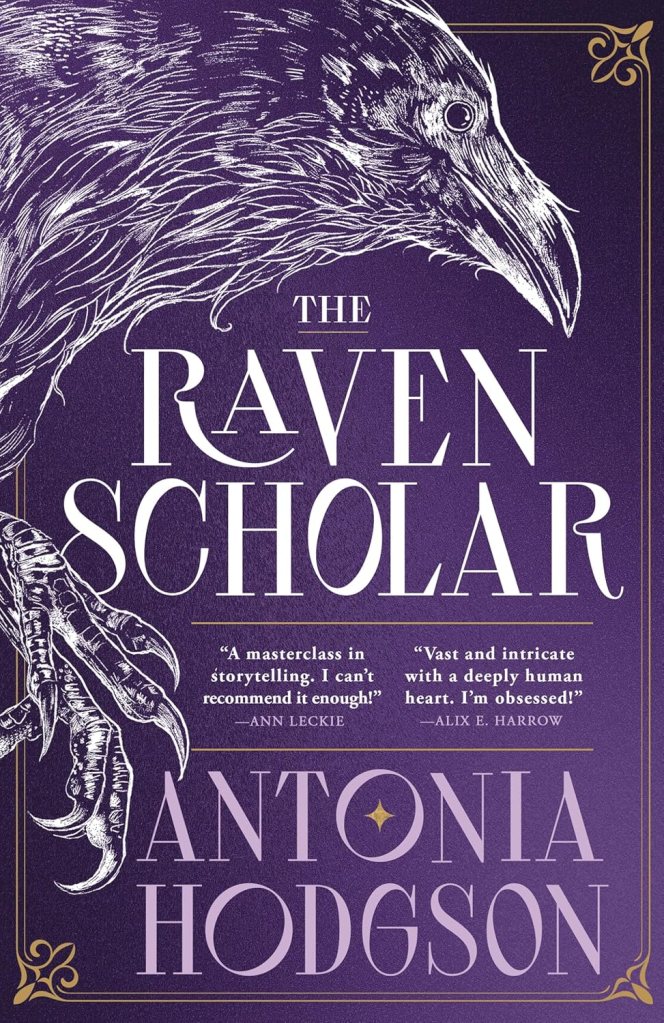
Book: “The Raven Scholar” by Antonia Hodgson

Publishing Info: Orbit, April 2025

Where Did I Get this Book: ARC from the publisher!

Where Can You Get this Book: WorldCat.org | Amazon | IndieBound

Book Description: Let us fly now to the empire of Orrun, where after twenty-four years of peace, Bersun the Brusque must end his reign. In the dizzying heat of mid-summer, seven contenders compete to replace him. They are exceptional warriors, thinkers, strategists—the best of the best.

Then one of them is murdered.

It falls to Neema Kraa, the emperor’s brilliant, idiosyncratic High Scholar, to find the killer before the trials end. To do so, she must untangle a web of deadly secrets that stretches back generations, all while competing against six warriors with their own dark histories and fierce ambitions. Neema believes she is alone. But we are here to help; all she has to do is let us in.

If she succeeds, she will win the throne. If she fails, death awaits her. But we won’t let that happen.

We are the Raven, and we are magnificent.

Review: No delay: I absolutely loved this book! It was one of those special reads where I went in with zero expectations and was blown away! I wasn’t familiar with the author (this is her first fantasy novel) and all I really knew about this one was that it featured yet another deadly, magical competition. Which, at this point, is more of a red flag than an interest point, given how flooded the genre has been with these sorts of books for the last several years. But man, this one proved why, in the right hands, even a tired trope can really come to life!

Part of this is the simple fact that, while the competition is the structure around much of the plot is built, it’s not really the main focus of the story. Instead, the central premise of the book is much more heavily focused on what starts as a murder mystery but quickly spirals out into a much larger conspiracy. And this larger mystery encompasses decades of history, some plot points from over 20 years ago, some events from a decade before, and others from more recent years. Much of this is slowly revealed throughout the course of Neema’a investigation, but the author also neatly uses a few chapters of a prologue that follows another character from years before. This was such a brave choice, as this character becomes central to the story, but is also never seen on page again. It’s a show of confidence that the author felt that the narrative voice and Neema herself were strong enough to reclaim the story back from a very different starting focus. With all of this, as the story unfolds, the reader is lulled into a sense of putting things together only to be smacked over the head with several huge late game reveals, some of which truly took my by surprise!

As for the competition, it did stand out from others, both in its simplicity and in its unique points. Some of it is just straight forward fighting, no real gimmicks. And as far as the magical competition portions went, the book was much more focused on the qualities of the groups who put these portions of the event together, what they wanted to see from a winner and a leader. In this way, these trials felt much less like the typical dangerous escapades we’re used to seeing. Instead, several of them are fairly generic, but made interesting by what they say about the individuals who participate in them based on the choices they make. This was also helped by the steady hand the author utilized throughout in creating this cast of competitors. Very early, I felt I had not only a strong understanding of who each of these characters were, but they all felt fully fleshed out and individual from one another, bringing their own baggage and their own motivations to this competition.

And, at the heart of it all, we have Neema and the Raven. Neema was simply excellent, everything I want from a protagonist. Smart, but awkward. Thrust into a situation she was completely unprepared for, we see all the stumbles of a flawed individual, but we also see the way her particular strengths lead her through. And most importantly, the ways in which she navigates these trials and the investigation all felt natural and believable to her history and abilities. Sometimes it’s really easy to see the author’s hand on the wheel with the creation of situations that seem to conveniently just work out for a main character who, by any rights, should fail miserable. Neema doesn’t glide through. People don’t trust her, don’t like her, and if she hadn’t attracted the interest of the Raven, it’s clear she would have done terribly. I also enjoyed the quirks of her characterization, the ways in which her strengths (her incredible scholarly knowledge) has and continues to create barriers to her ability to form connections to others. At times it was hard to see her treated so harshly by those around her, but the bright spots of the Raven’s narration and the very subplot-y love interest balanced these tough moments out.

And, of course, there is the Raven themself. What a unique narrative quality! There’s a way that this could have gone very wrong, that a quirky style like this could have been overplayed and over done. Instead, this has to be one of the most fresh feeling narrative styles that I’ve seen in a while! For those who are concerned, the majority of the story is told in your typical third person past tense approach. But sprinkled throughout, we are reminded that we are being told this story through the eyes of a very specific being with their own goals and perspective. Not to mention, the Raven was hilarious!

This book was pretty much my perfect read! Incredible fantasy world-building, an excellent main character, mystery, action, romance, it has it all! For a book that is 700 pages long, by the final portion, all I could think about was the fact that I wanted it to be even longer and how am I possibly going to wait for the sequel! This one doesn’t end on a cliffhanger, per se, but by the end of the book, this world looks very different than it did when it began and Neema’s journey is a wild ride, sprawling out before her. If you enjoy epic fantasy, this is a must read, as far as I’m concerned!

Rating 10: In a word: magnificent. Hodgson blasts onto the epic fantasy stage with a book that will quickly become a must-read for fans of the genre.

Reader’s Advisory:

“The Raven Scholar” can be found on this Goodreads list: 2025 Adult Fantasy & Science Fiction

Serena’s Review: “Gifted & Talented”

This post may contain affiliate links for books we recommend.  Read the full disclosure here.

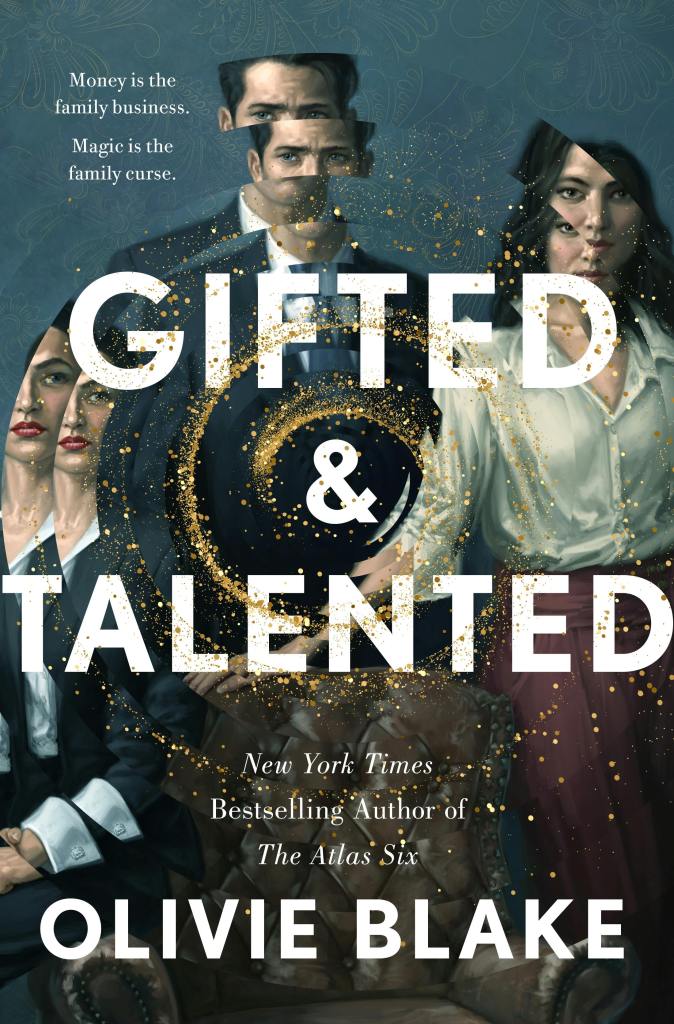
Book: “Gifted &Talented” by Olivie Blake

Publishing Info: Tor Books, April 2025

Where Did I Get this Book: ARC from the publisher!

Where Can You Get this Book: WorldCat.org | Amazon | IndieBound

Book Description: Thayer Wren, the brilliant CEO of Wrenfare Magitech and so-called father of modern technology, is dead. Any one of his three telepathically and electrokinetically gifted children would be a plausible inheritor to the Wrenfare throne.

Or at least, so they like to think.

Meredith, textbook accomplished eldest daughter and the head of her own groundbreaking biotech company, has recently cured mental illness. You’re welcome! If only her father’s fortune wasn’t her last hope for keeping her journalist ex-boyfriend from exposing what she really is: a total fraud.

Arthur, second-youngest congressman in history, fights the good fight every day of his life. And yet, his wife might be leaving him, and he’s losing his re-election campaign. But his dead father’s approval in the form of a seat on the Wrenfare throne might just turn his sinking ship around.

Eilidh, once the world’s most famous ballerina, has spent the last five years as a run-of-the-mill marketing executive at her father’s company after a life-altering injury put an end to her prodigious career. She might be lacking in accolades compared to her siblings, but if her father left her everything, it would finally validate her worth—by confirming she’d been his favorite all along.

On the pipeline of gifted kid to clinically depressed adult, nobody wins—but which Wren will come out on top?

Review: I’m one of those viewers who both recognized and appreciated the brilliant writing and acting found in “Succession” but who also struggled to enjoy the actual process of watching it. As a media consumer (books, movies, or shows), I’ve found that I struggle the most with stories where I can’t find a likable character to cling to. They don’t need to be perfect or strictly heroic, but just…likable. Jesse Pinkman from “Breaking Bad” is the perfect example of the sort of character I need to find to truly enjoy a story. So, when I saw that Olivie Blake was coming out with a new book and that it definitely was giving off strong “Succession” vibes, I was interested, but also a bit wary. That show was a slog at times of just hating everyone and everything they did. Would this book follow in its footsteps? Well, yes and no.

On the good side, I think some of Blake’s flowery, evocative style of writing worked really well with this sort of story. At best, everyone in this book is incredibly flawed, and Blake uses them and the situations they keep finding (creating!) themselves in to offer many beautifully crafted insights into the world as a whole. Commentary on power, ambition, and, of course, the complicated nature of siblings, with all of the competition and resentment that can be tied up in such a unique relationship. Here is someone who is the only other person/people in the world who truly understands your history, who’s seen it all, the good, the bad, the ugly. You love them; you can’t hide from them. I’ve struggled with Blake’s writing style at times in the past, but I think it paired really well with this sort of story.

That said, I am starting to put together the dots on the sorts of characters Blake has been writing lately. Namely, the kind that are found in things like “Succession.” In that way, she was perfectly positioned to write this sort book. But on the other hand, I’ve had a harder and harder time connecting with her books because I feel as if she always writes characters who I end up really disliking. They’re not just morally grey, they’re often rude, selfish, stubborn to the point of idiocy, etc. And while here these characters fit in well with the sort of story she was trying to write, I can’t say I enjoyed them any more for it. I kept banging my head against a wall, as I jumped from character to character who couldn’t help shooting themselves in the foot with terrible approaches to life and how they treat others.

I’ll also say that I question the necessity of the fantasy elements in this book. There are definite comparisons to “The Umbrella Society” (some were a bit too close, honestly, and made it feel less creative on its own), but, for the most part, the magic was so far in the background to the interpersonal dynamics that I’m not sure if it was serving much of a purpose. Other than staying true to the sort of books that Blake has written in the past and that her fans expect from her. But here at least, I think the book might have been better served to have remained a straight contemporary fiction novel. As it stands, I don’t think the sparce fantasy elements truly contribute much to the book itself. Those who are going in as hardcore fantasy readers will be left with a book that feels thin in this area.

Overall, this was an ok read. I will say, as a reader who has struggled with Blake’s style of writing in the past (sometimes it can veer into the land of pretentiousness), I think that the themes and subject matter of this book were well suited to her talents and the book shone brightest in its use of language to describe some of these darker currents. However, all of the characters were so unlikable that I can’t say I actually enjoyed my reading experience. Looking back, I think that’s been the difference for me with her books that I’ve enjoyed vs. those I didn’t. And it was unfortunate that this largely fell in the latter category. However, fans of Blake’s style should definitely check this out, especially if you’re the sort of reader who enjoys truly morally compromised characters!

Rating 7: Some poignant commentary on themes of sibling rivalry and ambition was held back a bit for me by a cast of truly unlikable characters.

Reader’s Advisory:

“Gifted & Talented” can be found on this Goodreads list: 2025 Adult Fantasy & Science Fiction and

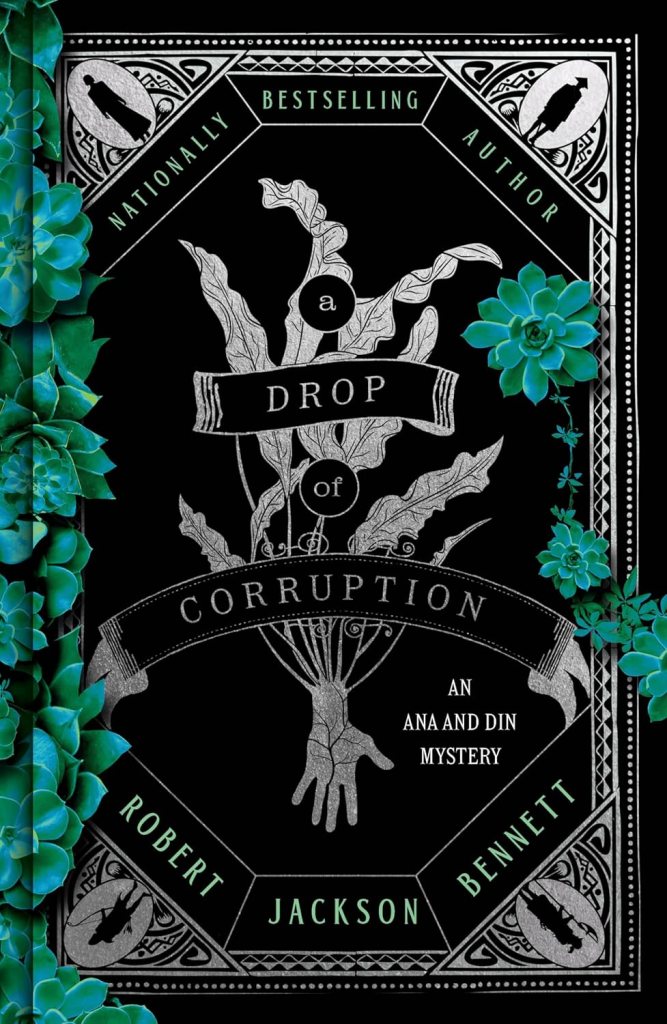
Serena’s Review: “A Drop of Corruption”

This post may contain affiliate links for books we recommend.  Read the full disclosure here.

Book: “A Drop of Corruption” by Robert Jackson Bennett

Publishing Info: Del Rey, April 2025

Where Did I Get this Book: ARC from the publisher!

Where Can You Get this Book: WorldCat.org | Amazon | IndieBound

Book Description: In the canton of Yarrowdale, at the very edge of the Empire’s reach, an impossible crime has occurred. A Treasury officer has disappeared into thin air—abducted from his quarters while the door and windows remained locked from the inside, in a building whose entrances and exits are all under constant guard.

To solve the case, the Empire calls on its most brilliant and mercurial investigator, the great Ana Dolabra. At her side, as always, is her bemused assistant Dinios Kol.

Before long, Ana’s discovered that they’re not investigating a disappearance, but a murder—and that the killing was just the first chess move by an adversary who seems to be able to pass through warded doors like a ghost, and who can predict every one of Ana’s moves as though they can see the future.

Worse still, the killer seems to be targeting the high-security compound known as the Shroud. Here, the Empire’s greatest minds dissect fallen Titans to harness the volatile magic found in their blood. Should it fall, the destruction would be terrible indeed—and the Empire itself will grind to a halt, robbed of the magic that allows its wheels of power to turn.

Din has seen Ana solve impossible cases before. But this time, with the stakes higher than ever and Ana seemingly a step behind their adversary at every turn, he fears that his superior has finally met an enemy she can’t defeat.

Review: I’ve never gone wrong picking up another book by this author! But I was particularly excited to grab this sequel, as the first one was the perfect mixture of two things I love especially: incredibly creative fantasy worlds and a Holmes/Watson duo solving complex mysteries. And this was one of those rare sequels where I went in pretty much wanting exactly the same as the first one! And boy, did I get it, and more!

So, I’ll jump straight to the end of the review now and say this was pretty much my idea of a perfect read. Not only did it bring back everything I loved from the first book, but it expanded on the the world-building and fantasy aspects of the story and gave greater depth to our main characters. The mystery itself was also complex and interesting, with numerous twists and turns. There were the right number of red herrings that readers could form their own guesses and theories, but then, when the final reveal came, there were inevitably pieces that were still true revelations.

I also really enjoyed the deeper themes of monarchy and empire that were explored in this book. The first one brushed up on some of these themes as well, but this one really dove into the ideas of kings and their seemingly deep-seated appeal as a form of governance. (On this point, the author included a really excellent author’s note at the end that is definitely worth giving a read!). Throughout the story, there is commentary and exploration of these structures of society, who falls through the cracks and who benefits, and why people cling to form of government that doesn’t serve them. Beyond this, there were some really great discussions of the inglorious but necessary role of justice enforcers and the pursuit of truth, even when it takes you to some dark places. (Of course, this being a fantasy novel, those dark places were more then simply metaphorically “dark.”) Is it ever right to do the wrong thing for the right reason? Who decides and how should justice be served? These are big topics, but the book does a great job of tackling them, without ever feeling heavy-handed or preachy.

Beyond this, I was simply happy to spend more time with Din and Ana. From Din, we saw the challenges that he’s faced, working for such an eccentric woman as Ana for now several years. In some ways, he’s adjusted well. In others, it’s clear he’s still floundering to find his role in this world. For Ana’s part, she’s still brilliant, but also strange in a way that is often perturbing. As the story continued, we began to see more and more glimpses behind the curtain, and there were some great reveals regarding her own history towards the end of the book.

The world Bennet has created here continues to be simply wild. So much creativity, but also so much horror, awaits around every corner. Similarly to the first book, this isn’t the read for you if you struggle with body horror. The dangers of this world present in incredibly unique and disturbing ways, and Bennet doesn’t shy away from fully describing it as such. The stakes of this book are also closely tied to the biodiversity of this world, and it was great exploring how humanity has found a way to live and thrive in a world as perilous as this one.

Overall, this was an excellent sequel, everything I could have wanted from a follow-up book! It took the phenomenal groundwork that was laid in the first book and ran wild with it. Can’t wait to see what comes next!

Rating 10: Deliciously dark, exploring the disturbing nature not only of this wild fantasy world but also of the depths of humanity itself.

Reader’s Advisory:

“A Drop of Corruption” is on this Goodreads list: Best Books Ever.

Serena’s Review: “The Gods Time Forgot”

This post may contain affiliate links for books we recommend.  Read the full disclosure here.

Book: “The Gods Time Forgot” by Kelsie Sheridan Gonzalez

Publishing Info: Alcove Press, April 2025

Where Did I Get this Book: Netgalley!

Where Can You Get this Book: WorldCat.org | Amazon | IndieBound

Book Description: Manhattan, 1870. Rua knows only two things: her name, and that she has no memories. So when the wealthy Harrington family mistakes Rua for their missing daughter, Emma, Rua goes along with the charade, hoping for answers about who she really is. As she tries to blend into a society she doesn’t remember, she’s drawn to a firmly off-limits the Lord of Donore, a newcomer to Manhattan society who is somehow familiar to Rua.

Finn is new to this side of the Atlantic and knows that the best way to fit in as Lord of Donore is to make friends in high places and play by the rules of society. He knows he shouldn’t become involved with a mysterious, recently missing debutante, but he’s intrigued by Emma Harrington, and Finn has an uncanny feeling that this isn’t the first time they’ve met. 

With societal pressures mounting on both sides, Rua is determined to discover the truth about the missing Harrington daughter and her own past. But when her memories begin to return, they’re of a world far stranger than New York and traced in dark magic.

As ancient secrets unfurl in Rua’s memory, Rua and Finn are forced to uncover the mystery of their past and try to save their future. In this gritty and glittering romantasy, nothing and no one is as they seem.

Review: Looking back on my reading experience of this book and what I think will likely happen for other readers as well, I keep coming back to “expectations vs. reality.” No one is done any favors when a book is set up as one thing, but then turns out to be very different. There are two primary areas where this happened: the marketing of this book’s genre and the book summary’s explanation of the romance.

So, first off, the genre expectations. This is marketed as a romantasy title. As we discussed in my subgenres post from a few weeks ago, this would mean the book is first and foremost a romance novel but situated within a fantasy setting. Now, the summary does explain that this book is also set in a particular point in history, so it can only be expected that an exploration of life in this place and time will make up a portion of the book. The problem here is that this actually took up the majority of the book! I got over the half way mark in this book before even remembering that this had been promoted as a romantasy…and other than a few throwaway lines here or there, there had been zero actual fantasy elements involved. I enjoy historical fiction, so it’s perhaps not surprising that I got as far as I did before this became apparent. But for readers who go in with the expectation of a romantsy novel, I think there will be disappointment.

Even on the historical front, I did struggle to really enjoy this book. There were a lot of ball room scenes and society scenes that simply began to feel repetitive, with many people behaving as the worst versions of characters from Bridgerton. Not only these settings, but the fact that every single time, these events would result in Rua making some “shocking” statements about how messed up all of these restrictions were. But more often than not, it just came across as Rua saying the most brain-numbingly obvious fact in the most abrasive manner possible. I think there are ways to write characters who defy societal expectations and thus draw attention to its flaws, but Rua was like a bull in a China shop in all of the worst ways.

The second problem came down to the romance and, again, how it is marketed in the book summary. As you can see above, the summary clearly pairs Rua with a character named Finn. Several paragraphs give us a brief overlay of their story together. But then I picked up this book and discovered, oh wait, it’s another love triangle and a character named Annette (who is NOWHERE TO BE SEEN in the book summary) is going to play a role in the romance. Again, poorly managed expectations don’t benefit anyone! Some readers really enjoy love triangles, but looking at this book description, they’d have no idea that this was a straightforward MF love story. Conversely, other readers (like me) don’t enjoy love triangles and try to avoid them. I know myself well enough to know that almost all love triangles set back my reading experiences fairly significantly, so I try to avoid requesting/reviewing those titles, as I don’t love writing critical reviews, especially when I know this aspect of it is totally subjective.

The story also struggles with its pacing. As I said above, the first half to 75% is largely focused on Rua’s experiences living in this society. But then the last quarter is a mad whirlwind, trying to wrap up all of the plotlines. It is here, too, where the fantasy elements finally really show up.

All of this to say, this book wasn’t for me, but that’s because I wasn’t the correct reader for it! (Well, I could get behind the historical stuff, but I just wasn’t expecting it as much when I went in.) I think there are readers out there who will enjoy this one, but I do think it would have been in this book’s best interest to be more straightforward about the romance tropes at its heart as well as the primary genre focus of the story.

Rating 6: Unfortunately, this one didn’t work for me. There was less fantasy than I was expecting, and I felt blindsided by yet another love triangle.

Reader’s Advisory:

“The Gods Time Forgot” can be found on these Goodreads lists: Victorian Fantasy and 2025 Debut Novels.

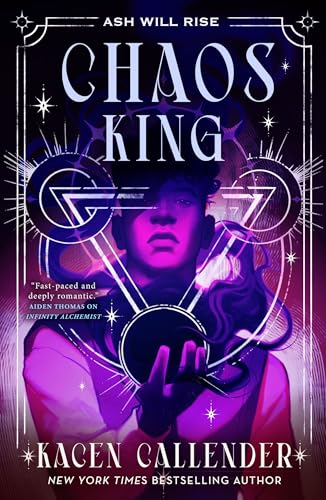
Serena’s Review: “Chaos King”

This post may contain affiliate links for books we recommend.  Read the full disclosure here.

Book: “Chaos King” by Kacen Callender

Publishing Info: Tor Teen, April 2025

Where Did I Get this Book: ARC from the publisher!

Where Can You Get this Book: WorldCat.org | Amazon | IndieBound

Book Description: Ever since he rose up against his father and saved New Anglia from destruction, Ash has been struggling to adapt to his new life. He has nightmares every night, haunted by strange black orbs and his screaming dead mother. Ash is sure she’s trying to warn him that the world is still in danger, and becomes determined to find a way to speak to her again―but communicating with the dead isn’t easy, even for an alchemist as powerful as Ash.

Previously Reviewed: “Infinity Alchemist”

Review: I didn’t love the first book in this series, but many of its problems also may have came down to all the elements a first book must tackle. Given more familiarity with the characters in this second go-around, I was interested to see where the story would go from there!

I will say, I did like this one better than the first. For one thing, I think the pacing was more balanced here. This makes sense, as it didn’t have to do nearly has much heavy lifting with regards to introducing the basic structures of this society and magic system. That being the case, the story had more free rein to dive straight into the main plot and several intense action sequences. This same benefit extended to the characters. While I still don’t love multiple love interests, the longer I’ve spent with all three of these people, the more I came to care about their various travails.

However, I still found myself struggling with the swapping pronouns for one of the characters. Inclusivity is important, but there are practical realities of reading a story via the written word that does create barriers to how this sort of character is presented. As it stands, swapping pronouns often throughout the story left me struggling to piece together who was saying/doing what. And this markedly detracted from my ability to stay connected to the plot, as I had to constantly come out of the story to piece together sentences and scour previous bits for context clues. Like I said in my original review, I’m not sure what the solution is here, but I think in light of the very real limitations of the written word, simply sticking with “they” as a pronoun would have greatly improved the writing in this book.

I did enjoy the themes explored here. This society has very real boundaries placed on its people, and we see the struggles our characters go through. Beyond that, we have the exploration of themes regarding religion and magic, and the lengths people are pushed to in their devotion to their beliefs. Revolution stories are always a good time in fantasy!

That said, the book has an odd ending. I thought this was a duology when I picked this one up, but the end definitely leaves the door open for more, with several questions left unanswered. Ultimately, I think if you enjoyed the first book, this one will definitely hold up as a good sequel. Even for those who didn’t love the first book, this was definitely an improvement!

Rating 7: While it’s an improvement on the previous book, I still struggled with the readability at times, and the ending had me scratching me head a bit.

Reader’s Advisory:

“Chaos King” can be found on this Goodreads list: 2025 Dark Academia Releases.

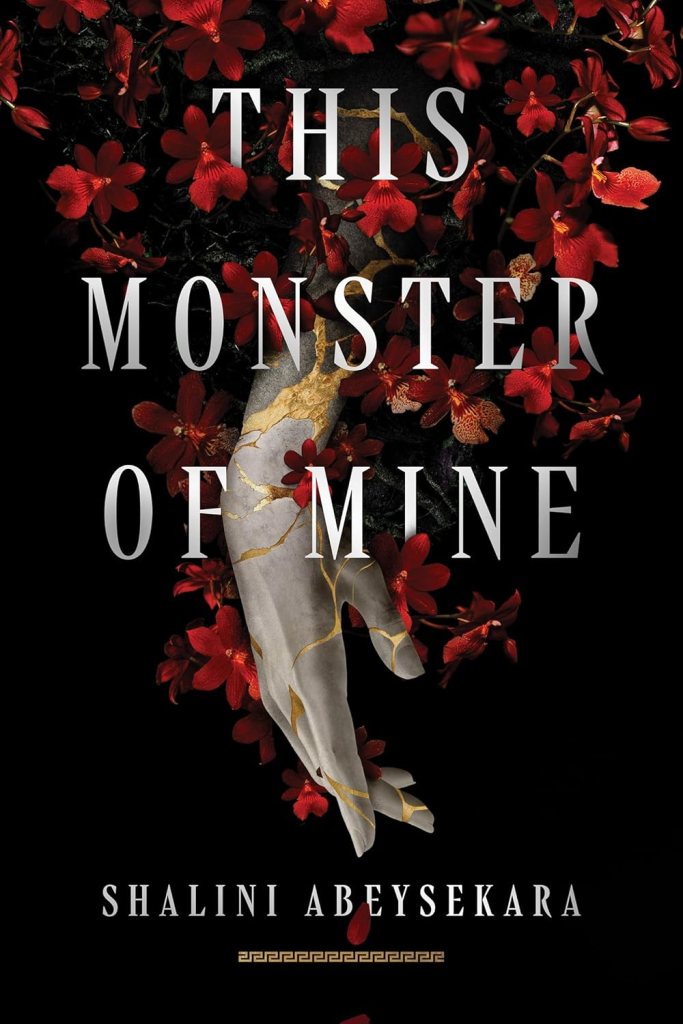
Serena’s Review: “This Monster of Mine”

This post may contain affiliate links for books we recommend.  Read the full disclosure here.

Book: “This Monster of Mine” by Shalini Abeysekara

Publishing Info: Union Square & Co., April 2025

Where Did I Get this Book: ARC from the publisher!

Where Can You Get this Book: WorldCat.org | Amazon | IndieBound

Book Description: Eighteen-year-old Sarai doesn’t know why someone tried to kill her four years ago, but she does know that her case was closed without justice. Hellbent on vengeance, she returns to the scene of the crime as a Petitor, a prosecutor who can magically detect lies, and is assigned to work with Tetrarch Kadra. Ice-cold and perennially sadistic, Kadra is the most vicious of the four judges who rule the land – and the prime suspect in a string of deaths identical to Sarai’s attempted murder.

Certain of his guilt, Sarai begins a double life: solving cases with Kadra by day and plotting his ruin by night. But Kadra is charming and there’s something alluring about the wrath he wields against the city’s corruption. So when the evidence she finds embroils her in a deadly political battle, Sarai must also fight against her attraction to Kadra – because despite his growing hold on her heart, his voice matches the only memory she has of her assailant…

Review: This is going to be a very strange review to write, mostly because it was a very strange book to read. I’m honestly having a hard time thinking of a book that was more of a roller coaster ride than this one. One minute I’m loving it, whipping through action scenes, swooning over the love interest. The next, I’m irate, considering DNFing, franticly scanning other reviews to see if I’m way off base or totally missing something.

Beyond the whiplash that this experience created, I was also off balance due to the fact that my usual points of interest/concern were reversed. I’m a character reader first and foremost, and more often than not, if I get through a book I’m otherwise struggling with, it comes down to the strength of the characters or the narrative voice. Here, however, the characters (more, the main character) was the problem, but the writing itself was so good that it carried me through the real deep troughs I experienced otherwise. The author simply has an excellent style and voice! The world-building was perfectly crafted, the dialogue all felt believable, hitting all of the right notes in its humorous, serious, or romantic moments. And the exploration of its themes regarding law and justice were *chefs kiss.*

And, again, when I wasn’t getting bogged down in the main character, I really enjoyed the romance! The story is a true slow burn, and while the romance is important to the story, it doesn’t overshadow the other serious aspects of the story, such as the aforementioned themes regarding justice or the mystery behind what happened to Sarai. And, for his part, Kadra was an excellent romantic interest in his own right! Strong, but compassionate. Filled with purpose, but also focused on Sarai as she works through her trauma. And, honestly, a hell of a lot more patient with her more ridiculous moments that I ever would have been.

And then, there’s Sarai. Now, if she had simply been an unlikable heroine through and through, we probably wouldn’t be here, good writing bedamned. No, instead, she has a lot of strengths as a narrator! I enjoyed most of her inner voice, and her motivations and magical abilities were all very interesting. The problem, however, came down to her approach to discovering the truth behind the attempt on her life. To get into my feelings with this, I’m going to have to go into some spoilers of actions in the first half of the book. For those who want spoiler free, I’ll just say she makes wild leaps of logic throughout that make zero sense. The rest of this review, however, will be a bit more in-depth with my problems here.

SPOILERS BELOW!

So, a little backstory: years ago, someone attempted to kill Sarai. The nature of the crime left her body and mind broken, with all but the barest fragments of memory of the event wiped from her mind. All she does remember is a specific voice, one that instructs another person to patch her up and get her out of the city, granted in a rough and tough tone of voice. In the years since, there has been a suicide spree, with many individuals with magical abilities like Sarai seeming to kill themselves in odd ways. Years later, she returns to try to discover what happened and who tried to kill her. Almost immediately, she recognizes the voice from her memories as Kadra.

Now, as readers, we know that Kadra can’t have been the attempted murderer, simply because we know we’re reading a romantic fantasy novel and he’s the romantic interest. Sarai couldn’t (and shouldn’t!) think this way, too. However, from the memories she does have, even she admits early in the book that whomever the voice belonged to was responsible for patching her up and could have very well been there for other reasons than being the person behind the attempt on her life. I read a paragraph from her saying just this and I thought, “Great, phew! We got the obvious bit out of the way right from the start and reinforced the idea that the true mystery here is why Kadra was there, why he helped her, and why he banished her out of the city.”

Unfortunately, no. In the very next chapter, Sarai is full-on convinced that Kadra must have been the one to try to kill her (somehow immediately forgetting/disregarding the fact that he then, inexplicably, saved her?? Why he wouldn’t have just finished her off for good is simply…never mentioned or thought of). What’s worse, Sarai begins to suspect that Kadra must also be behind the deaths of the others like her, those who have been supposedly committing suicide.

Early in their time working together, Kadra and Sarai go to the morgue to look over the body of the most recent “suicide victim.” While there, Sarai witnesses Kadra fighting with the coroner over the manner of death, insisting that it couldn’t be a suicide (something that Sarai agrees with, after viewing the body). The coroner, on the other hand, is sure it’s a suicide and has ruled it as such. What’s more, she’s sick of Kadra coming by FIVE OR SIX TIMES before this over the last few months to argue this very point! Sarai, internally, goes on to think this: “Aha! Kadra must be behind this! He’s perfectly positioned himself to cover up his crimes by being the investigator behind them!!”

Girl, what?? No one thought this guy was murdered EXCEPT Kadra! If it wasn’t for him, this guy would have been buried and listed as a suicide months ago! And yet somehow, Sarai, dumb dumb that she is, has decided that it’s totally reasonable and smart that a murderer would stage an elaborate scene to make a crime look like a suicide, and then, after completely getting away with it, spend the next few months arguing with a coroner, insisting that it was, in fact, a murder! It honestly boggled my mind.

Next, a few days later, Kadra decides that he and Sarai should go inform the family that this guy didn’t commit suicide but was killed and that they’re looking into it. Sarai, SUPREME DUMB DUMB that she is, thinks to herself this: “Great! Maybe while I’m there I can uncover proof that Kadra was behind it!!”

Girl, WHAT?!?! You think that Kadra murdered this guy, set up an elaborate staged suicide, called that very same staging into question, and is now going to take a woman with incredible magical abilities back to the home of the victim where he just so happened to leave around evidence that explicitly condemns him?? What is he getting out of this?? How is this helping him and not, as any normal person would think, clearly revealing him to be the only person most likely to have NOT killed these people. And again, throughout this, Sarai never deals with the fact that her theory of Kadra as the man behind her own murder attempt is completely blown out of the water by the simple fact that he WAS THE ONE TO SAVE HER!

The face-palming throughout all of this was frankly appalling. I won’t go into more details, but these flaws in thinking and ridiculous theorizing continued on well over the halfway mark in the book. Later, there are even more “revelations” that Sarai takes as confirmation of Kadra’s guilt, all of which are equally as stupid as the two examples I listed above. Even writing about it now, I’m getting mad about it all again.

What’s worse, as I said, so much about this book was clicking so well for me! The writing was so strong, the story-telling was good, Kadra was excellent! All the right pieces were there. But somehow, it feels like the author went astray with Sarai herself, as if she knew she wanted to create this suspicion between Sarai and Kadra, but couldn’t quite manage to make it actually work. So, instead, Sarai is just an idiot who thinks completely illogical things, just to maintain the mystery element behind Kadra and his involvement.

All of this said, I’ll definitely check out another book by this author. I think she’s got great potential, and with a few tweaks, I could have loved this book! Unfortunately, I couldn’t get past Sarai herself; I can’t remember the last time I read a book where a main character was this flawed in their reasoning for so long. However, other readers may be less bothered with it, particularly if characters are less important for you. The vibes of the story and the romance itself were very good!

Rating 7: I’d give this a 6 just for Sarai herself. But the actual writing and world-building deserves enough praise to bump it up to a 7.

Reader’s Advisory:

“This Monster of Mine” can be found on this Goodreads list: 2025 Debut Novels.

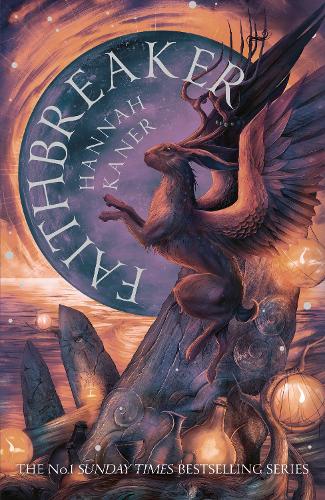
Serena’s Review: “Faithbreaker”

This post may contain affiliate links for books we recommend.  Read the full disclosure here.

Book: “Faithbreaker” by Hannah Kaner

Publishing Info: HarperVoyager, April 2025

Where Did I Get this Book: Edelweiss+

Where Can You Get this Book: WorldCat.org | Amazon | IndieBound

Book Description: War has come. The fire god Hseth is leading an unstoppable army south, consuming everything in her path. Middren’s only hope of survival is to unify allies and old foes against a common enemy.

Elo navigates an uneasy alliance with Arren; his friend, his enemy, and his king. Now they each must decide how much they’re willing to sacrifice to turn the tides of war.

Meanwhile, Inara joins her mother on their ship, the Silverswift, to seek aid. Still grappling with her powers, Inara must reconcile who she is and where she belongs, while Skediceth has to question if their bond will be enough to keep them safe.

Kissen has no allegiance to the old ways of Middren. But, as she tries to find her family, she is forced to question what, and whose, future she is fighting for.

Previously Reviewed: “Godkiller” and “Sunbringer”

Review: I’ll be honest, I’ve put off writing this review for a bit. On reflection, this trilogy has been a challenging experience. Mostly because the first book hit it out of the park for me, and now each subsequent book has been a step further and further away from that high. While this book does stick the landing of the overall plot itself, it wasn’t enough to temper my disappointment with various other aspects of the story.

But let’s start with the good. Like the two books before it, this one capitalizes on the intricate world-building that has been created over the course of the trilogy. There’s been excellent exploration of themes regarding religion, devotion, and the extremes to which individuals can be driven to under the influence of strong ideologies. This one continued in these veins. And, like I said, while it takes a while to get everything and everyone in place, the final confrontation and climax of the trilogy hits well.

The pacing is also fairly slow throughout. But this is true for the first two books as well, so readers should essentially expect a similar reading experience to those stories. Personally, I think the slower pacing works for the sort of story being drawn here. Never does this series claim to be an action-packed romp. But instead, it’s very character-based, and, as such, spends a lot of time in various characters’ heads exploring their personal arcs.

Now, unfortunately, we get to my complaints. First off, from the start I’ve mentioned that delicate balance that has been struck between the shared POVs. In the first book, all three POV characters were strong enough to make this approach work well. And, as they all spent the majority of their time together, these different POVs didn’t take us away from the two other characters, allowing the reader to still spend time with them all. In the second book, one of my complaints had to do with the lessening impact of these various POVs. Inara remained mostly the same, but Elo’s story took a massive dip, with much of his subplot feeling tacked on. And, in a strange turn, the excellence of Kissen’s chapters only served to further undermine the story, as it began to feel as if any chapters focused on the other two dragged even more than they should have in comparison.

Well, here, where I had so many hopes now that our main trio were finally reunited, this problem has only been expanded upon. Not only do they get immediately broken up into various groups again and sent off in different directions, but the story added in TWO more POVs. And, honestly, I couldn’t have cared less about Arren or Hestra! Not only did these chapters feel as if they were taking up precious page space from the characters I actually cared about, but in Arren’s case, the entire project behind him was DOA.

I get that the author thought that this added POV for him was necessary to attempt to make him a sympathetic character, but frankly, it was too little too late. I couldn’t simply sweep under the rug all of the actions I’d seen from this character in the first two books. Perhaps if these chapters were attempting to simply lighten opinions on him some, it would have worked. But to attempt to re-create him as a romantic interest for Elo? NO THANK YOU! I was so upset by this switch. Not only did it feel like the excellent dynamic that was created between Elo and Kissen was swept under the rug for no apparent reason (and frankly, this is the kind of stuff that just makes me furious because it makes me feel as if the author set me up for disappointment from the start), but Elo’s entire story has played out in him coming to realize what he deserves and what he doesn’t. What he absolutely doesn’t deserve is to end up with a character like Arren, who treated him so poorly and, frankly, betrayed him to a point that even if forgiveness could happen, romantic love certainly shouldn’t.

And it was more of the same for Kissen. Yes, her natural charisma as a character carried this new relationship further than my total disinterest in Elo’s relationship. But still. This felt like a late-game switch that simply wasn’t necessary and wasn’t set up to succeed. We had two entire books with plenty of other lore and action that needed to be resolved in the rather short page count of this last book. To attempt to wrap all of that up while also adding in two new relationships that only really appear in this last book? Something’s got to give, and it was with these romances.

It’s hard to be objective with this book. Once I saw where things were going with these new romances, I was so frustrated with the trilogy as a whole that I had a hard time focusing in on the rest of what the story was trying to accomplish. There was a solid ending, and one that pulled at the heartstrings in some meaningful ways. But what I loved best about this series were the three main characters. And as the trilogy wore on, it felt like more and more, that’s where the story struggled. Readers who are perhaps less invested in the main trio as a core group may enjoy this more than me. And that said, I do enjoy this author’s style of writing, so I’ll definitely check out what comes next (though, I’ll be honest, if it’s another series, I might wait for it to complete before starting up, so I know what I’m getting into. I really hate having the rug pulled out from under me, and it’s one of the few grievances that I have a hard time forgiving in authors.)

Rating 7: For me, personally, this was probably a 6. But as I know that I got caught up in my feelings, I’d say that on a whole, this one was still a solid conclusion to the trilogy, just not as good as the first book.

Reader’s Advisory:

“Faithbreaker” is on this Goodreads list: 2025 Adult Fantasy & Science Fiction.

Serena’s Review: “Exquisite Ruin”

This post may contain affiliate links for books we recommend.  Read the full disclosure here.

Book: “Exquisite Ruin” by AdriAnne May

Publishing Info: Gallery Books, March 2025

Where Did I Get this Book: ARC from the publisher!

Where Can You Get this Book: WorldCat.org | Amazon | IndieBound

Book Description:

Review: Sadaré wakes in a labyrinth, remembering nothing except that she is a powerful sorceress. Her only companion is a hostile immortal named Daesra—beautiful, dangerous, and demonic—who bound his divine soul for power and revenge.

Despite their animosity, the two have no choice but to work together to reach the center and defeat the monster who prevents their escape. But the longer they wander, the more deadly and alive the maze becomes—and the more Sadaré finds herself drawn to Daesra in ways she can’t explain.

As sorceress and demon develop a tenuous truce, the labyrinth gives Sadaré glimpses of their shared history of passion and pain that make her question everything she knows. Unlocking the secrets of her past may be the only way to survive and heal their entwined fates—but as she learns more about the betrayals that brought them to the labyrinth, Sadaré begins to fear that the monster at the center could be Daesra … or even herself.

Review: Regardless of my “hit and miss” track record with the romantasy genre, I was immediately intrigued by this one given its ties to the Minotaur myth. What a unique story! The only other version I know of that tackles this myth was the excellent short story by Naomi Novik in her latest short story collection. Now, that entire collection was probably my favorite short story book ever, so the bar was fairly high. But still, given how rarely this tale has been adapted, I felt confident that there was still a lot of room for exploration, especially with a romance angle added on.

That said, I didn’t pay tons of attention to the summary, and when I opened it up and started reading and realized that it was an amnesia story…I was less than thrilled. Totally subjective take, but amnesia is one of my least favorite tropes. For one thing, I think it’s very rare that an author can properly pull it off, and we saw plenty of examples of this stumbling block here: Sure, Sadare claims to remember nothing, but again and again, she makes assertations about her own history/motivations/preferences that she couldn’t possibly know. It’s hard to truly write a blank slate character, as would be true of an actual amnesiac, and Sadare is definitely not it. Beyond that, I have little tolerance for much of the flip-flopping we got from her, one minute drawn to the MMC and the next fearing and hating him once again, often with little given on the page to motivate a change from one emotion to the other.

The writing was also fairly stilted and it took me a long time to get invested. I think this comes down to an over-reliance on a telling vs. showing style. Sentence after sentence begins with Sadare saying “I…” did something/said something/thought something. As this was an early version, more polishing could be done here before the finished copy comes out, but often those changes are things like missed words or spelling rather than sweeping style changes.

So far this has been rather negative, but I do want to touch on what I did like. Whenever the story was given some breathing room from the romantic tension, I liked the exploration of the original myth and their wanderings through the maze. It could feel a bit repetitive at times with dead end met after dead end. But, on the other hand, this is a story about two individuals trapped in a maze. It should feel hopeless at times!

There were the pieces of a lot of good things here. I think both Sadare and the MCC had good foundations and the world-building was also very interesting. I think this author simply still needs some room to grow as far as the actual quality of the writing itself. With a more solid grip on the basics, this could have been a great read! As it stands, I think it will definitely appeal to the romantasy readers who enjoy monster fics. But if you’re generally a fantasy reader first and foremost, this might not be for you.

Rating 7: A unique romantasy with some creative world-building, but it was held back by an overly “telling” style of writing.

Reader’s Advisory:

“Exquisite Ruin” can be found on this Goodreads list: Greco – Roman Fantasy.

Serena’s Review: “Slaying the Vampire Conqueror”

This post may contain affiliate links for books we recommend.  Read the full disclosure here.

Book: “Slaying the Vampire Conqueror” by Carissa Broadbent

Publishing Info: Bramble, March 2025

Where Did I Get this Book: ARC from the publisher!

Where Can You Get this Book: WorldCat.org | Amazon | IndieBound

Book Description: Sylina has sacrificed everything for her goddess–her soul, her freedom, her eyes. Life in service to the Arachessen, a cult of the Goddess of Fate, has turned Sylina from orphaned street-rat to disciplined killer, determined to overthrow Glaea’s tyrannical king. But when a brutal vampire conqueror arrives on their shores, Sylina faces an even deadlier adversary. She’s tasked with a crucial mission: infiltrate his army, earn his trust… and kill him.

Atrius is a terrifying warrior carving an unstoppable path through Glaea. Yet when Sylina becomes his seer, she glimpses a dark and shocking past–and a side of him that reminds her far too much of parts of herself she’d rather forget. Sylina’s orders are clear. The conqueror cannot live. But as the blood spilled by Glaea’s tyrant king runs thicker, her connection with Atrius only grows stronger. A connection forbidden by her vows. A connection that could cost her everything.

Review: Bramble’s aggressive timeline to re-printing seemingly all of Carissa Broadbent’s back catalog is really biting into my plan to try and space these reads out! So, here we are, back with the latest, one that’s been out as an indie release for a while now and that I had been saving for a rainy day!

While I’ve definitely had favorites, I’ve always highly rated and greatly enjoyed Broadbent’s books, so I was excited to check this one out. I was particularly excited by the nature of this book, its being a stand-alone rather than part of a duology/trilogy, as many of her other titles are. And this one worked great in this format! The romance is a true slow burn, but one that resolves by the end of the book. The characters are strong enough to be introduced quickly and still pack a punch. And the world-building benefits from the various other books that are set in this same world, but still approachable to new readers, with few references to previous storylines.

Broadbent is one of those authors whose books seem to straddle the line between romantasy and romantic fantasy. They’re definitely romances, with a decent number of spice scenes and HEAs. But she also puts tons of effort into her world-building and magic system, and I think this gives the books good cross-over appeal to fantasy readers in general who enjoy a central love story. All of this to say, this was one of her best love stories yet!

I think the slow-burn nature of their relationship played out in the best way possible, with both characters coming in with their own goals and many pre-existing opinions about one another. But through the events of the story, their relationship begins forming first and foremost around mutual respect for one another’s abilities. Indeed, before the book spends much time at all with thoughts of romantic interest, we see several scenes instead of Sylina and Atrius admiring one another’s battle prowess. All of this ground work makes their eventual romance all the sweeter, as it feels as if it progresses at a natural and believable pace.

I also really loved Sylina as a character! The magic behind her blindness and the way that she interacts with the world was so interesting, from the details of her maneuvers while fighting to simple things like the ways that she and those like her connect with one another. As readers, its easy to have early suspicions about Sylina’s religion and the order that she works for. But the book does a great job exploring her slow path to questioning the way she has been brought up to understand the world, her views on authority and individual judgement, as well as autonomy. Throughout most all of her books, Broadbent has taken a keen look at religious extremism, often drawing neat but profound parallels to our current world, and this one is yet another example of this.

The book also doesn’t shy away from the violence and horror of the conflict brewing on the page. There’s a scene in the last third of the book that took me by surprise with just how grim it became. But, as this is a romance as well, things do get wrapped up with a nice HEA for our main characters. If you’re a fan of Broadbent’s work, then this is a must read! And if you’re looking for an easy entry point to her books, this is also a good place to start as it doesn’t commit you to more than one book!

Rating 9: Enticing and exciting! When you’re not busy swooning, you’ll be on the edge of your seat!

Reader’s Advisory:

“Slaying the Vampire Conqueror” can be found on this Goodreads list: Titles That “Slay”.