Ripley’s Reviews: A Ripley Wrap Up

This post may contain affiliate links for books we recommend.  Read the full disclosure here.

“Ripley’s Reviews” is an ongoing series where I will review every book in Patricia Highsmith’s “Ripley” Series, as well as multiple screen adaptations of the novels. I will post my reviews on the first Thursday of the month, and delve into the twisted mind of one Tom Ripley and all the various interpretations that he has come to life within. 

It’s kind of crazy to think that a little more than a year ago I started my “Ripley’s Reviews” series, and now I am coming to an end with it. I have to say I really had a fun time doing this specialized series on the blog, as Tom Ripley is such an important character for Thriller fiction and creating protagonists out of monsters. Admittedly overall the “Ripliad” was a bit of a hit or miss series for me, as were the film and media adaptations, but it was fun to see where the character has gone and how he has been interpreted. And for my write up to wrap up the review series, I thought I would talk about my favorite book of the series and my favorite adaptation.

Favorite Book: “The Talented Mr. Ripley”

This one was just the blueprint for so much and it was the introduction to the beloved character, and it never got better than this. “The Talented Mr. Ripley” is uneasy and chilling, but we also get to know Tom Ripley so well as the story goes on and he does more and more heinous things in his quest to absorb Dickie Greenleaf’s life and prestige. Highsmith really captured something special with this book, and it has been adapted, retooled, and reimagined in various ways in the decades after its release. I still think fondly of my bunk bed in Capitola, California as I read the book for the first time in high school, and how much it almost assuredly shaped my taste in thrillers for years to come.
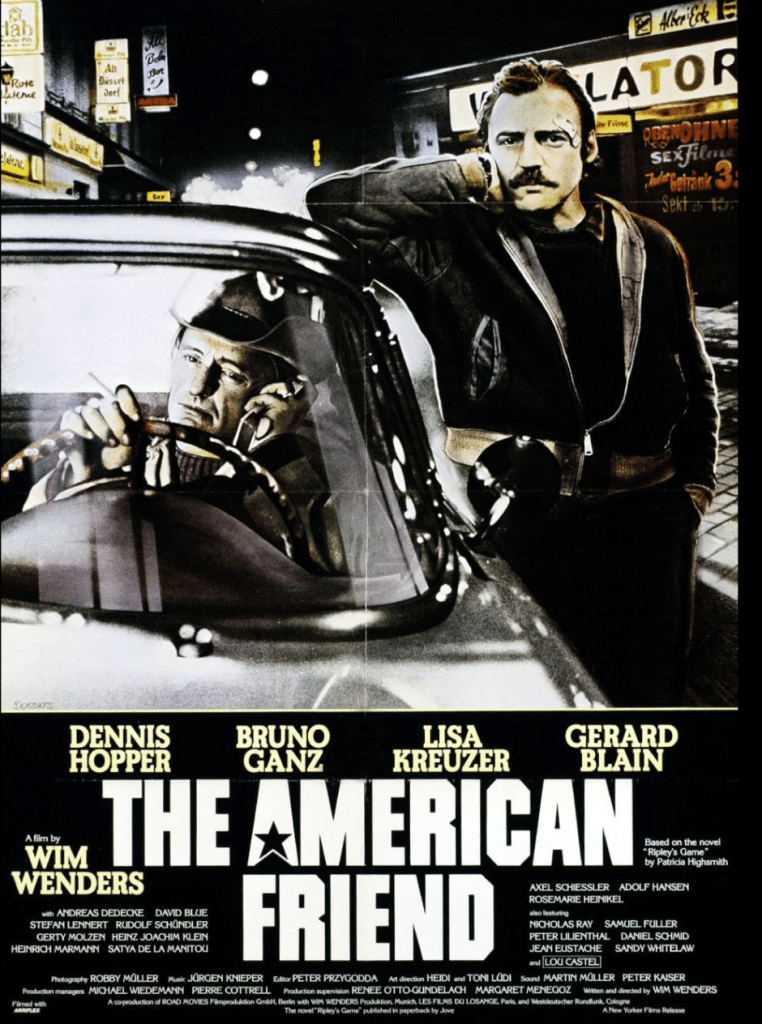
Favorite Adaptation: “The American Friend”

It’s so funny. Even when I reviewed this movie in my review series I said that I thought Matt Damon’s “The Talented Mr. Ripley” was my favorite of the film adaptations thus far. But as time went on, and it came time to write up this final thoughts post, I realized that I THINK “The American Friend” actually ended up being my favorite, just barely eeking out the 1999 film. I don’t know if it’s the tragic portrayal of Johnathan by Bruno Ganz, or the gorgeous cinematography that both evokes beauty and tension, or if it’s Dennis Hopper’s unexpected but effective turn as Ripley, but my heart keeps coming back to this film. I am planning on watching it again in the near future, seeing what I can catch and what will stand out on a second round when I’m not thinking of comparing and contrasting the source material with what ends up on the screen.

Best Ripley Overall: Matt Damon

I mean, I feel like Damon really, really captured the heart of the character, so while I was frustrated with some aspects of the 1999 film (justice for Dickie Greenleaf’s characterization!), I think that on the whole and comparing them all, this Ripley was the best one. He’s both horrifying in action but also relatable in his insecurities, and while I don’t want to call him ‘likable’, per se, he’s definitely an anti-hero in that I wanted to keep watching him weasel his way out of everything. At least until the end when he heel turn is fully complete. But Damon really portrays all of the facets that we have come to expect from Tom Ripley, humanizing him in ways without making him a hero or excusing his actions.

And with that, my “Ripley’s Reviews” series come to a close. I’m brainstorming other review series I can tackle in the future, but this one was a treat to take on. So long, Tom Ripley. It was a pleasure.

Ripley’s Reviews: “Ripley” (2024)

This post may contain affiliate links for books we recommend.  Read the full disclosure here.

“Ripley’s Reviews” is an ongoing series where I will review every book in Patricia Highsmith’s “Ripley” Series, as well as multiple screen adaptations of the novels. I will post my reviews on the first Thursday of the month, and delve into the twisted mind of one Tom Ripley and all the various interpretations that he has come to life within. 

TV Mini-Series: “Ripley” (2024)

We have come to the final “Ripliad” adaptation, in the form of the 2024 Miniseries “Ripley”. This was, interestingly enough, the thing that inspired me to do this entire blog series, as I saw it on my Netflix, started it, and then thought ‘huh….. I should really re-read the first book’. Which in turn turned into ‘Or MAYBE I should take on the ENTIRE series!’ So I turned off “Ripley”, and decided to save it. And about a year later, I was back, booting up this miniseries once more. “Ripley” stars a few people I am familiar with. The first is Andrew Scott, who I knew best from the movie “Pride” and the show “Sherlock”, who plays Tom Ripley. The next is Dakota Fanning, who plays Marge. I think the only thing I’ve seen her in is “The Runaways”, but she was solid in that. And finally we had Johnny Flynn as Dickie, who I had only seen in the 2020 version of “Emma” where he played Knightley. There was also Eliot Sumner playing Freddie, but I hadn’t seen them in anything before this. I went in with high hopes.

For the positives, I do have a fair amount of praise. The first is that this entire mini-series is brilliantly shot, and it captures both beauty and horror in a way that I found stunning. The black and white coloring makes things all the more stark, and there are scenes in this that took my breath away. In particular, the scene where Tom murders Dickie in the boat really stands out; it’s incredibly abrupt, it’s violent and jarring, and the way that it just keeps going through the murder itself and the way that Tom takes steps to cover it up were so unnerving I had to pause it a couple of times. We also get some beautiful shots of Italian cities, while also finding claustrophobia and lots of tension as Tom walks through various streets. This show takes its time with the story, lingering on its cinematography to set a scene and build tension.

And for the most part, I did enjoy the casting. I thought that Dakota Fanning as Marge was a great choice, and I really appreciated the way that this story presents her, not as a naive and incredibly kind love interest, but as someone who is a bit of a sour puss, but also immediately put off and suspicious of Tom when he just happens to re-enter her friend Dickie’s life by pure coincidence. Even when Tom ‘fesses up’, she isn’t sure, and I liked a more wary Marge in this story. I also thought that Andrew Scott was probably the most sinister Tom we have seen yet, with a cold calculating way about him as he ingratiates himself into Dickie’s life, and it feels as if he has made a decision about targeting and disposing of Dickie almost from the jump. Scott can play sinister, as we have seen in “Sherlock”, and in this he is a truly unnerving Ripley, deeply scary and cold. He is perhaps the most robotic of psychopaths that we have seen of a Ripley characterization, but I really enjoyed how much he scared me.

But, my biggest issue with this mini-series, as gorgeous as it is and as terrifying as Andrew Scott is and as perfect as Dakota Fanning is… Guys, I sincerely feel that Andrew Scott is a bit too old to play Ripley. And I feel that Johnny Flynn is too old to be playing Dickie (and I am saying this as someone who is only a little younger than he is). When Tom and Dickie are in their twenties, I am more inclined to buy Dickie’s devil may care privileged holidaying, and I am more inclined to believe him letting Ripley attach to him because of their supposed college connection. But when Dickie is in his late 30s, I just don’t buy his father not taking measures long before this moment. AND ON TOP OF THAT, we see Ripley running his small cons and schemes, but when it comes to bigger ones he loses his nerve pretty quickly, so I find it difficult to believe that he has been able to be this kind of con man for this long without being caught or without having to pivot off the path due to a lack of sustainability. And to almost add insult to injury, this adaptation felt not nearly as queer as I had hoped it would be. I fully recognize that Highsmith claimed that Ripley was never meant to be gay, but I was hoping that after the 1999 film there would be some kind of precedent to at least push it a little further that the strange quasi-sexual obsession that the Damon film had, and that the book had some undeniable hints at, with Ripley focusing a little too much on Dickie and his charismatic self and seeming to long to not just be him, but possess him. In this adaptation Dickie is kind of lackluster in most ways, and by taking out his dynamic personality we don’t get a captivating obsession from Ripley. It feels more like it’s just a momentary focus for the sake of the hunt, which isn’t BAD, per se. As i said, I find this version of Tom to be absolutely chilling. But without the obsession with Dickie feeling somewhat personal, it takes out a layer I had hoped it would be exploring and toying with, and it made it thud all the more.

So while it’s gorgeous and I enjoyed the interpretations of a few of the characters, overall “Ripley” had weird choices that kind of made it stumble for me. Next time I’m going to do a conclusion write up of my entire “Ripley” experience, and after mulling on it a bit I will be curious to see where this one ends up. I do recommend checking it out for the stunning visuals and the way that some of the scenes play out.

Ripley’s Reviews: “The Boy Who Followed Ripley” (2009)

This post may contain affiliate links for books we recommend.  Read the full disclosure here.

“Ripley’s Reviews” is an ongoing series where I will review every book in Patricia Highsmith’s “Ripley” Series, as well as multiple screen adaptations of the novels. I will post my reviews on the first Thursday of the month, and delve into the twisted mind of one Tom Ripley and all the various interpretations that he has come to life within. Up next is a BBC Radio 4 production based on “The Boy Who Followed Ripley”.

Radio Play: “The Boy Who Followed Ripley” (2009)

Given that the quality of the “Ripliad” had a considerable dip when we got to the final two books in the series, it’s not really surprising that they haven’t received any film adaptations. Because of this I wasn’t really expecting to do any more exploration of these books after my initial reviews, but then I found out that BBC Radio 4 did adaptations of ALL of the Tom Ripley books. And on top of that I found out that Nicholas Hoult played the role of Frank Pearson, the titular “Boy Who Followed Ripley”, and in that moment I knew I wanted to check it out.

I’ve listened to a few radio plays/adaptations in the past (my family had the entire NPR Radio “Star Wars” adaptation series, and we also had the BBC “Lord of the Rings”, both used on long car rides to Iowa), but it had been awhile, and “The Boy Who Followed Ripley” was an interesting reintroduction to the medium. It’s only an hour long, which seemed like it would be too short, but I actually found the compact timeframe to aid the story along. While the book felt a bit meandering and muddled to me, this play had a clear storyline that was straightforward and easy to follow. Sure, there are sometimes some clunky moments in the narration to set a very visual scene, but the play makes the solid choice to have Ripley (played by Ian Hart, more on him and Hoult in a bit) act as a first person narrator who can explain what is happening in addition to the dialogue. The BBC obviously knows what its doing, and it knew exactly which parts to pull from the book and how to present it into a condensed hour long play.

Ian Hart as Ripley and Nicholas Hoult as Frank are both very good in their roles, with Hart bringing in a sinister edge to go with his strange moments of affection towards his new friend, and Hoult sounding earnest and needy. I greatly enjoyed their chemistry, and thought that both of them really pulled out the strange undertones of the relationship the two characters have. I felt like the story leaned a bit into the queer subtext (we do, indeed, get our moment of Ripley getting in drag to stop Frank’s kidnapping, and I was overjoyed!), and Hart has some solid moments of vulnerability and bleak self awareness that I haven’t seen in a Ripley character since Matt Damon, without making him too sympathetic. That said, I didn’t listen to the other plays that cover the other books, so I’m not sure about how sympathetic they want him to be in the series as a whole. And Hoult was so subtle with Frank’s feelings and motivations, that his end hit harder for me than it did in the book. Man, Hoult is a treasure!

Overall, I’m happy I checked this out! It’s simple and yet more powerful that the source material. I probably won’t do any more of the BBC Radio 4 adaptations of the “Ripley” series, but this was well done. Up next is my final adaptation of a “Ripley” story, the Netflix series “Ripley” starring Andrew Scott as Ripley, Johnny Flynn as Dickie, and Dakota Fanning as Marge.

Ripley’s Reviews: “Ripley Under Ground” (2005)

This post may contain affiliate links for books we recommend.  Read the full disclosure here.

“Ripley’s Reviews” is an ongoing series where I will review every book in Patricia Highsmith’s “Ripley” Series, as well as multiple screen adaptations of the novels. I will post my reviews on the first Thursday of the month, and delve into the twisted mind of one Tom Ripley and all the various interpretations that he has come to life within. Up next is the fourth film adaptation of a “Ripley” book I’m covering, the 2005 film “Ripley Under Ground”.

Film: “Ripley Under Ground” (2005)

When I was doing my research on adaptations on the Ripliad, one of the films that was mentioned was the movie “Ripley Under Ground”, though many times it was also mentioned that it wasn’t easy to find. I had NEVER heard of this adaptation of a Tom Ripley book, which intrigued me. I was even more intrigued when I saw that Barry Pepper was playing Tom, as I know him from films like “The Green Mile” and “Crawl” and the thought of him as Ripley was interesting. This film came out to very limited release in 2005, and yes I can confirm it wasn’t an easy film to find on streaming (I couldn’t even find a trailer that wasn’t in German, hence the lack of link above). But I did find it, and committed to watching it as part of the Ripley series on the blog. After all, just because it was kind of lost to time, it had some promise. It’s a Ripley story! It has a cast. Wellll…. sadly, it’s the weakest adaptation yet, and it’s not even close.

I’m going to spoil some things in this, because without doing so I can’t fully explain some of my issues with the film. Fair warning!

It’s a very…. confusing adaptation. Firstly, this movie has basically treated this story like a standalone story, erasing “The Talented Mr. Ripley” and therein completely shifting Ripley’s backstory, history of violence, and desperation to keep up appearances. Instead he’s a poor wannabe actor (no Dickie Greenleaf murder, no money to inherit from his parents) who does have a history of conning people (after all, he cons his way out of paying rent, and has conned his way into his theater school), but has NO history of the murder and sociopathy the original character has. We’ve seen a standalone film of a sequel before, as “The American Friend” is very much a standalone and a very different Ripley. But for this kind of change to work, I REALLY need a, well, TALENTED Mr. Ripley to make up for it. Dennis Hopper brings that. Barry Pepper, unfortunately, does not. He barely has anything of a personality to speak of, and because of that is not compelling at all. It also removes a lot of his darker impulses, basically changing the one very clear murder Ripley commits in the book to an accident that Ripley has to clean up after. And to make things even more strange and confusing, the movie decides that Heloise… yes, Ripley’s naive and generally harmless wife Heloise… has to be something of a femme fatal and become a HUGE accomplice to him in his crimes, even going to far as to suggesting that they murder her father for his fortune right before the credits roll.

Just some REALLY weird choices being made here. (source)

I’ve been kind of mean to Barry Pepper, and but it’s warranted because I would say he’s probably the weakest member of the cast. Everyone else does a pretty good job. Willem Dafoe chews the scenery as art collector Murchison, even if at times it’s a little over the top. I quite enjoyed Alan Cumming as Ripley’s co-conspirator Jeff Constant, and we got a bit of a gender bent other co-conspirator with Claire Forlani as Cynthia, Derwatt’s girlfriend at the time of his death. Tom Wilkinson is the detective on the case, and I always like seeing him in things. But the stand out is Ian Hart as the guilt ridden and unstable Bernard, the friend that Ripley et al pressure into forging the paintings after they all witness Derwatt’s death. It’s a shame because I did enjoy the ensemble (OH AND ALSO we have a small role for Simon Callow of “Four Weddings and a Funeral” and “Amadeus” fame!), but with the lead being so lackluster it really brought the rest of the movie down. You really have to have an engaging Tom Ripley for a Tom Ripley film to work.

“Ripley Under Ground” was a baffling and disappointing adaptation. It’s pretty clear there is a reason that it has fallen by the wayside when compared to other films that strive to tell the Tom Ripley story. Up next I’m going to do something a little different. There isn’t a film adaptation of “The Boy Who Followed Ripley”. But there IS a BBC Radio Program adaptation, with Ian Hart (yes the same Ian Hart from above) as Tom Ripley, and Nicholas Hoult as Frank! So that’s up next!

Ripley’s Reviews: “The American Friend (Der amerikanische Freund)” (1977)

This post may contain affiliate links for books we recommend.  Read the full disclosure here.

“Ripley’s Reviews” is an ongoing series where I will review every book in Patricia Highsmith’s “Ripley” Series, as well as multiple screen adaptations of the novels. I will post my reviews on the first Thursday of the month, and delve into the twisted mind of one Tom Ripley and all the various interpretations that he has come to life within. Up next is the third film adaptation of a “Ripley” book I’m covering, the 1977 film “The American Friend”.

Film: “The American Friend (Der amerikanische Freund” (1977)

When I started this series of reviewing books and films about Tom Ripley, I didn’t realize that there were so many adaptations of the various books. I had clearly heard of the Matt Damon film and the “Ripley” series on Netflix (look for that in the future), but goodness! There are quite a few more! And NEVER in a MILLION years would I have ever thought that Dennis Hopper would be playing Tom Ripley. Dennis Hopper!?!? My main associations with Hopper as an actor are as follows: “Apocalypse Now!”, “Speed”, and “Blue Velvet”. He’s fantastic and nails all of these roles, but reserved they are NOT. And Tom Ripley is a cold, calculating, patient, and restrained character. I am not sure if Hopper has ever played restrained (let me know if I’m wrong!). But in “The American Friend”, he is Tom Ripley, and he’s…. KIND OF restrained. And interestingly enough, it does, indeed, work.

“The American Friend” is mostly an adaptation of “Ripley’s Game”, in which Ripley manipulates a working class picture framer to do his dirty work of carrying out a couple hits against some mafia figures, which Ripley didn’t want to do himself. It also takes the plot of “Ripley Under Ground” of the art forgeries and inserts them into this film, so it’s KIND of an adaptation of that as well, though it’s more for context I’d say. As an adaptation of “Ripley’s Game” it follows the plot mostly closely, though Ripley himself is a bit of a departure. And it probably is because Hopper is playing him. Instead of a put together and subtle posh fella living a luxurious quiet life, THIS Ripley feels like he could lose control at any minute, making him menacing in a different way. Yes, he does have a lot more calmly sinister moments, but it’s Dennis Hopper, and the more implied fiery villainy is a departure, but not in a bad way. I’m admittedly probably going to like Hopper in most anything I see him in, so I could be biased. But I thought that his Ripley was interesting and refreshing. And I really enjoyed the chemistry he had with Bruno Ganz, who plays manipulated picture framer Johnathan Zimmerman (they changed his name in this from Trevanny; not sure if it’s because this character is German instead of British, but it doesn’t really affect anything). This kind of feels like a buddy comedy in some ways as these two play off each other, since in this Ripley genuinely feels shame about his actions. Well, as much as he CAN, given that he’s still monstrous. He just feels a bit bad about it. He’s not the Ripley I’ve come to expect, but I still thought it was a fun interpretation. Cowboy hat and all (book Ripley would NEVER).

Speaking of Ganz, if I felt back for Johnathan in the book, I REALLY felt bad for him in the film. I think that that’s in part because he is just so worried about his wife and son, believing that he is dying of his until now stable blood disease (and like in the book, no, Ripley tricked him with a fake doctor and diagnosis) and that they will be penniless should he die. I am wholly unfamiliar with Ganz as an actor, as I have not seen much German cinema, but man he just broke my heart. You just feel his anxiety and desperation when he interacts with his family. I felt the same disgust for Ripley and his stupid mean plan as I did when I was reading the book. Ganz nailed it. And like I said above, the chemistry between him and Hopper was unexpected and sometimes, dare I say, kind of sweet?

As a thriller this is very well done, it’s intense and unrelenting. The tension is palpable and there are some scenes that truly had me at the edge of my seat, and the cinematography had some really great bits (I’m thinking of a particular scene where we are seeing Zimmerman flee and we are tracking him through his movements via the security camera footage). I also really loved a chase scene on a beach. Wim Wenders directed this and he had a very clear vision that translated well on the screen, with intensity and grittiness to spare.

So at this point in adaptations, I would say that Damon’s “The Talented Mr. Ripley” is still the best, followed by “The American Friend”, and then “Purple Moon”. But they’ve all been really enjoyable! Perhaps it should be no surprise that Tom Ripley is a character that translates well to the screen. Up next I am going to watch “Ripley Under Ground”, with Barry Pepper as Tom Ripley!

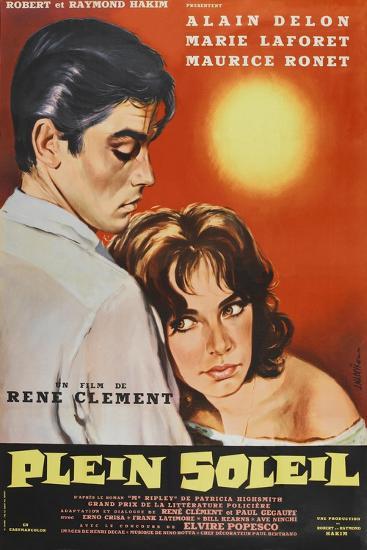
Ripley’s Reviews: “Purple Noon (Plein soleil)” (1960)

This post may contain affiliate links for books we recommend.  Read the full disclosure here.

“Ripley’s Reviews” is an ongoing series where I will review every book in Patricia Highsmith’s “Ripley” Series, as well as multiple screen adaptations of the novels. I will post my reviews on the first Thursday of the month, and delve into the twisted mind of one Tom Ripley and all the various interpretations that he has come to life within. Up next is the second film adaptation of a “Ripley” book I’m covering, the 1960 film “Purple Noon”.

Film: “Purple Noon (Plein soleil)” (1960)

It wasn’t until I started researching the Tom Ripley novels and all of their adaptations that I heard about “Purple Noon”, the 1960 French thriller that was the first Ripley screen adaptation. I am not as familiar with mid 20th century French cinema as a whole, though I’ve seen some classics like “Breathless”, “Hiroshima, Mon Amor”, and “Les Diaboliques”, so this title was brand new to me. But I was absolutely interested to see what a French adaptation of “The Talented Mr. Ripley” would look like. And it wasn’t at all what I expected. But in a mostly positive way. Though there are MANY differences between not only “Purple Noon” and “The Talented Mr. Ripley” the film, but also the book.

One of the biggest changes (of many!) is that in “Purple Noon”, Ripley’s object of sexual desire isn’t Dickie (or Philippe in this case), but it’s Marge. While Tom is still very much covetous of Philippe’s wealth and status, not once did I get the sense that he was into his pal, but man oh man was it pretty clear to me that he had the hots for Marge. It’s an interesting change, and one that simultaneously did and didn’t really work for me. I wholly understand that in 1960 the queer subtext was probably going to be left a bit behind, even in a French film, but it was still a little bit jarring to have Tom have his eyes on Marge while Philippe is definitely more a means to an end for funding and status. I kind of wondered why we even had that element when, in the original story, it’s really not at the forefront and one could argue isn’t needed. But it also kind of worked for me because the chemistry between Tom and Marge is there. It probably helps that Alain Delon and Marie Laforêt are both gorgeous and the backdrops were amazing and oof, they just crackled on screen. Which is, again, so strange to say about Tom Ripley given that in my mind he is a gay man. But hey, I’m going to allow it. I quite enjoyed their interactions. And I will say that there is a particular scene that was pretty sexy, even if the time period of the film means we didn’t get to see much.

Look, I get he’s a psychopath, but the CHEMISTRY!!! (source)

But it’s also very different from the book in other ways, including Tom’s plotting of murdering Philippe (in that he plots it at all!), the point in the timeline where our story begins (we start well after Tom has cuddled up with Philippe in Italy), and even how things start to perhaps unravel towards the end. Though all that said a good chunk of it in the middle follows the book pretty well, including the Freddie Miles plot point and some of the cat and mouse games that Tom keeps going as he passes himself off as Philippe. But then it starts to shift off again. I’m a bit conflicted about all of this, in all honesty. On one hand, it feels like there are enough changes that it doesn’t REALLY feel like a well done adaptation of “The Talented Mr. Ripley”, and that the liberties make it weaker. But on the other hand, it is such a well done film on its own standing that I really, really enjoyed it. The cinematography is gorgeous, the acting is really well done, and I was still quite entertained by the story even if I was thinking ‘that’s not quite right’ more often than not. And it also has the appropriate levels of creepy when it comes to Tom, even if he was a bit different from what I was expected and used to.

So is it a faithful adaptation? Not as much as I had expected. But it’s a well done film in its own right. I enjoyed watching “Purple Noon” and fully get why it’s a Criterion Collection member. Up next I’m going to take on “The American Friend”, which is an adaptation of “Ripley’s Game”. With Dennis Hopper as Ripley!

Ripley’s Reviews: “The Talented Mr. Ripley” (1999)

This post may contain affiliate links for books we recommend.  Read the full disclosure here.

“Ripley’s Reviews” is an ongoing series where I will review every book in Patricia Highsmith’s “Ripley” Series, as well as multiple screen adaptations of the novels. I will post my reviews on the first Thursday of the month, and delve into the twisted mind of one Tom Ripley and all the various interpretations that he has come to life within. Up next is the first film adaptation of a “Ripley” book I’m covering, the 1999 film “The Talented Mr. Ripley”.

Film: “The Talented Mr. Ripley” (1999)

I remember when “The Talented Mr. Ripley” came out. I was a freshman in high school, and Matt Damon was still riding high off of his turns in “Good Will Hunting” and “Saving Private Ryan” (and “Dogma” for this Kevin Smith fan, though it would be a couple years later that I fully dove into his whole deal). When I saw a trailer for “The Talented Mr. Ripley” it all seemed like another prestigious dramatic role for him, but then we got a pretty creepy turn as it went on and my 14 year old self was scandalized but intrigued. Toss in some Gwyneth Paltrow and a very new to me Jude Law (I was swooning) and I wanted to see it….. But didn’t get around to it until much later in life. I wanted to start with this film in my reviews of the films because it was the one that got Tom Ripley on my radar in the first place, and I was curious to see how it would hold up. AKA I was curious to see if it was actually as gay coded as I remembered and if it was as good of an adaptation I remembered. And I have great news: yes to both!

There are a number of changes that the film makes from the book, some of which work for me while others do not. I’ll start with what I did like in terms of changes. The first is that this movie really leans in to the whole ‘Tom is very much in obsessive love with Dickie’, and given how Ripley has been seen as a queer character even though Highsmith claimed he wasn’t this definitely worked. It makes it so that Tom’s longing isn’t only about coveting the things that he cannot have in terms of wealth and power, but also coveting a person that he cannot have. I’m not certain that it makes him seem more sympathetic (he’s still killing people, and one murder is particularly upsetting and ties into his identity), but it does make for a bit of a more complex character as the movie goes on. I definitely felt some pity for him as he pined for Dickie and is desperate for his affection and companionship, and thought that Damon played that angle of Tom really well. I also quite enjoyed the addition of Meredith (played by the iconic Cate Blanchett), a charming and naíve socialite that Tom meets almost immediately in Italy and impulsively passes himself off as Dickie towards her not an hour after arriving, which causes problems down the line. She kind of felt a bit like Heloise, Tom’s clueless but pretty nice wife in the books. Blanchett is always fantastic, and I really loved Meredith, even if she was a bit of a dope. But then she had no reason to not believe Tom, and it’s another layer of his manipulation skills that adds to his horribleness. Gwyneth Paltrow’s Marge is also expanded upon, and I really enjoyed seeing the direction that they take her, especially when it comes to her suspicions towards Tom as the story goes on.

But that leads into one of the changes that didn’t work as well for me, and that is how they basically assassinated Dickie’s character in this. In the book he is definitely a cad, and is blinded by his own privilege. But the movie REALLY trashes him. He’s unintelligent, condescending towards Marge, he’s having an affair with a local woman who he also impregnates, which leads to her killing herself because he refuses to take responsibility, and then when we get to the boat scene where Tom kills him with an oar, it is changed a bit to make it seem like Tom hit him in a moment of hurt and desperation and regretted it, only for Dickie to try and kill him. Which makes Tom fighting back and killing him a little easier to swallow. By making Dickie a villain in his own right it really takes away from Tom’s own reprehensible nature (that isn’t to say he doesn’t make up for it; there is a scene before the end of the film that makes it clear Tom has passed the point of no return that was chilling as hell). I just kind of felt back for the way book Dickie is thrown under the bus by film Dickie. Jude Law really is the perfect cad, though.

All in all I really enjoyed this adaptation! It’s eerie and unsettling, and I think that it’s a great portrayal of what Tom Ripley is, while giving him a little more complexity. Next up I’m going to tackle the 1960 film “Purple Noon”, the first adaptation of “The Talented Mr. Ripley”!

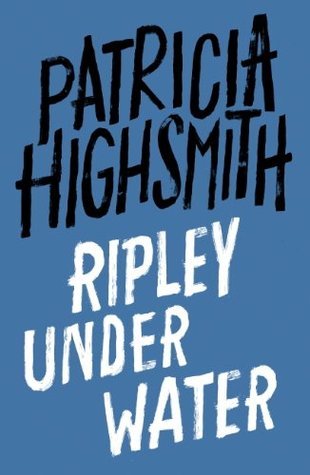
Ripley’s Reviews: “Ripley Under Water”

This post may contain affiliate links for books we recommend.  Read the full disclosure here.

“Ripley’s Reviews” is an ongoing series where I will review every book in Patricia Highsmith’s “Ripley” Series, as well as multiple screen adaptations of the novels. I will post my reviews on the first Thursday of the month, and delve into the twisted mind of one Tom Ripley and all the various interpretations that he has come to life within. Up next is the final book in the series, “Ripley Under Water”.

Book: “Ripley Under Water” by Patricia Highsmith

Publishing Info: Alfred A Knopf, October 1991

Where Did I Get This Book: The library!

Where You Can Get This Book: WorldCat.org | Amazon | Indiebound

Book Description: Tom Ripley passes his leisured days at his French country estate tending the dahlias, practicing the harpsichord, and enjoying the company of his lovely wife, Heloise. Never mind the bloodstains on the basement floor.

But some new neighbors have moved to Villeperce: the Pritchards, just arrived from America. they are a ghastly pair, with vulgar manners and even more vulgar taste. Most inconvenient, though, is their curiosity. Ripley does, after all, have a few things to hide. When menacing coincidences begin to occur, a spiraling contest of sinister hints and mutual terrorism ensues, resulting in one of Patricia Highsmith’s most elegantly harrowing novels to date.

Review: Happy 2025! I guess? New Year, new me, etcetera, and while I’m feeling pretty nervous about what this year has in store, I feel like we have the perfect transition here about to begin with my “Ripley’s Reviews” series. For you see, in the spirit of out with the old and in with the new, we are ending the first phase of this ongoing blog romp, as we have reached the end of the Tom Ripley books with “Ripley Under Water”! Patricia Highsmith published this book in 1991 and then passed away four years later, and therefore we are at a crossroads for how we follow Ripley as my series continues. I was hoping we’d get a pretty slamdunk ending to Ripley’s adventures after some shaky twists and turns. Unfortunately, that isn’t really what we got here.

Me in the final pages of this novel (source).

I found this to be more of the same from this series. Tom Ripley is still living at Belle Ombre with Heloise (oh Heloise. I enjoy her, she’s so daffy), just trying to tend to his garden and live life in relative comfort and opulence. And once again someone enters his life potentially threatening his comfort and stature, this time in the form of a boorish American couple called The Pritchards, who know a lot about his past and plan to make him suffer for it because… reasons? I did like the idea of Tom being on the receiving end of a little bit of torment for once, though the Pritchards were pretty two dimensional as villains, and I felt like we sleep walked through the story as Ripley attempts to outmaneuver them and keep his secrets hidden, even as they escalate and a literal body end up on Ripley’s literal doorstep. It’s entertaining, but nothing really stood out as unique or original. At least in “The Boy Who Followed Ripley” we had some really campy moments to even out the drudgery of Tom playing cat and mouse again. Here it’s just the same old song and dance, and while I enjoy Ripley very much and find him to be quite a character, I’ve realized that he needs supporting characters to play off of for his stories to really be successful. But I feel like as the series has gone on we’ve just gotten roadblocks and warm bodies that we know aren’t going to succeed in outwitting him.

And the saddest part of this book is that while it’s the final book in the series, it just kind of ends. I don’t know if this was because Highsmith had more plans for Tom but then died before she could bring them to life, or if it was because she knew that it would be a payday for her should she keep writing Ripley books and this one was merely a vessel to get said payday. I hope it wasn’t anything as cynical as that. But man, this just kind of ended without much fanfare. Maybe it’s a statement about how people like Tom Ripley just get to keep getting away with things. But as a narrative ending for Tom Ripley as a character, it just wasn’t very satisfying. I don’t know if I wanted him to get caught. It’s something I’m struggling with as the Joe Goldberg series goes on as well. But I wanted more than this.

Sorry to say that with “Ripley Under Water” we have come to a less than satisfying ending to Patricia Highsmith’s “Ripliad”. I don’t think this was a failed experiment on my part, as now having his full trajectory was interesting to be sure. But I had higher hopes than were warranted.

Well we are officially done with the book series. But we aren’t done yet! We still have a few films and TV adaptations to take on! And my first review of a “Ripley” adaptation is the film “The Talented Mr. Ripley”, which I will review next month! AKA the first movie where I was made aware that Jude Law is a person who exists. Can’t wait to revisit this one.

Rating 5: I’m a bit sad this is how we end the literary adventures of Tom Ripley, as it was more of the same and a weak ending to the series about one of the thriller genre’s MVPs.

Reader’s Advisory:

“Ripley Under Water” is included on the Goodreads list “The Vilest Man in Fiction”.

Ripley’s Reviews: “The Boy Who Followed Ripley”


This post may contain affiliate links for books we recommend.  
Read the full disclosure here.

“Ripley’s Reviews” is an ongoing series where I will review every book in Patricia Highsmith’s “Ripley” Series, as well as multiple screen adaptations of the novels. I will post my reviews on the first Thursday of the month, and delve into the twisted mind of one Tom Ripley and all the various interpretations that he has come to life within. Up next is the fourth book in the series, “The Boy Who Followed Ripley”.

Book: “The Boy Who Followed Ripley” by Patricia Highsmith

Publishing Info: Lippincott & Crowell, May 1980

Where Did I Get This Book: The library!

Where You Can Get This Book: WorldCat.org | Amazon | Indiebound

Book Description: The Boy Who Followed Ripley, the fourth novel in the Ripley series, is one of Patricia Highsmith’s darkest and most twisted creations.

Tom Ripley meets a young American runaway who has a dark secret that he is desperate to hide. Soon this unlikely pair is drawn into the seamy underworld of Berlin and a shocking kidnapping. In this masterful thriller, Highsmith shatters our perceptions of her most famous creation by letting us glimpse a more compassionate side of this amoral charmer.

Review: Okay look, I’m not going to beat around the bush here. I went into this review series thinking that all of the “Ripley” novels were going to be deeply suspenseful and able to stand the test of time. Patricia Highsmith is a well regarded author, and Tom Ripley is an icon. In the penultimate novel “The Boy Who Followed Ripley”, we get a bit of a dip in quality. Okay, a pretty large dip in quality. As a thriller, it really is stilted. The pacing is totally off. We have Tom Ripley meeting a young American teenager named Billy, who is actually an heir to a fortune named Frank Pierson who fled his home in America because he threw his wheelchair bound father off a cliff. So Tom finding a kindred spirit in this murderous young man goes on a road trip to Berlin, where we vacillate between tedious travel to a weird kidnapping plot that makes the story feel like it’s stopping and starting. Yes, as a thriller “The Boy Who Followed Ripley” didn’t feel all that thrilling or compelling to me.

But as a queer romp with Ripley really REALLY leaning in to the at the very least bisexual side that Highsmith spent so many years denying? GOOD LORD DOES IT WORK.

The way this book was gagging me as Ripley was feeling his oats… (source)

I am just going to be putting a pretty heavy spoiler warning on this review because we have to talk about so many things. As I mentioned above, for years Patricia Highsmith flat out denied the speculations that Tom Ripley was written as a gay man, in spite of the fact that people were picking up on little signs and coded moments here and there. His obsession with Dickie Greenleaf in the first book is probably the biggest piece of evidence, so much so that both the 1999 adaptation with Matt Damon and the newest Netflix adaptation with Andrew Scott run with it (the latter more than the former, and I will be watching both of these down the line in this series). But in “The Boy Who Followed Ripley” it feels like either Highsmith decided to maybe take these fan theories and speculations for a whirl, or she just decided to troll her readers. Because my goodness is Tom in his experimentation era here. Whether he’s listening to and appreciating Lou Reed’s album “Transformer” (long regarded as an album that really taps into the queerness of Glam Rock), or admitting to himself and others that he doesn’t really crave sex from his wife Heloise, or hanging out in a gay bar in Berlin with Tommy and enjoying the people he is interacting with, or LITERALLY DRESSING IN DRAG TO HELP FOIL THE KIDNAPPING PLOT, this book is REALLY going places that I didn’t expect when it came to Ripley’s sexuality. I’m by no means saying this is some pride parade of a novel, nor am I saying that this book is somehow ahead of its time when it comes to queer characterization. But I will say that getting into Ripley’s head as he’s getting in drag and seeing him muse about how putting on this disguise is freeing, or seeing him look on with what could be longing as Frank finds a fleeting community at a gay bar on the dance floor, was oddly bittersweet, and perhaps some of the most poignant moments for the character yet.

I don’t know why Ripley was so interested in saving Frank. Does he see himself in him? Does he see a potential protege? Is he just fixated again? It’s not clear. It has a lot of questions it leaves unanswered, and then Ripley moves on and will be going into his final story in the next. But for being the weakest in terms of thriller elements, any book that has Tom Ripley fighting kidnappers in drag as a ruse is a okay in my book. There is also a BBC Radio dramatization of this book with Nicholas Hoult as Frank, and I MAY be adding that to my adaptation reviews if I can find it. Anyway, next up is the final book in the series “Ripley Under Water”. I don’t know how Highsmith is going to wrap it up, but there’s no way to top Ripley in drag, if I’m being honest.

Rating 6: As a thriller, this is probably the weakest of the “Ripley” stories yet. BUT AS A QUEER FEVER DREAM?? It’s everything.

Reader’s Advisory:

“The Boy Who Followed Ripley” is included on the Goodreads list “The Vilest Man in Fiction”, and “Drag Queen Fiction”.

Ripley’s Reviews: “Ripley’s Game”

This post may contain affiliate links for books we recommend.  Read the full disclosure here.

“Ripley’s Reviews” is an ongoing series where I will review every book in Patricia Highsmith’s “Ripley” Series, as well as multiple screen adaptations of the novels. I will post my reviews on the first Thursday of the month, and delve into the twisted mind of one Tom Ripley and all the various interpretations that he has come to life within. Up next is the third book in the series, “Ripley’s Game”.

Book: “Ripley’s Game” by Patricia Highsmith

Publishing Info: Random House, March 1974

Where Did I Get This Book: The library!

Where You Can Get This Book: WorldCat.org | Amazon | Indiebound

Book Description: Living on his posh French estate with his elegant heiress wife, Tom Ripley, on the cusp of middle age, is no longer the striving comer of The Talented Mr. Ripley. Having accrued considerable wealth through a long career of crime—forgery, extortion, serial murder—Ripley still finds his appetite unquenched and longs to get back in the game.

In Ripley’s Game, first published in 1974, Patricia Highsmith’s classic chameleon relishes the opportunity to simultaneously repay an insult and help a friend commit a crime—and escape the doldrums of his idyllic retirement. This third novel in Highsmith’s series is one of her most psychologically nuanced—particularly memorable for its dark, absurd humor—and was hailed by critics for its ability to manipulate the tropes of the genre. With the creation of Ripley, one of literature’s most seductive sociopaths, Highsmith anticipated the likes of Norman Bates and Hannibal Lecter years before their appearance.

Review: We took a break last month from my “Ripley’s Reviews” Series due to Horrorpalooza (though you got TWO in September), but we are now back to this project and Tom Ripley continues to be loathsome and a literary legend. I was not familiar with the premise of “Ripley’s Game” before I started researching this series, and when I did get to this title I didn’t really know what to expect. I mean, outside of Ripley being the worst. And the worst he was. And it may be getting a LITTLE hard to handle for me.

Highsmith does breathe some new life into her Ripley stories with this third entry, as not only are we now delving somewhat into a Mafia thriller, but we also have two narratives we are following this time around. The first is, of course, that of Tom Ripley, who is still living his best life on his French estate with his vapid wife and all his ill gotten wares. He is approached to be a hitman for an acquaintance, but has no interest and instead suggests his friend seek out a man named Jonathan Trevanny, a lower class man with cancer, as he only ha a few months to live, surely, and may want the money to support his wife and child after he passes. Thing is, Trevanny doesn’t only have months to live, but the rumors make him think that perhaps he IS dying faster, and decides to take on the hits to keep his family supported. But Ripley can’t help himself, and inserts himself into Trevanny’s life further, and with that he’s up to his old tricks. I liked that we got to get into Trevanny’s head in this one, as it really showed his motivations and his anxiety and panic as he and Ripley are engulfed into Mafia dealings and the dangers that come with that. It was certainly interesting going in that direction as well, as you kind of wonder if Ripley may be biting off more than he can chew (but then we know he isn’t; we still have a couple books left). Also, this is another Ripley story that feels VERY queer coded, what with Tom once again obsessing over another man and inserting himself into his life. I know Highsmith had a lot of self loathing regarding her sexuality, and it’s interesting knowing that AND seeing Tom have these moments and layers.

But something that I did notice this time around is that I am starting to be a bit put off by Ripley and the things that he is doing. And I don’t mean that in a pearl clutching kind of way, after all this is Tom Ripley we are talking about here. It’s not like I think that he’s just ‘misunderstood’ or whatever. But I think that this time around, unlike in the two previous books, mostly the first book, Ripley seems to be absolutely destroying the life of Trevanny for no other reason than pettiness and a misplaced obsession. It’s one thing if Ripley is going in and wreaking havoc on the likes of the Greenleaf family, in that even though I’m not letting him off the hook for Dickie’s murder, at least there is some villainy of the selfish millionaire class that makes it feel more ‘fun’ in a way. Kind like in the “You” books where Joe Goldberg is a villainous murderer and stalker, but the people he is up against are all so unlikable and vile in their own ways that it’s more satirical and entertaining (while still making the various murders of the women he’s obsessed with just horrifying). In this book Ripley is gaslighting and setting up a lower class picture framer WITH CANCER to commit murders and drive him to the point of insanity all because he insulted him at a party once, and we don’t REALLY get the sense that Highsmith was unpacking the parallels of having a fun villain while dealing with the horrible things he’s done. I’m kind of grappling with this and trying not to feel like a hypocrite, and maybe that’s a feeling I have to own and Highsmith had the last laugh here. But this one felt a bit more misery filled than the previous two books, and as such I didn’t enjoy it as much.

We will see where we get with the next in the series, “The Boy Who Followed Ripley”. I don’t think that the bloom is off the rose yet, and I WILL say that I will be VERY interested to tackle a film adaptation of this one down the line.

Rating 6: I was quite in favor of two perspective narrative, but this was Ripley at perhaps his most vile, and the humor and satire didn’t balance it out as much for me this time.

Reader’s Advisory:

“Ripley’s Game” is included on the Goodreads list “The Vilest Man in Fiction”.