Serena’s Review: “The Prince Without Sorrow”

This post may contain affiliate links for books we recommend.  Read the full disclosure here.
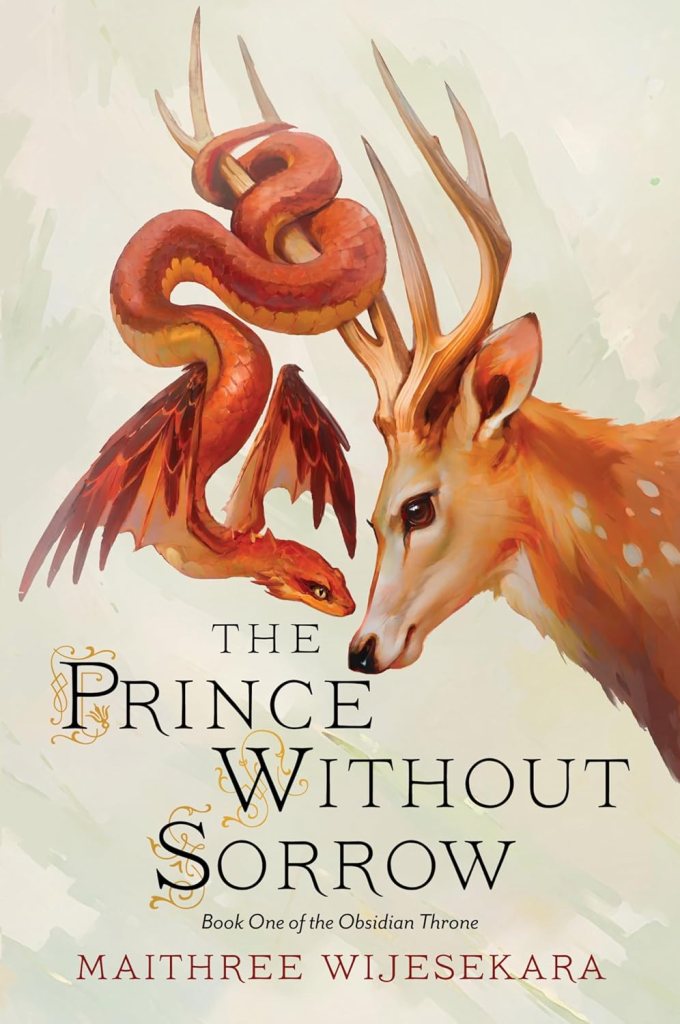
Book: “The Prince Without Sorrow” by Maithree Wijeskara

Publishing Info: Harper Voyager, March 2025

Where Did I Get this Book: ARC from the publisher!

Where Can You Get this Book: WorldCat.org | Amazon | IndieBound

Book Description: A prince born into violence, seeking peace.

Prince Ashoka is the youngest son of the tyrannical Emperor Adil Maurya. Considered an outcast by his father for his rejection of the emperor’s brutal onslaught against the witches of the empire, Ashoka longs for change. When the sudden and unexpected death of his father leaves the monarchy in disarray, Ashoka is sent to govern a tumultuous region annexed by Emperor Adil that is terrorized by nature spirits—a task many see as doomed to fail. Suspected by a disdainful governor and evaded by distrustful witches, Ashoka must question his rigid ideals and fight against becoming the one person he despises the most—his father.

A witch shackled by pacifism, seeking revenge.

Shakti is a a witch bound by a pacifist code. After witnessing the murder of her aunt and village at the hands of the emperor, Shakti hurtles down a path of revenge, casting a curse with unexpected consequences. Posing as a maidservant in the famed palace of the Mauryas and armed with newfound powers beyond her imagination, Shakti attempts to dismantle the monarchy from within by having the royal progeny ruin themselves and turn their father’s legacy into nothing but ash.

In a world where nature spirits roam the land, and witches are hunted to extinction, Ashoka and Shakti will be forced to grapple with the consequences of to take it for themselves or risk losing it completely.

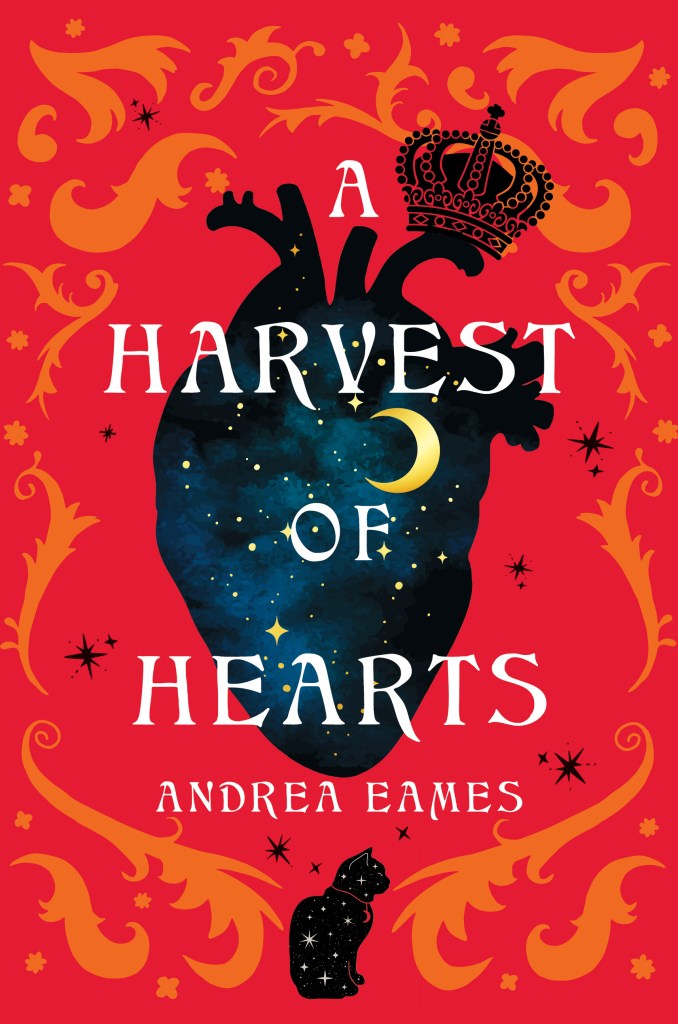
Review: I have to say, the cover was doing a lot of heavy lifting for me with this one! I don’t know if I even really looked at the summary much before requesting it! It’s such a lovely, unique image, one that definitely stands out from the typical fantasy crowd!

That said, the book didn’t quite live up to my high expectations. On the other hand, what it does have to offer feels very unique to the genre, so readers looking for a new entry point to fantasy fiction may appreciate what this one has to say. I was particularly intrigued by the exploration of pacifism and the building conflict between the main characters with regards to their approaches to moving through this world. We have one character who is actively trying to approach the world in a less violent manner, and another whose life has been one tragedy after another and who feels shackled by the restraints of nonviolence taught to her.

That said, I don’t feel like the author took full advantage of this premise. By the end of the book, I was left wondering if I had somehow missed the point that was trying to be made? But I also suspect that while a lot of interesting questions regarding pacifism and necessary violence were introduced, the author was unwilling to truly stake a position on these issues, which, ultimately, undercut much of what was presented here.

I also thought the magic system itself was fairly wobbly. The witches can’t use their powers without accruing bad karma, but Shakti is seemingly rewarded for doing just this? And then, later in the story, the other witches are also convinced to do away with what we’ve been told is a deeply held moral conviction? It all felt a bit too convenient. Add that on top of several other conveniences (the good guys and bad guys are almost cartoonishly one dimensional at times and very prone to giving speeches that clear up everything for every one), the story telling itself felt shaky. This was compounded upon by some structural issues with the writing like over-use of certain words and unclear metaphors.

All of that said, I do think there are readers for this book! As I said, the themes regarding pacifism were strong (even if I wish more had been done) and I did like the two main characters, which goes far for me. If you’re looking for a new-feeling fantasy novel, this may be one to check out!

Rating 7: There were strong themes regarding justified violence and pacifism, but some of the other story elements tripped up my reading experience in the end.

Reader’s Advisory:

“The Prince Without Sorrow” can be found on this Goodreads list: 2025 – Paranormal Romance (Standalones and 1st in Series).

Kate’s Review: “The Unworthy”

This post may contain affiliate links for books we recommend.  Read the full disclosure here.

Book: “The Unworthy” by Agustina Bazterrica & Sarah Moses (Translator)

Publishing Info: Scribner, March 2025

Where Did I Get This Book: I received an eARC from NetGalley.

Where You Can Get This Book: WorldCat.org | Amazon | Indiebound

Book Description: The long-awaited new novel from the author of global sensation Tender Is the Flesh: a thrilling work of literary horror about a woman cloistered in a secretive, violent religious order, while outside the world has fallen into chaos.

From her cell in a mysterious convent, a woman writes the story of her life in whatever she can find—discarded ink, dirt, and even her own blood. A lower member of the Sacred Sisterhood, deemed an unworthy, she dreams of ascending to the ranks of the Enlightened at the center of the convent and of pleasing the foreboding Superior Sister. Outside, the world is plagued by catastrophe—cities are submerged underwater, electricity and the internet are nonexistent, and bands of survivors fight and forage in a cruel, barren landscape. Inside, the narrator is controlled, punished, but safe.

But when a stranger makes her way past the convent walls, joining the ranks of the unworthy, she forces the narrator to consider her long-buried past—and what she may be overlooking about the Enlightened. As the two women grow closer, the narrator is increasingly haunted by questions about her own past, the environmental future, and her present life inside the convent. How did she get to the Sacred Sisterhood? Why can’t she remember her life before? And what really happens when a woman is chosen as one of the Enlightened?

A searing, dystopian tale about climate crisis, ideological extremism, and the tidal pull of our most violent, exploitative instincts, this is another unforgettable novel from a master of feminist horror.

Review: Thank you to NetGalley for providing me with an eARC of this novel!

Even though it was making the rounds when it came about a couple years ago, I never got around to reading “Tender Is The Flesh” by Agustina Bazterrica, a dystopian horror novel about a future where cannibalism is made legal and humans are bred for meat after the animals used for food are taken out by a virus. I heard that it was bleak and relentless, and I couldn’t quite bring myself to read it even though the metaphors sounded really interesting. But when I saw that she had a new horror novel out called “The Unworthy”, I decided to snap that one right up so that I could finally experience one of Bazterrica’s works. I thought that I prepared myself well, mentally, as hey, climate crisis and violent religious orders in horror? It’s not like those things deeply, deeply disturb me or anything, right?

Look, I know myself, I just lie to myself. (source)

This was my first time with a Bazterrica story and WOW. It was a ROUGH one, but not in a bad way. She takes on two horror sub-genres that stress me the hell out, eco/climate horror and religious horror, and combines them into a searing post-apocalyptic nightmare involving violence, chaos, zealotry, and, yes, feminine rage. Bazterrica doesn’t hold back from some really relentless and absolutely horrifying moments. There are so many content warnings I’d attach to this, between graphic depictions of violence to child death to mutilations and sexual violence, it’s fairly grim in the portrayal of a world devastated by climate change and a society that has basically collapsed, and the sociopaths that find ways to take advantage. Our nameless Narrator has been THROUGH it, and we see her story starting in the oppressive and zealous and violent convent, and eventually see how she got there as she writes out her story and comes to terms with everything that has happened to her. We also get hints into the corrupt and violent cult that she has found herself within, with her being a part of the ‘Unworthy’ class, who are submitted to hard labor, humiliation, and torture by the Superior Sister and the mysterious Him (a very creepy amped up take on carrying water for the patriarchy if I ever saw one). There are the Enlightened class that she hopes to join, though no one REALLY knows what that entails, just that it’s aspirational (though if you are like me and have a working knowledge of cults and tropes like this, you can guess that there are hidden, uh, costs). I loved the slow burn build up and how it was interspersed with not only Narrator’s past.

And then there were the genuinely beautiful things I found within this book, something I hadn’t expected as much when I picked it up given the plot and Bazterrica’s reputation. The first is just that the descriptions of things were gorgeous, and while this could be in part due to the translation by Sarah Moses, I get the sense that Bazterrica’s original text probably had this as well to show beauty within despairing. There was also the lovely connection between Narrator and newcomer Lucia, as Narrator hasn’t had a REAL connection since multiple losses she endured as the world as she knew it came crashing down. It’s also another great example of how high control groups and cults like the Sacred Sisterhood thrive on mistrust, paranoia, and the splintering of connections, and promising that only the group and its leadership can provide that, when it actuality community and connection to others is what can really bring people through the despairing and miserable times. And how community and connection is a threat. So many things I’ve been thinking about as of late just laying out on the pages here, in all it’s terrible and messy and scrappy hopeful glory.

“The Unworthy” is really, really tough, and has a lot of despair and misery. But it also has beauty, and showcases humanity in all of its highest highs and lowest lows. I quite enjoyed it, even if it made me feel really, really bad at times.

Rating 8: Relentless, horrifying, and at times rather gorgeous, “The Unworthy” is apocalyptic religious horror with an undercurrent of feminist rage.

Reader’s Advisory:

“The Unworthy” is included on the Goodreads list “Dystopian Womanhood”.

Joint Review: “The Bane Witch”

This post may contain affiliate links for books we recommend.  Read the full disclosure here.

Book: “The Bane Witch” by Ava Morgyn

Publishing Info: St. Martin’s Griffin, March 2025

Where Did We Get This Book: ARC from the publisher/Netgalley

Where You Can Get This Book: WorldCat.org | Amazon | Indiebound

Book Description: Piers Corbin has always had an affinity for poisonous things – plants and men. From the pokeweed berries she consumed at age five that led to the accidental death of a stranger, to the husband whose dark proclivities have become… concerning, poison has been at the heart of her story. But when she fakes her own death in an attempt to escape her volatile marriage and goes to stay with her estranged great aunt in the mountains, she realizes her predilection is more than a hunger – it’s a birthright. Piers comes from a long line of poison eaters – Bane Witches – women who ingest deadly plants and use their magic to rid the world of evil men. Piers sets out to earn her place in her family’s gritty but distinguished legacy, all while working at her Aunt Myrtle’s cafe and perpetuating a flirtation with the local, well-meaning sheriff to allay his suspicions on the body count she’s been leaving in her wake. But soon she catches the attention of someone else, a serial killer operating in the area. And that only means one thing – it’s time to feed. In Ava Morgyn’s dark, thrilling novel, The Bane Witch, a very little poison can do a world of good.

Serena’s Thoughts

There are a few go-to authors that Kate and I like to joint review, as we’ve both reliably enjoyed their books in the past. This author, I believe, is new to both of us! But we’ve both enjoyed “Practical Magic,” so with a comparable like that, plus the promise of a thriller-like mystery at its heart, we both thought this would be a good candidate to check out!

Unfortunately, for me, this was just ok. And part of that is the simple fact that it skewed further into the thriller genre and away from the fantasy genre than I typically prefer. So that’s nothing against the actual quality of that portion of the story (see Kate’s opinions there for a more reliable source on this genre!), but it does speak to the balance of this book. And I think for fantasy readers, specifically those looking for a read-alike for “Practical Magic,” this might feel like a bit of a let down. Instead, I think the “Gone Girl” reference made a lot more sense, and better fit, tonally, with what this book had to offer. Sure, the witchy stuff was definitely there, but the general plotting and themes fell much more in line, I think, with a thriller than with a typical fantasy story.

I also struggled to really enjoy Piers herself. In the beginning, she comes across as incredibly competent and thoughtful, as one would need to be to successfully pull of faking one’s own death. However, as the book continued, and especially towards the end, she began to make an increasing number of ridiculous decisions that just didn’t vibe with the sort of person we had first been introduced to. Her actions and various plot points felt jammed together in unnatural ways that served to push the story forwards in the direction the author wanted to go, but didn’t necessarily make sense on their own.

For me, this was just an ok read. I didn’t think the magical elements really lived up to my hopes, and I didn’t really connect with its thriller roots. I also struggled to enjoy Piers as a main character. However, readers how are more interested in the mystery and the serial killer angle might enjoy this more than I did!

Kate’s Review

Well, Serena knows me very well, because this one worked for me on many levels! Part of that was the mystery and thriller elements, to be sure, as I love a story with a serial killer and a woman who has to play a cat and mouse game with him. I also liked the suspense that builds up within the book as the story goes on, whether it’s due to the aforementioned killer that Piers is trying to track, albeit against her will, or the stress involving her abusive ex husband Henry and the cops on her tail after her faked death. Heck, I even liked the suspense regarding whether or not the other bane witches are going to accept Piers into their circle. I will say that as we got closer to the end, things went a little bit off the rails, which put a bit of a wrench in the pacing and how I connected to the story, but I thought that the plot itself was strong enough that I wasn’t too put off by it.

But what worked the most for me were the magical systems that Morgyn created for this book, as the idea of a witch being able to consume poison and transfer it to dangerous and deadly men to take them out is SO appealing to me as a horror reader who also loves witchy books. And I actually disagree with Serena a little bit, because I did get “Practical Magic” vibes from this, specifically the darker themes of that movie (I may not be speaking for the book, it’s been awhile since I’ve read it so lets just stick to the film) like violence against women, women taking their power into their own hands in dire circumstances, and the complicated relationships between families where estrangement and trauma is a very real wedge between people. So many of these things really click for me in my witch fiction, and I thought that Piers coming into her own as a dangerous but righteous bane witch was a fun and engaging arc (though I definitely agree that she does make some REALLY dumb decisions in the later third of the novel, no arguments there). And I always like witch stories that work outside the expected box, or outside of what we usually see in the sub-genre, and a bunch of mountain witches using poison magic was VERY fun and not something that I see as much.

Overall I found “The Bane Witch” to be a really entertaining witch tale, hitting all of the notes I had hoped it would.

Serena’s Rating 7: An interesting concept with the poison magic, but I struggled to connect to Piers and wanted more from the fantasy elements in the story.

Kate’s Rating 8: A fun and deliciously wicked witch tale with poison, empowerment, and a unique magical system. Add in a solid suspense vibe and it’s overall a winner.

Reader’s Advisory

“The Bane Witch” is included on the Goodreads lists Vampires and Werewolves and Witches…Oh My! and Poisonous Plant Fiction Titles.

Serena’s Review: “Nightweaver”

This post may contain affiliate links for books we recommend.  Read the full disclosure here.

Book: “Nightweaver” by R.M. Gray

Publishing Info: Little, Brown Books for Young Readers, March 2025

Where Did I Get this Book: Edelweiss+

Where Can You Get this Book: WorldCat.org | Amazon | IndieBound

Book Description: Six hundred years ago, Nightweavers, cursed beings with untamed power, claimed the continents for their own. The ocean was meant to be a safe haven for humanity, including seventeen-year-old Aster Oberon and her pirate family. But after Aster’s brother is killed in an epic battle at sea against Nightweavers, Aster and her family are thrust into a new life on land.

When a handsome Nightweaver named Will offers the Oberons protection and work at his opulent estate, Aster is suspicious. As the arrogant and entitled right hand to the wicked prince, Will is everything that she has been taught to hate. But as he shows empathy and kindness, Aster can’t ignore a blooming attraction. And even more, Will opens her eyes to a new There are monsters worse than Nightweavers, monsters who may be behind her brother’s death.

As Aster hunts the creatures responsible, dark secrets threaten to unravel everything she once believed about her family, herself, and her world.

Review: Well, while “The Otherwhere Post” reminded me earlier that YA fantasy can still work for me, unfortunately this book reminded me why I also often struggle with the genre. That’s not to say it was all bad, not by any means. More that I think this is the exact sort of book that will work well for its actual target audience of teen fantasy readers. However, adults who often stray into YA fantasy for their reads may have more frustrations with it, like I did.

Let’s start with some good things! I definitely went in intrigued by the pirate angle of the story. This felt particularly fresh in the current YA fantasy genre, and what bits of this we got were all good. Unfortunately, we get most of the actual pirate stuff in the first 25% of the book; after that the story re-located to the land and spends the majority of the rest of the story there. This seems like a missed opportunity to me, but I did enjoy those bits we got at the beginning. On top of that, there were a lot of different tropes here that readers may enjoy, including multiple love interests, chosen one plots, and various kingdoms that have their own goals and politics.

Personally, I found this plethora of tropes to be counterproductive. Some may enjoy this barrage, but for me, I prefer a more tightly focused story. By the end, the author seemed to be throwing every trope she could find at the wall and seeing what would stick, including a late reveal about the heroine that was so predictable I almost put the book down. In so many ways, this read like too many other YA fantasies I’ve read. It included a ton of things, but didn’t do any of them notably well.

I also didn’t enjoy the main character. She had some strengths, like bravery and such, but she was also clueless to the many obvious things going on around her. Beyond that, the inner voice for this character was simply rather dull. Again, nothing aggressively bad here, but more just bland. Some readers may enjoy her more than I did, particularly actual teen readers. The love interest(s) were equally bland, with some of them disappearing from the page for longer than they were on it, it seems!

Overall, there were some good ideas here, but the entire thing began to feel a bit predictable and mediocre. The author didn’t take advantage of the one truly unique aspect of her story, the pirate angle, and instead pursued story beats that we’ve seen a million times before. The pacing was also incredibly uneven throughout, which left me feeling behind the story at times and, at other moments, as if we hadn’t moved forward at all. Like I said, however, there will be readers for this book! I just think it’s the kind of YA fantasy that reads much better in its actual age range, without much crossover appeal to adults readers.

Rating 7: A YA fantasy that will probably be best enjoyed by actual teen readers; adult fantasy fans may feel underwhelmed by the predictable plotting and rather flat characters.

Reader’s Advisory:

“Nightweaver” can be found on this Goodreads list: YA Novels of 2025.

Serena’s Review: “The Liar’s Knot”

This post may contain affiliate links for books we recommend.  Read the full disclosure here.

Book: “The Liar’s Knot” by M. A. Carrick

Publishing Info: Orbit, Dec. 2021

Where Did I Get this Book: from the publisher!

Where Can You Get this Book: WorldCat.org | Amazon | IndieBound

Book Description: In Nadezra, peace is as tenuous as a single thread. The ruthless House Indestor has been destroyed, but darkness still weaves through the city’s filthy back alleys and jewel-bright gardens, seen by those who know where to look.

Derossi Vargo has always known. He has sacrificed more than anyone imagines to carve himself a position of power among the nobility, hiding a will of steel behind a velvet smile. He’ll be damned if he lets anyone threaten what he’s built.

Grey Serrado knows all too well. Bent under the yoke of too many burdens, he fights to protect the city’s most vulnerable. Sooner or later, that fight will demand more than he can give.

And Ren, daughter of no clan, knows best of all. Caught in a knot of lies, torn between her heritage and her aristocratic masquerade, she relies on her gift for reading pattern to survive. And it shows her the web of corruption that traps her city.

But all three have yet to discover just how far that web stretches. And in the end, it will take more than knives to cut themselves free…

Previously Reviewed: “The Mask of Mirrors”

Review: It’s been a hot minute since I read the first book in this trilogy, and I have no excuse! I really enjoyed the first book and some of the late reveals were truly excellent at setting up exciting stuff for the books to come! The best I can say is that, at 600+ pages, each book in this trilogy is quite the commitment. But one of the book boxes I subscribe to is currently doing this trilogy, so it was the perfect excuse to jump back into things!

As this is the second in the trilogy (and the middle of a trilogy that has been complete for a few years now) there will be some spoilers for the first book included in this review. Beware if you haven’t read the first one! These reveals are really better appreciated when discovered on your own read-through!

This book picks up pretty much immediately after the events of the first. I did have to go back and do a decent amount of re-reading to re-familiarize myself, as the story doesn’t waste time recounting too many details from the previous story. But after I settled in, this one was truly a joy to experience. Ren and Grey were excellent in the first book, but each was even better here. The titular “Liar’s Knot” easily applies to Ren and the numerous secret identities that she is attempting to balance. Through these identities, she has her fingers in numerous pies, with information flowing in from many sources. The challenge, of course, is believably transferring and using this information from one version of herself to another. How would a noble woman be aware of the secrets discovered my a masked vigilante? This all serves to highlight the strengths of not only Ren as a character, but the meticulous plotting done by the authors, to piece together all of these storylines and weave them together so intricately.

Grey, of course, is now particularly interesting after the reveal at the end of the last book that he was the Rook. In the first book, with this knowledge not revealed to the reader, Grey seemed to exist more on the periphery of the story. Here he comes fully into his own, with the readers now given a clear look into the magic and mystery behind the Rook. I really enjoyed the history behind the vigilante and the magic involved in it. Rook is very much a character of his own, and the Grey’s management of his identities is both similar to Ren’s (in that he has to manage who knows what about himself) but is also more magically complex: he must not lose himself to the magic of the hood.

I also really loved the romance that developed between these two. The first book briefly hinted at this as a possibility, but it came more through the Rook than through Grey himself. Instead, Vargo and the late Leato both had more romantic groundwork laid in the first book. But between Vargo’s lies and Leato’s, well, death, Grey/Rook easily stepped into the romantic lead role. And, honestly, I preferred him best in this role anyways, so I was excited to see it play out here! It’s probably no surprise that I loved this part of the story so much. I love one and ONLY ONE version of love triangles and it is the classic “secret identity” Superman/Lois/Clark version. And here we had excellent example of this sort of love story at its best, with Ren falling for both Grey and the Rook at the same time. But, importantly, while the authors took full advantage of this set up, they also knew when to give up the ghost and allow secrets to be revealed.

I also really enjoyed that we got to see more from Vargo. He becomes almost a third main character in this book, with a lot more POV chapters devoted to his perspective. He’s an interesting counterbalance to Ren and Grey and it was great learning more about his history (and that of Peabody!). That said, my one quibble with the story came down to a few character motivation moments, and one of the most stark was with Vargo. While I really like the direction this character took, I’m not sure I saw enough in the first book or this one to make sense of Vargo’s decisions? While he and Ren got along well enough, the rather extreme levels of devotion he takes for her, even while their relationship is really poor here due to his lies in the previous book, is a bit hard to buy.

In a similar vein, in the first book I really appreciated the morally grey motivations behind Ren’s con. It made sense for a character with a background like hers. However, this book introduces a magical elements that, while great on its own, seems to muddy the waters with regards to the grey aspects of Ren’s character. Like I said, I enjoy the direction the story is going with the greater conflict here, but I think Ren was a more interesting character when her motivations and decision making were more questionable. She’s already near perfect in many ways, so making her too much of your typical perfectly-motivated heroine can only be a loss.

That said, I loved this book! These last bits about characterization were truly minor quibbles and even often ended up leading into or introducing aspects of the ongoing story that I’m incredibly excited for. I’ll definitely be checking out the next book soon! You know, in the next few months, not years like last time…

Rating 9: Full of twisting secrets and layered lore, this book is even bigger and better than the first!

Reader’s Advisory:

“The Liar’s Knot” can be found on these Goodreads lists: High Fantasy Written by Women and Renaissance and Tudor Fantasy.

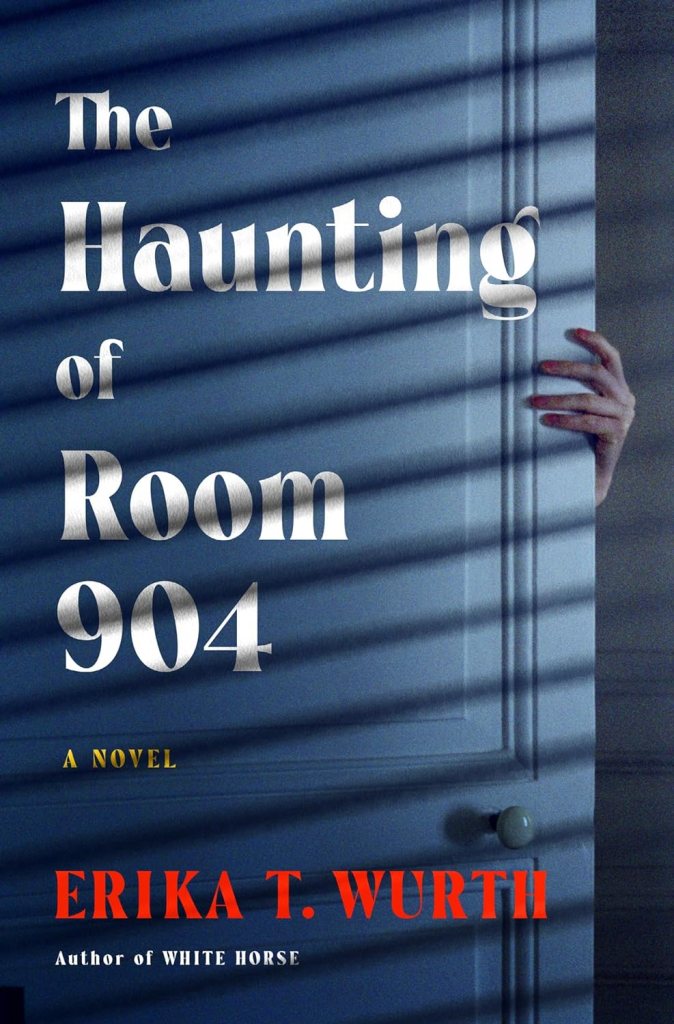
Kate’s Review: “The Haunting of Room 904”

This post may contain affiliate links for books we recommend.  Read the full disclosure here.

Book: “The Haunting of Room 904” by Erika T. Wurth

Publishing Info: Flatiron Books, March 2025

Where Did I Get This Book: I received an eARC from NetGalley.

Where You Can Get This Book: WorldCat.org | Amazon | Indiebound

Book Description: From the author of White Horse (“Twisty and electric.” —The New York Times Book Review) comes a terrifying and resonant novel about a woman who uses her unique gift to learn the truth about her sister’s death.

Olivia Becente was never supposed to have the gift. The ability to commune with the dead was the specialty of her sister, Naiche. But when Naiche dies unexpectedly and under strange circumstances, somehow Olivia suddenly can’t stop seeing and hearing from spirits.

A few years later, she’s the most in-demand paranormal investigator in Denver. She’s good at her job, but the loss of Naiche haunts her. That’s when she hears from the Brown Palace, a landmark Denver hotel. The owner can’t explain it, but every few years, a girl is found dead in room 904, no matter what room she checked into the night before. As Olivia tries to understand these disturbing deaths, the past and the present collide as Olivia’s investigation forces her to confront a mysterious and possibly dangerous cult, a vindictive journalist, betrayal by her friends, and shocking revelations about her sister’s secret life.

The Haunting of Room 904 is a paranormal thriller that is as edgy as it is heartfelt and simmers with intensity and longing. Erika T. Wurth lives up to her reputation as “a gritty new punkish outsider voice in American horror.”

Review: Thank you to NetGalley for providing me with an eARC of this novel!

It is always a double edged sword when it is time for me to approach a book that I have been very much looking forward to. I always try to temper my expectations, because in my own mind something I am SO excited about can get so hyped up. This was always in the back of my mind when I was getting ready to read “The Haunting of Room 904” by Erika T. Wurth. There were so many things I was excited about with this title. It’s a haunting story, and I LOVE a haunting story. It has a medium, and a somewhat reluctant one at that. And it’s Wurth’s newest horror novel, and after how much I loved “White Horse” this one was really, really anticipated. So combining all of these things had be buzzing with excitement and nervousness. The verdict? The nervousness was a LITTLE warranted…

Starting with the positives, I do have a good amount to say. For one, Wurth always knows how to tease out a creepy image onto the page, and for me, there are so many things you can do with ghosts in regards to creepy imagery. There were so many moments here that really unnerved me, be it sobbing ghosts being described in mirrors to uncanny movements of other supernatural beings that Olivia encounters, we have a lot of really great material that really stood out in my mind’s eye, horror wise. I also enjoyed the way that Wurth described and built up the aspect of Olivia’s paranormal investigations, and how we got to see a few of her clients and cases in action. I’ve been a huge fan of the concept of ghost hunting ever since I first saw “Ghostbusters” as a little girl, and I liked the lore and process that Wurth brought through in this story in regards to some of the cases. But the part of this book that stood out to me the most was how Wurth ties the concepts of trauma, generational or otherwise, to the story at hand, not only through Olivia’s family and the loss of her sister, but also through the exploration and connection to the Sand Creek Massacre, one of many horrendous acts of violence against Indigenous People by the United States Government. The chapters that follow the Massacre are devastating and the way that it intersects with the story at hand made it all the more emotionally powerful for me. I also really enjoyed Olivia as a character, with her snark and her scrappiness but also her vulnerability. She’s very easy to root for.

However, I did think that some of the pacing felt a little bit off, and that there was sometimes a bit TOO much stuffed into the story. We had some awkward transitions sometimes, and while parts of the story felt a bit slow, others felt rushed. In terms of overstuffing the story, I liked how we got to see different cultural themes brought into the book, but sometimes it felt like it was going a bit off track from the story that was laid out. For example, there was a piece of the puzzle involving a Golem and a Dybbuk Box and that didn’t feel like it was explored enough to have a solid reason to have it there (especially since the entire concept of a Dybbuk Box is based on a hoax and has perpetuated Jewish stereotypes and exploited Jewish folklore for modern sensationalistic ghost hunting motives; to be fair, though, Wurth does mention the original Dybbuk Box as a hoax). Especially when there were probably other ways that these puzzle pieces could have fit together that didn’t feel like we were getting off into the weeds.

So while this didn’t quite live up to my expectations, I still found “The Haunting of Room 904” to be an unsettling and very emotional ghost story, be the ghosts actual ghosts or the ghosts that still haunt American history.

Rating 7: Though it was a bit muddled at times, overall I found “The Haunting of Room 904” to be creepy, emotional, and a calling out of the way that atrocities of colonialism still haunt Native populations in America.

Reader’s Advisory:

“The Haunting of Room 904” is included on the Goodreads lists “Indigenous Books 2025”, and “Horror to Look Forward to in 2025”.

Serena’s Review: “A Harvest of Hearts”

This post may contain affiliate links for books we recommend.  Read the full disclosure here.

Book: “A Harvest of Hearts” by Andrea Eames

Publishing Info: Erewhon Books, March 2025

Where Did I Get this Book: ARC from the publisher!

Where Can You Get this Book: WorldCat.org | Amazon | IndieBound

Book Description: Before Foss Butcher was Snagged, she thought no more of the magic-users than did anyone else in her tiny village. Sometimes gorgeous women in impossible carriages rolled into town and took bits of people’s hearts. Everyone knew hearts fueled their magic. But Foss, plain, clumsy, and practical as a boot, never expected anyone would want hers.

True enough, when the only sorcerer in the kingdom stepped from his glossy carriage, he didn’t intend to hook Foss. Sylvester’s riot of black curls and perfectly etched cheekbones caught her eye a moment too long, that was all. Suddenly, Foss is cursed and finds herself stomping toward the grand City to keep his enchanted House, where her only friend is a talking cat and the walls themselves have moods.

But as Foss learns the ways of magic, she realizes she’s far from its only unwilling captive. Even Sylvester is hemmed in by spells and threats. It’s said this sorcery protects king, country, and order for thousands. If Foss wants to free herself—and, perhaps, Sylvester—she’ll have to confront it all . . . and uncover the blight nestled in the heart of the kingdom itself.

Review: I had high hopes for this book based on the unique-sounding summary (plus, who can say no to a cover with an adorable cat silhouette?). Unfortunately, this one started out a bit rough and then never quite recovered. I will talk about some of the good things first though. And primarily among those is the creativity at the heart of the this story. The idea of sorcerers who casually roll through villages and suck up parts of peoples’ hearts to gain power? Super interesting! This book has also been compared to “Howl’s Moving Castle,” and as I don’t think this fully works, there were aspects of the writing that did strike a similar note. Moments of whimsy and small interactions between Foss and Sylvester, some of these did have a certain “Howl’s” vibe to them.

However, for the most part, I didn’t connect with this book. It didn’t start off on a good note, with the very first chapter being essentially a big info-dump from the main character. It was paragraph after paragraph of basic facts about this world. This was made worse by some of the inconsistencies with the writing style for the voice of the main character. She’s meant to be have had a simple upbringing, which the author demonstrated with attempts at “folksy” language. But then some of the exposition would completely conflict with this character style, with Foss conveying information to the reader that it doesn’t seem like she would know (always a challenge with this POV style of writing, but the challenge in and of itself doesn’t excuse the error). Beyond that, this manner of introducing a world and magic system was simply clumsy, at best. From this rocky start, the pacing continued to be a problem, with large lulls happening throughout.

I also struggled to enjoy Foss as a character. I appreciate what the author was attempting to do, creating a character who struggles with self-esteem and self-perception. However, the actual execution of this was, again, very clumsy. Foss would bemoan her own looks and her expectations for a loveless future to such a degree that it felt like she was hitting readers over the head with it. And, from what the reader is given, none of these fears seem based in reality. Yes, people often struggle to view themselves as others do, and this is a believable problem. But the degree to which Foss focused on this aspect of herself was over the top and began to overwhelm any other characteristics she brought to the table.

I was also supremely uninvested in the romance. There wasn’t anything overtly bad here, but Sebastian was such a nothing character that, combined with my struggles with Foss’s self-talk, I couldn’t become invested in their love story. Perhaps others will appreciate these characters more than I did. I think each started with some interesting groundwork, but the story failed to realize them as fully-fleshed out characters.

Overall, this was a very underwhelming read. There were brief moments of light and I think the author could come into her own with future projects. But as it stands now, this book felt underdeveloped with fairly weak characters. Perhaps those fully dedicated to the cozy fantasy subgenre may find this one more appealing than I did, and I’m sure there are readers out there who will enjoy it. Unfortunately, that wasn’t me.

Rating 6: There were some creative ideas at the heart of this story, but weak characters and choppy pacing left me struggling to get through this one.

Reader’s Advisory:

“A Harvest of Hearts” can be found on these Goodreads lists: Realistic Hearts and 2025 Cozy Fantasy Romance.

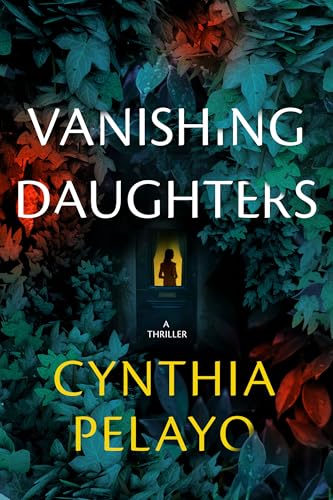
Kate’s Review: “Vanishing Daughters”

This post may contain affiliate links for books we recommend.  Read the full disclosure here.

Book: “Vanishing Daughters” by Cynthia Pelayo

Publishing Info: Thomas & Mercer, March 2025

Where Did I Get This Book: I received an ARC from the publicist.

Where You Can Get This Book: WorldCat.org | Amazon | Indiebound

Book Description: A haunted woman stalked by a serial killer confronts the horrors of fairy tales and the nightmares of real life in a breathtaking novel of psychological suspense by a Bram Stoker Award–winning author.

It started the night journalist Briar Thorne’s mother died in their rambling old mansion on Chicago’s South Side.

The nightmares of a woman in white pleading to come home, music switched on in locked rooms, and the panicked fear of being swallowed by the dark…Bri has almost convinced herself that these stirrings of dread are simply manifestations of grief and not the beyond-world of ghostly impossibilities her mother believed in. And more tangible terrors still lurk outside the decaying Victorian greystone.

A serial killer has claimed the lives of fifty-one women in the Chicago area. When Bri starts researching the murders, she meets a stranger who tells her there’s more to her sleepless nights than bad dreams—they hold the key to putting ghosts to rest and stopping a killer. But the killer has caught on and is closing in, and if Bri doesn’t answer the call of the dead soon, she’ll be walking among them.

Review: Thank you to Kaye Publicity for sending me an ARC of this novel!

I have a very special place in my heart for the story of “Sleeping Beauty”. It was my favorite Disney movie as a toddler, and my parents say that I basically wore our VHS of the film out due to watching it over and over again. I also generally enjoy the fairy tale in so many of its forms, even if those forms can be pretty dark and disturbing (no surprise given fairy tales). With all of this in mind I was so, so very excited to read Cynthia Pelayo’s new horror/thriller book “Vanishing Daughters”, as she decided to approach the story of Sleeping Beauty through the lenses of local folklore, grief, the things that haunt a person and a community, and violent misogyny. Pelayo is one of my favorite authors and I was very curious to see what she was going to do with a fairy tale so near and dear to my heart.

Pelayo once again creates a dreamy and strange world that lives within Chicago, but treads into fantastical places while still feeling very much steeped in the Midwestern metropolis through history, folklore, urban legend, and real life terrors. We follow Briar Rose, a journalist who lives in her family home in the woods, located on the Southside of Chicago, who is mourning her mother’s recent death. Briar Rose has been dreaming strange and terrifying things, and the house she lives within feels haunted, both by something otherworldly, but also by the crushing grief of the loss of her mother. Meanwhile a serial killer has been murdering women in Chicago, leaving devastation behind but capturing their spirits to holding them within a trapped other world, and his connection to Briar Rose reflects a destiny that the journalist was unaware of, even though her free spirited mother was hinting at it in life. This dark fantasy retelling is so rich and layered, with creative analogs to the original fairy tale while also connecting folklore of Chicago and its darker histories that still linger in the minds of its citizens. I loved how ethereal and odd this felt, really bringing out the idea of sleep and dreaming and all the themes that come with a Sleeping Beauty story.

The horror and thriller elements of the serial killer mystery are also on point, not only tapping into very real themes like violent misogyny and victims memories being exploited, but also the tales of cruel fairies that curse bloodlines and steal people for their own devices. For our evil fairy analog we have someone/something that is part fantastical in how it functions in this story, but also just feels like a very real threat, as women in real life can go missing and be left without a voice or justice, becoming ideas and warnings instead of being seeing as living breathing humans. It’s both a critique of the way women victims are exploited by true crime narratives, but also an interesting exploration of how real life folk lore and cautionary tales are created from tragedies and how we forget that. I enjoyed the POV of the serial killer, as it was such a jolting distinction from Briar Rose’s chapters, and it made me uneasy and on edge. You throw in the dark past of Chicago and so many cultural references to this city and its history (another thing I love about Pelayo’s books: Chicago itself is a character, and given that I really enjoy Chicago it’s so fun to see how she represents it) and you have a strong time and place with a lot of well explored history lessons.

“Vanishing Daughters” is my favorite of Pelayo’s works. This book is compelling and beautiful and raw and emotional, and I highly recommend it. If you haven’t ready anything by Cynthia Pelayo, now is the time and this is the title.

Rating 9: Probably my favorite Pelayo story to date, “Vanishing Daughters” is strange and dreamlike, while also exploring themes of grief, folklore, and the very real people who turn into myth, for better or worse.

Reader’s Advisory:

“Vanishing Daughters” is included on the Goodreads list “Horror To Look Forward To in 2025”.

Book Club Review: “The Princess Bride”

This post may contain affiliate links for books we recommend.  Read the full disclosure here.

We are part of a group of librarian friends who have had an ongoing book club running for the last several years. Each “season” (we’re nerds) we pick a theme and each of us chooses a book within that theme for us all to read. Re-visiting some of our past themes, we’re once again reading books that have had film/TV adaptations and then comparing the two mediums. For this blog, we will post a joint review of each book we read for book club. We’ll also post the next book coming up in book club. So feel free to read along with us or use our book selections and questions in your own book club!

Books: “The Princess Bride” by William Goldman

Publishing Info: Harcourt, Brace, Jovanovich, September 1973

Where Did I Get These Books: own it!

Where You Can Get These Books: WorldCat.org | Amazon| Indiebound

What We Watched: “The Princess Bride”

Book Descriptions: What happens when the most beautiful girl in the world marries the handsomest prince of all time and he turns out to be…well…a lot less than the man of her dreams?

As a boy, William Goldman claims, he loved to hear his father read the S. Morgenstern classic, The Princess Bride. But as a grown-up he discovered that the boring parts were left out of good old Dad’s recitation, and only the “good parts” reached his ears.

Now Goldman does Dad one better. He’s reconstructed the “Good Parts Version” to delight wise kids and wide-eyed grownups everywhere.

What’s it about? Fencing. Fighting. True Love. Strong Hate. Harsh Revenge. A Few Giants. Lots of Bad Men. Lots of Good Men. Five or Six Beautiful Women. Beasties Monstrous and Gentle. Some Swell Escapes and Captures. Death, Lies, Truth, Miracles, and a Little Sex.

In short, it’s about everything.

Kate’s Thoughts

Even though I’m solidly an older millennial, I didn’t see “The Princess Bride” until I was in middle school, and didn’t really grow up with it as a result. I know that’s perhaps a bit outside the norm for my age group (clock Serena’s experience below), but I enjoyed it enough for what it was. Because of that I was curious, a few years later, to read the actual book by William Goldman, and have distinct memories of reading it while on a family trip to a rental cabin in Wisconsin. When Serena picked it for our book club book I was interested to re-read it after all these years, as I felt like perhaps I’d have a new appreciation for it. And I was, in general, correct.

What I appreciated a bit more this time was the way that Goldman was kind of sending up sweeping fantasy romances, but it never really felt in a condescending way (at least to me; I know there were people in book club who REALLY didn’t care for his sections). Whether he’d ‘redact’ sections that went way too long focusing on decoration, or food, or he would cut out long and rambling other aspects of the story and the backstory of the world it was set within, it felt like a tongue and cheek chuckle at both sweeping fantasy as well as stuck up academics who try to find meaning in so much only to miss some of the points completely.

But that isn’t to say that the story itself of Buttercup and Wesley and their friends and foes is lesser in book form. I still found the story to be very fun, and I am sure that that is part due to the fact that Goldman himself adapted his book into the screenplay. I also really liked that we got the back stories for characters like Fezzik and Inigo, who definitely have memorable roles in the movie, but don’t have much exploration. As a person who always preferred the side characters to Buttercup and Wesley (blasphemy? Maybe! But damn did Inigo do SO MUCH MORE for fourteen year old Kate…), I enjoyed having the extra exposition.

Overall it was a fun revisit with a bit of a new perspective after all this time.

Serena’s Thoughts

Like many people, I watched and loved the movie before I realized there was a book. I mean, I first watched this when I was quite young, so even if I had known there was a book, it probably wasn’t at my reading level! But once I discovered it, you know I gobbled it right up! And have re-read it a few times since! However, it had been a few years since I went back to it, so after we decided to revisit this bookclub theme, I knew that I wanted to select this as my title. Bonus that the movie adaptation is so great as well!

All of this to say, I have probably very few novel things to say about either the book or the movie other than wild gushing. I do love them both. However, as became clear during our bookclub discussion, while telling the same story, the book and movie are very different things. I’d say that the movie is a fairytale romance first and foremost. However, the book is more focused on its comedy elements. This can be seen in the “story within a story” of “The Princess Bride” itself, as well with the framework and the “character” the author portrays himself as, going back and “adapting” this “classic” work. With those expectations in mind, I think each excels at its goals! The movie includes extra scenes focused on the romance, like the reunion between Wesley and Buttercup after falling down the ravine. And the book adds a lot of comedic content with the inclusion of features like the “Zoo of Death” and more intricate backstories for the side characters.

I do think the movie is probably more approachable to general audiences. The casting is truly perfect, and this version reduces the framing device of the “story within a story” to a few wholesome scenes between a grandfather and his grandson. But if you’re looking for a more detailed version of the story with a stronger focus on comedy (especially a lot of jabs at the publishing and entertainment business), definitely give the book a go!

Kate’s Rating 8 : It was a fun revisit to a high school read with a somewhat new set of eyes. It’s both a fun send up but a well done fairy tale romance as well.

Serena’s Rating 9: I love them both! A perfect example of a story being adapted in two different ways, but succeeding in both.

Book Club Questions

  1. This is a story within a story. how does this framing serve the story? Do you think the central conceit works? What do you make of Goldman as a character himself?
  2. The structure of the story uses a lot of parentheticals and asides. Do these work for you?
  3. The book calls itself a “classic tale of true love and high adventure.” Which aspects of each stood out to you, romance and adventure? Was one stronger than the other?
  4. Goldman also wrote the screenplay for the movie. In what ways did he adhere to or later the original story? Were there bits you would have chanted or included/not included?
  5. Mot of the characters are well established in people’s minds based on the movie versions. Did the movie stay true to the versions seen in the book? Were there any that were better in the books? Better in the movie? Did you have a favorite casting?

Reader’s Advisory

“The Princess Bride” is included on the Goodreads lists Best Books Ever and The Best Fairytales and Retellings.

Next Book Club Pick: “The Guernsey Literary and Potato Peel Pie Society” by Mary Ann Shaffer

Kate’s Review: “We Were Warned”

This post may contain affiliate links for books we recommend.  Read the full disclosure here.

Book: “We Were Warned” by Chelsea Ichaso

Publishing Info: Sourcebooks Fire, March 2025

Where Did I Get This Book: I received an ARC from the publisher.

Where You Can Get This Book: WorldCat.org | Amazon | Indiebound

Book Description: Everyone knows the legend of Fairport twenty years ago, a shocking murder closed the place down. This year, the ruins will be bulldozed at last. But tonight, it’s not too late to die.

All her life, Eden Stafford has heard the lore about the abandoned beach resort at the edge of ever since the notorious murder there, anyone who sets foot on the property is cursed to die, It’s more than just a over the years, two high school students who dared to explore the ruins of Fairport Village were killed there.

Eden is no stranger to notoriety, having endured a family scandal that’s made her a target at school. So when she reluctantly attends an overnight party at the ruins, she’s on edge—not because of some legend, but because the clique that has made her life hell for years is there, too, including Caleb Durham, the worst of them all.

Yet out of all the things Eden expected to happen that night, finding another student dead at Fairport Village wasn’t one of them.

Though the death is ruled an accident, Eden knows she saw something suspicious at the ruins—and Caleb and her other longtime tormentors did too. Now they’re all being followed by a deadly stranger, and to save themselves, they must work together to uncover the truth about Fairport Village. But after all that’s happened, can Eden really trust Caleb and his friends? Or will they leave her to face a killer alone?

Review: Thank you to Sourcebooks Fire for sending me an ARC of this novel!

One of my favorite things to do when I was working at one of my old library internships was putting together YA displays. I had this internship for half a year and I did about four or five displays, and finding common themes in books, from the obvious to the kind of quirky, was really fun. Whenever I read a YA novel I think about this fun task, and what kind of display said book would fit into. I kept thinking about that as I read “We Were Warned” by Chelsea Ichaso, because man would it have had so many possibilities! Would it have been on a YA Urban Legends display? A “If You Like “Pretty Little Liars…” display (dating myself like crazy here)? Would it have been on a “Creepy Stories By The Seaside” display? It has a lot of potential!

This is probably a great entry for the thriller genre for the target audience, but also has the goods to be entertaining to anyone looking for a quick and snappy read with some decent red herrings and an easy to follow mystery. I love the idea of an urban legend that is possibly true, and the way that it captures how a small town tragedy can take on a life of its own within the minds of the people who live within a community that has head to live with it. I’ve always been a huge sucker for mysteries and horror tales that use this kind of device, and this one had a solid background and a sufficiently eerie setting of an abandoned seaside resort that was the location of a horrific murder and some devastating fallout in the years after (including more murders). I found the mystery to be entertaining and a quick read, and I can definitely see how young adult audiences would be able to relate to Eden and Caleb, and even some of the more morally grey characters like Victoria, Caleb’s close friend and kind of Mean Girl that is Eden’s nemesis (but maybe misunderstood?). I enjoyed the dynamics between these characters and how Ichaso upended expectations for Eden and for me as a reader.

That said, as a 40 year old woman who has read MANY mysteries and thrillers over the years, “We Were Warned” definitely reads like a YA thriller to me. Which is NOT a bad thing at all. I would absolutely put this on a display for chilling thrillers in a YA section of a library, and know exactly who I would recommend this title to. But as a YA thriller, it does have some things that didn’t work for me. For one, Eden is, at times, a bit grating in the constant reminders of how Caleb must hate her and how much she hates him, while it’s pretty clear to the reader (or at least this reader) that there was more to the story on Caleb’s side. It got a bit repetitive to read about her resentment towards him and her assumptions, as it was obvious that wasn’t the case. There were also some twists in here that didn’t work for me, one in particular that followed a familiar ‘one last shock’ routine that almost never clicks with me when it happens in a thriller novel I’m reading. But again, these kinds of things are not necessarily going to hinder the audience that the book is intended for. It’s definitely a ‘your mileage may vary’ situation.

“We Were Warned” has a fun premise and an entertaining mystery. While it was a bit middle of the road for me, I am pretty certain that it will be a good fit for its intended audience!

Rating 6: Entertaining and a fast read to be sure and almost certainly a solid thriller for the audience it is written for, though more seasoned thriller fans may be underwhelmed at times.

Reader’s Advisory:

“We Were Warned” is included on the Goodreads list “YA Novels of 2025”.