Diving Into Sub-Genres: Romantic Fantasy


This post may contain affiliate links for books we recommend.  
Read the full disclosure here.

We each have our own preferred genres of choice. Kate loves horrors and thrillers, really anything that will keep her up at night! And Serena enjoys escaping through hidden doors into realms of magic and adventure. We also read mysteries, historical fiction, graphic novels, etc. etc. And that’s not even counting the multitude of sub-genres contained within each greater genre. In this series, one of us will present a list of our favorites from within a given sub-genre of one of our greater preferred genres.

There is a near constant debate going on right now about the definitions and delineations between what constitutes “romantasy” and what should be categorized as fantasy romance. Part of the problem, I think, comes down to simple word order and what it says about the type of book you’re picking up. As readers will have noticed following this series of posts about subgenres, or about these terms in general, is that the primary genre is always the last word, preceded by some sort of descriptor that gives additional detail into the specifics of the subgenre. So, for fantasy, you have things like urban fantasy or gothic fantasy. Further, for subgenres within romance you see things like dark romance or historical romance. Descriptor followed by primary genre.

Now, if you break apart the term “romantasy” you would get “romantic fantasy,” seeming to indicate that you are reading a fantasy book first and foremost with a dash of romance added in. It should meet all fantasy expectations with more free reign on how the romance is dealt with, as it is the “sub” of the greater “genre.” Unfortunately, this is NOT what “romantasy” means. Instead, it’s the opposite, a subgenre of the romance genre with all the requirements for the romance genre coming in first consideration, with fantasy used only as a support frame for the love story.

This all leaves it very confusing for the readers who are truly looking for the “romance” subgenre of fantasy, instead of the “fantasy” subgenre of romance that is so often being marketed to them. To make matters worse, more and more people are saying that this former option should be called “fantasy romance.” Which, as I just laid out, reads as completely opposite of the way that readers understand and approach genres and subgenres! To those not in the know, “fantasy romance” should be shelved right next to “historical romance” in the romance section; it only makes sense!

As you can see, I’ve labeled this post “romantic fantasy” and I truly think we should push this as the term used for this subgenre. “Romantasy” is so established as a term on its own at this point that I don’t think there would be any confusion regarding the fact that it was originally a combination of these two words. Instead, by using “romantic fantasy” instead of “fantasy romance” we’d be following the traditional rules of categorizing subgenres, thus making it easier for fantasy readers to find their preferred subgenre within this greater whole.

So, all of that said. Here are some “romantic fantasy” books that I think represent the subgenre well. I’ve intentionally tried to pick books that can be seen as the fantasy counterbalance to many of the popular “romantasy” tropes being put out today. Unlike those, these books follow fantasy genre conventions first and foremost, with the romance coming in second fiddle. Per the usual with fantasy, several of these are series, and as such, the romance plays out as slow-burn throughout, with love stories moving only incrementally (if at all!) in some books.

Wildwood Dancing” by Julier Marillier

Fairie/Fae Romance – Faerie romances are by far one of the most popular sub-subgenres seen in “romantasy” currently. There’s no denying the power of Maas and her influence in this area. On the other side, Marillier is a go-to for any fantasy reader looking for the romance subgenre within. I’m pretty sure every single one of her books would fit within this category. But this one is the closest to the sort of faerie romance that we typically see in “romantasy.” Unlike those, the romantic interest isn’t actually Fae, but much of the story still revolves around faerie, their wonder and danger. A couple other great examples for this with actual Fae romantic interests would be “Emily Wilde’s Encyclopaedia of Faerie” by Heather Fawcett and “Spinning Silver” by Naomi Novik. I highly recommend both of those as well, but I’m using another book by Novik below and I reviewed the latest “Emily Wilde” book just last week!

Kushiel’s Legacy” trilogy by Jacqueline Carey

Dark Romance/Enemies-to-Lovers – While I don’t read much of it, I know that “dark romance” is another very popular version of “romantasy” currently making the rounds. And it goes without saying that “enemies to lovers” is the current GOAT of tropes. The romantic fantasy comparable option for this one is a no brainer! “Kushiel’s Dart” goes into undeniably dark directions, both in its exploration of lust and sexuality and in the violence of this world. But there is also one of my favorite love stories at the heart of this trilogy as well! Beyond that, it’s political fantasy novel first and foremost, with detailed world-building and a strong focus on the political manipulations and strategizing of the characters that make up the story. Phedre is probably one of my Top 10 favorite fantasy heroines of all time, and that’s saying something considering just how many great ones there are out there!
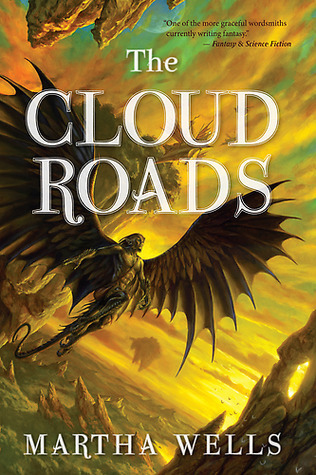
“The Books of the Raksura” by Martha Wells

Monster Romance – Ruby Dixon and her “Ice Planet Barbarians” is probably one of the most popular examples of this in “romantasy.” There are less human/monster love stories in fantasy (other than the typical urban fantasy fare with vampires and werewolves, but at this point, those barely count as monsters, as bizarre as that is!). But this was a perfect excuse to shine a light on one of Wells’ most over-looked trilogies! The story follows Moon, a shapeshifter who finds out he has a great destiny. As you can see from the cover art on this and the other books, Wells’ characters are wholly unique species with only small nods to humanistic traits. There is a ton of action and adventure to be found in this trilogy, but also a sweet romance at its heart. I’m hopeful that now that Wells’ other back catalog titles are getting re-prints that we’ll see new editions of these soon!
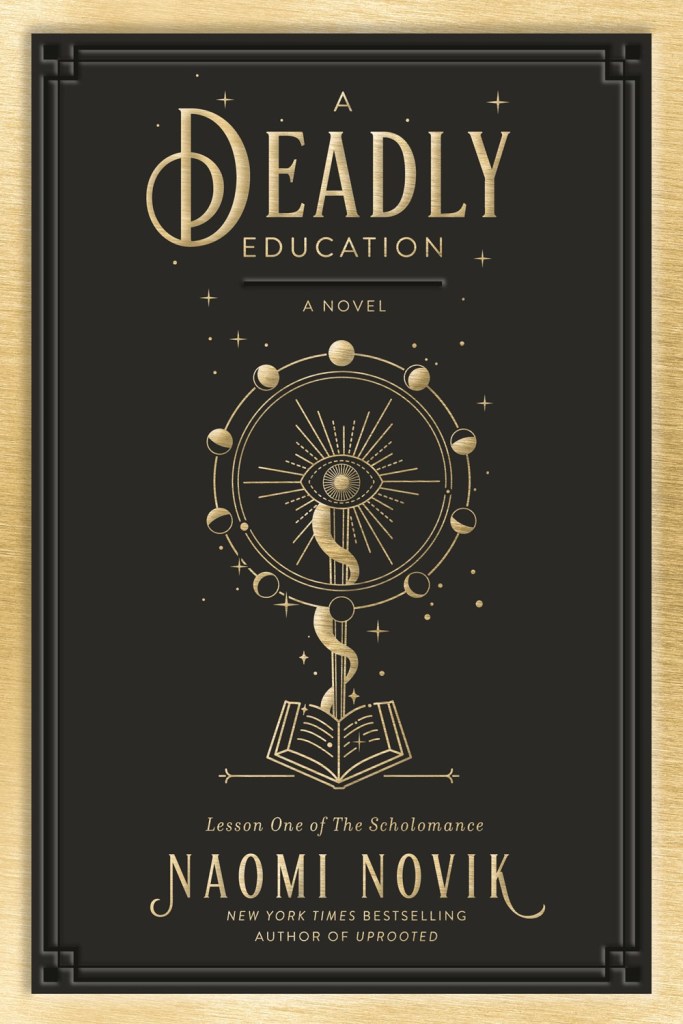
“Scholomance” trilogy by Naomi Novik

Dark Academia/Rivals-to-Lovers – I’ve already mentioned Naomi Novik on this list, as she has several others books that would easily fit within this subgenre (“Uprooted” is another great example that falls more on the fairytale re-telling side of things). But I wanted to highlight this trilogy as comparable titles to the dark academia trend seen a lot in “romantasy.” I love everything about this trilogy, but the stand-out feature is probably the narrator, El, who has one of the strongest voices as a narrator that I can think of. She’s also prickly and stand-off-ish, and her awkward stumble into the central romance is incredibly endearing.

“A Darker Shade of Magic” trilogy by V. E. Schwab
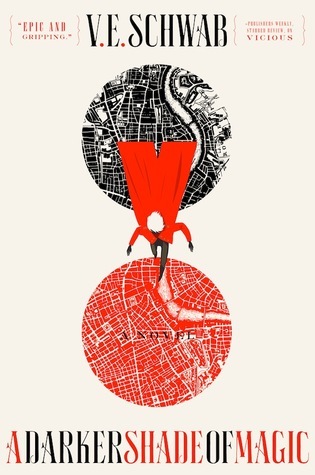
Multi-POVs/Multi-Romances – To be fair, multi-POV books are by far more common in the fantasy genre than in the romance genre. But as I couldn’t really think of any comparable options for why-choose/throuple romances, here we are. There are two lovely romances in this one, but true to the fact that they are fantasy novels first and foremost, neither love story really starts up until the second book. The central one follows Kel and Lila, the main characters of the story. And the second is a M/M romance that kind of came out of nowhere, but turned out to be heart-wrenching all on its own. Beyond that, the trilogy as a whole is so perfectly crafted that I think it’s one of those rare series where each book individually would warrant a “10” rating.

“The Rook and the Rose” trilogy by M. A. Carrik

Slow Burn – I have to say, it’s hard to think of a true slow burn in “romantasy.” But, as I’ve talked about extensively now, as a subgenre of the romance genre, it’s a bit hard to work a slow burn love story into a true HEA romance novel. But slow burns are a staple of romantic fantasy. As many of the above books highlight as well, the love stories often don’t even get truly started until the second book in. So too with this one. Instead, the focus is more on the intricate world-building, various hidden identities, and the careful balance who know s which of the numerous secrets floating around. The first book barely hints at the central romance, but it really blossoms in the second one!

What romantic fantasy books are your favorites? Let us know in the comments!

Serena’s Review: “The Outcast Mage”

This post may contain affiliate links for books we recommend.  Read the full disclosure here.

Book: “The Outcast Mage” by Annabel Campbell

Publishing Info: Orbit, January 2025

Where Did I Get this Book: ARC from the publisher!

Where Can You Get this Book: WorldCat.org | Amazon | IndieBound

Book Description: In the glass city of Amoria, magic is everything. And Naila, student at the city’s legendary academy, is running out of time to prove she can control hers. If she fails, she’ll be forced into exile, relegated to a life of persecution with the other magicless hollows. Or worse, be consumed by her own power.

When a tragic incident further threatens her place at the Academy, Naila is saved by Haelius Akana, the most powerful living mage. Finding Naila a kindred spirit, Haelius stakes his position at the Academy on teaching her to harness her abilities. But Haelius has many enemies, and they would love nothing more than to see Naila fail. Trapped in the deadly schemes of Amoria’s elite, Naila must dig deep to discover the truth of her powers or watch the city she loves descend into civil war.

For there is violence brewing on the wind, and greater powers at work. Ones who could use her powers for good… or destroy everything she’s ever known.

Review: I think this book will be one of those odd reads that really works for certain fantasy readers, but then fails to connects to a bunch of others. To start with, the book throws readers into the deep end of an entirely new fantasy world. I’m on the record as very much enjoying this approach to world-building in fantasy, but it’s also a big ask of many more casual readers. For the most part, this approach worked for me here as well. I was more than happy to go along with the story and characters slowly piecing things together as they came.

What didn’t work, however, was that further into the book we did start getting more overt details into these world-building portions. Unfortunately, they often came in long chunks of straight exposition and info-dumping. These larger bits of explanation also came fairly far into the story, meaning that for the readers who would appreciate the straight presentation of facts rather than the immersive nature of the beginning, there’s a decent chance they might have already put the book down by the point they show up.

I also ended up struggling to enjoy many of the characters in this book. For the pros, I very much enjoy mentor/mentee relationships, so I really liked the portions of the book that focused on these two characters. I will also say that there is very little to no romance in this book, so it’s a great option for readers who perhaps feel overwhelmed by the amount of romance in fantasy recently (not me, but I know these readers exist, haha!).

That said, there were simply too many POV characters in this book. I know that I personally have a fairly low bar for the number of characters I want to follow during a book. It typically tops out at around 3, and by far I prefer a single POV altogether. But here there were, I think, 5 or 6 different characters we followed. By necessity, some of those got more page time than others, which often directly influenced my interest in their various stories. However, the sheer overwhelming number of them ultimately decreased my ability to connect to any of them. Beyond that, as I read, it began to be hard to differentiate between them, leaving me unsure of whose story I was finding halfway through a chapter. Again, this is a very subjective take, and I know a lot of fantasy readers enjoy large casts of characters. But it didn’t work for me here.

So this was a bit of a mixed bag for me. I enjoyed the world that was introduced, but there were too many info dumps to make it smooth sailing. And I really like the focus on the mentor/mentee relationship, but there were too many other characters distracting from these two’s stories that I watered down the entire affair. I’ll likely stick around for the next book, as I’m definitely curious to see where the story goes from here.

Rating 7: A lot of potential and a strong central relationship was a bit hampered by shaky world-building and too many POVs to keep up with.

Reader’s Advisory:

“The Outcast Mage” can be found on this Goodreads list: All the New Fantasy Books Arriving in January 2025.

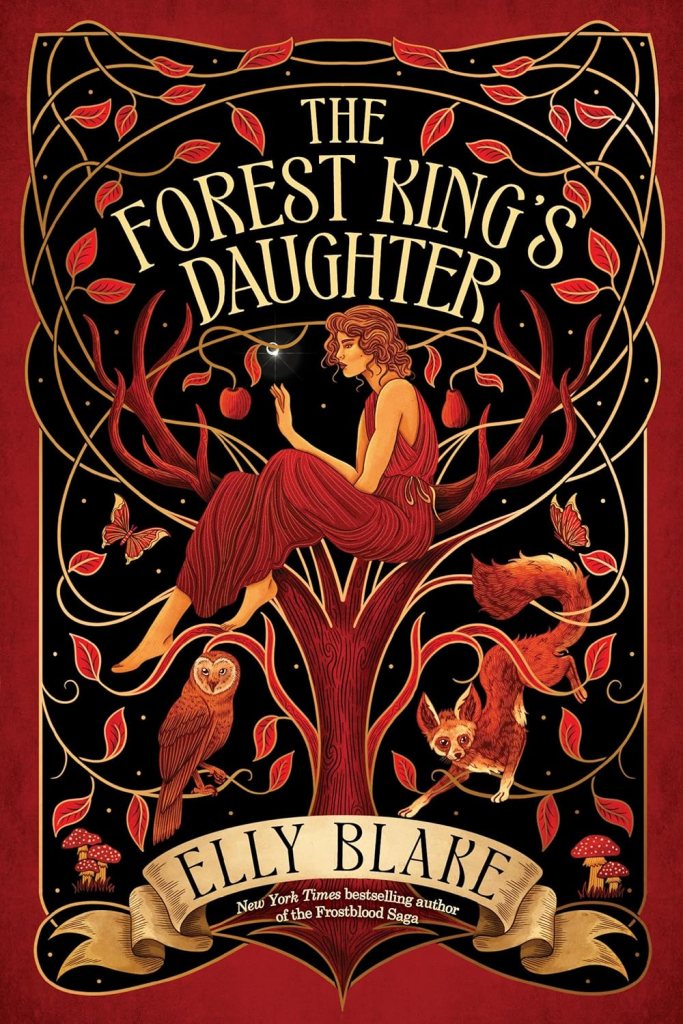
Serena’s Review: “The Forest King’s Daughter”

This post may contain affiliate links for books we recommend.  Read the full disclosure here.

Book: “The Forest King’s Daughter” by Elly Blare

Publishing Info: Little, Brown Books for Young Readers, February 2025

Where Did I Get this Book: ARC from the publisher!

Where Can You Get this Book: WorldCat.org | Amazon | IndieBound

Book Description: Once upon a time, among the bloodred trees of Thirstwood, a young forest princess became friends with a lonely demon boy. He gifted her an amber ring, a worthless trinket…or so he thought…because no sooner did he slide it onto her finger than the demon queen and forest king declared war.

Years later, Cassia is a crucial force in her father’s army, wielding her ring of light that can blind and disorient hundreds of demons at a time. Then battle-hardened Zeru abducts her, planning to steal the ring back to fix his costly childhood mistake. Exhausted, terrified, and more than a little mistrusting, Cassia is forced to travel with Zeru to a place they both believed only existed in storybooks, one where their childhood friendship slowly rekindles into something much more. But it’s only a matter of time before the war they’ve escaped comes for them, and a hidden threat to forest folk and demons alike grows in the shadows.

From the author of the Frostblood Saga comes the first book in an enchanting, adventure-filled fantasy series about the daughters of the powerful forest king, sure to leave readers breathless and desperate for more.

Review: This was an obvious book request for me! Everything about the summary above sounds like it has been tailored for me. Further, I’ve had a lot of good luck with Little Brown Books and their selection of YA fantasy. They seem to curate an author list that often produces some of my favorites in this genre and reading age. So how did this one turn out? Let’s dive in!

Overall, I enjoyed this one. I did have complaints here and there, but for the most part, this was a fun ride. Right from the start, I enjoyed the writing style, which had the sort of lyrical, fairytale quality that I prefer in fantasy stories like this. The two main characters were also introduced in an interesting way, with the reader first meeting them as children when they are unlikely friends. And then later, after things go terribly wrong, when they are older teens/adults on opposite sides of a war. It was a nice twist on the typical enemies-to-lovers romance plot, with the additional factor of initial friendship and trust from when they were children complicating their perspectives as adults.

I will say, in what would be a bit of a recurring problem throughout, there were some frustrating moments when both Cassia and Zeru made some truly wild leaps of logic and interpretation with regards to their shared history. In fact, one of my primary complaints about the book as a whole was the discordant feeling of these two main characters. For the majority of the book, each are written as highly competent, mature individuals. But then, on a fairly regular basis, they would each come up with the most ridiculous interpretation of the events surrounding them or the other’s motivations of intentions. It was the kind of writing where you could see the authors fingers all up in the narrative. The characters NEEDED to think a certain way to justify the arc of the story and romance. But in any reality, it made no sense to do so. Cassia, in particular, was incredibly naïve, especially about her father, way past the point of believability.

That said, I did actually enjoy the romance itself. When I started the book, I thought I had a pretty good grasp on how things would play out. Instead, the author swooped in with a major jump shift halfway through the book, re-positioning the stakes and, essentially, the world-building of this entire story. And through these changes, the romance itself veered into new and interesting territory. There was a bit of a “cake and eat it too” plot point with regards to Zeru and Cassia’s process of moving through their trust issues, but as the entire concept was so creative, I’ll give it a pass.

There were also some decent twists and turns in the larger conflict between the elves and demons. While some of the villains were plainly obvious from the start, there were a few twists with regards to other characters’ motivations that were revealed closer to the end. The pacing and plotting, overall, was steady throughout, and any moment where I began to become frustrated with some of the character inconsistency was quickly glossed over by another exciting story beat.

This is a solid YA fantasy story, and I think it’s well worth checking out if you’re looking for an original entry in the genre!

Rating 8: A few frustrations with character inconsistency aside, this was a lovely fairytale-like romance story with a surprisingly unique take on several classic fantasy tropes.

Reader’s Advisory:

“The Forest King’s Daughter” can be found on this Goodreads list: Romantasy TBR 2025

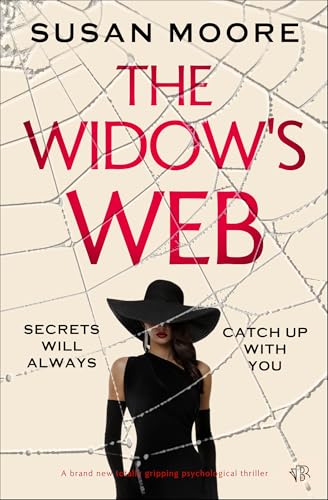
Kate’s Review: “The Widow’s Web”

This post may contain affiliate links for books we recommend.  Read the full disclosure here.

Book: “The Widow’s Web” by Susan Moore

Publication Info: Bloodhound Books, January 2025

Where Did I Get This Book: I received an ARC from the publicist.

Where You Can Get This Book: WorldCat.org | Amazon | Indiebound

Book Description: When her tycoon husband suddenly dies, a woman discovers the sinister secrets of Silicon Valley, in this psychological thriller debut.

When tech mogul Brad Jones is found drowned off the Marin coast, his death is quickly ruled a suicide. But his wife, Dr. Anna Jones, a renowned cyberpsychologist, isn’t convinced. Driven by grief and suspicion, Anna begins to dig into Brad’s past, uncovering some dark details behind Silicon Valley’s elite.

Anna soon crosses paths with Scott and Kristy Lyle, influential figures with connections reaching the highest echelons of the tech industry. The deeper she goes, the more she realizes Brad’s death is tied to a long-buried secret—one that powerful people would kill to protect. Caught between the truth and some dangerous enemies, will Anna risk everything to expose the sinister forces at play?

The Widow’s Web is a gripping psychological thriller that explores ambition, betrayal, and the terrifying reality that our worst enemies may be those we trust the most.

Review: Thank you to SparkPoint Studio for sending me an ARC of this novel!

Well it just so happens that this week the books I’m reviewing are ALL about rich people behaving badly! Just like “A Girl Like Us” on Tuesday, we are now tackling a story that feels way too relevant, and in this case it’s even more so as it is about villainous tech bros in Silicon Valley doing shady things and destroying lives to maintain their power. I miss the days that my associations with that part of Northern California were more about my childhood memories of family trips and beautiful oceans and less about the aforementioned monsters in tech. Yep, “The Widow’s Web” by Susan Moore is a rich behaving badly thriller, but it has less melodrama and more actual nasty and disturbing plot points. Which surprised me in a good way.

As a thriller, “The Widow’s Web” is pretty straight forward on the surface. We have Anna, a psychologist who has been married to her tech mogul husband Brad for years and living a lavish life in Silicon Valley. But when Brad suddenly dies by drowning, she is suddenly plunged into a viper’s nest of lies and secrets involving her husband and fellow tech bro Scott Lyle, and realizes that Brad was hiding horrible secrets from her. We get the clues to the big reveals through modern day investigation from Anna herself, to flashbacks involving Brad and his business dealings, to journalistic digging from a reporter who has ties to Scott Lyle through his wife Kristy, and it all makes for a mystery that is fairly well put together, though well tread territory when it comes to the puzzle pieces and the way they fit together. I did wholly enjoy Anna as a character, as a grieving wife as well as a woman who is trying to protect her son from dark truths as she is finding them out.

But what struck me the most about this book is that, unlike other wealthy people behaving badly books I’ve read recently, Moore decides to take the bad behavior to incredibly dark and sociopathic places. I don’t want to spoil too much, but this book and its reveals don’t feel soapy or fun, and while I love soapy and fun, I appreciate the candor that Moore has put into place in her characters and the absolute depravity that she is calling out, as these tech bros are so rich and powerful that they don’t feel any fear of consequences. Was it a mind fuck to read this kind of story as tech bros are trying to dismantle society as we know it and turn in their techno-dystopic ideals? It sure was! Does it make this book feel all the more relevant and horrifying? YUP, IT SURE DOES. That is what stood out to me about this book. I didn’t expect it to continue fueling my existential dread about everything.

“The Widow’s Web” has familiar beats, but dares to push the envelope in its themes. Because of that, I found it to be compelling and effective.

Rating 7: A twisty conspiratorial thriller that has a sympathetic main character and the gall to go to the darkest places when calling out the sociopaths of the tech industry.

Reader’s Advisory:

“The Widow’s Web” isn’t on any Goodreads lists yet, but it would fit in on “Mysteries Set in Silicon Valley (Fiction)”.

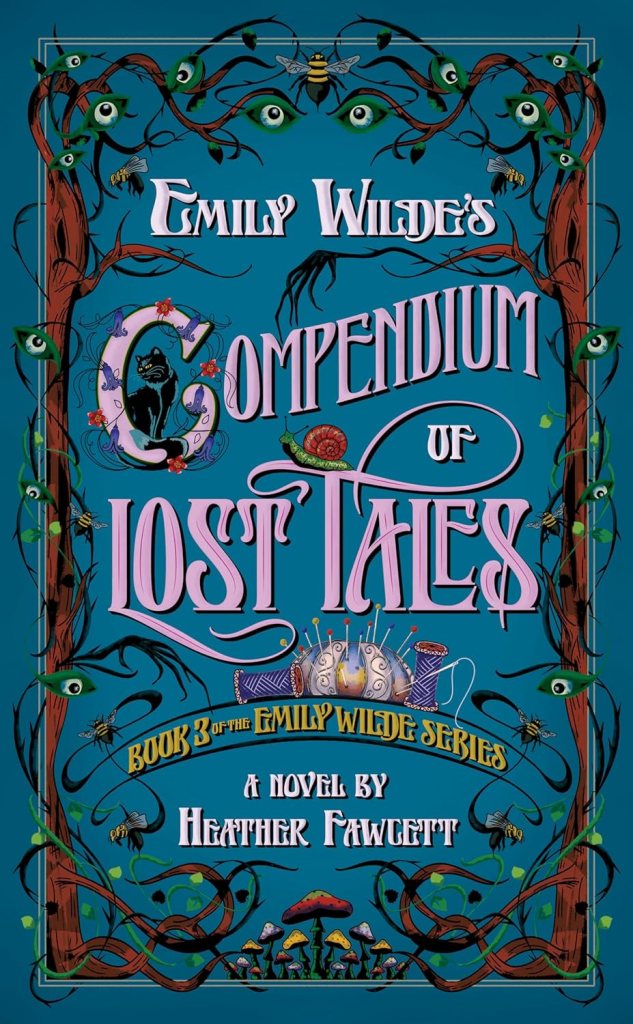
Serena’s Review: “Emily Wilde’s Compendium of Lost Tales”

This post may contain affiliate links for books we recommend.  Read the full disclosure here.

Book: “Emily Wilde’s Compendium of Lost Tales” by Heather Fawcett

Publishing Info: Del Rey, February 2025

Where Did I Get this Book: ARC from the publisher!

Where Can You Get this Book: WorldCat.org | Amazon | IndieBound

Book Description: Emily Wilde has spent her life studying faeries. A renowned dryadologist, she has documented hundreds of species of Folk in her Encyclopaedia of Faeries. Now she is about to embark on her most dangerous academic project studying the inner workings of a faerie realm—as its queen.

Along with her former academic rival—now fiancé—the dashing and mercurial Wendell Bambleby, Emily is immediately thrust into the deadly intrigues of Faerie as the two of them seize the throne of Wendell’s long-lost kingdom, which Emily finds a beautiful nightmare filled with scholarly treasures.

Emily has been obsessed with faerie stories her entire life, but at first she feels as ill-suited to Faerie as she did to the mortal How can an unassuming scholar such as herself pass for a queen? Yet there is little time to settle in, for Wendell’s murderous stepmother has placed a deadly curse upon the land before vanishing without a trace. It will take all of Wendell’s magic—and Emily’s knowledge of stories—to unravel the mystery before they lose everything they hold dear.

Review: I know I had a bit of a rough patch there, with several reviews back to back that were middling at best and often downright negative. But I did have one shining light through it all, and it was the fact that the third Emily Wilde book was releasing only a few weeks later! And finally, here we are!

The tough thing about writing reviews for series like this is the fact that when you have book after book that hits a home run, you start to run out of things to praise. What do you say when the author already has such a solid hand on the wheel, striking a perfect balance of world-building, immersive character arcs, and thrilling, fairytale-like story features? I guess one thing that can always be said is that by the third book, you know for sure it’s not just a fluke. Heather Fawcett is just this good, and Emily and Wendell are just this great as characters. And the romance is just this well done, even here, in the THIRD book, without a silly break-up or offensively mind-numb “miscommunication trope” in sight!

The strength of the romantic progression seen in this book truly demonstrates the strength of Emily and Wendell as their own established characters. We don’t need contrived plotting to drive the story. Instead, their relationship is tested by very real factors stemming from their own priorities and insecurities. Emily struggles to balance her scholarly ambitions with her new role as an incoming Queen of Faerie. Further, she sees Wendell in a new light, now that he is returned to his homeland, and must reconcile the two versions she knows, finding ways to bring her own wealth of knowledge to the forefront in their political challenges.

For his part, we see a very different Wendell here as well. He is still the lovably frivolous and rather self-centered character that we’ve come to know and adore. However, we also see more flashes of the dangerous aspects of his character. Beyond that, we see a new layer to him, as he comes into his own with the responsibilities of caring for his land, his people, and, of course, Emily (who would insist that she needs to caring for!).

There were so many excellent romantic beats, particularly from Wendell, that hit all of the right notes! Each book has been more romantic than the last, and this one was no exception. I love the way the relationship between these two progressed, while also very much staying the same, with each internally rolling their eyes at the other near constantly, while externally pledging undying support in whatever crazy pursuits they come up with next.

I also really enjoyed the main story we got here. I wasn’t quite sure where this book would go after the events of the second book. In many ways, that felt like the end of an excellent duology. But I was pleased to see that there was still plenty to explore in this world, including a hefty dose of danger and darkness. I will say, that like the two books before it, this one does have strange pacing towards the end.

Pacing is always tough, because it’s hard to explain exactly what is meant when you talk about it. But, on the other hand, a reader will often recognize strange pacing when they see it. And now in all three of these books, there has been this strange feeling of the book leading up to and hitting (perfectly, I might add) the climax of the story around the 75% mark. And then…the book just continues and an entirely new mini-adventure starts up and becomes the true end of the book. I always enjoy the story as a whole, including these final storylines. But they do sit oddly within the greater structure of the story. Perhaps, that initial 75% climax mark just hits too hard? But then, these are always incredibly impactful moments, and to lessen them would be a disservice. So, I’m not sure. Maybe just a strange feature, rather than a bug.

Overall, this one hit it out of the park! I’ve loved every minute I’ve spent with Emily and Wendell in this world, and this third book was no different! If I had to rank them, I’d say that the first one was still the best (as first books almost always are), but then this third one comes in right on its heels. But, as I adored the second book as well, this sort of ranking is ultimately rather meaningless. If you’ve enjoyed this series so far, boy, are you in for a treat!

Rating 9: Like Emily Wilde herself, Heather Fawcett is a force in her field! Everything a reader could hope for from a fairytale fantasy: dark forests, deep curses, and a desperately romantic love story.

Reader’s Advisory:

“Emily Wilde’s Compendium of Lost Tales” can be found on this Goodreads list: New In 2025.

Kate’s Review: “A Girl Like Us”

This post may contain affiliate links for books we recommend.  Read the full disclosure here.

Book: “A Girl Like Us” by Anna Sophia McLoughlin

Publishing Info: Sourcebooks Landmark, February 2025

Where Did I Get This Book: I received an ARC from the publisher.

Where You Can Get This Book: WorldCat.org | Amazon | Indiebound

Book Description: Succession meets Saltburn in a crackling locked-room thriller of inconceivable wealth, unchecked power, and the secrets poised to bring a powerful family down.

It’s 2004 and former reality TV star and party girl Maya Miller has just married the most eligible bachelor on the planet: Colin Sterling, of the globally famous Sterling family whose history of aristocratic titles and land holdings rival a British royal and whose media empire is comparable to the Murdochs. To some, Maya represents the American dream. To others, a gold digger. But when Colin’s cousin Arianna, the heiress to the family’s immense fortune, is found murdered, Maya is thrust into the spotlight: first as she is revealed to be the next heiress to the fortune, and then as the prime suspect.

Swiftly, the entire Sterling family goes into lockdown at Silver House, the family’s ancestral estate in the English countryside. They’re told it’s for their own safety—but Maya becomes convinced that it’s not to keep threats out, but to keep secrets in. Now, she has no choice but to find and expose the truth hidden within the Sterling family, and why Arianna, a girl she had never met, chose her to take her place. But Maya has secrets of her own. And she knows that in order to survive the Sterlings, she’ll have to beat them at their own game.

Review: Thank you to Sourcebooks Landmark for sending me an ARC of this novel!

You’d think that with the state of EVERYTHING going on right now I would be fully turned off of books about disgusting billionaires with way too much power being full on villainous, and yet it’s still a sub-genre of thrillers that I greatly enjoy (I mean I guess we will see if that continues going forward? Maybe it the stories all end like “Ready or Not”?). Regardless of my existential dread, I picked up “A Girl Like Us” by Anna Sophia McLoughlin in hopes of a soapy and easy to digest escapist thriller with twists and turns and maybe something a little more. I got basically everything except for the last bit.

In terms of mystery, this one is fairly straight forward. We have the uber wealthy steeping in their privilege and cruelty, as well as a newcomer who is dying to fit in but has some salacious secrets of her own, and a mysterious murder and a slew of suspects. It’s the exact kind of thriller that I would associate with a day by the pool or a long plane ride, one that makes the time go fast and keeps the reader entertained. Given how billionaires are really showing their asses lately (or even being fully super villain!) I am always down for a story that puts their terribleness front and center, and with Maya being a bit of a wild card and kind of a villainess in her own ways herself it’s fun to root for a morally grey character against a backdrop of really nasty people with too much money and power. And it just adds more some really soapy moments that felt right out of an episode of “The Bold and the Beautiful” circa the early 2000s when I was watching it in the student union when I was between classes in college. I was entertained to be sure.

But as I said above, by being fairly straight forward it doesn’t really go outside the box of what I’d expect from the genre, and while it’s fun seeing two dimensional villains claw at each other, it also makes for a tale that doesn’t really stand out in the long run. There are some interesting dynamics at play as we follow the perspectives of both Maya in the present and then Arianna in the past through her journal entries, but this too just stuck to familiar pathways and formulas. None of this is a bad thing, necessarily, though I have been finding myself more intrigued and compelled with thrillers that go the extra step. Would I recommend this as a fun read? Absolutely. But that being said, it didn’t wow me in the way that some recent thrillers have.

“A Girl Like Us” is a solid thriller that checks a lot of boxes of the genre. I was entertained, but not blown away.

Rating 6: Entertaining and soapy, but it didn’t really reinvent the wheel when it comes to thrillers.

Reader’s Advisory:

“A Girl Like Us” is included in the Goodreads article “A Month-by-Month Guide to 2025’s Biggest Mysteries and Thrillers”.

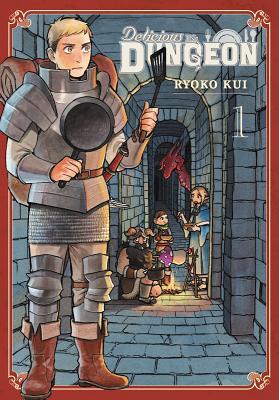
Book Club Review: “Delicious in Dungeon (Vol. 1 & 2)”

This post may contain affiliate links for books we recommend.  Read the full disclosure here.

We are part of a group of librarian friends who have had an ongoing book club running for the last several years. Each “season” (we’re nerds) we pick a theme and each of us chooses a book within that theme for us all to read. Re-visiting some of our past themes, we’re once again reading books that have had film/TV adaptations and then comparing the two mediums. For this blog, we will post a joint review of each book we read for book club. We’ll also post the next book coming up in book club. So feel free to read along with us or use our book selections and questions in your own book club!

Books: “Delicious in Dungeon (Vols. 1 &2)” by Ryoko Kui

Publishing Info: Yen Press, May 2017 & August 2017

Where Did I Get These Books: The library!

Where You Can Get These Books: WorldCat.org (Vol.1) (Vol.2) | Amazon (Vol.1) (Vol.2) | Indiebound (Vol.1) (Vol.2)

What We Watched: “Delicious in Dungeon” Episodes 1 & 2

Book Descriptions: Vol. 1: When young adventurer Laios and his company are attacked and soundly thrashed by a dragon deep in a dungeon, the party loses all its money and provisions…and a member! They’re eager to go back and save her, but there is just one problem: If they set out with no food or coin to speak of, they’re sure to starve on the way! But Laios comes up with a brilliant idea: “Let’s eat the monsters!” Slimes, basilisks, and even dragons…none are safe from the appetites of these dungeon-crawling gourmands!

Vol. 2: With the possibility of starvation as a constant companion, Laios’ party continues advancing deeper into the Dungeon. The adventurers have made it to the third floor but only rotting zombies, ghastly spirits, living paintings, and golems await them–all of them absolutely inedible. After coming this far by adapting and learning how to live off the dubious bounties of the Dungeon, how will they manage when even the meanest monster won’t make a decent meal?

Kate’s Thoughts

It had been a long time since I read any manga before our book club picked “Delicious in Dungeon” Volumes 1 and 2. Like, probably since we read “Sailor Moon” Volumes 1 and 2 a few years ago! I used to read more manga back in the day, but it has admittedly fallen away a bit, so I was eager to pick some up again. Especially since I’ve been doing an online Dungeons and Dragons campaign for the past year or so and this just SCREAMED D & D to me!

And it really did feel like I was reading a D & D campaign as our heroes go into the dungeon to find Laios’s captured sister and find the depths, the creatures, and other adventurers along the way. Not only is the lore of the dungeon expansive and super creative (different levels, different resting spots that have turned into markets and communities), I really enjoyed the many different creatures and how they are broken down and used for food, with thought out recipes and oddly mouthwatering pictures to boot! I also enjoyed seeing the party of varying characters try and maneuver through the monsters and the recipes, whether it’s determined leader Laios who wants to save his sister (and has always been curious about monsters as food for some reason), or anxious spellcaster Marcille, or steady locksmith Chilchuck, or fine dining chef dwarf Senshi (my favorite to be sure). And man, did that food look good even though it was made of slimes, scorpions, chimeras, and other dungeon dwelling beasts.

Will I go on in the series? Probably not. But it was a fun ride to be sure!

Kate’s Rating 7: Creative world building, fun characters, and some delicious looking food make for a fun adventure tale!

Book Club Questions

  1. Have you read manga before? If so, how did this manga compare with the other ones you’ve read in the past?
  2. Did you think that the art style and the structure of it fit the story? Do you think you may have liked this more if it were in a different format, like a long form fantasy novel?
  3. Which character did you connect with the most?
  4. If you watched the adaptation or parts of the adaptation, how did it compare to the source material? Do you think you liked watching it better or reading it better?
  5. Have you played any games that have dungeon quests or themes (like D&D, or any video or board game with dungeons and monsters)? How did those compare to this story?

Reader’s Advisory

“Delicious in Dungeon (Vols. 1 & 2)” are included on the Goodreads lists “Comics About Food”, and “RPG Board Games”.

Next Book Club Pick: “The Princess Bride” by William Goldman

Serena’s Review: “A Circle of Uncommon Witches”

This post may contain affiliate links for books we recommend.  Read the full disclosure here.

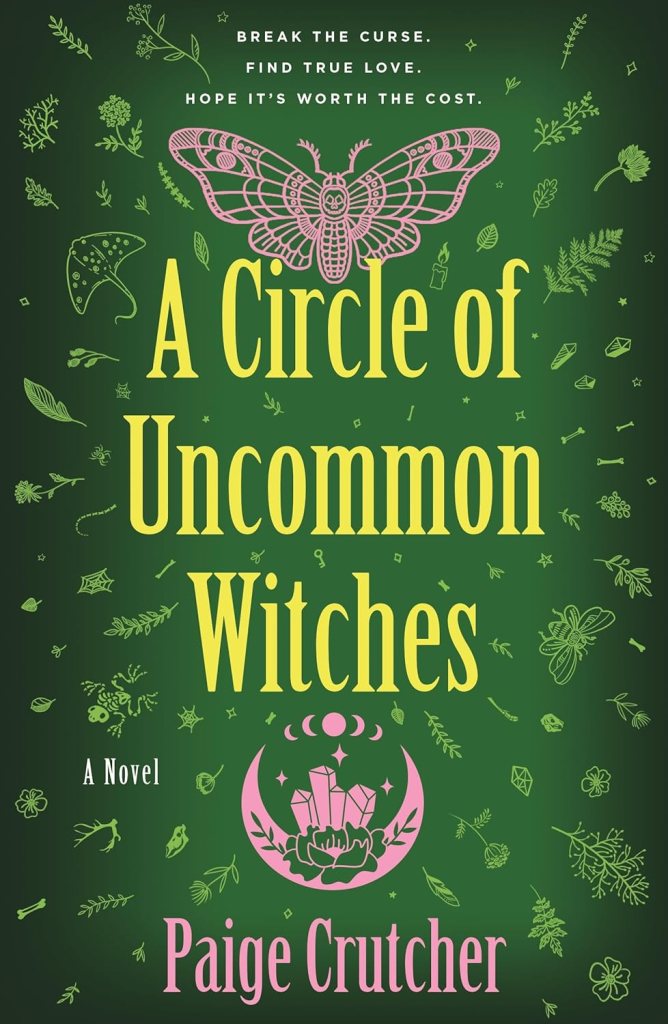
Book: “A Circle of Uncommon Witches” by Paige Crutcher

Publishing Info: St. Martin’s Griffin, February 2025

Where Did I Get this Book: ARC from the publisher!

Where Can You Get this Book: WorldCat.org | Amazon | IndieBound

Book Description: Doreen MacKinnon is doomed to die of a broken heart – if she can’t break the centuries old curse placed on her family.

Three hundred years ago, Ambrose MacDonald, a powerful male witch, fell in love with a MacKinnon. And when the MacKinnon witches forbade him from seeing his love, by secretly hiding her away, he retaliated by cursing the family and its future generations to never find love. But it wasn’t without a cost. Now, Ambrose is imprisoned by those same witches, trapped in a tempest and doomed to outlive everyone he has ever loved.

But Doreen isn’t like the other MacKinnon witches. As the 13th generation of the MacKinnon line, Doreen is one of the most powerful witches in centuries… and one of the loneliest. So when she discovers where Ambrose has been trapped, she releases him to help her break the curse, once and for all. Ambrose agrees to help, but with his own motive: vengeance. He plans to use her as bait to enact his revenge on her family.

Together, they enter a series of trials, which take them to a castle in Scotland, off a cliff, and into a world beyond their wildest dreams. As they work together, sparks start to fly, but soon Doreen must choose how far she is willing to go to break the curse, and what she’s willing to sacrifice.

Review: Ever since falling in love with “Practical Magic” (both the book and the movie) as a teenager, I’ve always been chasing that high with regards to romantic witch stories. Alas, I’ve never quite found the same, well, magic, for lack of a better word! But, ever hopeful, I requested this one right away when I saw it slated for publication this spring!

To start with what I did like, if you step back from the book and look at the overall plot and the grander design of the world and romance, there was a lot to like. The curse itself was interesting, especially its exploration of the morality of the choice the MacKinnons face: do they ensnare a man to love them through magic or do they choose to die young? Both of these have obvious downsides, and the added factor of manipulated feelings and the guilt that this would cause with regards to the former choice were compelling.

That said, the way this curse, these characters, and this world were first introduced was incredibly disjointed and sloppy. Instead of building up a story and a character who, over the course of the plot, would feed us the necessary information with regards to the curse, we are simply spoon-fed an explanation of the history and curse in several exposition-heaving dialogue scenes early in the book. The best word to describe it is clunky. Beyond that, because some of these greater facts are being presented so early, before I had any time to center myself in this world or care about these characters, I couldn’t truly appreciate the stakes of the curse, which should be dramatic.

Beyond that, I think the romance played out rather poorly. It walks right up to the line of instalove and then seems to tap a toe over it. Nothing is egregious, but it also wasn’t built up in a natural manner. Again, I struggled to become invested in these characters, both alone or together. At the same time, given how quickly they seemed to fall for one another, the actual progression of the romance felt very drawn out. I prefer slow-burns, but if you’re going to write characters who instantly fall for one another, I’d rather they act on that sooner rather than later. Instead, we got a rather frustrating game of hot and cold as the story continued.

There was a lot of potential to be found here, and I’d definitely check out another book by this author. I think there was a lot of potential in this world and concept, but some weakness with regards to pacing and characterization. However, if you’re looking for a fun, fast, witchy romance, this may be one to check out!

Rating 7: An intriguing concept with the magical curse, however the pacing and introduction of the world-building was clunky at times.

Reader’s Advisory:

“A Circle of Uncommon Witches” can be found on these Goodreads lists: Blessing and Cursing and Witchy Women.

Serena’s Review: “The Spirit Collection of Thorne Hall”

This post may contain affiliate links for books we recommend.  Read the full disclosure here.

Book: “The Spirit Collection of Thorne Hall” by J. Ann Thomas

Publishing Info: Alcove Press, February 2025

Where Did I Get this Book: ARC from the publisher!

Where Can You Get this Book: WorldCat.org | Amazon | IndieBound

Book Description: A young woman forced to live with ghosts in a mansion frozen in time must decide between forbidden love and the price of freedom in this gothic fantasy where Jane Eyre meets The Haunting of Bly Manor, perfect for fans of Starling House.

At Thorne Hall, a grand estate nestled in the Berkshires, fifteen restless spirits roam, bound within the mansion’s walls since the Gilded Age. Elegy Thorne bears the weight of her family’s curse to preserve the mansion as it was in the 1890s, using ancient folk songs to keep the spirits secret and silent in order to avoid deadly consequences.

When a mischievous child spirit wreaks havoc on the manor, the Thorne family calls upon their trusted preservationist to restore the mansion. He brings along his son, Atticus – a vibrant man full of life and ideas of modernization – and Elegy is captivated by him, igniting a longing for freedom she’s never dared to embrace.

Torn between her desire to follow her heart and her duty to her family and its legacy, Elegy begins searching for a way to release the spirit collection back to the afterlife and set both herself and the ghosts free. With century-old secrets, peculiar magic, and spirits both whimsical and deadly, Thorne Hall will haunt and enrapture readers—and you might just not want to leave.

Review: I love gothic fantasy, so when I read the description for this title, I knew it was one I’d want to check out! I have to admit, I was also a bit hesitant about how the modernity would work with everything else that was being promised. And, well, I just personally don’t love contemporary fiction, so there were ways that this could have went quite wrong, potentially. But, while it wasn’t quite the home run that I had hope for, it was still a thoroughly enjoyable read!

The book started off on an excellent note, hitting all of the historical and gothic vibes I could hope for! The language was lush and of the time, the splendor glittered, the horror spooked, and the mystery for the ongoing story was perfectly set up. This continued into the modern portion of the book when we first meet Elegy, and through her eyes, we meet the various ghoulish ghosts that make up the manor. I was most surprised here. While many of them were horrific and some of them downright evil, they were also given so much characterization and history that I became quite invested. I even found myself tearing up with some of the descriptions of the child ghosts and the reality of their experiences being trapped in this house.

I also enjoyed Elegy herself. She was an interesting character, being a young woman who is essentially living in a different time period than her contemporaries. Further, her future has always been charted for her, and its one that not only does she not want, but that she feels particularly ill-equipped to take on. The relationship between her and her father was quite toxic in all of the expected ways. However, there were also other relationships (such as the ones between herself and her friends/arranged fiancé and her step mother) that also took interesting twists and turns.

That said, I think the romantic relationship was by far the least successful. The love interest shows up, and it’s pretty much instalust/instalove right from the start. The author does give us a few throwaway lines here and there that this relationship built up more, but it’s all told to us, not shown. This comes in the form of long walks and hours spent talking together before the fire. But we’re not privy to much of this and are simply told after the fact that it happened and that Elegy now feels even closer than ever to him. As the plot progresses and the action picks up, we get to see a bit more of this development on the page, but it was still too little too late for me, as the entire foundation still felt weak.

The pacing itself was also a bit off. The first chapter, as I mentioned, is a banger. And then we meet Elegy and it feels like the story should continue at a decent clip. However, about a quarter of the way in, it feels like the brakes are slammed on, and it takes a long time for the actual plot to pick up again. Much of this time is instead devoted to these “long talks” that we don’t see and the continuation of the already-well-established feud between Elegy and her father figure. It takes quite a while for Elegy to move forward from her passive starting point. And while I think this hesitations is believable, it also made for a bit of a lagging reading experience.

It also feels like the author got a bit lost in the weeds with the blending of the historical and contemporary aspects of the story. I’m not sure if the contemporary setting really added to the story, as it necessitated various characters actively commenting on the oddness of Elegy’s habit of speaking and acting in a way that doesn’t line up with current standards. I’m not quite sure why it couldn’t have simply remained in the past, as the author clearly had a handle on that style of writing and it was the stronger of the two.

Overall, however, I still very much enjoyed this book! If you’re looking for a unique gothic fantasy story, this is definitely one to check out. It was more creepy than I had anticipated, but also more heart-wrenching, in the best way!

Rating 8: Full of shivers, both of the creepy and romantic variety!

Reader’s Advisory:

“The Spirit Collection of Thorne Hall” can be found on this Goodreads list: Forthcoming Fantasy, Dark Fantasy, & Horror (2025-)

Ripley’s Reviews: “The Talented Mr. Ripley” (1999)

This post may contain affiliate links for books we recommend.  Read the full disclosure here.

“Ripley’s Reviews” is an ongoing series where I will review every book in Patricia Highsmith’s “Ripley” Series, as well as multiple screen adaptations of the novels. I will post my reviews on the first Thursday of the month, and delve into the twisted mind of one Tom Ripley and all the various interpretations that he has come to life within. Up next is the first film adaptation of a “Ripley” book I’m covering, the 1999 film “The Talented Mr. Ripley”.

Film: “The Talented Mr. Ripley” (1999)

I remember when “The Talented Mr. Ripley” came out. I was a freshman in high school, and Matt Damon was still riding high off of his turns in “Good Will Hunting” and “Saving Private Ryan” (and “Dogma” for this Kevin Smith fan, though it would be a couple years later that I fully dove into his whole deal). When I saw a trailer for “The Talented Mr. Ripley” it all seemed like another prestigious dramatic role for him, but then we got a pretty creepy turn as it went on and my 14 year old self was scandalized but intrigued. Toss in some Gwyneth Paltrow and a very new to me Jude Law (I was swooning) and I wanted to see it….. But didn’t get around to it until much later in life. I wanted to start with this film in my reviews of the films because it was the one that got Tom Ripley on my radar in the first place, and I was curious to see how it would hold up. AKA I was curious to see if it was actually as gay coded as I remembered and if it was as good of an adaptation I remembered. And I have great news: yes to both!

There are a number of changes that the film makes from the book, some of which work for me while others do not. I’ll start with what I did like in terms of changes. The first is that this movie really leans in to the whole ‘Tom is very much in obsessive love with Dickie’, and given how Ripley has been seen as a queer character even though Highsmith claimed he wasn’t this definitely worked. It makes it so that Tom’s longing isn’t only about coveting the things that he cannot have in terms of wealth and power, but also coveting a person that he cannot have. I’m not certain that it makes him seem more sympathetic (he’s still killing people, and one murder is particularly upsetting and ties into his identity), but it does make for a bit of a more complex character as the movie goes on. I definitely felt some pity for him as he pined for Dickie and is desperate for his affection and companionship, and thought that Damon played that angle of Tom really well. I also quite enjoyed the addition of Meredith (played by the iconic Cate Blanchett), a charming and naíve socialite that Tom meets almost immediately in Italy and impulsively passes himself off as Dickie towards her not an hour after arriving, which causes problems down the line. She kind of felt a bit like Heloise, Tom’s clueless but pretty nice wife in the books. Blanchett is always fantastic, and I really loved Meredith, even if she was a bit of a dope. But then she had no reason to not believe Tom, and it’s another layer of his manipulation skills that adds to his horribleness. Gwyneth Paltrow’s Marge is also expanded upon, and I really enjoyed seeing the direction that they take her, especially when it comes to her suspicions towards Tom as the story goes on.

But that leads into one of the changes that didn’t work as well for me, and that is how they basically assassinated Dickie’s character in this. In the book he is definitely a cad, and is blinded by his own privilege. But the movie REALLY trashes him. He’s unintelligent, condescending towards Marge, he’s having an affair with a local woman who he also impregnates, which leads to her killing herself because he refuses to take responsibility, and then when we get to the boat scene where Tom kills him with an oar, it is changed a bit to make it seem like Tom hit him in a moment of hurt and desperation and regretted it, only for Dickie to try and kill him. Which makes Tom fighting back and killing him a little easier to swallow. By making Dickie a villain in his own right it really takes away from Tom’s own reprehensible nature (that isn’t to say he doesn’t make up for it; there is a scene before the end of the film that makes it clear Tom has passed the point of no return that was chilling as hell). I just kind of felt back for the way book Dickie is thrown under the bus by film Dickie. Jude Law really is the perfect cad, though.

All in all I really enjoyed this adaptation! It’s eerie and unsettling, and I think that it’s a great portrayal of what Tom Ripley is, while giving him a little more complexity. Next up I’m going to tackle the 1960 film “Purple Noon”, the first adaptation of “The Talented Mr. Ripley”!