
This post may contain affiliate links for books we recommend. Read the full disclosure here.
We each have our own preferred genres of choice. Kate loves horrors and thrillers, really anything that will keep her up at night! And Serena enjoys escaping through hidden doors into realms of magic and adventure. We also read mysteries, historical fiction, graphic novels, etc. etc. And that’s not even counting the multitude of sub-genres contained within each greater genre. In this series, one of us will present a list of our favorites from within a given sub-genre of one of our greater preferred genres.
Back at the height of the COVID pandemic I was having a hard time even THINKING about post-apocalyptic books because it kind of felt like we were teetering towards such a thing. Now I’m kind of whistling past the graveyard a bit, with the election behind us and all of my anxieties about what it all means in the coming months and years, as the sub-genre that REALLY stood out in my mind for this entry in our ongoing series was ‘end of the world’!!!!
I really enjoy a post-apocalyptic story, and as a sub-genre it can branch across multiple genres and still pack a punch. And it’s a theme that has been prevalent in literature for millennia, with stories like “The Epic of Gilgamesh”, “Dharmasastra”, “Völuspá”, and “The Book of Revelations” being of a more ancient time. The 1800s brought stories like “The War of the Worlds” by H.G. Wells, “Darkness” by Lord Byron, and “The Last Man” by Mary Shelley. The 20th Century really expanded on the sub-genre with lots of branches off within the sub-genre itself, be it due to disease, climate disaster, supernatural means, or manmade problems. It’s a dark sub-genre to be sure, but there is also an ever present theme of humanity finding pockets of banding together to find community and perseverance and connection during the darkest and most challenging of times. While my list is merely scratching the surface, these are the titles that sprung to mind when I was thinking about this sub-genre and how it still keeps going, even if it changes.

Book: “The Stand” by Stephen King
Probably considered one of the heaviest of hitters of the modern post-apocalyptic sub-genre, “The Stand” is one of my very favorite books, and there is a reason it has stuck around since it was published in the 1970s. This was my first Stephen King book and it set the stage for my entire reading journey from thirteen year old me up til now. “The Stand” is an apocalyptic tale about a manmade bioweapon called Captain Tripps, a superflu that has a 100% mortality rate, which is let loose in a lab accident and then set free by a fleeing soldier, ravaging the world population. Random survivors, who have immunity based on chance, soon find themselves being called to two different places. The first is in Colorado, with a kindly woman named Mother Abigail. The second is in Las Vegas, with the malevolent and mysterious Randall Flagg building an army to take control and wreak havoc. As the two bands of survivors rebuild their lives, and start to encroach on each other the groups will face off in a final stand of good versus evil. In true King fashion it’s not only the horror elements of this book, be they due to illness or terrible humans, but also the very well thought out characterizations of many characters, that make this story an absolute favorite of mine.
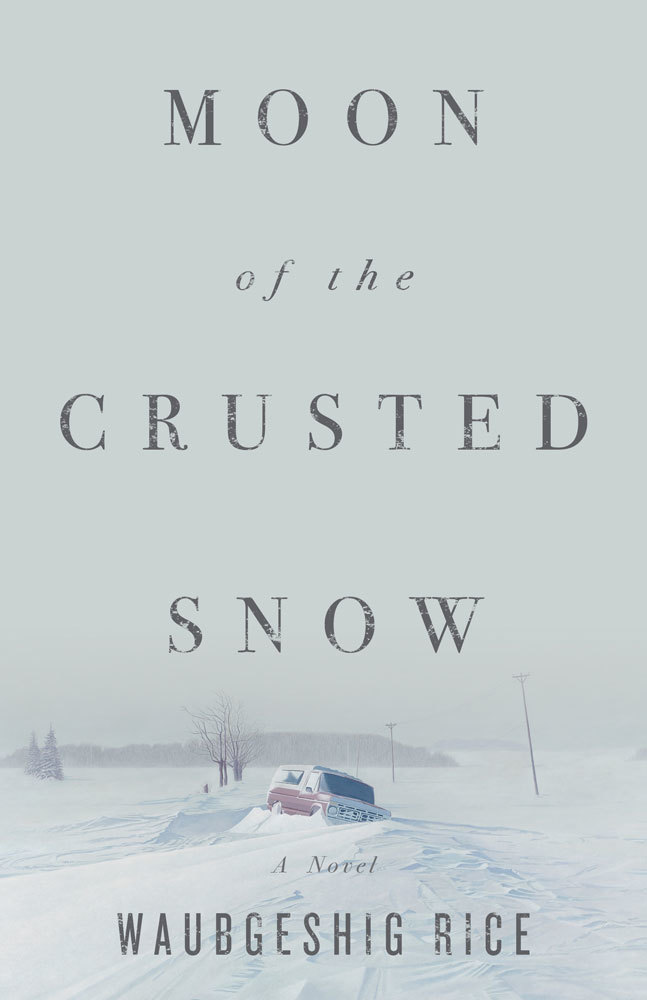
Book: “Moon of the Crusted Snow” by Waubgeshing Rice
Unlike “The Stand”, and many other apocalyptic/post-apocalyptic novels, “Moon of the Crusted Snow” is an end of the world tale that is a bit ambiguous about how society collapsed and the world as it was known ended. We approach it through the eyes of an isolated Anishinaabe community high up north, which has low communication with the outside world except in certain circumstances. So when they realize that something HAS happened, they aren’t wholly sure as to what ‘it’ was, and now have to figure out how to survive through the winter to rebuild their own community in the spring. But that’s less the point of this novel, as the focus is more on the fact that 1) Indigenous communities already experienced an apocalyptic event when white colonizers entered their lives, and 2) the end of something means the beginning of something else. We also see how cycles repeat as well, as the community lets a white survivor into their community as an act of good faith in hopes of helping him, and then he starts to throw his weight around and endangers everyone through his actions. This one is a slow burn thriller with a bit more of a quiet voice, but a strong and effective one as well. And a sequel came out last year!

Book: “Zone One” by Colson Whitehead
Zombie tales have kind of cycled out as of late, though for awhile they were VERY popular in the horror world. There are a whole plethora of zombie apocalypse stories to pick from, but I decided to highlight “Zone One” by Colson Whitehead, as it is a unique entry into the zombie apocalypse theme. We follow Mark Spitz, a man who is a survivor, or ‘sweeper’ in a post zombie apocalypse New York. He patrols and takes out zombies to try and make New York livable once more, and as we follow Mark over a few days of this job we learn about how the zombie apocalypse unfolded, how Mark survived it, and how people are trying to rebuild society and remove all of the straggling zombies who are still roaming about. Whitehead applies a very literary lens to the zombie sub-genre, and in it we see a slice of life character study as well as a post-apocalyptic tale of resilience and rebuilding.

Book: “Parable of the Sower” by Octavia Butler
This is, for me, perhaps the most disturbing book on this list, if only because it feels a little too real in how it approaches the end of the world through societal disparity and climate change. Doesn’t really help that it starts in 2024. OH WELL! Octavia Butler’s “Parable of the Sower” follows Lauren, a teenage girl living in an America that is at a boiling point, with the haves living in high gated communities and the have nots being locked out and subjected to a dying planet and violence, poverty, and death. When Lauren’s community is eventually overrun, she escapes into the wilds, and starts to not only band together with other survivors, but also starts to create and devise a belief system called Earthseed that will not only bring community back to its followers, but also will get them off a dying planet and to spread humanity across other planets. We read this in book club a couple years ago, and I remember loving it but also being absolutely terrified by how close it was to the reality we are living in at the moment. Butler is a force, and I highly recommend this book, even if it scares the living daylights out of me. Especially now.

Book: “The Fireman” by Joe Hill
And now for some lighter fare! And for Joe Hill, Stephen King’s son who also decided to dabble in an end of the world epic with “The Fireman”! A mysterious illness called Dragonscale has started manifesting in people, where a person develops weird skin lesions, then starts to smoke, burn up, and spontaneously combust. Harper is a nurse who is trying to remain positive throughout, though when she finds out she is pregnant AND develops Dragonscale, her husband Jakob rejects her, and she flees before he gets violent as society starts to crumble. Soon she meets a group of infected people who worship Dragonscale, and believe that they can use it as a blessing and have found a way to keep it under control. Within the group is referred to as The Fireman, as while he keeps his distance from the group for the most part, he has learned to control and manipulate his Dragonscale ‘powers’. But Harper soon realizes that this community may not be the safe haven for her and her baby. I really loved this book, finding it to be jarring as well as incredibly hopeful.

Book: “Station Eleven” by Emily St. John Mandel
I am ending this selection with a book that has really cemented itself not only as a modern end of the world classic, but also as one that focuses on the things that I am trying to focus on at the moment when things are so bleak and uncertain. “Station Eleven” by Emily St. John Mandel is, much like “The Stand”, and apocalypse story about an illness that sweeps the globe and kills millions of people, leading to the collapse of society. But while we do get flashbacks into how the world ended, and into the different characters who persevered, made a mark, or succumbed to it, the main crux of this story is humanity moving forward with community, hope, art, and love. We follow Kirsten and her troupe of fellow artists and performers as they travel the now ravaged U.S., performing for other survivors and keeping art and culture alive while providing hope and community for their audiences. But when they run afoul a maniacal self proclaimed prophet and his dangerous cult, they have to keep themselves and others safe from this group. What strikes me the most about this one, and why it’s my last pick for this list, is that while things are dark, and hard, and dangerous, Kirsten and her community are strong, supporting each other and finding joy even in the hardest times, while actively resisting against chaos, hate, and violence of those who wish to tear it all down. It’s truly a book for our times.
What post-apocalyptic books are your favorites? Let us know in the comments!





 The Library Ladies